Author Archive

Vito’s trial in Georgia opens – crucial to challenge raising hate crimes

April 22, 2019
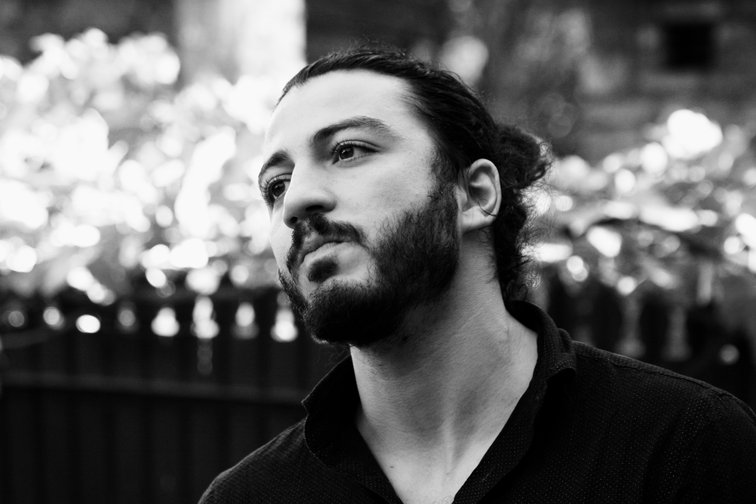
Vitali Safarov – Image: Svitlana Valko

……The investigation and trial into Vitali Safarov’s murder is the first time Georgian law enforcement are dealing with an alleged hate crime murder. And proving “ethnic hatred” as a motive, and that the crime was carried out by a group, is not an easy task for the prosecution – and requires a high level of professionalism. It took more than half a year for Georgian investigators to collect evidence and witness statements, as well as to conduct several expert examinations. According to Agit Mirzoev, head of the Centre for Participation and Development, both suspects are believed to be members of a neo-Nazi group that is known for having attacked foreign citizens and homeless persons in a central Tbilisi neighbourhood. Speaking to Ekho Kavkaza on 16 April, defence counsels stated that neither Kandelakishvili, nor Sokhadze were involved in a neo-Nazi organisation.

Mirzoev says that the suspects’ social network accounts were filled with far-right images and music. Here, according to Mirzoev, Sokhadze and Kandelakishvili paid respect to Adolf Hitler, bragged about cleansing the city of homeless persons, made threats against LGBT persons, and published videos of themselves training with bladed weapons and killing stray dogs. Sokhadze, who is believed to be a leader of the group, used the nickname “Slayer” online. Sokhadze’s social media account has since been deleted after the arrest, but prosecutors and the Centre for Participation and Development have screenshots.

Human rights groups have worked hard to keep the investigation in the public spotlight and encourage Georgian law enforcement to rise to the challenge. Initially the prosecutor’s office inclined to ignore the hate motive and charged only Kandelakishvili with premeditated murder, treating Sokhadze as a passive accomplice and charging him with not reporting the crime. But public pressure has worked: on 16 April, the prosecution charged both suspects with premeditated murder, committed by a group, on the grounds of ethnic hatred. If convicted, the defendants face sentences of between 13 to 17 years in prison. Neither defendant admitted their guilt.

…….Furthermore, on 16 April, the defence lawyers asked the judge to dismiss all evidence and witness testimonies presented by the prosecution. They claimed the evidence had been manipulated “in the interest of a certain segment of the population” – clearly referring to members of civil society and others who insist that the murder was a hate crime. The judge rejected the defence’s motion, admitting all evidence and witnesses from both the prosecution and the defence. The evidence will now be presented by the parties and reviewed by the judge during further sessions of the trial, which is expected to last several weeks. The next session is scheduled for 24 April.

… And the trial’s outcome is important in Georgia, a multi-ethnic country with centuries-old traditions of diversity – and where different cultures, languages and faiths co-exist. Sadly, Georgia is also a place where today the extreme right are growing in numbers and strength. Indeed, the struggle for justice for Vitali has spurred an anti-xenophobia campaign (“Georgia: No Place for Hate”), which is organised by his colleagues in the Centre for Participation and Development and other local NGOs. Right before the beginning of the hearings, over a hundred people gathered in front of the court building for a solidarity demonstration. They held photographs of Vitali and posters calling for a Georgia without hatred and racism, demanding justice and no impunity for the perpetrators. Activists and friends of Vitali wore pins reading “Never forget”, complete with his image. As he watched the participants of the action, Leri Safarov, Vitali’s father, could not hold back tears. “Only now am I starting to really know my son and understand what he was doing. Please carry on his work.”

https://www.opendemocracy.net/en/odr/vitali-safarov-trial-georgia/

In surprise move Bahrain king reinstates citizenship of 551 – 439 to go

April 22, 2019
FILE - In this May 21, 2017 file photo, Bahrain's King Hamad bin Isa Al Khalifa speaks during a meeting with U.S. President Donald Trump, in Riyadh, Saudi Arabia. The king reinstated the citizenship of 551 people convicted amid a crackdown on dissent on the island. The surprise royal decree, announced Sunday, April 21, 2019, by the state-run Bahrain News Agency, gave no explanation for his decision. (AP Photo/Evan Vucci, File)

The surprise royal order gave no explanation for King Hamad bin Isa Al Khalifa’s decision, other than to say that he had the final authority in such cases. “The study and evaluation of the situation of convicts should be based on criteria pertaining to the seriousness, impact and consequences of the crimes, as well as on the danger the convict may pose on national security,” the state-run Bahrain News Agency said in announcing the king’s decision. Authorities later will announce the names of those having their citizenship restored.

[Last week, 138 people lost their citizenship in a mass trial. That drew a rebuke from U.N. High Commissioner for Human Rights Michelle Bachelet, who described the convictions as giving “rise to serious concerns” about the country’s legal system. The Bahrain Institute for Rights and Democracy said last week’s verdict brought to 990 the number of people ordered stripped of their nationality since 2012.]

Sayed Ahmed AlWadaei, the director of advocacy at the institute, said he was surprised by the news. However, he cautioned that those like himself who had their citizenship stripped at the ministerial level, rather than through the courts, likely wouldn’t benefit from the king’s order. “I honestly think there is something going on behind scenes, maybe some diplomatic pressure is applied to the government,” AlWadaei said. “There must be a state behind it, maybe Britain or the United States.

Follow Jon Gambrell on Twitter at http://www.twitter.com/jongambrellap.

https://www.wral.com/bahrain-king-reinstates-citizenship-of-551-amid-mass-trials/18339059/

How ‘China fear’ affects companies: Leica tries to disclaim an ad that features the Tank Man

April 21, 2019

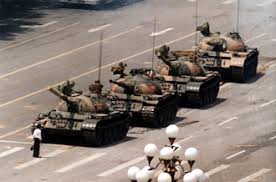
A promotional video that presents several vignettes of photojournalists documenting violence and conflict around the world became a controversy not just between the company Leica and China but also between two companies.  A recurring scene features a photographer who captured the famous image of a civilian blocking a column of tanks the day after the Chinese military’s deadly crackdown of protesters in June 1989. As the photographer’s shutter closes to capture the historic shot of the “Tank Man”, as the still-unidentified person is known, the screen transitions to a dedication to “those who lend their eyes to make us see”, before Leica’s distinctive red logo appears.

Following a public uproar in China and censorship of the brand on social media, Leica Cameras AG said on Thursday it had neither commissioned nor authorised the five-minute video – entitled The Hunt – that depicted photojournalists covering Beijing’s bloody crackdown on pro-democracy activists in 1989. Yet despite Leica’s efforts to disavow the video, F/Nazca Saatchi & Saatchi, the ad company that represents the German firm in Brazil and which produced the film, said on Friday that it was “developed together” with its client’s representatives in Brazil. F/Nazca “would never [harm] its huge reputation by creating, producing and airing a work without the proper approval of its client”, spokeswoman Carolina Aranha said in an interview on Friday. The agency was “immensely proud” of the video, which was released earlier this week, and was confident it had “delivered a remarkable piece”, she said. Leica did not immediately respond to requests for comment on F/Nazca’s statement when contacted outside business hours…

Airing just weeks before the 30th anniversary of Tiananmen Square, the video came at a highly sensitive time for Beijing, which routinely quells any mention in China of the events of June 4. But Zhou Fengsuo, who was a student leader at the time of the protests and now lives in the US, said Beijing was unlikely to make any explicit response to the video for fear of drawing attention to the matter. But that did not prevent a stern response from some members of the Chinese public. Soon after the commercial was shown online, social media users rushed to pour scorn over the German camera maker, which works with Chinese telecommunications giant Huawei to develop lenses for the company’s smartphones…

Following the outcry, the company said that it regretted any “misunderstandings or false conclusions that may have been drawn”. China is one of Leica’s fastest growing markets, with the company planning dozens of new stores on top of its current nine.

What ‘Jokowi 2.0’ means for human rights in Indonesia

April 21, 2019

In anticipation of the final result of the Indonesian presidential election on 22 May, which seems to have been won by sitting President Joko “Jokowi” Widodo (now with a senior Islamic cleric Ma’ruf Amin as his vice president), Asmin Fransiska, Abdil Mughis Mudhoffir, and Lailatul Fitriyah give in EconoTimes of 21 April 2019 their views on what that means for human rights:

Asmin Fransiska, Lecturer in Human Rights Law, Universitas Katolik Indonesia Atma Jaya

In 2014, Jokowi won the presidential election by promising to respect, protect and fulfil human rights. For four and a half years the Jokowi government failed to keep this promise. Jokowi should use his second victory to keep his promises.Indonesia’s 2017 Universal Periodic Review by the UN , shows that the government must address a number of human rights issues, for example, violence carried out by security forces, especially in remote areas, such as Papua, and cases of torture, and violence against women, children and minority groups.

…..As a first step, Jokowi and his new vice president, Ma’ruf Amin, must evaluate the Attorney General’s performance who for four years failed to bring human rights criminals to justice as recommended by the National Human Rights Commission….

Jokowi needs to balance the priorities of infrastructure development with environmental protection and corruption eradication. These two things are a prerequisite for development that values human rights. Indicators of human rights-friendly development include environmental preservation, protection of indigenous peoples and vulnerable communities, and high public participation in the development process from the beginning to the end.

==========

Abdil Mughis Mudhoffir, PhD Candidate in Politics, University of Melbourne, Lecturer in Sociology, Universitas Negeri Jakarta

In my opinion not much will change in terms of civil liberties protection in Jokowi’s second term if the constellation of power supporting the Jokowi government remains the same. …..The existence of retired generals allegedly involved in human rights violations as well as those connected with mining companies in Jokowi’s circle of power will hinder efforts to resolve not only past atrocities but also agrarian conflicts. The number of land conflict victims from agriculture, mining and infrastructure development activities will likely increase. State repression and civilian violence against discussions, film screenings and meetings that criticise the business relationships of people around Jokowi as well as those advocating for the interests of marginalised groups will continue.

Meanwhile, civil society efforts to prevent the military from intervening in civilian matters will continue to face challenges. The case of Robertus Robet, an activist and academic who was recently arrested during a rally for singing a song that criticised the military, for example, is likely to be left unresolved but will serve as a warning. The use of identity politics will still be dominant given that the Prosperous Justice Party (PKS) and Gerindra seemed to gain significant votes and will remain in opposition. Moreover, they also have strong candidates, such as current Jakarta governor Anies Baswedan, Sandiaga Uno or other PKS officials for the 2024 presidential election. The two parties will likely continue using religious identity narratives that will reproduce and sharpen polarisation in society to consolidate their power. As before, Jokowi’s camp will also respond to the attacks using similar narratives, with minority groups taking the brunt.

==========

Lailatul Fitriyah, PhD Candidate in Theology, University of Notre Dame

……..In other words, in the context of human rights, voters choose Jokowi on the principle of ‘the best of the worst’. Jokowi was elected because he did not have any record of human rights abuse, that’s all. Another aspect of Jokowi 2.0 era, which human rights activists will closely monitor, is his running mate, Ma’ruf Amin. Ma’ruf Amin’s popularity does not come from his commitment to inclusiveness, but his traditional support base as the senior cleric of the Nahdlatul Ulama, Indonesia’s largest Muslim organisation. In the long term, Ma’ruf Amin must serve not only his Muslim base, but also other segments of Indonesian society, especially those from marginal groups.

Ma’ruf should change his perspective. In his role as an Islamic scholar, he has alienated minority groups, including, Syi’ah, Ahmadiyah and LGBTIQ. As Vice President, Ma’ruf must act as a public official with the obligation to protect the rights of all Indonesian people, irrespective of race, ethnicity, sexuality or religion/non-religion. For Jokowi’s second term, the sacrificing of minority rights to gain popular votes will no longer be acceptable. Jokowi should protect minority groups who, although they had lived within the structure of systemic violence under his first term, have shown they still trusted him for a second term in office.

See also my recent: https://humanrightsdefenders.blog/2019/04/16/82-year-old-father-magnis-in-indonesia-tough-words-for-a-good-purpose/

https://www.econotimes.com/Jokowi-wins-Indonesias-election-polls-indicate–what-does-that-mean-for-human-rights-1527148

The 2019 World Press Freedom Index launched on 18th of April

April 20, 2019

Published every year since 2002 by Reporters Without Borders (RSF), the World Press Freedom Index is an important advocacy tool based on the principle of emulation between states. Because it is well known, its influence over governments is growing. Many heads of state and government fear its annual publication. [for 2018 see: https://humanrightsdefenders.blog/2019/01/30/world-press-freedom-index-2018-is-out-colorful-but-disheartening/]

The Index ranks 180 countries and regions according to the level of freedom available to journalists. It is a snapshot of the media freedom situation based on an evaluation of pluralism, independence of the media, quality of legislative framework and safety of journalists in each country and region. (It does not rank public policies even if governments obviously have a major impact on their country’s ranking. Nor is it an indicator of the quality of journalism in each country or region.)

Along with the Index, RSF calculates a global indicator and regional indicators that evaluate the overall performance of countries and regions (in the world and in each region) as regards media freedom. It is an absolute measure that complements the Index’s comparative rankings. The global indicator is the average of the regional indicators, each of which is obtained by averaging the scores of all the countries in the region, weighted according to their population as given by the World Bank.

The degree of freedom available to journalists in 180 countries and regions is determined by pooling the responses of experts to a questionnaire devised by RSF. This qualitative analysis is combined with quantitative data on abuses and acts of violence against journalists during the period evaluated. The criteria used in the questionnaire are pluralism, media independence, media environment and self-censorship, legislative framework, transparency, and the quality of the infrastructure that supports the production of news and information. Click here for more information

The press freedom map, which is distributed in print and digital versions, offers a visual overview of the situation in each country and region in the Index. The colour categories are assigned as follows: good (white), fairly good (yellow), problematic (orange), bad (red) and very bad (black).

https://rsf.org/en/ranking

Hurst Hannum wants a “radically moderate approach” to human rights

April 20, 2019
Hurst Hannum in his Fletcher School office
Hurst Hannum. Photo: Alonso Nichols
A piece by Taylor McNeil in TuftsNow of 19 April 2019 is about Hurst Hannum and his latest book Rescuing Human Rights: A Radically Moderate Approach (Cambridge University Press). Disclaimer: he and I are old acquaintances but have not seen each other for decades. I agree with much of what he says.

Hannum, a Fletcher School professor of international law, argues for bringing human rights back to the center of law and politics, while at the same time trying to define their role more carefully. Too often, he says, human rights are linked to just about everything, from punishing international crimes to seeking redress for nefarious corporate behavior and environmental degradation. “Human rights have come to mean almost anything to anyone,” Hannum said. “If something means everything, it means nothing. What we risk losing is a much narrower but more universal approach, focusing on the basic rights—civil, political, economic, social, and cultural—that government should be responsible for.

Since the United Nations Universal Declaration of Human Rights was set forth as “a common standard of achievement” every country in the world has ratified at least one human rights treaty, and most have ratified a half-dozen or more. Hannum is aware that implementation leaves much to be desired, but said that “continued emphasis on ensuring those rights that a country has already recognized is most likely to be the best way forward.”

….“While the contemporary world may seem bleak, apartheid is gone, authoritarian regimes have largely disappeared from eastern Europe and Latin America, and rights are more widely respected in countries as different as South Korea, Nepal, Tunisia, Taiwan, and Mongolia,” he said. “Many of these changes can be attributed at least in part to greater awareness of and demands for human rights, even though progress is often slow and difficult.” ..

Beginning with the Carter administration in the late 1970s, human rights became a focal point for U.S. foreign policy, “although they were never the only or most important factor in determining policy,” Hannum said. Since the Clinton presidency, the U.S. has focused increasingly on promoting democracy, not human rights per se. Hannum thinks that’s a mistake. “Obviously, democracy and human rights are related—all of the things that go into making a democracy are human rights,” he said. “But since the end of the Cold War, we’ve been pushing democracy as the solution to all problems, and it turns out that it’s not.” 

Unrealistic expectations of what democracy or a free-market economy can achieve “may help to explain the recent success of nationalists and populists, who often define democracy simply as elections, ignoring the essential human rights components of freedom of assembly, association, and expression that give such elections legitimacy,” Hannum said.

He also takes aim at human rights advocates who claim more for human rights than they can deliver—especially those who “confuse human rights with outsiders intervening in all sorts of way to fix other countries,” he said. “Human rights are about persuading governments to institute reforms within their own countries, not about imposing them from the outside.”

While he fully understands the desire to expand human rights efforts to deal more directly with contemporary problems, “we can achieve more if the goals are modest,” Hannum said. Of course, he knows that “Let’s try to achieve moderate success!” is not going to be a popular rallying cry, but he argues that such an approach seems radical these days “only because it seeks to retain the consensus and universality on which human rights are based.”

https://now.tufts.edu/articles/reviving-human-rights

Israel: Deportation of Human Rights Watch’s staff member again on the table

April 18, 2019

The sea-saw surrounding Omar Shakir of Human Rights Watch’ office [see: https://humanrightsdefenders.blog/2017/04/27/human-rights-watch-granted-israeli-work-permit-in-the-end/] continues with an Israeli court on 16 April 2019 upholding the Israeli government’s order to deport Omar Shakir, the Human Rights Watch Israel and Palestine director. The ruling by the Jerusalem District Court comes in response to a lawsuit filed in May 2018 by the organization, and Shakir challenging the government’s decision to revoke Shakir’s work permit and the constitutionality of a 2017 law barring entry to Israel for people who advocate so-called boycotts of Israel or Israeli settlements.

EU Parliament ‘improves’ proposed Terrorist Content Regulation

April 18, 2019

After my earlier piece about the risks in the draft EU regulation on terrorism content [see: https://humanrightsdefenders.blog/2019/01/31/ngos-express-fear-that-new-eu-terrorist-content-draft-will-make-things-worse-for-human-rights-defenders/], I am happy to report that some NGOs have welcomed the changes now made in the latest version.

On 17 April 2019 eub2 reports that “EU Parliament deletes the worst threats to freedom of expression proposed in the Terrorist Content Regulation”: Read the rest of this entry »

75 human rights defenders in India will monitor violence against Dalits during India elections

April 18, 2019
Caste violence, dalit

Representational Image. (File | EPS)
Ritwika Mitra  reports on 18 April that seventy-five ‘human rights defenders’ will be monitoring elections during elections in identified ‘sensitive’ constituencies across 20 states to monitor any form of violence against Dalits during the voting process, which takes place over the period 11 April to 19 May 2019.

The National Dalit Movement for Justice (NDMJ) — a coalition of Dalit rights organisations — is coordinating with volunteers the move. “If the volunteers notice any violence during the voting, they will immediately inform the electoral officer and the police. These defenders are trained and to spot any form of atrocity against Dalits…” said V A Ramesh Nathan, general secretary, NDMJ.

The focus would be on Uttar Pradesh, Bihar, Rajasthan, Tamil Nadu, Maharashtra, Madhya Pradesh, Odisha and Gujarat. The list, however, is not comprehensive. The coalition recently monitored the situation in Andhra Pradesh and Bihar during the first phase of the polling season. In Andhra Pradesh, there were cases where Dalits were not being allowed to vote, which were taken up by the volunteers and the issue was resolved, said Kamalchand Kispott, policy and advocacy officer, NDMJ.

http://www.newindianexpress.com/nation/2019/apr/18/lok-sabha-elections-2019-75-human-rights-defenders-to-monitor-violence-against-dalits-across-states-1965667.html

Former UN High Commissioner for Human Rights Zeid receives Brennan Human rights award

April 16, 2019
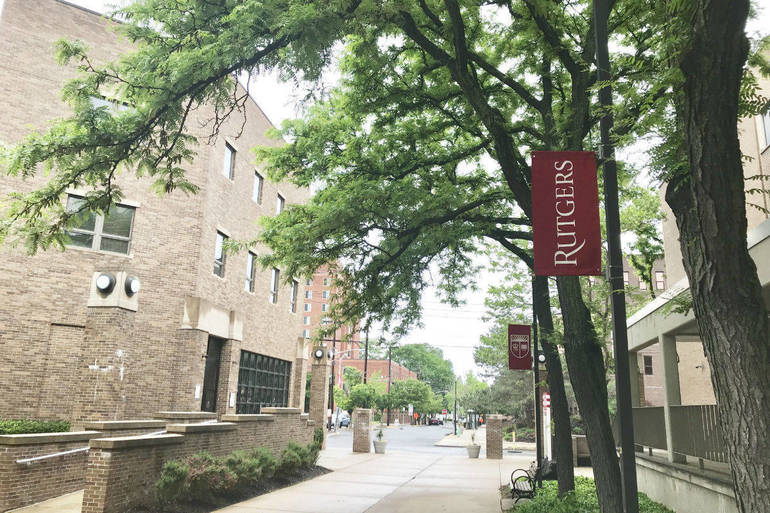
rutgers file.jpg

In his remarks upon receiving the award, Zeid Ra’ad Al Hussein discussed the history of international politics and cautioned against nationalization, noting that the human rights violations of today are the conflicts of tomorrow. “I worry, like so many others, that what we are seeing now is the decomposition of the international order,” said Ra’ad Al Hussein. “The rules and institutions that uphold international human rights law, international humanitarian law, and international refugee law are under immense pressure.” He shared that he has faith in the efforts of human rights defenders and the human rights movements around the world, “We cannot depend now on much of the leadership at the highest levels. We have to depend on ourselves and we have to have the courage to speak out and say what needs to be said.