Hans Thoolen on Human Rights Defenders and their awards

share information on human rights defenders, with special focus on human rights awards and laureates


Author Archive

« Older posts
Newer posts »

Oleg Sentsov received the Magnitsky Human Rights Award in person

November 18, 2019
On 14 November 2019 Ukraine’s film maker Oleg Sentsov received the Magnitsky Human Rights Award in person [for more this award: http://www.trueheroesfilms.org/thedigest/awards/sergei-magnitsky-human-rights-awards]. The prize was awarded last October, but Sentsov was in jail in Russia. The award was presented in London by Meghan McCain, the daughter of 2008 presidential candidate and U.S. Senator John McCain. Her father was also posthumously given the award in 2018.

In 2018 he also received the EU’s Sakharov prize, see: https://humanrightsdefenders.blog/2018/10/27/ukrainian-filmmaker-sentsov-wins-eus-sakharov-prize-for-human-rights/

https://112.international/video/ukraines-oleg-sentsov-gets-magnitsky-human-rights-award-1332-1332.html

https://www.unian.info/society/10756338-sentsov-gets-magnitsky-human-rights-award-in-person-photo-video.html

Posted in awards, EU, films, Human Rights Defenders | Leave a Comment »
Tags: ceremony, digest of human rights awards, filmmakers, Magnitsky Human Rights Award, Oleg Sentsov, Ukraine, You Tube

Amnesty’s Write for Rights Campaign 2019 – launched today – focuses on youth activists

November 18, 2019
On 18 November 2019 Amnesty International launched its Write for Rights campaign which this year champions children’s rights and youth activists. “This year Write for Rights, Amnesty’s flagship human rights campaign, champions youth activists who are taking on the world’s biggest crises,” said Kumi Naidoo, Secretary General of Amnesty International. “From those campaigning for climate and environmental justice, to those challenging inequality, poverty, discrimination and political repression, young people have emerged as a powerful force for change who deserve the world’s support.”

Every December people around the world write millions of letters, emails, tweets, Facebook posts and postcards for those whose human rights are under attack, in what has become the world’s biggest human rights event.  Amnesty International is hoping to break last year’s Write for Rights record of nearly six million messages of support for activists and individuals from 10 countries whose human rights are under attack. [for last year’s campaign see: https://humanrightsdefenders.blog/2018/11/24/amnesty-starts-again-its-write-for-rights-campaign/]

Write for Rights 2019 features youth human rights defenders and individuals from in Belarus, Canada, China, Egypt, Greece, Iran, Mexico, Nigeria, Philippines and South Sudan.

Launching two days ahead of Universal Children’s Day on 20 November, a day to promote children’s rights, several of the featured activists had their rights violated as children.

They include José Adrián, who was 14 when he was brutally beaten by police on his way home from school in Mexico. He is now demanding reparations for his treatment and for the police to stop arbitrary detentions in the state of Yucatán. Among the other cases are:

  • Grassy Narrows Youth, a group of youth activists from an Indigenous community in north-western Ontario who have suffered one of Canada’s worst health crises. Their community has been devastated by 50 years of mercury contamination of their fish and river system. The Grassy Narrows youth are urging the government to address the mercury crisis once and for all, including by providing specialized health care and compensation for all;
  • Sarah Mardini and Seán Binder, two volunteer rescue workers from in Lesvos, Greece, who face up to 25 years in prison for their humanitarian work helping spot refugee boats in distress;
  • Yasaman Aryani, who defied her country’s discriminatory forced veiling laws and now must serve 10 years behind bars. Amnesty is campaigning for her immediate release;
  • Marinel Ubaldo, a youth activist from the Philippines who is urging her government to declare a climate emergency and protect future generations from the devastating impacts of climate change after her home was destroyed by typhoon Haiyan.

“The Write for Rights campaign epitomizes the ideals that Amnesty International was founded on – it’s about individuals helping other individuals. We are urging people to get behind these incredible young people who are campaigning for justice, equality and freedom,” said Kumi Naidoo.

“As we know from our work over the past five decades, writing letters works. Not only can it help free prisoners of conscience, but it makes a huge emotional difference to the people we support and to their loved ones.”

Monica Benício, the partner of Marielle Franco, a local politician in Brazil who was killed last year and was featured as part of the last Write for Rights, said of the campaign: “It helps me to get up in the morning and see some meaning, knowing that there is this big global network of affection.  All these demonstrations of love and affection are helping us to mobilize, to demand justice, to pressure for investigation and above all to fight so that there will be no more Marielles.”

https://www.amnesty.org/en/latest/news/2019/11/write-for-rights-2019-puts-youth-activism-in-the-spotlight/

Posted in AI, Amnesty international, Human Rights Defenders | 2 Comments »
Tags: Amnesty International, Canada, children, Grassy Narrows Youth, international campaign, José Adrián, Kumi Naidoo, Marielle Franco, Marinel Ubaldo, Mexico, Monica Benício, Philippines, Universal Children’s Day, Write for Rights campaign, Yasaman Aryani, youth

Six HRDs from Latin America on PBI’s European tour

November 18, 2019
Whilst the European Union continues to express concern for the increased impact of climate change on the planet, those defending their territories and the environment continue to be attacked for their activism across the world. This alarming trend is present in Latin America where the women defenders of land, territory and the environment are particularly vulnerable. [see e.g. https://humanrightsdefenders.blog/2019/08/06/environmental-human-rights-defenders-more-deadly-than-being-a-soldier-in-a-war-zone/] With this in mind, PBI will be accompanying five women and one man from Mexico, Guatemala, Honduras and Colombia to different parts of Europe in order to exchange experiences and perspectives about protection and self-protection from a holistic perspective. These defenders will share information about their own situation of risk, as well as the cases they are working on.

Sandra.png

Telma.png

Nora.png

Olga.png

Emily.png

Franklin.png

https://www.peacebrigades.org/en/news/women-human-rights-defenders-latin-america-come-europe

Posted in Human Rights Defenders | 1 Comment »
Tags: accompaniement, Emilie Dewolf, environmental defenders, Europe, Franklin Alvarez, Indigenous rights, Latin America, Nora Ramirez, Olga Aroujo, PBI, Sandra Camuec, Telma Perez, women human rights defenders

Rescuing Human Rights – another way of re-assessing human rights

November 17, 2019

I wrote abut Hurst Hannum’s book ‘Rescuing Human Rights’ earlier [https://humanrightsdefenders.blog/2019/04/20/hurst-hannum-wants-a-radically-moderate-approach-to-human-rights/]. On 30 July 2019, Peter Splinter wrote for ISHR a book review “Rescuing Human Rights – Making the case for a reassessment of the scope of human rights advocacy”

 
Hurst Hannum, Rescuing Human Rights: A Radically Moderate Approach, Cambridge University Press, 2019. 223 pp.

Hannum argues the case for a hard-headed reassessment of what human rights are and what they can achieve, done with the aim of preventing unrealistic expansion or overreach that undermines their legitimacy and universal acceptance.

Hannum expresses a firm conviction in the durable value of human rights. He brings to Rescuing Human Rights a lifetime of rich and diverse experiences as an observer, teacher and practitioner of human rights in numerous capacities and settings. While conservative, Hannum’s thesis does not hark back to a golden age of human rights. He recognises that human rights law has evolved and will continue to evolve. He also accepts that “pushing the envelope of human rights norms may sometimes be a legitimate [advocacy] tactic.”

Hannum’s principal concern is with human rights ‘overreach’ – efforts to resolve contentious political issues by trying to make them into technical human rights matters that they are not. He is not a fan of a widespread inclination to advocate for human rights of the next good cause.

“Attempting to regulate ever more narrow slices of life under ever more diverse circumstances through promoting new human rights runs a serious risk of undermining both the legitimacy of human rights and their universality. The result may be to simply expand the number of rights that are routinely ignored rather than to bring real help to those whose rights, no matter how narrowly construed, are already being violated.” (p. 79)

He perceives that human rights activism based on an expansive concept of rights as the primary means to effect domestic social and political change is feeding a global backlash against human rights. He is concerned that this will undermine the legitimacy and effectiveness of human rights advocacy to protect universally recognised rights, which “facilitate the development and influence of other socio-economic-political-moral change agents in ways that are likely to respond to the needs of most people of the world.” (p. 10) While acknowledging that human rights are inherently political, as they constrain government behaviour, Hannum suggests that the more that human rights advocacy approximates politics, the less rights will be able to effectively set the boundaries for the open, inclusive, democratic politics required to effectively address major contemporary social, political and economic issues by ensuring that political decision-making takes account of the needs and preferences of all relevant parts of society.

“This book is an appeal for radical moderation, which values and promotes human rights norms without distorting or deifying them. …  Underlying many of the book’s arguments is the belief that human rights cannot provide dispositive answers to all of the world’s problems, although they may be a necessary precondition for resolving many of them.” (p. 157)

Rescuing Human Rights focusses on human rights as universal legal norms embodied in public international law, particularly universal and regional treaties. Hannum assumes a universal consensus over the core content and legitimacy of most human rights. He distinguishes human rights from moral and political standards, while acknowledging their complementarity as forces that shape societies.

While Rescuing Human Rights discusses human rights primarily as they are shaped and invoked at the international level, Hannum emphasises that they are applied in national contexts where the relationship of the State and rights-holders is played out. Human rights promotion and protection are essentially a national project that is shaped and constrained by national governments’ voluntary acceptance of universal legally binding human rights standards. An important chapter is devoted to arguing for flexibility in the application and prioritisation of human rights norms on the grounds that universality is not uniformity. This recognition points to the need for further examination of Hannum’s thesis in specific national contexts. Are the dangers of human rights expansion and overreach at the international level mirrored by developments at the national level in individual countries?

Rescuing Human Rights focusses largely on what human rights are not and should not be made out to be. Hannum’s thesis would also benefit from further exploration of how human rights can be used better to contribute to efforts to address major contemporary social, economic and political issues at the international and national levels. If one accepts that human rights cannot determine the outcomes for issues such as development, climate change and corruption, then what are the contributions that specific rights make in specific contexts to political, economic, cultural, moral and technological efforts to meet those and other challenges? Any recalibrating of human rights promotion and advocacy in accordance with the approach Hannum proposes would benefit from robust exploration of the important contributions that human rights do and can make, such as ensuring that climate change policies are developed in consultation with representatives of all persons whose rights might be affected and have regard to their human rights impacts, including for the most marginalised communities and groups.

Today, while human rights are increasingly invoked in connection with efforts to address a growing range of global and national challenges, they are also increasingly flouted or questioned in many parts of the world. This includes in some countries where until recently human rights appeared largely beyond challenge. Many governments are demonstrating a renewed brazenness in violating their international human rights obligations. In many countries, there is widespread apathy, popular disillusionment and even hostility for human rights. This current state of human rights has led to calls from civil society organisations, academics, governments and inter-governmental organisations for urgent stocktaking about what is to be done to defend and reinforce the post-1945 human rights achievement. Some call into question the human rights project, and others call for its reinvention. Some appeal to humanity’s better angels, and others buckle down on business as usual. Some pursue novel organisational approaches to human rights advocacy, and others look to human rights to provide solutions for ever more matters of concern.

The way forward is not clear. However, Hannum’s lucid argument for greater focus and humility in recourse to human rights and his call for the recalibration of the scope of human rights advocacy should form part of any discussion about the future of human rights. Rescuing Human Rights merits reading and reflection by all who study, defend or promote human rights.

Peter Splinter is an international human rights consultant and was Amnesty International’s Representative in Geneva from 2004 to 2016. Follow him on Twitter at @pgsplinter.

http://www.ishr.ch/news/book-review-i-rescuing-human-rights-making-case-reassessment-scope-human-rights-advocacy

Posted in books, human rights, Human Rights Defenders, ISHR | Leave a Comment »
Tags: book review, Hurst Hannum, international human rights mechanisms, international human rights movement, ISHR, Peter Splinter, Rescuing Human Rights: A Radically Moderate Approach, universality of human rights

Geneva and the future of multilateralism

November 16, 2019

Cedric Amon in Digital Watch of 17 September 2019 reported on the event “Geneva and the future of multilateralism“. Although it did not deal directly with human rights, I refer to it anyway as Geneva plays such an important role as the world’s hub for human rights, featuring regularly in this blog. The event was organised by the University of Geneva in partnership with the Swiss Federation, the Republic and State of Geneva, the City of Geneva, the United Nations Office at Geneva, and the Fondation pour Genève. The event celebrated 100 years of multilateralism in Geneva in remembrance of the creation of the League of Nations in 1919, which marked the beginning of modern multilateralism and the rise of International Geneva:

Mr Yves Flückiger (Director of the University of Geneva) spoke about the three principles which have contributed to Geneva’s central role on the international level: universality, unanimity, and consensus. He also underlined the importance of scientific institutions for the cohesion of the international system.

Flückiger further called for a more inclusive form of multilateralism to face today’s challenges. Moreover, he said that despite the current focus on new technologies, the human aspect in multilateralism and international co-operation should not be underestimated.

Mr Ignazio Cassis (Head of the Federal Department of Foreign Affairs, Switzerland) noted that the first general assembly of the League of Nations on 15 November 1919 put Geneva and Switzerland on the map of the international scene. This assembly also meant that Switzerland had to take on the responsibilities of a host state. He retraced Switzerland’s historical evolution and the official recognition of Switzerland’s neutrality at the end of the First World War (WWI). Cassis further explained that although the League of Nations had failed as an institution, it laid the groundwork for today’s multilateralism and served as the basis for a number of international organisations and scientific collaborations such as CERN.

Moreover, Cassis mentioned that the Swiss government had signed a joint declaration reaffirming their commitment to International Geneva and the multilateral system, introducing Switzerland as a host state during the 2020–2023 period. He also mentioned that projects such as the Geneva Science and Diplomacy Anticipator had already been created in line with the strategy.

Ms Tatiana Valovaya (Director-General of the UN Office at Geneva) underlined the importance of the League of Nations for today’s multilateral system and said that the League of Nations had created the foundation for the work of the UN, ranging from justice and minority production, to the improvement of work and the respect of international public law.

As Geneva is the birthplace of the League of Nations, Valovaya mentioned the importance of the Palais des Nations’ archives in Geneva.

Valoyava further noted that in a fragmented and polarised world, multilateralism is needed more than ever in order to address today’s challenges and to find global solutions to them. According to her, the multilateral system is not in crisis but transitioning. Therefore, it is important to shape this new system to make it more inclusive.

Mr Sacha Zala (Director of the Research Centre Dodis and Co-Editor of the publication ‘Switzerland and the Construction of Multilateralism’ (unreleased diplomatic documents)) explained that Switzerland has been very active in world politics over the past 100 years. Zala mentioned that the right to self-determination which was recognised at the dawn of WWI, created challenges for the unity of Switzerland and threatened to break apart the country. However, Switzerland has established itself as a vibrant centre for world politics, thanks to the many international institutions in Geneva and Bern. Multilateralism has since then become a cornerstone for Switzerland, the same way that Switzerland’s neutrality was essential to it becoming the host country of the League of Nations. Zala also mentioned the importance of hosting the International Committee of the Red Cross (ICRC), in maintaining Geneva’s status as a diplomatic capital.

Ms Heba Aly (Director of The New Humanitarian) moderated the debate. She mentioned that the most common symptom of the crisis of multilateralism is the incapacity of addressing the crises around the world, given that institutions seem blocked and the respect of International Humanitarian Law is fading.

Ms Laurence Boisson de Chazournes (Professor at the Faculty of Law, University of Geneva) observed that there is a disenchantment regarding international co-operation which stems from inside the countries. She explained that this sentiment stems from the problem of sharing the benefits of global co-operation, which means that certain populations feel abandoned and left out. She urged for a fundamental rethinking of the collaboration, and is hopeful that certain forms of private-public partnerships on specific areas will help strengthen multilateralism.

Boisson de Chazournes also mentioned the impetus given by the sustainable development goals (SDGs) which are also contributing to reshaping the current state of international co-operation. Moreover, she spoke about attributing responsibilities to the private sector by adopting global, rather than national, regulations in order to help support multilateralism. Regarding Geneva in particular, Boisson de Chazournes recognised the efforts being undertaken, but noted that the next challenge will be to digitise diplomatic practices to create a more inclusive system, and reduce travelling costs for face-to-face meetings with different actors.

Mr Francis Gurry (Director-General of The World Intellectual Property Organization) pointed out that the architecture of global institutions to address the current challenges is outdated. He identified this as being the greatest challenge of the UN system along with the attacks on the idea of multilateralism. Gurry emphasised that this is a political problem, given that he does not see a political will to reform international institutions. However, according to Gurry, there has been a transfer of power and capabilities, from the public to the private and non-governmental sectors, which must be reflected in the architecture of the international system.

Furthermore, he went on to recognise the mostly positive track record of UN institutions and indicated that abandoning multilateralism is not a choice, given that today’s problems are global and need global solutions. Moreover, short-term projections are a difficulty for the success of diplomacy. He explained that diplomacy means building relationships over time, to build trust. In an interconnected world this is more difficult, given the ease at which information travels and how used we have become to finding immediate solutions.

According to Gurry, technical co-operation, such as is practised at the International Telecommunications Union (ITU) and the World Meteorological Organization (WMO) is a good way to ensure the sustainability of co-operation in an increasingly complex world.

Mr Jean-Yves Art (Senior Director, Strategic Partnerships at Microsoft) pointed out that we are witnessing an increase in human relations in all aspects of our lives, which relies on private infrastructure. Art indicated that because of this, private actors operating these infrastructures also have a responsibility to find solutions to problems generated by this increase in human connections.

Another important problem which he recognised was that 50% of the world’s population is not connected. Given the importance of new technologies, not being connected will prove to be a major handicap and important obstacle to development.

According to Art, multilateralism is often associated narrowly with the UN system. However, he believes that multilateralism goes well beyond UN institutions, as was proven by the numerous calls involving all relevant stakeholders (for example: the Paris Call for Peace, and the Christchurch Call). These dynamics from outside the UN system are now also finding their way into its institutions. He also mentioned the approach of the High-Level Panel on Digital Cooperation which is spreading its recommendations through ‘champions’.

Ms Yusra Suedi (PhD student at The Global Studies Institute, University of Geneva) noted that one of the most pressing challenges of multilateralism is to find solutions on how to integrate different actors, such as youth, into the global system. In order to successfully do so, Suedi also stressed the importance of setting clear goals about the aim and extent of involving these new actors.

According to Suedi, the model of the Human Rights Council is a very important, and one of the most successful ones at the UN given that it managed to integrate the voices of civil society. However, she still sees room for improvement to include a more representative role for non-governmental organisations. For example, they could be allowed to introduce draft resolutions rather than simply expressing their point of views regarding the state of human rights in the various contexts.

http://dig.watch/resources/geneva-and-future-multilateralism

Posted in human rights, UN | Leave a Comment »
Tags: Canton of Geneva, Cedric Amon, Geneva, globalisation, Ignazio Cassis, international cooperation, League of nations, Multilateral diplomacy, multilateralism, UN, University of Geneva, Ville de Geneve

Shelter City Netherlands: call for temporary relocation in 2020

November 15, 2019

Justice and Peace Netherlands is launching a new call for human rights defenders at risk to participate in the Shelter City initiative around March 2020. The deadline to apply is 29 November 2019.   Shelter City offers human rights defenders (HRDs) at risk a possibility for rest and respite by letting them escape temporarily from a threatening situation. The initiative can benefit human rights defenders that are threatened or under intense pressure due to their work. Shelter City is an initiative coordinated by Justice and Peace Netherlands together with  municipalities in the Netherlands, local partners, and the Dutch Ministry of Foreign Affairs.

How does Shelter City work? Through temporary relocation, human rights defenders will be offered a shelter for 3 months in one of the Shelter Cities in the Netherlands, during which they can rest, continue their work in safety, build up capacity (including compulsory training on holistic security), extend their network and raise awareness about the situation in their country. Activities can include meetings with NGOs and public officials, public lectures, rest or leisure, treatment for work-related problems, continuing working remotely on human rights in their country, raising awareness of human rights with the Dutch public or participating in local initiatives organised by the municipality and/or the host organisation. At the end of the programme, participants are expected to return with new tools and energy to continue their work at home. A monthly stipend sufficient to cover costs of living, accommodation, health insurance, visa and return flight tickets to the Netherlands are provided. In addition, participants receive personal accompaniment throughout their stay in the Netherlands.
Who can apply for Shelter City?
For the purposes of Shelter City, the term HRD is intended to refer to the broad range of activists, journalists, scholars, writers, artists, lawyers, civil rights defenders, independent media professionals, civil society members, and others working to peacefully advance human rights and democracy around the world.

In order to be eligible to the Shelter City programme, HRDs must meet the following conditions:

  1. They implement a non-violent approach in their work;
  2. They are threatened or otherwise under pressure due to their work;
  3. They should be able to be relocated for a period of maximum 3 months. Limited spots are available for people who are not able to stay for the full 3 months;
  4. They are willing and able to return to their country of origin after 3 months;
  5. They are willing to speak publicly about their experience or about human rights in their country to the extent that their security situation allows;
  6. They have a conversational level of English (limited spots are available for French or Spanish speaking HRDs);
  7. They are willing and able to come to The Netherlands without accompaniment of family members;
  8. They have a valid passport (with no less than six months of validity) or be willing to carry out the procedures for its issuance. Justice and Peace covers the costs of issuing a passport and / or visa (if applicable);
  9. They are not subjected to any measure or judicial prohibition of leaving the country;
  10. They are willing to begin their stay in The Netherlands around March 2020. .

Note that additional factors will be taken into consideration in the final round of selection, such as the added value of a stay in The Netherlands as well as gender, geographic, and thematic balance. Please note that we can only accept HRDs currently residing in a third country under exceptional circumstances. To apply or submit the application of a human rights defender, please fill in the form by clicking ‘Apply Now’ below.. An independent commission will select the participants.

Apply Shelter City 2020 <https://form.jotformeu.com/93072618843361>

Note that the selected human rights defenders will not be automatically allowed into the Shelter City programme as Justice and Peace is not in control of issuing the required visas to enter the Netherlands.

For previous call, see: https://humanrightsdefenders.blog/tag/shelter-city-netherlands/
For more information, please contact us at sheltercity@justiceandpeace.nl

Posted in Human Rights Defenders | 1 Comment »
Tags: call for applications, Human Rights Defenders, outreach, Pax Christi International, Pax Christi Netherlands, relocation, security, Shelter City program, training

71 countries make first joint statement on reprisals at the Third Committee

November 14, 2019

which followed the GA, reported this unprecedented move: a cross-regional group of countries called on all States and the UN to prevent, respond to, and ensure accountability for cases of intimidation and reprisals against those who engage or seek to engage with the UN. In this joint statement presented to the Third Committee of the General Assembly in Octber 2019, 71 countries (listed below) highlighted that the UN must ensure that civil society organisations and human rights defenders who wish to engage with the UN are able to do so without fear of reprisal or intimidation. That same week the Assistant Secretary-General in his mandate as the senior official on reprisals held an event to discuss the annual reprisals report of the Secretary General.

This welcome move led by the Permanent Mission of the United Kingdom to the UN is in line with the call made, just last month, in resolution 42/28 at the Human Rights Council for the General Assembly to remain seized of all work in this area. ‘The statement highlighted that beyond the immediate impact on victims, these acts of intimidation and reprisals undermine the credibility and effectiveness of the UN as a whole, including the human rights system,’ said ISHR’s Tess McEvoy.

The integral role played by civil society and human rights defenders in encouraging openness, transparency and dialogue between people and those in power was also acknowledged. While highlighting positive steps that have been taken by the UN, including the Secretary-General’s annual report on reprisals and the work done by the Assistant Secretary-General in his mandate as the senior official on reprisals, the 71 countries strongly condemned any act of intimidation and reprisal, whether online or offline, against individuals and groups who cooperate or seek to cooperate with the UN, and expressed alarm about the growing number of cases.

‘While positive responses by some States to cases of reprisals were acknowledged, critically, the statement acknowledged the primary obligation of States to prevent and address reprisals. Moreover, all States were called on to prevent and ensure adequate protection against such acts by raising awareness, investigating and ensuring accountability and effective remedy by both State or non-State actors,’ added McEvoy. The statement also made clear the duty of the UN to address reprisals and called on the UN to strengthen the collective response to reprisals.

While we welcome this statement and the leadership of the United Kingdom as a step towards enhanced dialogue on the issue of reprisals at the General Assembly, more needs to be done to protect the right of everyone to communicate with the UN. We echo previous calls for States to step up efforts to address reprisals, including by referring to  specific cases during future dialogues at the UN. [see also my ‘old’: https://humanrightsdefenders.blog/2014/03/13/zero-tolerance-for-states-that-take-reprisals-against-hrds-lets-up-the-ante/]

The full statement as delivered is available here. The statement was made by the United Kingdom on behalf of Afghanistan, Albania, Andorra, Australia, Austria, the Bahamas, Belgium, Bosnia and Herzegovina, Bulgaria, Canada, Chile, Colombia, Costa Rica, Croatia, Cyprus, the Czech Republic, the Dominican Republic, Denmark, Ecuador, El Salvador, Estonia, Fiji, Finland, France, Georgia, Germany, Greece, Guatemala, Iceland, Ireland, Italy, Japan, Jordan, Latvia, Lebanon, Liechtenstein, Lithuania, Luxembourg, Malta, the Marshall Islands, Mexico, Monaco, Mongolia, Montenegro, the Netherlands, New Zealand, North Macedonia, Norway, Panama, Poland, Portugal, the Republic of Korea, the Republic of Moldova, Romania, Samoa, San Marino, Seychelles, Slovakia, Slovenia, South Africa, Spain, Sweden, Switzerland, Tunisia, Turkey, Tuvalu, Ukraine, the United States, Uruguay and Vanuatu.

https://www.ishr.ch/news/unga74-71-countries-make-first-joint-statement-reprisals-third-committee

Posted in human rights, Human Rights Defenders, ISHR, UN | Leave a Comment »
Tags: 2019, annual Report of the Secretary General on Reprisals, intimidation, ISHR, joint statement, reprisals, Tess McEvoy, Third Committee of the GA, UN General Assembly

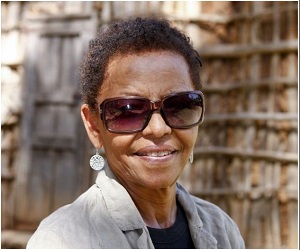
Ethiopian human rights defender Bogaletch Gebre has passed away

November 13, 2019

Ezega.com reported on 6 November 2019 the deatch of the highly-awarded woman human rights defender Bogaletch Gebre, founder of KMG Ethiopia (Kembatti Menotti Gezzima-Tope).

Bogaletch Gebre was a victim of female genital mutilation at the age of 12 and was forbidden from joining formal education, which forced her to sneak out of her home to attend a missionary school that paved the way for her to be what she became. Following her elementary years at the Missionary school, Bogalech Gebre attended various local schools as well as some prestigious Higher Education Institutions abroad.

In an interview with ETV, she said the trauma of FGM took her years to recuperate and she suffered complications from it years later. It wasn’t during her youth years Bogaletch Gebre learned more about what had happened to her and her family because of FGM. At the time Bogalech was a graduate student in the United States. When Bogaletch Gebre found out that FGM was needless and harmful practice, she became incensed. She eventually left her PhD program in epidemiology at the University of California, Los Angeles, and in 1995 she returned to Kembata Tembaro, her hometown in Ethiopia.

In 1997 she and her younger sister started KMG, an indigenous Resident Charity Organization with the goal of helping to create an environment where the values and rights of women are recognized and where their talents and wisdom are nurtured. The organization was founded with the two sister’s belief that if women are empowered and their talents nurtured, the lives of both men and women would improve.

Bogalech Gebre along with her sister began implementing their plans in the region of Kembatta – Tembaro. The organization they founded is now diversified its scope and operates in additional 24 of Southern Nations Nationalities and People’s Regional State (SNNPRS) and Oromia district, reaching out to more than 481,289 direct and 2,859,500 indirect beneficiaries, 70% of whom are women.

The realization of their effort has protected many girls from going through lasting complications. Bogalech Gebere believed and spoke about the need for a change and bringing together all communities, women, and men to make informed decisions.

In 2010, the Independent newspaper characterized her as “the woman who began the rebellion of Ethiopian women.” In particular, the Independent report praised her for KMG’s strong commitment to reduce the rate of bridal abductions in Kembatta and FGM. Bogalech Gebre was awarded the 2005 North-South Prize, in 2007 the Jonathan Mann Award for Global Health and Human Rights and in 2013 both the Bruno Kreisky Award and he King Baudouin International Development Prize.

Posted in awards | Leave a Comment »
Tags: awards, Bogaletch Gebre, Ethiopia, Ezega.com, Female Genital Mutilation (FGM), FGM, KMG Ethiopia, woman human rights defender

Nicaraguan journalist Luis Sequeira wins Rory Peck Award

November 12, 2019

France 24 reported on 8 November 2019 that the Nicaraguan journalist Luis Sequeira won the Rory Peck Award, which honours freelance photo and video reporters, for his AFP coverage of recent violence that has gripped his homeland. Sequeira was lauded at the annual ceremony in London for his shockingly raw footage of the violent crackdown against protesters in Nicaragua that began last year and continued into 2019.

His work showed demonstrators’ arrests and clashes with security forces after protests erupted on April 18, 2018, in response to President Daniel Ortega’s social security reforms. The resulting bloodshed has seen 325 people killed, from both the opposition and security forces, another 2,000 injured while 60,000 inhabitants have fled into exile, according to human rights groups. “This award is for the Nicaraguan people who have fought for democracy,” Sequeira said after being handed the award by Nicaraguan rights activist Bianca Jagger.

Sequeira, 25, started shooting video at the age of 17 and has worked for Telemundo, RCN, HBO, Reuters and Rutly. He has covered events across the Americas, in Europe and Asia, as well as in the Middle East. His work has included reporting on the plight of the Kurdish people, the jihadist attacks in Paris in 2015 and the terrorist attacks in Orlando, Florida in 2016. Sequeira has been working for AFP since 2018.

This is the fourth time in six years that an AFP journalist has won the prize. It was launched in 1995 in memory of the independent videographer Rory Peck, who was killed in Moscow two years earlier. The award recognises the best independent news cameramen, and the ceremony is one of the main ways that the Rory Peck Trust, which administers the prize, raises funds to assist freelance journalists.

See also: https://humanrightsdefenders.blog/2013/11/27/friend-of-journalists-award-goes-to-azeri-president/

https://www.france24.com/en/20191108-nicaraguan-journalist-luis-sequeira-wins-rory-peck-award

Posted in awards | Leave a Comment »
Tags: award ceremony, Bianca Jagger, Luis Sequeira, Nicaragua, photo journalism, photographer, Rory Peck awards

Meet Marisa Hutchinson of the Association EQUALS in Barbados

November 10, 2019

On 22 October 2019 ISHR published this interview with Marisa Hutchinson, Board member of the Association EQUALS in Barbados

Posted in films, Human Rights Defenders, ISHR | Leave a Comment »
Tags: Association EQUALS, Barbados, interview, ISHR, LGBTI, Marisa Hutchinson, profile, video clip

« Older posts
Newer posts »
  • Enter your email address to subscribe to this blog and receive notifications of new posts by email.

    Join 1,810 other subscribers
  • Recent Posts

    • Applications are now open for the 2027 Marianne Initiative for Human Rights Defenders. Deadline 4 MAY!
    • FIFA under fire for Peace Prize for Trump
    • Jimmy Lai receives DW Freedom of Speech Award 2026
    • JFK Study: At the Frontlines of Environmental Justice: Indigenous Environmental Human Rights Defenders in Latin America
    • Civil Rights Defender of the Year Award 2026 goes to news outlets Netgazeti and La Hora de Cuba
    • UN rapporteurs and NGOs raise concerns over Turkey’s treatment of human rights defenders
    • FIDH and OMCT urge the European Union to establish a directive on the protection and mobility of human rights defenders
    • Why Temporary Relocation Programs for HRDs are Essential
Blog at WordPress.com.
Entries and comments feeds.Valid XHTML and CSS.
  • Subscribe Subscribed
    • Hans Thoolen on Human Rights Defenders and their awards
    • Join 437 other subscribers
    • Already have a WordPress.com account? Log in now.
    • Hans Thoolen on Human Rights Defenders and their awards
    • Subscribe Subscribed
    • Sign up
    • Log in
    • Report this content
    • View site in Reader
    • Manage subscriptions
    • Collapse this bar

Loading Comments...