Author Archive

Nina Lakhani’s “Who Killed Berta Cáceres?” reviewed

June 10, 2020
COHA

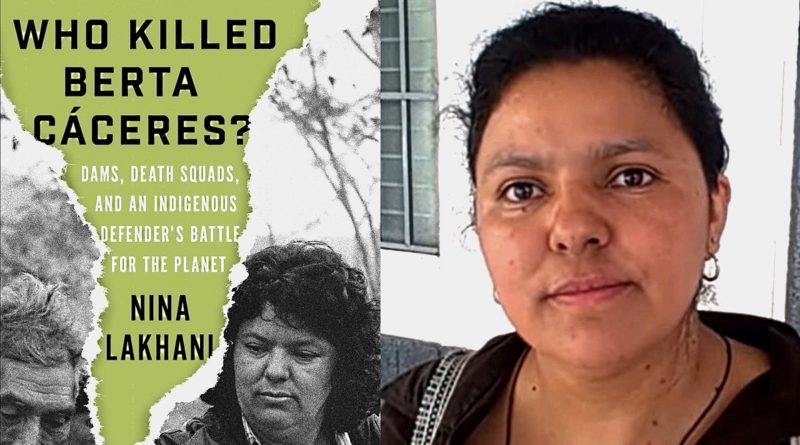
COHA of 9 June 2020 published a Book Review by John Perry of “Who Killed Berta Cáceres?: Dams, Death Squads, and an Indigenous Defender’s Battle for the Planet,” by Nina Lakhani.

They build dams and kill people.” These words, spoken by a witness when the murderers of environmental defender Berta Cáceres were brought to trial in Honduras, describe Desarrollos Energéticos SA (DESA), the company whose dam project Berta opposed. DESA was created in May 2009 solely to build the Agua Zarca hydroelectric scheme, using the waters of the Gualcarque River, regarded as sacred by the Lenca communities who live on its banks. As Nina Lakhani makes clear in her book Who Killed Berta Cáceres?, DESA was one of many companies to benefit from the 2009 coup d’état in Honduras, when the left-leaning President Manuel Zelaya was deposed and replaced by a sequence of corrupt administrations. The president of DESA and its head of security were both US-trained former Honduran military officers, schooled in counterinsurgency. By 2010, despite having no track record of building dams, DESA had already obtained the permits it needed to produce and sell electricity, and by 2011, with no local consultation, it had received its environmental licence.

[see also: https://humanrightsdefenders.blog/2018/03/03/anniversary-sparks-arrest-in-investigation-of-berta-caceres-murder/].

..Lakhani quotes a high-ranking judge she spoke to, sacked for denouncing the 2009 coup, as saying that Zelaya was deposed precisely because he stood in the way of this economic model and the roll-out of extractive industries that it required. The coup “unleashed a tsunami of environmentally destructive ‘development’ projects as the new regime set about seizing resource-rich territories.” After the post-coup elections, the then president Porfirio Lobo declared Honduras open for business, …….

Lakhani’s book gives us an insight into the personal history that brought Berta Cáceres to this point. She came from a family of political activists. As a teenager she read books on Marxism and the Cuban revolution. But Honduras is unlike its three neighbouring countries where there were strong revolutionary movements in the 1970s and 1980s. The US had already been granted free rein in Honduras in exchange for “dollars, training in torture-based interrogation methods, and silence.” At the age of only 18, looking for political inspiration and action, Berta left Honduras and went with her future husband Salvador Zúñiga to neighbouring El Salvador. She joined the FMLN guerrilla movement and spent months fighting against the US-supported right-wing government. Zúñiga describes her as having been “strong and fearless” even when the unit they were in came under attack. But in an important sense, her strong political convictions were tempered by the fighting: she resolved that “whatever we did in Honduras, it would be without guns.”

Inspired also by the Zapatista struggle in Mexico and by Guatemala’s feminist leader Rigoberta Menchú, Berta and Salvador created COPINH in 1993 to demand indigenous rights for the Lenca people, organising their first march on the capital Tegucigalpa in 1994. From this point Berta began to learn of the experiences of Honduras’s other indigenous groups, especially the Garífuna on its northern coast, and saw how they fitted within a pattern repeated across Latin America….

In Río Blanco, where the Lenca community voted 401 to 7 against the dam, COPINH’s struggle continued. By 2013, the community seemed close to winning, at the cost of activists being killed or injured by soldiers guarding the construction. They had blocked the access road to the site for a whole year and the Chinese engineering firm had given up its contract. The World Bank allegedly pulled its funding, although Lakhani shows that its money later went back into the project via a bank owned by the Atala Faraj family. In April 2015 Berta was awarded the Goldman Prize for her “grassroots campaign that successfully pressured the world’s largest dam builder to pull out of the Agua Zarca Dam.”

…….

The horrific events on the night of Wednesday March 2 are retold by Nina Lakhani. Armed men burst through the back door of Berta’s house and shot her. They also injured Gustavo Castro, who was visiting Berta; he waited until the men had left, found her, and she died in his arms. ,,,By the first anniversary of Berta’s death the stuttering investigation had led to eight arrests, but the people who ordered the murder were still enjoying impunity. Some of the accused were connected to the military, which was not surprising since Lakhani later revealed in a report for The Guardian that she had uncovered a military hit list with Berta’s name on it. In the book she reports that the ex-soldier who told her about it is still in hiding: he had seen not only the list but also one of the secret torture centers maintained by the military.

Nina Lakhani is a brave reporter. She had to be. Since the coup in Honduras, 83 journalists have been killed; 21 were thrown in prison during the period when Lakhani was writing her book. She poses the question “would we ever know who killed Berta Cáceres?” and sets out to answer it. Despite her diligent and often risky investigation, she can only give a partial answer. Those arrested and since convicted almost certainly include the hitmen who carried out the murder, but it is far from the clear that the intellectual authors of the crime have been caught. In 2017 Lakhani interviewed or attempted to interview all eight of those imprisoned and awaiting trial, casting a sometimes-sympathetic light on their likely involvement and why they took part.

….

In September 2018, the murder case finally went to trial, and Lakhani is at court to hear it, but the hearing is suspended. On the same day she starts to receive threats, reported in London’s Press Gazette and duly receiving international attention. Not surprisingly she sees this as an attempt to intimidate her into not covering the trial. Nevertheless, when it reopens on October 25, she is there. The trial reveals a weird mix of diligent police work and careful forensic evidence, together with the investigation’s obvious gaps. Not the least of these was the absence of Gustavo Castro, the only witness, whose return to Honduras was obstructed by the attorney general’s office. Castillo, though by then charged with masterminding the murder, was not part of the trial. Most of the evidence was not made public or even revealed to the accused. The Cáceres family’s lawyers were denied a part in the trial.

The who did what, why and how was missing,” says Lakhani, “until we got the phone evidence which was the game changer.” The phone evidence benefitted from an expert witness who explained in detail how it implicated the accused. She revealed that an earlier plan to carry out the murder in February was postponed. She showed the positions of the accused on the night in the following month when Berta was killed. She also made clear that members of the Atala family were involved.

When the verdict was delivered on November 29 2018, seven of the eight accused were found guilty, but it wasn’t until December 2019 that they were given long sentences. That’s where Nina Lakhani’s story ends. By then Honduras had endured a fraudulent election, its president’s brother had been found guilty of drug running in the US, and tens of thousands of Hondurans were heading north in migrant caravans. David Castillo hasn’t yet been brought to trial, and last year was accused by the School of Americas Watch of involvement in a wider range of crimes. … Daniel Atala Midence, accused by COPINH of being a key intellectual author of the crime as DESA’s chief financial officer, has never been indicted.

...And a full answer to the question “Who Killed Berta Cáceres?” is still awaited.

http://www.coha.org/nina-lakhanis-who-killed-berta-caceres-on-the-life-death-and-legacy-of-a-courageous-honduran-indigenous-and-environmental-leader/

The weakness of UN Secretaries General versus Big powers in speaking out

June 10, 2020

UN Chiefs Silenced by Big Powers with vetoes

as demonstrated again by George Floyd’s Killing

Protests in cities across the United States including in New York city. Credit: UN News/Shirin Yaseen
Thalif Deen wrote for the Santiago Times of 9 June a piece based on an IPS study about the lack of repsonse by the UN Secretary General.

…..But will any UN Secretary-General – past or present – have plucked up courage to condemn the political leadership either in the United States or China, two veto-wielding permanent members in the Security Council, in such harsh terms?

For a related issue, see: https://www.theguardian.com/global-development/2020/jun/09/what-does-the-un-stand-for-anger-as-staff-told-not-to-join-anti-racism-protests

The piece then considers whether a single 7 year term (instead of a reelection for 5 years) would help?

…The problem is that both Ban Ki-moon and Antonio Guterres have paid no attention to the three most important words that open the Charter of the UN: “We the peoples”…“They both pay homage only to governments; it’s as if ‘the peoples’ of the world don’t exist. As a result, there is neither transparency nor accountability”, said Lewis, who was a UN Special Envoy for HIV/AIDS in Africa, and later co-founder and co-director of AIDS-Free World.

Guterres, he said, hides behind the Convention on Privileges and Immunities, or with willful arrogance refuses to answer questions put to him. “Thus, when asked why he’s silent on the turbulence in the United States, and in particular the excessive use of force, he defers to his spokesperson who provides fatuous nonsense in response.”

It was exactly the way Ban never felt the obligation to tell the truth about cholera in Haiti, nor to feel it necessary to explain why the $400 million fund was effectively abandoned, he noted.

Perhaps one of the few exceptions in the 75-year history of the UN was former Secretary-General Boutros Boutros-Ghali of Egypt who paid the supreme penalty of being vetoed out of a second term —even though he garnered an overwhelming 14 of the 15 votes in the UN Security Council. But the US ingloriously vetoed his claims for a second term….

The 1996 study sponsored by two major think tanks implicitly accused some of the world’s big powers of manipulating the election of the Secretary-General so as to ensure that U.N. heads are political creatures with no minds of their own. “It is impossible to escape the impression, that many governments, including some of the most powerful, do not want a strong, independent leader as Secretary-General,” said the study published under the auspices of the New York-based Ford Foundation and the Dag Hammarskjold Foundation of Stockholm. The authors of the study – Brian Urquhart and Erskine Childers, both senior UN officials – said the selection of the Secretary-General is quite literally part of “an old-boy network.” “The United Nations is an intergovernmental organisation, and governments have no intentions of giving up control of it.”

Lewis argued there is no freedom of information in the UN, and that’s what gets governments like Sweden frustrated and thinking of shortening the SG’s term. “The Secretary-General should be required to hold an open press conference at least once, preferably twice a week, with a critical media corps to ask questions. If that were the case, the entire culture of his office would change.” “It’s his behaviour rather than his longevity that needs reform,” declared Lewis.

In a hard-hitting article titled “As Protests Sweep the US, the UN Tweets Platitudes”, Dulcie Leimbach, a former editor at the New York Times and founder of PassBlue, a widely-read web publication covering the United Nations, wrote: “Amid curfews in New York City, constant marches and protests, sirens from the streets and helicopters whirring above, the United Nations top leader, António Guterres, has not appeared before the media to say anything directly about the convulsions exploding across the five boroughs and far beyond. Instead, he has relied on his spokespeople to provide responses.

Leimbach also wrote that the lack of direct reference to the killing of George Floyd, and the turn of events here in the city and elsewhere, extends to the UN Security Council, the General Assembly, the US mission to the UN and other national delegations. Only the UN high commissioner for human rights, Michelle Bachelet, a Chilean who is based in Geneva, has directly addressed Floyd’s murder….

https://santiagotimes.cl/en/2020/06/09/un-chiefs-silenced-by-big-powers-with-vetoes/

After NSO, now Indian based hacking group targets NGOs

June 10, 2020

A multi-year investigation by Citizen Lab has unearthed a hack-for-hire group from India that targeted journalists, advocacy groups, government officials, hedge funds, and human rights defenders.

A lot has been written about the NSO group and human rights defenders [see: https://humanrightsdefenders.blog/tag/nso-group/], now another case of cyber insecurity has come up:

Jay Jay – a freelance technology writer – posted an article in Teiss on 9 June 2020 stating that Citizen Lab revealed in a blog post published Tuesday that the hack-for-hire group’s identity was established after the security firm investigated a custom URL shortener that the group used to shorten the URLs of phishing websites prior to targeting specific individuals and organisations. Citizen Lab has named the group as “Dark Basin“.

“Over the course of our multi-year investigation, we found that Dark Basin likely conducted commercial espionage on behalf of their clients against opponents involved in high profile public events, criminal cases, financial transactions, news stories, and advocacy,” the firm said.

It added that the hack-for-hire group targeted thousands of individuals and organisations in six continents, including senior politicians, government prosecutors, CEOs, journalists, and human rights defenders, and is linked to BellTroX InfoTech Services, an India-based technology company.

….The range of targets, that included two clusters of advocacy organisations in the United States working on climate change and net neutrality, made it clear to Citizen Lab that Dark Basin was not state-sponsored but was a hack-for-hire operation.

…As further proof of Dark Basin’s links with BellTroX, researchers found that several BellTroX employees boasted capabilities like email penetration, exploitation, conducting cyber intelligence operations, pinging phones, and corporate espionage on LinkedIn. BellTroX’s LinkedIn pages also received endorsements from individuals working in various fields of corporate intelligence and private investigation, including private investigators with prior roles in the FBI, police, military, and other branches of government.

The list of organisations targeted by Dark Basin over the past few years includes Rockefeller Family Fund, Greenpeace, Conservation Law Foundation, Union of Concerned Scientists, Oil Change International, Center for International Environmental Law, Climate Investigations Center, Public Citizen, and 350.org. The hack-for-hire group also targeted several environmentalists and individuals involved in the #ExxonKnew campaign that wanted Exxon to face trial for hiding facts about climate change for decades.

A separate investigation into Dark Basin by NortonLifeLock Labs, which they named “Mercenary.Amanda”, revealed that the hack-for-hire group executed persistent credential spearphishing against a variety of targets in several industries around the globe going back to at least 2013…

https://www.teiss.co.uk/indian-hack-for-hire-group-phishing/

https://thewire.in/tech/spyware-rights-activists-lawyers-citizen-lab

https://scroll.in/latest/964803/nine-activists-most-of-them-working-to-release-bhima-koregaon-accused-targets-of-spyware-amnesty

Also: Hack-for-hire firms spoofing WHO accounts to target organisations worldwide

Breaking: Human Rights Defender Nabeel Rajab in Bahrain finally released

June 10, 2020

Human rights activist Nabeel Rajab gestures as he leaves a police station in Manama, Bahrain, on May 28, 2012. Rajab, who had been sentenced to five years in prison for tweets alleging abuse at Bahrain’s prisons, has been released amid the ongoing coronavirus pandemic HASAN JAMALI/AP

JON GAMBRELL for Associated Press reproted on 9 June, 2020 that Bahrain has freed prominent human rights defender Nabeel Rajab amid the ongoing coronavirus pandemic, allowing him to serve out the remainder of his internationally criticized prison sentence from home. See recent post: https://humanrightsdefenders.blog/2020/04/24/martin-ennals-award-laureates-rally-to-demand-freedom-for-their-imprisoned-fellow-award-winners/

Nabeel Rajab, 55, wore a garland of white roses after his release, smiling while posing with his family for the first time since being detained in June 2016. Bahrain has been releasing inmates amid the pandemic, but largely had avoided freeing political prisoners. In September, a court denied Rajab’s request to serve out the rest of his sentence at home.

Rajab received a five-year prison sentence over tweets alleging torture at one of the country’s prisons and criticism of the Saudi-led war in Yemen. He separately received a two-year prison sentence over television interviews he gave that included criticism of Bahrain, a small island nation off Saudi Arabia that’s home to the U.S. Navy’s 5th Fleet. Fo rmore posts on Rajab, see: https://humanrightsdefenders.blog/tag/nabeel-rajab/

Bahrain’s prisons remain crowded with peaceful human rights defenders and opposition leaders, whose lives are threatened by the government’s inadequate response to COVID-19,” said Husain Abdulla, the executive director of the group Americans for Democracy and Human Rights in Bahrain.

https://www.startribune.com/bahrain-activist-nabeel-rajab-released-from-prison/571128782/?refresh=true

https://www.stripes.com/news/middle-east/prominent-bahraini-rights-activist-released-from-prison-1.633018

Defending Defenders: Challenging Malicious Lawsuits in Southeast Asia

June 8, 2020

SLAPPs on the increase

shutterstock_1049504825

The work of human rights defenders (HRDs) to expose harm by companies around the world has never been more important, but the space to do so is increasingly under threat as unscrupulous companies and governments around the world use the legal and judicial system to harass critics.

Logo

Strategic Lawsuits Against Public Participation (SLAPPs) are a powerful tool to silence by forcing defendants in a costly fight for their freedom of expression and their organisations’ existence. This year’s Corporate Legal Accountability Annual Briefing by the Business & Human Rights Resource Centre provides an in-depth analysis of nine emblematic case studies from Southeast Asia, and outlines the legal framework in which these lawsuits are brought, including emerging anti-SLAPPs regulation. The briefing also examines the legal and other tactics companies have used to silence HRDs; and analyses the legal strategies that lawyers have employed to successfully defend against SLAPPs while highlighting the role that courts have played in the region in either allowing or dismissing SLAPPs.

Key Findings

  • SLAPPs take place in a broader context of judicial harassment. 40% of all attacks on business-related HRDs globally [2015-2019] were judicial harassment, with numbers growing at an annual rate of 48%.
  • Judicial harassment appears to be the tactic of choice deployed by businesses operating in Southeast Asia to punish or silence defenders. Nearly half (44 %) of all attacks against HRDs in South East Asia constitute judicial harassment.
  • We recorded 127 cases of judicial harassment against HRDs in Southeast Asia between 2015 and 2019, including at least 30 SLAPPs, making Southeast Asia one of the most dangerous regions in the world for HRDs facing such threats.
  • In order to effectively fight SLAPPs in Southeast Asia and globally, we need robust legal frameworks that prevent companies from filing SLAPPs in the first place and allow courts to identify, call out and dismiss them as soon as they are filed. To make this happen, governments, businesses and investors, alongside defenders and civil society (and the lawyers who defend them), need to act decisively for the protection of civic freedoms and human rights defenders.

See also: https://humanrightsdefenders.blog/2020/01/28/ngos-demand-that-rules-against-strategic-lawsuits-against-public-participation-slapp-are-upgraded/

Full Briefing

Martin Ennals Award 2021 Nominations: deadline approaching

June 8, 2020

Nominations for the Martin Ennals Award 2021 are currently accepted. The deadline for nominations is June 12th 2020. Please forward this message to whomever you can.

The Martin Ennals Award for Human Rights Defenders honours individuals and organizations who have shown exceptional commitment to defending human rights, despite the risks involved, and who are in need of protection. [see also: http://www.trueheroesfilms.org/thedigest/awards/martin-ennals-award-for-human-rights-defenders]

In addition to the achievements of the nominee, several criteria are taken into consideration for the Award:

• Nominees must be currently active in the promotion and protection of human rights. The Award does not consider defenders who are deceased.

• The nominee should not employ or advocate violence.

• Self -nominations are not accepted.

• Defenders who are no longer in need of protection (e.g. because they are now in a safe environment) will normally not be considered.

Three finalists will be selected by the Jury and announced in October/November 2020. The Laureate will be announced in February 2021.

To submit a candidate use the form

Chau Van Kham – Australian human rights defender – ‘disappeared’ inside Vietnam’s prison system

June 8, 2020

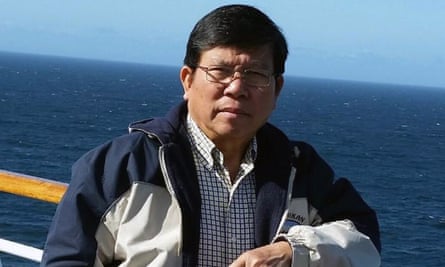
Chau Van Kham’s family has lost contact with him for nearly four months and fear the Australian government has ‘forgotten about him’ writes the Guardian on 6 June 2020.

Chau Van Kham

Vietnamese-born Australian, Chau Van Kham, was arrested in January 2019 and sentenced to 12 years imprisonment on ‘financing terrorism’ charges. Photograph: HRW/HANDOUT/EPA

Ben Doherty reports that the 70-year-old Australian Vietnamese-born Chau has “disappeared” inside Vietnam’s prison system and that no one from his family or the Australian government has been allowed to see or speak with him for nearly four months. Human rights advocates, lawyers and Chau Van Kham’s family said the charges against him are baseless and politically motivated, his single-day multiple-defendant trial was grossly unfair, and his failing health means his 12-year prison sentence is “effectively a death sentence”.

Chau’s son Dennis told the Guardian his family feared his failing health will be exacerbated by his isolation.  Chau’s sister, who lives in Vietnam, had previously been allowed to visit once a month to give her brother money, medicine and letters from home. But she has been refused access and phone calls to him since 10 February. Consular visits scheduled for February, March, April and May were all cancelled out of concerns over the spread of Covid-19. Permission for a visit in June is pending.

He has literally disappeared,” Australian lawyer Dan Phuong Nguyen, who is acting pro bono for the Chau family, told the Guardian.

[Chau, an Australian citizen, was born in Vietnam and served in the army of the Republic of Vietnam before 1975. After the war, he was sent to a re-education camp for three years before he fled Vietnam by boat, arriving in Australia in 1983. In Sydney, he worked as a baker for decades, rising before dawn to work at a modest suburban bakery. In 2010, he became a member of the Viet Tan pro-democracy organisation, and became a key Australian organiser of pro-reform rallies and an outspoken advocate for democratisation in Vietnam. The United Nations describes Viet Tan as “a peaceful organisation advocating for democratic reform”, but it was formally proscribed as a terrorist organisation by the Vietnamese government in 2016, which said it was “a reactionary and terrorist organisation, always silently carrying out activities against Vietnam.]

Chau sought to return to Vietnam in 2019 to meet fellow pro-democracy advocates but was refused a visa. He crossed into Vietnam via a land border with Cambodia in January, carrying a false identity document. He was arrested after meeting a democracy activist who, it is believed, was under surveillance, along with Vietnamese nationals Nguyen Van Vien and Tran Van Quyen, who were sentenced to 11 and 10 years prison respectively.

Chau was convicted and sentenced at his first appearance in the people’s court of Ho Chi Minh City after more than 10 months in detention.

The single-day judge-only trial, held simultaneously with four other people, saw him tried and convicted on charges of “financing terrorism”, and sentenced to 12 years in jail, all within four hours.

The court was effectively closed – open only for approved people, his family was excluded – for the entirety of the trial. Viet Tan condemned Chau’s hearing as a “sham trial” and said it would “continue to support human rights defenders on the ground”.  Chau’s appeal was dismissed in March.

Dennis Chau told a human rights summit in Geneva this year: “With a 12-year sentence, [my father will] be 82 when he is released … I don’t believe I’ll ever see him alive, a free man. It’s effectively a death sentence.”

https://www.theguardian.com/world/2020/jun/07/jailed-australian-democracy-activist-has-disappeared-inside-vietnams-prison-system

Abuse of nature and people: Environmental and Justice Activists Need to Join Forces

June 7, 2020

Image: Stournsaeh/Shutterstock

Cayte Bosler wrote on 3 June 2020 for the General Earth Institute a blog repeating the often heard warning that “Environmental and Justice Activists Need to Join Forces“. (https://blogs.ei.columbia.edu/2020/06/03/environmental-justice-activists/). It also relates this to the recent upheavals in the USA started by the killing of George Floyd:

Resistance inspires. Defiance in the face of a violent, oppressive culture can inspire another person’s defiance. Even when an uprising is only beginning, when the path forward is unclear, it is essential to resist. All together. The goal: to defeat a system fundamentally, historically, and intentionally based on mass exploitation in the interest of profit for a privileged few.

The environmental movement can learn from those who come from a tradition of resistance and have organized their struggle in movements like Black Lives Matter and Idle No More, founded by First Nations. The protests enveloping our country today are seeded by centuries of injustice and violence, by underlying power imbalances and inequalities that have never been truly addressed. The founders of these social movements knew then and now that they cannot combat violent oppressors through pure persuasion. So they resist.……….

Environmentalists and justice activists cannot stay isolated in their movements. To be effective at combating climate change and countless other social and environmental injustices, we must acknowledge the links between the abuse of nature and people, and devise strategies to protect the planet, to resist its demise – even when doing so is frightening. Especially then. Ultimately, resisting mass exploitation on all fronts is the only thing that will make us safer.

For many — especially people of color — the impacts of climate change and the degradation of environmental harm are not a future concern. It is life or death, and it’s happening now. If we want to reverse the losses, we need to begin to speak honestly to each other about the long history of abuse that has led to the unrest, rage, and grief that we feel today. We need to confront how power works in society, including in regions where exploitation of indigenous people and the ecosystems they call home go unnoticed by mainstream media….

In addition to poverty, lack of clean air, safe drinking water, health care, and more—all of which lead to “preexisting conditions”—many communities of color are confronted with the threat of coronavirus and are more vulnerable to the pandemic. Reports estimate that people of color are twice as likely to die from COVID-19…….

The author provides several examples from her own field work and experience……

How can we endeavor to protect the planet when its frontline defenders are being killed or intimidated by state-sanctioned violence? How can we expect to solve the climate crisis if our strategies do not include protecting life above corporate, government, and elite interests? Again, environmental advocates can learn from movements born from violent exploitation who are organizing to resist that violence.

Viable movements need supportive cultures to sustain them. They require healthy norms of behavior, processes to handle conflict, and ways to defeat destructive internal divisions and competition that stymie even the best-intentioned efforts toward progress. Horizontal hostility—a concept defined by Florynce Rae Kennedy, an African American lawyer, feminist, civil rights advocate, lecturer, and activist—occurs when activists fight against each other over differences rather than vertically against the oppressor. This behavior leaves relationships, activist networks, and movements in shreds.

A livable planet for all requires solidarity, using our shared principles and humanity to rise together to protect nature and banish injustice.

Cayte Bosler is a student in Columbia’s Sustainability Management masters program.

see also: https://humanrightsdefenders.blog/2019/08/06/environmental-human-rights-defenders-more-deadly-than-being-a-soldier-in-a-war-zone/

https://humanrightsdefenders.blog/2020/04/24/land-rights-defenders-are-the-main-target-of-those-destroying-the-environment/

Facebook engineers resign due to Zuckerberg’s political stance

June 6, 2020
Image courtesy of Yang Jing/Unsplash

Yen Palec on 6 June 2020 writes that a group of Facebook employees recently resigned. They do not agree with Mark Zuckerberg’s political stance. Some engineers are condemning the executive for his refusal to act on issues about politics and police brutality.

See: https://humanrightsdefenders.blog/2020/06/03/more-on-facebook-and-twitter-and-content-moderation/

In a blog post, the engineers claim that Facebook has become a “platform that enables politicians to radicalize individuals and glorify violence.”.. Several employees, many of whom are working at home due to the pandemic, are criticizing the company. While some claim that the First Amendment protects these hate posts, many are arguing that it has gone too much…..

These criticisms are coming from some of Facebook’s early and tenured employees. Among those that vent their criticism are Dave Willner and Brandee Barker. They claim that the company’s policy may result in a double standard when it comes to political speech…..

In terms of political speech, Twitter’s action set the standard for tech companies to follow. Human rights activists and free speech defenders rally into Twitter’s side, one major platform did not: and that’s Facebook. As the biggest social media platform in the world, the company has the power to influence almost any political debate.

https://micky.com.au/facebook-engineers-resign-due-to-zuckerbergs-political-stance/

Cambodian Monk Council defrocks “video monk’ Luon Sovath

June 6, 2020

0n 4 June 2020 Sun Narin for the VOA reported that The Monk Council in Siem Reap province, Cambodia, expelled prominent activist monk and human rights defender Venerable Luon Savath based on leaked audio recordings purportedly between the monk and a group of women.

Venerable Loun Sovath, an award-winning human rights activist, attends the commemoration of the sixth anniversary of the violent crackdown on garment workers in Phnom Penh, Cambodia, January 3, 2020. (Hul Reaksmey/VOA Khmer)

This in not the first time that Loun Sovath is in trouble with the ‘authorities’ be they secular or religious, so there could be reasonable doubt about the veracity of the recordings. See:

https://humanrightsdefenders.blog/2014/11/05/cambodian-mea-laureate-2012-luon-sovath-charged-with-incitement/

https://humanrightsdefenders.blog/2014/11/22/martin-ennals-award-jury-expresses-its-concern-about-loun-sovath-martin-ennals-award-laureate-2012/

The leaked audio recordings are purportedly between the monk and a group of women. In a decision dated June 3, head of the Monk Council in Siem Reap, Chum Kimleng, alleged that Luon Sovath had conversations about “deep love” with women, which were shared on Facebook. The statement added that the conversations were between the monk, a woman and her daughters, alleging that Luon Sovath indulged in sexual activity.

If Luon Sovath wears monk robes from now on, related authorities take legal actions,” read the announcement, which defrocked the monk effective Wednesday.

The Monk Council claimed to have investigated the video recordings, but did not provide any evidence or forensic analysis with the statement to show the voice in the recordings belonged to Luon Sovath or if he had acted in violation of religious norms. VOA Khmer attempted to reach Luon Sovath on the phone and his social media accounts on Thursday, but the activist monk did not respond to requests for comment.

There are four videos circulating on Facebook, and seem to originate from one account, called Srey Da Chi-Kraeng that was created on May 30. The videos, according to the accompanying text on Facebook, are recordings with four women – a mother and three daughters.

The video recordings are of an unidentified person, or persons, sitting in a dimly-lit room and having Facebook audio conversation, ranging seven to 10 minutes each. The video is shot so that only the person’s hand holding the smartphone can be seen.

The Facebook account involved in the alleged call has a male voice and uses the image of Luon Sovath and his name in Khmer script. The conversations are flirtatious in nature and include discussions about giving each other massages.

VOA Khmer could identify two Facebook accounts and one page used by Luon Sovath in the past. One of the accounts, which seems to belong to the venerable monk was created in 2017, it has the same display picture as that seen in the videotaped Facebook calls.

However, VOA Khmer found another Facebook account, called Luon Sovath, using the same display picture and was created on May 29, a day before the Srey Da Chi-Kraeng account was created.

The Monk Council in Siem Reap could not be reached on Thursday to provide details of their investigation into the recordings.

Bor Bet, a monk and member of Independent Monk Network for Social Justice, received a call from Luon Sovath last week, with the activist monk alleging that “people wanted to mistreat me.”

“He told me that they want to frame him,” Bor Bet said. “[Luon Sovath said] it is a political case and done because we are human right defenders.”

A spokesperson for the Ministry of Culture and Religion, Seng Somony, said the ministry had received the decision to defrock Luon Sovath, rejecting the accusation that the development was politically motivated…

Luon Sovath has been internationally recognized for his work in documenting land rights abuses in Cambodia and was featured in the documentary, A Cambodian Spring. [https://www.theguardian.com/film/2018/may/20/cambodian-spring-review] In 2012, he received the Martin Ennals Award.

https://www.voacambodia.com/a/monk-council-expels-activist-monk-luon-sovath-for-alleged-intimate-relationship/5448949.html