Author Archive

Annual Report 2019 of the Human Rights Foundation

July 14, 2020

Thor Halvorssen, President of the Human Rights Foundation, writes in the foreword that ‘since our launch 15 years ago, the Human Rights Foundation has created a global network of support for hundreds of the bravest and most influential dissidents in the world. These individuals dedicate their lives, often at great personal risk, to challenging authoritarian governments that violate the most basic rights of 4.18 billion people in 94 countries across the globe. In order to better serve these individuals and turn the tide toward a freer and more open world, we are challenging ourselves to significantly grow our reach and impact in 2020. .. the Human Rights Foundation exists to challenge tyranny and promote freedom in closed and closing societies. So how do we accomplish that?:

We engage in political prisoner legal advocacy

We educate a global audience through media and events that reach millions of people every month

We conduct research and analyses that change government policy across the world;

We produce high-impact reports and publications focusing on human rights and authoritarianism; and

We directly support individual activists and civil society organizations on the frontlines of democratic change

See also: https://humanrightsdefenders.blog/2020/06/29/un-representative-in-south-korea-sees-balloon-actions-as-freedom-of-expression/

https://hrf.org/wp-content/uploads/2020/07/2019-HRF-Annual-Report-digital.pdf

Former MEP Barbara Lochbihler about her human rights work

July 13, 2020

On 10 July 2020 the Martin Ennals Foundation published an interview with new Board member Barbara Lochbihler, former Secretary General of Amnesty International Germany and Member of the European Parliament (2009-2019):

  1. What motivated you to join the Martin Ennals Foundation?

During the past thirty years, in my role as Secretary General of Amnesty International Germany and before with the Women’s International League for Peace and Freedom in Geneva, and then later on as Member of the European Parliament, with a focus on human rights, the work and expertise of human rights defenders were and became central to me. The increasing challenges and threats they face demanding better protection of the rights of their fellow human beings is still very worrisome and needs all our attention and solidarity. 

  1. Why did you choose to join the UN Committee against Enforced Disappearance?

After ending my mandate in the European Parliament in Brussels, I was looking for a way to continue my human rights engagement. The United Nations human rights work in Geneva is at the centre of developing international protection mechanisms and norms.
Since a year now, I’m an independent expert in the UN Committee against Enforced Disappearance. It monitors the implementation of the International Convention for the Protection of All Persons from Enforced Disappearance and takes up individual cases. I’m enjoying the great teamwork with colleagues in an international context.

  1. 2020 has been so far a year of global upheaval. What is your advice to human rights defenders across the world?

The work of human rights defenders is essential to improve the situation on the ground, by factual reporting of cases, by analysing the root causes of human rights violations, by demanding political change and proposing better legal protection mechanisms. In 2019, Front Line Defenders registered 304 cases of human rights defenders who were killed. Increasingly human rights defenders are under threat, they experience violence and oppression. It is urgent to continue our international support and solidarity with human rights defenders, in order to counter and defend the space for civil society actors.

https://www.martinennalsaward.org/barbara-lochbihler-interview/

UK criticised for selling spyware and wiretaps to 17 repressive regimes including Saudi Arabia and China

July 13, 2020

Jon Stone in the Independent of 13 july 2020 wrote about the UK Government being urged to explain £75m exports to countries rated ‘not free’. The British government is providing more than a dozen repressive regimes around the world with wiretaps, spyware and other telecommunications interception equipment they could use to spy on dissidents, public records show. Despite rules saying the UK should not export security goods to countries that might use them for internal repression, ministers have signed off more than £75m in such exports over the past five years to states rated “not free” by the NGO Freedom House.

The 17 countries include China, Saudi Arabia and Bahrain, as well as the United Arab Emirates, which was the biggest recipient of licences totalling £11.5m alone since 2015….One such beneficiary of the UK’s exports is Hong Kong, which had a £2m shipment approved last year despite ongoing repression of pro-democracy protests. The Philippines, where police extrajudicial killings are rampant, has also provided steady business for British firms hawking surveillance systems.,,

A government spokesperson said blandly : “The government takes its export responsibilities seriously and assesses all export licences in accordance with strict licensing criteria. We will not issue any export licences where to do so would be inconsistent with these criteria.” But Oliver Feeley-Sprague, Amnesty International UK’s programme director for military, security and police affairs, said the UK did not seem to be undertaking proper risk assessments when selling such equipment and said the government’s controls were becoming “notorious” for their “faulty decision-making”

With numerous human rights defenders arrested and jailed in countries like Saudi Arabia, the UAE and Turkey in the past five years, there’s a greater need than ever for the UK to be absolutely scrupulous in assessing the risk of UK telecoms technology being used unlawfully against human rights activists, journalists, and peaceful opposition figures.

“It’s just not clear that the UK is undertaking proper risk assessments when selling this equipment, and it’s not clear whether UK officials are making any effort to track how the equipment is used in one, two or three years’ time.

This week international trade secretary Liz Truss announced the UK would be resuming arms exports to Saudi Arabia, after a court had previously ordered that they were suspended. The government said it had reviewed claims that Saudi forces in Yemen had breached international humanitarian law and said any possible breaches were “isolated incidents” because they had happened in different places and different ways.

Andrew Smith of Campaign Against Arms Trade said the sale of the spying equipment raised “serious questions and concerns”.

See also: https://humanrightsdefenders.blog/2019/05/14/beyond-whatsapp-and-nso-how-human-rights-defenders-are-targeted-by-cyberattacks/

https://www.independent.co.uk/news/uk/politics/uk-spyware-wiretaps-saudi-arabia-china-bahrain-uae-human-rights-a9613206.html

China: Five years after major crackdown, international community must support to human rights lawyers

July 12, 2020

On 9 july 2020 the International Service of Human Rights came out with a good overview of what has happened to the Chinese lawyers since the crackdown five year ago [see: https://humanrightsdefenders.blog/2015/07/29/the-remarkable-crackdown-on-lawyers-in-china-in-july-2015/]. Human rights lawyers are a cornerstone of China’s human rights movement: they represent victims of abuses, promote compliance with international law, and strive for human rights change inside the system.

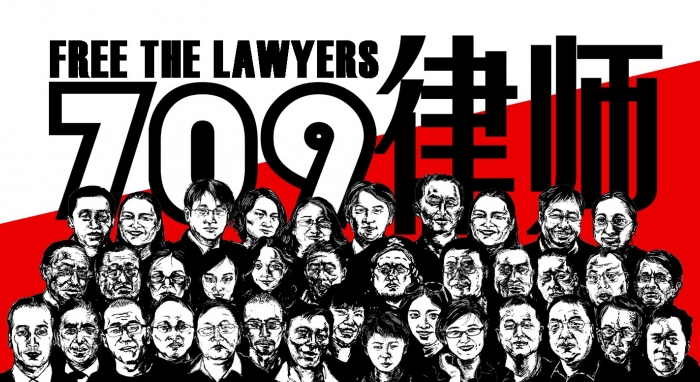
In the weeks following 9 July 2015, over 300 Chinese weiquan (‘rights defence’) lawyers and legal activists were harassed, detained and disappeared, in a nationwide police sweep that came to be known as the ‘709 Crackdown’. Five years later, these lawyers and their families still face a range of restrictions and rights violations aimed at silencing their efforts for a more just and rights-compliant society.

Disbarment, secret detention, disappearances, harassment of relatives, stigmatisation: the ‘systematic crackdown on lawyers’ denounced by UN experts has changed in form but not in its scale or scope.

Despite the risks, they strive to uphold the fundamental rights of all Chinese citizens, guaranteed under China’s Constitution and international treaties. They represent the most vulnerable and unjustly accused: those who have been evicted from their land or are victims of police abuse; minorities criminalised for their religious belief or ethnicity; human rights defenders and those expressing opinions different from the official Party line.

Without independent lawyers, there can be no rule of law,’ says Sarah M Brooks, ISHR Asia Advocate.

And when the rule of law is weaponised – as we saw last week with the imposition of the National Security Law in Hong Kong – lawyers are on the front lines of defending rights and freedoms. The least we can do – as individuals and as a global community – is to stand with them.

In a defiant act of reclaiming, 9 July is now recognised by the human rights movement as ‘China Human Rights Lawyers Day’. To highlight this important day, ISHR has produced a bilingual information flyer on the patterns of repression against Chinese human rights lawyers, and action by the international community. The information flyer is available in English and Chinese.
请点击此处下载中文版
For more information, please contact Raphael Viana David at r.vianadavid@ishr.ch or on Twitter at @vdraphael.

See also: https://humanrightsdefenders.blog/tag/china-change/

https://mailchi.mp/ishr/alert-to-the-human-rights-councils-35th-session-32794?e=d1945ebb90

Turkey engages in abduction of Turkish nationals living abroad through secret agreements with other states according to UN letter

July 11, 2020

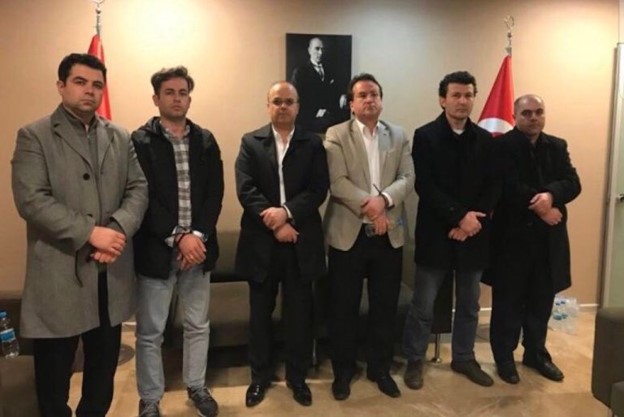
Turkish nationals who were abducted in Kosovo were kept for a time at the Turkish embassy premises.

On 9 July 9, 2020 the Nordic Monitor higlighted the shocking news that the Turkish government has signed bilateral security cooperation agreements with multiple states that were phrased ambiguously to allow for the expulsion or abduction of Turkish nationals living abroad, This is based on a joint UN letter on 5 May 2020.

Four UN rapporteurs/experts sent a joint letter to the Turkish government to express their concern about the “systematic practice of state-sponsored extraterritorial abductions and forcible return of Turkish nationals from multiple States to Turkey.

Joint UN letter on systematic practice of state-sponsored extraterritorial abductions and forcible return of Turkish nationals from multiple States to Turkey, see: https://spcommreports.ohchr.org/TMResultsBase/DownLoadPublicCommunicationFile?gId=25209

The Government of Turkey, in coordination with other States, is reported to have forcibly transferred over 100 Turkish nationals to Turkey, of which 40 individuals have been subjected to enforced disappearance, mostly abducted off the streets or from their homes all over the world, and in multiple instances along with their children,” the letter said.

Nordic Monitor previously reported how the content of Turkey’s security agreements has changed in parallel to the transformation of national legislation and that the new documents contained ambiguous copy-paste phrases designed to suppress government opponents outside the country.

[The Turkish] Government has signed bilateral security co-operation agreements with multiple States allegedly containing broad and vague references to combatting terrorism and transnational crime. Sources claim that the agreements have been phrased ambiguously to allow for expulsion or abduction of anyone deemed to be a ‘security risk’ from third countries party to the agreements. There appears to be a clear link in the timing of the alleged operations – most, if not all, have been carried out within two years since the agreements entered into force. For instance, allegations are made that Turkey has signed secret agreements with several States, including Azerbaijan, Albania, Cambodia and Gabon, where several operations are reported to have taken place,” the letter stated….

Furthermore, rapporteurs, with reference to statements by Turkish officials, exposed the fact that over 100 alleged members of the Gülen movement have been abducted abroad by Turkish intelligence and brought back to Turkey as part of the Turkish government’s systematic global manhunt.

“Turkish authorities have not only acknowledged direct responsibility in perpetrating or abetting abductions and illegal transfers, but have also vowed to run more covert operations in the future. On September 21, 2018, it is alleged that Turkey’s Presidential Spokesperson stated during a press conference that the Government would continue its operations against the Hizmet Movement, similar to the one in Kosovo (March 29, 2018).”….

We note in this respect that deprivation of nationality for the sole purpose of facilitating expulsion or removal goes against international law norms and standards. Finally, we wish to highlight that violations of international human rights obligations resulting from these agreements engage Turkey’s responsibility under international law as well as the third countries parties to the agreements” the letter said….

https://www.nordicmonitor.com/2020/07/turkey-signed-secret-agreements-with-several-states-to-conduct-state-sponsored-extraterritorial-abductions-a-joint-un-letter-underlines/

That Turkey takes an aggressive stand on anything that smacks like terrorism was made clear again on 7 July 2020 when Turkey’s Foreign Ministry slammed recent remarks by Sweden’s foreign minister against Turkey’s military operation in northeastern Syria while meeting via videolink with members of the PYD/YPG/PKK terrorist organization.  

Essentially this meeting was not the first in which Ann Linde came into contact with members of the terrorist organization. She previously held talks with members of the terrorist organization and participated in activities organized by people associated with the terrorist organization,” the ministry said late Thursday in a statement.

It is a shame that so-called human rights defenders, who are becoming an instrument to the terrorist organization’s smear campaign, ignore the massacres, crimes and oppression…committed by these terrorists in Syria,” it stressed. [what the term “human rights defenders” here means is not clear] – https://www.aa.com.tr/en/turkey/turkey-slams-swedish-fm-for-meeting-with-terror-group/1905510

#HoldTheLine Coalition comes out for Maria Ressa

July 11, 2020

On behalf of the #HoldTheLine Coalition, Reporters Without Borders (RSF), the Committee to Protect Journalists (CPJ), and the International Center for Journalists (ICFJ) are calling for public support for Maria Ressa and independent media in the Philippines.

On 15 June 2020, Ressa was convicted of “cyber-libel,” alongside former Rappler colleague Reynaldo Santos Jr — a criminal charge for which they face up to six years in prison. [see: https://humanrightsdefenders.blog/2020/06/15/ressas-cyber-libel-conviction-in-the-philippines-shocks/

Ressa and Santos could be imprisoned if the cyber-libel case is not overturned on appeal.  Ressa is facing at least six other cases and charges. Guilty verdicts in all of these cases could result in her spending nearly a century in jail.  

Rappler is also implicated in most of these cases, with several involving criminal charges related to libel, foreign ownership, and taxes.  For independent media in the Philippines, these targeted attacks and legal threats pose a clear and present danger to press freedom.

As a matter of urgency, please sign this petition calling on the Philippine government to drop all cases against Ressa, Santos, and Rappler and cease attacks on independent media in the country. Share this appeal using the #HoldTheLine hashtag!

Credit image : Maria TAN / AFP

I sign the petition

https://rsf.org/en/free-mariaressa

India – back on Security Coiuncil – should clean up it human rights act

July 11, 2020

The admittedly Pakistan-based Geonet.tv gives a good summary of India’s disregard of concerns and objections in five letters by UN Human Rights Council (UNHRC) about human rights abuses in Jammu and Kashmir, India’s new terrorism law and the Citizenship law.

In the five letters, UNHRC experts raised pertinent questions and pointed out violations by Indian authorities of the resolutions by UN Security Council, General Assembly and UN Human Rights Council…

On July 4, 2020, United Nations Human Rights Council (UNHRC) made public 14 cases of worst possible human rights abuses in Jammu and Kashmir after the Indian government failed to respond to their concerns within the stipulated 60 days.

Four UNHRC Rapporteurs on torture, extrajudicial executions, minority issues and freedom of religion under HRC charter and mandate had written to Indian government on May 4th, 2020, to respond back on the 14 cases and countless other cases involving grave abuse of human rights in Kashmir after its annexation on Aug 5th, 2019. The UN Rapporteurs in the May 4th letter lamented that Indian government had not responded to their earlier letters on Aug 16, 2019, and February 27, 2020, on the atrocities in Kashmir. The two earlier letters questioned the restrictions in Kashmir on rights of expression and assembly and dissent following Indian annexation of Kashmir.

In another letter on May 6th, 2020, eight Rapporteurs of UNHRC and one Vice Chair of a Working Group raised serious concern on the new anti-Terrorism law passed by Indian parliament just before Indian annexation of Kashmir in July/Aug 2019. UNHRC questioned the detention of any accused for an extended period of six months under the new anti-terror law

In another letter on February 28th, 2020, eight Rapporteurs of UNHRC and one Vice Chair of a Working Group questioned the Indian Citizenship Act of December 2019 which discriminates against Muslims and bars them to get Indian citizenship whereas people from different religious beliefs who entered Indian before Dec 2014 are eligible for it. The letter also heavily criticise excessive use of force to quell protests against this Act which resulted in death of over 50 and injuries to hundreds.

See also: https://humanrightsdefenders.blog/2020/06/27/un-experts-address-3-big-ones-usa-china-and-india/

https://www.geo.tv/latest/297349-india-ignored-five-unhrc-letters-about-human-rights-violations

Nordic countries take up the human rights torch?

July 11, 2020

In an interesting article published on 10 july 2020, Bruno Stagno Ugarte – Deputy Executive Director for Advocacy of Human Rights Warch sees encouraging signs of a revival of the leading role of the Nordic countries when it comes to international human rights policy.

…There are encouraging signs these countries might be ready to re-engage in denouncing grave abuses and lead international efforts for country-specific scrutiny and accountability.

And it all started with the smallest of the lot, Iceland. [Philippines, see: https://humanrightsdefenders.blog/2019/07/22/why-iceland-led-the-un-resolution-on-the-philippines/ and Saudi Arabia, see: https://humanrightsdefenders.blog/2019/03/08/saudi-arabia-for-first-time-openly-criticized-in-un-human-rights-council/ ]…..

..If Iceland with a population of 365,000, found the bandwidth to lead on two issues simultaneously, its larger Nordic neighbors can surely match both its courage and performance.

There are reasons to be encouraged on that front. In June, Finland supported the creation of a Libya investigation by the Human Rights Council to document violations committed by all parties and preserve evidence. Denmark, currently a member of the Council, is considering addressing ongoing rights violations by Saudi Arabia. And now that Norway has been elected to a non-permanent seat on the United Nations Security Council for the 2021-22 term, we hope it will become a principled voice for human rights and lead on country-specific situations.

In the absence of leadership by larger states, it is incumbent on smaller states, individually and collectively, to ensure that multilateral tools remain relevant to address dire human rights situations. The Nordic countries have done so in the past; it is time for them to do so again.

https://www.hrw.org/news/2020/07/10/nordic-comeback-human-rights

Shalini Randeria’s lecture on Press Freedom in the time of Coronavirus

July 10, 2020

On 30 April 2020 at the occasion of World Press Freedom Day the Graduate Institute in Geneva organised a lecture by Shalini Randeria Professor, Anthropology and Sociology and Director of the Albert Hirschman Centre on Democracy, on “Defending Press Freedom in the Time of Coronavirus“. Even after 6 weeks it is still valid, here in full:

See also: https://humanrightsdefenders.blog/2020/05/03/world-press-freedom-day-2020-a-small-selection-of-cases/ and https://humanrightsdefenders.blog/2020/05/04/world-press-freedom-day-2020-a-few-more-links/

The coronavirus crisis has provided a welcome pretext for soft authoritarian regimes the world over to strengthen their hold on power, with their declared states of exception potentially becoming the new normal. Curbing press freedom was among illiberal rule’s casualties even prior to the pandemic; attacks against independent newspapers and TV channels have not been limited to the Trump Presidency, which is notorious for its charge of “fake news” against critical reporters. But neutrality of the press can be a risky principle in the face of “alternative facts” such as Trump’s recent home remedies for the coronavirus.

The USA was ranked 45th out of 180 countries for its hostility towards news media in Reporters without Borders’ recently published World Press Freedom Index, with China (ranked 117th), Iraq and Iran among the countries mentioned for censoring coverage of the COVID-19 outbreak.

Instead of suppressing the spread of COVID-19, placing limits on press freedom could backfire, not only by reducing public awareness about the grave risks of the virus, but also preventing public debate about steps needed to mitigate the risks.

Moreover, this gag on press freedom compounds an unprecedented lockdown in which parliaments – even in liberal democracies – are hardly functioning, courts are not in regular session, street protests are impossible due to restrictions on the right to assembly, elections have been cancelled (for the most part), and universities are closed.

Under these circumstances, a free press is the only institution of countervailing power that could hold a government to account.

A widespread anti-press sentiment along with the detention, intimidation and jailing of activists and journalists, has become the order of the day in Turkey and India, to name but a few of the countries witnessing systematic assaults on press freedom in recent years, assaults that have escalated under the conditions created by the curtailment of civil liberties due to the threat of coronavirus.

Hungary suspended its parliament and further curbed freedom of expression, giving Prime Minister Orban unfettered emergency powers to rule by decree. China expelled American journalists for reporting on the dangers of the virus, while Iraq temporarily withdrew Reuter’s license after it published a story on the government’s under-reporting of COVID-19 cases.

On 10 April 2020, The New York Times reported that 28,000 workers at news companies in the USA had lost their jobs since the start of the pandemic. It is unlikely that the news industry will receive the federal aid that it is pleading for to prevent further job losses and closures.

What Buzzfeed has called “media extinction” comes in the wake of decades of layoffs and the shutting down of small local and regional newspapers, but also of large, progressive news sites, such as ThinkProgress in 2019. Fox News, however, continues to gather strength, posting record ratings in the first quarter of this year.

The commercialisation of the public sphere, along with the enormous concentration of power in the hands of very few media companies, which are closely linked to politicians in many a liberal democracy, spells danger for press freedom, as does repression by authoritarian governments. Both trends result in a near monopoly over information.

The WHO’s Director-General alerted us recently that the pandemic is also an “infodemic”, one that has given a fillip to spurious conspiracy theories circulating widely in various social media: “fake news” spread not only by ill-informed private individuals or ill-intentioned groups but also by governments.

But it has drawn attention once again to the dangers of “dead” or “buried” news suppressed by those in authority along with the deployment of all kinds of strategies to control information and mute public debate.

The rhetoric of the pandemic as “war” against an invisible enemy employed in France, as much as in China and the US, serves the same function.

Liberal democracies need strong civil society organisations that can mobilise public opinion and foster public debate, monitor the functioning of institutions, and hold politicians and public officials responsible.

In the absence of the freedom of the press, neither protest nor dissent can be voiced. The COVID-19 crisis may have accelerated the speed of the movement towards the slippery slope of dismantling democracy and human rights in many parts of the world.

https://graduateinstitute.ch/communications/news/defending-press-freedom-time-coronavirus
UN Rapporteur and Amnesty seek freedom for those “punished for daring to drive.”

July 9, 2020

On 9 june 2020 Agnes Callamard, the UN special rapporteur on extrajudicial, summary or arbitrary executions, urged member states to pressure Saudi Arabia to free women activists before a G20 nations summit which Riyadh will be hosting in November. At least a dozen prominent women’s rights activists were arrested in Saudi Arabia in 2018 as it lifted a ban on women driving cars, a step that many of the detainees had long campaigned for. The women were rounded up as part of a broader crackdown on dissent that extended to clerics and intellectuals.

Several of the arrested women have alleged torture and sexual assault in detention. Saudi officials deny this and said the detainees were suspected of having harmed Saudi interests and offered support to hostile elements abroad.

Some of the activists are now on trial, but few charges have been made public. Charges against at least some of the activists relate to contacts with foreign journalists, diplomats and human rights groups. Their prosecution has drawn global criticism, particularly following the 2018 murder of journalist Jamal Khashoggi by Saudi agents inside the kingdom’s Istanbul consulate. (as Rapporteur Agnes Callamard also dealt with Khashoggi’s killing: https://humanrightsdefenders.blog/2019/12/23/the-unsatisfactory-end-to-the-khashoggi-investigation/)

The families of some of the activists, included Loujain al-Hathloul, raised concerns earlier this year when they were unable to contact their detained relatives in prison for several weeks. Contact was eventually restored. [https://humanrightsdefenders.blog/2019/10/07/lina-al-hathloul-speaks-out-for-her-sister-loujain-imprisoned-in-saudi-arabia/].

Earlier Amnesty International had called on Saudi Arabian authorities to immediately release women human rights activists, including those who are “being punished for daring to drive.“…. Amnesty UK has launched a “Beep for freedom” campaign in support of the persecuted women’s rights defenders. The campaign involves supporters sharing photos of themselves behind the wheel of a car or sharing the campaign’s “Beep For Freedom” car horn symbol, with an appeal to the Saudi authorities to “immediately and unconditionally” release the activists and drop all charges against them.

https://www.dailystar.com.lb/News/Middle-East/2020/Jul-09/508775-un-investigator-calls-on-saudi-arabia-to-free-female-activists.ashx

https://www.aa.com.tr/en/middle-east/amnesty-intl-urges-sarabia-to-release-female-activists/1889626