Dozens of rights groups are urging the European Union to impose sanctions on the Israeli NSO Group to ban the company’s Pegasus surveillance technology. The letter sent to the EU was signed by 86 rights groups and independent experts, including Reporters Without Borders, Amnesty International, Human Rights Watch, the Electronic Frontier Foundation and Privacy International, among others. A consortium of media revealed that this powerful spyware was used extensively by several governments to spy on lawyers, journalists, political opponents and human rights activists.
Several victims of illegal surveillance have been identified in Hungary, where the government initially denied being a client of NSO Group, before admitting to having purchased the software. See also:
“There is overwhelming evidence that Pegasus spyware has been repeatedly used by abusive governments to clamp down on peaceful human rights defenders, activists and perceived critics,” Deborah Brown, senior digital rights researcher and advocate at Human Rights Watch, said in a statement. “The EU should immediately sanction NSO Group and ban any use of its technologies.”
The EU’s global human rights sanctions would allow the EU to adopt “ “targeted sanctions against entities deemed responsible for violations or abuses that are “of serious concern as regards the objectives of the common foreign and security policy”, including violations or abuses of freedom of peaceful assembly and of association, or of freedom of opinion and expression,” the letter read.
NSO Group was blacklisted by the US State Department at the beginning of November, and slapped with a sanction that drastically limited the business relationships the US company had with US customers or suppliers, according to the French newspaper Le Monde. “The EU should unequivocally close its doors to business with NSO Group,” Brown said.
“Targeted sanctions are necessary to that end, and to add to growing international pressure against the company and the out-of-control spyware industry.”
In Europe, several investigations are ongoing, but no sanctions have been formally imposed on the company. In addition to Hungary, several other countries are, or have been, customers of NSO Group – although this does not mean that all these countries have made illegal use of Pegasus.
In addition to Germany, several EU countries have purchased access to the software, according to Le Monde.
Let’s take a moment to recognise some of the widely known activists. But before starting, let me tell you that the list isn’t exhaustive. Every woman who speaks up for her or others’ rights at home or in public places is an activist. Being an activist requires the perspective to look beyond the given and seek that which is deliberately made invisible.
1. Cynthia Stephen
An independent researcher on gender, poverty, development and policy, Cynthia Stephen has worked as an activist and writer for over 30 years. Stephen is a champion of equality and has supported the cause and rights of Dalit women often. In an article published on SheThePeople, Stephen said, “The life of a human being varies with their position in the caste hierarchy. Women are only objects who fulfil domestic, ritual and reproductive roles in a patriarchal family. The untouchables don’t even figure in the law book as they are outside the pale of the four castes. Women and Dalits are non-citizens, non-people as far as it (the Indian state) is concerned”
Kiruba Munusamy
Munusamy is an advocate at Supreme Court and a prominent anti-caste and equality activist. She is also a writer, research and a founder of many organisations that promote equality. Speaking to SheThePeople, she said, “All of us need to stand against women’s oppression, Islamophobia, violation of the LGBTQIA community. This has to become an anti-status quo revolutionary movement. It has to have leadership from the oppressed community.”
3. Shruti Kapoor
After the Nirbhaya gangrape case shook the world, Shruti Kapoor took the initiative of empowering girls and not letting the incident happen again. Kapoor founded the organisation named Sayfty to educate and empower girls. The organisation also aims at providing knowledge about legal rights and laws to women. It trains girls in self-defence to make them self-sufficient in fighting against crime in India. Kapoor is widely known for her phenomenal work and has been awarded a couple of times. Apolitical named her one of the most influential people in global policy in 2019. In the same year, the Indian Ministry of Women and Child Development recognised Kapoor as one of the 30 #WebWonderWomenwho have been using social media to drive a positive change.
Preeti Singh
Preeti Singh is a prominent disability activist. She often speaks about the stigma that further disables disabled people and advocates the importance of building disability-friendly infrastructure. She was born with Cerebral Palsy, which is a congenital disorder of movement, muscle tone or posture. Being a young child, she received a lot of negative comments like she’s burden, she should die and many other hurtful things.
Sister Lucie Kurien
Sister Lucie Kurien was initially working at HOPE, an organisation founded by Holy Cross Convent that works for abused women. At that time, she was approached for help by a pregnant woman who was constantly abused by her alcoholic husband. But Kurien was unauthorised to invite the woman to spend the night in the organisation. So she told the woman to come next day so that she can arrange alternate accommodation for her. But that night, the pregnant woman was attacked by her husband who set her and her unborn child ablaze. Kurien was devastated and that’s when she thought about opening a shelter home for abused and deserted women. Hence Maher was founded. Maher is an organisation that provides shelter to women and underprivileged children. It has branches in Maharashtra, Kerala and Jharkhand. It not only helps the survivors of domestic violence but also educates the poor and underprivileged. Many villagers were provided with knowledge about rights, duties and responsibilities in society.
Naseema Khatoon
At the age of 28, Naseema Khatoon , daughter of a sex worker, hailing from Muzaffarpur, Bihar founded the organisation named Parcham. The organisation rehabilitates sex workers and their children and protected them from police atrocities. It also educates and employs them by starting a small scale manufacturing business of bindis, candles and incense sticks.
Shweta Katti
Born and raised n Kamathipura, Asia’s most infamous red-light area, Shweta Katti is known for her work towards empowering marginalised girls. At the age of 16, she joined Kranti, an NGO that empowers girls from the red-light area and makes them agents of social change., Katti was included in the Newsweeks-25-Under-15 Women to Wach list in 2013. She also received UN Youth Courage Award. Katti received a scholarship from Bard College hence becoming the first woman from the red-light area to study abroad.
Riya Singh
A doctoral researcher at Delhi’s Ambedkar University, Riya Singh plays a vital role in empowering Dalit voices. She works at the Research and Advocacy Officer at Dalit Women Fight which is India’s largest Dalit women-led organisation to tackle caste based violence and discrimination. She has actively worked with survivors of caste atrocities. Speaking with SheThePeople about the caste-based violence like Hathras gangrape case, she said, “I’ve never understood the need of explaining why caste is important in a caste-based crime. Caste is right in front of our eyes… The first thing people ask is what is your name? If you give your first name, they’ll ask you – aage kya hai? (for surname). But Indian society is hesitant about claiming caste pride when it is about bad things.”
It is important to note that women to defend our rights are at great risk of being deprived of their own rights. In 2015, a report by The Guardian revealed that human rights activists are constantly being targeted around the world. “Women are in a really very bad position in the whole world but in countries like Honduras where we actually no rights all, we may have the worst part. And the women who speak up in a worse [position.]” said Daysi Flores, JASS Honduras country director, in Guardian’s Global Development Podcast.
We have often come across cases of murder, sexual crime and abuse against women activists. A prominent example from India is the reported molestation against female students in Jamia Milia Islamia during the CAA-NRC protest which became a reason for bringing together many women activists. Gladys Lanza Ochoa, a feminist and human rights activist from Honduras was illegally imprisoned for defending the rights of women in the country and fighting against the imprisonment she died due to health problems.
Arundhati Roy was charged with sedition for her comment on the CAA-NRC protest. Aishe Ghosh was brutally hurt during a breakthrough in the college. Many marches for women’s safety and crime against them is shadowed by the danger of being harassed by men involved in the protest or those dressed up as police. Cases of sexual misconduct were reported by women protestors from the Singhu Border too. A woman was reported to have been stalked by a man who took pictures of her at the protest site. Another woman reported that a prominent male protestor from Singhu Border would propose to her each time she bumped into her and touch her face a few times.
As far as India is concerned the major reason for the unaddressed issues of women is their lack of representation in law and government. The representation of women in the Indian judiciary dwindles at 12% which is lower than in Afghanistan (27.6 %). India ranks at 146th in women’s representation in the national Parliament. In Lok Sabha, only 14 per cent of seats belong to women.
If the judiciary and parliament involve fewer women, how can we be assured of the safety of women activists on the ground? How can we be assured that the safety of women activists is a concern of the government? So on this international woman human rights defenders day, let us pledge the safety and security of women who fight for our rights.
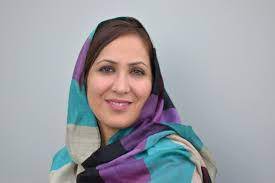
It is hoped that the award will “further inspire the world to pay closer attention to human rights in Afghanistan, especially women’s rights” and “encourage human rights defenders and those who have been deprived of human rights,”
According to the TFD, Rasuli has been actively involved in social activism and the promotion of women’s rights at a young age and thorough her years of work, “Afghan women have gradually been able to receive justice from judicial procedures.”
As the co-founder and executive director of the Women for Justice Organization, Rasuli has led lawyers, gender experts and activists in efforts to increase women’s access to justice, uphold the rule of law in Afghanistan, and investigate some of the most emblematic sex crime cases in the country over the years, the TFD said in its statement.
She also previously served as director of Medica Afghanista, another organization that provides psychosocial counseling and legal support to female survivors of sexual violence. However, in an interview with the European public broadcaster, Arte, aired in September, Rasuli revealed that she has relocated to the U.S. following the U.S. military pull-out from Afghanistan.
The TFD on Tuesday declined to confirm Rasuli’s current whereabouts, but said she would deliver her acceptance speech in a pre-recorded video that would be published on its website on 10 December.
The foundation said it would not host a physical award ceremony this year due to COVID-19.
Women and girls everywhere continue to be subjected to multiple forms of gender-based violence, including femicide, online violence and domestic violence, UN and regional experts (for impressive list see below) said today. They call on States to exercise due diligence and to fight pushbacks on gender equality.
“Although they represent more than half the world’s population, women and girls the world over are still at risk of being killed and subject to violence, intimidation and harassment when they speak out – for the simple fact of being women and girls. Violence against women and girls is the result of intersectional forms of social, political, economic, racial, caste and cultural discrimination perpetrated daily against women and girls in all of their diversity, including in the context of armed conflict, and States and the international community have the obligation mandated by international human rights law and standards to address this violence. Together, these forms of discrimination not only aggravate the intensity and frequency of violence but also sharpen the impunity that exists against it and increase societal and individual readiness to allow it.
Of particular concern is the fact that not only women and girls continue to be subjected to multiple manifestations of violence but that the spaces where this violence takes place have also multiplied. Nowhere is this more apparent than within online spaces, including social media. Governments, private companies and others may seek to hide their responsibilities behind the seemingly “borderless” nature of the internet. But human rights are universal and, as such, there is one human rights regime that protects the rights of women and girls offline as well as online, and that demands zero tolerance for violence against women and girls in the digital space. Violence against women and girls flourishes because those who seek to silence women and girls and facilitate their exploitation, abuse, maiming and killing are not firmly prevented from and held accountable for their actions.
It is unacceptable that in today’s world where humanity and life on this planet faces the existential threats of climate change and toxic pollution amidst a proliferation of conflict; the COVID-19 pandemic has killed at least 5 million people and infected at least 250 million worldwide in less than two years, also causing an increase in domestic violence against women, that women and girls are unable to participate fully in responding to these threats or in the search for solutions because they are discriminated, abused and continue to suffer violence, including sexual violence, exploitation and death on the basis of their sex, gender, sexual orientation and gender identity. These global crises interact with and further deepen pre-existing inequalities as well as legal, institutional and policy gaps to eliminate gender-based violence against women and girls, which in many cases, worsen them. Indigenous women, internally displaced women, women with disabilities, lesbian and transgender women and women belonging to other vulnerable or marginalized groups are particularly affected by the failure of these policies to prevent such violence, as well as protect and assist survivors.
While a number of States, non-state actors and other stakeholders have stepped up their interventions and resource allocations to prevent and respond to gender-based violence against women and girls, more effort in terms of both financial and non-financial interventions is needed to make these approaches truly transformative, particularly with regards to prevention, to avoid that policies remain ‘gender blind’, ‘gender exploitative’ or ‘race neutral’. Many of these policies do not disaggregate data based on social and racial constructs which discriminate, marginalize, exclude, and violate women and girls. These policies need to transform the prevailing social, economic and political systems that produce, nurture, and maintain gender inequality and drive violence against women and girls everywhere, through increased investment in their education and skills development, access to information, social services and financial resources, and support for positive representation and images in public discourse and social media. Collectively, they need to do more to challenge the patriarchal social norms and constructs of masculinity, femininity, racism and casteism that are based on extremely harmful stereotypes and which can cause psychological, physical, emotional and economical harm, including for women of colour, including those of African descent. These stereotypes pervade state institutions as evidenced by the lack of accountability for many cases before law enforcement and justice systems. States must also ensure access to comprehensive physical and mental care for survivors of gender-based violence, as part of the full range of quality sexual and reproductive health care that must be available for all.
Collective effort is required to stop the reversal of progress made in ending violence against women across the world and to counter the backlash against gender equality and the tenets of human rights-based legislation and governance. Those responsible for these regressive steps often begin by attempts to co-opt the justice system, change or issue new legislation and curtail fundamental rights and freedoms for women and girls, such as their freedom of thought, expression and association, their right to peaceful assembly, freedom of association, freedom of thought and, in particular, their sexual and reproductive rights. All human rights are inalienable, interdependent and exist without a hierarchy, despite the efforts of some actors to sacrifice some of these rights at the expense of others, often in the name of their own cultural or religious norms and their particular perception of societal harmony.
Women and girls around the world need to be heard; their voices should not be silenced nor their experiences go unnoticed. Women will never gain their dignity until their human rights are protected. Women’s rights are human rights. Women and girls’ agency and participation in all processes that affect their rights and lives need to be promoted and protected at all costs. States should ensure and create an enabling environment for women to exercise their fundamental freedoms of expression, association, peaceful assembly and public participation free from intimidation and attacks. States must exercise their due diligence obligation and protect women human rights defenders, activists and women’s organizations who are regularly harassed, intimidated and subjected to violence for defending their rights and promoting equality. The level and frequency of violence against them should raise alarm bells everywhere. It is, and should be, a public policy and a human rights priority.
If we want to gauge the underlying health, security and prosperity of a society, we all need to address our duty to play a part in the respect and furtherance of women and girls’ rights. There will be no prosperity without ending violence against women and girls in the public as well as in the private sphere.
There will be no ending of violence against women and girls if we don’t recognize and protect the dignity, rights and security of women and girls everywhere and at all times.” ENDS
We Will Stop Femicide was founded in 2010 to provide legal help to Turkish women facing abuse at home. It has been chosen as the winner out of about 400 applicants.
“We are proud to announce the winner of the #IGEP 2021, WE WILL STOP FEMICIDE PLATFORM, a non-governmental organization that does groundbreaking work combating violence against women in Turkey and whose work has a global relevance. Congratulations!” the award’s organizers posted on Twitter.
The prize was awarded in the Finnish city of Tampere to the founder of the organization, Gulsum Onal, by Finnish Prime Minister Sanna Marin.
“The work of the We Will Stop Femicide Platform includes decision meetings, educational activities, informative seminars, mass protests, and a variety of correspondence meetings. The association seeks to work with provincial and district assemblies to ensure gender equality nationwide in Turkey,” Marin said.
She further stressed the importance of a global effort to end violence against women and called on the international community to ensure protection of women‘s rights in all countries.
Nobel Peace Laureate Nadia Murad also attended the ceremony.
When the United Nations High Commissioner for Refugees (UNHCR), feels the need to speak out publicly – as it did on 22 November 2021 – it must be serious: It said that it deplored Thailand’s deportation of a Cambodian refugee, which occurred only ten days after the authorities deported two other Cambodian refugees. This action contravenes the principle of non-refoulement, which obliges States – including Thailand – not to expel or return people to a territory where their life or freedom would be threatened.
On 19 November, the Cambodian refugee was arrested. UNHCR immediately notified the authorities of the individual’s refugee status and urged the Government not to return the individual to Cambodia over serious concerns for the safety of the refugee. The refugee was held in a detention centre in Aranyaprathet overnight and deported to Cambodia the following day, on 20 November.
“We are extremely alarmed by this trend of forcibly returning refugees to Cambodia, where they face a serious risk of persecution. Given recent developments, we are very concerned about the safety of UNHCR recognised Cambodian refugees in Thailand,” said Gillian Triggs, UNHCR’s Assistant High Commissioner for Protection.
“We urge the Royal Thai Government to refrain from deporting recognized refugees and to abide by its international obligations, particularly the principle of non-refoulement. UNHCR continues to offer its full support to the Government in ensuring the protection of those in need in Thailand,” she added.
UNHCR is seeking urgent clarification from the Thai authorities regarding the circumstances leading to this most recent deportation and the fate of those returned in Cambodia. UNHCR exhorts Cambodian authorities to uphold international human rights standards and to allow human rights organisations access to the deportees.
The National Investigation Agency (NIA) of India arrested on Monday, 22 November 2021 prominent human rights defender Khurram Parvez after a day of extensive searches at his residence and office in Jammu and Kashmir capital Srinagar. He is an internationally recognized human rights defender, see: https://www.trueheroesfilms.org/thedigest/laureates/81468931-79AA-24FF-58F7-10351638AFE3
A family member told TheWire that Khurram’s residence in the city’s Sonawar locality was raided by NIA officials who were accompanied by local police and paramilitary troopers, on Monday morning. Another raid was carried out later in the day at his office in the Amira Kadal locality.
The raids were carried out in connection with a case (RC 30/2021) filed by the agency earlier this year.
Sources said the investigators confiscated Khurram’s mobile phone, laptop, some books and documents from his office and residence before taking him to the agency’s camp office in Srinagar’s Church Lane on Monday afternoon. “In the evening, we got a call to bring his clothes,” said a family member, adding that his wife and their son went to the office and handed his clothes to the officials there.
The NIA has not so far issued any statement on the arrest of Khurram, who is also the chairman of Asian Federation Against Involuntary Disappearances. Sources said his family was handed the arrest memo on Monday evening and he is likely to be flown to New Delhi on Tuesday.
The United Nations said it was disturbed by the reports of Khurram’s arrest, “I’m hearing disturbing reports that Khurram Parvez was arrested today in Kashmir & is at risk of being charged by authorities in #India with terrorism-related crimes. He’s not a terrorist, he’s a Human Rights Defender,” Mary Lawlor, UN Special Rapporteur on Human Rights Defenders, tweeted. David Kaye, a former UN Special Rapporteur, said Khurram’s arrest under terrorism charges was “yet another extraordinary abuse in Kashmir.”
World Organisation Again Torture (OMCT), a Geneva based non-profit which works with groups across the world to fight for human rights, said it was “deeply concerned” by Khurram’s arrest, “We are deeply concerned about the high risk of torture while in custody. We call for his immediate release,” OMCT said in a tweet. One of the most prominent rights defenders from Kashmir, Khurram has extensively worked on documenting the abuses allegedly committed both by security forces and militants in Kashmir as coordinator of Jammu Kashmir Coalition of Civil Society (JKCCS), a rights group based in Srinagar. See also: https://humanrightsdefenders.blog/2016/12/01/human-rights-defender-khurram-parvez-reluctantly-released-in-india/
The JKCCS has published more than a dozen reports on human rights abuses in Kashmir and its last report, ‘Kashmir’s Internet Siege’ focused on the mass detentions and the reported breakdown of the judicial system in Jammu and Kashmir in the aftermath of the reading down of Article 370. See also: https://humanrightsdefenders.blog/2020/02/09/forgotten-kashmir-something-has-to-be-done/
Khurram’s last tweet on August 30 this year was about a programme organised by Asian Federation Against Involuntary Disappearances and its members countries across Asia who pledged “that truth will not be buried, disappeared won’t be ever forgotten & perpetrators will never be forgiven.”
However, India’s government resists any notion of having acted wrongly:
Ministry of External Affairs (MEA) spokesperson Arindam Bagchi said that the [UN] statement makes “baseless and unfounded allegations” against Indian security forces. “It also betrays a complete lack of understanding on the part of the OHCHR of the security challenges faced by India from cross-border terrorism and its impact on the most fundamental human right ‘the Right to Life’ of our citizens, including in Jammu and Kashmir,” he said.
Asserting that all actions are undertaken in accordance with the law, he said, “We urge the OHCHR to develop a better understanding of the negative impact of terrorism on human rights.”
A committee of 5 human rights experts has selected a shortlist of 12 human rights defenders from among the nominees for 2021; since then an independent jury composed of 5 members has select 3 candidates from this shortlist. The Minister of Foreign Affairs will now choose a winner from the three remaining candidates:
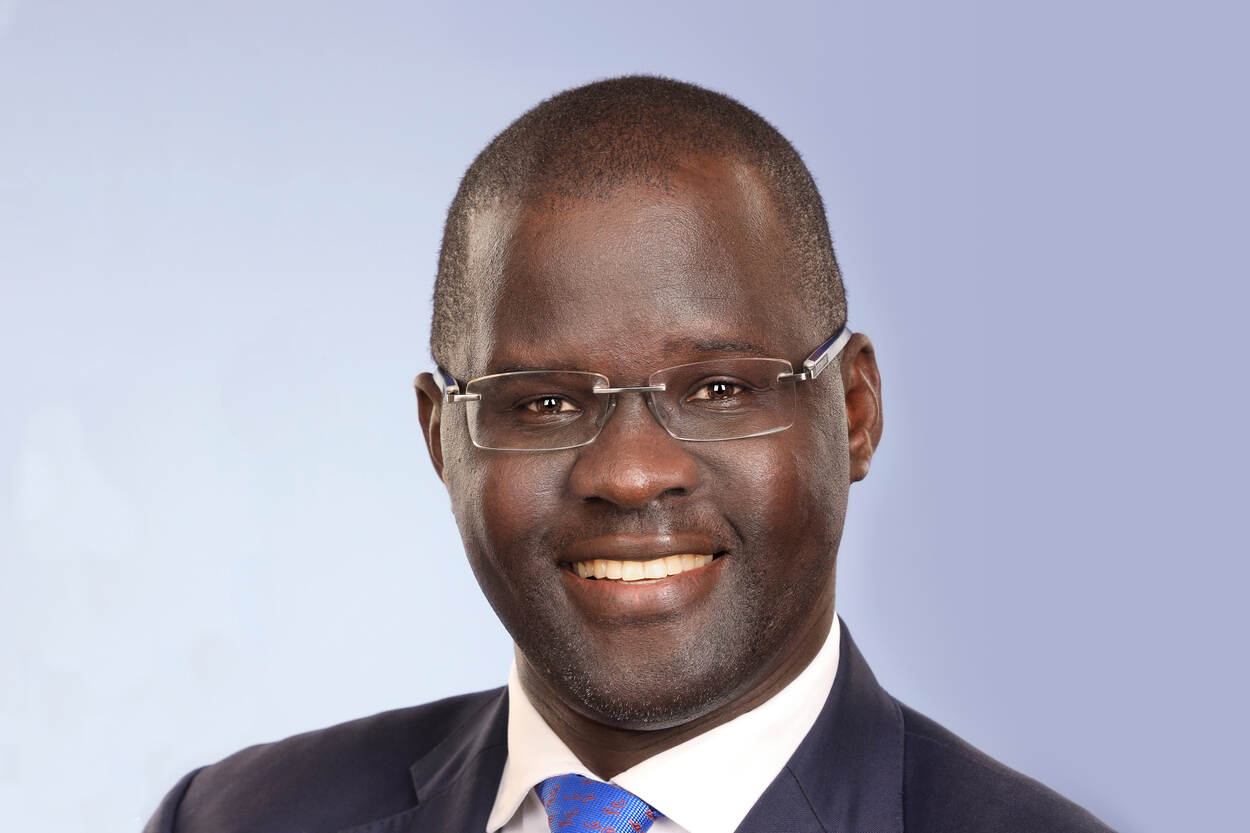
Human rights activist and lawyer in Uganda
As a child, he grew up in the epicentre of a brutal war between the Lord Resistance Army and government forces. Today, working as a human rights lawyer, he is being threatened, spied on and shadowed. This is his story.
Nicholas Opiyo.
As a human rights lawyer, Ugandan Nicholas Opiyo is not afraid to take on sensitive cases. He challenged the law that gave the police the right to ban public gatherings. He led the campaign for the enactment of a law criminalizing torture and drafted the initial bill that was enacted by parliament in 2012. He, alongside other brave Ugandan activists, successfully challenged Uganda’s anti-gay law in 2014. He has provided legal representation to the gay community in Uganda.
Nicholas is executive director of Chapter Four Uganda, an NGO that works to protect civil liberties and improve universal observance of human rights. He defends human rights activists who are being persecuted in Uganda. He also stands up for people who are in trouble with the government and lack the resources to defend themselves. See: https://www.trueheroesfilms.org/thedigest/laureates/6743A94B-BA1A-AA2A-AC6C-592EBD981EDA
Surviving war
Nicholas grew up on the outskirts of the northern Ugandan city of Gulu. His village was repeatedly attacked by the Lord’s Resistance Army (LRA), a rebel group that used child soldiers. Unlike many young people abducted into the ranks of the rebels, he survived abductions. The rebels kidnapped his father and sister, who managed to return after several months in captivity. To avoid being kidnapped, Nicholas walked several kilometres every day so he could sleep in the city. It was safer in a church compound or on the pavement in front of shops than in his village.
Government soldiers detained Nicholas’ father as part of an operation to eliminate traitors. The soldiers took all men 18 and older to a stadium where they were held for days without food. Looking through a crack in the stadium wall, Nicholas could see his father being beaten. Nicholas’ father was released after three days because he was innocent. Unable to forget these events, Nicholas decided to become a lawyer. ‘First I wanted to be a journalist so I could speak about [mistreatment],’ he said in an interview met Buzzfeed News. ‘But I thought … I can go to court and change things.’
Nicholas’ work often gets him in trouble with the state. He is being threatened, spied on and shadowed. In December 2020, in the run-up to the elections, he was arrested and imprisoned. Although he was charged with money laundering, the government presented no evidence. He spent Christmas and New Year’s Eve in jail. Human rights activists see the charges against Nicholas as a way to hinder his work as a human rights lawyer. Even in jail, he used his time to talk to prisoners who sought advice. In fact, he says, his arrests give him the energy to do even more. [see also: https://humanrightsdefenders.blog/2020/12/23/ugandan-human-rights-defender-nicholas-opiyo-arrested-like-a-criminal/]
Nunca Más: they had to flee from Nicaragua, but their struggle continues
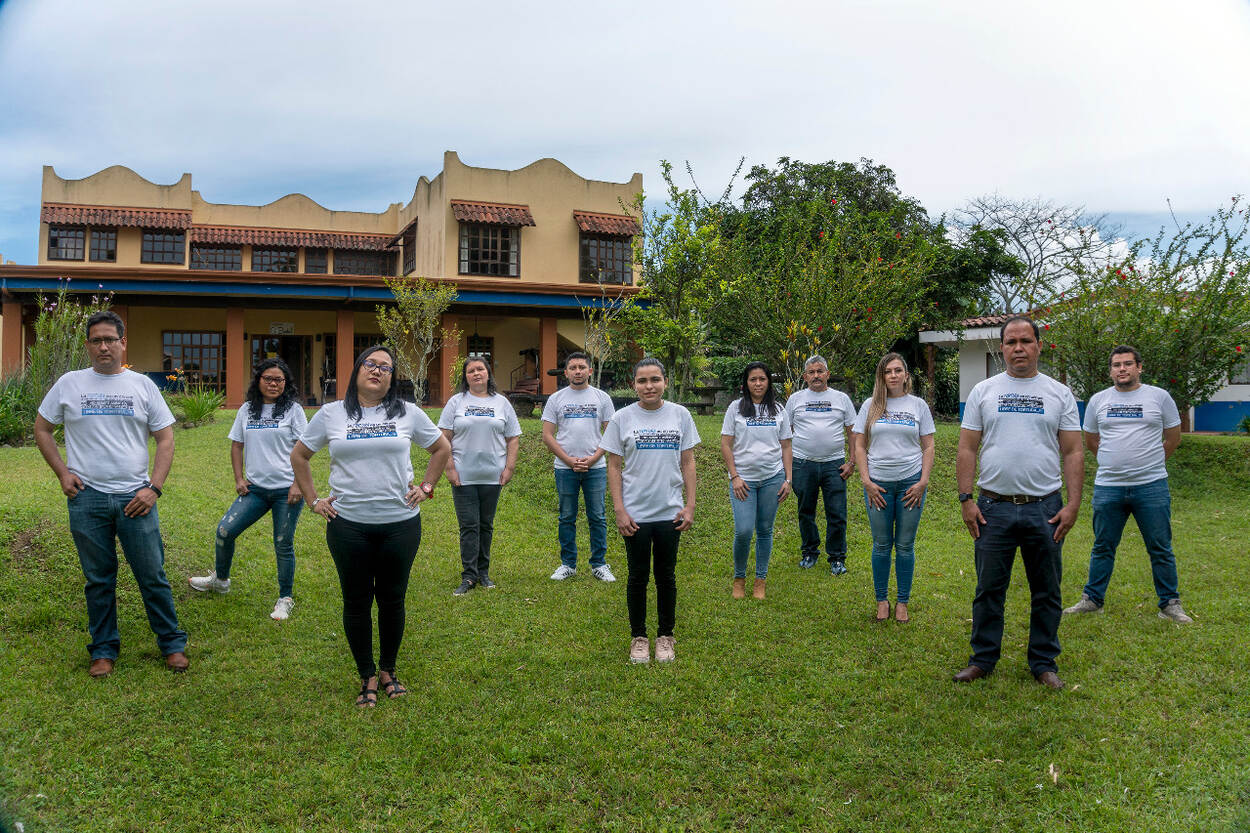
Banished from Nicaragua, a target of cyberattacks: despite all these setbacks, the activist collective Nunca Más is continuing to work for human rights in Nicaragua. This is their story.
Nunca Más.
‘When Daniel Ortega became president of Nicaragua, his supporters said that there was no longer any reason for us to exist. That human rights work in Nicaragua was a thing of the past. But that can never happen! Anyone who exercises power is capable of abusing it.’ So said human rights defender Gonzalo Carrión Maradiaga in an interview with the Nicaraguan magazine Envío. For 14 years he had been legal adviser of the Nicaraguan Center for Human Rights (CENIDH), which combats impunity and human rights violations.
In December 2018 the Ortega government closed CENIDH by force. The human rights defenders on its staff were expelled from Nicaragua. Gonzalo and his colleagues fled to Costa Rica, where they continued their work and in 2019 founded Nicaragua Nunca Más. Nunca Más reports on torture and other human rights violations in Nicaragua, in the interests of justice and to discourage new violations. They offer legal and psychosocial support to victims and their family members, journalists and human rights defenders, and conduct human rights training courses. They also work at international level on behalf of victims of human rights violations. At the moment, justice cannot be sought through the Nicaraguan legal system, as it is under influence of the president. Nonetheless, gathering evidence is crucial to ensure justice for human rights violation in the future.
It was not easy to make a fresh start in a new country, but the founders of Nunca Más have managed to recover. Between 2019 and 2021 the group documented over 400 cases of serious human rights violations. The collective has now issued five reports, including information on victims who have been tortured, humiliated and arbitrarily imprisoned. The reports also contain information about extrajudicial executions and denial of the right to organise. Such reports are crucial in the absence of free press.
Under pressure
The Nicaraguan government have not been pleased with Nunca Más’ reports, and are subjecting the organisation to severe pressure. Its website has been the target of repeated cyberattacks. Extra digital security measures have enabled the collective to safeguard personal data and sensitive digital information. Despite these difficult conditions, including being forced to live far from their familiar surroundings, its human rights defenders are persisting bravely with their struggle. Gonzalo has not seen his wife or one of his daughters for 18 months. ‘But the time will come. One day I’ll go back,’ he said resolutely in the interview with Envío.
It was not easy to make a fresh start in a new country, but the founders of Nunca Más have managed to recover. Between 2019 and 2021 the group documented over 400 cases of serious human rights violations. The collective has now issued five reports, including information on victims who have been tortured, humiliated and arbitrarily imprisoned. The reports also contain information about extrajudicial executions and denial of the right to organise. Such reports are crucial in the absence of free press.
Mari Davtyan, lawyer in Russia, opposes domestic violence
The Russian police do not always respond to domestic violence complaints. Sometimes their failure to act has fatal results. Lawyer Mari Davtyan has been working for years now to change this situation. This is her story.
Mari Davtyan.
In December 2017 Margarita Gracheva’s husband chopped her hands off with an axe. She had asked the police for help several times in the preceding months – in vain. Mari Davtyan was Margarita’s lawyer. Now Mari is working on the case of three teenage sisters who killed their father on 28 July 2018, when they could no longer bear his many years of physical and sexual abuse. Their mother had reported the violence to the police, but was ignored. Domestic violence is seen in Russia as a ‘family issue’, and outside interference is viewed as meddling, Mari noted in an interview with Voice of America. Mari’s strong defence for the teenage sisters has sparked a debate in Russian society on domestic violence and conservative family values.
Since 2017 domestic violence is no longer a serious offence in Russia, but a misdemeanour. Perpetrators are fined, have to do community service or are served with a training order. They are only taken to court in cases of repeated violence or serious injuries. This law is meant to preserve the ‘unity of the family’; according to this logic, fathers don’t belong in jail. Mari has been fighting for years now to change this law, ‘because it has been proven dangerous for the safety of thousands of women in Russia’, Mari said in an interview with Marina Pisklakova-Parker of the Anna Center in Moskou. Fighting and winning cases like this has ‘helped the government understand that we are not dealing with violence in the right way,’ said Mari in an interview with the Washington Post. Growing numbers of people are putting pressure on the courts and government to reflect on how they are treating victims.
Mari is also the head and legal expert of the Consortium of Women’s NGOs, which works to protect victims of domestic violence in Russia. The organisation gives courses on women’s rights to lawyers and the police and helps victims with their legal cases. ‘We have more than 100 lawyers working with us today, this year we have more than 150 cases, and I think about 1,000 consultations with individual women,’ said Mari in an interview with the European Human Rights Advocacy Centre (EHRAC). She sees that women are becoming more confident and more often have the courage to seek her out. ‘They are finding the power to ask for help and they’re starting to understand what a healthy relationship should look like,’ she said in her interview with Voice of America.
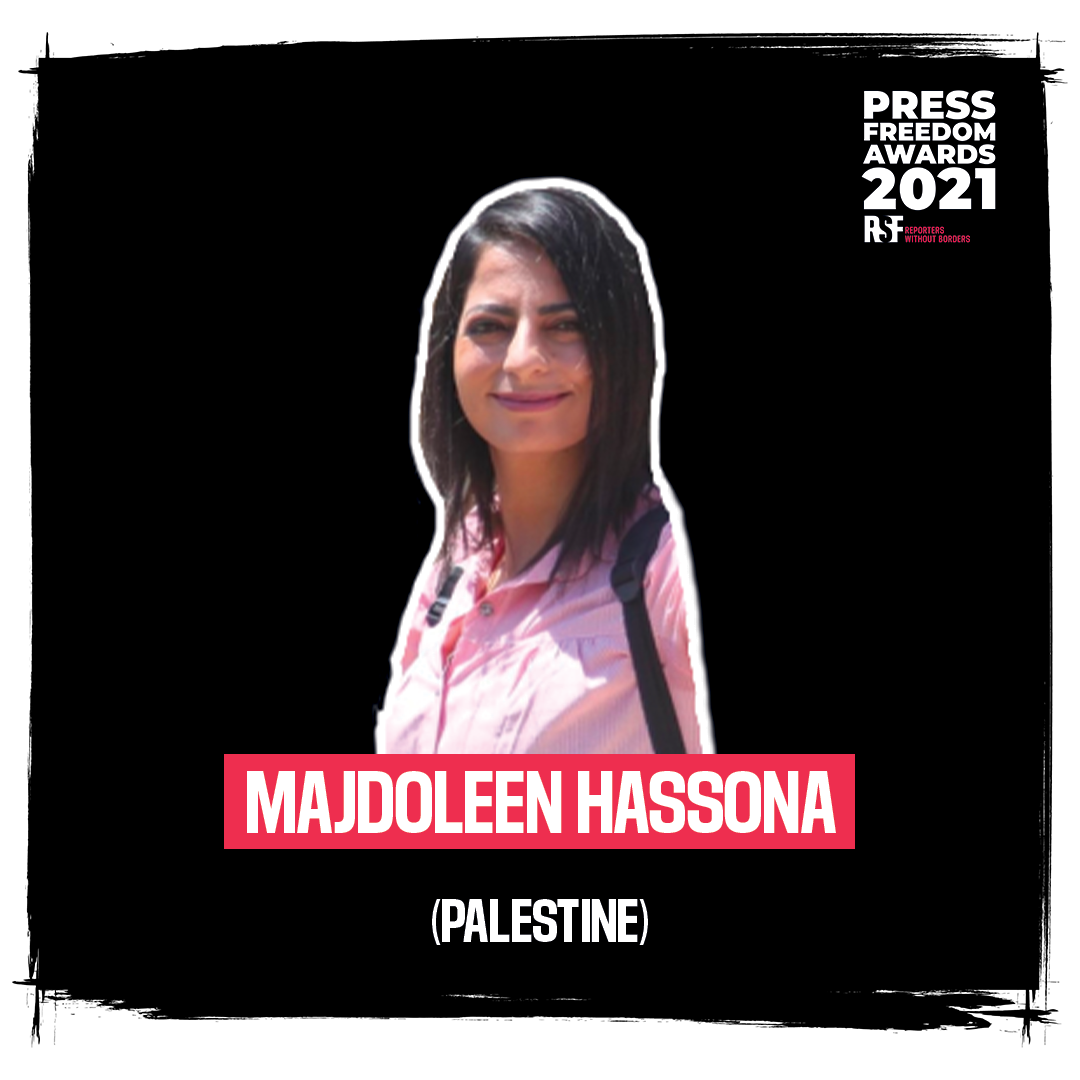
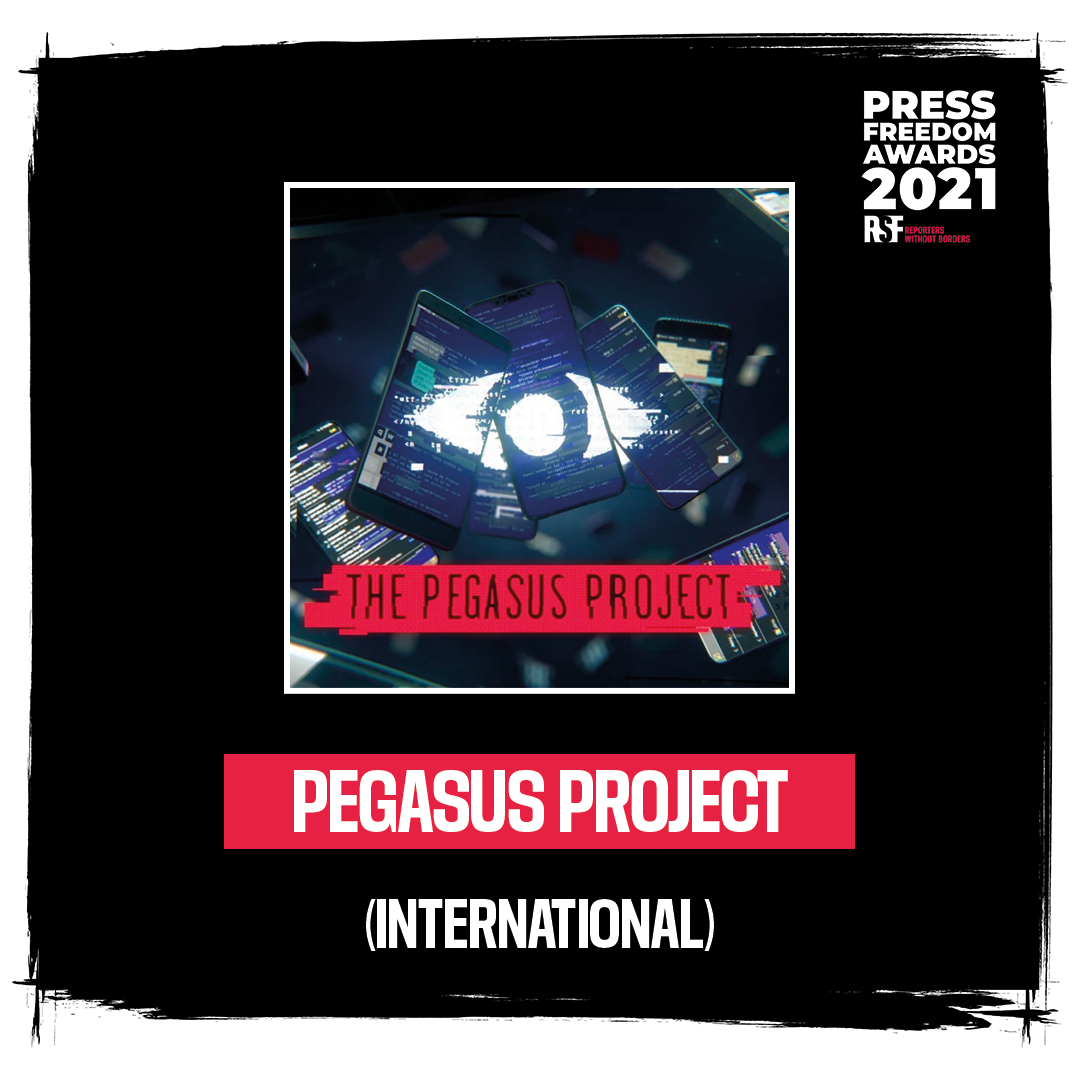
On 20 November 2021 Pacific Media Watch reported that the 2021 Reporters Without Borders (RSF) Press Freedom Awards have been given to Chinese journalist Zhang Zhan in the courage category, Palestinian journalist Majdoleen Hassona in the independence category, and the Pegasus Project in the impact category.
RSF president Pierre Haski announces the 29th RSF Press Freedom Awards in Paris. Video: RSF
RSF’s press freedom prizes are awarded every year to journalists or media that have made a notable contribution to the defence or promotion of freedom of the press in the world. This is the 29th year they have been awarded. The 2021 awards have been given in three categories — journalistic courage, impact and independence.
Courage Prize The 2021 Prize for Courage, which aims to support and salute journalists, media outlets or NGOs that have displayed courage in the practice, defence or promotion of journalism, has been awarded to Chinese journalist Zhang Zhan.
Despite constant threats, this lawyer-turned-journalist covered the covid-19 outbreak in the city of Wuhan in February 2020, live-streaming video reports on social media that showed the city’s streets and hospitals, and the families of the sick. Her reporting from the heart of the pandemic’s initial epicentre was one of the main sources of independent information about the health situation in Wuhan at the time.
After being arrested in May 2020 and held incommunicado for several months without any official reason being provided, Zhang Zhan was sentenced on 28 December 2020 to four years in prison for “picking quarrels and provoking trouble”. In protest against this injustice and the mistreatment to which she was subjected, she went on a hunger strike that resulted in her being shackled and force-fed. Her friends and family now fear for her life, and her health has worsened dramatically in recent weeks. See also: https://humanrightsdefenders.blog/2021/11/06/chinese-journalist-zhang-zhan-at-imminent-risk-of-death/
Independence Prize The 2021 Prize for Independence, which rewards journalists, media outlets or NGOs that have resisted financial, political, economic or religious pressure in a noteworthy manner, has been awarded to Palestinian journalist Majdoleen Hassona.
Majdoleen Hassona
Before joining the Turkish TV channel TRT and relocating to Istanbul, this Palestinian journalist was often harassed and prosecuted by both Israeli and Palestinian authorities for her critical reporting. While on a return visit to the West Bank in August 2019 with her fiancé (also a TRT journalist based in Turkey), she was stopped at an Israeli checkpoint and was told that she was subject to a ban on leaving the territory that had been issued by Israeli intelligence “for security reasons”. She has been stranded in the West Bank ever since but decided to resume reporting there and covered the anti-government protests in June 2021 following the death of the activist Nizar Banat.
Impact Prize The 2021 Prize for Impact, which rewards journalists, media outlets or NGOS that have contributed to clear improvements in journalistic freedom, independence and pluralism, or increased awareness of these issues, has been awarded to the Pegasus Project.
The Pegasus Project
The Pegasus Project is an investigation by an international consortium of more than 80 journalists from 17 media outlets* in 11 different countries that was coordinated by the NGO Forbidden Stories with technical support from experts at Amnesty International’s Security Lab. Based on a leak of more than 50,000 phone numbers targeted by Pegasus, spyware made by the Israeli company NSO Group, the Pegasus Project revealed that nearly 200 journalists were targeted for spying by 11 governments — both autocratic and democratic — which had acquired licences to use Pegasus. This investigation has made people aware of the extent of the surveillance to which journalists are exposed and has led many media outlets and RSF to file complaints and demand a moratorium on surveillance technology sales. See also: https://humanrightsdefenders.blog/2021/11/10/palestinian-ngos-dubbed-terrorist-were-hacked-with-pegasus-spyware/
“For defying censorship and alerting the world to the reality of the nascent pandemic, the laureate in the ‘courage’ category is now in prison and her state of health is extremely worrying,” said RSF secretary-general Christophe Deloire.
“For displaying a critical attitude and perseverance, the laureate in the ‘independence category has been unable to leave Israeli-controlled territory for the past two years. “For having revealed the scale of the surveillance to which journalists can be subjected, some of the journalists who are laureates in the ‘impact’ category are now being prosecuted by governments.
Redress, an NGO campaigning for the return of Nazanin, says the award “recognises the injustice Nazanin has suffered as a pawn of international diplomacy”.
It comes after ended his second hunger strike, this time for 21 days, to try and break the political impasse to bring Nazanin home.
“Nazanin was very pleased to hear of this award, for herself but also for all the others detained in Iran that you don’t get to hear about,” her husband Richard Ratcliffe said.“The Iranian regime gets away with terrible crimes that thrive in darkness where accountability should be.”
He added: “All our family are very proud of this award.”
Since Richard’s hunger strike, Boris Johnson has said it is “worth considering” paying a £400m historic debt to Iran by sending a plane full of cash to Tehran.
Nazanin, 43, mother of a seven-year-old girl, was arrested in Tehran in 2016 after being accused of plotting to overthrow the Iranian government – charges always denied and widely refuted.
William Browder, head of the Global Magnitsky Justice Campaign, said: “Nobody should ever be put in a situation like this, but in spite of the pressure, she has proven how powerful she can be even in the most powerless situation. Her hostage takers should understand that their crimes won’t go unpunished.”
Accepting the “courage under fire” award on her behalf at the event in London on Thursday evening, Gabriella read her mother’s words.



 Hans Thoolen on Human Rights Defenders and their awards