Posts Tagged ‘writers’

The History of Writers Defending Human Rights in the USSR, e.g. the poet Lina Kostenko

September 16, 2025

On 14 September 2025 Ilya V Ganpantsura wrote in Countercurrents:

In the USSR, writers often became defenders of human rights. They were people of various ages and backgrounds, yet their works exposed injustice and reflected personal courage to speak the truth — for which many paid with exile and labor camps. Why did the authorities fear writers so much? And why should they be honored today?

One such figure was the Soviet-Ukrainian writer and poet Lina Kostenko, who, through her works and personal stance, inspired resistance, standing proudly for freedom and against the oppressive system, despite multiple attempts to push her out of cultural and literary life. Her novel Notes of a Ukrainian Madman, written in the 1970s, was long banned and circulated only through underground self-publishing (samizdat). Through this work, Kostenko protested the totalitarian regime and shed light on the lives of those who could not live in good conscience under Soviet rule. The novel symbolized the fight for the right to be oneself.

Lina Kostenko was part of the “Sixtiers” (Shistdesyatnyky) movement, a generation that opposed Soviet propaganda stereotypes, aimed to restore historical memory, protect national culture, and resist ideological control in Ukraine. As a writer and poet, Kostenko not only used her works to critique the totalitarian regime but also supported the core values of the movement: personal freedom, the right to cultural expression, and the condemnation of repression.

“We are warriors. Not idlers. Not slackers.
And our cause is righteous and holy.
For while others fight for whatever,
We fight for independence.
That’s why it’s so hard for us.”
“A human seemingly cannot fly…
But has wings.
Has wings!”

Her contribution to the cultural revival of Ukraine and the preservation of free speech values is immeasurable. Today, Lina Kostenko still resides in Ukraine. In 1987, she was awarded the Shevchenko National Prize for her novel Marusia Churai.

One of Lina Kostenko’s close friends and fellow Sixtiers was the poet, translator, and dissident Vasyl Stus. They actively supported each other in their fight against censorship during the most difficult times of repression.

Stus openly criticized the Soviet regime for human rights violations, which led to his repeated persecution. In 1972, he was arrested and sentenced for “anti-Soviet agitation and propaganda.” Despite the harsh conditions of his imprisonment, he continued to write, and his works were distributed through samizdat, inspiring many to resist oppression.

After five years in a Mordovian labor camp and two years in exile in the Magadan region, Stus returned to Kyiv in September 1979. There, he resumed his human rights activities, supporting “prisoners of conscience” with the help of Western organizations. In 1978, he was made an honorary member of the English PEN Club. However, in early 1980, he was arrested again. Vasyl Stus died in a maximum-security labor camp in 1985. His life and works became symbols of the relentless struggle for freedom and human dignity under totalitarianism.

The stories of Lina Kostenko and Vasyl Stus remind us that words can be powerful weapons in the fight for truth and dignity. Their courage, dedication to the ideals of freedom, and love for Ukrainian culture prove that even under the harshest conditions, there is always room for bravery and resistance. Today, as issues of freedom of speech and cultural identity remain pressing, their legacy continues to inspire us to remember that truth is a value worth fighting for.

https://countercurrents.org/2025/09/the-historical-tragedy-of-writers-defending-human-rights-in-the-ussr/

The pen mightier than the sword: award courageous writers

November 19, 2019

On 18 November 2019 Emma Frost wrote in the Boar a piece extolling writing as an act of courage. She refers to courageous laureates and concludes that “unfortunately, the need for such awards merely confirms the continual existence of persecution, state-sponsored violence and oppression in our world”. THF’s digest lists more than 40 international awards under the theme freedom of expression: http://www.trueheroesfilms.org/thedigest.

Befeqadu Hailu is an Ethiopian writer, blogger, and human rights activist who recently was awarded the 2019 PEN Pinter Prize for International Writer of Courage. Before achieving this prestigious title, Befeqadu had been imprisoned, brutalised, dehumanised and labelled a ‘terrorist’ by his own government for exercising what should be a basic human right: freedom of speech. …However, Befeqadu isn’t the only writer who has faced such injustice. Instead, he is one of thousands of courageous individuals who dare to speak and write about the truth of their society, and who are consequently punished for doing so. Many readers will recognise the story of Malala Yousafzai, a girl from Pakistan who was almost assassinated by the Taliban in 2012 for her blog posts to BBC Urdu about life under the terrorist organisation and her campaigning for female education. She was only 15 years old when she took that famous bullet to her head.

Female author Nazanin Zaghari-Ratcliffe was sentenced to 10 years’ imprisonment in 1982 in Iran for campaigning for civil and female rights. She used her time in prison as an inspiration for her novel The Secret Letters From X To A, a beautifully written book that ponders the responsibility of publishing an individual’s truth in the face of personal danger for doing so. More recently, Maltese journalist Daphne Caruana Galizia was killed by a car bomb in 2017,as a consequence for her dedication to exposing the corruption of Maltese politicians through her blog, ‘Running Commentary’.

These examples are testaments to the importance of writing. Without the written records of their struggle and their defiance, the the courage of brave individuals would remain unheard and we would remain in ignorance of their plight. In a world where it is safer not to write about injustice, writers make a valiant choice every day to speak out, knowing the risk of exile, imprisonment, or even death. The former 2015 PEN Pinter award winner Raif Badawi, a Saudi blogger for his website ‘Free Saudi Liberals’ and activist for greater human rights in Saudi Arabia, is currently imprisoned to this very day and his exact whereabouts are unknown.

The significance of awards such as the PEN Pinter Prize for International Writer of Courage cannot be exaggerated. They validate the heroic and life-threatening efforts by writers to create a better world and convey to those who are imprisoned for their literature that they are seen, they are heard, and that they won’t be abandoned. The Civil Courage Prize is another such human rights award that recognises “steadfast resistance to evil at great personal risk”. This award was inspired by the story of Alexander Solzhenitsyn, whose book The Gulag Archipelago exposed the true horrors of the Russian gulag system through the use of interviews, diaries, legal documents and his own experience as a gulag prisoner.

Unfortunately, the need for such awards merely confirms the continual existence of persecution, state-sponsored violence and oppression in our world. It signifies that human rights organisations such as Amnesty International have a long way to go in achieving freedom for everyone. In spite of this, I have hope that these brave individuals won’t give up and will continue to write for the sake of a better humanity. All of this reaffirms my steadfast belief that the pen truly is mightier than the sword, and that writing is the most important political tool of our century.

Writing as an act of courage

Revoking of Kamila Shamsie’s Dortmund book award is fiercely contested

September 25, 2019
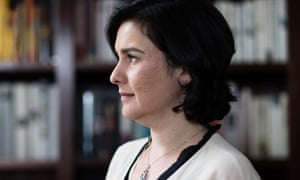
Kamila Shamsie.
Kamila Shamsie. Photograph: Teri Pengilley/The Guardian

The judges had initially chosen Shamsie for writing that “builds bridges between societies”, but changed their minds on learning she backed the BDS movement, saying that her “political positioning to actively participate in the cultural boycott … contrasts with the claim of the Nelly Sachs prize to proclaim and exemplify reconciliation among peoples and cultures”.

Shamsie’s supporters reply asks: “What is the meaning of a literary award that undermines the right to advocate for human rights, the principles of freedom of conscience and expression and the freedom to criticise? … Without these, art and culture become meaningless luxuries.”

The revoking of Shamsie’s award follows a motion passed in May by the German parliament that labelled the BDS movement antisemitic. But the letter writers point to a decision earlier this month in the administrative court of Cologne ruling that Bonn city council’s decision to exclude the German-Palestinian Women’s Association from a cultural festival because of its support for BDS was unjustified. The writers highlight the statement last year from more than 40 progressive Jewish organisations arguing that conflating anti-Jewish racism with opposition to Israel’s policies and system of occupation and apartheid “undermines both the Palestinian struggle for freedom, justice and equality and the global struggle against antisemitism”.

The letter also criticises the German city of Dortmund, which runs the award, for refusing to make public Shamsie’s written response to the decision.

Shamsie, winner of the UK’s Women’s prize for fiction, had called it a “matter of outrage that the BDS movement (modelled on the South African boycott) that campaigns against the government of Israel for its acts of discrimination and brutality against Palestinians should be held up as something shameful and unjust”. Asked to comment, a spokeswoman for the city of Dortmund said that the jury had decided not to give any further statements. “The council has legitimated the jury of Nelly Sachs prize to choose an awardee,” she said. “The jury is autonomous in its decision and gave reasons in the press release. There has been no council meeting after the jury’s decision, so the withdrawal has not been a topic for the council yet.”

https://www.theguardian.com/books/2019/sep/23/hundreds-of-authors-protest-after-kamila-shamsies-book-award-is-revoked

https://www.timesofisrael.com/writers-defend-uk-author-stripped-of-prize-for-her-support-of-israel-boycott/

http://english.wafa.ps/page.aspx?id=qfv8dda113530808358aqfv8dd

https://www.dawn.com/news/1507849

Cuban Roberto Fernandez Retamar to win UNESCO’s Jose Marti Prize

January 25, 2019

Emirates (Mansoor) and UK (Hedges): finally someone made the point

December 6, 2018

On 4 December 2018 Jonathan Emmett wrote in a post about something that I had been wondering for weeks: “Are UK authors only prepared to defend the rights of people like themselves?”. Totally correct:

Read the rest of this entry »