Posts Tagged ‘UN’

UN COP28 climate summit sees rare demonstration for imprisoned Emirati, Egyptian human rights defenders

December 9, 2023

AP reported on 2 December 2023 that protesters at the United Nations’ COP28 climate summit demonstrated Saturday for imprisoned human rights activists in Egypt and the United Arab Emirates, the past and current host of the negotiations.

Demonstrators carried signs bearing the image of Emirati activist Ahmed Mansoor and Egyptian pro-democracy activist Alaa Abdel-Fattah, part of incredibly restricted, but still-unprecedented protests being allowed to take place within the UAE from within the U.N.-administered Blue Zone for the summit.

However, just before the demonstration organized by Amnesty International and Human Rights Watch, protesters had to fold over signs bearing the Emirati detainees’ names — even after they already had crossed out messages about them. The order came roughly 10 minutes before the protest was due to start from the U.N., which said it could not guarantee the security of the demonstration, said Joey Shea, a researcher at Human Rights Watch focused on the Emirates.

See also: https://humanrightsdefenders.blog/2023/09/01/19-ngos-call-on-us-to-press-the-uae-to-release-ahmed-mansoor-ahead-of-cop-28/

“It is a shocking level of censorship in a space that had been guaranteed to have basic freedoms protected like freedom of expression, assembly and association,” Shea of HRW told The Associated Press.

https://apnews.com/article/cop28-climate-summit-protests-ahmed-mansoor-alaa-abdel-fattah-79b2e3180385bb54ca1cc4b6cb4ae4d2

UN Secretary-General’s Report 2022/23 on Reprisals : lack of progress

September 29, 2023

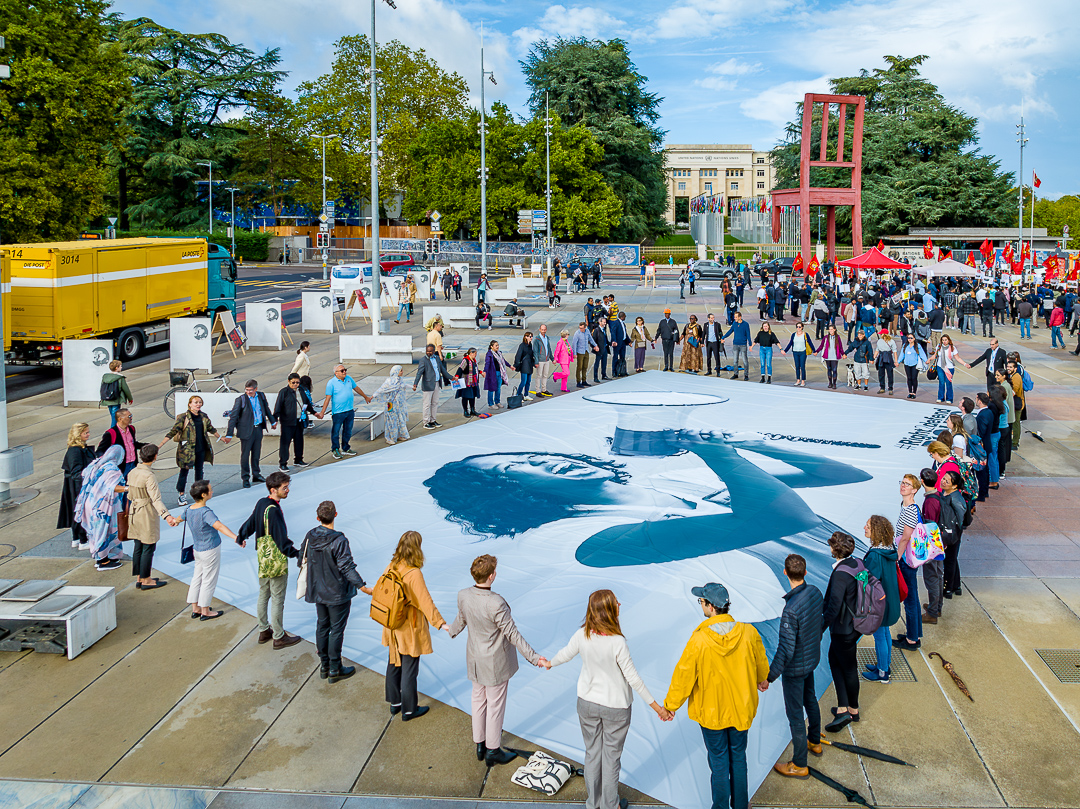
On Monday 18 September, over 50 activists, members of civil society organisations and diplomatic partners gathered on Geneva’s Place des Nations, unfurling a giant banner celebrating the right to defend human rights, as enshrined in the foundational UN Declaration on Human Rights Defenders.

The banner and gathering were meant to mark the 25th anniversary of the Declaration, which was adopted by the UN General Assembly in 1998. The document explicitly laid out the rights of human rights defenders and the protection owed to them by governments and businesses, emphasising that everyone has the right to advocate and defend rights and fundamental freedoms.

On 28 September 2023, the UN Secretary-General’s report on reprisals was presented, which covers the period from 1 May 2022 to 30 April 2023. Over 220 individuals and 25 organizations in 40 countries across the world faced threats and retaliation from State and non-State actors for cooperating with the UN on human rights.

Human rights defenders and other civil society actors are increasingly under surveillance and continued to face legal proceedings, travel bans and threats, and be given prison sentences for cooperating with the UN and the UN’s human mechanisms.

A global context of shrinking civic space is making it increasingly difficult to properly document, report and respond to cases of reprisals, which means that the number is likely much higher,” said Assistant Secretary-General for Human Rights Ilze Brands Kehris in her presentation to the Human Rights Council in Geneva. [see also: https://humanrightsdefenders.blog/2020/11/16/new-assistant-secretary-general-wants-to-improve-civil-society-participation-in-the-general-assembly/]

Among the growing trends noted in the report is the increase in people either choosing not to cooperate with the UN due to concerns for their safety, or only doing so if kept anonymous. 

Victims and witnesses in two-thirds of the States listed in the report requested anonymous reporting of reprisals, compared with one-third in last year’s report.  And most people who reported facing reprisals for their cooperation with the Security Council and its peace operations, as well as with the UN Permanent Forum on Indigenous Issues did so on the condition of anonymity.

A second trend was the increasing surveillance of those who cooperate or attempt to cooperate with the UN, being reported in half of the countries named in the report.  An increase in physical surveillance by State actors was also noted, likely linked to the return to in-person forms of engagement with the UN.

Third, almost forty-five per cent of the in the report continued to apply or enact new laws and regulations concerning civil society, counter-terrorism and national security, which punish, deter or hinder cooperation with the UN and its human rights mechanisms. 
These legislative frameworks represent severe obstacles to long-standing human rights partners of the UN worldwide, and were used to outlaw some of them, raid their offices, and question, threaten or try their staff.

Finally, the specificity and severity of acts of reprisals against women and girls, which constitute half of the victims in this year’s report, was once again identified with concern.

Most of them are human rights defenders and civil society representatives targeted for their cooperation with UN human rights mechanisms and peace operations, but there is also a significant number of judicial officers and lawyers subjected to reprisals for their cooperation with the UN in search of accountability and remedy.

We have a duty to those who put their trust in us,” said Brands Kehris. “That is why at the UN, we are determined to live up to our collective responsibility to prevent and address intimidation and reprisals against those who cooperate with the organization and its human rights mechanisms.” 

The 40 States referred to in the report are: Algeria, Afghanistan, Andorra, Bahrain, Bangladesh, Belarus, Burundi, Cameroon, China, Colombia, Cuba, Democratic Republic of the Congo, Djibouti, Egypt, France, Guatemala, India, Indonesia, Iran (Islamic Republic of), Iraq, Israel, Saudi Arabia, Libya, Maldives, Mali, Mexico, Myanmar, Nicaragua, Pakistan, the Philippines, Qatar, the Russian Federation, South Sudan, United Republic of Tanzania, United Arab Emirates, Uzbekistan, Viet Nam, Venezuela (Bolivarian Republic of), Yemen, and the State of Palestine.

The full report at A/HRC/54/61

https://ishr.ch/latest-updates/defenders-gather-before-the-un-headquarters-to-call-for-better-protection-of-their-work/

https://genevasolutions.news/human-rights/punished-for-speaking-up-at-the-un

Researcher puts bomb under ‘traditional’ protection of human rights defenders

July 7, 2023

On 6 July 2023 Janika Spannagel in Open Global Rights comes with a study of great importance to the work for human rights defenders. The researcher states that “focusing only on defenders’ physical integrity risks undermining the very idea of supporting agents of human rights change” and that there is a need to Rethink campaigns on human rights defenders

Spannnagel’s work featured in this blog before [see: https://humanrightsdefenders.blog/tag/janika-spannagel/] but this work questions more directly the core of HRD protection.

Instead of summarising I will provide large quotes:

,,,,The theory of change put forward by actors, including Front Line Defenders, International Service for Human Rights, and many others, claims that by protecting local human rights activists, international campaigns can support them in their work to advance human rights protection on the ground. This assumption appears plausible and aligns with prominent accounts in academic human rights literature, where domestic activists’ protection from repression is seen as a way to open spaces for them to challenge the regime and enact change.

That said, empirical evidence from UN casework and the experience of Tunisian defenders shows that this promise has not been fulfilled when it comes to human rights defenders in authoritarian regimes, as I show in my recent book. There, I argue that, while international attention can have important protective benefits, it does little to support individual human rights defenders as agents of change in repressive contexts. [Emphasis added]

The reason for this is that international casework on defenders, including urgent action–like campaigns or UN communications, maintain the traditional focus on physical integrity rights that has guided the long-standing casework on political imprisonment, torture, or enforced disappearances. In doing so, it overlooks the many administrative, discursive, and covert forms of repression that typically bypass international scrutiny more broadly but that often very effectively disrupt and thwart defenders’ work toward change.

The analysis of over 12,000 individual cases of human rights activists taken up by the UN special rapporteur on human rights defenders between 2000 and 2016 reveals that, in almost three-quarters of them, at least one of the violations described fell within the category of physical integrity violations. Detention cases alone made up 56% of all cases raised during that period. In contrast, only 4% of the cases dealt exclusively with softer types of repression, such as travel bans, bureaucratic issues, job dismissals, surveillance, or defamation.

This distribution far from represents the everyday experience of human rights defenders in authoritarian states—instead, it is reflective of a humanitarian instinct in human rights casework to privilege cases that are considered most severe. One could argue that UN communications, and perhaps attention-based campaigning more broadly, are inherently humanitarian, not transformative instruments. But one should ask: What, then, is the purpose of focusing on human rights defenders, as opposed to any victim of repression? [Emphasis added]

The priority given to physical integrity violations has two important adverse consequences. First, we can see that the data profoundly shape our understanding of what human rights defenders are struggling with. For example, on the basis of such data a CIVICUS report claims that in order to repress civic space, states resort “most often” to detention of activists, attacks against journalists, and excessive use of force against protesters. The human rights community’s own focus on violent repression thus paradoxically misleads us to believe that this is where most attention is needed.

Secondly, this focus reinforces a protection gap for violations that fall outside of the conventional notion of state repression as physically harmful and as undeniably politically motivated. Research on repression highlights that authoritarian states engage in repressive substitution, where they replace highly scrutinized coercive tactics—typically harder and overt types of repression—with softer and more covert measures. The case of Tunisia under Ben Ali aptly illustrates the strong impact of such tactics on defenders’ ability to carry out meaningful work.

When analyzing the further development of cases taken up by the UN, I also found that, while some positive effects of the UN’s attention could be identified for most of them, many did not see an actual improvement relative to the reported violations over the course of the next year; where they did, it was mostly an easing of harder repression. Ultimately, there is a real risk that governments continue to use hard repression to increase their bargaining power and then pass off a release from prison as a costly concession, while in reality imposing softer but equally effective measures against the activist in question.

With this problem in mind, what could be done differently? Casework that follows a transformative logic should not seek to maximize the reduction of physical harm—the humanitarian logic—but should define protection needs in terms of safeguarding a defender’s ability to do effective human rights work. 

Those engaging in casework and campaigns on human rights defenders should actively revisit their priorities in terms of the violations they tend to address. Far too often, softer repression remains unreported, unnoticed, and not acted upon, which effectively creates a twilight zone in which authoritarian states can comfortably stifle opposition voices without risking much pushback. We owe it to the countless number of human rights activists around the world to ensure that the label of “human rights defender” does not merely serve to laud their heroism and excite donors and the media, but that it is dedicated to fulfilling its promise of human rights change.

https://www.openglobalrights.org/rethinking-campaigns-human-rights-defenders/index.cfm

For the more traditional approach, see e.g. https://www.ipsnews.net/2023/07/recognising-human-rights-defenders-remarkable-agents-positive-change/

China and Russia Fail to Defund UN Human Rights Work

February 23, 2023

On 14 February, 2023 Louis Charbonneau, HRW United Nations Director, reported that the UN General Assembly achieved a funding breakthrough by agreeing to fully fund UN human rights mechanisms that China, Russia, and their allies had sought to defund in the 2023 budget. All these efforts failed. The Czech Republic as European Union president countered by proposing full funding for human rights mechanisms at the level proposed by Secretary-General António Guterres. The resolution passed by a sizable majority.

There’s more good news. Not only did the defunding efforts fail, but the highly problematic recommendations put forward by the UN Advisory Committee on Administrative and Budgetary Questions were rejected. The Advisory Committee is supposed to be an independent body of experts, but in recent years, its “experts” from countries like China and Russia have been pushing their governments’ anti-human rights agendas and advocating for sharp cuts in funding for human rights work, with no good reasons. Due to divisions between western countries and developing states, the standard UN funding compromise had become accepting the non-binding Advisory Committee recommendations. For example, if its recommendations had been adopted, the staff and budget for the Iran commission of inquiry would have been cut in half.

This should set a precedent for UN human rights funding in the future.

https://www.hrw.org/news/2023/02/14/china-and-russia-fail-defund-un-human-rights-work

Iran out of UN Commission on the Status of Women

January 3, 2023
The United Nations headquarters building is seen from inside the General Assembly hall.

Members of the United Nations voted to remove Iran from the Commission on the Status of Women, a body overseen by the Economic and Social Council. | Pool photo by Eduardo Munoz

On 14 December 2022 Politico reported on another setback for Iran in the diplomatic area: A U.S.-led effort to push Iran off a United Nations panel that promotes women’s rights succeeded on Wednesday, the latest move in a broader Western campaign to punish Iran for its crackdown on widespread protests.

The resolution to oust Iran from the Commission on the Status of Women passed with 29 votes in favor and eight against. Yet of the 54 countries eligible to vote, at least 16 abstained — a sign of the wariness about setting a precedent of the U.S. dictating who’s deserving of U.N. panel memberships. Some countries had also questioned why Iran was singled out when other past and present panel members have spotty records on women’s rights.

Iran received vocal support from coiuntries such as Russia and China, some of which noted that there were no formal procedures to push Iran off the commission. Abstainers included countries such as India, the Solomon Islands and Indonesia. Many did not make public statements during the debate.

The vote was held by the U.N.’s Economic and Social Council, which oversees the women’s rights commission. The commission was established in 1946, and its past activities include laying the groundwork for a landmark treaty that has served as an international bill of rights for women. It also urges countries to update their legal frameworks to provide equal rights for women.

Wednesday’s vote followed a campaign by women’s rights activists, including many in the Iranian diaspora, to get Iran off the commission as it has tried to suppress protests. Hundreds have been killed in the crackdown. Iran also has begun executing protesters as part of its attempt to end the demonstrations, which have often been led by young people and women.

See also: https://humanrightsdefenders.blog/2022/11/23/un-human-rights-council-holds-special-session-on-iran-on-24-november/

https://www.politico.com/news/2022/12/14/u-n-member-states-vote-to-oust-iran-from-womens-rights-panel-00073886

The right to a clean, healthy, and sustainable environment (R2E) – further steps and historical decision in the Case of Torres Strait Islanders

November 9, 2022

Following the Human Rights Council and General Assembly resolutions recognising the right to a clean, healthy, and sustainable environment (R2E), adopted in 2021 and 2022 respectively (HRC/RES/48/13 and A/RES/76/300), people have started to consider appropriate next steps in advancing the legal recognition, implementation, and monitoring of this right. See also: https://humanrightsdefenders.blog/2021/10/11/new-right-to-healthy-environment-ngos-urge-action/

A blog post of the Universal Rights Group on 7 November 2022 reports on meeting on 18 October hosted by the Permanent Mission of Costa Rica in Geneva, UNEP, and the Universal Rights Group bringing together over 20 human rights experts from Geneva Permanent Missions in a non-attributable setting designed to promote open and forward-looking debate on appropriate next steps. The discussion was informed by an ‘options paper’ prepared by the Special Rapporteur on human rights and the environment, Dr David Boyd, detailing three possible ways to advance the R2E, which he argued can and should be carried out concurrently.

In the meantime, a more operational development was the historic decision, the United Nations (UN) Human Rights Committee found on Friday 23 September that Australia’s failure to adequately adapt to climate change violates the human rights of Torres Strait Islanders.   

Karin M Frodé, Andrea Olivares Jones and Joanna Kyriakakis reported on the case:

The Committee, which oversees the implementation of the International Covenant on Civil and Political Rights (ICCPR) received a complaint by eight Torres Strait Islanders and six of their children in 2019. The group called for the Committee to recognise that the Australian Government had violated their human rights by failing to reduce carbon emissions, and introduce measures to adapt to climate change.

The Committee’s decision makes clear that inadequate responses to climate change can result in the violation of human rights. It is a landmark victory worth celebrating as part of a broader trend in climate change litigation which has seen human rights arguments put forward to hold both states (ie, the NetherlandsPakistan and Belgium) and corporations (ie, Shell and other Carbon Majors) accountable. It is also an example of a rise in cases where Indigenous actors are central. 

The Committee’s decision: The Committee found that Australia has violated the Torres Strait Islanders’ rights to private life, home and family and their enjoyment of culture. In doing so, the Committee noted Australia’s efforts to construct a seawall, but found it to be an inadequate response to the alarming threats that had been raised by Torres Strait Islanders since the 1990s, due to its delay initiating the project ([8.12], [8.14]).

While decisions by UN bodies are not automatically binding in Australian law, they are persuasive opinions by independent experts that outline Australia’s international obligations and analyse whether they are complied with. The relationship between climate change impacts and human rights is an emerging area, so the clarity that decisions such as in the present case bring is critical. This decision is therefore important not only to the complainants but for other climate justice advocates. 

The present decision follows other climate related decisions by human rights bodies. In Teitiota, a case brought against New Zealand, the same Committee made important observations about state obligations and climate change in the context of asylum seekers and refugees, though it stopped short of finding a violation. Another complaint brought by young climate activists against five states for climate inaction before the Committee on the Rights of the Child, focused on child-centric impacts of climate change. Although dismissed for technical reasons, that decision made important findings that children fall within the jurisdiction of states where transboundary harm originates, following the approach of the Inter-American Court of Human Rights

See also: https://humanrightsdefenders.blog/2022/03/02/human-rights-high-commissioner-bachelet-urges-support-for-environmental-defenders/

https://www.ohchr.org/en/press-releases/2022/09/australia-violated-torres-strait-islanders-rights-enjoy-culture-and-family

Independent Commission of Inquiry hears Palestinian complaints

November 9, 2022
Members of the UN Independent International Commission of Inquiry attend a press briefing at the UN headquarters in New York

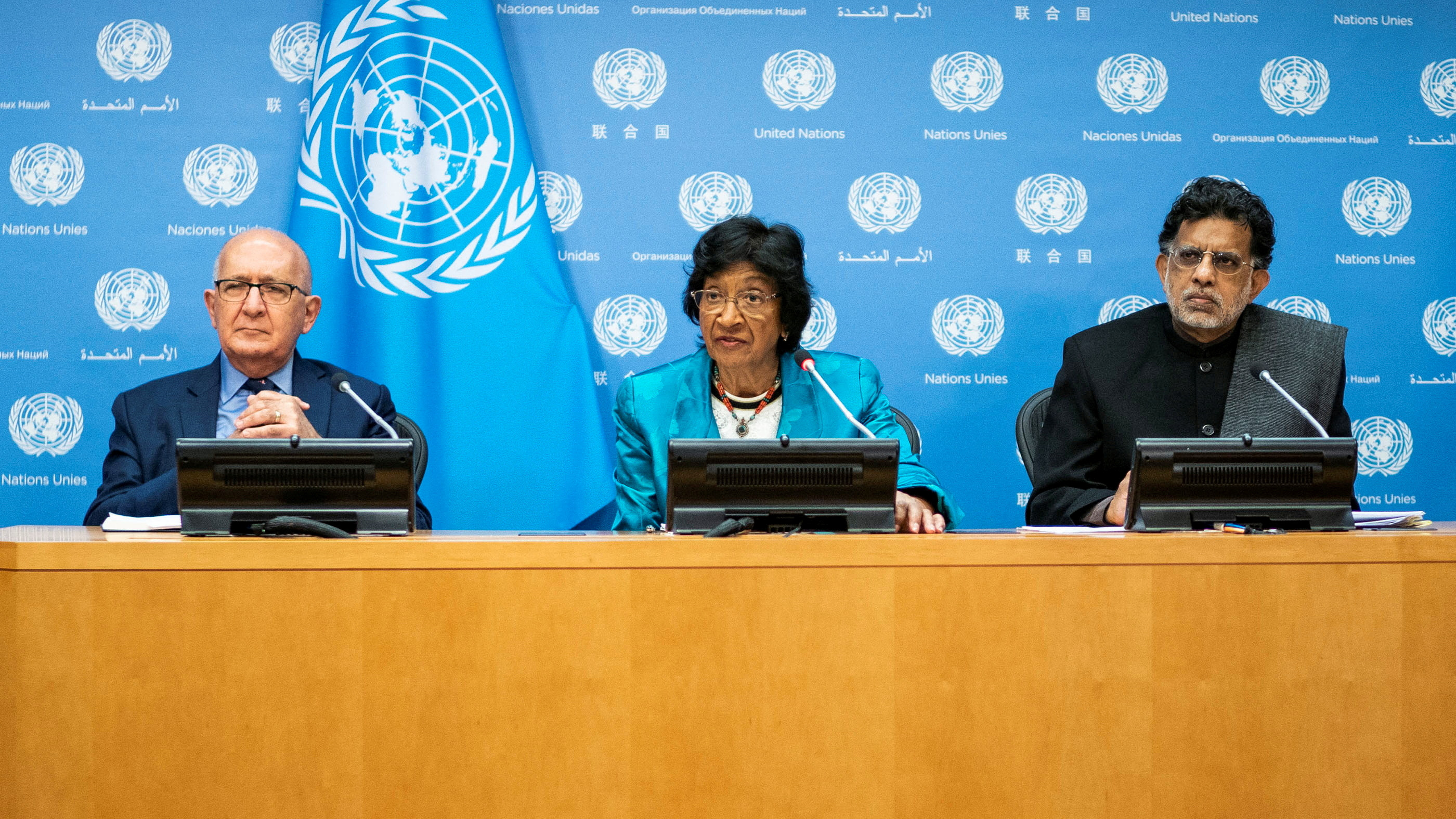
Members of the United Nations Independent International Commission of Inquiry on the Occupied Palestinian Territory and in Israel, Navanethem Pillay, Miloon Kothari and Chris Sidoti attend a press briefing at the United Nations headquarters in New York, U.S., October 27, 2022. REUTERS/Eduardo Munoz/File Photo

On 7 November 2022 Emma Farge reported for Reuters how a Palestinian human rights group told a U.N. panel on Monday 7 November it had been subject to threats and “mafia methods” during a campaign of harassment organised by Israel to silence groups documenting alleged Israeli rights violations.

The independent Commission of Inquiry, established by the Human Rights Council, the U.N. top human rights body, last year, plans five days of hearings which it says will be impartial and examine the allegations of both Israelis and Palestinians. Israel dismissed the process overseen by the panel as a sham while it declined comment on the specific allegations.

In the opening session, the commission heard from representatives of Palestinian organisations shuttered by Israel in August and designated as “terrorist” entities. See also: https://humanrightsdefenders.blog/2021/10/23/assault-by-israel-on-palestinian-human-rights-ngos/

Shawan Jabarin, General Director of human rights group Al-Haq, denied the terrorism charge and called the closure an “arbitrary decision“, saying Israeli security forces had used “mafia methods” against it in a years-long harassment campaign. See also: https://humanrightsdefenders.blog/2011/11/30/israel-refuses-to-let-hrd-shawan-jabarin-travel-to-receive-award-in-denmark/

They used all means, I can say. They used financial means; they used a smear campaign; they used threats,” he said, saying his office was sealed with a metal door on Aug. 18.

Asked to detail the threats mentioned to the panel, Jabarin told Reuters after the hearing that he had received a phone call from somebody he identified as being from “Shabak”, or the Israel Security Agency, two days after the raid. They threatened him with detention, interrogation or “other means” if he continued his work, he added.

https://www.reuters.com/world/un-hearings-probing-alleged-israeli-rights-abuses-open-geneva-2022-11-07/

Human Rights High Commissioner Bachelet urges support for environmental defenders

March 2, 2022
United Nations
Protect the defenders of the planet, UN rights chief urges
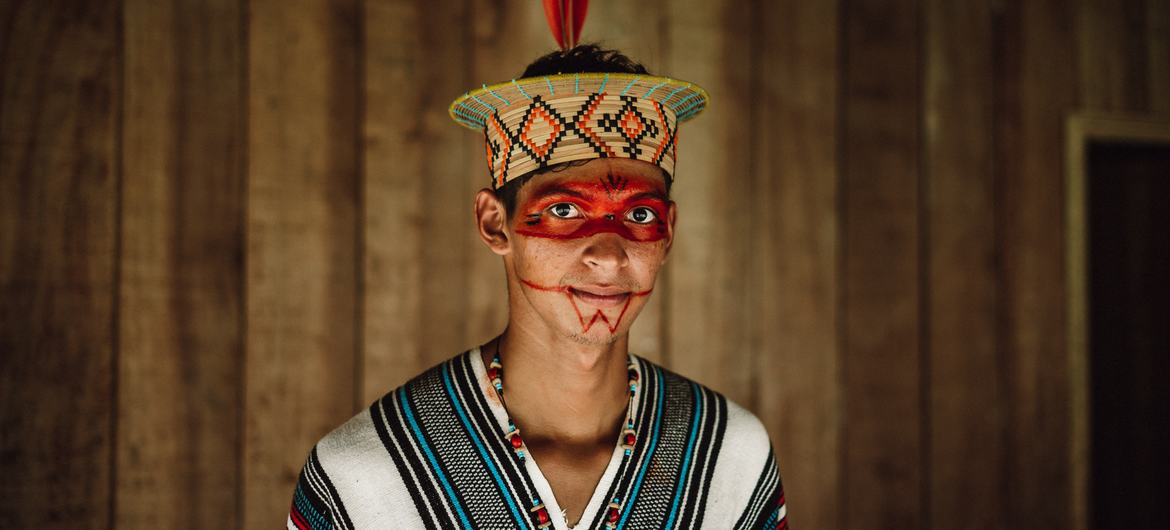
Poyowari Piyãko, a young activist, poses in his home in the Apiwtxa village, which belongs to the Ashaninka indigenous people, in northern Brazil.

Poyowari Piyãko, a young activist, poses in his home in the Apiwtxa village, which belongs to the Ashaninka indigenous people, in northern Brazil. © UNICEF/Alécio Cézar

The world must be made a safer place for people working to protect the planet, who sometimes pay with their own lives for their activism, UN Human Rights High Commissioner Michelle Bachelet said on Tuesday 1 March 2022.  Protecting the environment goes hand-in-hand with protecting the rights of those who defend it, she told the UN Human Rights Council in Geneva, which is holding its annual month-long session. 

Ms. Bachelet revealed how speaking out and standing up for environmental rights can come at enormous cost as activists have been killed or subjected to abuse, threats and harassment.   

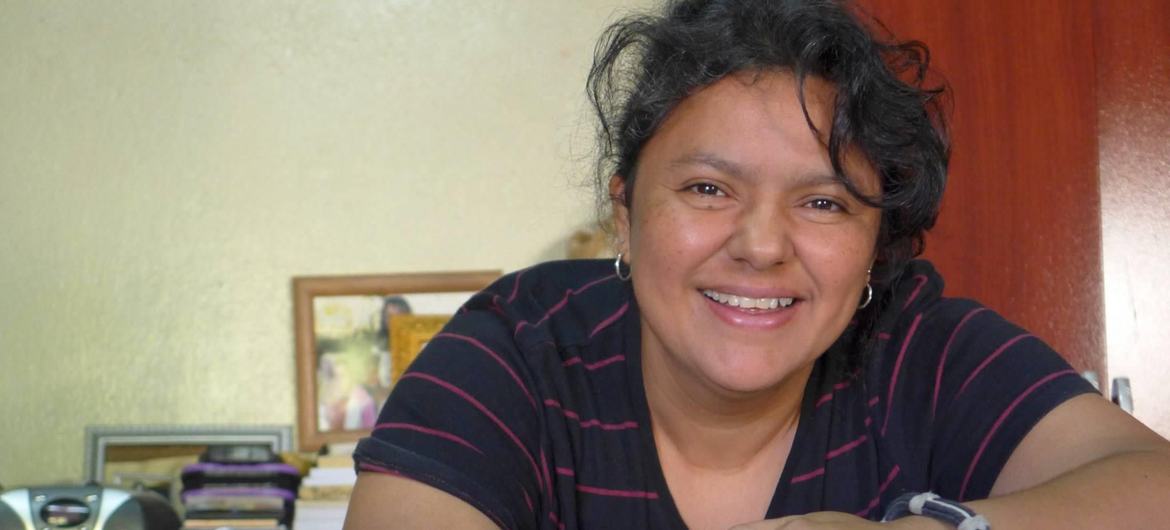
At particular risk are people who speak out against deforestation, extractives, loss of cultural heritage or identity, or large scale-agribusinesses and development projects – including those intended to produce clean energy, such as mega dams,she said.  Many environmental human rights defenders are also indigenous peoples, or members of local communities or minority groups – or those representing them.   Berta Caceres, an environmental activist from Honduras, was assassinated in March 2016.  She was recognized posthumously as a UN Champion of the Earth laureate for her tireless campaign for the rights of indigenous people.

Berta Caceres, an environmental activist from Honduras, was assassinated in March 2016. She was recognized posthumously as a UN Champion of the Earth laureate for her tireless campaign for the rights of indigenous people. © UNEP

She said entire communities may face threats and intimidation when someone speaks out on their behalf.  Ms. Bachelet underlined that States have an obligation to respect and protect the rights of environmental human rights defenders, and the communities they represent.  Authorities must also prevent and ensure accountability for attacks.  These actions are in line with a Council resolution adopted last year which upholds the right to a healthy environment, she said.  See also: https://humanrightsdefenders.blog/2021/10/26/aarhus-convention-gets-new-mechanism-to-protect-environmental-defenders/ and

“In addition, it is critical that States effectively regulate businesses and hold them accountable for human rights violations,” she said, while corporations also have a similar duty, as outlined in the UN Guiding Principles on Business and Human Rights

Ms. Bachelet advised that prior to undertaking any climate project, both governments and businesses must carry out human rights risk assessments.  

If indigenous peoples’ rights are at risk of being adversely affected by such projects, it is crucial that their free, prior and informed consent is obtained,” she said. 

The UN rights chief also reported on some of the global work of her staff.  “All around the world, my Office is committed to supporting States, businesses and environmental human rights defenders in all of their efforts to protect our planet,” she said. 

For example, over 200 human rights defenders in the Pacific region have been trained to help boost sustainable development, business and human rights in the context of climate change.  

In Southeast Asia, OHCHR is monitoring cases of harassment, arrest, killings and disappearances of environmental human rights defenders, while

https://yubanet.com/world/protect-the-defenders-of-the-planet-un-rights-chief-urges/working with governments towards ending punitive measures levelled against activists. 

https://news.un.org/en/story/2022/03/1113022

Towards a fairer selection of NGOs to participate in the UN human rights debate

February 14, 2022
This image has an empty alt attribute; its file name is international-un-ecosoc-ngos-committee-participation-getty.jpg
A plenary meeting at the 76th Session of the General Assembly, at the UN Headquarters, in New York, USA, 21 January 2022, Lev Radin/Pacific Press/LightRocket via Getty Images

NGOs that seek to participate fully at the UN – making statements and organising events to highlight injustice and provide recommendations – have to get accredited.  The “Committee on NGOs” manages the process – as  the gateway for NGOs into the United Nations. If you’re a State with a mind to block NGOs, membership of the Committee is perfect. This is where you can sit and control who comes in. By asking questions of NGO applicants, members of the Committee can push their accreditation for many years.  For more on this see: https://humanrightsdefenders.blog/2018/02/09/the-saga-of-the-anti-ngo-committee-in-the-un-continues/

Currently there are 70 organisations that have faced over four years of deferrals.  Two human rights organisations have been deferred for over ten years.  Some  NGOs  have also been accused by Committee members of having terrorist sympathies: baseless accusations against which the NGOs have been denied appeal.  

In four short months there’s  a chance to change things. Elections to the Committee on NGOs will be held in April 2022. The 54 members of the UN’s Economic and Social Council (ECOSOC) vote to fill the 19 seats on the Committee across all regional groups. 

A joint letter by a massive number of NGOs of 10 February 2022 makes the point:

To: Member States of the UN General Assembly

Excellencies:

We are five months out from elections to the ECOSOC Committee on Non-Governmental Organisations for the 2023-2026 term. These are key elections for all those who value the expertise of civil society and seek to ensure the UN can benefit from it.

The Secretary General has called civil society the UN’s ‘indispensable partners”. Member States recently committed to boosting partnerships ‘to ensure an effective response to our common challenges’. In recommending approval of the participation of non-governmental organisations in a range of UN bodies and processes, the Committee on NGOs plays a key role in facilitating such partnerships. It is essential that the members of the Committee are committed to fulfilling such a task fairly and judiciously.

With this in mind, we would like to request the following, that:

1/ States with an interest in facilitating and safeguarding civil society access to and participation in UN processes stand for election to the Committee.

2/ Candidates make public the reasons for their candidacy and their commitment to fulfil their responsibilities as members of the Committee, as per ECOSOC Resolution 1996/31.

3/ All regions put up competitive slates, as the Asia-Pacific and GRULAC regions did in the last elections for the Committee in 2018. Competitive elections are important to create buy-in to the process and encourage states to be accountable for their commitments.

4/ All regions make public candidacies at least two months before the elections to allow for proper consideration of candidates.

5/ All ECOSOC members vote (and be encouraged to vote) only for candidates with positive track records in regard to civil society access and participation. Candidates could be assessed in regard to indicators such as support for relevant UN resolutions, such as those on civil society space and human rights defenders; on responses to cases of intimidation and reprisals; and on national level initiatives to safeguard civic space, press freedom – online as offline – and the right to defend human rights.

6/ ECOSOC members should consider introducing term limits for membership of the Committee on NGOs, among other reforms encouraging openness and accountability. As with other UN bodies, states should be required to leave the Committee for a specific interval of time after serving for a maximum agreed period. Term limits would encourage greater diversity in membership over time and encourage states to step up as candidates.

The Committee on NGOs is entrusted with the task of facilitating civil society access so that the expertise and experience of civil society partners can enrich and inform UN debates. It needs members that are committed to fulfilling the Committee’s mandate in a fair, transparent, non-discriminatory, expeditious and apolitical manner. It falls on all member states – as potential candidates and / or electors – to ensure that the Committee membership is fit for purpose.

Please elect to stand up for civil society!

Yours sincerely,

In addition to the letter, individuals can undertake additional steps. You can engage with States on all the campaign objectives!

  • On competitive elections and voting with integrity: See here for a model email for sending to those who get to vote, ECOSOC members.  Check here whether your State is going to vote. 
  • On candidates: Does your state have a positive record on promoting civil society but isn’t running? See here for a model email to encourage them. 

https://ishr.ch/action/campaigns/openthedoor2ngos/

Working Together

https://www.hrw.org/news/2022/02/16/letter-members-uns-general-assembly-regarding-ecosoc-committee-ngos

Myanmar: one year after the coup – only getting worse

February 2, 2022
A crowd of protesters wearing face masks, holding up an image of a woman, Aung San Suu Kyi.

On 1 February last year, the military seized power over Myanmar/Burma by overturning the election results and detaining State Counsellor Aung San Suu Kyi. The military is still controlling power by force and uses brutal violence against human rights defenders, civil society groups, and journalists in order to silence all forms of protest and dissent. More than 1,500 people have been killed by the military and over 8,000 people have been arrested.

The coup prompted mass protests and more than 1,500 people have been killed by the military. Over 8,000 people have been arrested in the harsh crackdowns. In a series of charges, Aung San Suu Kyi has been sentenced to several years in prison. Most recently, five new corruption charges against her were announced and in all she faces up to 164 years in jail. See also: https://humanrightsdefenders.blog/2021/09/30/rohingya-human-rights-leader-mohibullah-murdered-in-bangladesh-refugee/

Despite the military’s brutal response, people have come together to fight the dictatorship. Nationwide protests, boycotts, strikes, and coordinated civil disobedience movements have taken place. Journalists across the country have continued their work despite severe attacks by the military.  

A new report by Athan looks at how the military coup has affected journalists’ work and press freedom in the country. Throughout the country’s history, military coups have led to severe attacks on press freedom and the 2021 coup is no exception.  Since the launch of the coup, 141 journalists have been arrested and 13 have been sentenced to prison. On 10 December, photojournalists Ko Soe Naing and Ko Zaw Tun were arrested while taking photos of a nationwide silent strike. Ko Soe Naing was tortured to death at the interrogation centre four days later. Just a couple of weeks after that, editor of the Federal Journal, A Sai Kay (Aka) Sai Win Aung, was shot dead by the military in Lay Kay Kaw.  See also: https://humanrightsdefenders.blog/2021/05/11/three-democratic-voice-of-burma-journalists-and-two-activists-risk-refoulement-by-thailand/

According to Athan, the attacks on press freedom since the 2021 military coup have been the worst the country has seen.  “Journalists and news media require continuous support to sustain local media and its journalists in order to secure journalists’ careers and their safety, and to enable an environment for journalistic professionals and the industry,” says a representative from Athan about the report. 

On the one-year anniversary of the military coup in Myanmar, the High Representative on behalf of the European Union and the Foreign Ministers of Albania, Australia, Canada, New Zealand, Norway, Republic of Korea, Switzerland, the United Kingdom, and the United States, have made the following declaration:

….The European Union is deeply concerned by the continuing escalation of violence and the evolution towards a protracted conflict with regional implications. Since the military coup, the situation has continuously and gravely deteriorated. A large part of the population is now in a highly precarious situation, experiencing poverty, food shortages, displacement, and violence. ..

The European Union condemns in the strongest terms continuing grave human rights violations including torture, sexual and gender-based violence, the continued persecution of civil society, human rights defenders, and journalists, attacks on the civilian population, including ethnic and religious minorities by the Myanmar armed forces. Therefore, the EU calls for full accountability of the leaders responsible for the coup as well as of the perpetrators of violence and human rights violations. The EU also reiterates its firm demand for the immediate and unconditional release of all prisoners arbitrarily detained in relation to the coup and the return to power of democratically elected leaders.

As a matter of priority, the EU reiterates its calls for an immediate cessation of all hostilities, and an end to the disproportionate use of force and the state of emergency. The military authorities must ensure rapid, safe, and unhindered humanitarian access to all displaced persons and people in need, in all parts of the country. The European Union will continue to provide humanitarian assistance, in accordance with the principles of humanity, neutrality, impartiality, and independence and reiterates its call for the full and immediate respect of international humanitarian law…

In view of the escalating violence in Myanmar, increased international action is required in line with the already existing EU arms embargo on Myanmar. Since the military coup on 1 February 2021, the EU has imposed targeted sanctions on the Myanmar military, its leaders, and entities. In the absence of any swift progress of the situation in Myanmar, the EU stands ready to adopt further restrictive measures against those responsible for undermining democracy and the serious human rights violations in Myanmar.

It is a failed coup,” said Yanghee Lee, co-founder of the Special Advisory Group on Myanmar and former UN special rapporteur for human rights in the country in a CNN report of 1 February. “The coup has not succeeded in the past year. And that is why they are taking even more drastic measures to finish out the coup.” He reported on problems for human rights defenders already in 2015, see: https://humanrightsdefenders.blog/2015/03/19/myanmar-backsliding-by-prosecuting-human-rights-defenders-instead-of-perpetrators/

https://edition.cnn.com/2022/01/31/asia/myanmar-coup-anniversary-resistance-junta-intl-hnk-dst/index.html