In order for the international human rights system to function to its fullest potential, human rights defenders must be able to share crucial information and perspectives regarding situations on the ground. However, many defenders still face unacceptable risks and are unable to cooperate safely with the UN. Although this study by the International Service for Human Rights (ISHR) dates back to 3 may 2020 , I still want to refer to it because reprisals is one of the most importatnt topics covered regularly in this blog [see https://humanrightsdefenders.blog/tag/reprisals/ and https://humanrightsdefenders.blog/2014/03/13/zero-tolerance-for-states-that-take-reprisals-against-hrds-lets-up-the-ante/%5D
Photo: FlickR / Looking4poetry
ISHR’s new report to the UN Secretary-General demonstrates the need for the UN and States to do more to prevent and ensure accountability for intimidation and reprisals against those who cooperate or seek to cooperate with the UN. The report was prepared in response to the call for submissions to the annual report of the Secretary-General on cooperation with the UN in the field of human rights, aka the ‘Reprisals Report’. ISHR’s report outlines developments in the international and regional systems, and documents a number of cases.
ISHR’s submission presents a disturbing pattern of intimidation and reprisals. Cases of reprisals featured in the submission range from States dangerously maligning defenders to killing them. In Venezuela, increased monitoring of the situation by the UN has been met with increased risk, stigmatization and harassment of defenders working with the mechanisms. In the Philippines, human rights defenders continue to be vilified by the government and accused of being terrorists. Defenders in Honduras, India, Thailand, Cuba, and Yemen continue to be threatened and harassed. In Russia and Cameroon, defenders who engaged with the UN have been refused entry to the country. Defenders working on China continue to be smeared and discredited and there continues to be no investigation into the death of Cao Shunli, who was jailed and died in custody for trying to provide information to the UN. Defenders in Egypt, the UAE, Saudi Arabia, remain in jail because they dared engage in international advocacy. Other countries cited in the report include The Bahamas, Brazil, Burundi, Mexico, Morocco, and the United States.
The report includes follow-up information on a large number of cases, demonstrating that incidents of reprisals and intimidation are very rarely, if ever, adequately resolved. ‘One only needs to look at the cases that remain unresolved year after year, to know that something more must be done by the UN on follow-up. Otherwise, reprisals ‘work’ to dissuade engagement, and perpetrators are emboldened’, said Madeleine Sinclair, New York Office Co-Director and Legal Counsel.
The primary duty to prevent and remedy reprisals lies with States—who must do more to prevent, investigate and ensure accountability for reprisals. ‘States must use the opportunity of the interactive dialogue on the Secretary-General’s report in September, as well as Item 5 debates, to raise specific cases and hold their peers accountable’, said Sinclair.
The submission also highlights ISHR’s new study, ‘Intimidation and its Impact on Engagement with the UN Human Rights System: Methodological challenges and opportunities’. The study responds to the challenge of severe intimidation leading to ‘self-censorship’ and proposes methodological approaches to strengthen the future capacity to measure and understand how intimidation tactics – both blunt and subtle – effectively inhibit human rights reporting and action, thus reinforcing impunity for States’ abuses. Among these is the dire need for better data. ‘As a starting point, the UN needs to harness its vast data collecting power to systematically track cooperation with its diverse human rights mechanisms so as to be able to track deterioration or improvements from year to year,’ said Sinclair. The study proposes that this, combined with data on human rights abuses, would enable the identification of countries where there is high abuse and low cooperation as well as those with high abuse and high cooperation. Best practice research can then extract lessons learned from countries with high levels of abuse and high levels of cooperation that may assist countries where intimidation has been more successful in sustaining inhibition.
An open letter has been signed by: Article 19, Assembly of Pro-Democratic NGOs of Belarus, Barys Zvozskau Belarusian Human Rights House, Belarusian Association of Journalists, Belarusian Helsinki Committee, Civil Rights Defenders, Human Constanta, Human Rights House Foundation, Human Rights Watch, International Federation for Human Rights (FIDH), La Strada International, Legal Initiative, Legal Transformation center (Lawtrend), Viasna Human Rights Center and World Organisation Against Torture (OMCT).
The UN Human Rights Council must urgently convene a special session to address the human rights crisis in Belarus. The joint letter expresses the organisations’ “utmost concern” over “widespread violations of human rights, including arbitrary arrests, prosecutions under trumped-up charges, and torture and other ill-treatment”.
The letter calls on the council to adopt a resolution requesting the UN High Commissioner for Human Rights to monitor and report on human rights abuses in Belarus with “a view to ensuring full accountability”.
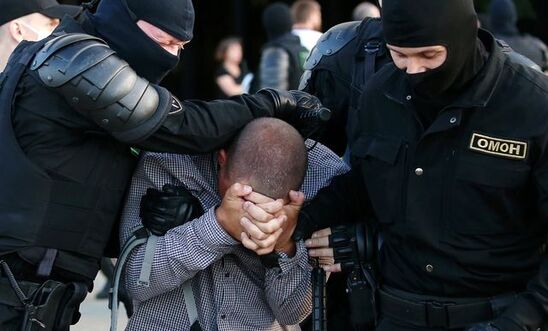
[In the three days after the 9 August presidential election, the authorities in Belarus confirmed the arrest of at least 6,700 protesters. According to Viasna Human Rights Center, at least 450 of the detainees reported being tortured or otherwise ill-treated – including through severe beatings, being forced to perform humiliating acts, being threatened with rape and other forms of violence – while held in incommunicado detention for up to ten days.
Since 12 August, the authorities have taken steps to de-escalate the situation, refraining from mass arrests and releasing those detained. However, the threats against peaceful protesters recently made by President Alyaksandr Lukashenka and his subordinates together with the recent deployment of the armed forces in the country’s capital Minsk and elsewhere, signal a possible new spiral of violence and accompanying human rights violations.]
On Wednesday 9 September 9am-12pm (New York time)Amnesty International and the International Service for Human Rights will hold – as usual – an online pledging event for candidate States in advance of the Human Rights Council elections that will take place this autumn for the membership term 2021-2023,. State representatives and civil society are invited to participate actively in the events and pose questions to candidate States.
The link to attend the event will be shared closer to the date.
Have a question? Follow the event on Twitter and submit questions to candidates via: @ISHRglobal #HRCpledging #HRCelections2020
The admittedly Pakistan-based Geonet.tv gives a good summary of India’s disregard of concerns and objections in five letters by UN Human Rights Council (UNHRC) about human rights abuses in Jammu and Kashmir, India’s new terrorism law and the Citizenship law.
In the five letters, UNHRC experts raised pertinent questions and pointed out violations by Indian authorities of the resolutions by UN Security Council, General Assembly and UN Human Rights Council…
On July 4, 2020, United Nations Human Rights Council (UNHRC) made public 14 cases of worst possible human rights abuses in Jammu and Kashmir after the Indian government failed to respond to their concerns within the stipulated 60 days.
Four UNHRC Rapporteurs on torture, extrajudicial executions, minority issues and freedom of religion under HRC charter and mandate had written to Indian government on May 4th, 2020, to respond back on the 14 cases and countless other cases involving grave abuse of human rights in Kashmir after its annexation on Aug 5th, 2019. The UN Rapporteurs in the May 4th letter lamented that Indian government had not responded to their earlier letters on Aug 16, 2019, and February 27, 2020, on the atrocities in Kashmir. The two earlier letters questioned the restrictions in Kashmir on rights of expression and assembly and dissent following Indian annexation of Kashmir.
In another letter on May 6th, 2020, eight Rapporteurs of UNHRC and one Vice Chair of a Working Group raised serious concern on the new anti-Terrorism law passed by Indian parliament just before Indian annexation of Kashmir in July/Aug 2019. UNHRC questioned the detention of any accused for an extended period of six months under the new anti-terror law
In another letter on February 28th, 2020, eight Rapporteurs of UNHRC and one Vice Chair of a Working Group questioned the Indian Citizenship Act of December 2019 which discriminates against Muslims and bars them to get Indian citizenship whereas people from different religious beliefs who entered Indian before Dec 2014 are eligible for it. The letter also heavily criticise excessive use of force to quell protests against this Act which resulted in death of over 50 and injuries to hundreds.
In an interesting article published on 10 july 2020, Bruno Stagno Ugarte – Deputy Executive Director for Advocacy of Human Rights Warch – sees encouraging signs of a revival of the leading role of the Nordic countries when it comes to international human rights policy.
…There are encouraging signs these countries might be ready to re-engage in denouncing grave abuses and lead international efforts for country-specific scrutiny and accountability.
..If Iceland with a population of 365,000, found the bandwidth to lead on two issues simultaneously, its larger Nordic neighbors can surely match both its courage and performance.
There are reasons to be encouraged on that front. In June, Finland supported the creation of a Libya investigation by the Human Rights Council to document violations committed by all parties and preserve evidence. Denmark, currently a member of the Council, is considering addressing ongoing rights violations by Saudi Arabia. And now that Norway has been elected to a non-permanent seat on the United Nations Security Council for the 2021-22 term, we hope it will become a principled voice for human rights and lead on country-specific situations.
In the absence of leadership by larger states, it is incumbent on smaller states, individually and collectively, to ensure that multilateral tools remain relevant to address dire human rights situations. The Nordic countries have done so in the past; it is time for them to do so again.
Verafiles of 6 July 2020 carries the personal impression of human rights defender Mary Aileen D. Bacalso who attended the 44th seesion of the UN Human Rights Council where the Philippines was on the agenda.
Participation to the 44th session of the UN Human Rights Council was mostly online. Inset photo on the left is UN High Commissioner of Human Rights Michelle Bachelet. Inset photo on the right is Philippine Justice Secretary Menardo Guevarra.
During the last two and a half decades, ..I would never have believed that I should see the UN session hall almost empty as it was during the 44th session of the UN Human Rights Council, which opened on 30th June 2020. Participation was online due to the COVID-19 pandemic.
The Republic of the Philippines, one of the founding members of the United Nations, was yet again subjected to international scrutiny at the outset of the 44th session. The UN High Commissioner of Human Rights said that according to her office’s report the Philippine situation is “near impunity.” This from the first female Chilean president, Michelle Bachelet, a woman who survived torture during the Pinochet dictatorship: she was referring to Philippine laws and policies directed at the drugs business and threats to national security, whose implementation has led to the killing of 248 human rights defenders – lawyers, journalists, trade unionists – between 2015 and 2019.
….Yet barely a week after the start of the UNHRC session, the bill has already been signed into law, on 3 July 2020. This draconian law, which introduces warrantless arrests among other curtailments of fundamental freedoms, is vehemently opposed by civil society….
At the 44th session, members of the European Union, part of the Western European and Other Groups, expressed profound concern about the direction of the Philippines, emphasizing the consequences for human rights of the Duterte administration’s “war on drugs” and censuring its failure to implement recommendations made during the Philippines’ Third Cycle of the Universal Periodic Review.
ASEAN on the other hand, and other members of the Asia and the Pacific Group, as well as some states in other regions such as Venezuela, Cuba and Belarus, expressed their unequivocal support for the Philippines, noting in particular its collaboration with the UNHRC, its robust NGO community and its efforts in reducing poverty. China conspicuously praised the Philippines’ progress in human rights……
Philippine non-government organizations (NGOs) condemned their country’s withdrawal from the International Criminal Court; the arrest and detention of Maria Ressa; the endless implementation of extrajudicial executions; the shutdown of the largest television network, ABS-CBN; continuing enforced disappearances and torture; the red-tagging of Sister Mary John Mananzan OSB and of a number of NGOs; the shoot-to-kill order against COVID-19 lockdown violators; and the then-imminent enactment of what is now the 2020 Anti-Terror Law.
Towing President Duterte’s line, Justice Secretary Menardo Guevarra responded that transparency and constructive cooperation characterized the country’s engagement with the UN, while the Philippine Commission on Human Rights, which Duterte tried to eliminate in 2018 by giving it a budget of PhP 1,000 ($20), asserted the vital importance of accountability. Commissioner Karen Dumpit said that the past failure to protect human rights had directly led to the current climate of impunity, and there was an obligation on the Government to pursue social justice and uphold human rights.
The Philippines prides itself as a founding member of the community of nations, though to become a model of human rights promotion and defense remains a distant hope.
Mary Aileen D. Bacalso is former secretary-general of the Asian Federation Against Involuntary Disappearances. For her work against enforced disappearances, the Argentinian Government conferred on her the Emilio F. Mignone International Human Rights Prize in 2013, and she was awarded the 2019 Franco-German Ministerial Prize for Human Rights and the Rule of Law.
The ISHR published on 24 June its usual and irreplacable “HRC44 – Key issues on agenda of June 2020 session”
As usual I have lifted out of this the issues that would seem to affect most directly Human Rights Defenders. To stay up-to-date on all issues: follow @ISHRglobal and #HRC44 on Twitter, and look out for its Human Rights Council Monitor.
The UN Human Rights Council (the Council) will hold its 44th regular session at Palais des Nations in Geneva from 30 June to 21 July 2020.
Modalities for participation in HRC44
State delegations not wishing to enter the plenary room physically will be able to deliver their statements by pre-recorded video-message, as provided for under HRC decision 19/119. Similarly, NGOs in consultative status with ECOSOC will be given the opportunity to do the same insofar as interactive dialogues, panels and UPR adoptions are concerned. It won’t be possible to hold “official” side events during the 44th session (online or in-person). Any events happening on the sidelines of the session will be considered independent events and won’t be publicised in the Bulletin of Informal meetings by the Secretariat. Read here the information note by the Secretariat which is updated according to the latest information, and an additional explainer by HRC-net.
Human Rights implications of COVID-19
The High Commissioner will present an oral update on the human rights impact of COVID-19 at the 44th session, as mandated by the presidential statement adopted by the Council in May 2020. The presidential statement also calls on the High Commissioner to produce a report on the impact of the COVID-19 pandemic on the enjoyment of human rights around the world to be presented at the 46th session in March 2021. In addition to their previously mandated reports, some mandateholders will present additional reports to address the impact of COVID-19 as related to their mandate, including the Special rapporteur on freedom of opinion and expression, David Kaye. [for some of my earlier posts on covid and human rights see: https://humanrightsdefenders.blog/tag/covid-19/]
Here are some highlights of the session’s thematic discussions:
Business and human rights
At this session, the Working Group on Business and Human Rights is expected to present reports on their activities over 2019, including a country visit to Honduras and on the theme of anti-corruption and the UN Guiding Principles (UNGPs). They are also meant to present groundbreaking guidance on human rights defenders and the role of business. ISHR expects that such guidance should provide companies with concrete suggestions for how to engage human rights defenders in the development and implementation of their human rights policies. It is important that the guidance explains why this is not simply good practice, but is also aligned with the Guiding Principles’ word and spirit – and thus should be widely mainstreamed for any company committed to the UNGPs. There will tentatively be a resolution presented to renew the mandate of the UN Working Group on Business and Human Rights, as well as to welcome the thematic reporting.
Reports of cases of intimidation and reprisal against those cooperating or seeking to cooperate with the UN not only continue, but grow. Intimidation and reprisals violate the rights of the individuals concerned, they constitute violations of international human rights law, and undermine the UN human rights system. [agains for earlier posts see: https://humanrightsdefenders.blog/tag/reprisals/]
During the 42nd session, the Council adopted a resolution which listed key trends such as the patterns of reprisals, increasing self-censorship, as well as the use of national security arguments and counter-terrorism strategies by States as justification for blocking access to the UN. The resolution acknowledged the specific risks to individuals in vulnerable situations or belonging to marginalised groups, and called on the UN to implement gender-responsive policies to end reprisals. The Council called on States to combat impunity and to report back to it on how they are preventing reprisals, both online and offline.
Item 5 of the Human Rights Council’s agenda provides a key opportunity for States to raise concerns about reprisals, and for governments involved in existing cases to provide an update to the Council on any investigation or action taken toward accountability to be carried out.
Other thematic reports :
At this 44th session, the Council will discuss a range of civil, political, economic, social and cultural rights through dedicated debates with the mandate holders, including interactive dialogues with:
The Working Group on the issue of human rights and transnational corporations and other business enterprises (includes recommendations from 2019 visit to Peru)
The Special Rapporteur on contemporary forms of racism, racial discrimination, xenophobia and related intolerance
The Special Rapporteur on extrajudicial, summary or arbitrary executions
The Special Rapporteur on the rights to freedom of peaceful assembly and of association
The Special Rapporteur on the promotion and protection of the right to freedom of opinion and expression
In addition, the Council will hold dedicated debates on the rights of specific groups including:
The Special Rapporteur on trafficking in persons, especially women and children
The Special Rapporteur on the independence of judges and lawyers
The Special Rapporteur on the human rights of migrants
The Working Group on discrimination against women and girls
The Special Rapporteur on the human rights of internally displaced persons
The Special Rapporteur on violence against women, its causes and consequences
The Independent Expert on protection against violence and discrimination based on sexual orientation and gender identity
#HRC44 | Country-specific developments
China (Hong Kong and Uyghur regions)
Violations in China, especially those linked to freedom of association, were made even more clear during the government’s efforts to respond to the COVID-19 epidemic. …..States should ensure continued calls for access to UN human rights experts, in line with last year’s joint letter condemning China’s suppression of minorities. Finally, following nearly a year of protests – largely of peaceful civilians – the central government in Beijing launched an initiative to draft and pass National Security Legislation in Hong Kong. This alarming development was foreshadowed by increasing police violence and use of chemical weapons; the arrest and political prosecution of more than a dozen pro-democracy leaders; and further restrictions on the free press. Many activists, and the European Parliament, are calling for UN Secretary-General António Guterres to appoint an envoy, rightly recognising that China’s actions violate international agreements aimed at ensuring peace and security.
United States of America
Last week, the Council held an urgent debate and adopted a resolution in reaction to systemic racism and police violence in the US and elsewhere. The UN Special Rapporteur on contemporary forms of racism and the UN Working Group on Experts on People of African Descent had also voiced their support for an international commission of inquiry. They have urged the Human Rights Council to ensure the following outcomes from the debate: (1) the creation of an international commission of inquiry to investigate systemic racism in law enforcement in the United States; and (2) the creation of a thematic international commission of inquiry to investigate systemic racism in law enforcement globally, with a focus on systemic racism rooted in legacies of colonialism and transatlantic slavery. They stressed that “both measures described above are necessary and cannot be substituted for one another”.
Saudi Arabia
Women human rights defenders (WHRDs) have been in prison for over two years, only because they demanded that women be treated equally as men, and no one has been held accountable for their torture. While the Council has sustained pressure on Saudi Arabia in 2019, it is essential that this scrutiny continues as the situation on the ground has not improved. ISHR calls on all States to jointly call on Saudi Arabia to immediately and unconditionally release the WHRDs and drop the charges against them; and implement the bench-marks set out in the two joint statements delivered by Iceland and Australia in 2019, underlining that should these benchmarks not be met, more formal Council action would follow.
Saudi Arabia is running for Human Rights Council election in October 2020 and hosting the G20 in November 2020. These all provide windows of opportunity to push for the immediate and unconditional release of the women human rights defenders and all those detained for exercising their rights.
Nicaragua
The COVID-19 crisis has not prevented the Nicaraguan government from making further use of repressive methods to continue targeting released political prisoners, human rights defenders, as well as indigenous people and other social groups, and their relatives. In a rapidly-deteriorating human rights situation, the authorities’ dangerous denial and inaction in the face of the pandemic have additionally fueled an alarming health crisis.
It is in this context that Council Members renewed a resolution on Nicaragua this week at the resumed 43rd session of the Human Rights Council. ISHR joined Race and Equality and a number of national and international organisations in urging the Council to ensure strong support for the resolution on the human rights situation in Nicaragua. To ensure the international community is fully informed of the worsening national situation, the resolution requests the High Commissioner to prepare a report and two oral updates, the first of which should be presented at the Council’s 44th session.
Honduras
The Working Group on Business and Human Rights will present the report on its official visit to Honduras (carried out between the 19 and 28 August 2019). …According to the end of mission statement, a significant number of human rights defenders who work for the respect and protection of human rights in the context of business activity have been arbitrarily arrested, intimidated, stigmatised, criminalised, threatened and some killed.
This was particularly evident in reference to those working in the field of extractive and hydro-electric industries. The murder of leading land,environment and indigenous peoples´ rights defender Berta Cáceres, who had been campaigning against the construction of the Agua Zarca dam, is one case cited where impunity is ongoing. Individuals responsible for the killing have been tried and jailed. However, those suspected of planning the crime, including senior management from the company building the dam (DESA) according to the independent mission of experts GAIPE, have not been investigated or prosecuted. [see also: https://humanrightsdefenders.blog/2020/06/10/nina-lakhanis-who-killed-berta-caceres-reviewed/]. Another Special Procedure expert – the Special Rapporteur on the independence of judges and lawyers – will also be presenting a report on its official visit to Honduras in August 2019. After completion of the visit, he called on Honduras to take urgent action to end corruption and guarantee an independent judiciary, stressing that ‘the justice system, as well as the political class’ are being ‘called strongly into question by the citizens’.
Burundi
The Commission of Inquiry on Burundi will present its oral briefing during the 44th session of the HRC. ISHR continues to remain highly concerned about the human rights situation in Burundi and its refusal to cooperate with the Council’s mechanisms.
Egypt
Seven UN experts have expressed concern about the collective and corrosive effects of Egypt’s counter-terrorism laws and practices on the promotion and protection of human rights. They stated that “Despite repeated communications by UN experts over arbitrary detention of individuals, human rights defenders and activists, the Egyptian Government has not changed its laws of practice”. The ‘Terrorism Circuit courts’ in Egypt, are enabling pre-trial detention as a form of punishment including against human rights defenders and journalists, such as Ibrahim Metwally, Mohamed El-Baqer and Esraa Abdel Fattah, Ramy Kamel, Alaa Abdel-Fattah, Patrick Zaky, Ramy Shaat, Eman Al-Helw, Solafa Magdy and Hossam El-Sayed. All of the individuals that the Special Procedures and the High Commissioner have written about since September 2019 are still in pre-trial detention by these courts. Once the terrorism courts resumed after they were suspended due to COVID-19, they renewed their detention retroactively.
The government’s response to the UPR in March 2020 demonstrated its lack of political will to address key concerns raised by States and to engage constructively with the Council. For example, the government refused to acknowledge the systematic and widespread attacks against defenders, the practice of torture and ill-treatment in detention centres, and to receive visits by Special Rapporteurs on torture and human rights defenders. The government claimed that no one is detained for exercising their rights, despite the fact that the UN Working Group on Arbitrary Detention found that arbitrary detention is a systematic problem in Egypt and could constitute a crime against humanity.
ISHR urges States to call on Egypt to immediately and unconditionally release all those detained for exercising their human rights, to stop using pre-trial detention as a punishment, and to take immediate measures to guarantee their rights to contact their families on a regular and continuous basis and to ease sending and receiving letters, food and medical supplies to them.
Philippines
The OHCHR issued its report (A/HRC/44/22) on the human rights situation in the Philippines, drawing on extensive engagement with and information provided by civil society in the country, the region and globally. The report refers to the killing of 208 human rights defenders, journalists and trade unionists, including 30 women, between January 2015 and December 2019. Confirming practices of vilification, criminalisation, restrictions of fundamental rights, as well as the continuing attacks including ‘red-tagging,’ the report notes existing impunity and the failure of domestic mechanisms to ensure accountability. The presentation of this report provides an important opportunity for debate on the key findings, and to consider options for how to advance recommendations to address the government’s violations of human rights overall, and restrictions on human rights defenders in particular.
The Council will hold an interactive dialogue on the High Commissioner’s annual report on 2 July 2020. The Council will consider reports on and is expected to consider resolutions addressing a range of country situations, in some instances involving the renewal of the relevant expert mandates. These include:
Interactive Dialogue with the High Commissioner on the human rights situation of Rohingya people
Enhanced Interactive Dialogue with the High Commissioner on the situation of human rights in the Philippines
Interactive Dialogue with the SR on the situation of human rights in Eritrea
Oral update by the High Commissioner on the situation of human rights in Nicaragua
Interactive Dialogue with the SR on the situation of human rights in Belarus
Interactive Dialogue with the High Commissioner on the situation of human rights in the Bolivarian Republic of Venezuela
Interactive Dialogue with the Commission of Inquiry on Burundi
Interactive Dialogue with the SR on the situation of human rights in Myanmar
Interactive Dialogue with the Commission of Inquiry on the Syrian Arab Republic
Interactive Dialogue with the SR on the situation of human rights in the Palestinian Territories occupied since 1967
Enhanced ID on the oral reports of the Government of the Sudan and OHCHR on progress towards the opening of a country office
Oral update of the High Commissioner on cooperation with Georgia
Adoption of Universal Periodic Review (UPR) reports
During this session, the Council will adopt the UPR working group reports on Armenia, Grenada, Guinea, Guinea-Bissau, Guyana, Kenya, Kiribati, Kuwait, Kyrgyzstan, Lao People’s Democratic Republic, Lesotho, Spain, Sweden, and Turkey.
ISHR supports human rights defenders in their interaction with the UPR. We publish and submit briefing papers regarding the situation facing human rights defenders in some States under review and advocate for the UPR to be used as a mechanism to support and protect human rights defenders on the ground. This session of the Council will provide an opportunity for Turkey, Kuwait and Guinea to accept recommendations made in relation to human rights defenders, as proposed in ISHR’s briefing papers.
#HRC44 | Council programme, appointments and resolutions
During the organisational meeting for the 44th session held on 12 and 15 June 2020, the President of the Human Rights Council presented the programme of work. It includes five panels of discussion and 81 reports. States also announced at least 17 resolutions.
Appointment of mandate holders
The President of the Human Rights Council has proposed candidates for inter alia the Special Rapporteur on freedom of opinion and expression and the Special Rapporteur on trafficking.
Resolutions to be presented to the Council’s 44th session
At the organisational meeting the following resolutions were announced (States leading the resolution in brackets) especially relevant:
Elimination of discrimination against women (Colombia, Mexico)
Human rights situation in Eritrea (Australia, Austria, Belgium, France, Germany, Netherlands) mandate renewal
Business and human rights (Norway, Russian Federation, Ghana, Argentina) Working Group + Accountability and Remedy project mandate renewals
Extrajudicial, summary or arbitrary executions (Sweden) mandate renewal
Human rights and climate change (Bangladesh, Philippines, Viet Nam)
Independence and impartiality of the judiciary, jurors and assessors, and the independence of lawyers (Hungary, Australia, Botswana, Maldives, Mexico, Thailand) + mandate renewal
Trafficking in persons, especially women and children (Germany, Argentina, Philippines) + mandate renewal
Freedom of opinion and expression: access to information (Canada, Namibia, Brazil, Fiji, Netherlands, Sweden)
Rights of persons with disabilities (Mexico, New Zealand) mandate renewal
The human rights situation in Belarus (EU)
The right to peaceful protest (Switzerland, Costa Rica)
Panel discussions
During each Council session, panel discussions are held to provide member States and NGOs with opportunities to hear from subject-matter experts and raise questions. All panel discussions are broadcast live and archived on http://webtv.un.org. Five panel discussions are scheduled for this upcoming session:
Annual full-day meeting on the rights of the child (two panels, theme: “Realizing the rights of the child through a healthy environment”)
Annual full-day discussion on the human rights of women
Panel discussion on the impacts, opportunities and challenges of new and emerging digital technologies with regard to the promotion and protection of human rights; including an oral update of the Advisory Committee on its report on new and emerging digital technologies
Panel discussion on promoting and protecting the rights of persons with disabilities in the context of climate change
Annual thematic panel discussion on technical cooperation in the promotion and protection of human rights (theme: “Upholding the human rights of prisoners, including women prisoners and offenders: enhancing technical cooperation and capacity-building in the implementation of the Nelson Mandela Rules and the Bangkok Rules”)
HRCnet was established in 2006 to enhance NGO engagement with the Human Rights Council and to strengthen the Council’s impact and influence on the ground. Since then, HRCnet members working in coordination and solidarity, or as a network as a whole, have contributed significantly to some of the most important initiatives and outputs of the Human Rights Council and its mechanisms.
HRCnet’s membership comprises 16 NGOs and organisations working at the international level and across almost all regions:
Africa
African Centre for Democracy and Human Rights Studies (The Gambia)
DefendDefenders (East and Horn of Africa Human Rights Defenders Project) (Uganda)
Southern African Human Rights Defenders Network (Zimbabwe)
West African Human Rights Defenders Network (Togo)
Asia-Pacific
Asian Legal Resource Centre (Hong Kong, China)
Asian Forum for Human Rights and Development (FORUM ASIA) (Thailand)
Commonwealth Human Rights Initiative (India)
Human Rights Law Centre (Australia)
Latin America
Centro de Estudios Legales y Sociales (CELS) (Argentina)
Conectas Direitos Humanos (Brazil)
Middle East and North Africa
Cairo Institute for Human Rights Studies (Egypt)
Egyptian Initiative for Personal Rights (Egypt)
International
CIVICUS (South Africa)
Human Rights Watch (USA)
International Service for Human Rights (Switzerland)
Open Society Foundations (USA)
HRCnet members have substantially shaped debates and made influential policy proposals on country situations, as well as thematic and institutional issues. HRCnet works to:
Safeguard civil society: through securing actions by key actors that have, in a number of cases, assisted in the release of human rights defenders from detention or in alleviating pressure on NGOs.
Enhance access: by assisting rights holders from the Global South in engaging with the international human rights system and strengthening capacity to influence States, and harness civil society, from all regions.
Amplify impact: by facilitating coordination and collaboration between international and regional NGOs.
Promote accountability: seeking the establishment of commissions of inquiry or other independent expert mechanisms to investigate and promote accountability for gross human rights violations.
Enhance scrutiny: through the mandating of new Special Procedures to monitor human rights and document violations.
Strengthen protection: through the establishment of new Special Procedures and other mechanisms.
Lisa Schlein reported on 14 June 2020 that the U.N. Human Rights Council will be faced with many important issues left hanging when its 43rd session was suspended in March because of COVID-19. [see also: https://humanrightsdefenders.blog/2020/02/24/human-rights-defenders-issues-on-the-agenda-of-43rd-human-rights-council/] The 44th session, which opens today, will employ a so-called hybrid approach, with a mix of both real and virtual presentations. To ensure the safety of participants during this time of coronavirus, U.N. officials say social distancing measures will be strictly enforced. Delegations will have a reduced number of representatives attending the session and hundreds of side events by nongovernmental organizations will not take place on U.N. premises.
Presentation of reports and interactive dialogues on human rights issues will involve experts who are either physically present or speaking by video conference. Countries that will come under review include the Democratic Republic of the Congo, Mali, Ukraine, Libya, Afghanistan, and the Central African Republic.
One of the highlights of the weeklong meeting will be an urgent debate on institutionalized racism in the United States underlined by the killing of African American George Floyd while in police custody.
The ISHR states on this topic that it is committed to highlighting how the voices of the families of those killed by police in the U.S., including George Floyd, Breonna Taylor and Michael Brown, and the organisations supporting them are driving the UN to call for action to stop the killings and address deep-seated racism and inequality. This is necessary but not sufficient; we echo the call of the UN independent human rights experts and the Chair of the Committee on the Elimination of Racial Discrimination that ‘this is a time for action and not just talk’.
The international community has a critical role to play in advancing independent, expert inquiry into systemic racism in law enforcement in the U.S., starting with the uprising in Ferguson, Missouri, and the concerns of excessive use of force against protestors and journalists since George Floyd’s murder.
Geneva director of Human Rights WatchJohn Fisher calls this a moment of reckoning for the United States. He said the event will likely be used by some countries to advance their own agendas. “We are also very concerned that China is seeking to exploit this moment of global chaos and the disarray within the U.S. to crack down on rights and freedoms in Hong Kong … And, we are calling upon states to take this moment to bring more attention to Hong Kong, as I mentioned. We feel this is a time when China will be watching the international response, and, if that response is muted, will feel emboldened to go even further down the track,” he said.
At the end of the week, the council will take action on decisions and the adoption of more than 40 resolutions. They include recommendations on improving human rights in countries such as Libya, Iran, Nicaragua, South Sudan, and Myanmar.
The statement addresses several issues, including:
the right to health;
the rise of stigma and discrimination and scapegoating of LGBTI persons;
access to housing, water and sanitation;
the right to work and impacts on livelihood; and
civic space restrictions.
While acknowledging that actions to combat the COVID-19 pandemic are urgent and necessary, signatories of the statement urge UN Member States and stakeholders to ensure that international human rights obligations are complied with, and specific vulnerabilities of LGBTI persons are taken into account, during the implication of such emergency response measures.
Five key recommendations to States and stakeholders are included in the statement, including:
ensure accessibility of health care and services to every person, including sexual and reproductive health, without discrimination of any kind;
comply with international human rights laws and standards when implementing emergency measures, following requirements of legality, necessity, proportionality and non-discrimination, including on the basis of sexual orientation, gender identity and expression and sex characteristics (SOGIESC);
guarantee that shelters are inclusive for all persons regardless of their SOGIESC and implement measures allowing LGBTI persons to report violence and discrimination suffered in a private context, including at homes and shelters;
ensure that emergency measures to address the socio-economic impacts of the pandemic, as well as recovery plans, are inclusive to LGBTI persons – especially to trans, older and homeless LGBTI persons; and
ensure access to national, regional and international systems of accountability. States and stakeholders should implement lines of action designed to sustain and ensure the continuity of the engagement of civil society and human rights defenders in UN bodies and mechanisms.
In its conclusion, the statement urges authorities ‘to ensure that this public health emergency will neither exacerbate existing misconceptions, prejudices, inequalities or structural barriers, nor lead to increased violence and discrimination against persons with diverse sexual orientation, gender identity and expression and sex characteristics.’