Posts Tagged ‘torture’

Emma Bolshia helps Bolivian victims recover from torture and its second trauma, silence

December 9, 2015

In the series “10 December, 10 Defenders” OMCT published on 4 December 2015 the profile of Emma Bolshia Bravo who helps Bolivian victims recover from torture and its second trauma, silence.


Considering the magnitude of the psychological effects on the victim, the fear it generates within society, and the traumas transmitted to the following generations, torture causes irreparable damage,” says Emma Bolshia Bravo. “That’s why prevention of torture is crucial.Read the rest of this entry »

Norbert Fanou-Ako protects children in Benin’s cycle of violence

December 8, 2015

In the series “10 December, 10 Defenders” [https://thoolen.wordpress.com/2015/12/01/10-december-10-defenders-profiles-of-human-rights-defenders-against-torture/]the OMCT publishes today the case of “Benin: Meet Norbert: Better protecting children to break Benin’s cycle of violence. “Violence is the first inheritance of a child born within a violent family,” says Norbert Fanou-Ako.  As director of a non-governmental organization called Solidarity for Children in Africa and the World (ESAM) he is trying to break Benin’s vicious cycle of violence. The violence deeply engrained in this country starts at home and in school with commonplace whipping, caning, slapping and other uses of ill-treatment against children and then extends to regular beatings to force confessions out of suspected juvenile delinquents at police stations. Read the rest of this entry »

Salah Abu Shazam keeps hope for redress amid civil war in Libya

December 7, 2015

Torture is certainly practised in all societies, but the problem in Libya is the frequency of its occurrence,” explains Salah Abu Khazam, who founded and heads the Libyan Network for Legal Aid. “That’s because the Government is only concerned with its own security.” This comes from OMCT’s profile “Libya: Meet Salah: Keeping hope for redress in the absence of a State, amid a civil war“.

Salah doesn’t have it easy. He works in a country with two governments, non-existent police force, a defunct judicial system and no rule of law, where human rights defenders like him, prime targets of scores of armed groups, regularly get kidnapped or killed. Two volunteer human rights lawyers working for his organization were directly threatened, and chances are he himself is on the black list for promoting democratic ideals, gender equality, or any value opposed to those upheld by Islamist armed groups. Yet, he still gets up every morning thinking that Libya is going to become a better place: “The day will come when the culprits will be held accountable for their crimes and victims will receive reparation,”.

While most of his peers are in exile, Salah, 31, holds onto his country. He is proud to say he has rescued two people from death under torture, and a third one from a death sentence for having stolen a military vehicle. He is convinced no one can enjoy any wellbeing or lead a proper life while such violations are tolerated by the social and political system, until the universal values of human rights are enforced in Libya. One has to say, though, that the light at the end of the tunnel still seems very far at this stage.

After the 2011 attacks and uprising that led to the downfall of the Qadhafi regime after 24 years of dictatorship, many Libyan intellectuals and lawyers such as Salah engaged in the defence of human rights. With the backing of international NGOs including OMCT, Amnesty International, and the Red Cross a number of local networks and civil society organizations sprung up to better protect citizens from routine human rights violations. Yet this hopeful period of building up democratic institutions and restoring civil rights was short-lived as another wave of widespread violence overtook the country, home to the world’s 10th-largest oil-reserves, as numerous belligerents fuelled political, racial, ethnic, religious and interregional conflicts.

The country has been divided since June 2014, when a number of factions refused to accept the legislative election results and the establishment of a new Parliament, leaving Libya with two Governments: one recognized by the international community based in al-Bayda, and another loyal to the former General National Congress based in Tripoli. To make things worse, many regions have ties to Islamist groups while other areas are self-governing, and rival armed groups have spread across the territory, creating additional lines of fracture.

The result was complete chaos, with a collapse of state institutions and deteriorating economic, social and health conditions, which forced the European Union and United Nations Support Mission to Libya to leave the country. The escalation of violence since in August 2014 – when Islamist militias took over Tripoli and its civilian airport – was so ferocious that the UN Security Council called for the application of sanctions against violators of humanitarian and human rights law. The violence also led to at least 400,000 internally displaced Libyans and to hundreds of thousands migrant workers fleeing the country.

It is in this improbable context that Salah’s organization, founded in 2014 with OMCT’s help, has documented 90 torture cases, forced disappearances, arbitrary detentions and abuses. It has filed 15 complaints with local courts for torture, detention and extra-judiciary executions. It is working with other partners on how to use international mechanisms to seek redress for victims of torture in the face of an incompetent national judicial system. Society must free itself from passivity and dependence and participate collectively to demand the respect of its rights,” explains Salah.

https://thoolen.wordpress.com/2015/12/01/10-december-10-defenders-profiles-of-human-rights-defenders-against-torture/

– By Lori Brumat in Geneva

Source: Libya: Meet Salah: Keeping hope for redress in the absence of a State, amid a civil war / December 5, 2015 / Links / Human rights defenders / OMCT

Vilma Núñez de Escorcia, 77, still not ready to stop fighting against torture in Nicaragua

December 7, 2015

In the series Human Rights Defenders against Torture, OMCT published on 7 December “Nicaragua: Meet Vilma: Still not ready to stop fighting against torture in Nicaragua”.  Vilma Núñez de Escorcia , 77, has been heading the Centro Nicaragüense de Derechos Humanos (CENIDH) for the past quarter of a century, assisting civil society’s underprivileged populations and building the capacity to protect and promote human rights.  The first female magistrate in Nicaragua appointed Vice-President of the Supreme Court from 1979 to 1987, Vilma pegs her commitment to fighting for justice to the fact that she was born outside marriage ­- a terrible thing at that time, which meant that she was barred from the best religious secondary school and could not inherit as much as each of her “legitimate” siblings. She is now thankful for what she then considered as a “misfortune” as it made her realize how the legal system treated people differently. This realization made her want to train as a lawyer specializing in human rights and penal law. “I didn’t’ want anyone else to suffer discrimination so I chose to become a lawyer, to understand and stop it,” she explains.

She remembers her first encounter with torture Read the rest of this entry »

Russian Olga Sadovskaya keeps fighting torture

December 2, 2015

Yesterday I announced the “10 December, 10 Defenders” Campaign by OMCT. One the first profiles concerns Russian human rights defender Olga Sadovskaya.

Olga Sadovskaya does not shout, or carry banners in the streets; nor does she complain about the threats and insulting graffiti she regularly finds painted on the fence around her house.  This sober 36-year-old lawyer, who practices yoga in her spare time, has put her legal skills and intellectual rigor in the service of the cause of fighting torture.  As Deputy Director of the Committee Against Torture, theNGO that won the 2011 Council of Europe Human Rights Prize, she focuses on winning legal victories in torture cases by thorough investigative groundwork, sophisticated medical reports and legal expertise.

Everyone should care about torture because anyone could be the next victim,” Olga says. “If torture is condoned or indeed widespread, it means that the State’s legal system is not working properly, not only when torture is involved, but at all levels.” Torture works like a litmus test. If it is accompanied by impunity, the legal system is dysfunctional. “There is no guarantee that the law will work properly in ordinary, day-to-day situations, as when someone asks for a bank loan, sues for damages, needs her child to be protected from abuse or her mother to be provided with anaesthesia”, she explains.

The work pays off. In the 13 years she has been with the Committee, she and her colleagues have filed 84 complaints at the European Court of Human Rights, managed to put more than 100 police officers in jail for torture, with clients receiving almost 46 million roubles (700,000 USD) in compensation, and several lives being saved by evacuation from Chechnya.

Olga describes her work as a constant challenge given the Russian Government’s attempts to close down independent human rights organizations.  For lack of substantive arguments, the Government accuses the Committee – partially funded by international donors, as most NGOs – of being a foreign agent, in order to prevent it from accessing funds that allow it to function. This is a commonly used tactic against human rights activists. Rather than simply banning an NGO, some States block its access to external funding by a variety of restrictive measures – legal, administrative or practical – which being, less obvious, are less likely to draw international condemnation. Although, as a result, the Committee might run out of money within three months, Olga keeps ploughing through her cases with unwavering faith that her work is about restoring trust in the State. [for more on foreign agent, see: https://thoolen.wordpress.com/tag/foreign-agent/]

Story by Lori Brumat in Geneva.

OMCT-LOGO

Source: Russian Federation: Olga and the paradox of fighting torture: Revealing legal dysfunctionality, building trust / November 1, 2015 / Links / Human rights defenders / OMCT

“10 December – 10 Defenders” Profiles of Human Rights Defenders against Torture

December 1, 2015

OMCT-LOGOTo portray the work of human rights defenders working on the ground to prevent torture, the World Organisation Against Torture (OMCT) shares profiles of 10 persons between 1 and 10 December, International Human Rights Day.

These stories, such as those of Yavuz in Turkey, Olga in Russia, and Justin in DRC are hosted on OMCT’s website and social media, including the new LinkedIn page, as well as on Facebook and Twitter accounts, starting today. People are encouraged to like and share the posts. I will also highlight some of them in future posts.

For last year’s campaign see: https://thoolen.wordpress.com/2014/11/26/omct-launches-again-its-10-days-campaign-for-and-with-human-rights-defenders/


Source: OMCT showcases 10 torture activists ahead of Dec. 10 UN Human Rights Day, launching its 30th anniversary celebration / November 1, 2015 / Links / Human rights defenders / OMCT

2015 Robert F. Kennedy Human Rights Award goes to Natalia Taubina from Russia

October 21, 2015

On 7 October, Robert F. Kennedy Human Rights announced that Ms. Natalia Taubina, a leading human rights defender from Russia, has been selected as the laureate of the 2015 Robert F. Kennedy Human Rights Award, now in its 32nd year.  “..I know my father would be proud of her work” said Kerry Kennedy, President of Robert F. Kennedy Human Rights. “This award is not just a recognition, it is an opportunity to work hand in hand with human rights defenders to protect the rights and freedoms of the Russian people.

Natalia is the Director of the Public Verdict Foundation in Russia and is being recognized for her work to hold law enforcement agents accountable for human rights violations and support victims of torture in Russia. The Public Verdict Foundation litigates on behalf of citizens wrongfully arrested, beaten, tortured, and illegally detained by police. In 2014, the Russian government categorized the foundation as a “foreign agent”to publicly invalidate, shame, and render inoperable organizations with international ties. Natalia’s organization has resolutely fought this label in court and is committed to protecting human rights despite the government’s attempt to shut down civil society groups.

This recognition of our work is especially important today when civil society in Russia is under unprecedented pressure. The climate in which we now operate is hostile like never before. But victims of abuse in Russia need us, and we are not going to abandon them” said Natalia Taubina.

Mrs. Robert F. Kennedy will present Natalia with the 2015 Robert F. Kennedy Human Rights Award in Washington, D.C., in a ceremony on 19 November.

About the Robert F. Kennedy Human Rights Award see their website or http://www.brandsaviors.com/thedigest/award/robert-f-kennedy-human-rights-award
For more info: cronin@rfkhumanrights.org

Source: | Robert F. Kennedy Center for Justice & Human Rights

Mutabar Tadjibayeva wins landmark case in UN Human Rights Committee against Uzbekistan

October 8, 2015

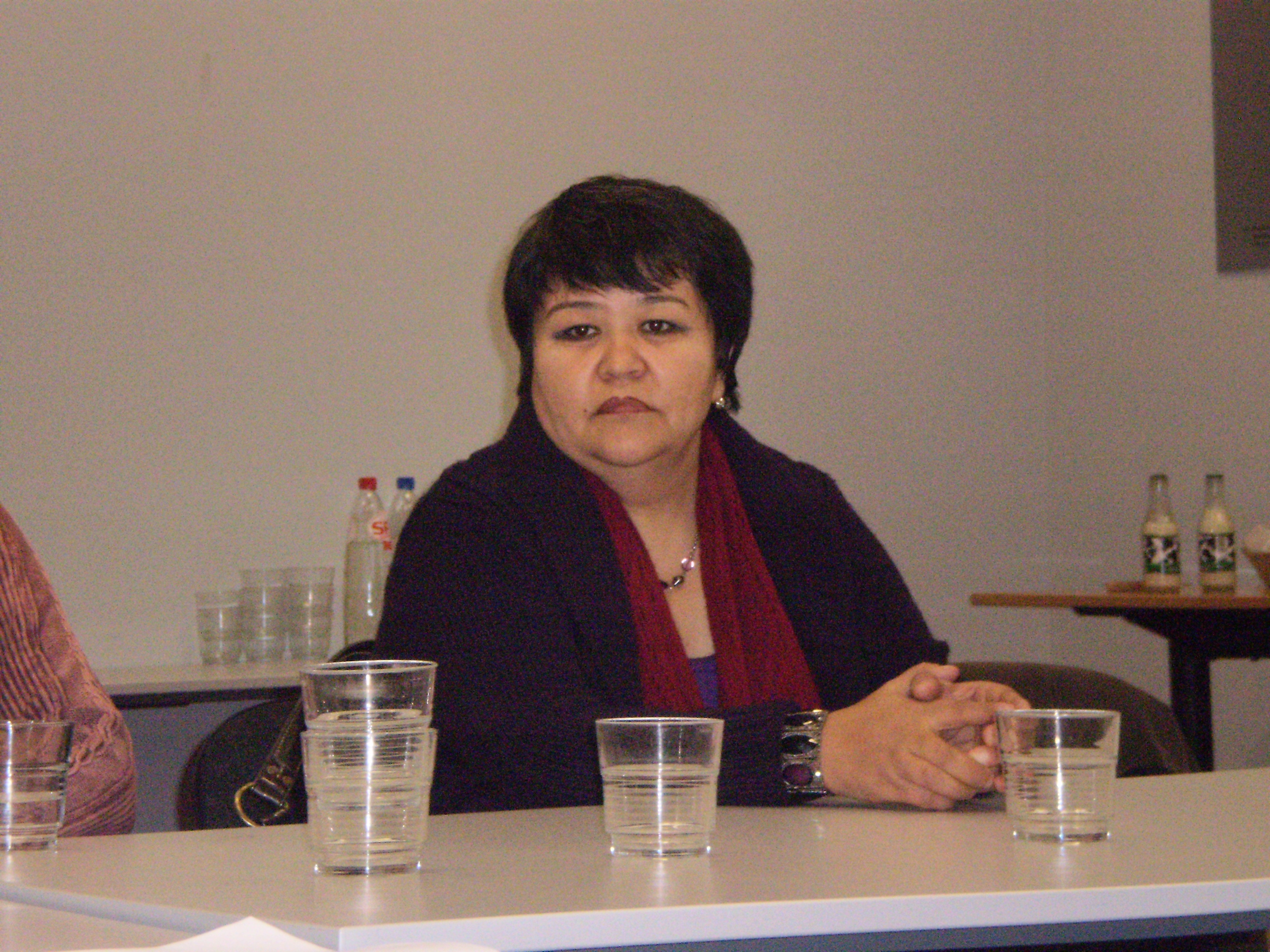
Mutabar Tadjibayeva is remarkable, even among human rights defenders. Her story is well-known in human rights circles: arrested, detained and tortured in Uzbekistan’s prisons, she was released on medical grounds and allowed to leave the country in 2008. That year she came to Geneva to receive in person the Martin Ennals Award for Human Rights Defenders [see: http://www.martinennalsaward.org/index.php?option=com_content&view=article&id=73&Itemid=116&lang=en and https://thoolen.wordpress.com/tag/mutabar-tadjibayeva/].OLYMPUS DIGITAL CAMERA

But she does not just live quietly in exile in Paris. She continues fight for her rights, lodged a complaint to the UN Human Rights Committee in 2012 and this body found on 6 October 2015 that there had been “multiple violations” of her rights, according to a press release issued by three human rights NGOs on 8 October (the Fiery Hearts Club, Redress and FIDH).   Read the rest of this entry »

Bahrain: #FreeNabeel campaign more urgent than ever in view of resumption USA security assistance

July 8, 2015

Nedal Al Salman , Head of International Relations and Women & Children’s Rights Advocacy of the Bahrain Centre for Human Rights [BCHR], launched today a day of solidarity for the president of the BCHR, Nabeel Rajab, with videos of supportive MEP’s. There is an urgent resolution adopted by the EU Parliament about Bahrain and in particular the case of Nabeel Rajab. [https://thoolen.wordpress.com/2015/01/20/video-statement-of-troublemaker-nabeel-rajab-who-is-on-trial-today/]

You can join in the campaign by recording your self on video, state your name and the organisation you represent and say a few words about Nabeel Rajab and call for his release. Your video/photo can be shared on twitter under the hashtag #FreeNabeel [https://thoolen.wordpress.com/tag/nabeel-rajab/]

How difficult it is to match human rights diplomacy with geopolitical considerations is shown in the OP-ED in the New York Times of 7 July 2015 by Sayed Alwadaei, the director of advocacy at the Bahrain Institute for Rights and Democracy:

“Last week, the State Department announced the resumption of “security assistance” to Bahrain. This ended a four-year ban on the transfer of arms that the United States put into effect in 2011, after the Bahraini government’s harsh crackdown on Arab Spring protests. In a statement, the State Department argued that Bahrain had made enough progress in human rights reform to be rewarded by ending the embargo, even though the human rights situation in Bahrain was not “adequate.” The State Department dedicated 49 pages of its 2014 report on human rights, released last month, to Bahrain.

It is a damning document: detailing arbitrary detention, torture, prison overcrowding, constraints on free speech and more. The decision to renew security assistance — in the words of a State Department spokesman, “armored personnel vehicles, MRAPs, Humvees, TOW missiles, arms and ammunition, that kind of thing” — is not only incongruous but also shortsighted, with potentially disastrous consequences.

Prince Zeid Ra’ad Zeid al-Hussein of Jordan, the United Nations high commissioner for human rights, criticized acts of torture in Bahrain in his opening remarks at a session of the Human Rights Council in June. He called for “an immediate investigation” into allegations of torture in Bahrain’s prisons and for the release of “all those detained in connection with their peaceful activities.”

If Prince Zeid were a Bahraini, he could probably be arrested on charges of “insulting a statutory body” — as happened to the human rights defender Nabeel Rajab after he called for prosecution of officials who committed torture in prison. He now faces at least 10 years in prison on various charges relating to his activism.

I was arrested on March 16, 2011, a day after the government announced a state of emergency, a month after the protests started. A military court sentenced me to prison for protesting and talking to the media. What they did to me in prison will stay with me for life.

On my first day in Jaw Prison, about 20 miles south of the capital, Manama, an officer spat on me, grabbed me by the hair and threw me against a wall. During interrogation, another smacked me in the face and dared me to raise my arms to shield myself. They told me I’d be beaten even more if I did.

While I was in detention, four people were tortured to death, as Human Rights Watch has reported. In the interrogation rooms, we always thought of those who had been killed, wondering who might be the fifth. After my release from prison, I fled Bahrain and in 2012 sought asylum in Britain. This January, Bahrain revoked my citizenship, along with that of 71 others, leaving me stateless.

Bahrain’s situation has not improved since 2011. Last November, an inmate was beaten senseless and thrown into solitary confinement, where he died from his wounds during the night. In March, a prison riot broke out. Prisoners were angry about their treatment in overcrowded and unsanitary conditions, and about the unfair trials that had put more than a thousand of them there. Prison authorities are accused by prisoners of responding with excessive force.

What happened next was incomparable to what I was put through. According to a report published last month by a coalition of rights groups, including my own, prisoners said that police officers used birdshot and tear gas against inmates inside corridors and cells. Inmates were rounded up, beaten and held in the courtyards, where they spent weeks sitting in Bahrain’s heat. Former prisoners allege that officers forced inmates to kneel and lick their boots. An imprisoned academic named Abduljalil al-Singace has been on a hunger strike for over 100 days, in protest of the ill treatment suffered by prisoners in March. (There are growing concerns for his health.)

In light of the continuing abuses, the State Department’s praise of the release of the political prisoner Ibrahim Sharif as a sign of “meaningful reform progress” is absurd. Never mind that Mr. Sharif, sentenced to five years in 2011, had served most of his sentence, and that as a political prisoner, he should never have been imprisoned to begin with. And as one political prisoner was released, another, Sheikh Ali Salman, received a four-year sentence for his opposition activities. The police also called in his deputy for questioning last week, after he made a speech against torture in prison.

When the United States expressed concerns a few weeks ago to the Human Rights Council in Geneva about “the continuing criminal cases on grounds of political expression and assembly,” Bahrain rejected them as groundless. It is Bahrain’s prerogative to disregard its American ally’s qualms, but must the United States reward such disrespect by renewing military assistance?

The answer lies in geopolitics. Persian Gulf monarchs are on high alert as the United States nears a nuclear deal with their regional rival, Iran. They want to protect their position as the West’s strategic partners and maintain their influence in the Middle East. At the same time, the rise of the Islamic State is a potent threat to their security, which America seeks to bolster militarily. Resuming arms transfers rekindles not only the American-Bahraini relationship but also the hugely important American-Saudi one.

But these diplomatic considerations come at the cost of relinquishing whatever moral standing the United States had in Bahrain. Ending the suspension of military assistance was a misuse of America’s substantial leverage to bring positive change to the human rights situation in Bahrain and the Gulf, which has only deteriorated since 2011. For Bahrainis striving for a democratic country, America’s move is completely regressive.

President Obama promised a “tough conversation” with the Gulf monarchs when he met them in May. Was this the outcome of that conversation?”

Losing Leverage on Bahrain – The New York Times.

Lessons from the Pinochet regime by Andrés Velasco

June 2, 2015

At the 2015 Oslo Freedom Forum on 26 May Chilean economist, Andrés Velasco, in highly personal account describes how political, economic, and social unrest led to the collapse of Chilean democracy in the 1970s. Growing up under Augusto Pinochet’s military dictatorship, Velasco is familiar with stories of political prisoners, torture, intimidation, and exile. Velasco argues that the extreme brutality of the military dictatorship became too difficult for most Chileans to face, allowing the violence to continue unhindered. As Velasco reminds us, however, Chilean civil society eventually united behind an incredibly creative political campaign, and succeeded in voting Pinochet out of power. Velasco ends his speech on an optimistic note, arguing that the common sense of Chileans will prevent another democratic collapse.