In a short statement that was issued on 10 March 2022, the Russian Ministry of Foreign Affairs indicated that they will no longer participate in the Council of Europe in response to ‘the EU’s and NATO’s continued efforts to destroy the Council of Europe and the common humanitarian and legal space in Europe’. It could mean that Russia may leave Europe’s main organisation on human rights, rin response to its recent suspension related to the war in Ukraine.
“Russia will not participate in the transformation by NATO and the EU obediently following them of the oldest European organization into another platform for incantations about Western superiority and narcissism,” the ministry said, according to Russian media outlet RIA News. “Let them enjoy communicating with each other without Russia.”
Russia joined the Council of Europe in the winter of 1996, and since then the country has had a moratorium on the death penalty. Two years later, Moscow ratified the European Convention for the Protection of Human Rights and Freedoms (ECHR).
Several times Russia was deprived of the right to vote in the Parliamentary Assembly of the Council of Europe, despite the fact that it is one of the five largest sponsors of the organization. After the start of the special operation in Ukraine, the Council of Europe suspended Moscow’s membership.
On 17 March 2022 the Committee of Ministers of the Council of Europe has formally decided that the Russian Federation ceases to be a member of the organisation. This happens after just over a quarter century of membership, since Russia joined on 28 February 1996.
To Permanent Representatives of Member and Observer States of the United Nations (UN) Human Rights Council:
Excellency,
As the 49th session of the UN Human Rights Council gets underway, and Russia continues its invasion of Ukraine, we, the undersigned civil society organisations, would like to draw your attention to the dire human rights situation within the Russian Federation, and urge all states to bring this neglected country situation onto the agenda of the Human Rights Council.
A year after last year’s joint statement on the situation in Russia, authorities there have further intensified the already unprecedented crackdown on human rights. A fully-fledged witch hunt against independent groups, human rights defenders, media outlets and journalists, and political opposition, is decimating civil society and forcing many into exile.
The gravity of this human rights crisis has been demonstrated in the last few days by the forcible dispersal of anti-war rallies and pickets across Russia with over 6,800 arrested (as of 2 March 2022), attempts to impose censorship on the reporting of the conflict in Ukraine and to silence those media and individuals who speak out against Russia’s invasion of Ukraine, including through blocking media websites, threats of criminal prosecution under “fake news” and “high treason” charges and other means.
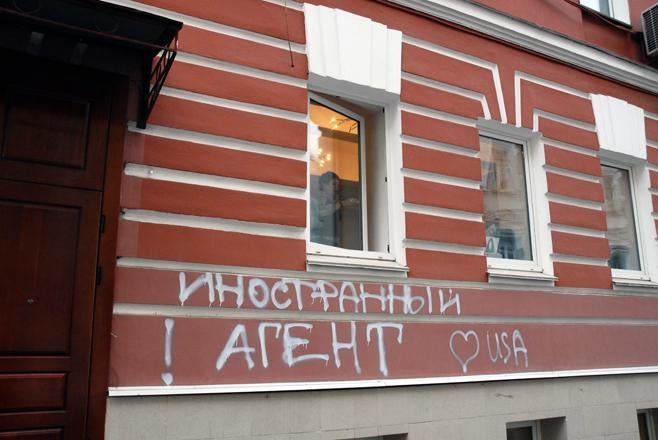
In a shocking development, the authorities moved to shut down “Memorial,” one of the country’s most authoritative human rights organizations. At the end of December, courts ruled to “liquidate” the group’s key legal entities, International Memorial Society and Human Rights Center Memorial, over alleged persistent noncompliance with the repressive legislation on “foreign agents.” On 28 February, the Supreme Court upheld this decision, despite an article 39 ruling from the European Court of Human Rights ordering the Russian authorities to halt liquidation proceedings.
The December rulings came at the end of a particularly terrible year for human rights in the country, during which authorities threw top opposition figure Alexei Navalny in prison, banned three organizations affiliated with him as “extremist,” launched criminal proceedings against several of his close associates, doubled down on Internet censorship, and designated more than 100 journalists and activists as “media-foreign agents”.
Recent months also saw a dramatic escalation of repression in Chechnya, where Russian law and international human rights obligations have been emptied of meaning. With the Kremlin’s tolerance or acquiescence, the local governor, Ramzan Kadyrov has been eviscerating all forms of dissent in Chechnya, often using collective punishment. In December 2021, Kadyrov opened a brutal offensive against his critics in the Chechen diaspora, by having the police arbitrarily detain dozens of their Chechnya-based relatives. It continued in January with the abduction and arbitrary detention on fabricated charges of Zarema Musaeva, mother of human rights lawyer Abubakar Yangulbaev, and death threats issued against the Yangulbaev family and some prominent human rights defenders and journalists.
This is a country situation urgently requiring the Council’s attention. We urge the Human Rights Council to adopt a resolution expressing serious concern about the human rights violations and abuses occurring in Russia, requesting the High Commissioner to monitor and report on the situation, and appointing a dedicated Special Rapporteur to address the human rights situation in Russia.
Yours sincerely,
Signed:
Human Rights Watch
Amnesty International
Human Rights House Foundation
International Federation for Human Rights
International Service for Human Rights
Human Rights Centre Memorial (Russia)
Civic Assistance Committee (Russia)
There was also a statement was delivered by Yulian Kondur and the International Charitable Organization Roma Women Fund ‘Chiricli’ in the name of Minority Rights Group (MRG) and other organizations at the Human Rights Council’s Urgent Debate, held on Friday 4 March 2022, on the situation of human rights in Ukraine stemming from the Russian Aggression. They called on authorities and aid actors to ensure that Roma, minorities and marginalised peoples are granted equal access to protection and safety when seeking refuge, including those without identity documentation.
Isabel Linzer and Yana Gorokhovskaia in Just Security of 3 March 2022 state that “Russia’s Invasion of Ukraine Imperils Human Rights Defenders and Political Exiles“:
.. while general humanitarian aid is essential to accommodate the expected millions fleeing the conflict, Ukraine’s allies should also provide immediate, strategic support to individuals who may be targeted for reprisals by Russian authorities, specifically human rights defenders, journalists, as well as political exiles from authoritarian states. As intelligence reports have suggested, Ukrainian and foreign activists – democracy’s vocal defenders – may be singled out for attacks by Russia.
As of 2021, Freedom House documented over thirty physical acts of transnational repression – attempts to silence dissent beyond its borders through physical violence or other coercion – committed by Russia since 2014. Increasingly, Russian authorities have also helped other repressive States, including Belarus, Tajikistan, and Turkmenistan, reach political activists and dissidents who reside in Russia. Among other dangers, Russia’s invasion of Ukraine threatens to extend the reach of these authoritarian practices and endanger civil society activists who had previously found safe haven in Ukraine.
Ukraine’s civil society is exceptionally vibrant. Widespread civic mobilization was crucial during both the Orange Revolution in 2005 and the Maidan Revolution in 2014. A dozen activists who participated in protests in 2014 were elected to the Rada (Ukraine’s parliament) and others joined regional and local councils around the country. Ukrainian civil society was instrumental in providing military supplies to the under-resourced Ukrainian army when Russian-backed forces began an armed conflict in the east of the county in 2014. Since then, non-governmental groups have worked hard to help internally displaced people including through programs that support young people and women. Though it has faced challenges, today Ukraine’s civic sector represents a wide range of causes and identities, including free expression, anti-corruption, and LGBT+ rights. Many of these same civic causes have been under attack in Russia for years.
Last week, reporting revealed that U.S. intelligence was aware of lists, drafted by the Russian government, of people in Ukraine who would be arrested or assassinated following the invasion. Russian and Belarusian dissidents, journalists, activists, religious and ethnic minorities, and LGBTQI+ individuals were identified as potential targets, and the U.S. government has reportedly warned individuals of the threats against them. Russian President Vladimir Putin seemed to confirm these chilling reports when he declared the invasion on Feb. 24, saying, “We will hand over everyone who committed bloody crimes against civilians, including Russian citizens, to court,” in a thinly-veiled threat to people his government broadly defines as opposition.
In addition to Ukrainian activists, the country is also home to many foreign activists. Ease of entry facilitated by Ukraine’s visa-free entry regime for citizens of dozens of countries makes it a natural refuge for people escaping repressive regimes and a hub of diaspora activism. Now, Ukraine’s uniquely inclusive civil society landscape may provide the Kremlin with an abundance of individuals it views as politically threatening to target for repression.
These are credible threats. …
Russia not only engages in transnational repression directly. It also helps other States to pursue their dissidents within its sphere of control. Wherever the Russian government controls territory, activists, members of civil society, and political dissidents are at risk. Following a mass protest movement in response to fraudulent elections, Belarusian dictator Alexander Lukashenko undertook an aggressive campaign to pursue opponents within Belarus and abroad, relying especially on Russian assistance. The world was stunned when Minsk forced the landing of a RyanAir flight to arrest a dissident journalist on board, but Belarus has also extracted dozens of its citizens from Russian territory, with the full cooperation of Russian authorities. Many had been living in Russia for years and had done little except post messages of support for pro-democracy protests in their home country. Ukraine today is home to thousands of Belarusians who fled Minsk’s brutal repression. Their safety has been stripped from them by the invasion. See also: https://humanrightsdefenders.blog/2021/11/05/joint-statement-on-the-sentencing-of-two-members-of-human-rights-group-viasna-in-belarus/
Protecting civilians, and especially human rights defenders both Ukrainian and foreign, is one of the most urgent non-military actions Ukraine’s allies can take. They should coordinate to warn and, when desired by the individuals in question, extract and resettle vulnerable individuals. Family members of potential Russian targets should also be relocated, to prevent them becoming leverage points used against those who are evacuated. Given the Kremlin’s track record of transnational repression across Europe, at-risk individuals should be given the option of swift relocation to geographically distant countries, like the United States, rather than remaining in border States where they are more vulnerable. Civil society organizations in a position to offer digital security training and socio-psychological assistance to members of civil society should be given ample funding to do this work…
Witness stands with the victims of Russia’s unlawful attacks. In a conflict that is rife with disinformation, false narratives, and manipulated media, the importance of capturing and preserving trusted, authentic accounts of human rights crimes cannot be underestimated. They are sharing resources for those on the ground in Ukraine and Russia – who are navigating immense risks as they capture and share video documentation of potential human rights violations and war crimes. And, they are sharing resources for those of us witnessing from a distance, so that we amplify grassroots truths and decrease the spread of mis/disinformation.
Guidance for Frontline Documenters working with and learning from activists documenting and preserving visual evidence of war crimes and human rights violations from Syria and Yemen to Brazil, it developed its peer-reviewed and field tested Video As Evidence Field Guide. Earlier they also worked with Ukrainian civil society and human rights groups during the 2014-15 conflict to prepare versions in Ukrainian and Russian
In Ukrainian: ПОЛЬОВИЙ ПОСІБНИК “ВІДЕО ЯК ДОКАЗ” Field Guide: Video as Evidence wit.to/VAE-UA
In Russian: ПОЛЕВОЕ ПОСОБИЕ «ВИДЕО КАК ДОКАЗАТЕЛЬСТВО» Field Guide: Video as Evidence wit.to/VAE-RU
It is of course the worst for the direct victims of Russia’s aggression in Ukraine, but the very courageous people who stand up against the autocratic government and nationalistic media in Russia deserve all our attention. On 26 February 2022, Human Rights Watch wrote “Russia: Arbitrary Detentions of Anti-War Protesters“:
Police arbitrarily detained hundreds of peaceful protesters across Russia on February 24, 2022, at rallies in solidarity with Ukraine and against the war, Human Rights Watch said. The authorities also arrested at least two human rights defenders who spoke up against Russia’s full-scale invasion in Ukraine, threatened to block mass media outlets in case their reporting on the war differed from the official narrative, and demanded that foreign social media platforms stop restricting reports from Russian state media.
“For years, Russian authorities have been suppressing free speech and peaceful protests to stifle critical voices,” said Hugh Williamson, Europe and Central Asia director at Human Rights Watch. “Now the government is silencing all those who speak out against the war with Ukraine.”
According to OVD-Info, an independent human rights project working to protect freedom of assembly in Russia, by the evening of February 25, police had detained at least 1,858 people for participation in anti-war protests in 57 cities, including Moscow, Saint Petersburg, Krasnodar, Ekaterinburg, Saratov, Nizhny Novgorod, and Voronezh. Some of detained protesters stood in single pickets and held posters saying “no to war, do not be silent,” “stop the war,” and other similar slogans.
At around 3 p.m. on February 24, the police detainedMarina Litvinovich, a human rights activist, in Moscow after she had made a call over social media to “come out and say we are against war.” She was released several hours later, pending a court hearing and the next day was fined for violating the rules on public gatherings. https://www.rferl.org/a/russia-litvinovich-fined-ukraine-invasion-protest/31723131.html
In response to calls for peaceful protests, Russia’s Investigative Committee published a news release with a warning that organizing unsanctioned gatherings is a prosecutable offense and threatening “harsh punishment” for organization of “mass riots.”
In the evening of February 24, protesters gathered in different cities across Russia to demonstrate against war. According to OVD-Info, more than 1,000 protesters were arbitrarily detained in Moscow and around 400 in Saint Petersburg where the biggest protests took place.
Human Rights Watch analyzed and verified 27 videos recorded north of the Gostinny Dvor metro station in Saint Petersburg and close to Pushkinskaya Square in Moscow that were published on social media on February 24. The vast majority document brutal arrests of peaceful activists by police officers. In at least four cases, videos show police officers beating protestors, pushing them to the ground, dragging them, grabbing them by the head, and choking them.
Mass media and OVD-Info also reported other cases of excessive use of force by the police, refusal of medical assistance, and denial of access to lawyers. At night, at least six police stations in Moscow, and some stations in Saint Petersburg, Saratov, Voronezh and Ekaterinburg refused access to outside visitors after initiating the “Fortress” protocol, authorized for a situation of potential attack, which meant lawyers were denied access to their clients for hours. On February 25, OVD-info reported they could not get in touch with three of the detainees on their list.
Russian public figures, journalists, scientists, activists, and average social media users have been publicly expressing their shock and indignation at the full scale Russian military operations in Ukraine and calling for the hostilities to end. Thousands used the hashtag #нетвойне (#notowar).
Lev Ponomarev, a prominent human rights defender and the founder of the Movement for Human Rights, initiated a petition “against war,” calling on the Russian military to withdraw from Ukraine and inviting people to join the peaceful anti-war movement. The police detained Ponomarev on February 24 and charged him with organizing unsanctioned protests in connection with the petition, which had gathered over 550,000 signatures by the evening of February 25.
On February 24, the internet regulator Roskomnadzor published a warning to mass media disseminating “unverified” and “false” information, claiming that only information from official sources can be used when reporting on the “special operation” in Ukraine. The authorities also said that all “false” information would be instantly blocked and warned about fines for disseminating “fake” news.
Roskomnadzor also sent official letters to Facebook (Meta) demanding that it should lift restrictions imposed by the social media platform on official pages of state and government mass media. The authorities said that Facebook had marked them as “untrustworthy” and hid their publications from the platform’s search. Roskomnadzor also called on Russian users to switch to national internet resources and social networks due to “unfounded blockings by foreign platforms.”
On February 25, the Office of the Prosecutor General, in coordination with the Ministry of Foreign Affairs, accused Facebook of being “involved in violation of fundamental human rights and freedoms” and imposed restrictions on access to the platform in Russia.
The authorities’ actions to prevent people from participating in peaceful public protests and freely expressing their opinions violate fundamental rights, including those to freedom of expression and assembly and the prohibition on arbitrary detention, guaranteed by the European Convention on Human Rights (ECHR), the International Covenant on Civil and Political Rights (ICCPR), and Russia’s own Constitution.
“The ability to express disagreement in a peaceful way is crucially important in any society that respects human rights and rule of law,” Williamson said. “This abusive crackdown on a peaceful anti-war movement is yet further proof, if more was needed, of the government’s intolerance of independent voices.”
On the other hand, in a post of 25 February 2022, Brian Dooley of Human Rights First relates what human rights defenders in Ukraine are telling about the immediate impact on them of the Russian invasion.
Devon Kearney in NPQ of 8 February 2022, reports on a worrying legislative development in El Salvador….
It has been nearly a decade since the Russian government passed its “foreign agent law,” a measure that requires nonprofit groups that engage in political activity to register with the government if they receive money from overseas. Russia justified the bill by saying it was based on a U.S. law—a statute from the lead-up to World War II that many of us came to know only after Donald Trump’s campaign manager, Paul Manafort, was accused of being an unregistered foreign agent. Putin’s message was that this was just an ordinary, even boring regulatory measure.
The sinister brilliance of the foreign agent law is twofold. First, it targets human rights NGOs’ supply lines, as it were, making it difficult to accept the funds they need to survive. In much of the world, human rights defenders rely on support from global philanthropies like the Open Society Foundations for the funding they need to operate. By the standards of Russia’s law, most would be required to register as foreign agents. Groups that take foreign money would be subject to government meddling and harassment; those that opted to do without would struggle to keep their doors open.
Second, the law accomplishes this by co-opting legitimate regulatory functions of the state to crush dissent. Setting the rules for nonprofits—along with corporations, lobbyists, and a wide range of activities that impact the public good—is something governments are supposed to do. The great innovation of Putin and the autocrats that followed him was to turn regulatory schemes into instruments of their own political dominance. By obviating the need for violence against opponents, these methods may avoid the consequences of harsher exercises of state power. They are key to creating, in the words of Hungarian semi-dictator Viktor Orbán, an “illiberal democracy,” a state where elections continue but the rights and liberties of the people are curtailed.
Under 38-year-old President Nayib Bukele, a charismatic young politician, El Salvador has taken a sharp turn toward authoritarianism. Bukele made headlines in February 2020 when he brought armed soldiers into Congress to stand behind him as he demanded funding for the military. He has since fired prosecutors and judges in order to pack the legal system with loyalists. Bukele is the latest in a growing number of modernized dictators who adopt the tactics but not the swagger of their forebears. But his style is distinctive. In the Journal of Democracy, Salvadoran political scholar Manuel Meléndez-Sánchez writes: “Bukele relies on millennial authoritarianism, a distinctive political strategy that combines traditional populist appeals, classic authoritarian behavior, and a youthful and modern personal brand built primarily via social media.”
Bukele’s authoritarian moves have raised alarms among Salvadoran civil society and around the world. The US has expressed its concern by hitting the government in the pocketbook: in May 2021, the United States Agency for International Development announced that it would pull funding from the Salvadoran police and other national agencies, instead directing the funds to civil society groups carrying out local development projects. More recently, USAID Administrator Samantha Power said the agency would commit $300 million for direct civil society funding in Central America, and promised to increase the amount of funding bypassing national governments to 50 percent within 10 years.
All of this is in keeping with Power’s stated intention to provide aid to developing nations with a local, “bottom up” approach that prioritizes small businesses over big international contractors, and local civil society groups over national governments—“[t]o engage authentically with local partners and to move toward a more locally led development approach,” as she told the Senate Foreign Relations Committee in July 2021.
But in a region where US interference has long rankled rulers and their people, the move may be seen as ham-fisted—taking aid money to support opponents of a duly-elected government brings to mind the ways in which our country funded proxy wars that killed hundreds of thousands of Salvadorans and left a bloody trail in Nicaragua and Guatemala, as well. More recently, in 2019 the Trump Administration slashed hundreds of millions of dollars in aid to the region in the hopes that by increasing financial pain it could pressure countries to take harsher measures to prevent their people from fleeing to the U.S.
With this history as a pretext, and perhaps stinging at this new reduction in aid funding, Bukele’s government struck back. On November 9, 2021, the government introduced a bill to require domestic nonprofits or social enterprises (solely commercial enterprises are exempted) to register as foreign agents if they “respond to the interests of, or are directly or indirectly funded by, a foreigner.”
“That the Legislative Assembly is even considering such a restrictive bill sends a chilling message to human rights groups and organizations fighting against impunity and corruption,” says Ricardo González Bernal, the Fund for Global Human Rights’ Program Director for Latin America. The Fund supports grassroots human rights defenders and independent journalism in El Salvador, across Central America, and throughout the world.
As feared in November (see blog post below) Russia’s Supreme Court on Tuesday 28 December 2021 ordered the closure of Memorial International, one of the country’s most respected human rights organizations, wiping out three decades of work to expose the abuses and atrocities of the Stalinist era. Memorial is the winner of at least 7 international human rights awards: https://www.trueheroesfilms.org/thedigest/laureates/BD12D9CE-37AA-7A35-9A32-F37A0EA8C407
The court ruled that Memorial International had fallen afoul of Russia’s “foreign agent” law. But the group said the real reason for the shutdown was that authorities did not approve of its work.
The ruling is the latest blow to Russia’s hollowed-out civil society organizations, which have gradually fallen victim to Putin’s authoritarian regime.
Videos posted on social media showed Memorial supporters shouting, “Shame, shame!” in the court’s hallways and at the entrance to the building shortly after the ruling. Seven people were detained outside the courthouse following the proceedings, according to independent monitoring group OVD-Info. The organization said three of them are believed to be instigators whose sole aim was to cause havoc, not support Memorial.
Memorial International’s lawyer, Tatiana Glushkova, confirmed the ruling to CNN and said the group would appeal the decision. “The real reason for Memorial’s closure is that the prosecutor’s office doesn’t like Memorial’s work rehabilitating the victims of Soviet terror,” Glushkova told CNN.
The Prosecutor General’s Office of Russia requested Memorial International be liquidated in November. The group was accused of repeatedly breaking the law for failing to mark all its publications with a compulsory “foreign agent” warning. The Justice Ministry had designated the group a foreign agent in 2016, using a law targeting organizations receiving international funding.
Memorial’s representatives argued there were no legal grounds for the group’s closure, and critics say the Russian government targeted Memorial for political reasons.
Oleg Orlov, a member of Memorial International’s board, said the court’s decision was “purely ideological” and “a demonstrative, blatant, illegal decision.”
“Allegedly, we do not assess the Soviet Union and Soviet history the right way. But this is our assessment, we have the right to do it,” Orlov told CNN.
Memorial was founded in the late 1980s to document political repressions carried out under the Soviet Union, building a database of victims of the Great Terror and gulag camps. The Memorial Human Rights Centre, a sister organisation that campaigns for the rights of political prisoners and other causes, is also facing liquidation for “justifying terrorism and extremism”. One of the group’s co-founders was Nobel Peace Prize winner Andrei Sakharov, who went on to be the first honorary chairman of the Memorial Society.
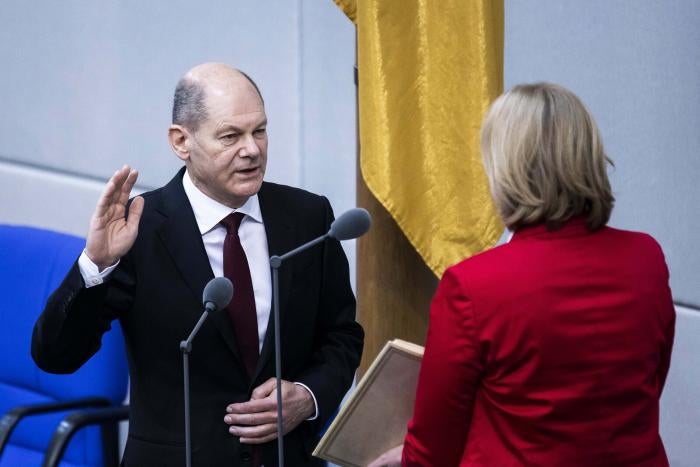
On 10 December 2021, David Fischer, HRW’s Media Coordinator, Germany published “A Human Rights Roadmap for Germany’s New Government“
…The climate crisis threatens catastrophic impacts on human rights, and ambitious climate action by the government to reduce greenhouse gas emissions is critical if Germany – the European Union’s biggest greenhouse gas emitter – is to help prevent the worst of those impacts. The new government’s coalition agreement, a non-binding roadmap for legislative action, calls for elimination of coal energy “ideally” by 2030, promises a roll-back of subsidies for fossil fuels and legislation to deal with climate change adaptation planning. These are positive steps but insufficient to reach Germany’s contribution toward the global goal in the Paris Agreement of limiting global warming to 1.5°C above pre-industrial levels.
In addition to the climate crisis, the new coalition between the Social Democrat Party (SPD), the Free Democrats (FDP) and the Greens (Die Grünen) will have to tackle challenges to the rule of law within the EU, stand up for human rights against autocrats in China and Russia, and address the many challenges arising from the pandemic.
The coalition agreement makes promising commitments to advance the rights of lesbian, gay, bisexual, and transgender (LGBT) people, including to change the law on legal gender recognition for transgender people so that it is based on self-determination. The coalition also commits to protecting human rights in supply chains in line with the UN Guiding Principles on Business and Human Rights that include the right to a remedy for victims. It proposes to increase the capacity of German courts to prosecute universal jurisdiction cases such as the trial on state-sponsored torture in Syria.
Within Europe, the new government intends to push for judgements of the European Court of Human Rights to have greater impact and “be implemented in all member states”. It supports the use of mechanisms and sanctions to enforce the rule of law in European Union member states. It also calls for shared responsibility for migrants and refugees among member states, an end to pushbacks at EU borders and for the border agency Frontex to respect human rights.
Scholz’s new government will now need to live up to expectations on human rights and prove that what the coalition dubbed “Germany’s responsibility for Europe and the World” is expressed in actions and not just words.
A committee of 5 human rights experts has selected a shortlist of 12 human rights defenders from among the nominees for 2021; since then an independent jury composed of 5 members has select 3 candidates from this shortlist. The Minister of Foreign Affairs will now choose a winner from the three remaining candidates:
Human rights activist and lawyer in Uganda
As a child, he grew up in the epicentre of a brutal war between the Lord Resistance Army and government forces. Today, working as a human rights lawyer, he is being threatened, spied on and shadowed. This is his story.
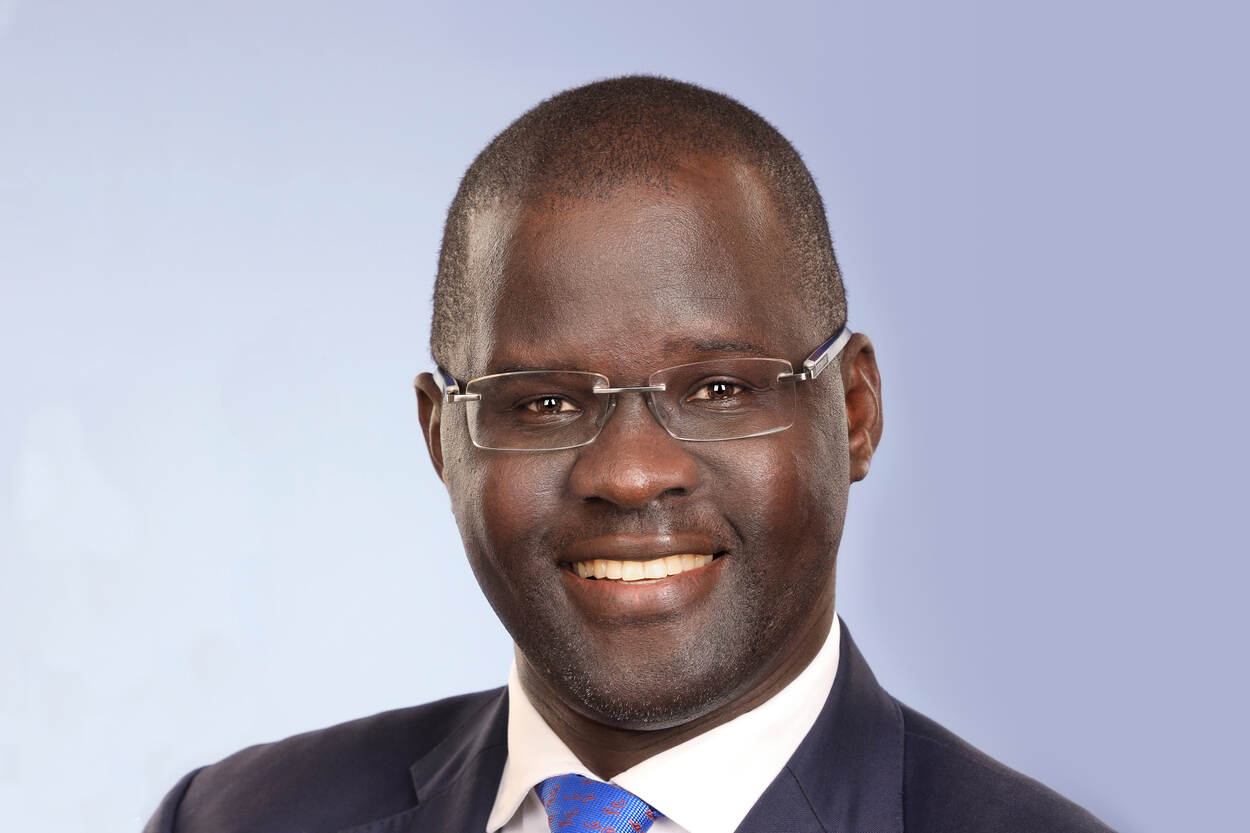
Nicholas Opiyo.
As a human rights lawyer, Ugandan Nicholas Opiyo is not afraid to take on sensitive cases. He challenged the law that gave the police the right to ban public gatherings. He led the campaign for the enactment of a law criminalizing torture and drafted the initial bill that was enacted by parliament in 2012. He, alongside other brave Ugandan activists, successfully challenged Uganda’s anti-gay law in 2014. He has provided legal representation to the gay community in Uganda.
Nicholas is executive director of Chapter Four Uganda, an NGO that works to protect civil liberties and improve universal observance of human rights. He defends human rights activists who are being persecuted in Uganda. He also stands up for people who are in trouble with the government and lack the resources to defend themselves. See: https://www.trueheroesfilms.org/thedigest/laureates/6743A94B-BA1A-AA2A-AC6C-592EBD981EDA
Surviving war
Nicholas grew up on the outskirts of the northern Ugandan city of Gulu. His village was repeatedly attacked by the Lord’s Resistance Army (LRA), a rebel group that used child soldiers. Unlike many young people abducted into the ranks of the rebels, he survived abductions. The rebels kidnapped his father and sister, who managed to return after several months in captivity. To avoid being kidnapped, Nicholas walked several kilometres every day so he could sleep in the city. It was safer in a church compound or on the pavement in front of shops than in his village.
Government soldiers detained Nicholas’ father as part of an operation to eliminate traitors. The soldiers took all men 18 and older to a stadium where they were held for days without food. Looking through a crack in the stadium wall, Nicholas could see his father being beaten. Nicholas’ father was released after three days because he was innocent. Unable to forget these events, Nicholas decided to become a lawyer. ‘First I wanted to be a journalist so I could speak about [mistreatment],’ he said in an interview met Buzzfeed News. ‘But I thought … I can go to court and change things.’
Nicholas’ work often gets him in trouble with the state. He is being threatened, spied on and shadowed. In December 2020, in the run-up to the elections, he was arrested and imprisoned. Although he was charged with money laundering, the government presented no evidence. He spent Christmas and New Year’s Eve in jail. Human rights activists see the charges against Nicholas as a way to hinder his work as a human rights lawyer. Even in jail, he used his time to talk to prisoners who sought advice. In fact, he says, his arrests give him the energy to do even more. [see also: https://humanrightsdefenders.blog/2020/12/23/ugandan-human-rights-defender-nicholas-opiyo-arrested-like-a-criminal/]
Nunca Más: they had to flee from Nicaragua, but their struggle continues
Banished from Nicaragua, a target of cyberattacks: despite all these setbacks, the activist collective Nunca Más is continuing to work for human rights in Nicaragua. This is their story.
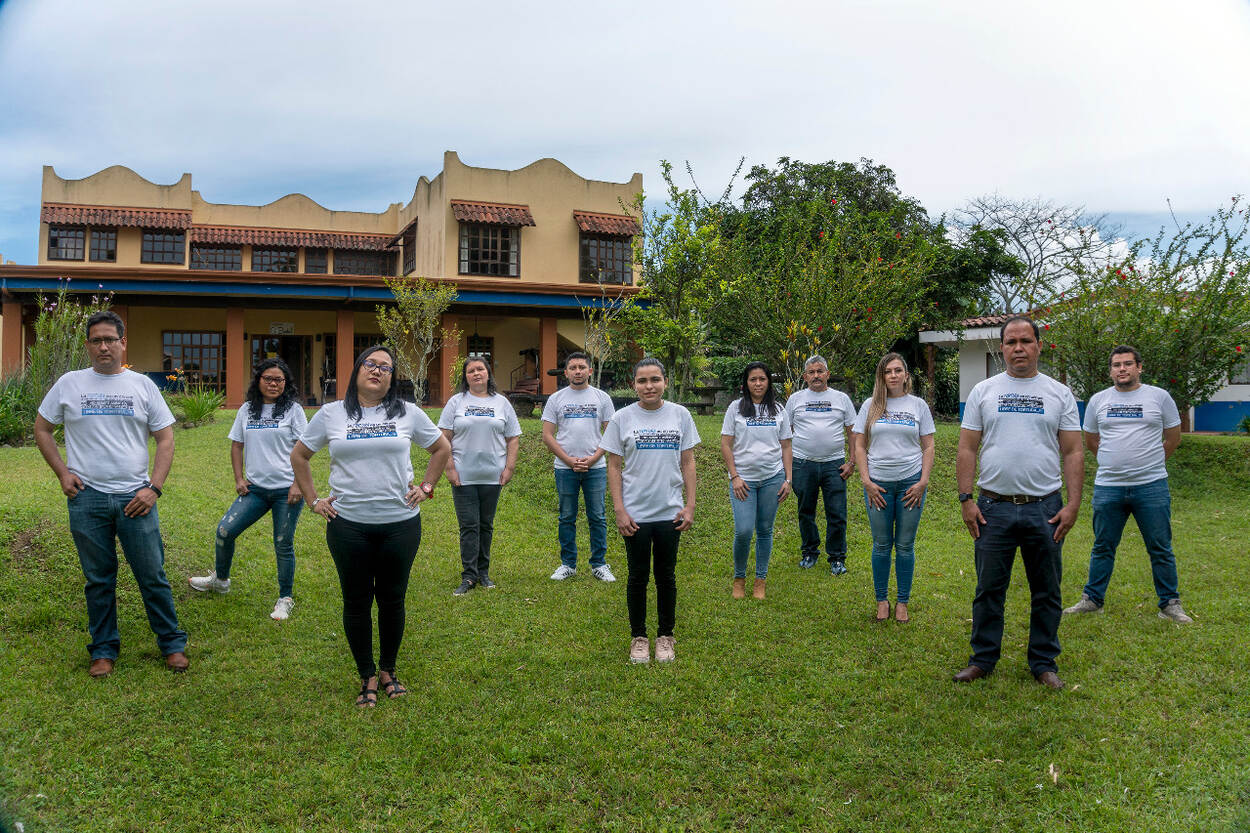
Nunca Más.
‘When Daniel Ortega became president of Nicaragua, his supporters said that there was no longer any reason for us to exist. That human rights work in Nicaragua was a thing of the past. But that can never happen! Anyone who exercises power is capable of abusing it.’ So said human rights defender Gonzalo Carrión Maradiaga in an interview with the Nicaraguan magazine Envío. For 14 years he had been legal adviser of the Nicaraguan Center for Human Rights (CENIDH), which combats impunity and human rights violations.
In December 2018 the Ortega government closed CENIDH by force. The human rights defenders on its staff were expelled from Nicaragua. Gonzalo and his colleagues fled to Costa Rica, where they continued their work and in 2019 founded Nicaragua Nunca Más. Nunca Más reports on torture and other human rights violations in Nicaragua, in the interests of justice and to discourage new violations. They offer legal and psychosocial support to victims and their family members, journalists and human rights defenders, and conduct human rights training courses. They also work at international level on behalf of victims of human rights violations. At the moment, justice cannot be sought through the Nicaraguan legal system, as it is under influence of the president. Nonetheless, gathering evidence is crucial to ensure justice for human rights violation in the future.
It was not easy to make a fresh start in a new country, but the founders of Nunca Más have managed to recover. Between 2019 and 2021 the group documented over 400 cases of serious human rights violations. The collective has now issued five reports, including information on victims who have been tortured, humiliated and arbitrarily imprisoned. The reports also contain information about extrajudicial executions and denial of the right to organise. Such reports are crucial in the absence of free press.
Under pressure
The Nicaraguan government have not been pleased with Nunca Más’ reports, and are subjecting the organisation to severe pressure. Its website has been the target of repeated cyberattacks. Extra digital security measures have enabled the collective to safeguard personal data and sensitive digital information. Despite these difficult conditions, including being forced to live far from their familiar surroundings, its human rights defenders are persisting bravely with their struggle. Gonzalo has not seen his wife or one of his daughters for 18 months. ‘But the time will come. One day I’ll go back,’ he said resolutely in the interview with Envío.
It was not easy to make a fresh start in a new country, but the founders of Nunca Más have managed to recover. Between 2019 and 2021 the group documented over 400 cases of serious human rights violations. The collective has now issued five reports, including information on victims who have been tortured, humiliated and arbitrarily imprisoned. The reports also contain information about extrajudicial executions and denial of the right to organise. Such reports are crucial in the absence of free press.
Mari Davtyan, lawyer in Russia, opposes domestic violence
The Russian police do not always respond to domestic violence complaints. Sometimes their failure to act has fatal results. Lawyer Mari Davtyan has been working for years now to change this situation. This is her story.
Mari Davtyan.
In December 2017 Margarita Gracheva’s husband chopped her hands off with an axe. She had asked the police for help several times in the preceding months – in vain. Mari Davtyan was Margarita’s lawyer. Now Mari is working on the case of three teenage sisters who killed their father on 28 July 2018, when they could no longer bear his many years of physical and sexual abuse. Their mother had reported the violence to the police, but was ignored. Domestic violence is seen in Russia as a ‘family issue’, and outside interference is viewed as meddling, Mari noted in an interview with Voice of America. Mari’s strong defence for the teenage sisters has sparked a debate in Russian society on domestic violence and conservative family values.
Since 2017 domestic violence is no longer a serious offence in Russia, but a misdemeanour. Perpetrators are fined, have to do community service or are served with a training order. They are only taken to court in cases of repeated violence or serious injuries. This law is meant to preserve the ‘unity of the family’; according to this logic, fathers don’t belong in jail. Mari has been fighting for years now to change this law, ‘because it has been proven dangerous for the safety of thousands of women in Russia’, Mari said in an interview with Marina Pisklakova-Parker of the Anna Center in Moskou. Fighting and winning cases like this has ‘helped the government understand that we are not dealing with violence in the right way,’ said Mari in an interview with the Washington Post. Growing numbers of people are putting pressure on the courts and government to reflect on how they are treating victims.
Mari is also the head and legal expert of the Consortium of Women’s NGOs, which works to protect victims of domestic violence in Russia. The organisation gives courses on women’s rights to lawyers and the police and helps victims with their legal cases. ‘We have more than 100 lawyers working with us today, this year we have more than 150 cases, and I think about 1,000 consultations with individual women,’ said Mari in an interview with the European Human Rights Advocacy Centre (EHRAC). She sees that women are becoming more confident and more often have the courage to seek her out. ‘They are finding the power to ask for help and they’re starting to understand what a healthy relationship should look like,’ she said in her interview with Voice of America.
On 12 November 2021Tanya Lokshina, Associate Director, Europe and Central Asia Division Human RightsWatch, reported that the Russian authorities have moved to shut down Memorial, one of Russia’s oldest and most prominent rights organization, an outrageous assault on the jugular of Russia’s civil society.
Memorial, which defends human rights, works to commemorate victims of Soviet repression, and provides a platform for open debate, has two key entities: Memorial Human Rights Center and International Memorial Society.[ the winners of not less than 7 human rights awards, see : https://www.trueheroesfilms.org/thedigest/laureates/BD12D9CE-37AA-7A35-9A32-F37A0EA8C407]
On November 11, International Memorial received a letter from Russia’s Supreme Court stating that the Prosecutor General’s Office had filed a law suit seeking their liquidation over repeated violations of the country’s legislation on “foreign agents.”
A court date to hear the prosecutor’s case is set for November 25. According to Memorial, the alleged violations pertain to repeated fines against the organization for failure to mark some of its materials — including event announcements and social media posts — with the toxic and false “foreign agent” label, one of the pernicious requirements of the “foreign agents” law.
On November 12, Memorial Human Rights Center received information from the Moscow City Court that the Moscow City Prosecutor’s Office filed a similar suit against them and a court hearing was pending.
For nearly a decade, Russian authorities have used the repressive legislation on “foreign agents” to restrict space for civic activity and penalize critics, including human rights groups. Last year parliament adopted new laws harshening the “foreign agent” law and expanding it in ways that could apply to just about any public critic or activist. The amendments were but a fraction of a slew of repressive laws adopted in the past year aimed at shutting down criticism and debate. See also: https://humanrightsdefenders.blog/tag/foreign-agent-law/
Even against this backdrop, to shut down Memorial, one of Russia’s human rights giants, is a new Rubicon crossed in the government’s campaign to stifle independent voices.
This move against Memorial is a political act of retaliation against human rights defenders. Russian authorities should withdraw the suits against Memorial immediately, and heed a long-standing call to repeal the legislation on “foreign agents” and end their crackdown on independent groups and activists.