Posts Tagged ‘risk’

The dangers confronting human rights defenders in the United States

December 2, 2024

On 27 November, 2024 Amelia Shindelar (managing director of the Human Rights Initiative at the University of Minnesota) published in Open Global Rights an assessment of the situation of n HRDs in the USA: From grief to activism: The dangers confronting human rights defenders in the United States

Human rights defenders who have lost loved ones to law enforcement violence face additional traumas and risks. These activists need safety and support for their mental and physical well-being.

…HRDs are at high risk of adverse health and safety outcomes. They face significant mental health challenges, particularly when the defenders are from a marginalized community and work on issues related to their identities and their communities. Through a series of interviews with HRDs involved in the anti-law enforcement violence movement, my research team learned about the particular risks faced by HRDs in the United States who have lost a loved one to law enforcement violence. 

The most recognised risk to HRDs is the threat to their physical safety. This danger can take various forms, including direct violence and assault, ranging from beatings to torture and abduction at the hands of both state and non-state actors. Tragically, hundreds of HRDs are killed each year. Front Line Defenders reported over 300 killings in 2023 alone, and this figure likely underestimates the true toll.

While not as often discussed, other risks are just as severe. These include the criminalization of protest and activism, spurious lawsuits, or legal proceedings designed to hinder their work and drain their resources. Ostracization and or stigmatization within their communities leads to social isolation. The chronic stress and trauma associated with human rights work can have severe mental health consequences. 

The unique struggles of defenders who have lost loved ones to law enforcement violence

In the United States, HRDs who have lost family members or loved ones to law enforcement violence face an exceptional set of traumatizing experiences that go beyond the already significant challenges associated with the loss of a loved one to violence. We identified four common risk factors that contribute to this:

1. Dehumanization and criminalization by the media

Traditional media often relies on official statements from law enforcement, which emphasize perceived threats and reinforce that the officer is justified in their use of force. Victims of law enforcement violence are regularly portrayed as criminals in an effort to justify their deaths and shift the focus elsewhere.

Shortly after the death of her son in 2022, Monique Johnson shared with us her experience of how the media portrayed the situation, saying, “They always put their own narrative out there so that people think that he’s the bad guy.” Monique’s experience mirrors that of all the other activists that we interviewed. This negative portrayal can have severe consequences, including exacerbating grief, traumatization, and a loss of social support, as community members withdraw their assistance based on these representations. 

2. Recurring exposure to law enforcement violence

Each new incident of violence reopens the wounds. With over 1,000 people killed by law enforcement in the United States each year, the reminders are frequent and painful. Cindy Sundberg, whose son Tekle was killed in 2022, vividly described her experience: “Each event and each killing is like you just open up the wound, and they take a knife and stir it up. And you are just oozing pain.”

In the cases that receive substantial media attention, there’s an added layer of daily trauma. Courteney Ross, George Floyd’s fiance, described this experience: “It never stops. I know loss and grief don’t stop, but when you are faced with literally a symbol of your loved one’s murder every single day, it’s exhausting. It’s just—it’s fearful; it’s anxiety ridden.”

This recurring exposure leads to chronic stress, keeping defenders in a state of heightened alertness that can have severe physical and mental health consequences and affect their ability to process their grief and trauma.

3. Surveillance and harassment by law enforcement

Many HRDs report surveillance or harassment by law enforcement following the death of their loved ones, ranging from increased police presence in their neighborhoods to overt acts of intimidation. Such experiences contribute to a pervasive sense of fear and insecurity.

Matilda Smith shared her experience of constant fear after the officer who killed her son moved into her apartment building: “I was afraid for my life, and my daughter was, and my son as well.” This anxiety led her to move to a different part of town, but the feeling of being watched persisted. The psychological impact of surveillance can be severe, leading to a constant state of alertness and paranoid thoughts and behaviors.

4. Negative consequences of activism

All of the affected individuals with whom we spoke turned to activism to find purpose and healing after the death of their loved ones. As demonstrated by the examples above, among others, activists face multifaceted risks. “I’ve known people in this work that have died of a broken heart,” said Jeralynn Brown-Blueford, co-founder of the Alan Blueford Foundation. Other interviewees also described the emotional, physical, financial, and social toll of their work. 

Activism can involve difficult physical labor; carrying protest materials for long distances, building temporary blockades, setting up and taking down sound systems and event spaces, and distributing supplies and resources are just a few examples. Marilyn Hill, whose son was killed in 1997 and has since been active in the anti-law enforcement violence movement, talked about the physical toll the work takes: “I had to load and unload and pick up heavy things…I ended up with a hole in my stomach, and it got bigger and bigger. I ended up having the most excruciating surgery that left me in a nursing home for a month after the surgery.” 

The intense focus on activism can strain family relationships. According to Colette Flanagan, founder of Mothers Against Police Brutality, “People get confused; they don’t know what to do when you fight against the policeman. It has damaged our family. I basically lost my daughter. We’re estranged—we haven’t spoken in ten years.” Family estrangement can lead to a loss of crucial support systems, leaving defenders more vulnerable to burnout and emotional exhaustion.

Conclusion

Understanding the risks faced by HRDs in the United States is crucial not only for supporting individual defenders but also for ensuring the sustainability of human rights movements. As the rights community continues to grapple with issues of systemic injustice and human rights violations, we must recognize the human cost borne by those on the front lines of these battles and work towards creating safer, more supportive environments.

Her research focuses on the protection, security, and well-being of human rights defenders.
https://www.openglobalrights.org/from-grief-to-activism-the-dangers-confronting-human-rights-defenders-in-the-united-states/

Appeal to support human rights defender Waldo Albarracín in Bolivia

July 8, 2020

Human rights defender Waldo Albarracín continues to be the subject of death threats and may be the target of surveillance, as a result of his work in Bolivia. Since October 2019, the defender has been targeted on a regular basis with threatening messages via his Facebook account by known and unknown individuals. The messages include threats to incriminate him and to set his house on fire.

Waldo Albarracin

About Waldo Albarracín: Waldo Albarracín is a well established and widely recognised human rights defender in Bolivia. He was the President of the Permanent Assembly of Human Rights of Bolivia (APDHB) from 1992 to 2003 and the Bolivian Ombudsman from 2004 to 2010. He is the current Rector of Universidad Mayor de San Andrés in La Paz and President of the National Committee for the Defence of Democracy (CONADE), a civil platform defending political rights.

1 July 2020 Front Line Defenders called for urgent action. Those of you who want to take action in this and other cases of threatened HRDs, should subsctibe to Front Line’s almost daily information.

Download the Urgent Appeal

In May 2020, Waldo Albarracín was mentioned as a target in a threatening video posted and circulated on social media by the illegal armed group Resistencia Juvenil Cochala. At 1:10 in the video, one man of a group of six men, hooded and armed, stated: “Resistencia Juvenil Cochala will fight on behalf of the Bolivia against Waldo Albarracín and Bolivian political leaders.” The armed group currently exceeds 5,000 members online and describes itself as a citizen’s platform, formed to fight against tyranny and in promotion of democracy in Bolivia. According to the group, it has no one leader.

In June 2020, the Fake Antenna Detection Project, an initiative established by the South Lighthouse organisation, released its findings that Waldo Albarracín, along with a number of human rights organizations and academic entities, may have had their mobile phones intercepted. The study identified 24 suspicious antennas, capable of interfering with mobile phones, some of which were located by the Office of the Permanent Assembly of Human Rights in Bolivia and also by the University Mayor de San Andres, both places where Waldo Albarracín works from. It has been suggested by local media that the interceptions were orchestrated by the military and government authorities, however the authorities are yet to comment publicly on the existence of the antennas and how permanent they are. South Lighthouse researches and monitors surveillance activities and abusive technological practices threatening human rights, security, and privacy in Latin America and other parts of the world.

Front Line Defenders has previously expressed concern regarding the risks faced by Waldo Albarracín. Although the human rights defender has faced risks since 2004 as a result of his human rights work, there has been a worrying escalation since the protests in 2019 regarding the results of the presidential election. On 10 November 2019, the defender’s house was set on fire by a crowd of around 500 people, whilst his family were still inside.

..Front Line Defenders believes he is being targeted solely as a result of his peaceful and legitimate human rights activities.

https://www.frontlinedefenders.org/en/case/ongoing-death-threats-against-and-potential-surveillance-waldo-albarracin

Michel Forst about the security risks faced by Human Rights Defenders

July 7, 2020

Human rights defenders reconnect us to what makes the essence of humanity” says Michel Forst, the former UN Special Rapporteur in his foreword to the updated Guidelines on security and protection for grantees by the Norwegian Human Rights Fund (NHRF).

Jalila, Mohamadou, Paulo and Lita are all human rights defenders who work in difficult areas. In forgotten places, where the State does not operate anymore or where conflicts rage on. They provide support to women victims of sexual violence; they advocate for transitional justice; they visit peaceful protesters who have been arbitrarily detained. They bring human rights to the darkest, most isolated places. They are the voices for those whose voices have been stolen. Each and every day these ordinary women and men brave countless risks to be close to those they defend. Because they defend human rights they are targeted by those who benefit from human rights violations. Each day they must reinvent themselves and their most trivial routines. Jalila turns her phone off while having discussions with other defenders; Lita makes sure she travels back home while the sun is still high; and Paulo frequently changes the passwords to his social media accounts. When traveling outside his village, Mohamadou leaves instructions for his family as preparation for the possibility of being arrested and taken to jail.

Each day these four defenders feel in their own minds and bodies what it means to defend human rights in complex settings and thousands of other human rights defenders face the same situation on the ground. They cannot depend on protection from the State or constant protection from their own communities, so they bear the heavy responsibility of protecting themselves, staying safe alone. Some are fortunate to have the support of their organizations and movements but must still practice self-protection. Sometimes this individual responsibility feels like a burden and can have lasting and severe consequences on their psychological, physical and social well-being.

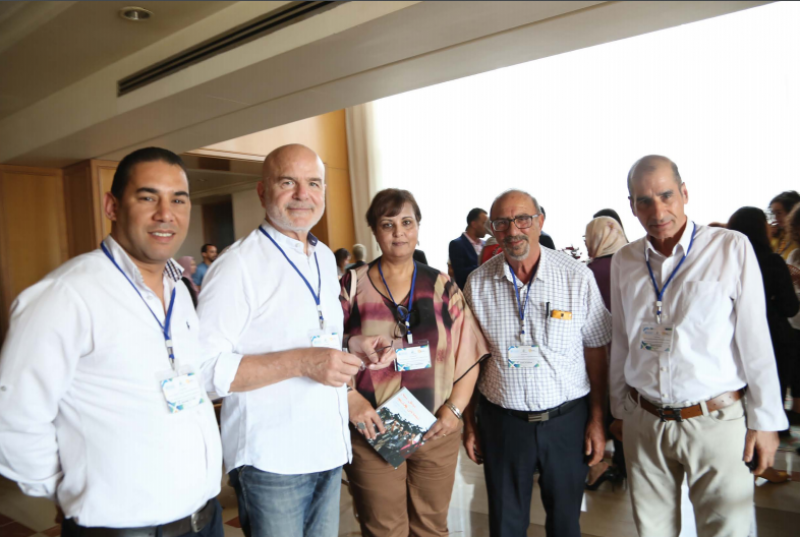
Former Special Rapporteur on the situation of HRDs, Michel Forst, with human rights defenders during a consultation on the situation in the MENA region (Photo: NHRF’s grantee partner, Gulf Centre for Human Rights).

In recent years, a number of initiatives across the globe have contributed to support defenders and to provide them with a set of concrete tools to mitigate risks. Defenders have been building solidarity networks and strategic alliances, they have developed risks analysis and digital security trainings. Women human rights defenders and indigenous communities have helped understand the necessity to develop collective and holistic approaches to security. Some States have developed laws and mechanisms to better protect defenders as a response to the current deterioration of the situation of HRDs. Over the past five years, I have heard and learnt about many good practices on protection, and I am pleased with the efforts of the NHRF to provide these guidelines as a resource to help identify and navigate these initiatives.

….Defenders often represent the last remaining hopes for those whose are left behind, who are excluded and despised by their societies. … it is imperative that we strengthen our support to these heroes. It is not only a matter of justice, it is for the sake of our common future, for our humanity. We must defend and stand and act in solidarity with these selfless, indomitable people.

Main photo: Mónica Orjuela/NHRF.

https://nhrf.no/article/2020/human-rights-defenders-reconnect-us-to-what-makes-the-essence-of-humanity-michel-forst

See also: https://humanrightsdefenders.blog/2018/01/17/protection-internationals-next-e-learning-course-on-security-starts-19-february/

The EU Human Rights Defenders’ mechanism – a short overview

May 28, 2019

Many readers of this blog wil already follow ProtectDefenders.eu [see also: https://humanrightsdefenders.blog/2018/02/27/10611/]. Still, for those who don’t here follows a short overview taken from a 31 May 2019 communication which gives an impressive tally of the last three year: 

Over the past three years, ProtectDefenders.eu – the EU Human Rights Defenders mechanism implemented by a Consortium of international civil society organisations, has emerged as a solid, successful and crucial tool for at-risk human rights defenders, and as an increasingly referenced instrument within the international human rights defenders community. As per the three-years report, ProtectDefenders.eu has stepped up the practical support available to HRDs at risk and local human rights NGOs, and mobilised resources in favour of at least 30,018 defenders in a timely and comprehensive manner.

In a context marked by the increasing demand for support from human rights defenders operating in the most difficult contexts, ProtectDefenders.eu…

  • has granted emergency support to 1,402 human rights defenders at high risk, in order to implement security measures, such as emergency relocation, individual security, medical support, or legal support. Over the past three years, the countries from which the highest number of HRDs received support were Syria, Burundi, Honduras, Russia, China, Iran, and DRC.
  • has facilitated and funded temporary relocation programmes for 459 human rights defenders (and their families when needed) with the support of comprehensive accompaniment schemes within host institutions from all over the world. For this purpose, ProtectDefenders.eu has maintained and broadened the EU Temporary Relocation Platform, supported the creation of new host organisations and engaged as an essential counterpart for human rights defenders in need for relocation and for host organisations.
  • has expanded the capacitites of more than 173 local human rights organisations, communities, and groups operating in the most dangerous contexts, through funding (such as seed-funding, core-funding and lifeline support) and contributions to develop sensitive initiatives and capacity-building programmes.
  • has provided capacity-development and training for at least 6,673 defenders aimed at empowering them to better manage their own security and to develop effective stragies and action to help them advance their their work in defence of Human Rights.
  • has provided effective guidance and immediate responses to 2,600 human rights defenders thanks to direct access to the 24/7 hotline, the ProtectDefenders.eu single-entry points, and direct contact with the Secretariat.
  • has monitored the situation of at least 1,323 human rights defenders in the field, through 284 fact-finding and advocacy missions, trial monitoring, accompaniment, or visits to prison.has mobilised public and media attention, as well as political responses on more than 5,100 individual cases such as attacks or threats against defenders through appeals, letters or petitions:
  • has reached out to at least 4,289 of the less connected, most targeted and at-risk defenders around the world, through 60 initiatives, such as missions to remote areas.

ProtectDefenders.eu aims at reaching out to the less connected and particularly targeted defenders and these groups (such as Women Human Rights Defenders, LGBTI+ rights defenders, land and environment rights defenders, indigenous rights defenders, or defenders from remote areas) represent approximately 75% of the beneficiaries.

https://www.protectdefenders.eu/en/newsfeed.html#newsletter-article-288

Human rights defender from York: Ahmed Al-Kolaibi, Yemen

January 23, 2015
On 16 February 2015, the York Press carried a feature story by Stephen Lewis about 5 human rights defenders in the temporary shelter programme at York University. The aim of the placements is to give those fighting for human rights around the world a breather, as well as the chance to forge contacts with other human rights workers and organisations around the world.

Ahmed Al-Kolaibi grew up in a mountain village in Dhamar in rural Yemen where the law counts for little, and what matters is tradition and custom. For more than 30 years, there have been ‘revenge’ wars between neighbouring villages. When he was seven, Ahmed lost his own father in one of these revenge killings. An uncle was also badly hurt As he grew older, Ahmed, now 27, began trying to persuade other young men in his village that the killings were senseless. The village elders, incensed that he didn’t want to fight for the ‘honour’ of his village, decided to make an example of him.

íYork Press:
Ahmed Al-Kolaibi

They punished me. They took my house, they took my land, because they wanted me to be an example,” he says. He went to Sana’a, the Yemeni capital, where he began to work for a peace-keeping organisation, the Dar Al-Salam Organisation. He works as a mediator in the warring villages, trying to arrange truces between rival sheikhs. He has helped train 360 other mediators – and has even secured the release of abducted foreigners. But being a mediator is very dangerous. “We have lost 15 people,” he says quietly.

It can also be deeply frustrating. Once, trying to negotiate a peace between two villages, he was told that 25 people had been killed in one, and ‘only’ 23 people in the other. Before the fighting could be resolved, he was told, ‘we have to kill two people from that village so it is 25/25′.

5 human rights defenders in York tell their incredible stories (From York Press).