Hans Thoolen on Human Rights Defenders and their awards

share information on human rights defenders, with special focus on human rights awards and laureates


Posts Tagged ‘refugees’

« Older posts
Newer posts »

European Lawyers in Lesvos awarded Pax Christi Peace Prize 2019

August 14, 2019

Pax Christi International honoured the European Lawyers in Lesvos (ELIL) as the recipient of the 2019 Pax Christi International Peace Prize at a ceremony held in Brussels on Wednesday evening, 26 June.

The prize was accepted by “European Lawyers in Lesvos” (ELIL’s) managing director, Philip Worthington, who delivered a speech on the work of ELIL and their efforts to protect the human rights of migrants and refugees in crisis. The evening began with a speech highlighting the centrality of recognising the human dignity of every person by Bishop Kevin Dowling (Rustenburg, South Africa), Co-President of Pax Christi International. His speech was followed by his counterpart, Ms Marie Dennis, Co-President of Pax Christi International, addressing the importance of the refugee crisis to Pax Christi sections and member organisations around the world and how we are inspired by the work of ELIL. Ms. Greet Vanaerschot, Pax Christi International’s Secretary General, presented the award to Mr Worthington. Attendees were treated to musical interludes by recording artist Zem. A reception followed the one-hour ceremony.

One of the very few providers of legal assistance on the Greek island of Lesvos (also known as Lesbos, a focal point of mass immigration into Europe), ELIL was founded in June 2016 by the Council of Bars and Law Societies of Europe (CCBE) and the German Bar Association (DAV). Since that time, along with a small permanent staff, almost 150 volunteer asylum lawyers from 17 countries have provided free legal assistance to more than 9,000 people, most of whom are from Syria, Iraq or Afghanistan. ELIL is the largest provider of legal assistance to asylum seekers on Lesvos and is the primary provider of legal assistance to unaccompanied minors who have been incorrectly registered as adults (over 500 cases in total) and asylum seekers in detention (almost 200 cases in total). In addition to other services, ELIL also helps reunite families by assisting with family reunification applications under the Dublin Regulation.

Established in 1988, the Pax Christi International Peace Award is funded by the Cardinal Bernardus Alfrink Peace Fund and honours contemporary individuals and organisations who make a stand for peace, justice and nonviolence in different parts of the world. For text and videos of the speeches, photos of the ceremony & more, please click HERE.

Read more about European Lawyers in Lesvos (ELIL): www.europeanlawyersinlesvos.eu

Posted in awards, human rights, Human Rights Defenders | Leave a Comment »
Tags: awards, Council of Bars and Law Societies of Europe (CCBE), European Lawyers in Lesvos (ELIL), Greece, human rights lawyers, lesbos, migrants, Pax Christi International, Pax Christi Peace Prize, Philip Worthington, refugees

Hell and Hope: a documentary film about three women who escaped ISIS and made a new life in Germany

August 13, 2019
HELL AND HOPE (2019) film by Amish Srivastava from Amish Srivastava on Vimeo.

Khemta H Jose in the Quint reviews the movie ‘Hell & Hope’. This documentary is filmed in Germany in 2018, where 1,100 Yazidi survivors of ISIS brutalities found refuge. There, they have managed to rebuild shattered lives even as mothers and sisters are missing – presumed enslaved or killed – fathers and brothers dead. Before it was too late for Salwa in Iraq’s Sinjar, before the militants came, she says it was Yazidi men who prevented them from running. “The men refused to run despite their wives asking them to. ‘We men don’t run away, we stay and fight’. But the women didn’t know how to drive, so they couldn’t run either. I doubt if in all of Sinjar, even four women know how to drive – if they knew how to drive, they would have escaped and survived. The men could’ve stayed and fought if that was what they wanted. They should have fought and not let us face what we faced.” said Salwa, Yazidi Survivor Knowing how to drive seems like a small thing, in the grand scale of what was happening in Iraq and Syria. And yet it is that small independence they were denied that might have made all the difference.

The camera follows three women – Lamiya, Salwa and Bazi – as they go about their lives in Germany; to classes, to work. Lamiya was one of two Yazidi women survivors who won the EU’s prestigious human rights award – the Sakharov Prize – for their work in advocating for their besieged community. [see: https://humanrightsdefenders.blog/2016/11/01/sakharov-prize-2016-went-ultimately-to-two-yazidi-women/]

……

Despite the gripping horror of each story, there is not much different in the perspectives offered than what we’ve heard over the years now in countless pieces of reporting – the kidnappings, the slavery, the killings. What’s new is the fine detail that comes out when you have multiple women tell broadly the same story; the banality of evil.

Two of the three women who spoke expressed disgust, contempt and were especially distressed by the encouragement given to Daesh terrorists by their wives. It was felt as a deeper betrayal, even though Salwa explains why they did it: “What we saw was that the women encouraged their husbands. This is why I always say that women should see the world and get an education. They controlled women’s minds. What was Daesh telling their wives? They would say that women don’t go to heaven, that a woman is incomplete. Only men go to heaven, so in this life, women must please their husbands, and when they go to heaven, they can ask for their wives to join them. After a Daesh militant kills Yazidis, because they are infidels, he will go to heaven and if he is satisfied with his wife, he will ask for her to come.”

..how did they make it out of that hell? The German government reached out. “The girls did not apply for asylum. The government of the German state of Baden Württemberg came up with a special quota program to give girls, children and other victims a direct residence permit for 3 years.” Amish Srivastava, Director, Hell & Hope…

Watching the documentary is an exhausting experience, but the viewer is forewarned. One of the first lines that appear on the screen is “Girls risked their lives to escape Islamic State captivity. Few succeeded.”

https://www.thequint.com/entertainment/movie-reviews/hell-and-hope-isis-yazidi-women-escaped

Posted in films | Leave a Comment »
Tags: Amish Srivastava, Baden Württemberg, Bazi, Documentary film, Germany, Hell & Hope (film), human rights of women, Iraq, Lamiya Aji Bashar, refugees, Salwa, Syria, Vimeo, Yazidi

A good appointment at the UN High Commissioner for Refugees

August 9, 2019
Image
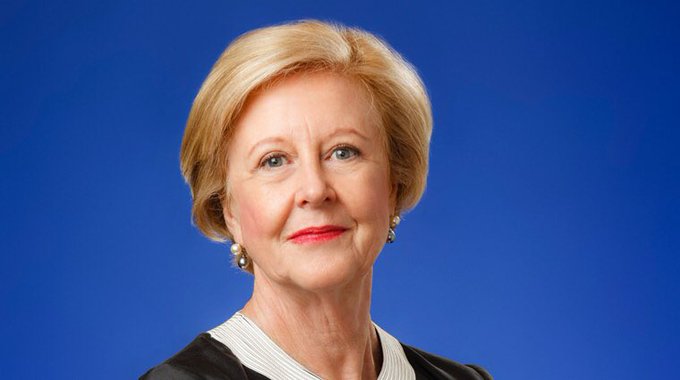
On 8 August 2019,  Filippo Grandi, the UN High Commissioner for Refugees (UNHCR) announced that Austrialian Gillian Triggs [@GillianTriggs] has been appointed Assistant High Commissioner for refugee protection. He states that she will bring to #UNHCR substantial legal expertise, knowledge and experience of refugee issues and a passion for human rights. From the single blog post I have on her that seems indeed very likely: https://humanrightsdefenders.blog/2015/06/16/the-importance-of-independent-national-human-rights-bodies-illustrated-in-australia/

Posted in UN | Leave a Comment »
Tags: appointment, Filippo Grandi, Gillian Triggs, protection, refugees, UNHCR, United Nations High Commissioner for Refugees

Following threats to NGO offices in Israel, human rights defenders demand investigation

August 1, 2019
On Wednesday, death threats were found spray-painted outside the offices of Amnesty International in Tel Aviv and ASSAF, an organization which advocates for refugees and asylum seekers in Israel. (Photo: @AmnestyIsrael/Twitter)

Julia Conley, staff writer of Common Dreams wrote on 31 July 2019 about the threats against three NGOs in Israel. Human rights defenders in Israel linked recent threats at three civil society organizations to the rhetoric and policies of the country’s government, which has worked to intimidate and suppress groups critical of its treatment of Palestinians and other marginalized people. Staff members at Amnesty Israel in Tel Aviv and the Aid Organization for Refugees and Asylum Seekers in Israel (ASSAF) on Wednesday found death threats written in spray paint on walls outside the organizations’ offices. A box containing death threats and a dead mouse was found around the same time at the Elifelet Children’s Activity Center, which cares for refugee children.

“We have filed a complaint with the police and we see this as the result of the ongoing campaign of incitement against aid and human rights organizations, led by the government,” tweeted Amnesty Israel. Amnesty International denounced the threats as “deplorable and malicious acts” which must be investigated and unequivocally condemned by the government.

“The Israeli authorities should take a strong stand by publicly condemning these acts and making clear that attacks against NGOs will not be tolerated,” said Philip Luther, the group’s research and advocacy director for the Middle East and North Africa. “The Israeli authorities must also take steps to ensure that human rights defenders and civil society organizations more generally are effectively protected and can carry out their work free from threats, intimidation, or harassment.”

[see also: https://humanrightsdefenders.blog/2019/04/18/israel-deportation-of-human-rights-watchs-staff-member-again-on-the-table/ ]

…………”This is not the first time we are being threatened,” ASSAF wrote in a post on Twitter. “This is the result of the ongoing incitement campaign against aid and human rights organizations in Israel—with the encouragement and backing of politicians and public figures.” “You have to make sure this is the last time,” the group added, addressing authorities.

Posted in AI, HRW, Human Rights Defenders | 1 Comment »
Tags: AI, Aid Organization for Refugees and Asylum Seekers in Israel (ASSAF, Common Dreams, Elifelet Children's Activity Center, freedom of association, Israel, NGOs, Philip Luther, refugees, threats

Interview with Cédric Herrou, migrants rights defender who is the central person in the film Libre

July 18, 2019

ISHR had the chance to meet with Cédric Herrou for the Geneva premiere of movie ‘Libre’ where director Michel Toesca follows him in his endeavours in France‘s Roya Valley. During our interview, Herrou, a migrant rights defender and president of association ‘Défends Ta Citoyenneté’, shared his testimony, challenges, aspirations and calls to action.  The interview was published on 22 March 2019.

Posted in films, Human Rights Defenders, ISHR | 1 Comment »
Tags: Cédric Herrou, fillm, France, Geneva, interview, ISHR, Libre (film), Michel Toesca, migrants, migrants rights defender, profile, refugees, You Tube

About the struggle against statelessness

July 10, 2019

Amal de Chickera of the Institute on Statelessness and Inclusion worre on 5 July 2019 an OPINION: “We need to build a global statelessness movement”.

…The denial of the right to a nationality and resultant statelessness is a condition imposed on people (almost always through violating international law), with the intention of weakening them. Statelessness is thus, nothing short of violence. Even as the words and actions of many world leaders cheapen human rights and lives; promote insularity, narrow nationalism, racism, xenophobia, misogyny and hypocrisy and disproportionately target the most vulnerable; those denied legal status, the stateless and those at risk of statelessness are inevitably targeted by the politics of hatred and fear.

Be they Rohingya of Myanmar, refugees fleeing Syria, minorities in Assam India, Dominicans of Haitian origin, single Nepalese mothers, those accused of terrorism in the UK, human rights defenders in Bahrain, or those languishing in camps at the American border; we repeatedly witness the denial of status, the right to a nationality and (risk of) statelessness as a consequence and cause of discrimination, exclusion and hardship.

If the right to a nationality and inclusion were a house, it would be no exaggeration to say global politics and events have (again) lit a spark under its wooden foundation.

Confronted with this reality, over a year ago, our Institute decided to organise a World Conference on Statelessness. This may appear a strange decision, considering the number of all-consuming emergencies globally, but our motivation stemmed from a sense that we cannot always be in reaction mode.

We must confront the issue on the front foot, finding inclusive, creative and effective ways to promote the right to nationality. The conference brought together 300 activists, advocates, academics, artists and others from 60+ countries. One participant referred to it as the ‘A team’, not merely for the alliterative descriptors, but because of the commitment shown to come together and create something bigger and better than the sum of our parts.

But what does this mean?

On an issue as complex and intersectional as statelessness, spanning numerous fields including human rights, migration, child rights, development, feminism, humanitarianism, conflict, economics and politics (to name but some), it is evident that there are no simple or straightforward solutions. The conference however did throw up some clear indicators:

  1. The grand challenges of statelessness: the conference was structured around 10 Grand Challenges focusing on global crises and big issues – the Rohingya, Syria, gender discrimination, citizenship stripping and legal identity etc. These issues are bigger than statelessness but can only be resolved if the right to a nationality and statelessness is understood and prioritised.
  2. The underlying problems: The underlying causes of exclusion and statelessness are most often racism, patriarchy and xenophobia. We can tell right from wrong when a racist attacks a minority child, a misogynist harasses a woman, or a xenophobe abuses a migrant. But when this happens under the cloak of law, procedure and official language, we respond not with anger, but tolerance. We try to find a middle ground. The Kuwaiti Bidoon, the Nepali mother or stateless refugee in Greece are not searching for middle ground. They demand their rights.
  3. Celebrating successes: We have many successes to celebrate, including the Makonde successfully securing their Kenyan citizenship and Sierra Leone passing a gender equal nationality law. We must learn from our successes, as we do from our defeats.
  4. Inclusive, interdisciplinary and effective: We have to confront inequalities among ourselves, accepting the very real barriers to inclusion we face, challenging ourselves to diversify our work and our partners, and ultimately transcend the limitations of our own organisations and contexts, creating something bigger, that cannot be claimed by one entity.
  5. Activists front and centre: A global movement must have courageous activists who defy the odds to fight for their people. We who are not directly impacted by statelessness must step aside and let the real experts set the agenda, guide us and hold us to account.

We have a long way to go, but the stakes cannot be higher. The more nationality is instrumentalised and viewed as a privilege to be taken away from the undeserving, the more we will see people and groups being labelled as such, so they may be excluded, denied and deprived. Our house is burning and we can only stem the fire through a global movement and working together.

SEE ALSO: https://www.unhcr.org/protection/statelessness/53b698ab9/handbook-protection-stateless-persons.html

http://news.trust.org//item/20190705101713-ajq91/

Posted in human rights, UN | 1 Comment »
Tags: Amal de Chickera, Institute on Statelessness and Inclusion, nationality, refugees, Reuters Thompson Foundation, Rohingya, statelessness, UNHCR

Today: World Refugee Day 2019

June 20, 2019

Many are the initiatives on this day. UNHCR lists just a few ways that you can take action right now and spread this message even further:

  • Take part in our #StepWithRefugees challenge – get moving in solidarity with refugees
  • Find a World Refugee Day event near you and meet others who stand with refugees
  • Tell your local representative that you support refugees and encourage them to sign our statement of solidarity #WithRefugees

Sometimes good news fall on the right day: a French court acquitted Tom Ciotkowski, a British human rights defender who documented police abuse against migrants and refugees and volunteers who were helping them in Calais. Amnesty International France’s Programme manager on Freedoms, Nicolas Krameyer said: “Today’s decision, delivered on World Refugee Day, is not only a victory for justice but also for common sense. Tom Ciotkowski is a compassionate young volunteer who did nothing wrong and was dragged through the courts on trumped up charges”. [see also: https://humanrightsdefenders.blog/2019/05/15/european-governments-should-stop-treating-solidarity-and-compassion-as-a-crime/]

EuroMed Rights focuses on the current practice of stopping people from disembarking ships/boats on the Mediterranean Sea shoreline, particularly in Tunisia. In many aspects, this situation is emblematic of the obstacles faced by refugees in obtaining protection and access to rights in the Euro-Mediterranean region. It is also emblematic of the unfailing solidarity with refugees of local organisations and individuals.

Freedom United issues a call to close Libyan slave markets.

Medecins Sans Frontieres (MSF) is featuring stories of survival—a collection of video testimonies and first-hand accounts from people who have risked everything for a chance at safety. As an organisation working with refugees and people on the move, we know that nothing—not a wall, or even an ocean—will ever stop people who are simply trying to survive.

———-

https://www.amnesty.org/en/latest/news/2019/06/france-acquittal-of-young-man-for-showing-compassion-to-refugees-in-calais-shows-solidarity-is-not-a-crime/

https://mailchi.mp/euromedrights/world-refugee-day-deadlock-at-sea-obstacles-to-the-right-of-asylum-the-tunisian-case?e=1209ebd6d8

https://www.freedomunited.org/

https://www.msf.org/refugees-around-world-stories-survival-world-refugee-day

Posted in AI, EMHRN, films, Human Rights Defenders, UN | Leave a Comment »
Tags: Amnesty International, euroMed Rights, France, Freedom United, Libya, Medecin Sans Frontieres, refugees, slave trade, Tom Ciotkowski, Tunisia, UNHCR, video, world refugee day

European governments should stop treating solidarity and compassion as a crime

May 15, 2019

Two recent cases of criminalization of human rights defenders in Europe helping people at sea:

Iuventa crew
Iuventa crew

On 13 May 2019 MarEx  reported that the crew of the rescue ship Iuventa operated by the German NGO Jugend Rettet has received the Swiss Paul Grüninger human rights award for saving the lives of around 14,000 of men, women and children in the central Mediterranean. For more on this award, see: http://www.trueheroesfilms.org/thedigest/awards/paul-grueninger-award

The award is seen as a statement against the criminalization of those helping people at sea and comes whilst the crew is under criminal investigations in Italy for “aiding and abetting illegal immigration.” They face up to 20 years in prison and fines of 15,000 Euro ($16,900) per saved person. The prize money of 50,000 Swiss francs contributes to the defense.

The Iuventa was the first rescue vessel seized in Italy in August 2017. Captain Dariush was master of the Iuventa for three voyages off the Libyan coast: “We’re being charged for saving lives. This is absurd,” he said. “It is European politicians who block any safe way for people in need, so we had to act.”

The crew says: “Although we have to stand trial, it is us who accuses Europe. We accuse European politicians of turning their backs on people in need. We accuse the E.U. of collaborating with regimes who violate human rights.” The Italian public prosecutor’s office has been investigating the crew for almost two years. Covert investigators claim to have observed the Iuventa crew cooperating with smugglers. However, the NGO claims that scientists at Goldsmiths, University of London have said there is no evidence for this. “They have compared the accusations of the Italian police with all available data, meteorological measurements, logbooks and recordings of the Reuters agency. In their study for Forensic Architecture, they conclude that the allegations are false.” The trial is expected to begin in autumn, and it is expected that charges will be brought against the 10 crew members. It is a precedent for Europe, says lead lawyer Nicola Canestrini: “This trial will show whether Europe can continue to stand for fundamental rights and solidarity in the world.”

——–

On 15 May 2019, Amnesty International called for all charges to be dropped ahead of the trial of Tom Ciotkowski, a British human rights defender who documented police abuse against migrants and refugees and volunteers who were helping them in Calais. AI calls for all European governments to stop treating solidarity as a crime. The trial will start at on 15 May, at the Tribunal de Boulogne-sur-Mer.

Tom Ciotkowski is facing up to five years in prison and a fine of up to 7,500 Euros on trumped up charges. In July 2018, he was observing French riot police preventing volunteers from distributing food to migrants and refugees in Calais. He was charged with contempt and assault after he challenged the violent actions of a policeman against another volunteer. “Tom Ciotkowski is a compassionate young volunteer who was taking action to support migrants and refugees when he was arrested. He has committed no crime and is being unjustly targeted for documenting the abusive behaviour of the police in Calais,” said Amnesty International’s Senior Campaigner on Migration Maria Serrano.

“Tom’s case is sadly emblematic of the harassment, intimidation and attacks that human rights defenders supporting migrants and refugees face at the hands of police in Calais. His case also reflects a wider European trend of criminalizing acts of solidarity, as a way of discouraging others from standing up for human rights. We need courageous, compassionate people like Tom more than ever

[BACKGROUND At the end of July 2018, Tom Ciotkowski was observing French riot police ID-checking volunteers who were trying to distribute food to migrants and refugees. He recorded on his mobile phone an official pushing and kicking a volunteer. When Tom complained about the behaviour of the police, an officer approached him and another female volunteer, who he hit with a baton. When Tom asked the officer for his identification number and told the policeman not to hit women, he was pushed hard by an officer and fell backwards over a metal barrier separating the pavement from the road. As Tom fell backwards, a passing lorry narrowly missed him. He was then arrested, put in custody for 36 hours and charged with contempt and assault (“outrage et violence”). In May 2019, Tom filed a complaint against the police officer who pushed him and against other officers who provided reports stating false facts against Tom to support his arrest and prosecution.]

See also: https://humanrightsdefenders.blog/2018/12/02/un-experts-consider-human-rights-defenders-in-italy-under-threat/

https://www.maritime-executive.com/article/iuventa-crew-receives-human-rights-award-in-switzerland

https://www.amnesty.org/en/latest/news/2019/05/france-trumped-up-charges-against-human-rights-defender-must-be-dropped/

Posted in Amnesty international, awards, human rights, Human Rights Defenders | 6 Comments »
Tags: AI, criminalisation, digest of human rights awards, Europe, France, human rights awards, Italy, Iuventa, Jugend Rettet, migrants, Paul Grüninger human rights award, refugees, rescue, Tom Ciotkowski

Angelina Jolie addressed UN forcefully on crucial role of women

May 4, 2019

Angelina Jolie Addresses Women's Rights at the UN

UNTV via AP Video

And just in case you missed it, on Friday 29 March 2019, Angelina Jolie warned at the UN that the world “will remain stuck in a cycle of violence and conflicts” as long as nations continue to put almost every other issue ahead of women’s equality, rights and participation. In her speech to the annual meeting of foreign and defense ministers, the Oscar-winning actress focused primarily on women, but she also talked about the importance of multilateralism and the growing refugee crisis. She showed again that she is an excellent speaker [see e.g. https://humanrightsdefenders.blog/2017/02/27/angelina-jolie-gives-2017-sergio-vieira-de-mello-lecture-on-15-march-2017/].

Jolie, who is a special envoy for the UNHCR, added in a keynote address to a ministerial meeting on U.N. peacekeeping that “denying half a population representation in peace negotiations or in government is not the route to long-term stability.” There are many examples around the world of successful and inspiring women, she said, “but women and girls are still the majority of the victims of war,” over half the world’s refugees, and “the vast majority” of victims of rape and sexual violence. If the world accepted the principle that those affected by a problem should be charged with determining a solution, Jolie said, “then the majority of the world’s peace negotiators, foreign ministers and diplomats would be women.” But she quickly said: “We all know the reality.” The reality, Jolie added, is that unequal power relations, “abuse of power, gender bias, violence and lack of justice” have kept many women in a subordinate and vulnerable position internationally.

She pointed to missile strikes on schools and hospitals, families bombed in their homes, chemical weapons dropped on neighborhoods, besieged areas unable to get aid, and mass rapes.

“We seem incapable of upholding minimum standards of humanity in many parts of the world,” Jolie said. “That this comes at a time when humankind is richer and more technologically advanced than ever before is all the more painful.”

She recalled that there were fewer than 20 million displaced people when she started working with the UNHCR. “Today there are over 65 million people displaced, and the numbers are rising,” Jolie said. ” Peacekeepers who commit violations must be investigated and prosecuted, she said, and there must be no impunity for crimes committed against women and girls during conflict. Above all, Jolie said, the world needs to understand “that women are themselves protectors: As mothers. As peacekeepers. As human rights defenders.” “As long as we continue to put almost every other issue ahead of women’s rights and participation we will remain stuck in a cycle of violence and conflict. We will have learned nothing. And our institutions will count for less than they should,” Jolie said.

https://www.facebook.com/plugins/video.php?href=https%3A%2F%2Fwww.facebook.com%2Fcirca%2Fvideos%2F269269693996858%2F&show_text=0&width=560

https://news3lv.com/news/entertainment/live-angelina-jolie-to-deliver-remarks-at-un-general-assembly

https://www.wdio.com/entertainment/angelina-jolie-addresses-womens-rights-at-the-un/5297596/

Posted in human rights, UN | Leave a Comment »
Tags: Angelina Jolie, forced displacement, humanitarian standards, migrants, New York, peace and conflict, peacekeepers, refugees, UN, UNHCR Goodwill Ambassador, women human rights defenders

Geneva Launch of the World Refugee Council’s Report aiming to transform global system

April 15, 2019
The Global Migration Centre‘s mission is to advance new solutions to address the structural challenges facing the global refugee system. It is forged by an independent group of individuals which include political leaders, policy advisers, academic experts and private sector and civil society representatives from around the world. The Council unveiled its report “A Call to Action: Transforming the Global Refugee System ” in January 2019. It offers bold recommendations to transform the global refugee system with a focus on four key areas: political will, responsibility sharing, financing and accountability. It now hosts the Geneva Launch of the World Refugee Council’s Report.

Wednesday 17 April 2019, 18:30 – 20:00
Auditorium A2| Maison de la paix, Geneva

Speakers: 

  • Her Excellency, Ms. Rosemary McCarney, Ambassador, Permanent Mission of Canada to the United Nations Office and other international organizations in Geneva
  • Lloyd Axworthy, Chair, World Refugee Council, former Canadian Foreign Minister
  • Lawrence L. Herman, World Refugee Council
  • Allan Rock, Special Adviser, World Refugee Council
  • Moderator:  Vincent Chetail, Director, Global Migration Centre, Graduate Institute, Geneva

Posted in human rights | Leave a Comment »
Tags: A Call to Action: Transforming the Global Refugee System, Geneva, Global Migration Centre, Graduate Institute of International and Development Studies, meeting, migration, refugees

« Older posts
Newer posts »
  • Enter your email address to subscribe to this blog and receive notifications of new posts by email.

    Join 1,786 other subscribers
  • Recent Posts

    • Two new interactive tools to strengthen diplomatic initiatives to support human rights defenders
    • Andrea Bolaños Vargas next Special Rapporteur on human rights defenders?
    • Risks for Human Rights Defenders amid war in the Middle East
    • Strategy 2030: ISHR’s new Strategic Framework
    • Launch of the 2025 Freedom of Thought Report
    • Checklist with criteria for candidates Special Rapporteur on freedom of expression
    • UN experts warn of extreme M23 violence targeting human rights defenders in DRC
    • Amnesty Reports Attacks on Indonesian Human Rights Defenders in 2024 – four acquitted in 2026
Blog at WordPress.com.
Entries and comments feeds.Valid XHTML and CSS.
  • Subscribe Subscribed
    • Hans Thoolen on Human Rights Defenders and their awards
    • Join 441 other subscribers
    • Already have a WordPress.com account? Log in now.
    • Hans Thoolen on Human Rights Defenders and their awards
    • Subscribe Subscribed
    • Sign up
    • Log in
    • Report this content
    • View site in Reader
    • Manage subscriptions
    • Collapse this bar