Posts Tagged ‘PACE’

Ukrainian human rights defender Maksym Butkevych wins CoE’s 2025 Václav Havel Prize

September 30, 2025
2025 Václav Havel Prize awarded to Ukrainian journalist and human rights defender Maksym Butkevych

The thirteenth Václav Havel Human Rights Prize – which honours outstanding civil society action in defence of human rights – has been awarded to Ukrainian journalist and human rights defender Maksym Butkevych. The prize was presented at a special ceremony on the opening day of the autumn plenary session of the Parliamentary Assembly of the Council of Europe (PACE) in Strasbourg on 29 September 2025

Mr Butkevych is a co-founder of the Zmina Human Rights Centre and of Hromadske Radio. Despite his lifelong pacifism, he volunteered for the Ukrainian Armed Forces at the start of the 2022 Russian invasion and became a platoon commander. Captured and sentenced to 13 years in prison by Russian forces, he endured over two years of harsh imprisonment before being released in a prisoner exchange in October 2024. He remains a powerful symbol of courage and resilience in defence of justice and freedom.

The two runners-up for the 2025 Prize are Georgian journalist Mzia Amaghlobeli and Azerbaijani journalist Ulvi Hasanli. Both of them are currently detained in their home countries.

Opening the ceremony, PACE President Theodoros Rousopoulos said it was no coincidence that all three shortlisted candidates this year were journalists. Urging the immediate release of Ms Amaghlobeli and Mr Hasanli, he said: “Your voice may be silenced, but your testimony is heard loud and clear.” The President – himself a former journalist – also thanked all three candidates for their courage in opposing authoritarianism and for acting as role-models for a whole generation of journalists and human rights defenders: “Governments should not be afraid of the truth,” he declared.

For more on the Václav Havel Human Rights Prize, and its laureates, see: https://www.trueheroesfilms.org/thedigest/awards/7A8B4A4A-0521-AA58-2BF0-DD1B71A25C8D.

IPS at this occasion published a post critical of the lack of follow up to free the laureates:

The Václav Havel Prize is an important international recognition for those who stand up for human rights and against autocracy, but while recognition through such awards and solidarity matters deeply, it is not enough. The Council of Europe must match its willingness to recognise the courage of human rights defenders with efforts to stand courageously up to autocrats and dictators, even and especially those within its own membership ranks.

For PACE leadership and members, the recognition given to human rights defenders through the Václav Havel Prize must be matched with tireless, persistent and coordinated action to put pressure on the other political bodies of the Council of Europe. This includes adopting resolutions demanding the release of imprisoned laureates; organising visibility campaigns within PACE through side events, exhibitions and public initiatives; building stronger connections and networks with families of prisoners; and consistently deploying all available diplomatic tools to keep political prisoners at the forefront of European media and diplomacy.

At the same time, CoE leaders, including the Secretary General and Commissioner for Human Rights (currently Alain Berset and Michael O’Flaherty, respectively), must put the release of political prisoners at the top of the organisation’s priority list. These leaders have important public platforms that must consistently and relentlessly raise the profile of human rights defenders at risk. Leaders must work to mobilise member states to apply pressure for the release of political prisoners.

Finally, Council of Europe member states – signatories to the European Convention on Human Rights – need to recognise that the continued detention of human rights defenders poses a great risk to the long-term credibility of the institutions. Member states – on their own and through the organisation’s powerful Committee of Ministers – have to use all tools at their disposal to address the rising cases of political prisoners and crackdowns against civil society across the broader region. The Committee of Ministers needs to put enhanced enforcement pressure on member states regarding the judgments of the European Court of Human Rights on fundamental freedoms. These judgements, after all, often affect the fate of political prisoners.[https://www.ips-journal.eu/topics/democracy-and-society/prizes-without-freedom-risk-becoming-trophies-of-hypocrisy-8573/]


 Last year’s winner 

 Václav Havel Prize film

https://www.coe.int/en/web/portal/-/2025-v%C3%A1clav-havel-prize-awarded-to-ukrainian-journalist-and-human-rights-defender-maksym-butkevych-1

https://www.kyivpost.com/post/61106

Three shortlisted candidates for the 2024 Václav Havel Prize of the CoE

August 29, 2024

August 27, 2024

The selection panel of the Václav Havel Human Rights Prize, which rewards outstanding civil society action in defence of human rights in Europe and beyond, has announced the shortlist for the 2024 Award.

Meeting in Prague, the panel – made up of independent figures from the world of human rights and chaired by the President of the Parliamentary Assembly of the Council of Europe (PACE) Theodoros Rousopoulos – decided to shortlist the following three nominees, in alphabetical order:

Akif Gurbanov, Azerbaijan

The nominee is a human rights defender, political activist and active member of the Azerbaijani civil society. He is the co-founder of the Institute of Democratic Initiative (IDI) and of the Third Republic Platform. He was arrested in March 2024 in a wave of arrests targeting journalists and activists in the country.

María Corina Machado, Venezuela

The nominee is a leading political figure in Venezuela engaged in denouncing human rights abuses in her country and defending democracy and the rule of law. She is the co-founder of the Venezuelan volunteer civil organisation ‘Súmate’ for civil and political freedom, rights and citizen participation.

Babutsa Pataraia, Georgia

The nominee is a leading feminist activist and human rights lawyer in Georgia. She is the Director of ‘Sapari’, an NGO focusing on women’s rights and providing support for victims of violence since 2013. She has worked for over a decade to fight against feminicide, sexual violence against women, and sexual harassment.

https://www.trueheroesfilms.org/thedigest/awards/7A8B4A4A-0521-AA58-2BF0-DD1B71A25C8D

Three shortlisted for the 2022 Václav Havel Prize of the Council of Europe

September 27, 2022

On 6 September 2022 the selection panel of the Václav Havel Human Rights Prize [for more on this award and its laureates, see: https://www.trueheroesfilms.org/thedigest/awards/7A8B4A4A-0521-AA58-2BF0-DD1B71A25C8D] announced the shortlist for the 2022 Award.

Meeting in Prague the panel – made up of independent figures from the world of human rights and chaired by Tiny Kox, the President of the Parliamentary Assembly of the Council of Europe (PACE) – decided to shortlist the following three nominees, in alphabetical order:

Vladimir Kara-Murza, Russian Federation

The nominee is a Russian politician, author and historian. He is one of the opposition leaders in the Russian Federation, and co-founder of the Russian Anti-War Committee established to oppose Vladimir Putin’s invasion of Ukraine. Mr Kara-Murza was arrested in April 2022 and faces up to 10 years imprisonment. [he received earlier awards: https://www.trueheroesfilms.org/thedigest/laureates/34e43b60-3236-11ea-b4d5-37ffeeddd006, see also https://humanrightsdefenders.blog/2022/04/14/human-rights-defender-vladimir-kara-murza-arrested-in-russia/]

Rainbow Coalition/Invalid Campaign for LGBTQIA+ rights, Hungary

The nominee is a coalition of human rights organisations, LGBTQIA+ rights groups and other civic movements. The Rainbow Coalition has been campaigning and mobilising support for the defence of LGBTQIA+ rights in Hungary.

Ukraine 5 AM Coalition

The nominee is a coalition of Ukrainian human rights organisations whose aim is to uncover, document, collect and preserve evidence, while raising awareness of alleged war crimes and crimes against humanity committed in Ukraine during the ongoing war of aggression by the Russian Federation.

Announcing the panel’s choice, the PACE President said that the Council of Europe has worked since its creation to safeguard freedom, the rule of law and social justice on the continent. “Every year, the Václav Havel Human Rights Prize celebrates concrete, courageous and determined action by women, men and organisations who defend human rights. Their courage and determination in standing up for basic principles of justice and fairness deserve our profound respect and gratitude,” he added.

https://pace.coe.int/en/news/8797/three-candidates-shortlisted-for-the-2022-vaclav-havel-prize

Belarus’s Kalesnikava Awarded Vaclav Havel Human Rights Prize

September 29, 2021

On 27 September 2021 RFE/RL’s Belarus Service reported that jailed Belarusian opposition figure Maryya Kalesnikava has won the Vaclav Havel Human Rights Prize awarded annually by the Parliamentary Assembly of the Council of Europe (PACE) to honor “outstanding” civil society action in the defense of human rights amid an ongoing crackdown in Belarus on pro-democracy activists and groups by authoritarian ruler Alyaksandr Lukashenka. See also: https://www.trueheroesfilms.org/thedigest/laureates/beff3c8d-0e20-4e88-9efb-cdfcb4c26f40


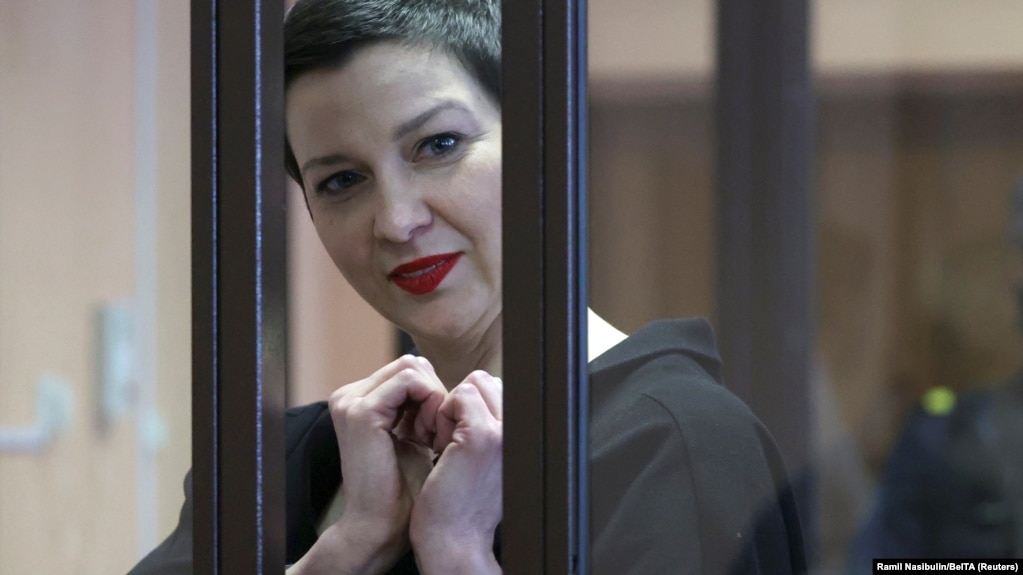
Maryya Kalesnikava forms a heart shape to supporters from inside a defendants' cage at her trial in Minsk on September 6.
Maryya Kalesnikava forms a heart shape to supporters from inside a defendants’ cage at her trial in Minsk on September 6.

The prize was presented by PACE President Rik Daems to Maryya’s sister, Tatsyana Khomich, at a special ceremony on September 27, the opening day of the autumn plenary session of the PACE in Strasbourg. For more on this award, see: https://www.trueheroesfilms.org/thedigest/awards/7A8B4A4A-0521-AA58-2BF0-DD1B71A25C8D

“In standing up against a regime which has chosen force and brutality against peaceful and legitimate protest, Ms. Kalesnikava showed that she is ready to risk her own safety for a cause greater than herself — she has shown true courage,” Daems said.

Accepting the prize on her sister’s behalf, Khomich said: “This award is a sign of solidarity of the entire democratic world with the people of Belarus. It is also a sign to us, Belarusians, that the international community supports us, and that we are on the right track.”

Kalesnikava and another opposition figure, Maksim Znak, were sentenced to prison terms of 11 and 10 years respectively on September 6, after being found guilty on charges with conspiracy to seize power, calls for action to damage national security, and calls for actions damaging national security by trying to create an extremist group. Both pleaded not guilty, rejecting the charges.

Kalesnikava, 39, was a coordinator of the election campaign of an excluded presidential aspirant, former Belgazprombank head Viktar Babaryka. After Babaryka was arrested weeks before the August 2020 presidential election, Kalesnikava joined forces with another presidential candidate, Svyatlana Tsikhanouskaya, whom the majority of Belarusians have called the winner in the election.

After joining Tsikhanouskaya’s support group, Kalesnikava became a member of the opposition Coordination Council and turned into a prominent leader of protests demanding the resignation of Lukashenka, who was officially announced the winner of the election demonstrators say was rigged and which the West has refused to acknowledge.

Kalesnikava was snatched from the streets of Minsk in September 2020 by masked men along with two staffers. The three were driven early the next day to the border, where authorities told them to cross into Ukraine.

Security officers reportedly failed to deport Kalesnikava because she ripped her passport into small pieces after they arrived in the no man’s land between Belarus and Ukraine. Her two associates entered Ukraine, but with no valid passport, Kalesnikava remained in the country and was subsequently detained.

See also: https://humanrightsdefenders.blog/2021/09/07/nominees-for-vaclav-havel-human-rights-prize-2021-announced/

In the meantime the Belarusian Justice Ministry has filed a lawsuit to dissolve the Belarusian Helsinki Committee, one of the country’s oldest independent human rights groups, Human Rights Watch said today. On September 30, 2021, the Belarus Supreme Court is scheduled to hold a hearing on the lawsuit. The move is part of wider effort by Belarusian authorities to silence all independent or critical voices in the country.

In a September 22 letter, five international human rights organizations, including Human Rights Watch, urged the Justice Ministry to withdraw its lawsuit, calling it “inappropriate [and] inconsistent with the Belarusian government’s obligations to respect and protect the legitimate work of human rights defenders.” They also said the lawsuit “violates a number of fundamental rights, including those of freedom of expression and association and due process.”

https://www.rferl.org/a/belarus-kalesnikava-havel-prize/31480306.html

https://www.euronews.com/2021/09/28/us-europe-rights-belarus

https://www.hrw.org/news/2021/09/29/belarus-authorities-target-top-human-rights-group

.

Ilham Tohti and Balkan youth group share 2019 Vaclav Havel Human Rights Prize

October 1, 2019
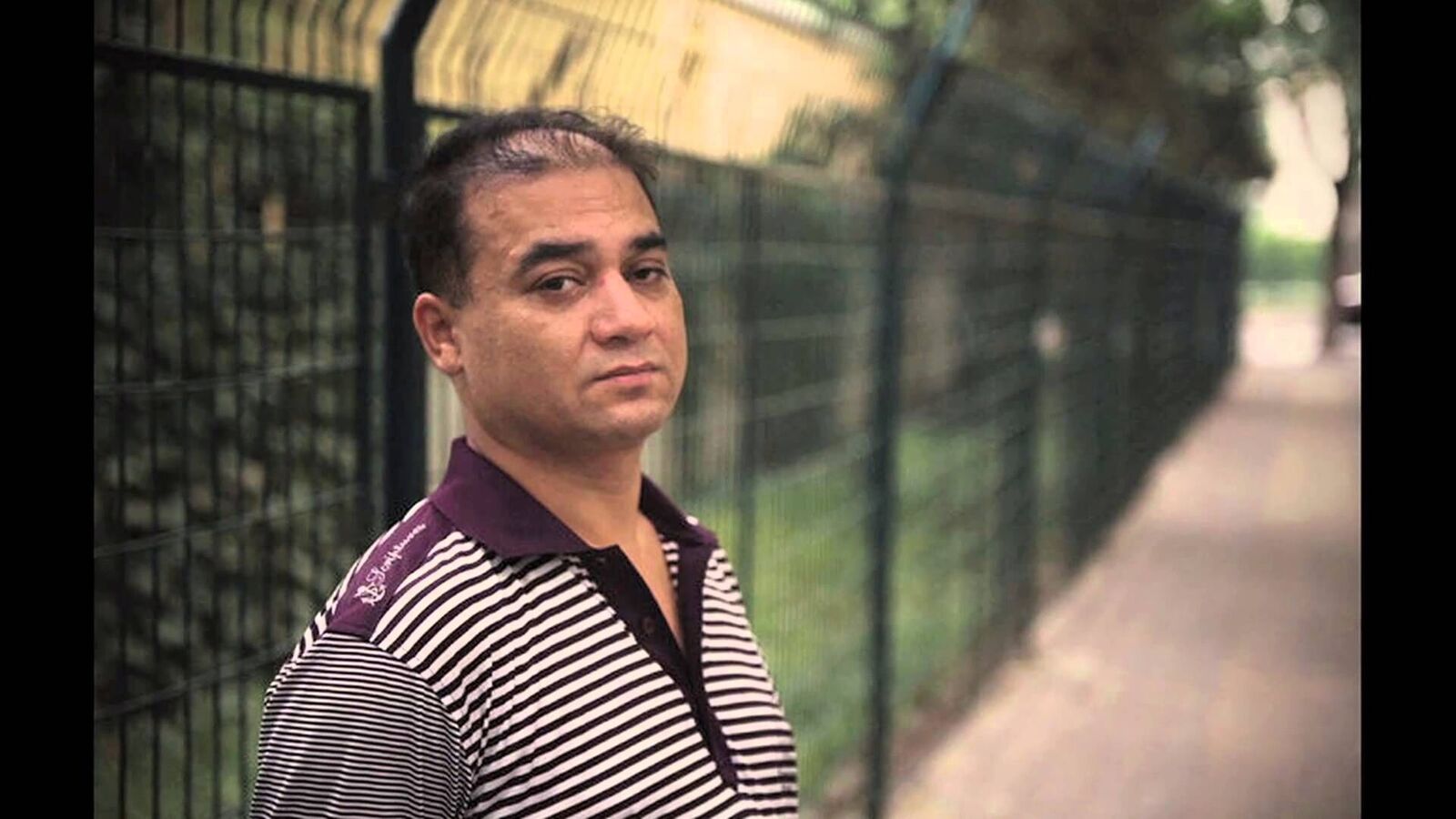
The Parliamentary Assembly of the Council of Europe (PACE) has awarded jailed Uyghur scholar Ilham Tohti the 2019 Vaclav Havel Human Rights Prize, making him the first dissident from China to receive the prize. Tohti, 49, shares the prize  with the Youth Initiative for Human Rights (YIHR) – a group that brings together youths from across the Balkans to promote reconciliation – on Monday at ceremony in Strasbourg, France on the opening day of PACE’s autumn plenary session.
PACE said in a statement after a live broadcast on September 30 that actions taken by the two prize winners carry “a message of hope for all those who aspire to build a better world, one where the dignity, rights, and basic liberties of everyone are respected and guaranteed.

Tohti is an advocate for China’s Uyghur Muslim minority who was sentenced to life in prison by Beijing in 2014 on separatism charges. YIHR is a Balkan-based group promoting reconciliation through building connections between young people from different ethnic groups, regions, and countries.

The award was accepted on Tohti’s behalf by Enver Can of the Ilham Tohti Initiative, who said that while the prize honors individuals and organizations, “it also recognizes a whole population in giving the entire Uyghur people a voice,” and vowed to continue efforts to free the jailed professor. Speaking to RFA’s Uyghur Service on Monday, Tohti’s daughter, Jewher Ilham, welcomed the award and expressed appreciation to Europe-based rights groups—particularly the Ilham Tohti Initiative—for advancing her father’s case.

Enver Can called the Vaclav Havel Prize “tremendous recognition of Ilham Tohti’s efforts to help his people.”

After Tohti was shortlisted for the seventh Vaclav Havel Human Rights Prize last month [see also: https://humanrightsdefenders.blog/2019/08/29/ilham-tohti-one-of-the-finalists-for-the-vaclav-havel-human-rights-prize/], China’s Foreign Ministry spokesperson Geng Shuang told a press conference that PACE should “withdraw the nomination and stop supporting separatist and terrorist forces.”

Tohti was awarded the PEN/Barbara Goldsmith Freedom to Write Award in 2014, the Martin Ennals Award in 2016, the Liberal International Prize for Freedom in 2017, and Freedom House’s Freedom Award in 2019. The jailed professor is also a nominee for the 2019 Nobel Peace Prize.
——–

https://www.rfa.org/english/news/uyghur/award-09302019133018.html

https://www.rferl.org/a/council-of-europe-awards-joint-havel-prize-to-uyghur-activist-tohti-balkan-youth-group/30191297.html

RUXIT: a real possibility and bad for human rights defenders

May 9, 2019

An article in www.politico.eu describes in ominous terms the looming rift with Europe that could have far-reaching consequences: “Ruxit.” That’s what Thorbjørn Jagland, secretary-general of the Council of Europe, has called Russia’s potential withdrawal from the human rights organization after 23 years as a member, amid a dispute over Crimea. 

The prospect of Ruxit — which could happen within the coming months — has Russian human rights defenders worried. Leaving the Council of Europe, Russian opposition figures warn, would be catastrophic for human rights in their homeland and provide a boost to Kremlin hard-liners.

In 2018, Russians submitted the largest number of petitions to the Strasbourg-based court out of any of the Council of Europe’s 47 members. Around 20 percent of the ECHR’s 56,000 pending cases were filed by Russian citizens. In the past two years, Moscow has reluctantly paid out €23.3 million to claimants, including opposition protesters, prisoners, and LGBTQ activists.

The European Court of Human Rights is the only legal body capable of restoring justice for those people who are illegally imprisoned and tortured, as well as ruling on compensation for the relatives of people killed either during investigations or while in prison,” said Maria Alyokhina, a Pussy Riot activist and co-founder of Zona Prava, an organization that works to protect prisoners’ rights in Russia.

….Although Russia, a signatory to the 1949 European Convention on Human Rights, has failed to implement around two-thirds of the court’s judgements — including many on the torture or ill-treatment of prisoners — human rights activists say the ECHR’s positive impact on Russian laws and judicial practice should not be underestimated. Even with all the severe problems with human rights in our country, the situation would be a lot worse if Russia hadn’t been a member of the Council of Europe,” reads an open letter signed in November by dozens of Russian human rights defenders.

Russian President Vladimir Putin | Yuri Kadobnov/AFP via Getty Images

….The dispute that could lead to Russia’s exit from the Council of Europe has been simmering since 2014, when the Kremlin’s annexation of the Ukrainian peninsula of Crimea triggered a suspension of its voting rights in the organization’s parliamentary assembly (PACE).  Russia hit back by refusing to participate in PACE sessions. As a result, more than half of the ECHR’s judges, who serve a single nine-year term, have been elected without Russia’s participation in the voting process. From June 2017 onward, Moscow also started freezing its membership payments, which amount to €33 million a year — equal to around 7 percent of the Council of Europe’s annual budget.

Under the Council’s regulations, countries that have failed to make payments for two years are automatically suspended from the 47-member organization and can later be expelled.  Russia has said it will jump, rather than wait to be pushed, and could announce its departure next month if the organization does not alter its rules in Moscow’s favor at its meeting of ministers in Helsinki on May 17.

Why should we be in an organization that we can’t work in and that doesn’t meet our interests?” Pyotr Tolstoy, the deputy speaker of Russia’s parliament and head of the country’s PACE delegation, told POLITICO. Jagland, who stands down this year after serving two terms as secretary-general, has said he wants to avoid a Russian exit. France and Germany, as well as other members of the Council, have also said they would prefer Russia to remain. But time may be running out.

…In 2015, Russian President Vladimir Putin approved legislation giving Moscow the right to reject ECHR rulings if the country’s Constitutional Court decides that they contradict Russian law. So far, however, that law has only been enforced twice. And despite continuing tensions with the West, 58 percent of Russians are in favour of their country’s membership of the Council of Europe and the ECHR, according to a recent survey carried out by the Levada Center, an independent pollster in Moscow. Only 19 percent were opposed, while the rest of the respondents did not express an opinion.

Russia’s exit from the human rights organization would mark the second time a member state has left it since it was formed in 1949. Greece’s military junta withdrew in 1969 under the threat of expulsion, but the country was readmitted five years later after the junta’s fall.

..Dmitry Oreshkin, a Moscow-based political analyst whose vote-monitoring efforts helped spark massive protests against Russian President Vladimir Putin in 2011-2012, said that the dispute is symbolic of Russia’s shift away from Europe as part of the Kremlin’s revival of “Soviet values.”  But he added that economic and trade links with Europe, a key consumer of Russian energy exports, would make it hard for Moscow to cut ties entirely, and suggested that the Kremlin’s rhetoric is intended purely for domestic consumption. The Council of Europe is a convenient enemy,” Oreshkin said. “Leaving it would give Putin a burst of support among ultra-patriotic voters, but this would be a short-term propaganda victory that wouldn’t last long.”  He added: “It’s easy to slam the door, but a lot harder to open it again.

For other posts on Russia, see: https://humanrightsdefenders.blog/tag/russia/

https://www.politico.eu/article/ruxit-russian-human-rights/
Dunja Mijatović new Council of Europe Commissioner for Human Rights

January 25, 2018


On Wednesday 24 January 2018, Dunja Mijatovic (Bosnia and Herzegovina) was today elected as the Council of Europe Commissioner for Human Rights by the  Parliamentary Assembly (PACE) in Strasbourg. Ms Mijatovic was elected for a non-renewable term of six years starting on 1 April 2018.

She obtained 107 of the votes cast in the second round, a relative majority. Pierre-Yves Le Borgn’ (France) obtained 103 votes and Goran Klemencic (Slovenia) obtained 19 votes. Mijatovic will replace Nils Muiznieks, who has held the post since 2012.

From 2010 to 2017, Dunja Mijatovic was the OSCE Representative on Freedom of the Media. Previously, she served as Director of Broadcasting at the Communications Regulatory Agency of Bosnia and Herzegovina (CRA). She was also the Chairperson of the European Platform of Media Regulatory Authorities (EPRA) and she chaired the Council of Europe’s Group of Specialists on freedom of expression and information in times of crisis.

Mijatović was awarded the Médaille Charlemagne in 2015. Since 2000 the Médaille Charlemagne is awarded to a European personality who has made an outstanding contribution to the process of European integration and the development of a European identity. She is also the recipient of the City of Geneva PEC AWARD 2015 for her work on the issue of the safety of journalists and media freedom in Ukraine during the crisis and her “exceptional personal commitment for the promotion of freedom of information in the whole region.”

The International Peace Center in Sarajevo awarded her the “FREEDOM” prize in 2010 for her work and activities on the struggle for freedom, peace and development in Bosnia and Herzegovina, Europe and the world.

http://www.assembly.coe.int/nw/xml/News/News-View-EN.asp?newsid=6941&lang=2&cat=8

Turkey angry after PACE Havel prize is awarded to jailed judge

October 18, 2017

Turkish judge Murat Arslan, who was head of the Association for the Union of Judges and Prosecutors (YARSAV).

The Vaclav Havel Human Rights Prize, named after the dissident playwright who later became Czech president, is given by the Parliamentary Assembly of the Council of Europe (PACE). On Monday 16 October the prize awarded to the Turkish judge Murat Arslan, who was head of the Association for the Union of Judges and Prosecutors (YARSAV). Arslan was arrested in October 2016 on suspicion of links to Gulen who Ankara blames for the failed coup aimed at ousting President Recep Tayyip Erdogan.

The PACE described Arslan as a “staunch supporter of the independence of the judiciary.” But the Turkish foreign ministry said in a statement that it “is wrong and unacceptable to award the prize … to a person who is a member of Feto terrorist organisation“. “While the judicial process is underway, presenting a terrorism suspect as a human rights defender is a betrayal of the ideals of democracy and human rights,” it said. For more on the award see: http://trueheroesfilms.org/thedigest/awards/vaclav-havel-prize-for-human-rights-pace

In his absence, the prize was received by a representative of the European Magistrates for Democracy and Freedom group (Medel) which had nominated him. In a message from jail, Arslan told the ceremony that Turkey had “learnt nothing” from Europe’s 20th century history but “we will not let ourselves be closed up in a wall of fear”. [https://humanrightsdefenders.blog/2017/08/31/finalists-for-pace-vaclav-havel-human-rights-prize-announced/]

Turkey has been a member of the Council of Europe since 1950 but relations have frayed after the PACE in April voted to reopen political monitoring of the country.  see also: https://humanrightsdefenders.blog/2017/07/11/council-of-europe-losing-patience-with-turkey-after-arrest-of-human-rights-defenders/

http://aa.com.tr/en/politics/turkish-mp-slams-europe-body-for-rewarding-feto-suspect/939149

Finalists for PACE Václav Havel Human Rights Prize announced

August 31, 2017
The Václav Havel Human Rights Prize is awarded each year by the Parliamentary Assembly of the Council of Europe (PACE) in partnership with the Václav Havel Library and the Charta 77 Foundation to reward outstanding civil society action in the defence of human rights in Europe and beyond. The Prize is awarded in memory of Václav Havel, enduring symbol of opposition to despotism. The Prize consists of a sum of €60 000.

The finalists for 2017 are:

  • Murat Arslan (Turkey). The nominee, in detention since 2016, is a well-known and reputed judge. President of the now dissolved Association for the Union of Judges and Prosecutors (YARSAV), he has always been a supporter of the independence of the judiciary.
  • Hungarian Helsinki Committee. A non-governmental human rights organisation founded in 1989 and based in Budapest, it carries out a broad range of activities in the area of human rights with a particular focus on access to justice and the rights of asylum seekers, refugees and stateless persons.
  • Father Georg Sporschill (Austria). A Jesuit who has devoted his life to the care of the most vulnerable, notably children. He has set up an association (Elijah) which carries out numerous projects in Austria, Bulgaria, Republic of Moldova and Romania.

Chairing the meeting of the selection panel, Sir Roger Gale, the most senior Vice-President of the Assembly, said: “the jury chose the candidates from among a long and well-qualified list of nominees, fully respecting the spirit and the principles of the Vaclav Havel Human Rights Prize”.The winner of the prize is due to be announced on 9 October 2017. The 2016 Prize went to Yazidi human rights activist Nadia Murad. [https://humanrightsdefenders.blog/2016/10/18/yazidi-survivor-nadia-murad-wins-vaclav-havel-human-rights-prize-2016/]

Source: Václav Havel Human Rights Prize

Council of Europe losing patience with Turkey after arrest of human rights defenders

July 11, 2017

Many NGOs and governments have expressed deep concern over what is happening in Turkey. The Parliamentary Assembly of the Council of Europe (PACE) probably matters more than most in this case as it is one of the few international institutions where Turkey still is a ‘functioning member’. Back in April it was put on a ‘watch list’ and Turkey reacted furiously [http://www.reuters.com/article/us-turkey-politics-councilofeurope-idUSKBN17R18U ]. Now, on 7 July 2017, the co-rapporteurs for the monitoring of Turkey, Marianne Mikko (Estonia, SOC) and Nigel Evans (United Kingdom, EC), have expressed serious concern at the arrest of several prominent human rights defenders in Istanbul on 5 July, including Amnesty International Director Idil Eser.

These arrests, which took place during a training seminar on human rights defenders, are another devastating signal at a time when Turkey needs to address serious human rights issues, as pointed out by the Parliamentary Assembly in its most recent resolution.” “We ask for the immediate release of these human rights defenders, and urge the Turkish authorities to ensure that fundamental freedoms, including freedom of assembly and freedom of expression, are duly and effectively secured, and to refrain from further action which might have a chilling effect on society,” said the co-rapporteurs.

On 5 July 2017, ten human rights defenders were arrested and detained: Nalan Erkem and Özlem Dalkiran (Helsinki Citizens Assembly), Ilknur Üstün (Women’s Coalition), Idil Eser and Veli Acu (Amnesty International), Günal Kursun (Human Rights Agenda Association), Nejat Tastan (Association for Monitoring Equal Rights), Seyhmuz Özbekli (Rights Initiative) and moderators Ali Garawi and Peter Steudtner. [See also back in 2016: https://humanrightsdefenders.blog/2016/03/20/turkey-fair-trial-human-rights-lawyers-expression-l4l/]

On 8 June 2017, Yves Pozzo Di Borgo (France, EPP/CD), PACE’s rapporteur on “Ensuring the protection of human rights defenders in the member States of the Council of Europe“, had already expressed his deep concern after the arrest of Taner Kiliç, Chair of Amnesty International. (https://humanrightsdefenders.blog/2017/06/09/human-rights-watch-urges-turkey-to-release-amnestys-country-head/)

Turkish author Elif Şafak / Elif Shafak urges her fellow writers to resist self-censorship and instead challenge tyranny and repression with their pens. However, it’s not enough for writers alone to defend democracy — we all must become activists and stand in solidarity with those who oppose tyranny worldwide. See her speak at the Oslo Freedom Forum this year: Oslo Freedom Forum
On 24 May 2017 Front Line Defenders urged that Turkish President Recep Tayyip Erdoğan – joining the leaders of other NATO nations to attend a summit of the military alliance in Brussels on 25 May – be held accountable for his treatment of HRDs. Front Line Defenders urged countries to call on the Turkish government to fulfil the country’s international human rights obligations and to cease the systematic targeting of human rights defenders (HRDs).

Source: PACE: News

https://turkeypurge.com/rights-activists-detained-in-turkey-at-risk-of-torture-says-un-spokesman