Posts Tagged ‘Nicaragua’

Finalists for the 2017 Front Line Defenders Award come from Ukraine, Nicaragua, Vietnam, South Africa and Kuwait

March 31, 2017

The Jury has selected human rights defenders from Ukraine, Nicaragua, Vietnam, South Africa and Kuwait as finalists for the 2017 Front Line Defenders Award for Human Rights Defenders at Risk:

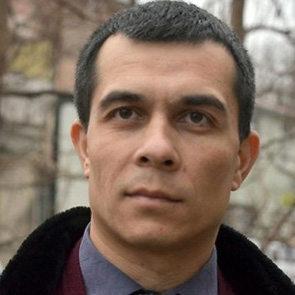
emil-kurbedinov.jpg

Emil Kurbedinov, Crimea/Ukraine

Emil Kurbedinov is a Crimean Tatar and human rights lawyer. Since the occupation of Crimea by the Russian Federation, Emil has been defending the persecuted Crimean Tatar minority, civil society activists and journalists. He also provides emergency response and documentation of rights violations during raids and searches of activists’ homes. In January 2017, masked representatives from Crimea’s Centre for Counteracting Extremism detained Emil and took him to a local directorate of the Russian Federal Security Service (FSB) for interrogation. A district court found him guilty of “propagandizing for extremist organisations” and sentenced him to ten days in detention.

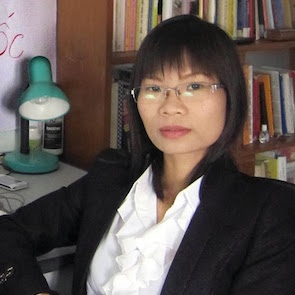
Pham Thanh Nghien

Pham Thanh Nghien, Vietnam

Vietnamese blogger Pham Thanh Nghien spent four years in prison for her work publicising violations against and defending the rights of relatives of fishermen killed by Chinese patrols. Following her release, she was kept under house arrest, during which time she spearheaded numerous human rights campaigns and co-founded the renowned Vietnamese Bloggers’ Network. Nghien has had her home raided, been blocked from attending medical appointments, had a padlock placed on her door from the outside, and been refused a marriage certificate. Nghien has also survived numerous physical assaults aimed at stopping her powerful, peaceful work uncovering and publicising human rights violations in Vietnam.

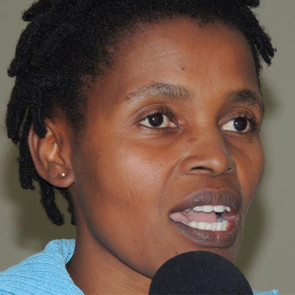
nonhle_mbuthuma.jpg

Nonhle Mbuthuma, South Africa

Nonhle Mbuthuma has persisted in her struggle for land and environmental rights in South Africa’s Eastern Cape despite assassination attempts, ongoing death threats and the murder of her colleague. She is a founder and current member of the Executive Committee of the Amadiba Crisis Committee, formed to unite community members in five villages of the Amadiba Tribal Authority region opposing destructive mining projects. In July 2016, Nonhle and other activists successfully forced the biggest shareholder in a titanium mining project to withdraw, but threats to activists continue as the community now fears the project will continue with funding from local “front” companies.

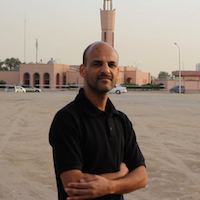
Abdulhakim Al-Fadhli

Abdulhakim Al Fadhli, Kuwait

Abdulhakim Al Fadhli is currently imprisoned for his peaceful activism on behalf of Kuwait‘s stateless Bedoon and other minority communities in Kuwait. The term Bedoon, meaning “without” in Arabic, refers to the community of stateless persons, native to Kuwait, who are prohibited from obtaining any official state documents including, but not limited to, birth, death and marriage certificates. Abdulhakim is currently serving a one-year prison sentence and faces deportation upon release. Throughout his imprisonment, he has protested and staged hunger strikes against the inhumane and unsanitary conditions in the Anbar 4 prison facility, where he has also been subjected to solitary confinement. [see also https://humanrightsdefenders.blog/2014/02/27/car-chase-in-kuwait-bedoun-human-rights-defender-the-target/]

francisca-ramirez

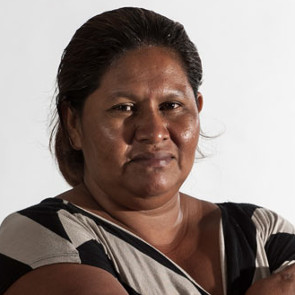
Francisca Ramírez Torres, Nicaragua

Human rights defender Francisca Ramírez Torres‘ children were attacked in attempt to stop her powerful work advocating against a destructive inter-oceanic canal in Nicaragua. Francisca is the coordinator of the Council for the Defence of Land, Lake and Sovereignty, which educates communities on their rights, campaigns for the repeal of laws allowing land-grabbing. The proposed canal would displace thousands of small farmers and indigenous peoples, without respecting their right to free, prior and informed consent. Francisca has been detained, harassed, and had her home and family attacked for her peaceful resistance to this destructive canal project.

The annual Front Line Defenders Award seeks to focus international attention on the human rights defender’s work, thus contributing to the recipient’s personal security, and a cash prize of €15,000 is awarded to the Award recipient and his/her organisation in an effort to support the continuation of this important work.

Source: 2017 Front Line Defenders Award for Human Rights Defenders at Risk | Front Line Defenders

Alarming criminalisation of human rights defenders in Latin America

February 27, 2016

The criminalization of human rights defenders in the context of the extraction of natural resources and megaprojects is becoming a very worrisome phenomenon in Latin America, denounces the Observatory in a report published today in Mexico. Entitled “The criminalization of human rights defenders in the context of industrial projects: a regional phenomenon in Latin America”, this document points to the role of businesses, civil servants, public prosecutors, judges, and the State. The report issued by OMCT and FIDH (in the context of their Observatory for Human Rights Defenders) on 25 February 2016 describes the specific cases of human rights defenders criminalized in eight Latin American countries (Brazil, Colombia, Ecuador, Guatemala, Honduras, Mexico, Nicaragua and Peru).


The report especially stresses two core issues common to all the countries studied: Read the rest of this entry »

Vilma Núñez de Escorcia, 77, still not ready to stop fighting against torture in Nicaragua

December 7, 2015

In the series Human Rights Defenders against Torture, OMCT published on 7 December “Nicaragua: Meet Vilma: Still not ready to stop fighting against torture in Nicaragua”.  Vilma Núñez de Escorcia , 77, has been heading the Centro Nicaragüense de Derechos Humanos (CENIDH) for the past quarter of a century, assisting civil society’s underprivileged populations and building the capacity to protect and promote human rights.  The first female magistrate in Nicaragua appointed Vice-President of the Supreme Court from 1979 to 1987, Vilma pegs her commitment to fighting for justice to the fact that she was born outside marriage ­- a terrible thing at that time, which meant that she was barred from the best religious secondary school and could not inherit as much as each of her “legitimate” siblings. She is now thankful for what she then considered as a “misfortune” as it made her realize how the legal system treated people differently. This realization made her want to train as a lawyer specializing in human rights and penal law. “I didn’t’ want anyone else to suffer discrimination so I chose to become a lawyer, to understand and stop it,” she explains.

She remembers her first encounter with torture Read the rest of this entry »

IM-Defensoras: women human rights defenders in Central America support each other

February 25, 2014

MDG : Women activists in Latin America  : protest against violence in Mexico

(A woman protesting against violence (c) Yuri Cortez/AFP/Getty Images)

An excellent piece in the Guardian of 25 February by Jo Tuckman describes the impact of the Mesoamerican Human Rights Defenders’ Initiative [IM-Defensoras] which through solidarity tries to protect woman human rights defenders. The Honduran Berta Cáceres – who has been under threat for years because of her campaign against extractive industries – says that without solidarity from her peers, it could all be over. “The solidarity is why I am alive and why I am here,” she told a recent meeting of the IM-Defensoras in the Mexican capital. “And, of course, we are committed to continue.” (https://thoolen.wordpress.com/tag/berta-caceres/)

IM-Defensoras is a three-year-old effort to provide women rights defenders in the Central American region with protection mechanisms that are gender-sensitive and adapted to different contexts, and that go beyond traditional options. The organisers of IM-Defensoras say activists in Central America are increasingly being targeted and governmental protection is rarely effective and difficult to trust. The initiative documented 414 attacks on women activists between 2010 and 2012, a period in which it says 38 women were killed, with the vast majority of their deaths blamed on the state.

The initiative is built around the creation of national networks of activists. So far, these have been set up in Mexico, Guatemala, Honduras, El Salvador and Nicaragua, with about 360 members. The plan is to expand these networks and set up new ones in Costa Rica and Panama. The importance of the networks stems partly from the recognition that women activists are usually less able to rely on family and organisational support than men. For example, a female leader in danger is much likelier to face pressure from her family, or even from male colleagues, to withdraw from activism. “The gender perspective means recognising that women defenders have already broken the rules“.

The networks are the basis of most of the work of IM-Defensoras. In times of emergency, the networks may draw attention to a credible death threat or organise temporary exile, for example. They devise strategies that take into account complications such as whether an activist also has children.

The Guardian article also draws attention to an often overlooked aspect of support networks: fighting stress. The initiative also encourages activists to pay attention to the stress they accumulate from sustained threats, attacks, sexual harassment and smear campaigns. The risk of burnout is increased further by the fact that most women activists receive no salary and so also undertake paid work, at the same time as spending several hours a day on domestic chores. After getting supportive messages, Lolita Chávez, a Guatemalan K´iche’ (Mayan language) human rights defender is quoted as saying:  “I said to myself: ‘Maybe others think I am a terrorist but there are sisters telling me I am a defender of human rights’,”… “It was a counterbalance.” Chávez also spent three weeks in Mexico at a workshop to help her look after her own mental and physical health, which, like most women activists, she had neglected for years. “The initiative has filled me with life, but there are many sisters out there who are still waiting for this kind of support,” Chávez told the Mexico City meeting. “It is possible to do what we do and not be a martyr.” (see also: http://thoolen.wordpress.com/2014/01/29/lolita-chavez-about-land-and-life-in-peril-in-guatemala/)


Central American women put their lives on the line for human rights | Global development | theguardian.com.

Nominees for the Martin Ennals Award 2011 announced today

March 12, 2011

Today Michel Veuthey. Board member of the Martin Ennals Foundation, announced the Nominees for the Martin Ennals Award 2011 during the closing ceremony of the Human Rights Film Festival in Geneva.

The five nominees are: Ms Kasha Jacqueline Nabagesera (Uganda), Father Alejandro Solalinde Guerra (Mexico), Mr. Azimjon Askarov (Kyrgyzstan), Mr. Pacifique Nininahazwe (Burundi), and Ms Vilma Nuñez de Escorcia (Nicaragua).

The Martin Ennals Award is a unique collaboration of ten international human rights organisations which constitute the Jury: Amnesty International, Human Rights Watch, Human Rights First, International Federation for Human Rights, World Organisation Against Torture, Front Line, International Commission of Jurists, German Diakonie, International Service for Human Rights and HURIDOCS.

For more information (English, French and Spanish) and portraits of the nominees please go to http://www.martinennalsaward.org