Posts Tagged ‘International Federation for Human Rights’
April 15, 2014
The International Federation for Human Rights (FIDH) has started a most interesting campaign using social media to free human rights defenders. I strongly advise readers of this blog to take action by subscribing to the idea and retweeting or reblogging it on their own platforms. Let us see what can be achieved by 27 April when the campaign finishes!
https://www.thunderclap.it/projects/9969-forfreedom

Posted in FIDH, human rights, Human Rights Defenders | Leave a Comment »
Tags: campaign, FIDH, free human rights defenders, Human Rights Defenders, International Federation for Human Rights, internet, social media, twitter
December 21, 2013
The mission to Honduras was made up of Baltasar Garzón, a Spanish jurist and human rights defender; Luis Guillermo Pérez Casas, attorney and head of the FIDH mission; Lisa Haugaard of the Latin America Working Group; Annie Bird of Rights Action; Mirna Perla, former magistrate of the Supreme Court of Justice of El Salvador; Julieta González from APRODEV-Advocacy Program for Central America in Brussels; Susanna Daag from the Copenhagen Initiative for Central America (CIFCA) in Brussels; Hollman Morris, Colombian journalist and human rights defender; Enrique Santiago of the Foro de Abogados of Spain; Beatriz Gil from the Institute for Political Studies on Latin America and Africa (IEPALA) in Spain; and Pascal Paradis from Lawyers without Borders, Canada. The mission was carried out with the support of CIPRODEH.
The report of 20 December 2013 highlights the following:
- deep concern over the attacks and threats made against the human rights defenders mentioned in its November 23, 2013 press release, including journalists and those who work to defend women, indigenous and Garifuna territories, natural resources, and the lesbian, gay, transsexual, bisexual, and intersexual community. The mission had access to two blacklists targeting leaders of social and labor organizations, human rights defenders, journalists, and members of the Libertad y Refundación political party and indicating they would be murdered.
- concern over the recent and apparently arbitrary transfer of public prosecutors who had been working in the Special Human Rights and Anti-Corruption Prosecutors’ Offices and the impact of these transfers on the work necessary to overcome the high level of impunity in the country.
- number of irregularities in the election process identified through multiple reports from diverse sectors of Honduran civil society.
- a lack of transparency around the funding of political campaigns and the sources of political party funding.
- strong presence of the Armed Forces during the course of the elections.
- reports that during the course of the last few days, four people linked to the Partido Libertad y Refundación have been murdered. These numbers are over and above the 39 murders that have taken place since May of last year, mostly of members of the same party.
for the full text see: International Mission of FIDH with the Support of CIPRODEH on the Honduran Elections – FIDH.
Posted in FIDH, human rights, Human Rights Defenders | Leave a Comment »
Tags: Baltasar Garzón, Central America, CIPRODEH, death threats, elections, extra judicial killings, FIDH, Honduras, Human rights defender, Human Rights Defenders, International Federation for Human Rights, Latin America Working Group, LGBTI, Luis Guillermo Pérez Casas, military
November 30, 2013
Human rights defenders play a critical role in exposing and ensuring accountability for business-related human rights violations. Despite this, around the world, there is an increase in attacks, judicial harassment, restrictions, surveillance, intimidation and reprisals against defenders who work on land and environment issues associated with business activities. A side event on 3 December in Geneva (Palais des Nations Room XX from 13h00 to 15h00) will pay special attention to challenges engendered by the increasing criminalisation or repression of those peacefully denouncing adverse human rights impacts of corporate projects, discussing the role of both States and companies. Read the rest of this entry »
Posted in FIDH, human rights, Human Rights Defenders, OMCT | Leave a Comment »
Tags: Center for International Environmental Law, corporate accountability, criminalization, environmental issues, FIDH, Forum Asia, Geneva, Human right, human rights, Human rights defender, Human Rights Defenders, human rights violations, International Federation for Human Rights, International service for, ISHR, Jorge Luis Morales, land disputes, OMCT, Peace Brigades International, side event, streaming, webcast, World Organisation Against Torture
November 17, 2013
While the appeal of human right defender Naji Fateel in Bahrain is due to start tomorrow, 18 November, a group of five human rights NGOs regrets the lack of cooperation by Bahraini authorities to allow access to the country for a trial observation mission. The Arabic Network for Human Rights Information, the Cairo Institute for Human Rights Studies, Front Line Defenders, the Gulf Center for Human Rights, and the Observatory for the Protection of Human Rights Defenders (a joint programme of the International Federation for Human Rights – and the World Organisation Against Torture), had mandated – with support from IFEX – a lawyer to observe the trial, but their request remains unanswered.
[Naji Fateel, co-founder of the Bahrain Youth Society for Human Rights and a blogger, was sentenced on September 29, 2013 to 15 years in prison for “the establishment of a group for the purpose of disabling the constitution” under Article 6 of the Terrorism Act.]
via Bahrain: Lawyer mandated by international human rights NGOs denied entry to Bahrain to observe the trial of human rights defender Naji Fateel / November 15, 2013 / Urgent Interventions / Human rights defenders / OMCT.
Posted in FIDH, Front Line, human rights, Human Rights Defenders, OMCT | 2 Comments »
Tags: anti-terrorist laws, Arab Network for Human Rights Information, Arabic Network for Human Rights Information, Bahrain, Bahrain Youth Society for Human Rights, bloggers, Cairo Institute for Human Rights, fair trial, Front Line Defenders, Gulf Center for Human Rights, Gulf Centre for Human Rights, Human right, Human rights defender, IFEX, International Federation for Human Rights, Naji Fateel, Non-governmental organization, Observatory, Trial, trial observation, World Organisation Against Torture
October 18, 2013
China’s Second Universal Periodic Review: Challenges and Opportunities on MONDAY 21 October in Room XXV of the Palais des Nations in Geneva 12:30-14:30
FIDH league members will lead an NGO information meeting on key civil society trends and challenges since 2009.
The panel will discuss:
- Civil society’s important role in advancing progress and addressing China’s human rights challenges
- The challenges to fundamental rights and freedoms presented by national security laws
Posted in human rights, Human Rights Defenders | Leave a Comment »
Tags: China, Civil society, FIDH, Human right, International Federation for Human Rights, NGO, Non-governmental organization, United Nations, United Nations Human Rights Council, Universal Periodic Review
October 7, 2013
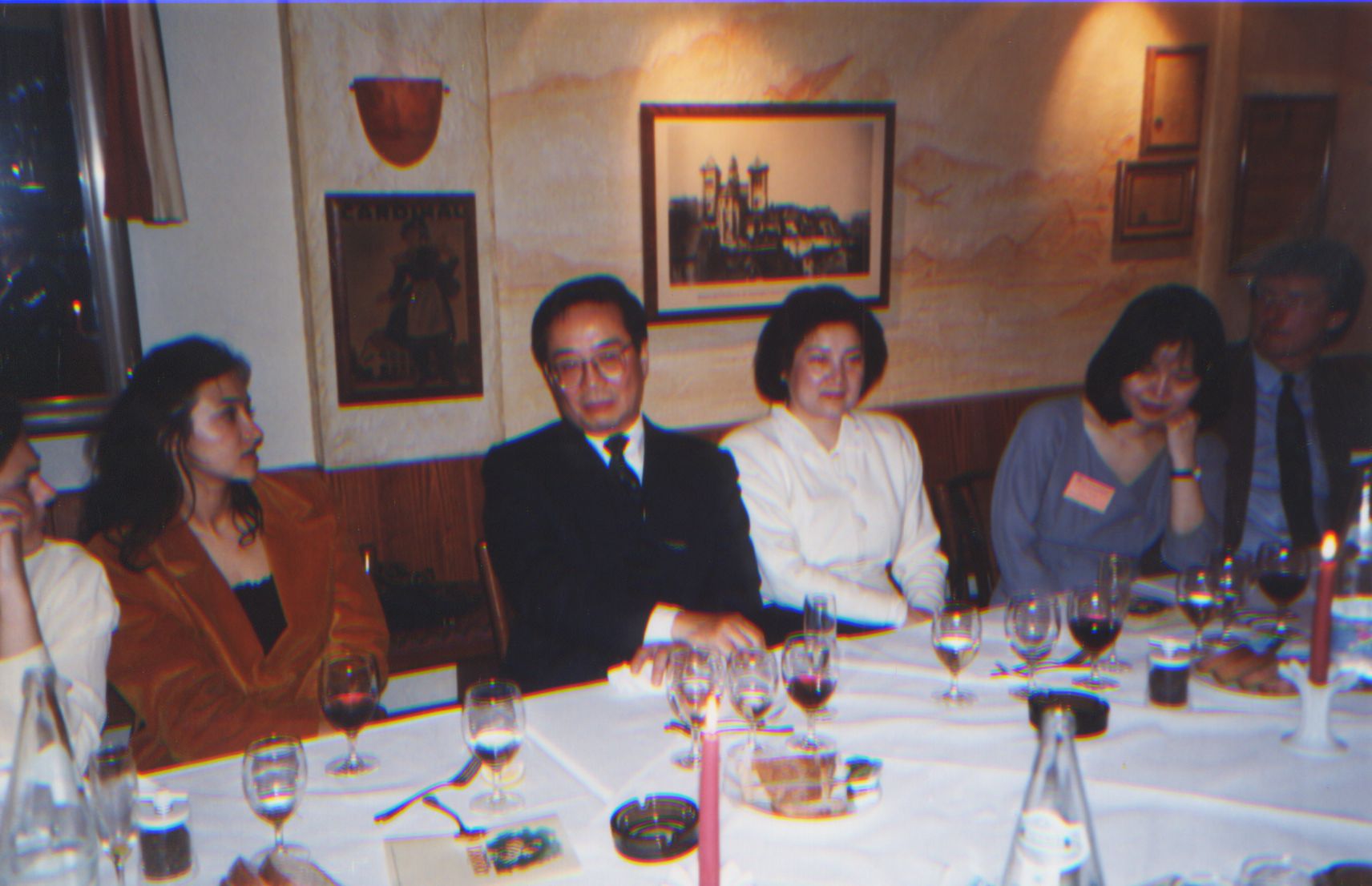
This blog tends to prioritize news on human rights defenders who are in trouble. This makes one overlook perhaps too often the contribution made by those who are working for the cause in other ways. To rectify I want to pay tribute to another woman who has contributed enormously to the creation and growth of the Martin Ennals Award for Human Rights Defenders: Simia Ahmadi. After 20 years she is leaving the Board of the Foundation on 7 October, just before the 20th ceremony tomorrow.
In 1992 Simia was a young, upcoming human rights worker who had just finished an internship with the UN. To her great regret she never met Martin Ennals in person. Her main motivation was that an award could be effective and volunteered to help it being set up. After successful initial fundraising she was the part-time Secretariat in the first year.

(Simia, left of first Laureate Harry Wu in 1994, Geneva)
After that, she worked several years for the International Federation for Human Rights (FIDH). Thereafter she was Programme Coordinator of the Legal and Human Rights Centre in Tanzania and from 2006-2009 she served as FIDH’s Representative to the UN in Geneva. After her move to Kenya in 2010, she served as the Chief of Party of the Public International Law and Policy Group in Kenya. Now she devoting her considerable energy to Kahesa, of which she is the Director-Founder and undertakes consultancy work such as evaluations KAHESA is a social enterprise that produces decorative and environmentally-sound paper through the employment of mentally-challenged Kenyans. Check out her www.kahesa.com and Facebook page: Kahesa paper
For being at the cradle of the MEA and making sure that the there is no grave for long time she deserve the deepest thanks from all especially Human Rights Defenders around the world.
Posted in FIDH, human rights, Human Rights Defenders, MEA | Leave a Comment »
Tags: FIDH, Geneva, Harry Wu, human rights, International Federation for Human Rights, Kahesa, Kenya, Legal and Human Rights Centre, Martin Ennals, Martin Ennals Award, Martin Ennals Award for Human Rights Defenders, Martin Ennals Foundation, MEA, Tanzania, United Nations, woman human rights defender
October 3, 2013
The Observatory for the Protection of Human Rights Defenders, a joint programme of the International Federation for Human Rights (FIDH) and the World Organisation Against Torture (OMCT), reports on 2 October 2013 on the ongoing judicial proceedings against the Anti-Discrimination Centre “Memorial” (ADC Memorial), which has now become the first NGO in Russia facing both administrative and civil proceedings for the same “offence” on the basis of the law on so-called “foreign agents”. Read the rest of this entry »
Posted in FIDH, human rights, Human Rights Defenders, OMCT | 1 Comment »
Tags: ADC Memorial, administrative rules, FIDH, Foreign agent, foreign funding, Gerald Staberock, Human Rights Defenders, International Federation for Human Rights, judicial harassment, Karim Lahidji, Memorial, Non-governmental organization, Observatory for the Protection of HRDs, OMCT, persecution, Prosecutor, Russia, United Nations, World Organisation Against Torture
September 30, 2013

Imprisoned Belarus human rights defender Ales Byalyatski has been awarded the Vaclav Havel Human Rights Prize of the Council of Europe Parliamentary Assembly. Read the rest of this entry »
Posted in FIDH, human rights, Human Rights Defenders | 1 Comment »
Tags: Ales Bialiatski, Ales Byalyatski, award, Belarus, Bialiatski, Charta 77 Foundation, China, Council of Europe Parliamentary Assembly, FIDH, foreign funding, Georgia, Georgian Young Lawyers' Association, human rights awards, imprisonment, International Federation for Human Rights, Jean-Claude Mignon, Minsk, Rights Defense Network, Vaclav Havel, Vaclav Havel Human Rights Prize, Vaclav Havel Human Rights Prize of the Council of Europe Parliamentary Assembly, Viasna Human Rights Centre
September 24, 2013
On 18 September the Ford Foundation announced $6.25 million in grants to seven leading human rights organizations that will strengthen and diversify the global human rights movement. The 7 grants focus on human rights organizations that operate in numerous countries and international forums, underscoring the foundation’s long commitment to supporting collaboration. Combined with a five-year, $50 million initiative announced last year to support human rights organizations based outside Europe and the United States, Ford is spurring innovative thinking about the way the global human rights system functions and its capacity to address 21st century issues such as economic and social inequality.
“The human rights movement has arguably been the most effective and wide-reaching social movement of our time,” said Darren Walker, president of the Ford Foundation. “But the movement faces a notably different set of challenges today than it did even 15 years ago, along with a new set of opportunities for advancing human rights in today’s world. The grants we make today will enable these institutions to more actively adapt, diversify and retool the way the movement works for all of us.”
The seven grants announced today will support: Read the rest of this entry »
Posted in human rights, Human Rights Defenders | Leave a Comment »
Tags: Africa, Amnesty International, Business and Human Rights Resource Centre, Civil society, Crisis Action, economic and social rights, equality, FIDH, Ford Foundation, funding, Global Witness, human rights, Human Rights Defenders, human rights organizations, Human Rights Watch, International Federation for Human Rights, International Network of Civil Liberties Organizations, media, non-governmental, Non-governmental organization, Social and Cultural Rights, strategy, the Association for Women's Rights in Development, The International Network for Economic, United States, Witness (human rights group)
September 19, 2013

(Sudanese IDPs – (c) AI private)
In a long letter to the UN Human Rights Council now in session a group of 13 NGOs urges the Council to continue monitoring Sudan. The letter has two main chapters on:
Conflicts in Darfur, Southern Kordofan, and Blue Nile, ………and
Repression of Civil and Political Rights……….
The letter ends with urging the Human Rights Council to:
- condemn the human rights violations in Darfur, Southern Kordofan and Blue Nile, as well as the government’s continued use of indiscriminate bombing in all three states, attacks on civilians, and other abuses by government forces and allied militia;
- establish an independent investigation into ongoing human rights violations in Southern Kordofan, Blue Nile, and Darfur, and report back to the Human Rights Council promptly;
- urge Sudan to grant humanitarian agencies access to Southern Kordofan and Blue Nile states, in compliance with international human rights and humanitarian law obligations;
- express concern over the continued restrictions of basic civil and political rights, and the continued harassment of critics of the government, including the practice of arbitrary detention, torture and ill-treatment, preventing meaningful public dialogue on critical issues at a time when Sudan is preparing to adopt a new constitution and for national elections in 2015;
- urge Sudan to reform its repressive National Security Act of 2010 and other laws granting immunity to officials, seriously investigate allegations of human rights violations and hold perpetrators to account;
- renew the special procedure country mandate on Sudan for at least three years under Item 4 with a clear mandate to monitor and report twice a year to the Human Rights Council and the General Assembly on violations of human rights in all parts of Sudan.
——-
Earlier on AI’s Global Blog, Khairunissa Dhala, Researcher on Sudan/South Sudan team at Amnesty International has answered her own question: “Does the human rights situation in Sudan still require a UN-mandated Independent Expert to monitor and report back on developments?” as follows: “Given Sudan’s dire human rights situation – ongoing armed conflicts in three different states, restrictions on freedoms of expression, association and assembly, including arbitrary arrest and torture of human rights defenders and activists – it is hard to imagine that there is even a question on whether this is needed. But we’ve been here before.
Two years ago, I attended the HRC’s 18th session where members of the Council reached a “compromise” on human rights monitoring in Sudan. It was a “compromise” because, while the Independent Expert’s mandate was renewed, it solely focused on providing technical assistance and capacity-building support to the national authorities. In other words, the Independent Expert would no longer be asked to monitor the human rights situation in Sudan. [….]Compromising on the Independent Expert’s mandate was seen as a concession to Sudan by the international community. A concession given to a country where widespread and systematic violations and abuses of international human rights and humanitarian law are taking place.
But there should be no compromise on human rights. Since then, the Independent Expert’s mandate has successively been renewed to provide technical assistance, while the awful human rights situation in Sudan calls for a clear need for monitoring.. Conflict remains ongoing in Southern Kordofan and Blue Nile, to the detriment of the civilian population. Over the past two years I have interviewed numerous men, women and children from these two states. They have shared harrowing accounts of how their loved ones were killed when bombs dropped by Antonov aircrafts, from high altitudes, by the Sudanese Armed Forces, landed on their homes. Coupled with ground attacks by Sudanese forces and the armed opposition group the SPLA-N, this conflict has led to more than 200,000 people fleeing to refugee camps in South Sudan and Ethiopia, in addition to the tens of thousands of internally displaced people in the two areas. The Sudanese authorities are still denying unhindered humanitarian access to all affected areas. Meanwhile, in Sudan’s Darfur state, a decade after the start of the armed conflict, the crisis is ongoing and violence has again intensified. This year alone, more than 300,000 people were forced to leave their homes behind, fleeing violent clashes between predominantly ethnic Arab groups.
Across Sudan, freedom of expression, association and assembly also remain restricted. Journalists and activists face constant harassment, arbitrary arrests, as well as torture and other forms of ill-treatment by Sudan’s National Intelligence and Security Service. Given the critical human rights situation, any compromise on the Independent Expert’s mandate is an abdication of the Human Right Council’s duty to promote and protect human rights in Sudan…..The Independent Expert should have their mandate strengthened to monitor Sudan’s human rights situation under item 4 (Human rights situations that require the Council’s attention) and report twice a year to the Council and the UN General Assembly on violations of international human rights and humanitarian law taking place anywhere in the country.”
Read more:
Sudan: Letter to the UNHRC regarding the renewal and strengthening of the special procedure mandate on the situation of human rights in Sudan
Why monitoring human rights in Sudan still matters | Amnestys global human rights blog.
Posted in AI, FIDH, HRW, human rights, Human Rights Defenders | Leave a Comment »
Tags: Amnesty International, Blue Nile, Cairo Institute for Human Rights Studies, Darfur, East and Horn of Africa Human Rights Defenders Project, experts, human rights, Human Rights Defenders, Human rights in Sudan, human rights violations, Human Rights Watch, International Federation for Human Rights, international human rights and humanitarian law, Khairunissa Dhala, killings, South Kordofan, Special Procedures, Sudan, UN Special Rapporteur, United Nations Human Rights Council


 Hans Thoolen on Human Rights Defenders and their awards