Posts Tagged ‘Human Rights Defenders’

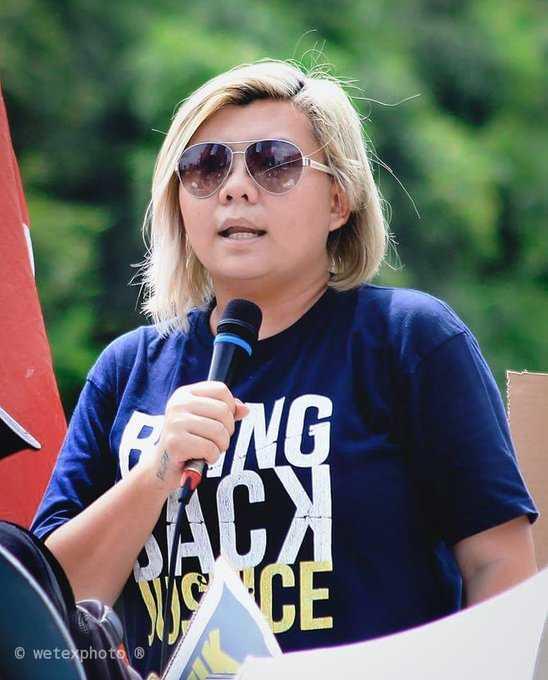
UN experts urge Indonesia to protect human rights defender Veronica Koman

September 17, 2019

Human rights lawyer Veronica Koman

Human rights lawyer Veronica Koman Photo: Whens Tebay

Five UN experts(Mr. Clement Nyaletsossi Voule, Special Rapporteur on the right to peaceful assembly and association; Mr. David Kaye, Special Rapporteur on the promotion and protection of the right to freedom of opinion and expression; Ms Dubravka Šimonović, Special Rapporteur on violence against women; Ms Meskerem Geset Techane, Chair of the Working Group on discrimination against women and girls; Mr. Michel Forst, Special Rapporteur on human rights defenders) have urged Indonesia to protect the rights of lawyer Veronica Koman who advocates for West Papuan rights. They also urged Indonesia to protect people’s rights to peaceful protest and those reporting on protests in West Papua, and to ensure access to the internet

Earlier this month a police warrant was issued for Ms Koman, who is believed to be in Australia, after police claimed she spread fake news online. Indonesian authorities have blamed disinformation and Papuan independence activists for a recent wave of protests in the region

The UN rights experts said Indonesian authorities should address acts of harassment, intimidation and threats against people reporting on the protests. Ms Koman was named as a “suspect” by authorities who accused her of provoking unrest after she published reports on the protests and on a racist attack against Papuan students in Java that triggered the demonstrations. “We welcome actions taken by the Government against the racist incident, but we urge it to take immediate steps to protect Veronica Koman from any forms of retaliation and intimidation and drop all charges against her so that she can continue to report independently on the human rights situation in the country,” the experts said.

They also expressed concerns over reports indicating that the authorities were considering revoking Ms Koman’s passport, blocking her bank accounts and requesting Interpol to issue a Red Notice to locate her. The experts stressed that restrictions on freedom of expression not only undermined discussion of government policies, but also jeopardised the safety of human rights defenders reporting on alleged violations.

Protests have been increasingly taking place in the provinces of Papua and West Papua since mid-August over alleged racism and discrimination and amid calls for independence. “These protests will not be stopped by an excessive use of force or by cracking down on freedom of expression and access to information,” the experts said… The experts welcomed the engagement of the authorities on these matters and said they looked forward to continued dialogue.

https://www.rnz.co.nz/international/pacific-news/398922/un-urges-indonesia-to-protect-koman

https://www.thejakartapost.com/news/2019/09/16/un-human-rights-experts-express-support-for-veronica-koman-in-papua-case.html

https://en.tempo.co/read/1245609/veronica-koman-meets-her-duties-not-spreading-hoax-activists?TerkiniUtama&campaign=TerkiniUtama_Click_1

Messages of positive behavior instead of accounts of abuse could have better long term impact

September 16, 2019

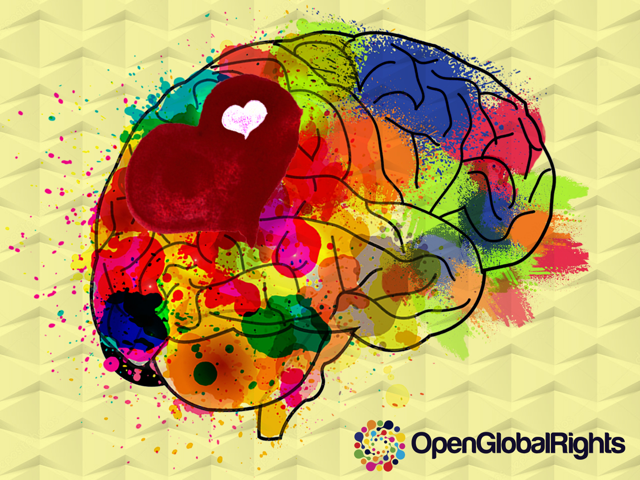
Brain research suggests emphasizing human rights abuses may perpetuate them

Laura Ligouri in Open Global Rights of 18 June 2019 writes about an aspect of campaiging that few human rights defenders and NGOs will be familiar with: “Capitalizing on the brain’s capacity to simulate events, messages of positive behavior – instead of repeated exposure to accounts of abuse – could better lead to the changes we wish to see in the world“. Laura Ligouri is the founder and director of Mindbridge, a not-for-profit organization connecting psychological and neurobiological insight to non-profit and government-sponsored humanitarian efforts. Here the piece in full:

Throughout the last few decades, much human rights work has necessarily sought to bring human rights abuses to light. But focusing only on abusive behaviour—without paying attention to its opposite—comes with a cost.

According to psychological and neurobiological research, repeated exposure to accounts of human rights abuses may inadvertently prime individuals to engage in the very acts we hope to eliminate; for example, repeated negative actions by some in a particular group come to be seen as normal behaviour for the group as a whole. As a result, activists must strike a balance between exposing abuses and demonstrating positive human rights-oriented behavior. By capitalizing on the brain’s capacity to mentalize and simulate events, messages of positive behavior could lead to the changes we wish to see in the world.

Some of the darkest moments in human history have their roots in the dehumanization of groups and people. If human rights activists can see what lies behind these trends, they can work to tackle the root causes and not just the symptoms of dehumanization. Research shows that many processes involved in dehumanization aren’t necessarily grounded in a lack of empathy for the victimized group. Instead, they are based in neurobiological mechanisms oriented around maintaining one’s own group at all costs. In fact, failures to promote positive, pro-social behavior might not rest in our ability to empathize with the “Other” but in the degree to which we identify and align with our own group.

Extreme human rights abuses often have their roots in powerful neurobiological mechanisms that lead humans to mirror or simulate what they see others in their group doing. Very recent research  shows how repeated exposure to hate speech, such as repeatedly reading it on local media, could prime your brain to engage in hateful speech or even hateful actions.

For human rights defenders, this can become dangerous: every time an organization, news source or media outlet emphasizes and repeatedly highlights a form of human rights abuse, even to condemn it, we are simultaneously engaging a very specific component of the social brain that emphasises compliance with the norms of our own group. Over time, the social brain will justify these acts and will find ways to divest our group of responsibility.

Moreover, a landmark study in 2012 showed that feeling connected to a group not only creates disconnection from more distant “others”, but could directly lead to dehumanization of those communities. The experiments indicated that the more people feel socially connected to closely-knit groups, the less likely they are to attribute human mental states to distant others. They are also more likely to recommend harsh treatment for those distant others.

But is empathy the whole story? A great multitude of non-profit organizations worldwide have worked tirelessly to increase empathy between groups, albeit largely by raising awareness about the suffering of marginalized groups or asking people to walk in other people’s shoes. Yet failures to empathize with others happens all the time.

Research has shown that when presented with images of people in pain, activation of the parts of the brain where empathy resides was significantly less for strangers than for loved ones or people of the same race. Other tests show that it is easier to promote aggressive behavior in interactions between groups than between individuals. When social relations shift from “me versus you” to “us versus them”, human interactions tend to become substantially more aggressive.

For example, in one experiment researchers examined whether acting as a member of a competitive group, versus acting alone, would ultimately lead to increases in one’s willingness to harm competitors. Using functional magnetic resonant imaging, or fMRI, participants were asked to perform a competitive task, once alone and once within a group. These same participants were later asked to engage in an activity where they had an option to harm competitors from another group. Results showed reduced brain activation related to empathy and moral decision-making among participants acting within the group, compared to participants acting alone. This reduced activation was later linked to their willingness to harm a person in another group.

The warning for human rights activists is that suspending our sense of individualized morality in favor of group-based norms is among a series of influential factors leading to dehumanization. But how do we reverse concepts of dehumanization once they have already occurred? And if these processes are deeply embedded within unconscious, psychological and neurobiological mechanisms that have evolved over hundreds of thousands of years, is it even possible to defuse and/or rewire them?

The answer is: we don’t have to. What would happen if we used our brain’s ability to mentally simulate an event where, instead of picturing or simulating hurting an individual, we imagined helping them? Researchers examined whether the same mechanisms that underlie processes related to empathy might also work to support the way in which our brain envisions the world, called episodic simulation. Their results showed that not only did the act of imagining helping increase participants’ actual intentions to help others, but also that the more vividly people could imagine a scenario, the more likely they were to help another.

These results have been replicated within the Mindbridge Implicit Bias Project, a series of trainings that capitalizes on the brain’s neuroplasticity in order change an individual’s relationship to bias and discrimination towards social groups over time.

Other research showed concretely the way in which positive episodic simulation coupled with capitalizing on the social brain can result in re-humanization of another group. Held in Israel, the researchers through a series of experiments asked Israeli-Jews to read about members of their group helping Palestinians. They found that Israeli-Jews who became aware about their group helping Palestinians showed greater humanization towards Palestinians.

The challenge for the human rights movement is to counter dehumanization that is seeded by group influence and images of human rights abuses with something different. By modelling the sort of behavior we want to see—kindness, caring and empathy—we can begin to re-humanize vulnerable groups.

If inhumanity can be learned, so can greater humanity. Understanding the brain may help us do just that.

https://www.openglobalrights.org/brain-research-suggests-emphasizing-human-rights-abuses-may-perpetuate-them/


Russian human rights defenders try technology and gaming innovations

September 13, 2019

Tatiana Tolsteneva has written in Global Rights of 12 September, 2019 a very interesting piece about wether technology and gaming innovations can bring new life to Russian NGOs and appeal to younger audiences. Tatiana Tolsteneva has 10 years of managing experience in the Russian non-profit sector, with a focus on human rights defenders initiatives. She has a Master’s degree in Law from Lobachevsky State University of Nizhni Novgorod (UNN) and is finalizing her Master’s Degree in Social Innovation and Entrepreneurship at the London School of Economics. It is long read but contains some fascinating insights:

While there is significant debate over foreign funding issues and closing civic space in Russia, a key problem of the Russian non-profit sector is its “catch-up” form of development. Due to limited resources, this sector develops much more slowly than media or information technologies, for example. In Team 29, an informal association of lawyers and journalists, we are trying to change this, primarily by introducing new media technologies in the non-profit sector.

Lawyers of Team 29 are known not only for taking up cases considered hopeless in which the state accuses people of crimes against national security, but also for seeking so-called “justice in Russian.” That is, fighting for a sentence below the lower limit established by the Criminal Code or for a pardon by the president. In a country in which acquittals account for only 0.02% of total cases, this is considered a success.

In addition, our journalists have developed a niche media resource covering a wide range of issues regarding the relationships of citizens and the Russian government. The Team advises citizens on what actions to take if subjected to searches or questioning, how to find information in governmental databases, and how to protect one’s private data. Through this work, Team 29 is changing the concept of what a human rights activist in Russia can be, and we seek to explain the complexities of this work. The main problem of human rights defenders in Russia for a long time was separation from “ordinary people”. The positioning, language, and public image of human rights defenders were such that average citizens did not understand what human rights workers were doing and how it related to them. Team 29 was one of the first human rights organizations to adopt modern explanatory journalism techniques to strengthen communication with its target audience. In other words, we started to translate from “legal” to “human” language, and to make our materials more engaging to win the online struggle for reader attention.

The positioning, language, and public image of human rights defenders were such that average citizens did not understand what human rights workers were doing and how it related to them. 

In 2015, we joined our legal skills with explanatory journalism technologies in order to develop what are now called “legal handouts”. These are texts providing legal advice, in plain language, mostly on how to deal with unexpected clashes with Russian law enforcement. For example, the handouts explain a person’s rights and how citizens can protect themselves from mistakes often related to lack of knowledge. Each handout has had an average of 100,000 views, and work on these handouts resulted in the subsequent creation of Team 29’s online mini-media resource. Its average monthly attendance amounts to at least 50,000 unique visitors.

The problem in these developments was that the major audience of Team 29’s media projects was people between 25-44 years old, while it is the Y generation—people younger than 25—that has been a driving force of socio-political processes in Russia. For example, this younger age category of Russian citizens has been the one most actively involved in the public mass protests of recent years.

We made it a goal to reach out to that audience with mobile games, which have a huge audience in that demographic and can be played offline. In fact, pro-social games—games with grounded social impact—are an advanced tool in media and non-profit fields abroad. But until now, there have been no such games in Russia.

To develop this new game in Russia, we had to decide what software could be developed with limited resources. We chose “text quests” since they are the least expensive for production and easy in their mechanics. Text quests are a type of game in which interaction with the player is through textual information. The plot of the quest is not rigidly fixed and can change depending on the actions of the player. An important aspect of a text quest is story-telling; we tried to make the plot of our quest fascinating for the player, based on real events, and causing empathy for the main character.

Gebnya is a mobile text quest game that tells users how to communicate with the police and security services in Russia.

The result is Gebnya, a mobile text quest game that tells users how to communicate with the police and security services in Russia, and how to protect oneself, one’s family, and one’s information. The Android version of the app was released on October 6, 2017, and the iOS version on April 18, 2018. At present, the game has been downloaded more than 70,000 times, and the majority of its audience (57%) are people younger than 24. However, less than 15% of users are women.

We also have found that mobile apps can be a part of an alternative business model for human rights NGOs. We have received $1,020 through in-game payments, with most of this revenue (87%) being micro-payments ($1 or 100 rubles).

In the first version of the game, through the in-game payments, it was possible to take part in the crowdfunding of the development of new scenarios. In later versions, we added the ability to pay for the game without ads, as well as for additional gaming options, a standard business model for so-called free-to-play mobile games.

We believe that it can be more important to experiment with something new than to continue with traditional methods that may not be working. 

Once we established the demand for this type of game, we decided to expand it. First, we held a hackathon called “More Games Needed”, which helped non-profit projects of St.-Petersburg to create game software products of their own. A project dedicated to preventing domestic violence called Where Can Couplehood Lead won the hackathon and received mentorship from our experts. We expect the game to release in October 2019. We also intend to release another project together with the educational project Teplitsa (Greenhouse) – Technologies for Social Good.

Second, since Gebnya has currently attracted very few women, we decided to develop a game on problems important for women in Russia and the post-Soviet space. The game dedicated specifically to women’s issues is now under development, and its beta version should be released in November 2019. We decided to focus on three of the many problems faced by women in Russia: cyberbullying, stalking, and intimate partner violence. The game’s plot is designed to help recognize these phenomena, help build personal boundaries, and to get acquainted with legal and psychological defense tools and relevant professional assistance centers.

Team 29 plans to continue this pro-social game development as a project separate from our journalistic and legal work, and we are currently working on additional games with a number of other Russian NGOs.

While developing Gebnya in 2017, we were in fact rather skeptical about the project’s prospects, but we decided to pursue it anyway. We believe that it can be more important to experiment with something new than to continue with traditional methods that may not be working. After all, the non-profit sector cannot survive without innovations.

https://www.openglobalrights.org/technology-and-gaming-innovations-bring-new-life-to-russian-ngos/
See also other posts on communication: https://humanrightsdefenders.blog/tag/communication/

NGOs call Canada’s revised guidelines on human rights defenders a step in the right direction

September 1, 2019

With human rights defenders increasingly under attack around the world, civil society organizations in June 2019 welcomed the Government of Canada’s revised guidelines aimed at strengthening its approach to ensuring the safety and security of these courageous activists. In 2016 [see https://humanrightsdefenders.blog/2016/12/13/canada-joins-select-group-of-governments-with-guidelines-on-human-rights-defenders/] they were first made public. After input from civil society, the government now has revised and updated the guidelines.

.. The groups welcome Canada’s acknowledgement that human rights defenders put themselves at great risk—along with their families, communities and the movements they represent—as they work to promote human rights and strengthen the rule of law. Women and LGBTI human rights defenders, for example, face high-levels of sexual and other forms of gender-based violence because of their gender and the rights they are advocating for. “In many parts of the world, human rights defenders are at risk as a result of their courageous work and their willingness to speak truth to power. Canada and the international community need to be strong supporters of these brave individuals. Human rights defenders must be able to act freely and without any interference, intimidation, abuse, threats, violence or reprisal. We are committed to speaking out against violations, standing up for human rights defenders and striving for a world where the rights and freedoms of all people are respected,” said Foreign Affairs Minister Chrystia Freeland on 17 June in Ottawa at a human rights event where the guidelines were announced.

For Canada’s new guidelines to be effective in helping to protect and support human rights defenders, they will need to be accompanied by a comprehensive implementation plan and increased Canadian funding going directly to human rights defenders and the movements they represent.  Canada also needs to take a stronger approach to support human rights defenders advocating for corporate accountability, for instance, by enabling robust investigations when defenders face heightened risks linked to private sector investments.  It will also be critically important that Canada create an advisory body that includes the participation of human rights defenders with experience and first-hand knowledge of the threats facing human rights defenders….

Importantly, the new guidelines call for Canadian diplomats working abroad at overseas missions or at Global Affairs Canada headquarters in Ottawa to take a more feminist and intersectional approach to promoting the rights of defenders. The document notes that many human rights defenders have multiple and “overlapping” identities, and often work on multiple issues.  Human rights defenders may belong to one or more groups facing discrimination, including women, LGBTI people, Indigenous people, land and environment defenders, people with disabilities, journalists, and those seeking greater freedom of religion or beliefs.  Human rights defenders in conflict and post-conflict countries face unique risks posed by high levels of militarization.

Quotes from Canada’s Voices at Risk: Canada’s Guidelines on Supporting Human Rights Defenders

Canada recognizes the key role played by human right defenders in protecting and promoting human rights and strengthening the rule of law, often at great risk to themselves, their families and communities, and to the organizations and movements they often represent.

Canada’s guidelines on supporting human rights defenders is a clear statement of Canada’s commitment to supporting the vital work of HRDs.”

Endorsed by:
  • Amnesty International Canada
  • The MATCH International Women’s Fund
  • Nobel Women’s Initiative
  • Oxfam Canada
  • United Church of Canada

https://www.oxfam.ca/news/canadas-new-guidelines-to-support-human-rights-defenders-a-step-in-the-right-direction/

Human rights defenders at Gymnich’ meeting in Helsinki

August 30, 2019

Sometimes small announcement are the most interesting: Foreign Ministers from 28 EU countries continue their ‘Gymnich’ meeting in Helsinki today, 30 Augsut 2019. On the agenda they’ll be discussing the situation in the Middle East, hybrid threats, the Arctic and the wildfires in the Amazon rainforest. Over lunch ministers will get the chance to meet with international human rights defenders to hear their stories. …..


https://newsnowfinland.fi/domestic/morning-headlines-friday-30th-august-2019

Zimbabwe: two years Emmerson Mnangagwa have shown little difference from Mugabe

August 26, 2019
Anna Chibamu, writing in the New Zimbabwe of 26 August 2019, summarises the latest report of Amnesty International which shows that President Emmerson Mnangagwa has shown little difference with his predecessor Robert Mugabe and his near-two year reign has been replete with human rights abuses. In a statement, AI deputy director for Southern Africa Muleya Mwanawanda said Mnangagwa’s administration, since taking charge following the removal of Mugabe and the subsequent general elections last year, has been marred by a systematic and brutal crackdown on human rights and a decline in socio-economic conditions. “What we have witnessed in Zimbabwe since President Emmerson Mnangagwa took power is a ruthless attack on human rights, with the rights to freedom of expression, peaceful assembly and association increasingly restricted and criminalised,” said the group.

Amnesty International said it has documented at least 15 killings by police when nationwide protests erupted mid-January this year and last week, 128 protesters were reportedly arrested with 400 having been convicted in the disturbances that rocked the country early this year. To date, the human rights organisation said 22 people including Evan Mawarire, a well-known local cleric and activist, and trade union leader Peter Mutasa – still face trumped-up subversion charges in connection with the protests. Some of the activists and human rights defenders were arrested at Robert Mugabe International Airport in May as they returned from a capacity-building workshop on non-violent protest tactics in the Maldives [https://humanrightsdefenders.blog/2019/05/21/four-zimbabwe-human-rights-defenders-detained-at-at-the-mugabe-airport-on-their-return-from-foreign-trip/]

On 24 August the Zimbabwean made similar statements.
That not everyone agrees is obivious and in a long anti-opposition rant in the Sunday Mail of 25 August one can find gems like:
The joint statement by the EU member states and the unashamed US was as condescending as it was patronising. Stripped to its bare essentials, the August 20 statement, without an iota of evidence, accuses Government of “intimidation, harassment and physical attacks” of hooligans disguised as human rights defenders.“…
and :“..they overly concerned with the rights of those who want to demonstrate — purportedly under the guise of freedom of assembly, association and expression, or any such gobbledygook — while ignoring the rights of those still nursing sutured, serrated and weeping wounds from the recent orgies of violence? Have these Excellencies, so besotted with human rights, ever lent an ear or a measly penny to those still counting losses and smarting from the recent violence, which destroyed their businesses and sources of livelihood? Is it not Mr Government who is picking up the tab? Hypocrites! But no sooner had the ink on the statement of these meddlesome Excellencies dried than we began discovering wholesale abductions, all played out to an excitable Twitter audience. Dear reader, it all happens on Twitter.”

For the diplomatic statement see: https://humanrightsdefenders.blog/2019/08/21/statement-by-western-diplomats-in-zimbabwe-on-human-rights-defenders/

———
https://www.newzimbabwe.com/ai-mnangagwas-horror-first-year-in-office-marked-by-repression/
https://www.thezimbabwean.co/2019/08/violence-in-zimbabwe-is-escalating/
https://www.sundaymail.co.zw/when-excellencies-grace-chitungwiza-shebeen

Statement by western diplomats in Zimbabwe on human rights defenders

August 21, 2019

The Heads of Mission in Zimbabwe of the European Union, France, Germany, Greece, the Netherlands, Romania, Sweden, the United Kingdom, Australia, Canada and the USA issued the following statement on 20 August 2019:

Intimidation, harassment and physical attacks on human rights defenders, trade union and civil society representatives, and opposition politicians – prior to, during and following the demonstration in Harare on 16 August – are cause for great concern.

The Zimbabwean Constitution guarantees the right to personal security from violence and prohibits physical or psychological torture. The Heads of Mission urge the authorities to respect these fundamental rights, and to hold perpetrators of violence legally responsible.

The Heads of Mission call on the authorities to respect the constitutional rights to freedom of assembly, association and expression as well as to peaceful protest, and urge all political party leaders and supporters to abstain from threats and incitement to violence as well as acts of violence or vandalism. The security forces must adhere to their Constitutional mandate and exercise restraint and proportionality while maintaining public order.

Only by addressing concretely and rapidly these human rights violations will the Government of Zimbabwe give credibility to its commitments to address longstanding governance challenges. The Heads of Mission reiterate their calls for the implementation of the government’s political and economic reform agenda, underpinned by inclusive national dialogue and increased efforts to address the severe social situation.

See also the Government’s reaction: https://allafrica.com/stories/201908210061.html

https://eeas.europa.eu/headquarters/headquarters-homepage/66559/joint-local-statement-respect-human-rights-and-freedom-assembly_en

https://www.africanews.com/2019/08/20/joint-local-statement-on-respect-for-human-rights-and-freedom-of-assembly/

Kazakhstan President Tokayev pardons Yaroslav Golyshkin and Erlan Baltabai

August 12, 2019
A bit of good news: President of Kazakhstan Kassym-Jomart Tokayev ahead of Eid al-Adha pardoned the convicted journalist Yaroslav Golyshkin and a trade union activist Erlan Baltabai, the President’s spokesman Berik Uali reported. They both were released, according to radio Azzattyk. Editor of the Pavlodar newspaper “Versiya” Yaroslav Golyshkin in October 2015 was sentenced for 8 years on extortion of money from then-governor of Pavlodar region Kanat Bozumbayev in return of secrecy of the compromising information. Golyshkin was conducting journalist research on the supposed rape in the office of the governor. However, the international fund for freedom of speech “Adil soz” claimed that the journalist’s prosecution is connected to execution of his professional duties. According to the Radio Azzattyk, the Kazakh human rights defenders in 2018 called the journalist a political prisoner.

The trade union activist Erlan Baltabai was jailed for 7 years by the Shymkent court for “power abuse”, “violation of requirements of regulations of the trade union”, “embezzlement of trade union“s money” and “causing damage to the complainant”.

https://akipress.com/news:623525:President_Tokayev_pardons_journalist_Yaroslav_Golyshkin_and_activist_Erlan_Baltabai/

LWF rolls out Advocacy Handbook in Central America

August 5, 2019
Participants at the LWF advocacy training workshop in San José, Costa Rica, 14-16 July. Photo: LWF/F. Wilches

The persecution and killing of human rights defenders in Central America, as well as obstacles to the exercise of religious freedom in the region were under the spotlight at an advocacy training workshop in San José, Costa Rica, 14 -16 July.  The Lutheran World Federation (LWF) event was attended by 21 participants from six of the communion’s member churches in Central America and North America and from the World Service regional program.

The training facilitated by the LWF Office for International Affairs and Human Rights was an important opportunity for participants to share experiences of advocacy in their local and national contexts, hear about good practices and learn basic guidelines for effective advocacy work from a rights-based approach including gender analysis. The main tool used was the recently published LWF Advocacy Handbook, which is available in English, French and Spanish.

Participants talked about their concerns for the plight of human rights’ defenders who risk their lives on a daily basis in pursuit of justice and peace in their countries. They also discussed other human rights issues including limitations to freedom of expression and peaceful assembly, the rights of indigenous peoples, the challenges facing those living with HIV and  the importance of a critical approach to the role of the churches in the public space. “What makes this handbook special is its attempt to equip human rights defenders with a wide range of practical strategies that link local and global advocacy actions for meaningful impact at grass roots level” stated Dr Ojot Miru Ojulu, LWF Assistant General Secretary for International Affairs and Human Rights

The training is expected to be replicated in the other LWF regions over the coming years with the goal of helping the member churches, country programs and communities to strengthen their capacity to work on advocacy and human rights. See also: https://humanrightsdefenders.blog/2019/05/29/three-award-winning-colombian-human-rights-defenders-on-a-european-tour-to-raise-awareness/

LWF Advocacy Handbook

https://www.lutheranworld.org/news/lwf-rolls-out-advocacy-handbook-central-america

Amnesty International’s Global Assembly 2019 deserves more attention: big shifts coming up

August 5, 2019

This weekend Amnesty International’s 2019 Global Assembly (GA) took place on the edge of Johannesburg. In a world where all news should be equal, or a world less fixated on Busi Mkhwebane or Donald Trump, global gatherings of human rights activists ought to be headline news. Their debates and decisions should be reported; their accountability structures scrutinised. But the media was visible by its absence. This is what the Daily Maverick of 4 August 2019 wrote and its is worth reading in its totality!:

Amnesty International (AI) is probably the largest international human rights organisation in the world. It has more than eight million members and each of its 69 country sections sent three elected delegates to the GA, one of whom had to be a young person under 25. AI is worth watching because its membership is largely unpaid volunteers, people prepared to get on the streets to realise their hopes for a fairer world. Unlike many other civil society organisations it doesn’t take funding from governments or private corporations. And it’s still hungry for change. But in addition to the GA taking place in South Africa, our country lent some of its most famous sons to the deliberations. The keynote opening address was delivered by Justice Dikgang Moseneke, who movingly recalled how letters from Amnesty International sent to his mother began arriving within a month of the start of his 10-year sojourn on Robben Island. “It was an abiding lesson in global solidarity,” he told delegates, who gave him three standing ovations. He was complemented by seasoned South African activist Kumi Naidoo, who is entering his second year as AI’s secretary-general. Amid the buzz of arriving delegates, last-minute preparations and a pre-conference of its youth members, I persuaded Naidoo to surrender 45 minutes of his time for a short conversation about the challenges AI faces on making itself relevant and ready for some of the greatest challenges humanity has ever faced. Naidoo started our conversation by saying that AI understands that this is a watershed time for human rights activism. He pointed out that the movement is midway through developing a new strategy that aims to help it become “a bigger, bolder and more inclusive human rights movement”. “Bigger” because AI knows it needs numbers to have political clout – it aims to increase its membership to 25 million people in the next few years. “Bolder” because many of the methods activists have used successfully in the past have been tamed. In his address to the assembly, he warned that “Our ability to raise the political cost of human rights violations simply by exposing them and naming them is receding.” He talked of the need for widespread “civil disobedience”. This might come as a shock to many of AI’s traditional members who are more used to writing protest letters. “More inclusive”, because AI’s centre of gravity has to shift south and its demographic has to quickly encompass millions more young people and black people. These are big asks, but Naidoo argues that this is a critical moment for introspection by human rights activists. In the face of galloping climate change, rising populism and “Big Men” leaders with their fingers on weapons of mass destruction, it has to be an introspection on the run. In 2019 and the years ahead we cannot afford a demobilisation of civil society as it takes time out to think. This is because, warns Naidoo, “Humanity is at a critical point. The world in which AI was created in 1961 is now very, very different.” He talks a lot, in this regard, about the climate crisis, about how real the threat of human extinction is becoming. “The Special Report of the UN Intergovernmental Panel on Climate Change in October 2018 said we have 12 years to drastically reduce carbon emissions.” (The report said that to limit climate change to 1.5°C it will be necessary to reduce carbon emissions by 45% globally by 2030). As a result, Naidoo believes, Amnesty now needs “to climatise all our existing work”. Hear, hear, I thought, there’s a lesson for South African civil society there. For example, one pillar of AI’s core business has always been campaigning against the death penalty. And it has done very well. UN Secretary-General Antonio Guterres says that only 23 out of its 193 member states still carry out the death penalty. But now, Naidoo says, “Humanity is facing a mass death penalty as a result of climate change.” Bearing out the importance AI attaches to this “existential threat to civilization” AI’s 2019 Ambassador of Conscience Award has been given to Greta Thunberg and the Fridays for the Future movement. AI hopes it will be handed over by the US politician and activist Alexandria Ocasio-Cortez in Washington during the week of the great climate strike planned for 20 September.

Yet, Naidoo says, “The core DNA of Amnesty – defending human rights defenders – will continue.” The fact that the very notion of human rights is under attack makes them all the more important to defend. Thus, “Whilst last year the United Nations marked the 70th anniversary of the Universal Declaration of Human Rights with the necessary aplomb, if the UN were to try and pass such a declaration today it would not get out of the starting blocks.”

Sadly, with the current crop of leaders like Trump, Modi, Putin, Bolsanero, Johnson we know he’s right. Once again it falls to civil society to stand up and make the case for human rights. But that can’t mean just more of the same. Civil society’s methods, tactics and strategies have to adapt. For example, although AI was formed to protect what are known as first generation rights (exposing torture and the death penalty, supporting prisoners of conscience etc), Naidoo told the conference that it is socio-economic or second generation rights that matter most to billions of people – access to food, health services, basic education or water. And these days it is most often community protests to demand the fulfilment of these rights that leads corrupt and fragile states to unleash new waves of violations on the rights to peaceful assembly, freedom of expression or association. A recent report by Global Witness records the killing of three environmental or land activists a week in 2018. In this context the climate crisis again serves to hammer home the need for change. “If people think human beings currently treat each other badly, you haven’t seen anything yet,” Naidoo muses, echoing conclusions made in a recently published UN report on Climate Change and Human Rights. So in addition to gazing at its DNA, AI also discussed its campaign methods, and it’s here perhaps that it required the deepest introspection: “At best we are winning the battles, but losing the war.” “We have access to power, without influence.” “We have to get out of our silos.”… “The catastrophic error we made at the Rio Earth Summit in 1992 was to frame climate change as an environmental issue.” In fact, it’s an everything issue. Much the same can be said about many of the other fronts on which civil society wages its war for dignity. Health is an education issue. Education is a gender equality issue. Water is a dignity issue. Preventable hunger is a torture issue. Nutrition is a children’s rights issue, and so on. It’s time to rethink how we articulate rights and freedoms. At the end of 45 minutes, a polite young AI staffer ushered us out of the room. Naidoo looked tired even though the day was just beginning. We are living in what philosopher Slavoj Zizek calls “the end-times” and Kumi Naidoo is the captain of one of the few human rights movements that has to find it within itself to pull us back from the brink. And that’s why the Amnesty Global Assembly should have been in the news.

https://www.dailymaverick.co.za/opinionista/2019-08-04-bolder-and-more-inclusive-amnesty-international-holds-global-assembly-in-sa/