
International Commission of Jurists urges Singapore to stop harassment of human rights defender Jolovan Wham
https://asiancorrespondent.com/2017/12/singapore-human-rights-watch-repression/#CZ3VvbvQq6iQymK5.97
share information on human rights defenders, with special focus on human rights awards and laureates
https://asiancorrespondent.com/2017/12/singapore-human-rights-watch-repression/#CZ3VvbvQq6iQymK5.97
This blog tries to follow as much as possible what happens in the world of human rights awards which honor human rights defenders. Here is a story from Belize where an award (as in reward) is used in a different way: A reward is offered for the capture of Albert Cattouse’s killer!
Around seven-thirty on Thursday night, shots rang out in the vicinity of Dolphin Street near the rear of Roger’s Stadium. A well-known taxi driver and activist had been gunned down in cold blood. Seventy-two-year-old Albert Anthony Cattouse was driving his Lincoln Town Car when he was targeted by a gunman. The bullet caught him in the head and he died instantly inside his taxi, which came to a stop inside the drain. The activism community is up in arms because Cattouse, who was very vocal, recently participated in the high gas price protest last week (News Five’s Duane Moody reports).

The community activist group, Belize Leaders for Social Justice (BLSJ), is offering a $5,000 reward for information leading to the arrest and conviction of the person responsible for the murder of Albert Cattouse. The BLSJ issued a statement today, condemning Cattouse’s murder, noting that he was a defender of human rights. “The activism community and human rights defenders are concerned that this murder can be related to Mr. Cattouse’s outspoken condemnation for acts of corruption and the injustices levied on our citizens by the government of Belize,” the group said.
Sources:

The Vaclav Havel Human Rights Prize, named after the dissident playwright who later became Czech president, is given by the Parliamentary Assembly of the Council of Europe (PACE). On Monday 16 October the prize awarded to the Turkish judge Murat Arslan, who was head of the Association for the Union of Judges and Prosecutors (YARSAV). Arslan was arrested in October 2016 on suspicion of links to Gulen who Ankara blames for the failed coup aimed at ousting President Recep Tayyip Erdogan.
The PACE described Arslan as a “staunch supporter of the independence of the judiciary.” But the Turkish foreign ministry said in a statement that it “is wrong and unacceptable to award the prize … to a person who is a member of Feto terrorist organisation“. “While the judicial process is underway, presenting a terrorism suspect as a human rights defender is a betrayal of the ideals of democracy and human rights,” it said. For more on the award see: http://trueheroesfilms.org/thedigest/awards/vaclav-havel-prize-for-human-rights-pace
In his absence, the prize was received by a representative of the European Magistrates for Democracy and Freedom group (Medel) which had nominated him. In a message from jail, Arslan told the ceremony that Turkey had “learnt nothing” from Europe’s 20th century history but “we will not let ourselves be closed up in a wall of fear”. [https://humanrightsdefenders.blog/2017/08/31/finalists-for-pace-vaclav-havel-human-rights-prize-announced/]
Turkey has been a member of the Council of Europe since 1950 but relations have frayed after the PACE in April voted to reopen political monitoring of the country. see also: https://humanrightsdefenders.blog/2017/07/11/council-of-europe-losing-patience-with-turkey-after-arrest-of-human-rights-defenders/
http://aa.com.tr/en/politics/turkish-mp-slams-europe-body-for-rewarding-feto-suspect/939149

Martin Ennals Award for Human Rights Defenders
The Jury of the Martin Ennals Award for Human Rights Defenders, the highest accolade in the international human rights moment, has just announced that Mohamed Zaree, a human rights lawyer from Egypt, has been selected as the 2017 Laureate. The announcement was made on 10 October at 18h30, during the annual ceremony in Geneva. You can still follow it through live streaming at this very moment: via: https://www.facebook.com/villegeneve.ch/.
Mohamed Zaree is a human rights activist and legal scholar whose work focuses on human rights advocacy around freedom of expression and association. He is also known for his role as the Egypt Country Director of the Cairo Institute for Human Rights Studies (CIHRS), which works throughout the Arabic speaking world. He assumed this role after government pressure on CIHRS prompted them to relocate their headquarters to Tunis in 2014.
The Egyptian government has been escalating its pressure on the human rights movement. Human rights NGOs and defenders are confronted with a growing wave of threats, harassment, and intimidation, legal and otherwise. Despite this, Zaree continues to lead CIHRS’ research, human rights education, and national advocacy initiatives in Egypt and is shaping the media debate on human rights issues. During this critical period for civil society, he is also leading the Forum of Independent Egyptian Human Rights NGOs, a network aiming to unify human rights groups in advocacy. Zaree’s initiatives have helped NGOs to develop common approaches to human rights issues in Egypt. Within the context of the renewed crackdown on Egyptian human rights organizations, he has become a leading figure in Egypt’s human rights movement. Zaree is currently facing investigation under the “Foreign Funding Case” and is at high risk of prosecution and life imprisonment. The “Foreign Funding Case” highly restricts NGO activities. Despite this, Zaree continues to engage the authorities in dialogue wherever possible, arguing that respect for human rights will increase stability in Egypt. Zaree has been under a travel ban since May 2016.
Martin Ennals Foundation Chair Dick Oosting stated: “Severe restriction of civil society’s space to express itself is what led Mohamed Zaree to advocate for human rights and fight for the freedom of association. He is still paying the price for his courageous acts, and we urge his government to lift the travel ban.”
The unique composition of the Jury of the MEA [a coöperation by 10 global human rights organizations, see www.martinennalsaward.org for more detail] makes this award the most important prize in the human rights world. It is supported by the City of Geneva.
The two other finalists also received Martin Ennals prizes:
Karla Avelar (El Salvador)
FreeThe5KH (Cambodia)
For more on the award see also: https://humanrightsdefenders.blog/2017/09/18/ceremony-of-the-24th-martin-ennals-award-coming-up-on-10-october. and
http://www.trueheroesfilms.org/thedigest/awards/martin-ennals-award-for-human-rights-defenders

Nabil Adib, Mudawi Ibrahim’s defence lawyer, said the republican decision has dropped all charges against his client, who has served nine months in detention with charges including undermining the constitutional order and inciting war against the state. Ibrahim, 59, was detained by Sudan’s National Intelligence and Security Service last December. He was also charged with espionage, dissemination of false news and inciting hatred against the state. [see: https://humanrightsdefenders.blog/tag/mudawi-ibrahim-adam/]
In March 2009, the authorities shut down Sudan Social Development Organization, which was chaired by Ibrahim, a professor of Mechanical Engineering at the University of Khartoum, and winner of the inaugural 2005 Front Line Defenders Award for human rights defenders [https://www.frontlinedefenders.org/en/profile/dr-mudawi-ibrahim-adam]. Ibrahim’s case has received wide concern from national and international legal organizations and societies defending human rights.
What is interesting also here is the source: Xinhua….which reports on human rights violations regularly except in China of course.
Source: Sudan’s human rights activist receives amnesty – Xinhua | English.news.cn
On 7 August 2017 RFK Human Rights announced that Venezuelan human rights defender and Alfredo Romero has been named the 2017 laureate of the Robert F. Kennedy Human Rights Award. Romero has been fearless in his resistance to the increasing repression of the Venezuelan government. He has dedicated his life to protect all Venezuelans from arbitrary detention and other human rights violations through his work as Executive Director of Foro Penal Venezolano (FPV), a non-governmental organization that brings together over 200 pro-bono lawyers and 1,700 volunteers. The NGO won in 2015 already an award from the US State Department.[https://humanrightsdefenders.blog/2015/07/23/us-state-department-2014-human-rights-defender-award-to-azimjon-askarov-and-foro-penal/]
“I am very grateful for this Award, which I accept in honor of the struggle to achieve freedom for all Venezuelans,” Romero said. “The Award is a tribute to my family at Foro Penal Venezolano, which is united in its enduring commitment, conviction and heart, and above all, I accept it on behalf of the victims of repression by the Venezuelan government”.”
“Even as we celebrate Alfredo’s honor, Venezuelans are suffering under a repressive regime that is increasingly eroding all democratic principles,” Robert F. Kennedy Human Rights President Kerry Kennedy said. “Alfredo’s work is a testament to the optimism and hope that will ultimately triumph over violence and repression.”
Source: | Robert F. Kennedy Human Rights
On 1 August 2017, two unidentified gunmen shot and killed minority rights defender Lafiqul Islam Ahmed in Kokrajhar district, Assam state. Lafiqul Islam Ahmed <https://www.frontlinedefenders.org/en/profile/lafiqul-islam-ahmed> was a human rights defender and a student leader. He was the president of All Bodoland Minority Students’ Union (ABMSU), a student group working to defend the rights of migrant Muslim communities in Bodoland Territorial Area Districts (BTAD), an autonomous administrative division in northern Assam. ABMSU have protested against the forceful eviction of Muslims from government land across the state, and demanded compensation and rehabilitation for internally displaced persons (IDPs) in Assam. Under Lafiqul Islam Ahmed’s leadership, the union has also campaigned to end child marriage, child labour and dowry and have worked on women’s empowerment. Lafiqul Islam Ahmed was also vocal against corruption, smuggling and arbitrary anti-Muslim policies and harassment.
The human rights defender had previously been subjected to threats. The Superintendent of Police in Kokrajhar has opened an investigation into the murder and two persons were arrested in connection to the case on 2 August 2017. Lafiqul Islam Ahmed, along with the ABMSU, was to lead a march on 2 August 2017 to protest against the discrimination of Muslims through the “D voters” system. This is a category of voters in Assam whose citizenship rights, entitlements and privileges are withheld until they can prove their citizenship. Many members of the Muslim community in the state have allegedly been arbitrarily categorized as such, making them second-class citizens and severely restricting their civil and political rights.
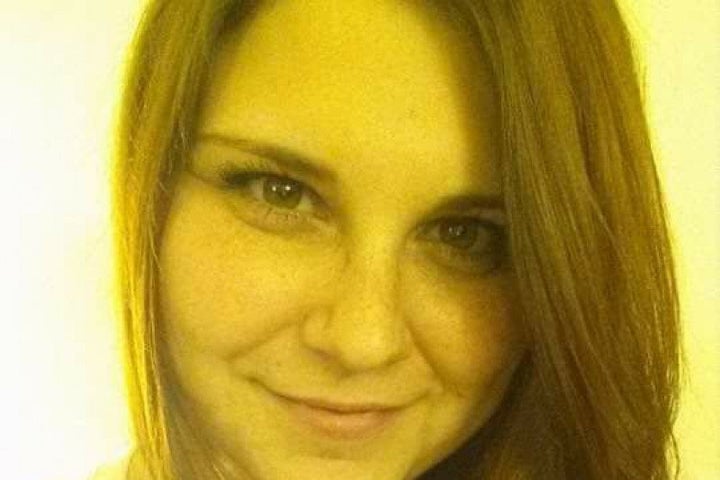
20-year-old James Fields Jr. was arrested over the incident and charged with murder. Fields was one of thousands of members of the so-called “alt right” who were in Charlottesville attending Saturday’s “Unite The Right” march. The rally became violent after the white supremacists were confronted by anti-fascist groups.
Source: Heather Heyer ‘Murdered While Protesting Against Hate’ In Charlottesville, Friends Say | HuffPost

The Philippine human rights community has not forgotten Father Rosaleo Romano more than three decades after his disappearance during the dark years of the dictatorship. A “man of the cloth”, Father Romano, “Rudy” to his friends, one of the staunchest human rights defenders during those years, was forcibly made to disappear by the military…Father Rudy did not live his spirituality in the confines of convent walls. He meaningfully lived it out through his apostolate with poor farmers, with striking factory workers, with the poor whose shanties were demolished in the name of development, and with students struggling for academic freedom. The priests consequently suffered persecution during that most obscure time of the dictatorship of Ferdinand Marcos.
In his white cassock, Father Rudy would confront soldiers with their batons and shields. He would link arms with protesters, and suffered arrest and stayed behind the bars of prisons several times. The persecutions did not cow him from following the footsteps of the “Most Holy Redeemer”. It strengthened his resolve to fully embrace the consequences of his actions. “If I die, you will know who killed me,” he told his parents from the province of Samar. He paid the price for concretizing the church’s teaching of preferential option for the poor. He became, and remains to be, one of the more than 2,000 documented cases of disappearances during the Marcos years. The disappearance of the Redemptorist priest brought thousands of people in the central Philippine province of Cebu out in the streets during those years. The perpetrators’ act of cowardice of abducting a committed pastor resulted in an outrage not only among the organized masses in the country but even among international solidarity groups.
More than three decades have passed. There is no trace of Father Rudy’s whereabouts. In a country battered by burning human rights issues, and with the silence of Filipinos who continue to place their trust in a president who openly attacked human rights defenders, the Catholic Church in the Philippines needs to relive the example of Father Rudy. It is sad that there seems to be a dearth of people with the Redemptorist’s zeal and commitment these days. Have we given justice to Father Rudy’s very ideals that earned for him the status of one of the most well-known desaparecidos during the Marcos era? Have his sacrifices in opting for the poor, the deprived, and the oppressed borne fruits for freedom and democracy? Has his exemplary life multiplied a hundredfold through the proliferation of people who are following his footsteps?
Father Rudy’s name is carved on the “Flame of Courage” built by the Redemptorist congregation in Manila in 1994. With hundreds of names of Filipino desaparecidos, the monument of a mother holding a torch and a child holding a picture of his disappeared father manifests the never-ending hope against hope that one day, the long-awaited reunification of families will be realized.
The dream of a “new heaven and a new earth” is far from being realized in this predominantly Catholic country where the teachings of love and justice are blatantly ignored. The “people of God” need, more than ever, pastors who are willing to offer their lives so that others may live.
[Mary Aileen Bacalso is secretary-general of the Asian Federation Against Involuntary Disappearances. https://humanrightsdefenders.blog/2013/12/23/filippines-hrd-wins-emilio-mignone-award-for-work-against-enforced-disappearances/]
Source: The imperative of more shepherds for the Lord’s flock – La Croix International
 Hans Thoolen on Human Rights Defenders and their awards
Tulip Siddiq. Photograph: Jack Taylor/Getty
Last year the family of one such victim approached me to press their case. Mir Ahmad bin Quasem, or Arman as he is known to friends and family, is a British-trained Bangladeshi lawyer who was abducted in August 2016 by state security forces. They knocked on his door and, in front of his wife and young children, dragged him away. This abduction followed the exact modus operandi of other abductions by the security forces in Bangladesh. Since this incident there has been no confirmation of his whereabouts, but we believe that he is still alive.
Mir Ahmad was on the defence team for his father, Quasem Ali, who was prosecuted by Bangladesh’s self-styled “international crimes tribunal”, set up by the ruling party in Bangladesh to try crimes committed during the country’s war of liberation against Pakistan.
The tribunal has been widely criticised internationally, including by groups such as Amnesty International and Human Rights Watch, as well as the United Nations high commissioner for human rights and eminent British lawyers. Along these lines, Mir Ahmad decided to join his father’s defence team but was abducted a month before his father’s execution, while the appeal procedure was still under way.
Mir Ahmad has not been charged with any offence and his abduction and continued detention by the Bangladeshi government is contrary to the Bangladeshi constitution and the country’s obligations under international law. Forced disappearances are common in Bangladesh under the current government: more than 320 people have been disappeared since 2009.
Mir Ahmad is one of three sons of former politicians who were abducted at around the same time, one of whom has been released. In a secret recordingobtained by Swedish radio, it is claimed by a high-ranking government security officer that the fate of those seized is decided by those “high up”. Astonishingly, as reported in these pages, Sheikh Hasina recently claimed that such forced disappearances also occur in Britain and the US, saying “275,000 British citizens disappeared” in the UK each year.
Last week Channel 4 News raised the issue and put the matter to Siddiq. The interaction now has become a matter of public record. Siddiq complained that Mir Ahmad was not her constituent, that she had no sway over Bangladeshi politics and that in any case she was a British MP focusing on Britain…..Even if we are to take Siddiq at her word that she has no sway over Bangladeshi politics, what is preventing her from at least speaking out? My client may not be Siddiq’s constituent, but nor is he the constituent of Shabana Mahmood MP, who raised an official parliamentary question on the matter earlier this year.
Before and since the Channel 4 News report was aired, the family of Mir Ahmad bin Quasem have been visited by state security forces who have reportedly warned them that “if there is any such news, come next time we will not be good like this time and you will not get to see our face like today”.
Since it has come to this, I earnestly hope that Siddiq can speak out to try to help ensure that Mir Ahmad’s mother, sister, wife and two young daughters are not intimidated by the Bangladeshi security services or face enforced disappearance themselves. This is an urgent matter and I ask Tulip Siddiq, as I have done many times before, to speak to me so it can be resolved.
https://www.theguardian.com/commentisfree/2017/dec/04/tulip-siddiq-bangladesh-disappeared-abducted-prime-minister