Posts Tagged ‘freedom of expression’

48 Human Rights groups intervene for detained Nigerian Omoyele Sowore

August 26, 2019

On 23 August 2019 48 NGOs issued an urgent appeal in relation to the arrest and detention of Omoyele Sowore, Nigerian journalist and human rights defender, to the UN and African human rights bodies. Joy Hyvarinen, head of advocacy at Index on Censorship said: “Index on Censorship urges the Nigerian authorities to release the prominent journalist and campaigner Omoyele Sowore immediately. The arrest and detention are a shocking violation of Mr Sowore’s human rights, which calls into question Nigeria’s willingness and ability to meet international human rights obligations.


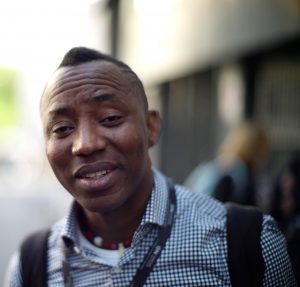
Omoyele Sowore (Photo: Mohamed Nanabhay / Wikipedia)

To the members of the Working Group and the Special Rapporteurs:

We, 48 human rights and press freedom organisations, respectfully request that you consider this urgent appeal in relation to the arrest and arbitrary detention of Nigerian journalist and human rights defender Omoyele Sowore who was arrested by the authorities following a call for peaceful protest. We request that you urgently intervene to secure the immediate release of Mr Sowore and declare his arrest and detention a gross violation of his human rights, including the right not to be arbitrarily detained as protected by Article 9(1) of the International Covenant on Civil and Political Rights (ICCPR) and Article 6 of the African Charter on Human and Peoples’ Rights (the Banjul Charter); the right to a fair trial as protected by Article 14 ICCPR and Article 7 of the Banjul Charter; the right to freedom of expression as protected by Article 19 ICCPR and Article 9 of the Banjul Charter; the right of freedom of peaceful assembly and of association as protected by Articles 21 and 22 ICCPR and Articles 10 and 11 of the Banjul Charter; and his rights as a human rights defender as outlined in the 1999 UN Declaration on Human Rights Defenders and 2017 African Commission Cotonou Declaration on strengthening and expanding the protection of all Human Rights Defenders in Africa.

Background 

  1. Mr Sowore is a prominent journalist, human rights activist and pro-democracy campaigner. He is the founder of Sahara Reporters, an online news agency based in New York City that focuses on corruption, human rights abuses and other political misconduct in Nigeria. Challenging government corruption and speaking truth to power has been the constant thread throughout Mr Sowore’s career, from the leading of student protests in the 1990’s to his recent campaign running for Presidential office in Nigeria.

Omoyele Sowore’s arrest and detention 

  1. Mr Sowore was arrested on 3 August 2019 in his hotel room during a trip to Lagos. Security agents forcefully detained Mr Sowore without informing him of any charges against him and flew him to Abuja, where he is currently being detained at the facility of the headquarters of the Nigerian State Security Service. Mr Sowore has access to food and water, but no access to the outside world: no newspapers, television or phone, and he spends most days in isolation. He was held incommunicado until 6 August, during which time Mr Sowore refused to answer any questions without consulting with his lawyer. He was allowed access to his lawyers only on 7 August, 4 days after his arrest.
  2. Based on Section 35 of the Nigerian Constitution, Mr Sowore should have been arraigned before a court within 48 hours. As of today, Mr Sowore has not been arraigned in any court.
  3. However, on 6 August, 3 days after his arrest, the State Security Service did seek an ex- parte order from the Federal High Court in Abuja to detain Mr Sowore under Section 27(1) of the Terrorism Act 2013, which enables the detention of anyone planning to “commit an act of violence”. The Court’s order of 8 August, made within 48 hours after the State Security Service’s request, granted the authorities permission to detain Mr Sowore for 45 days. Within 24 hours, his legal team, led by Mr Femi Falana, filed a motion to set aside the order and requested Mr Sowore’s immediate release, arguing that his detention was contrary to the Nigerian Constitution. At the time of writing, this request has not been heard by the courts and no date for hearing has been fixed. Importantly: no formal charges have been filed against Mr Sowore.

Mr Sowore’s call for a peaceful #RevolutionNow protest 

  1. The arrest of Mr Sowore appears to be the direct consequence of his call for a peaceful protest scheduled to take place on 5 August 2019, using the hashtag #RevolutionNow.

The objective of the protest was to demand that the Nigerian government end corruption and economic inequality and guarantee education to all. That the protest Mr Sowore and the Coalition for Revolution (CORE) movement he founded called for was a peaceful one is made clear at the very outset of the call for protest, issued on 27 July, which starts by setting out the “rules of engagement”:

We eschew all forms of violence. No protester should throw any object as little as stones or attack any security officials. We are aware of their intent to provoke the mass unduly by using undue tactics and sponsored agents, so as to give the protest a bad name. We encourage all Nigerians to remain calm as we are ready to fight these injustices to a logical conclusion. 

  1. A week earlier, in an interview with the Arise News channel, Mr Sowore stated that “Nigeria needs revolution, not war,” clearly distinguishing his call for substantial change from a call to violence. Mr Sowore has used the word “revolution” contextually to mean “change for the better” since 2006, when he founded Sahara Reporters. Mr Sowore then stated that he would “revolutionise” the way news is being reported in Nigeria –– something he actually did with the investigative citizen journalism the website publishes.
  2. Despite Mr Sowore’s arrest and detention, the 5 August #RevolutionNow protests took place in Abuja, Lagos, Osun, Ondo and Cross River. Protesters met a police force that dispersed them with teargas and gunshots. Numerous protesters, including several of Sahara Reporters’ journalists, were arrested and charged with illegal assembly.

Request for urgent action 

  1. It is clear that Mr Sowore’s arrest on apparent grounds of suspicion of terrorism is unfounded. Mr Sowore did what he has done throughout his career as a journalist and human rights activist: exercise his right to freedom of expression and seek to bring about change through peaceful means, in this case a peaceful protest. The use of the emotive term “revolution” merely underlines his desire for transformative change in what he considers the shortcomings of the current government. There are strong suspicions that Mr Sowore’s arrest stems from ulterior motives than responding to any supposed criminal wrongdoing. This is further highlighted by the fact that the authorities failed to define a charge against him for the first few days after his arrest; the investigations that were subsequently instigated against him under the Terrorism Act were clearly only created to serve the purpose of silencing Mr Sowore.
  2. As such, the arrest and detention of Mr Sowore amount to a violation of his right not to be arbitrarily detained as guaranteed under Article 9 ICCPR and Article 6 of the Banjul Charter. The fact that the charges brought against him most likely stem from his call for a peaceful demonstration and his critical stance on the Nigerian government also violates Mr Sowore’s right to free expression under Article 19 of the ICCPR and Article 9 of the Banjul Charter and his right of freedom of peaceful assembly and of association under Articles 21 and 22 ICCPR and Articles 10 and 11 of the Banjul Charter. Not properly arraigning Mr Sowore before a competent court within the time limit mandated by the Nigerian Constitution and not allowing him access to a lawyer during the initial days of his detention violates his right to a fair trial as protected by Article 14 ICCPR and Article 7 of the Banjul Charter. The foregoing also constitutes a violation of his rights as a human rights defender as defined in the 1999 UN Declaration on Human Rights Defenders and 2017 African Commission Cotonou Declaration on strengthening and expanding the protection of all Human Rights Defenders in Africa.
  3. As a State Party to both treaties, Nigeria is under an obligation to guarantee these rights to all its citizens, as specified under Article 2(1) of the ICCPR and Article 2 of the Banjul Charter. Accordingly, we appeal to the Working Group and UN and AU Special Rapporteurs to:
  • intervene urgently to secure the immediate release of Mr Sowore; and
  • declare his arrest and continuing detention a gross violation of his human rights.

SIGNED BY:
All Workers’ Convergence (AWC) 

Afrika Movement for Freedom and Justice (AMFJ)

Agege Women Agenda (AWA)

ARTICLE 19 Senegal/West Africa

Centre for Constitutional Rights

Centre for Human Rights and Social Justice (CHRSJ)

Chidi Odinkalu Former Chairman, National Human Rights Commission (Nigeria) & Senior Fellow, Open Society Justice Initiative

Coalition for Revolution (CORE) 

Committee for the Defence of Human Rights (CDHR) 

Community Women Initiatives (CWI) 

The Concerned Forum 

Congress of Progressive Youths (COPY) 

Democratic Youth League

Edo State Civil Society Organisation (EDOSCO)

Enough is Enough (EiE) Nigeria 

Freedom of Expression Hub

Gani Fawehinmi Apostles 

Gani Fawehinmi Memorial Organization (gafam.org) 

Governance Advancement Initiative for Nigeria (GAIN)

Global Voices Sub-Saharan Africa

Grassroot Justice Centre

Human and Environment Development Agenda (HEDA) 

Human Rights Network for Journalists-Uganda (HRNJ-UGANDA)

IAmVocal

Index on Censorship 

Media Legal Defence Initiative

Media Rights Agenda

Moshood Abiola Vanguard for Democracy (MAVD)

Movement For People’s Rights

National Conscience Party (NCP), Lagos State Branch

Nigerians in Diaspora Europe, Belgium-Luxembourg (NIDOE-BeLux)

Open Society for West Africa (OSIWA), Nigeria Office

Paradigm Initiative

People’s Alternative Front (PAF)

Peoples’ Unite

Rivers State Civil Society Coalition (RIVSCO)

Rule of Law and Accountability Advocacy Centre (RULAAC) 

Save Lagos Group

Socialist Vanguard Tendency (SVT) 

Socio-Economic Rights and Accountability Project (SERAP)

Sovereign Vital Force 

Spaces for Change 

Take-It-Back (TiB) Movement 

Talakawa Parliament

Veteran Group for Operation Clean Crusade (VGOCC) 

Women for Leadership Change

Workbond International Network (WIN)

Youth In Good Governance Initiative (YIGGI) 

New documentary series highlights the struggle of women human rights in Vietnam

August 7, 2019

A new series of video interviews highlights the perspectives and struggles of human rights women in Vietnam.

The 88 Project, an organisation supporting freedom of expression in Vietnam, released the first video of an ongoing interview series with female activists in Vietnam. In the first interview with Pham Doan Trang, a dissident journalist and political activist, she discusses the challenges women face as bloggers and human rights activists: “In general, Vietnamese women are not respected. Not only in democracy activism but in all fields. In democracy activism, female activists are disadvantaged because they get attacked no less than male activists. They get beaten and assaulted. The work they do is no less than their male counterparts. But what they often get from other people is pity. I think it is not respect.” See also: https://humanrightsdefenders.blog/2017/11/18/overview-of-recent-campaigning-for-human-rights-defenders-in-vietnam/

Other women including social activist and blogger Tran Thi Nga, who is currently serving a nine-year prison sentence, have also been seriously injured following physical attacks, often conducted by hired men. Tran Thi Nga’s attack was documented and posted on Youtube with recordings of her being wheeled into a hospital accompanied by her two young children. According to family reports, Tran Thi Nga has been subjected to both physical and psychological harassment after her arrest, receiving death threats and beatings from a cellmate.

According to the 88 Project database, there are currently more than 200 prisoners of conscience in Vietnam with over 30 identifying as female. Bloggers and journalists are frequently arrested and charged for “activities attempting to overthrow the state” or “conducting propaganda against the state”. According to Amnesty International, the Vietnamese government has been conducting a growing crackdown on freedom of expression and peaceful activism over the past few years.

Nguyen Dang Minh Man, a photojournalist and the woman who has served the longest time in prison so far, is expected to be released at the beginning of August.

International support for the staff of “The Intercept” website in Brasil

August 2, 2019

On 31 July a number of and leading international and Brazilian free speech organizations appealed for support for the staff of The Intercept Brasil, a Rio de Janeiro-based investigative news website that has been the target of a fierce campaign of harassment and intimidation since 9 June. The Intercept Brasil’s revelations about the “Operation Car Wash” corruption case triggered a wave of verbal attacks and threats against the website’s representatives. The most serious recent attacks include Brazilian President Jair Bolsonaro’s public threat on 27 July to imprison The Intercept Brasil founder and editor Glenn Greenwald. [see also: https://humanrightsdefenders.blog/2014/12/15/edward-snowden-gets-another-human-rights-award-in-berlin/]

The 26 press freedom and human rights organizations and media outlets named below strongly condemn the recent wave of attacks and threats against the investigative news website The Intercept Brasil. We call on the authorities to ensure respect for the constitutionally guaranteed right of journalists to protect the confidentiality of their sources.

The attacks began on 9 June after The Intercept Brasil published the first of a series of reports revealing apparent irregularities in the “Operation Car Wash” investigation, one of the most important corruption investigations in Brazilian history. To publish these revelations, which are based on documents provided by an anonymous source, The Intercept Brasil partnered with several Brazilian media outlets including the Folha de São Paulo newspaper and Veja magazine.

Since then, the staff of The Intercept Brasil and in particular, its founder Glenn Greenwald, have been subjected – especially on social networks – to countless insults, slurs and death threats accompanied by false information designed to undermine the credibility of its reporting. This harassment is symbolic and symptomatic of the difficulties encountered by all media workers who investigate sensitive stories in Brazil, where the journalists are often the targets of intimidation and persecution campaigns.

Regardless of their provenance, the attempts to undermine and attack the credibility of The Intercept Brasil and its partners are viewed by the signatories of this appeal as a grave threat to the freedom to inform. Not only are they designed to deflect the public’s attention from the content of the revelations but above all, they reinforce an increasingly hostile work environment for the media and especially for investigative journalism.

We remind the authorities that the Brazilian state has a duty to guarantee the protection of journalists and to investigate the serious threats received by the journalists at The Intercept Brasil and its partners.

Freedom of the press and information are pillars of democracy. They transcend political divisions and must be protected and guaranteed at all costs.

Signatories:

Agência Pública de Jornalismo Investigativo

Amnesty International Brazil

Article 19 Brasil

Asociación de la Prensa de Madrid (APM)

Associação Brasileira de Imprensa (ABI)

Associação Brasileira de Jornalismo Investigativo (Abraji)

Associação dos Correspondentes Estrangeiros (ACE) de São Paulo

Committee to Protect Journalists (CPJ)

Federação Nacional dos Jornalistas (FENAJ)

Federación de las Asociaciones de Periodistas de España (FAPE)

Freedom House

Freedom of the Press Foundation

Global Editors Network (GEN)

Human Rights Watch

IFEX

Index on Censorship

Instituto Vladimir Herzog

Interamerican Press Association (IAPA/SIP)

International Press Institute

Intervozes

Mediapart

Observatório da Imprensa

PEN International

Reporters sans frontières (RSF)

The Guardian

Witness Brasil

Mauritanian blogger freed after being held for nearly six years

August 1, 2019
Reporters Without Borders (RSF) is delighted to report that Mohamed Cheikh Ould Mohamed Mkhaitir, a Mauritian blogger who had been held for more than five and a half years and who was originally sentenced to death for apostasy, was released at dawn yesterday. When contacted by RSF after his release, Mkhaitir thanked all the organizations who have been campaigning on his behalf ever since his arrest in January 2014. He was arrested for a Facebook post criticizing the use of religion to justify discriminatory practices against the blacksmith community to which he belongs. See: https://humanrightsdefenders.blog/2019/06/24/ngos-demand-the-release-of-mohamed-cheikh-ould-mkhaitir-in-mauretania/

The death sentence he received in December 2014 on a charge of apostasy was eventually commuted to two years in prison by a Nouadhibou appeal court in November 2017. He should then have been released but many demonstrations calling for his execution had been held during his trial and the authorities continued to detain him on “security grounds”, denying him access to his family and lawyers.

“We are deeply relieved that he has finally been freed after being held for more than five and a half years in almost total isolation,” RSF secretary-general Christophe Deloire said. “For nothing more than a social network post, he was subjected to a terrible ordeal that violated a decision by his own country’s judicial system. This blogger was francophone Africa’s longest-held citizen-journalist. We thank all those who contributed to his release.”

Mkhaitir had made formal statements of repentance on Facebook and TV in the past few weeks. This was the condition that was set for his release after a meeting at the start of July between outgoing President Mohamed Ould Abdel Aziz and several religious officials. The new president, former defence minister Mohamed Ould Ghazouani, is to be sworn in on 1 August. Mkhaitir’s release was the outcome of a major international campaign to which RSF, many other NGOs and his lawyers all contributed. …. Mainly because of Mkhaitir’s arbitrary detention, Mauritania has fallen 46 places in RSF’s World Press Freedom Index since 2016 and is ranked 94th out of 180 countries in the 2019 Index. Aside from Tanzania, no other country has fallen so sharply in the same period.

https://rsf.org/en/news/mauritanian-blogger-freed-after-being-held-nearly-six-years

More on Neha Dixit, a winner of the 2019 Press Freedom Award

July 22, 2019

(Rajni George)

The Committee to Protect Journalists on 16 July gave one of its International Press Freedom Awards 2019 to Neha Dixit, an Indian freelance reporter, who has covered politics, gender, and social justice in print, TV, and online media for more than a decade. [see: https://humanrightsdefenders.blog/2019/07/17/international-press-freedom-awards-2019/]

She began her career at Tehelka magazine and then joined the special investigation team at India Today. In 2019, Dixit spent months investigating and reporting stories that shed a light on important issues in the country, including extrajudicial killings by police. She also reported on the illegal detention of citizens under draconian laws that appeared to be motivated by political interests. In January 2019, the Office of the United Nations High Commissioner for Human Rights sent a notice to the Indian government to express its concern about the detentions. In 2018, Dixit reported on the damage to the health of poor Indians who were being used as guinea pigs by pharmaceutical companies in illegal drug trials.

In 2016, she wrote a story for Outlook magazine that accused members of a right-wing nationalist group of trafficking more than 31 girls in Assam state to other parts of India in order to inculcate them with a nationalist ideology. After the story was published, members of the ruling party filed a criminal defamation suit against Dixit and Outlook, accusing both of violating Indian law. CPJ condemned the case, which continues today, and provided Dixit with support for its legal fees. CPJ’s research has found that section 153A of India’s colonial-era penal code, under which the suit was filed, has been used to silence journalists, writers, and academics in India. Dixit was also charged with “inciting communal hatred through writing,” for which she could face a five-year prison term.

After Dixit’s exposé on extrajudicial killings by the police, she said high-ranking police officials threatened her family’s safety if she continued to report on the issue. She is frequently harassed online as a result of her reporting, especially from alleged right-wing extremists. She has been threatened with physical attacks, rape, and death, and her personal information has been exposed online. She told CPJ in May 2019 that she faces up to 300 abusive messages a day.

Dixit’s work has been published in international outlets including The New York Times, Al-Jazeera, Caravan, and The Wire. She has received numerous awards, including the European Commission’s Lorenzo Natali Media Prize in 2011, the Kurt Schork Award in International Journalism in 2014, and the 2016 Chameli Devi Jain Award for Outstanding Woman Journalist.

https://cpj.org/awards/2019/neha-dixit-india.php

More on Maxence Melo, a winner of the 2019 Press Freedom Award

July 22, 2019

Digital activist Maxence Melo. (Daniel Hayduk, AFP, File)

Digital activist Maxence Melo. (Daniel Hayduk, AFP, File)
A Tanzanian journalist awarded the International Press Freedom Award on 16 July [see https://humanrightsdefenders.blog/2019/07/17/international-press-freedom-awards-2019/] said he hoped the recognition will “lift the corner of the veil” on the plight of reporters in his homeland reported News24 on 17 July 2019. Maxence Melo, a blogger whose critical writings of President John Magufuli have landed him in hot water.
The CPJ said the co-founder of the Jamii Forums blog in 2006, was a “champion of online freedom of expression” who never flinched, even in the face of Tanzania’s strict internet laws. Melo has been in court more than 80 times, the CPJ said, and is still facing prosecution for refusing to disclose his sources in a story criticising Tanzanian authorities. His work focuses on corruption, tax evasion and human rights violations.

Melo said he hoped the award would turn the spotlight on the exceptional difficulties faced by journalists in Tanzania. “This prize lifts a corner of the veil on what is happening in our country,” said Melo, who is barred from leaving Tanzania’s financial capital and biggest city, Dar es Salaam. “Never before in our country has a government violated press freedom so much.

It is of course not good news that my country is making the headlines because of its laws and practices that violate freedoms of the press and expression,” Melo said. “With the announcement of this award, I think the international community will take a greater interest in what is happening in Tanzania, in the difficult environment in which the media and human rights defenders work in Tanzania.” Melo, a father of three, said he had received death threats. “It is obvious that I am afraid, afraid for my personal safety, but also for the safety of my family,” he said.

In 2015, the East African country was 75th in the world in RSF’s press freedom rankings. By 2019, it had slid to 118th.

https://www.news24.com/Africa/News/tanzanian-press-champion-hopes-prize-lifts-veil-on-abuses-20190717

Cartooning in the doldrums? Cartooning Award 2019 seeks nominations!

June 19, 2019

Last week the New York Times announced that it would no longer carry [https://www.nytimes.com/2019/06/10/business/international-new-york-times-political-cartoons.html] political cartoons in its international edition. The outcry was loud but also accompanied by other voices such as on 16 June 2019 “The point is that globalisation and information technology have changed the business of cartooning. Cartoonists wedded to the old-school, in-house ways of the 20th century can throw tantrums about free speech as much as they like. If they do not recognise the way the world has changed – and is changing – then they will be left behind as their profession moves forward. History is not on their side. Just as 18th-century copperplate engravings were replaced by lithograph prints, and standalone caricatures were replaced by cartoons in 19th-century humour magazines, and they in turn by 20th-century newspaper cartoons, the web cartoon has well and truly arrived in the 21st century.“[http://theconversation.com/the-new-york-times-ends-daily-political-cartoons-but-its-not-the-death-of-the-art-form-118754]

In the meantime, Cartoonists Rights Network International seeks nominations for its twenty-fourth Courage in Editorial Cartooning Award. Read the rest of this entry »

UN Strategy and Plan of Action on Hate Speech launched

June 19, 2019
The Strategy and Plan of Action guides all United Nations entities, at Headquarters and in the field, to do their part to address hate speech. The Strategy and Plan of Action calls for stronger support to Member States as well as stronger engagement with private companies, civil society and media. It is consistent with and supports other key agendas of the United Nations, including the Sustainable Development Goals, the Sustaining Peace resolutions and the promotion and protection of human rights.  The Strategy provides ideas on how to address the root causes and drivers of hate speech and how to reduce its impact on societies.

Sports and Politics: Minsk 2019 apes Baku 2015 and with similar results

June 17, 2019

Belarus news, Alexander Lukashenko, European Games 2019, European Games Minsk, European Games Baku, Belarus human rights, Belarus press freedom, sports and human rights, European Olympic Committee, corruption in sport

Minsk, Belarus, 05/09/2019 © Tricky_Shark / Shutterstock

The second edition of the European Games is set to kick off on June 21 2019 in Minsk, Belarus. Events covering 15 different sports, from archery to sambo, will be contested over nine days. The 10 disciplines recognized as Olympic sports are especially important because they serve as qualifications for Tokyo 2020. Belarus finds itself trying to oversee a successful international sporting event while at the same time dismissing condemnation of its domestic political situation.

International organizations such as the United Nations, Amnesty International and Human Rights Watch routinely criticize the human rights conditions in Belarus. Actions such as peaceful protests and membership in opposition organizations are basically criminalized under Belarusian law. Access to websites critical of the government is routinely denied, and press freedom curtailed. To add to this, Belarus remains the last country in Europe to employ the death penalty. These issues once again have risen to the fore when Belarus was selected to host the European Games that are thought to represent a different political culture.

These views are echoed by Human Rights Watch, which strongly pushed the European Olympic Committees (EOC) for assurances that journalists can carry out their work unhindered during the games. For its part, the EOC states that it will appoint special observers to ensure press freedom, but critics contend this is not enough. Key questions remain about the conditions for journalists when the games are over, and whether the EOC will ensure action if serious issues arise. The German Olympic Sports Confederation (DOSB) went so far as to contemplate a boycott of the 2019 European Games. It was a half-hearted idea, as the DOSB viewed the maneuver as a last resort rather than an actionable response to the situation in Belarus. In the end, the requirement for athletes to achieve qualifications for the Tokyo Olympics quashed any sort of political activism.

Further, the Sports and Rights Alliance — a coalition of leading NGOs, sports organizations and trade unions — petitioned for positive advancements for Belorussian human rights prior to the commencement of this year’s games. It alleges that the EOC overlooks duties established in the Olympic Charter to protect human rights and dignity. At the recent Olympism in Action Forum, which focused on the relation of human rights and sport, David Grevemberg, chief executive of the Commonwealth Games Federation, stated that “You’re judged by the company you keep and what you stand for.”..

Azerbaijan hosted the first European Games in Baku in 2015. [see: https://humanrightsdefenders.blog/2015/06/12/baku-games-starting-today-with-avalanche-of-human-rights-criticism/] It is apparent that the past experience of 2015 had little effect on the EOC, and that the organization will not shift its mandate to accommodate the demands put forward by human rights defenders. Baku 2015 provides a template and numerous lessons for Minsk 2019. In the case that Minsk can put on a well-managed spectacle with memorable moments of sporting excellence, human rights concerns will not overshadow the Belarusian edition of the European Games.

.,… Lukashenko explained that “Visitors should get positive impressions of their stay in Belarus, in Minsk, and should take these impressions back home.” The president often refers to the 2014 Sochi Winter Olympics and how the event improved opinions about Russia prior to the ensuing scandals linked to the Kremlin. Lukashenko knows there is a tough task ahead of him in regard to the human rights lobby and criticism of his strongman style of governance. However, the EOC’s president, Janez Kocijančič, firmly stated that any human rights concerns would not overshadow the competition, and that it is not in the dominion of the sports committee to influence domestic politics of host nations. This is a reaffirmation that sport is to be kept separate from politics and goes neatly along with Lukashenko’s retorts to criticism…

It is naive to believe that sport and politics are separate, as much as EOC and Belarusian officials insist on that principle. While the actual sporting activities are guided by apolitical rules, both the atmosphere and the message of large-scale events are inherently political. Hosting duties bring international scrutiny of human rights offences, while the country anticipates a public relations makeover. Both require diplomatic nuance and managed interactions with the regional community. Thus, levels of political involvement are apparent….

International sporting events held in countries with tainted human rights records often become lighting rods in the global community. It is of great importance to highlight these issues and to focus attention on states that regularly infringe upon basic freedoms. However, little perceptible success has been achieved by international NGOs advising boycotts or protective mechanisms by the umbrella organizations responsible for the events — in this case the EOC.

It is a difficult task to shift the development and implementation of a large-scale multidisciplinary event with a lot invested in its success on all sides. Campaigns need to expand their reach beyond those involved in the human rights movement who are already aware of calls to action. Social engagement must overcome the collective excitement over sport.

……

It seems that sport governing bodies struggle with achieving a balance between spectacle and sport. This issue will continue to complicate the relationship between athletics and politics, as liberal democracies balk at the cost of hosting such events, while states with debatable democratic records seek legitimacy from the international community. Sports diplomacy delivers this through soft power.

See on this tipic also: https://humanrightsdefenders.blog/2019/02/01/sports-and-human-rights-focus-on-sports-washing-big-names-play-for-big-money/

The views expressed in this article are the author’s own and do not necessarily reflect Fair Observer’s editorial policy.

Belarus Understands the Diplomatic Power of Sport

Social media councils – an answer to problems of content moderation and distribution??

June 17, 2019

In the running debate on the pros and cons of information technology, and it complex relation to freedom of information, the NGO Article 19 comes on 11 june 2019 with an interesting proposal “Social Media Councils“.

Social Media Councils: Consultation - Digital

In today’s world, dominant tech companies hold a considerable degree of control over what their users see or hear on a daily basis. Current practices of content moderation on social media offer very little in terms of transparency and virtually no remedy to individual users. The impact that content moderation and distribution (in other words, the composition of users’ feeds and the accessibility and visibility of content on social media) has on the public sphere is not yet fully understood, but legitimate concerns have been expressed, especially in relation to platforms that operate at such a level of market dominance that they can exert decisive influence on public debates.

This raises questions in relation to international laws on freedom of expression and has become a major issue for democratic societies. There are legitimate motives of concern that motivate various efforts to address this issue, particularly regarding the capacity of giant social media platforms to influence the public sphere. However, as with many modern communication technologies, the benefits that individuals and societies derive from the existence of these platforms should not be ignored. The responsibilities of the largest social media companies are currently being debated in legislative, policy and academic circles across the globe, but many of the numerous initiatives that are put forward do not sufficiently account for the protection of freedom of expression.

In this consultation paper, ARTICLE 19 outlines a roadmap for the creation of what we have called Social Media Councils (SMCs), a model for a multi-stakeholder accountability mechanism for content moderation on social media. SMCs aim to provide an open, transparent, accountable and participatory forum to address content moderation issues on social media platforms on the basis of international standards on human rights. The Social Media Council model puts forward a voluntary approach to the oversight of content moderation: participants (social media platforms and all stakeholders) sign up to a mechanism that does not create legal obligations. Its strength and efficiency rely on voluntary compliance by platforms, whose commitment, when signing up, will be to respect and execute the SMC’s decisions (or recommendations) in good faith.

With this document, we present these different options and submit them to a public consultation. The key issues we seek to address through this consultation are:

  • Substantive standards: could SMCs apply international standards directly or should they apply a ‘Code of Human Rights Principles for Content Moderation’?
  • Functions of SMCs: should SMCs have a purely advisory role or should they be able to review individual cases?
  • Global or national: should SMCs be created at the national level or should there be one global SMC?
  • Subject-matter jurisdiction: should SMCs deal with all content moderation decisions of social media companies, or should they have a more specialised area of focus, for example a particular type of content?

The consultation also seeks input on a number of technical issues that will be present in any configuration of the SMC, such as:

  1. Constitution process
  2. Structure
  3. Geographic jurisdiction (for a national SMC)
  4. Rules of procedure (if the SMC is an appeals mechanism)
  5. Funding

An important dimension of the Social Media Council concept is that the proposed structure has no exact precedent: the issue of online content moderation presents a new and challenging area. Only with a certain degree of creativity can the complexity of the issues raised by the creation of this new mechanism be solved.

ARTICLE 19’s objective is to ensure that decisions on these core questions and the solutions to practical problems sought by this initiative are compatible with the requirements of international human rights standards, and are shaped by a diverse range of expertise and perspectives.

Read the consultation paper

Complete the consultation survey

https://www.article19.org/resources/social-media-councils-consultation/