Posts Tagged ‘EU’

State of Human Rights in Belarus called ‘Catastrophic’ at the UN

July 12, 2023
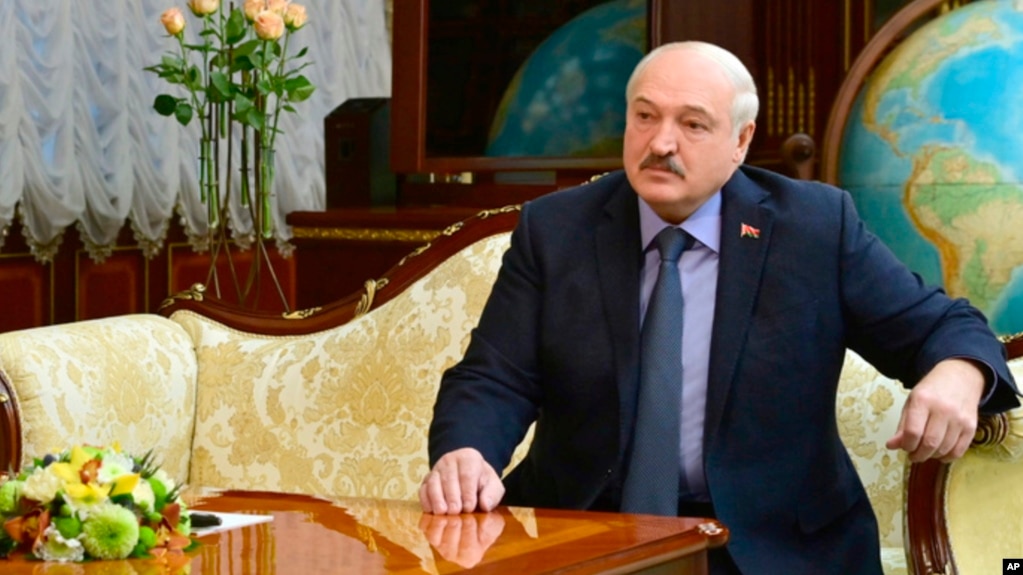
The regime of Belarusian President Alexander Lukashenko — seen here in Minsk, Belarus, on April 10, 2023 — is deliberately purging civil society of its last dissenting voices, a United Nations special rapporteur told the U.N. Human Rights Council on Tuesday.

The human rights situation in Belarus is catastrophic, and only getting worse, the United Nations special rapporteur on the country said on 4 July 2023, according to AFP.

Belarusian leader Alexander Lukashenko’s regime in Minsk is deliberately purging civil society of its last dissenting voices, Anais Marin told the U.N. Human Rights Council.

“The situation remains catastrophic. Unfortunately, it keeps on worsening,” said the special rapporteur on the human rights situation in Belarus. “The Belarusian government amended an already restrictive legislation aimed at dismantling civic freedoms, leading to a surge in politically motivated prosecutions and sentencing.

“The lack of accountability for human rights violations fosters a climate of fear among victims and their families,” Marin said. Marin has been in post for five years and reminded the council that she alerted them two years ago to the “totalitarian turn” taken by Minsk, evidenced by the “disregard for human life and dignity” during the crackdown on peaceful protesters in 2020. In her annual report, the French political scientist said more than 1,500 individuals were still being detained on politically motivated charges, with a daily average of 17 arbitrary arrests since 2020.

“I have good reasons to believe that prison conditions are deliberately made harsher for those sentenced on politically motivated grounds, by placing them in punishment cells for petty infraction to prison rules,” said Marin.

“No one has been held accountable in Belarus for arbitrarily detaining tens of thousands of peaceful protesters in 2020, nor for the violence or torture many of them have been subjected to.

“This general impunity, and the climate of fear resulting from ongoing repression, have compelled hundreds of thousands of Belarusians into exile.

Human rights defenders face ongoing persecution, she said, with more than 1,600 “undesirable organizations forcibly dissolved, including all remaining independent trade unions.

“This illustrates a deliberate state policy of purging civic space of its last dissenting elements,” she said.

Marin said independent media outlets had been labelled as “extremist organizations,” while academic freedom is “systematically attacked.”

“Ideological control and disciplinary measures restrict freedom of opinion and their expression,” she said.

Primary and secondary education is also subject to “ideological control,” with children “discouraged from expressing their own opinions” and facing “threats and consequences” for holding dissenting views.

Consequences for speaking out

As for the Russian invasion of Ukraine, individuals face challenges when trying to speak out against it or question Belarus’s role in facilitating the 2022 invasion.

“Anti-war actions led to numerous detentions and arrests, some on charges of planning terrorist attacks — a crime which can now be punished by death,” she said.

Belarus was immediately offered the Human Rights Council floor to respond to Marin’s comments but was not present.

On 11 July HRW underlined this with the case of Belarusian lawyer Yulia Yurhilevich and journalist Pavel Mazheika who ace up to seven years in prison

https://www.eeas.europa.eu/delegations/un-geneva/hrc53-interactive-dialogue-situation-human-rights-belarus-eu-statement_en?s=62

https://www.voanews.com/a/state-of-human-rights-in-belarus-catastrophic-un-told-/7167606.html

https://www.hrw.org/news/2023/07/11/travesty-justice-reaches-new-low-belarus

EU directives for SLAPPs and Media Freedom: a long journey

July 2, 2023
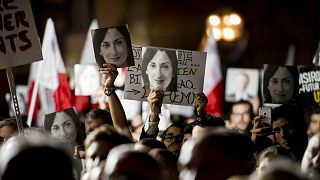
Protesters hold photos of slain journalist Daphne Caruana Galizia outside the office of the Prime Minister of Malta on Nov. 29, 2019

Maria Psara – writing for Euronews of 27June 2023 – says that European Union member States are trying to water down the directives for SLAPPs and Media Freedom…European lawmakers are accusing member states of trying to water down EU legislation aimed at strengthening protections for journalists and media freedom. 

The European Parliament’s Legal Affairs Committee (JURI) will on Tuesday vote on an anti-SLAPP directive first proposed by the Commission in April 2022 and that would enable judges to swiftly dismiss manifestly unfounded lawsuits against journalists and human rights defenders.  [see: https://humanrightsdefenders.blog/2022/04/28/eu-finally-moves-on-law-to-protect-media-from-legal-abuse-slapps/]

It would also establish several procedural safeguards and remedies, such as compensation for damages, and dissuasive penalties for launching abusive lawsuits. The JURI vote will form the basis of the Parliament’s position in negotiations with member states if it is also endorsed by the plenary in mid-July.

SLAPPs or Strategic lawsuits against public participation are a particular form of harassment used primarily against journalists and human rights defenders to prevent or penalise speaking up on issues of public interest. The Commission’s proposal has been dubbed as the ‘Daphne Law’ in honour of murdered Maltese journalist Daphne Caruana Galizia.

Member states, which together form the Council of the EU, have however sought to water down the text, drawing criticism for the Commission.

“I would like to express my regret concerning the weakening of the remedies against abusive court proceedings, in particular the deletion of the provision on compensation of damage and the weakening of the provision on award of costs,” Didier Reynders, Commissioner for Justice, said earlier this month after member states agreed on their negotiating position. 

Parliament is seeking to redress that with German MEP Tiemo Wölken (S&D), the rapporteur on the draft directive, telling Euronews: “We made it stronger and we also added other provisions such as a creation of an ‘one stop shop’ which the SLAPPs targets can contact to receive help by dedicated national networks of specialized lawyers, legal practitioners and psychologists.”

It is not the first time member states are accused of trying to water down a proposal on media freedom.  Earlier this month, a deal among the 27 member states on the European Media Freedom Act (EMFA) made a lot of eyebrows rise, because of a planned exemption to allow for the wiretapping of journalists. The regulation, first proposed by the Commission in September 2022, included safeguards against political interference in editorial decisions and against surveillance. The EU’s executive wanted to put focus on the independence and stable funding of public service media as well as on the transparency of media ownership and the allocation of state advertising.

“We have welcomed in particular as a political symbol the draft regulation for EMFA, as the Commission for the first time has adopted a legislative act dealing with all media, a traditionally sensitive subject dealt with at national level only,”  Renate Schroeder, director of the European Federation of Journalists (EFJ), told Euronews. Yet, the EPJ and other NGOs, still criticised the proposal as “not ambitious enough”.

“In particular we believed that Article 4 on the protection of journalists’ sources and protection from surveillance has not met Council of Europe standards. We also advocated for stronger binding rules on media transparency,” Schroeder added.

But member states are seeking to add an exemption to Article 4, introduced by France and opposed by Germany only, that would allow them to spy on journalists in the name of national security.

The original proposal sought to ensure that governments could not “detain, sanction, intercept, subject to surveillance or search and seizure” journalists in order to uncover their sources, unless “justified by an overriding requirement in the public interest” while the deployment of spyware was to be restricted only to “serious crimes”. 

The Council’s is hoping to broaden the number of offenses allowing such surveillance from 10 to 32.

“The text doesn’t protect journalists anymore and thereby makes the Act almost useless for journalists’ protection at least,” Schroeder said. 

“It still proposes useful tools when it comes to independence of public service media, transparency on state advertisement, some minimum rules on media ownership and on editorial independence. But yes, some member-states are afraid of journalism and thereby give hands to illiberal countries such as Hungary who oppose the Act. We hope the European Parliament will be firm, but we are not too optimistic,” underlined the director of EFJ.

However, on 12 July, with 498 votes to 33 and 105 abstentions, MEPs adopted their negotiating position on new rules to protect those working on matters of public interest like fundamental rights, the activities of public officials or corruption allegations.

On 27 February 2024, the European Parliament formally adopted that text, which has now been published. https://www.lexology.com/library/detail.aspx?g=105f78e8-27de-4fa3-99b1-6ed97c4d659f

See also: https://www.independent.com.mt/articles/2023-07-11/local-news/Protection-of-journalists-in-the-EU-MEPs-back-rules-to-stop-abusive-legal-cases-6736253272

for Latin America, see: https://www.article19.org/resources/inter-american-commission-on-human-rights-ensure-protection-against-slapps/

https://www.euronews.com/my-europe/2023/06/26/meps-accuse-eu-countries-of-undermining-attemps-to-protect-journalists

https://www.europarl.europa.eu/doceo/document/A-9-2023-0223_EN.html

https://www.euronews.com/my-europe/2023/08/23/record-number-of-abusive-slapp-lawsuits-filed-in-europe-in-2022-report

and then on 30 November 2023: https://www.consilium.europa.eu/en/press/press-releases/2023/11/30/council-and-eu-parliament-reach-provisional-agreement-on-eu-law-protecting-journalists-and-human-rights-defenders/

and on 29 April 2024 the UN came with: https://www.ohchr.org/en/documents/brochures-and-leaflets/impact-slapps-human-rights-and-how-respond

Finally:

https://commission.europa.eu/news/new-eu-rules-protect-against-strategic-lawsuits-against-public-participation-enter-force-2024-05-03_en

https://www.hrw.org/news/2024/05/07/joint-statement-civil-society-reaction-adoption-eu-directive-combating-violence

Human Rights Watch addresses Spain’s Presidency of the EU

June 27, 2023

On 26 June 2023 HRW called on Spain use its six-month tenure as EU Presidency to translate into concrete and bold actions commitment to protect fundamental rights and the rule of law.

Spain holds the presidency as the world marks the 75th anniversary of the Universal Declaration of Human Rights (UDHR) on 10 December 2023. In anticipation of this pivotal moment Spain should make every effort to uphold the rights and values enshrined in this historic document.

HRW calls upon the Spanish government to consider the following priority issues and recommendations:

  1. Fundamental Rights and Rule of Law in EU member states

Two EU member states – Hungary and Poland – currently face scrutiny under Article 7 of the Treaty on European Union (TEU)…

The freezing of EU recovery and cohesion funds under the conditionality mechanism represents a welcome step but it is insufficient to address the gravity of the erosion of rule of law and human rights. While Hungary and Poland have adopted some limited measures in response to requirements under the mechanism, these have failed to address fundamental and long-standing concerns. ….We urge the Council to hold the Polish and Hungarian governments to account by using the powers conferred to it under the Treaties and to fulfil the strong mandate to act given to it by the European Commission and Parliament. The urgency of Spain’s leadership and responsibility cannot be overstated as it is one of only two remaining presidencies before Hungary and Poland in turn assume leadership of the Council. It is highly likely that during that time progress on rule of law will at best stall, and at worst Article 7 scrutiny will come to an end altogether…

  1. Rights-Respecting and Principled EU Migration Policy

Spain’s EU Council presidency comes at a critical time for the EU’s migration policy after the Council agreed on 8 June on a negotiating position on an EU-wide reform of its asylum and migration system. Given its mandate to lead on behalf of member states the negotiations with the European Parliament on a final agreement, Spain has an opportunity to broaden the scope for a rights-respecting approach.

We call on your government to:

  • Support the establishment of proactive, state-led SAR operations in the Mediterranean Sea that could involve expanding the mandates and capacity of existing initiatives like EUNAVFOR MED and Frontex, funding professional rescue NGOs and ensuring predictable disembarkation.
  • Promote a discussion on the critical role of NGOs to ensure that they are fully able to carry out their lifesaving SAR activities, instead of facing obstruction and criminal and administrative penalties; and provide platforms for discussion of cooperation between member state rescue coordination centers and NGOs.
  • Advocate for independent and effective border monitoring mechanisms to document human rights violations at EU external borders, such as unlawful pushbacks, to ensure accountability for those responsible for human rights abuses and access to justice for victims.
  • Ensure that migration cooperation with third countries, and all provision of financial, technical, and material assistance, are contingent on clear and verifiable human rights commitments. 
  • Enable a constructive trialogue on the asylum procedures regulation and the asylum and migration management regulation with a view to limiting the use of accelerated border procedures, the detention of asylum seekers including families with children, and discretionary use of the “safe third country” concept.
  • Promote a discussion on establishing more safe and legal pathways for migration as called for by EU Justice and Home Affairs Commissioner Johansson.[8]
  1. Human Rights as a Pillar of EU’s Foreign Policy

The EU is equipped with solid instruments to ensure that human rights protection remains at the centre of its external action. The EU has shown resolve in its response to Russia’s invasion of Ukraine and has led at the United Nations to address key human rights crises.

..

During its Presidency, we call on your government to:

  • Continue to combat impunity for crimes committed in Ukraine, including by providing adequate resources to the International Criminal Court’s (ICC) regular budget, advocating and supporting the implementation of ICC arrest warrants, pressing Ukraine to ratify the Rome Statute and supporting independent investigations and prosecutions under universal jurisdiction.
  • Continue to support Human Rights Defenders (HRDs) at risk and share your experience with other EU member states. Encourage other EU member states to learn from and replicate Spain’s forward-leaning approach with the Program for Support and Protection of Human Rights Defenders at Risk that provides dedicated one-year residential visas for HRDs. Advocate with EU member states to use their discretion and facilitate access by HRDs to multi-year multi-entry Schengen visas in line with EU guidelines.
  • Recalibrate EU’s engagement with China to address the government of China’s human rights record through measurable deliverables; counter the government of China’s flawed narratives on its own human rights record; reject efforts to undermine international human rights institutions; lead the creation of a UN investigative and monitoring mechanism for crimes against humanity committed in Xinjiang; sanction or hold accountable those responsible for such crimes; and make plans to reduce dependency on a government that assaults human rights both domestically and in its foreign policy.

see also: https://freedomhouse.org/article/media-freedom-and-journalists-groups-call-eu-prioritise-media-freedom-reforms-and-human

HRW Letter – Spain Presidency June 2023

Yu Wensheng and Xu Yan detained again in China

April 24, 2023

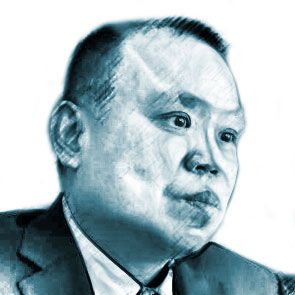
On 18 April 2023 CHRD called on the Chinese government to immediately release human rights lawyer Yu Wensheng and his wife Xu Yan, who have been criminally detained and denied access to lawyers of their choice. CHRD also calls on the Chinese government to end its de facto house arrest of Yu Wensheng and Xu Yan’s 18-year-old son. CHRD urges the EU, EU member states, the US, UN bodies, and other member of the international community to forcefully condemn the Chinese government’s detention of Yu Wensheng and Xu Yan. See also: https://humanrightsdefenders.blog/2022/03/03/breaking-news-mea-laureate-yu-wensheng-released/

On April 13 at approximately 4:00 pm, human rights lawyer Yu Wensheng and his wife Xu Yan left their home in Beijing to travel by subway to attend an event at the European Delegation. They were invited to an event with the EU’s Ambassador to China Jorge Toledo Albiñana according to Politico.  

However, Yu and Xu were prevented from accessing the subway by four plainclothes police officers. One of the officers, a state security police officer, told them that they were being summoned to a police station, which Yu Wensheng announced on Twitter. The four police officers took them to the Shijingshan Bajiao police station. Human rights lawyers Wang QuanzhangLi Heping, and Bao Longjun were also harassed by authorities during this period.

The EU Delegation to China tweeted on April 13, “We demand their immediate, unconditional release. We have lodged a protest with MFA [China’s Ministry of Foreign Affairs] against this unacceptable treatment.

According to Rights and Livelihood Watch, on April 15 in the evening, approximately seven police officers came to Yu Wensheng and Xu Yan’s home, and they orally read a criminal detention notice to the couple’s son, who had just turned 18 years old. The pair were criminally detained on the charge of “picking quarrels and provoking trouble.” Police would not allow the son to take photos, nor would they give him the criminal detention notice. Also, even though no warrant was presented, police proceeded to search the home and carried off many items.

On April 16, two lawyers, Song Yusheng and Peng Jian, paid a visit to Yu and Xu’s son to bring him fruit, and fill out paperwork to obtain legal status to represent Yu and Xu.  There were two people guarding the door of Yu and Xu’s home. Lawyer Song knocked on the door, and it was answered by the son, but the lawyer saw that in the home there were also two officers inside, one plainclothes and one wearing a uniform. The plainclothes officer, who said his name was Lu Kai, asked what they wanted. The lawyers said that they were there to visit the son and have him sign an agreement (委托书) to entrust them as lawyers. However, the plainclothes police officers said that Yu Wensheng told them that he “doesn’t want to have lawyers at this stage” and that Xu Yan had already found two lawyers.

Yu Wensheng’s detention may also be related to his condemnation of the sentencing of Xu Zhiyong and Ding Jiaxi, two prominent pro-democracy figures. On April 12, Yu Wensheng wrote on Twitter that he had been visited at his home by Shijingshan police for a tweet he had sent out on April 9 that said, “[I] strongly condemn the Chinese authorities heavy sentence of scholar Xu Zhiyong to 14 years and of Lawyer Ding Jiaxi to 12 years! I pay my respects to Xu Zhiyong and Ding Jiaxi, who have worked hard in the struggle for freedom, democracy, human rights, and the rule of law. I believe that one day the Dream of a Beautiful China will be realized.

In March 2022, Yu Wensheng was released from prison after serving four years and three months on the charge of “inciting subversion of state power.” Yu was taken away by police in 2018 the day after he released an open letter recommending changes to China’s Constitution, including a call for elections and the creation of an oversight system for the Chinese Communist Party.

The Chinese government has put heightened pressure on human rights award winners. Yu Wensheng was the recipient of the prestigious Martin Ennals Award in 2021 [see: https://www.trueheroesfilms.org/thedigest/laureates/69fc7057-b583-40c3-b6fa-b8603531248e] and the winner of the Franco-German Prize for Human Rights and the Rule of Law in 2018. Previous winners of awards have been subjected to extra-legal abuse. While Nobel Peace Prize Laureate Liu Xiaobo was at one point granted “medical parole,” he was not allowed the freedom of movement to seek medical treatment outside of China and died in de facto state custody. Likewise, Hu Jia, a prominent human rights defender and winner of the Sakharov Prize for Freedom of Thought in 2008, was prevented from seeing his dying father in his final days. Hu Jia was deprived of his liberty and “forcibly traveled” starting from March 4 of this year. Being “traveled” is a common tactic used by state security officers to ensure journalists at the annual March Two Sessions meetings or other “sensitive” political events do not talk to dissidents. Hu Jia’s father passed away from pancreatic cancer on March 9, 2023. 

The Chinese government is preventing defendants in sensitive cases from having lawyers of their own choice and instead mandating government-approved lawyers in order to prevent real legal defense. On February 10, 2023, digital rights activist Ruan Xiaohuan was sentenced to seven years in prison on the charge of “inciting subversion of state power.” His wife, Ms. Bei, wanted to hire an experienced lawyer for the appeals stage, and so she went to Beijing to talk with Shang Baojun. However, upon landing in Beijing, she was taken away by eight Shanghai police. Meanwhile lawyer Shang Baojun tried to visit Ruan at the Yangpu Detention Center in Shanghai, but staff there would not allow for the visit since they claimed that Ruan already had two legal aid lawyers. 

https://www.feedspot.com/fo/2238712/fe/4614987?hash=feed/fof_fo_2238712__f_4614987?dd=7644857710522777

UN Rapporteur on Iran comes with devastating assessment

March 22, 2023

Patrick Wintour, Diplomatic editor of the Guardian, reported on Monday 20 March 2023 that the he UN rapporteur on Iran, Javaid Rehman, has said the scale and gravity of Iran’s violations of human rights amount to a crime against humanity. Javaid Rehman, a special rapporteur on Iran, told the United Nations Human Rights Council on Monday the country was experiencing the most serious violations in four decades.

Rehman warned Iran was experiencing the most serious violations in four decades. He also claimed the death in police custody of Mahsa Amini, a young Kurdish woman, in September 2022 resulted from beatings by the “morality police”. Iran has said she died from a pre-existing neurological disorder, but Rahman said reliable medical sources pointed to state culpability. He said Iran had refused to conduct an impartial or transparent inquiry into her death, including the allegations that she was beaten up and tortured.

The scale and gravity of the violations committed by Iranian authorities, especially since the death of Ms Amini, points to the possible commission of international crimes, notably the crimes against humanity of murder, imprisonment, enforced disappearances, torture, rape and sexual violence, and persecution,” he said.

Drawing on evidence, including eyewitness testimony and comments from reliable medical sources, the report said it was clear she had died on 16 September “as a result of beatings by the state “morality police”.

“I would like to stress that her death was not an isolated event but the latest in a long series of extreme violence against women and girls committed by the Iranian authorities,” Rehman said. He said “the responsibility of top senior officials in instigating this violence can … not be ignored.”

The UN human rights council decided last November – despite protests from Beijing and Tehran itself – to launch a fact-finding mission into the repression of peaceful demonstrators after protests erupted around Iran. A fact-finding team has been appointed but has been denied access to Iran. See: https://humanrightsdefenders.blog/2022/11/23/un-human-rights-council-holds-special-session-on-iran-on-24-november/

“Protesters including children were beaten to death,” Rehman said, adding that “at least 527 people, including 71 children were killed, and hundreds of protesters severely injured.”He also said dozens of protesters “have lost their eyes because of direct shots to the head”, while Iranian doctors had reported that women and girls participating in the demonstrations “were targeted with shotgun fire to their faces, breasts and genitals”.

He said: “Children released have described sexual abuses, threats of rape, floggings, administration of electric shocks and how their heads were maintained underwater, how they were suspended from their arms or from scarves wrapped around their necks.”

The EU says it has now imposed sanctions on 204 individuals and 34 entities in six waves of sanctions. The UK announced it was putting sanctions on five members of the board of directors of the IRGC Co-operative Foundation. This organisation funnels money into the Iranian regime’s repression, the UK Foreign Office said.

He voiced outrage at the executions of at least four people associated with the protests “after arbitrary, summary, and sham trials marred by torture allegations”. He added: “These summary executions are the symbols of a state ready to use all means to instil fear and quash protests,” pointing out that at least 17 other protesters have so far been sentenced to death and more than 100 others face charges that carry the death penalty.

See also: //humanrightsdefenders.blog/2023/03/13/women-human-rights-defenders-from-iran-and-pakistan-explain-why-women-resisting-are-a-force-to-be-reckoned-with/

https://www.theguardian.com/world/2023/mar/20/iran-rights-violations-crime-against-humanity-un-expert

Also Human rights violations by authorities in Belarus and Venezuela may amount to crimes against humanity, the UN human rights council has heard. SEE: https://genevasolutions.news/global-news/un-finds-possible-crimes-against-humanity-in-belarus-venezuela-iran?utm_source=newsletter&utm_medium=email

Today: the people of Ukraine win this year’s European Union Prize

October 19, 2022

The European Parliament on Wednesday 19 October awarded “the people of Ukraine” its annual Sakharov Prize for freedom of thought amid the ongoing war with Russia. For more on this award and its previous laureates, see: https://www.trueheroesfilms.org/thedigest/awards/BDE3E41A-8706-42F1-A6C5-ECBBC4CDB449

This award is for those Ukrainians fighting on the ground. For those who have been forced to flee. For those who have lost relatives and friends. For all those who stand up and fight for what they believe in. I know that the brave people of Ukraine will not give up and neither will we,” said Roberta Metsola, the European Parliament’s head.

EU Commission chief Ursula von Der Leyen congratulated the people of Ukraine and said: “Their spirit and determination to fight for the values we hold dear is an inspiration to us all.”

At (the EU Council) we’ll focus on continuing our assistance; we will stand with Ukraine for as long as it takes,” European Council President Charles Michel said on Twitter.

Last year: https://humanrightsdefenders.blog/2021/10/21/alexei-navalny-wins-eus-sakharov-prize/

https://www.europarl.europa.eu/news/en/press-room/20221017IPR43706/the-ukrainian-people-awarded-the-european-parliament-s-2022-sakharov-prize

https://www.aa.com.tr/en/europe/ukrainian-people-awarded-eus-sakharov-prize-for-freedom-of-thought/2715666

Call for an EU Visa framework for At-Risk Human Rights Defenders

September 24, 2022

ProtectDefenders.eu and the great many undersigned NGOs are convinced that with political will and clear guidelines, the EU can and should return to its political mandate in favour of human rights and human rights defenders, and lead on the implementation of concrete initiatives, good practises, and policy changes to ensure that at-risk human rights defenders can access European Union visas with guarantees, security, and predictability.

More specifically, they call on the EU stakeholders to:
i) propose a specific facilitated procedure for human rights defenders within the EU Visa Code, setting common criteria and defining the elements of a facilitated procedure;
ii) include instructions in the EU Visa Handbook on granting facilitations to HRDs and their family members,
iii) work towards amending the legal instruments on visas, particularly the Visa Code, and
iv) introduce amendments to the Temporary Protection Directive that allow temporary protection status in the EU to be granted to defenders at risk.

Furthermore, they call on the EU Member States to implement consistent policies and guidelines to recognise the right of human rights defenders to access visas; as well as to promote the exhaustive use of their current prerogatives to urgently guarantee access to visas for those facing severe threats and risks.


ProtectDefenders.eu is the European
Union Human Rights Defenders
mechanism, led by a Consortium of 12
NGOs active in the field of Human Rights:
• Asian Forum for Human Rights and
Development (FORUM-ASIA)
• DefendDefenders – East and Horn of Africa
Human Rights Defenders Project
• Euro-Mediterranean Foundation Of
Support To Human Rights Defenders
(EMHRF)
• ESCR-Net
• Front Line Defenders
• ILGA World
• Peace Brigades International
• Protection International
• Reporters Without Borders
• The International Federation for Human
Rights (FIDH)
• The World Organisation Against Torture
(OMCT)
• Urgent Action Fund for Women’s Human
Rights (UAF)
This initiative is supported by:
• AfricanDefenders
• Amnesty International
• Araminta
• Artist Protection Fund
• Artists at Risk (AR)
• Asociación Zehar-Errefuxiatuekin
• Brot für die Welt
• Cairo Institute for Human Rights Studies
• Center for Applied Human Rights (CAHR),
University of York
• Civil Rights Defenders
• Comissió Catalana d’Ajuda al Refugiat
(CCAR)
• Defenders in Dordrecht (DiD)
• Docip (Indigenous Peoples’ Center for
Documentation, Research and Information)
• European Center for Press and Media
Freedom (ECPMF)
• Fédération internationale des ACAT /
International Federation of ACAT (FIACAT)
• Freedom House
• Free Press Unlimited (FPU)
• Gulf Centre for Human Rights (GCHR)
• Hamburg Foundation for politically
persecuted persons
• Heinrich-Boell-Stiftung (hbs)
• Human Rights House Foundation (HRHF)
• Human Rights House Tbilisi
• Humanists International
• Iniciativa Mesoamericana de Mujeres
Defensoras de Derechos Humanos
• International Arts Rights Advisors (IARA)
• International Dalit Solidarity Network (IDSN)
• International Partnership for Human
Rights (IPHR)
• International Service for Human Rights
(ISHR)
• Justice & Peace
• Mundubat
• Open Society Foundations (OSF)
• PEN America’s Artists at Risk Connection (ARC)
• Pen International
• Réseau de Défenseurs des Droits Humains
de l’Afrique Centrale (REDHAC)
• Scholars at Risk
• Southern Africa Human Rights Defenders
Network
• Tbilisi Shelter City
• Un Ponte Per
• Unit for the Protection of Human Rights
Defenders of Guatemala

Call for applications for the Daphne Caruana Galizia Prize for Journalism

May 10, 2022

The Daphne Caruana Galizia Prize for Journalism was launched on 16 October 2020 as a tribute to the Maltese anti-corruption investigative journalist and blogger who was assassinated in a car bomb attack in 2017. [see: https://www.trueheroesfilms.org/thedigest/awards/ea7f958d-a957-4495-9ab4-9550741a8a58]

The Prize, with the support of the European Parliament, will be awarded annually to in-depth journalism pieces undertaken by EU-based professional journalists. The Prize is open to individual professional journalists or teams of professional journalists of any nationality. Applications may be submitted by authors themselves or by professional media organisations and associations on their behalf.

Applications must be submitted via the online platform by  31 July 2022, 12 AM (CEST).

The Prize aims to recognise outstanding in-depth journalism work on topics that are relevant for the European Union (EU) as a whole or some of its Member States, and contribute to the promotion of principles and values of the EU, as enshrined in the European Charter of Human Rights

https://www.europarl.europa.eu/news/pt/press-room/20220502IPR28408/premio-de-jornalismo-d-caruana-galizia-convite-a-apresentacao-de-candidaturas

EU finally moves on law to protect media from legal abuse (SLAPPs)

April 28, 2022

I have devoted posts to this important issue before [see: https://humanrightsdefenders.blog/tag/strategic-lawsuits-against-public-participation-slapps/]. Let us not forget that Daphne Caruana Galizia was facing 40 lawsuits when she was murdered. See: https://www.trueheroesfilms.org/thedigest/laureates/70b0bee4-9af2-40c6-a11e-5b9ad159b96f

Andrew Rettman writing in the EUObserver of 27 April 2022

Independent media should have less to fear in future from malicious lawsuits, after the EU Commission put forward a new law to shield them.

Billionaires, big corporations, and autocrats have, in recent years, resorted ever more frequently to so-called strategic lawsuits against public participation (SLAPPs) in order to try to gag adversaries.

But if EU states and MEPs back the commission’s proposed anti-SLAPP directive, then judges will soon get a fresh mandate to throw out bogus cases — and compensate their victims.

With these measures we are helping to protect those who take risks and speak up when the public interest is at stake,” EU values commissioner Věra Jourová said in Brussels.

We promised to defend better journalists and human rights defenders,” she said. “The new law does that,” Jourová said.

The directive lists criteria which individual judges can, using their discretion on a case-by-case basis, use to decide whether litigation is genuine or abusive.

These include seeking disproportionately huge financial damages or launching multiple cases at the same time, for instance.

The anti-SLAPP law applies to non-EU or “third” countries, giving European judges leeway to annul vexatious judgments against EU nationals if they are doled out in London, for example.

It is delimited to civil cases “with cross-border implication”. This is because EU competences do not cover national and criminal media laws in member states under the terms of Europe’s treaties. It means a Polish journalist or LGBTI rights activist, for example, who is sued by a Polish entity would normally not be covered.

But the “cross-border” element has been drafted by Jourová’s lawyers in a canny way so that if their case arguably had relevance beyond their national borders then the EU law would kick in.

EUobserver has faced three lawsuits in the past three years that were designated as SLAPPs by leading pro-free media NGOs.

The first saw a Luxembourg-based firm sue us in Belgium about an article on disinformation in Malta — an archetypal example of a “cross-border” lawsuit falling under the directive.

The second saw a Belgian firm sue EUobserver in Belgium, but as the story covered VIP-jet leasing security for EU and Nato heads of state from all over Europe this would also be covered under the cross-border clause.

The final one, which is ongoing, involves a Belarusian firm suing EUobserver in Belgium over an article about alleged money-laundering in Cyprus, but this would also likely fall under both the “third-country” and “cross-border” provisions, NGO experts told this website Wednesday in a flash analysis.

The commission “did the best it could do”, given its jurisdiction, Julie Majerczak, from the Paris-based NGO Reporters Without Borders, said. “It’s not perfect, but it’s a big step forward — two years ago we were nowhere on this,” she added…

There were at least 438 SLAPP cases in 24 member states in 2021 targeting 978 people or entities, the commission noted. Journalists in Bulgaria, Croatia, Poland, and Slovenia were being routinely targeted, Reporters Without Borders said. Journalists in Italy and environmental activists in France and Spain were also notable victims, it added.

https://euobserver.com/rule-of-law/154815

https://www.maltatoday.com.mt/news/europe/116496/brussels_unveils_groundbreaking_proposal_to_prevent_and_penalise_slapp_lawsuits_#.Ymqx_5LP1TZ

https://eutoday.net/news/human-rights/2022/slapps-european-commission-seeks-to-tackle-abusive-lawsuits-against-journalists-and-human-rights-defenders

EU’s Report on Human rights 2021

April 20, 2022

On 19 April 2022 the EU published its 2021 report on Human Rights and Democracy in the World.l

INTRODUCTION: In 2021, in a context characterised by a prevailing global pandemic and a sustained trend of rising authoritarianism, the EU stepped up its work to uphold human rights, democracy and the rule of law across the world and strengthened its tools.

On the eve of the Human Rights Day on 10 December 2021, the EU launched the Global Europe Human Rights and Democracy programme [see: https://humanrightsdefenders.blog/2021/12/17/eu-launches-a-e1-5-billion-6-year-plan-to-promote-human-rights-and-its-defenders/].

This annual report on human rights and democracy monitors the implementation of the EU Action Plan by presenting the progress achieved to date.

One landmark achievement is the EU Global Human Rights Sanctions Regime (EUGHRSR). In 2021, the EU adopted restrictive measures targeting persons and entities from China, the Democratic People’s Republic of Korea (DPRK), Libya, South Sudan, Eritrea and Russia, involved in serious human rights violations and abuses. The EU imposed sanctions in the case of Alexei Navalny’s arbitrary arrest and detention, as well as sanctions against the Wagner group and its members. In December, the Council adopted a decision prolonging for one year the existing sanctions.

Throughout the year, the EU took the lead in UN human rights fora on initiatives aimed at addressing human rights violations and abuses in Afghanistan, Belarus, Burundi, DPRK, Ethiopia, Eritrea and Myanmar. The first EU strategic dialogue with the Office of the UN High Commissioner for Human Rights (OHCHR) in October 2021 was an opportunity to share updates on global human rights issues, to discuss priorities and to build a stronger partnership for more effective multilateralism and rules-based international cooperation. As a staunch advocate of multilateralism, the EU also remains vigilant in the defence and advancement of universal human rights and the integrity and functionality of the global human rights system.

Pursuing its political priority towards achieving gender equality and women’s empowerment, the EU reinforced its ambition through the implementation of the EU Action Plan on Gender Equality and Women’s Empowerment in the EU External Action 2021-2025 (GAP III). The EU remained committed to preventing and combatting all forms of gender-based violence and engaged as an Action Coalition leader in the Generation Equality Forum, as well as in the Call to Action on Protection from Gender-Based Violence in Emergencies.

In 2021, the International Year for the Elimination of Child Labour, the EU Strategy on the Rights of the Child5 was also adopted. It was developed with contributions from over 10,000 children and proposed new actions to support children and contribute to the protection and promotion of their rights.

In 2021, the EU further expanded its concrete support to civil society organisations and human rights defenders, especially environmental, land and indigenous peoples’ rights defenders, women human rights defenders and labour rights defenders, who remained under severe pressure around the world. The 23rd EU-NGO Human Rights Forum organised on 7-8 December 2021 focused on ‘Rebuilding better: a human-rights based recovery from the pandemic’. The EU Human Rights Defenders Mechanism ProtectDefenders.eu (EUR 35 million for 2015-2022) has supported nearly 53,000 human rights defenders at risk and their families since its launch in 2015. [see: https://humanrightsdefenders.blog/2022/02/28/eu-by-far-biggest-funder-of-human-rights-defenders/]

In a global context of democratic backsliding, supporting democratic electoral processes remained a cornerstone of EU engagement worldwide. Despite the restrictions linked to the pandemic and political and security circumstances, in the second half of 2021 the EU successfully deployed Election Observation Missions to Zambia, Kosovo, Iraq, Venezuela, Honduras, and The Gambia.

Download document (PDF | 3.31 MB | Report of the EU High Representative for Foreign Affairs and Security Policy)Download document (PDF | 3 MB | Country Updates)