‘In the face of proliferating environmental conflicts and persistent intimidation, harassment and detention of environmental human rights defenders, the Escazú Agreement offers hope to the countless individuals and communities in the region that suffer from pollution and the negative impacts of extractive industries,’ said the UN Special Rapporteur on toxics and human rights, Marcos Orellana.
The Escazú Agreement includes strong protections for indigenous peoples and environmental human rights defenders, at a time when they are subject to unprecedented levels of violence.
The experts expressed hope that the treaty could serve as a model for other regions to improve cooperation and mobilise efforts for better governance of natural resources and environmental protection through transparency, accountability and community engagement. By ensuring people’s rights to information, participation, and access to justice, the Agreement affirms a strong rights-based approach to environmental governance.
The experts also voiced concern over disinformation campaigns that have obfuscated public debate in certain countries of the region.
‘We urge those countries who have yet to ratify or adhere, to join regional efforts and demonstrate best practice for a more just and sustainable region,’ the experts said.
The Escazú Agreement will enter into force 90 days following the 11th ratification. The experts commended the 11 countries that ratified the agreement: Antigua and Barbuda, Argentina, Bolivia, Ecuador, Guyana, Nicaragua, Mexico, Panama, Saint Vincent and the Grenadines, Saint Kitts & Nevis, and Uruguay.
‘The remaining nations in the Latin America and Caribbean region should move quickly towards ratifying the Escazú Agreement in order to maximise the treaty’s effectiveness in protecting human rights in the face of today’s interconnected climate, biodiversity, and pollution crises,’ the experts said.
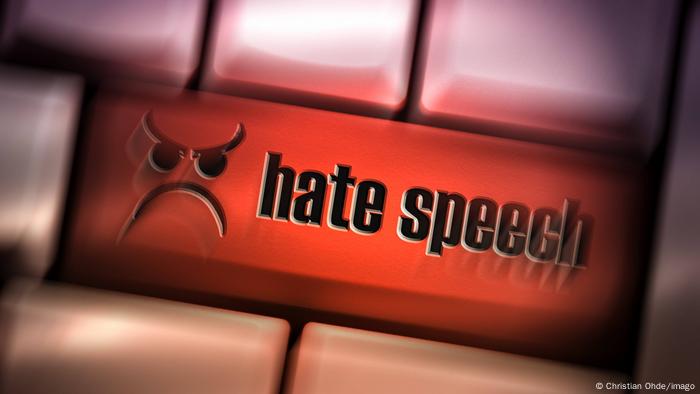
Deutsche Welle carries a long but interesting piece on “What impact is hate speech having on climate activism around the world?”
From the Philippines to Brazil and Germany, environmental activists are reporting a rise in online abuse. What might seem like empty threats and insults, can silence debate and lead to violence.
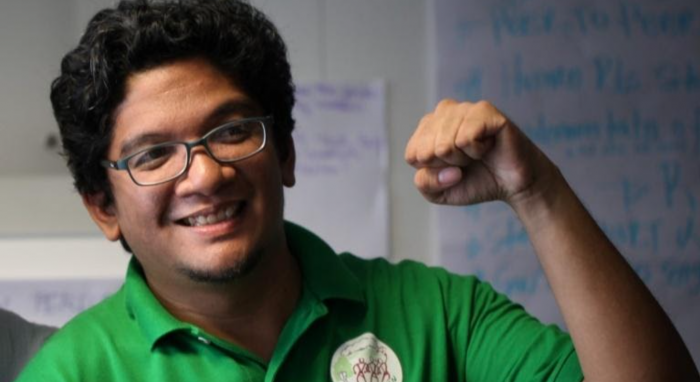
Renee Karunungan, an environmental campaigner from the Philippines, says being an activist leaves you “exposed” and an easy target for online hate. And she would know. “I’ve had a lot of comments about my body and face,” she says, “things like ‘you’re so fat’ or ‘ugly’,” she says. “But also, things like ‘I will rape you‘.” Such threats were one reason she decided to leave the country.
There isn’t much data on online abuse against environmentalists. But Karunungan is one of many saying it’s on the rise.
As it becomes woven into the fabric of digital life, we sometimes forget the impact a single comment can have, Karunungan says: “The trauma that an activist feels – it is not just ‘online’, it is real. It can get you into a very dark place.”
“There is also a huge gray zone,” says Josephine Schmitt, researcher on hate speech at the Centre for Advanced Internet Studies, and definitions can be “very subjective.” ..
While no international legal definition exists, the UN describes hate speech as communication attacking people or a group “based on their religion, ethnicity, nationality, race, color, descent, gender or other identity factor.”
According to several researchers and activists, environmental campaigning also serves as an identifying factor that attracts hate.
“Environmental defenders are attacked because they serve as a projection surface for all kinds of group-based enmity,” says Lorenz Blumenthaler of the anti-racist Amadeu Antonio Foundation.
Blumenthaler says his foundation has seen an “immense increase” in hate speech against climate activists in Germany – and particularly against those who are young and female. This year Luisa Neubauer, prominent organiser of Germany’s Fridays for Future movement, won a court case regarding hateful comments she received online. This came after far-right party Alternative für Deutschland’s criticisms of Greta Thunberg included likening her to a cult figure and mocking her autism.
In Bolsonaro’s Brazil, for example, Mary Menton, environmental justice research fellow at Sussex University, says in there is often a fine line between hate speech and smear campaigns. She has seen an increase in the use of fake news and smear campaigns – on both social and traditional media – aiming to discredit the character of Indigenous leaders or make them look like criminals. Coming from high-level sources, as well as local lobbies and rural conglomerates, these attacks create an atmosphere of impunity for attacks against these Indigenous activists, Menton says, while for activists themselves, “it creates the sense there is a target on their backs.“..
Some of it comes from international “climate trolls” calling climate change a hoax or the activists too young and uninformed. But the most frightening come from closer to home. “Some people outrightly say we are terrorists and don’t deserve to live,” Mitzi says. In Philippines, eco-activists are targets for “red-tagging” – where government and security forces brand critics as “terrorists” or “communists.”
Global Witness ranks it the second most dangerous place in the world for environmental defenders, with 46 murders last year, and Mitzi believes there is a clear link between hate speech online and actual violence.
Online hate can delegitimize certain political views and be the first step in escalating intimidation. Mitzi says many environmental groups are frightened of having their offices raided by the police and have experienced being put under surveillance.
Ed O’Donovan, of Irish-based human rights organization Frontline Defenders says in contrast to the anonymous targeting of human rights defenders by bots, attacks on climate activists “often originate with state-controlled media or government officials.”
And they can serve a very strategic purpose, dehumanizing activists so that there is less outrage when they are subject to criminal process, or even attacked and killed. Extractive industries and businesses are also involved, he adds, highlighting how “very calculated” hate speech campaigns are used to divide local communities and gain consent for development projects.
Indigenous people protesting against large-scale projects, like these activists against a mine in Peru, are particular targets for hate campaigns For those invested in suppressing climate activism, Wodtke says hate speech can be a low-cost, high-impact strategy. For environmental defenders, it diverts their “attention, resources and energy,” forcing them into a position of defence against attacks on their legitimacy. …
Arnold Joaquín Morazan was shot dead in his home in Guapinol, a small low-income community on Honduras’s north coast, earlier this week in what is being reported as a murder by local media.
Morazán Erazo belonged to the Guapinol environmental group, whose imprisoned activists were recently shortlisted for the EU’s Sakharov Prizefor freedom of thought. [see: https://humanrightsdefenders.blog/tag/guapinol-activists/]
On 27 September 2020, in the central Honduran city of Comayagua, two unidentified individuals on a motorcycle shot Almendares, a local freelance journalist, three times and then fled the scene; bystanders brought the journalist to a local hospital, and he was then transferred to the Escuela Universitario hospital in the capital city of Tegucigalpa, where he died yesterday morning, according to newsreports and a report by Honduran free expression organization C-Libre.
“Honduran authorities must do everything in their power to conduct a credible investigation into the killing of journalist Luis Alonzo Almendares, determine whether it was related to his work, and prosecute those responsible,” said CPJ Central and South America Program Coordinator Natalie Southwick, in New York. “Violence against journalists is happening with terrifying frequency in Honduras, and impunity prevails in almost all cases. The government must act urgently to show that the killers of journalists will be held to account.
Joe Parkin Daniels in Bogotá Colombia reports for the Guardian of 8 October 2020 on the latest Amnesty International study entitled “Why Do They Want To Kill Us?” and published on Thursday. It identified four areas of the country as particularly dangerous for activists: Buenaventura; the Amazonian province of Putumayo; the war-torn Catatumbo region on the Venezuelan border; and the Kubeo-Sikuani indigenous settlement in the eastern planes
Activists in Colombia have warned that they continue to face extermination despite the coronavirus pandemic, as Amnesty International accused the country’s government of doing little to protect them.
At least 223 social leaders – community activists defending human, environmental, and land rights – have been murdered this year, according to local watchdog Indepaz.
“We are being massacred, drop by drop,” said Danelly Estupiñán, who leads the Black Community’s Process (or PCN), an activist group dedicated to Afro-Colombian rights, in Buenaventura, an Afro-Colombian port city on the Pacific coast. Estupiñán has received countless death threats, been followed by suspicious men, and had her house broken into in recent months
“For years, Colombia has been one of the world’s most dangerous countries for people who are defending human rights, territory, and natural resources,” Erika Guevara-Rosas, Americas director at Amnesty, said in a statement to media on Thursday.
“Defenders will continue to die until the government effectively addresses structural issues such as the deep inequality and marginalization suffered by communities, ownership and control of the land, substitution of illicit crops, and justice,” Guevara-Rosas went on to say.
Human rights defenders across the country told Amnesty International’s researchers that the Covid-19 outbreak has also prompted authorities to reduce the protection arrangements – including state-provided bodyguards and armoured vehicles.
A historic 2016 peace deal between the Colombian government and what was then Latin America’s largest rebel group, the Revolutionary Armed Forces of Colombia (or Farc), was supposed to end decades of the bloodshed.
But though the accord formally ended five decades of civil war that killed 260,000 and displaced over 7 million, only a small fraction of its provisions have been implemented, while violence continues to rattle the countryside as Farc dissidents, other rebel militias, and cartels jostle for control.
On 24 September.2020 the International Service for Human Rights (ISHR) published the human rights defender’s story of Leon Dulce from the Philippines. Leon Dulce is the National Coordinator for Kalikasan People’s Network for the Environment, an organisation that prevents environmental exploitation and protects marginalised communities from harm caused such exploitation. Working closely with different networks and alliances, his responsibilities include legislative advocacy, undertaking fact-finding investigations, facilitating grassroots dialogues, and engaging with government agencies.
Hi Leon, tell us about yourself and how you decided to defend human rights
I am Leon Dulce, a 31 year-old environmental defender from the Philippines. Choosing the path less travelled in protecting our right to a balanced and healthful ecology was a confluence of factors throughout my life, from the formative influence of my parents, both development workers, to my exposure to student activism in the University of the Philippines. The life-changing decision to be a full-time activist came in 2011 when I decided to join the Kalikasan People’s Network for the Environment (Kalikasan PNE) to be one of its youth organisers. I haven’t turned back ever since.
How does defending rights affect your personal life?
Being an environmental defender has shaped my worldview to live with simplicity, to tap your inner humanity, to be conscientious of your work knowing the lives of people and our planet itself are at stake. I echo the words of Albert Einstein, “Man can find meaning in life, short and perilous as it is, only through devoting himself to society.”
At the 2017 International Human Rights Day protest mobilisations in the Philippines. Photo credit to Kalikasan PNE
What continues to inspire you to defend human rights?
We continue to be inspired by the living, breathing victories of people power in working towards a better world. We have seen that it is possible for corporations to be shuttered down and made to pay reparations, murderous generals put in jail, and fascist dictators to be toppled and held to account, all at the hands of people power.
Businesses should realise that the whole of society benefits from a premium investment in due diligence for our rights, environment, and climate. When nobody is left behind, everyone is on board to push through with building the cogs and wheels of society.
There are no shortcuts, especially with multiple conflicting interests over natural resource-rich environments where the powerful can easily override the marginalised.
Are you encountering any threat because of your work, and if so, what could be done at national / international level to help you work in safer conditions?
We have been repeatedly tagged as enemies of the State in a worsening crackdown on human rights defenders by the regime of President Rodrigo Duterte. Our office has been constantly harassed and almost raided by the police last year. Our members on the ground have been murdered in the dead of the night.
We hope the international community joins us in urging the United Nations to conduct an independent investigation into the human rights situation in the Philippines. We hope the inquiry would lead to greater action from UN experts and member States to hold the Duterte regime to account.
What is your hope for the future?
I hope to live in that better world, a just and humane society in harmony with nature and climate, before I come to the end of my days.
What was the human rights problem you were addressing?
We are campaigning with local indigenous Tuwali communities to close down the 10,266-hectare Didipio gold-copper mine of Australian-Canadian corporation Oceanagold. This mining project has figured in a long history of civil-political and socio-economic rights violations against the indigenous communities in the remote mountain villages of Kasibu Municipality since it acquired a contract over the mineralised lands it currently operates on in Nueva Vizcaya province in 2006.
Why did you decide to choose this UN mechanism to help you solve it?
We decided to engage with the UN Special Procedures hoping that a communication from UN Special Rapporteurs would pressure the Duterte government to take action, even in spite of its bristling stance against the UN.
If the Special Rapporteurs respond with a country visit, whether formal or academic, it would create high-profile attention for the Tuwali people’s struggles against Oceanagold. It would be a show of solidarity that would raise the morale of the defenders on the ground.
What happened at the UN?
On 13 February 2019, a total of nine Special Procedures mandate holders sent a joint communications letter to the Duterte government echoing the human rights concerns we raised.
Later, on 30 April 2020, Special Rapporteurs would cite this communication once again in urging the Duterte government to respect indigenous people’s rights in response to an earlier violent dispersal of the Tuwali protester’s ongoing barricade against the mine.
What was the impact on the ground?
We believe the intervention from the UN experts is a significant factor in making the Duterte government think twice from railroading then the impending renewal of Oceanagold’s contract agreement.
The UN Communication helped create the momentum that led to the provincial government’s issuance of a restraining order against the Oceanagold mine, and the community organisations’ launching of a people’s barricade enforcing this restraint through direct action.
Do you have any tips for other defenders using this mechanism?
Crucial to our success in engaging the UN Special Procedures is in how we strategically located it within an interplay of various advocacy tactics. The UN intervention fed into the direct action of organised communities of defenders, and helped galvanise a broad support network from churches, local governments, and civil society.
The intervention was also leveraged in a communications and lobbying strategy that exposed the national government’s collaborationism with irresponsible big businesses, discouraged their usual ‘rubber-stamping’ for these mining corporations, and deterred full-on reprisals against the defenders.
September 30, 2020 from 10:00 AM – 11:00 AM EDT there will be an Online meeeting on the “Implementation of the Human Rights Council Resolution A/HRC/40/ on Environmental Human Rights Defenders and the Geneva Roadmap” by the World Resources Institute (WRI)
This session aims to explore how civil society organizations can use the UN Resolution A/HRC/40/L.22/. The session also intends to discuss the “ Road Map to Geneva” which was created in April of this year to facilitate international engagement on processes that support defenders at the national and international level. Join us as we highlight the work of the new Special Rapporteur on Human Rights Defenders and her vision as well as provide a practical list of events that can move the agenda forward.
Speakers
Ms. Mary Lawlor,Special Rapporteur on the situation of human rights defenders
Peter Bille Larsen, University of Geneva
Enteng Bautista,National coordinator of Kalikasan People’s Network for the Environment, Philippines
On 8 September 2020 the Observatory for the Protection of Human Rights Defenders, a partnership of the World Organisation Against Torture (OMCT) and FIDH, requests urgent intervention in the arbitrary arrest of Mother Nature activists Thun Ratha, Long Kunthea and Phoun Keo Reaksme in Cambodia.
The three environmental activists and members of “Mother Nature”, were arrested for denouncing the exploitation of Phnom Penh‘s Bueng Ta-mouk lake. The project aims to build a military base, which will destroy the habitat of many bird species and damage biodiversity, and is also expected to cause significant flooding in Phnom Penh. According to the information received, on September 3, 2020, Ms. Long Kunthea and Ms. Phoun Keo Reaksmey were arrested by police in Phnom Penh as they were about to walk from Wat Phnom to Prime Minister Hun Sen’s house in order to request a meeting with the Prime Minister to share their concerns over a number of environmental issues, including the development of Bueng Ta-mouk lake. On the same day, Mr. Thun Ratha was arrested at his home in Khan Pur Sentchey District, Phnom Penh, by around 25 police officers, who surrounded the property for approximately two hours before arresting him. The police padlocked the property shut and left a letter displayed on the door informing that the operation was taken on the grounds that Mr. Thun Ratha “published the information without legal permission”, without specifying which information was published or what the legal grounds were for requiring permission over such a publication.
On September 6, 2020, the three were charged with “incitement to cause societal chaos” (articles 494 and 495 of the Cambodian Criminal Code) and placed in pre-trial detention. They could face up to two years in prison. Mr. Thun Ratha was taken to the Correctional Center 1 while Ms. Long Kunthea and Ms. Phoun Keo Reaksmey were taken to the Correctional Center 2.
The Observatory reiterates its deepest concern about the fact that Cambodian authorities regularly use legal harassment and the politicised judicial system to target land and environmental activists and recalls in particular that this is not the first time that Mr. Thun Ratha and other Mother Nature activists have faced harassment.
In the Pozo Aguarico region of Ecuador, lawyer Maria Cecilia Herrera shows the oil pollution that remains in the ground 30 years after oil production ceased. Photograph by Enrico Aviles, 2020.
After recalling the work and death of his friend Rosan Steve relates how the culprit, the oil giant Chevron, has been pursuing a scorched-earth campaign to avoid paying for the cleanup or helping any of the victims. In the process, Chevron and its main law firm – Gibson Dunn – has pioneered a new, highly unethical form of lawfare intended to intimidate environmental defenders in all 180 countries where it operates. I should know; I’m the main target of Chevron’s lawfare, which has involved 60 law firms and 2,000 lawyers.
Here’s some of the backstory. Multiple courts have found that from the late 1960s to 1992, Texaco deliberately dumped billions of gallons of cancer-causing oil waste across 1,500 square miles of previously pristine rainforest, poisoning groundwater and rivers residents depended on for drinking, bathing, and fishing. Texaco, which was later acquired by Chevron, told local Indigenous peoples that the toxic waste was actually good for them, saying it would “nourish the brain and retard aging.”
In 1993, a coalition of 30,000 Indigenous peoples and rural communities fought back. The father of one of my Harvard Law School classmates asked me to join the team of Ecuadorian and American lawyers representing them. After hearing from leaders like Rosa and seeing the damage with my own eyes, I was appalled by what Texaco had done to these communities. Unlike BP’s Deepwater Horizon spill in the Gulf of Mexico, this disaster was no accident. It was done by design to externalize production costs onto some of the most vulnerable communities on the planet—the very people whose historical role is to act as the guardians of the forest.
After years of fighting in courts in the U.S., Ecuador, and Canada, the coalition won an unprecedented $9.5B in damages. Several appellate courts and a total of 17 appellate judges affirmed the case unanimously, and Canada’s Supreme Court ruled the Ecuadorians had the right to enforce their judgment. Human-rights champions hailed the victory as the beginning of a new era of environmental accountability.
But then Chevron unveiled another component of its strategy to try to prevent the Indigenous plaintiffs from receiving a cent. The central feature was filing a civil RICO suit in U.S. federal court against me as well as all 47 Ecuadorian community leaders who signed the lawsuit, claiming that the entire case on which I had spent 18 years of my life had been nothing more than a “racketeering” conspiracy designed to “extort” money from the company. Judge Lewis Kaplan denied us a jury, refused to review any of the voluminous scientific proof of Chevron’s pollution, and then ruled in Chevron’s favor. He based his decision almost completely on the testimony of a man who later admitted to lying repeatedly under oath and to receiving huge payments from the company.
I continue to challenge Kaplan’s flawed decision, which has been rejected by multiple appellate courts in Ecuador and Canada. But largely because I would not turn over my computer and cell phone to Chevron (an order that many experts believe to be a violation of attorney-client privilege and one that I have appealed), Kaplan tried to prosecute me criminally for contempt. His charges were rejected by the federal prosecutor. Kaplan then took the extraordinarily rare step of appointing a private law firm, Seward & Kissel, to prosecute and detain me in the name of the government. Seward & Kissel later admitted that Chevron is actually a client of the law firm.
While I await my day in court, I’m now under house arrest. (I believe I’m the only lawyer in U.S. history detained pretrial on a contempt charge.) I’ve been confined to my small apartment for 12 months on a charge that carries a maximum of six months’ imprisonment. This has been incredibly hard on my 14-year old son as well as my clients, who have been denied their lawyer. Chevron clearly wants me confined so I can no longer work on the case or speak publicly about the company’s gross wrongdoing.
Two weeks ago, two retired U.S. federal judges provided a big boost. The Hon. Nancy Gertner (Harvard Law School) and the Hon. Mark Bennett (Drake University Law School) criticized their former colleague Kaplan in the news journal Law360 for the way he’s handled this case. I’m grateful for their courage, because it’s extremely rare for federal judges to call out colleagues publicly.
Please vote with your wheels and fill up your tank anywhere but Chevron. And I hope governments around the world will stand up to attempts to criminalize peaceful activism. They can start by refusing to do business with Chevron until the company learns to respect the rule of law and ceases its attacks on human rights defenders. We must not let this targeting of human rights defenders spread as quickly as the toxins that killed Rosa and the men, women, children whose names filled her notebook.
Steven Donziger is a human-rights advocate based in New York City. He can be followed on Twitter at @SDonziger. His legal defense fund is at www.donzigerdefense.com and Frente de Defensa de la Amazonía’s web site is makechevroncleanup.com
More than half the killings were in Colombia and the Philippines and indigenous people made up 40% of the victims, the Britain-based group said inn its report. It was a significant rise on 2018, when 164 killings were recorded.
The threat from mining and large-scale agriculture caused the most number of deaths, with these sectors also responsible for worsening climate change impacts, Global Witness said.
“Insecure land tenure, irresponsible business practices and government policies that prioritise extractive economies at the cost of human rights are putting people, and their land, at risk,” said Rachel Cox, a campaigner at Global Witness.
“Land and environmental defenders play a vital role in protecting climate-critical forests and ecosystems. When they take a stand against the theft of their land, or the destruction of forests, they are increasingly being killed,” she said.
Latin America accounted for more than two-thirds of all victims last year, with Colombia the deadliest country of all, with 64 killings.
In Asia, the Philippines had 43 killings compared to 30 the previous year, with six in India, three in Indonesia and one in Cambodia, according to Global Witness.
Many more were attacked, arrested, threatened and sued, said Global Witness, which recorded killings in 21 countries.
In the Philippines – which was the deadliest country in 2018 – “relentless vilification” of activists by the government and impunity for attackers may be spurring an increase in killings, it said.
A spokesman for President Rodrigo Duterte did not respond to requests for comment.
At least 119 activists and farmers have been killed since Duterte took office in 2016, according to Global Witness, while local campaign groups put the figure at about 200.
Dozens of United Nations experts last month called for an independent investigation into human rights violations in the Philippines, including killings of farmers and indigenous people.
The coronavirus pandemic has accelerated the “downward spiral of the human rights situation”, and a new anti-terrorism bill could be used to target activists, they said.
“Days after the act was signed, the harassment of human rights defenders has visibly worsened,” said Cristina Palabay, secretary general of Philippine human rights advocacy group Karapatan.
“While rural communities, including indigenous peoples, grapple with the impact of COVID-19, they are constantly hounded by military operations that benefit mining corporations encroaching on their ancestral land,” she said.
Two of the country’s biggest agribusiness brands – Dole Philippines and Del Monte Philippines – earlier this year said they would review their processes to better protect land rights.
But attacks against activists during coronavirus lockdowns signalled more violence worldwide, Cox said.
“Governments around the world have used the crisis to strengthen draconian measures to control citizens and roll back hard-fought environmental regulations,” Cox told the Thomson Reuters Foundation.
Resistance inspires. Defiance in the face of a violent, oppressive culture can inspire another person’s defiance. Even when an uprising is only beginning, when the path forward is unclear, it is essential to resist. All together. The goal: to defeat a system fundamentally, historically, and intentionally based on mass exploitation in the interest of profit for a privileged few.
The environmental movement can learn from those who come from a tradition of resistance and have organized their struggle in movements like Black Lives Matter and Idle No More, founded by First Nations. The protests enveloping our country today are seeded by centuries of injustice and violence, by underlying power imbalances and inequalities that have never been truly addressed. The founders of these social movements knew then and now that they cannot combat violent oppressors through pure persuasion. So they resist.……….
Environmentalists and justice activists cannot stay isolated in their movements. To be effective at combating climate change and countless other social and environmental injustices, we must acknowledge the links between the abuse of nature and people, and devise strategies to protect the planet, to resist its demise – even when doing so is frightening. Especially then. Ultimately, resisting mass exploitation on all fronts is the only thing that will make us safer.
For many — especially people of color — the impacts of climate change and the degradation of environmental harm are not a future concern. It is life or death, and it’s happening now. If we want to reverse the losses, we need to begin to speak honestly to each other about the long history of abuse that has led to the unrest, rage, and grief that we feel today. We need to confront how power works in society, including in regions where exploitation of indigenous people and the ecosystems they call home go unnoticed by mainstream media….
In addition to poverty, lack of clean air, safe drinking water, health care, and more—all of which lead to “preexisting conditions”—many communities of color are confronted with the threat of coronavirus and are more vulnerable to the pandemic. Reports estimate that people of color are twice as likely to die from COVID-19…….
The author provides several examples from her own field work and experience……
How can we endeavor to protect the planet when its frontline defenders are being killed or intimidated by state-sanctioned violence? How can we expect to solve the climate crisis if our strategies do not include protecting life above corporate, government, and elite interests? Again, environmental advocates can learn from movements born from violent exploitation who are organizing to resist that violence.
Viable movements need supportive cultures to sustain them. They require healthy norms of behavior, processes to handle conflict, and ways to defeat destructive internal divisions and competition that stymie even the best-intentioned efforts toward progress. Horizontal hostility—a concept defined by Florynce Rae Kennedy, an African American lawyer, feminist, civil rights advocate, lecturer, and activist—occurs when activists fight against each other over differences rather than vertically against the oppressor. This behavior leaves relationships, activist networks, and movements in shreds.
A livable planet for all requires solidarity, using our shared principles and humanity to rise together to protect nature and banish injustice.
Cayte Bosler is a student in Columbia’s Sustainability Management masters program.