Hailing from Somalia, Ukraine, Venezuela and Uganda, the 2022 Laureates have each created new models for human and societal interactions that challenge the status quo. With crises stemming from authoritarian governance, international aggression, profit-seeking economic systems and political inertia to take action against a planetary climate breakdown, these change-makers have imagined a better world and work tirelessly to make it a reality.
“The 2022 Right Livelihood Laureates are grassroots actors dedicated to strengthening their communities. In the face of failing governance and a breakdown of order – including wars, terrorism, extractivism, massive displacement and economic crises – they have established new, human-centric systems. Their successes demonstrate how we can build societies on the principles of justice rather than exploitation,” said Ole von Uexkull, Executive Director at Right Livelihood.
Meeting in Prague the panel – made up of independent figures from the world of human rights and chaired by Tiny Kox, the President of the Parliamentary Assembly of the Council of Europe (PACE) – decided to shortlist the following three nominees, in alphabetical order:
Rainbow Coalition/Invalid Campaign for LGBTQIA+ rights, Hungary
The nominee is a coalition of human rights organisations, LGBTQIA+ rights groups and other civic movements. The Rainbow Coalition has been campaigning and mobilising support for the defence of LGBTQIA+ rights in Hungary.
Ukraine 5 AM Coalition
The nominee is a coalition of Ukrainian human rights organisations whose aim is to uncover, document, collect and preserve evidence, while raising awareness of alleged war crimes and crimes against humanity committed in Ukraine during the ongoing war of aggression by the Russian Federation.
Announcing the panel’s choice, the PACE President said that the Council of Europe has worked since its creation to safeguard freedom, the rule of law and social justice on the continent. “Every year, the Václav Havel Human Rights Prize celebrates concrete, courageous and determined action by women, men and organisations who defend human rights. Their courage and determination in standing up for basic principles of justice and fairness deserve our profound respect and gratitude,” he added.
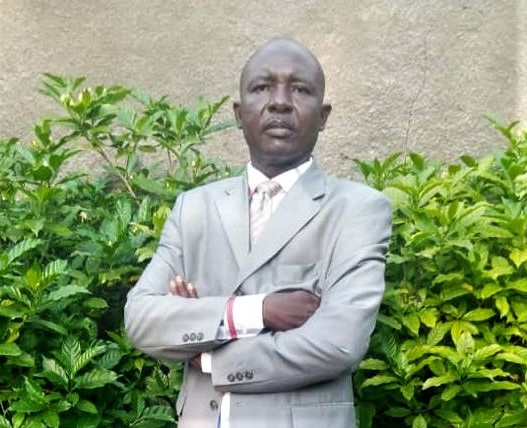
The Rafto Prize 2022 is awarded to Nodjigoto Charbonnel and his organization Association Jeunesse pour la Paix et la Non-Violence (AJPNV), “Youth for peace”, for their courageous struggle to abolish torture in Chad as well as internationally. In the context of authoritarianism, terrorism, war on terror and institutionalized violence, and at great personal risk, Charbonnel and his team assist survivors in rebuilding their lives after torture, and advocate the protection of human rights, and the prevention of torture and sexual violence by providing human rights education for youth and civil society.
For more on this award and its laureates, see: https://www.trueheroesfilms.org/thedigest/awards/A5043D5E-68F5-43DF-B84D-C9EF21976B18. Since the year 2000, AJPNV has conducted programs for the rehabilitation of victims of torture, the promotion of peace and non-violence and the prevention of torture in Chad. The need is overwhelming: in 2021, the organization treated 575 torture survivors. AJPNV provides medical, psychological, and legal support, free of charge, to victims of torture and sexual violence to reduce its somatic, psychological, and social harm. They assist the reintegration of victims of sexual violence through vocational training and prevent torture through education on the effects of torture on the individual and on the society.
Nodjigoto Charbonnel became familiar with the long-term harm and suffering caused by torture after his father survived mistreatment by state authorities. This experience motivated Charbonnel to found AJPNV. For 8 years he worked as an engineer at an international oil and gas production company, but in 2012 they terminated his contract because of his human rights work. Charbonnel serves as the Sub-Saharan Africa Council member of the International Rehabilitation Council for Torture Victims and as a regional leader of the Global Human Rights Project. Due to his work, Charbonnel has been detained and imprisoned three times. He and his family have also suffered harassment by state agents. Despite the political repression, Charbonnel and his AJPNV team maintain a clear voice for the victims of torture and sexual violence: “We reaffirm our commitment to shed light on those who commit torture, to expose their violation, to prevent future acts of torture, to ensure justice“
The Brunet Foundation at the Public University of Navarre has published its Call for nominations for their International Jaime Brunet Prize to promote and disseminate the protection of human rights and contribute to the eradication of degrading and inhumane treatment. See also: https://www.trueheroesfilms.org/thedigest/awards/14B9DC4A-B689-D56A-2825-8E11E6374C3E.
The 2022 call is governed by the following guidelines:
The 2022 Jaime Brunet Prize is called with the aim of distinguishing: a) Work related to Human Rights. b) A career dedicated to the promotion of Human Rights.
The prize consists of a diploma, a sculpture commemorating the award and €36,000 in cash.
The prize may be awarded to the following, regardless of their status or nationality: a) Individuals. b) Work teams. c) Institutions or agencies.
Nominations can be presented by the nominees themselves or by third parties using the official form, which can be downloaded from: www.unavarra.es/conocerlauniversidad/fundacion-jaime-brunet It should be accompanied by a reasoned justification no longer than 20 pages.
If desired, this document may be submitted together with up to ten reasoned endorsements. The Board of the Brunet Foundation may present and endorse new candidates. It will also re-present the non-winning candidates from the two previous years.
Candidates can be nominated in Spanish, Basque, English and French and should be sent by email to t: fundacion.brunet@unavarra.es
The deadline for applications closes on September the 30th 2022.
Proposals will be examined by a Jury designated by the Board of the Foundation, which shall meet at the Public University of Navarre. The announcement of the winner of the 2022 Brunet Prize shall take place, as far as possible, on the anniversary of the Universal Declaration of Human Rights, on 10th December 2022.
On 30 August, 2022, the International Day of the Disappeared, the international community must recognize and respond to the widespread use of enforced disappearances in the People’s Republic of China, say an impressive group of NGOs (see list a the end):
Just over five years ago, on 13 August 2017, human rights lawyer Gao Zhisheng vanished for the third time. Gao, praised as the ‘Conscience of China’, had long fought for the rights of those who dared to speak out, who belonged to religious minorities, who were evicted from their homes when their land was seized, or who protested against exploitation. For that, he was in and out of prison and separated from his family for nearly a decade. For more than five years, his wife and children have had no idea of his whereabouts, nor even if he is alive. [see: https://www.trueheroesfilms.org/thedigest/laureates/33C77656-F58B-454E-B4C7-E1775C954F14]
Gao Zhisheng’s case is severe, and yet represents only the tip of the iceberg: many other activists and lawyers face a similar fate, such as Tang Jitian, disappeared in 2021, tortured, and detained in a secret location. UN experts, including the Working Group on enforced disappearance, have sounded the alarm from as early as 2011 about the use of enforced disappearances against those taking part in China’s human rights movement. It is used to silence those promoting rights and freedoms, to enable acts of torture and ill-treatment without any oversight, and to send a chilling message to any person who may dare to criticize the government.
The UN Secretary-General Antonio Guterres echoed this when he reminded the international community that enforced disappearance is a ‘method of repression, terror, and stifling dissent’. Relatives – themselves also victims of this crime– are deprived of their right to justice, and to know the truth, constituting a form of cruel and inhumane treatment for the immediate family.
But no matter how powerful a country is, no matter what security challenges (real or perceived) they may face, the experts rightfully emphasize: ‘There can never be an excuse to disappear people.’ Enforced disappearances are strictly prohibited under international law under any circumstances, and may constitute a crime against humanity when committed as part of a widespread or systematic attack against any civilian population.
The Chinese government continues to ignore calls for it to ratify the International Convention for the Protection of All Persons from Enforced Disappearance. It has disregarded requests for over nine years by the UN’s Working Group on Enforced and Involuntary Disappearances to visit the country, including its most recent on 7 January 2022. In the meantime, the number of cases of individuals disappeared presented before the Working Group soared, reaching 214 by 2021, out of which 98 remain outstanding.
It is urgent that the UN, governments, and civil society worldwide press China to end, unequivocally, all forms of enforced disappearance.
UN experts and civil society actors have documented many practices used by the Chinese authorities amounting to enforced disappearance. Some are written into Chinese law, or Chinese Communist Party guidance; others happen outside the scope of China’s own laws. Some target individuals for their actions or speech; others are wielded with the intent to terrorize a particular ethnic or religious community.
Residential Surveillance at a Designated Locations(RSDL)
‘Residential Surveillance at a Designated Location’ is allowed for in China’s Criminal Procedure Law, and authorizes holding someone in custody – prior to arrest – for up to six months in an undisclosed location. This ‘location’ is unofficial, selected at the discretion of the police, and the individual is isolated in solitary confinement without access to family, counsel or options to appeal the measure. This is especially true for those activists and dissidents accused of ‘national security crimes’. Incomplete government data admits to use of RSDL in some 23,700 instances, but civil society estimates that for the period 2013 to 2021, the real figure is closer to 85,000, with increased use over time. The practice continues despite having been condemned by UN experts as ‘a form of enforced disappearance’ that ‘may per se amount to cruel, inhuman or degrading treatment or punishment, or even torture.’ The experts’ assessment is clear: RSDL must be repealed. [see also: https://humanrightsdefenders.blog/2022/02/05/chinas-residential-surveillance-at-a-designated-location-needs-to-disappear/]
Liuzhi system
The liuzhi (留置) extralegal detention system mimics the practice of RSDL, but is used to specifically punish any public servant or Chinese Communist Party (CCP) member who allegedly ‘violates duties’ or commits ‘economic crimes,’ potentially reaching nearly 300 million victims. As with RSDL, liuzhi detentions can last up to six months, holding victims incommunicado and in solitary confinement at undisclosed locations. Yet, detentions are outside the scope of China’s laws, including the Criminal Procedure Law, as liuzhi is not part of the criminal justice system. Instead, it is run by China’s powerful extra-judicial anti-graft watchdog, the National Supervision Commission (NSC), a quasi-state body answerable only to the CCP. Legal safeguards, including the right to legal counsel, do not apply to individuals investigated under liuzhi, until and unless their case is sent for criminal prosecution. Incomplete official data acknowledges 11,000 individuals held under liuzhi; civil society estimates actual figures to surpass 57,000 disappeared victims. UN experts addressed a general allegation on this issue to China in September 2019.
Psychiatric incarceration (ankang)
Since the 1980s, China’s Ministry of Public Security has locked up individuals targeted for their political and religious beliefs in psychiatric hospitals for the criminally insane, known as ankang (安康) (‘peace and health’). Despite legal reforms, police continue to send human rights defenders for compulsory treatment without medical justification in both ankang facilities, and psychiatric hospitals for the general public. Civil society data indicates this is a regular, large-scale practice, where victims are denied contact with the outside world and often subjected to torture and ill-treatment, while families are not informed about their relatives’ forced hospitalization.
Enforced disappearance in Tibet
The Chinese authorities continue to disappear Tibetans, including religious leaders, critics and influential thinkers, subjecting them to torture and ill-treatment, and employing the threat of disappearance to instill widespread fear across Tibet. In February 2022, six UN experts raised concern over the physical well-being of Tibetan musician Lhundrup Drakpa, writer Lobsang Lhundrub, and school teacher Rinchen Kyi, arrested and disappeared ‘in connection with their cultural activities in favour of the Tibetan minority language and culture.’ In July 2021, four UN experts expressed similar concern over the enforced disappearance of Rinchen Tsultrim and Go Sherab Gyatso, pointing to a ‘worrying pattern of arbitrary and incommunicado detentions (…) against the Tibetan religious minority, some of them amounting to enforced disappearances.’
The 11th Panchen Lama, Gedhun Choekyi Nyima, one of the most important Tibetan Buddhist leaders, was disappeared in 1995 at the age of six. The Chinese government continues to ignore calls for his release, UN experts’ concerns, or the UN child rights committee’s request for access to establish his whereabouts and health.
Enforced disappearance in the Uyghur region
Beginning in 2017 in the Xinjiang Uyghur Autonomous Region (XUAR, or Uyghur Region), Uyghurs and Turkic Muslims have been detained incommunicado by Chinese government officials in internment camps, forced labor facilities, official prisons where they serve lengthy sentences, and other facilities where they are at risk of being subject to forced labor. Reports to the UN Working Group on enforced disappearances escalated dramatically, indicating a widespread and systematic practice. While the Chinese government refers to these camps as ‘vocational education and training centers’, administrative detention in the camps has no basis in Chinese, or international law.
Journalists and NGOs have reported countless testimonies of people whose family members are or were missing and believed to be detained in the XUAR, and yet who have no way to establish their family members’ whereabouts. They almost never receive official confirmation regarding their family member’s status from the Chinese authorities; efforts to gather information from Chinese consulates or embassies abroad have been largely unsuccessful. Very few detainees are allowed contact with the outside world. Even nominally ‘free’ Uyghurs living in XUAR have been effectively forbidden to speak with their family or friends abroad. Uyghurs in the country and overseas are wholly deprived of their right to truth.
We, the undersigned organizations, urge the international community as a whole to ensure sustained attention and take meaningful action to put an end to all forms of enforced disappearance in China. The authorities must release all those disappeared, ensure their relatives’ right to truth, justice, reparation, and guarantees of non-recurrence.
We stand in solidarity with all those missing, and with their loved ones, left longing for them to return alive.
On 29 August 2022, on the occasion of the International Day of Victims of Enforced Disappearances, AFAD, FIDH, Maayer Daak and Odhikar urge the government of Bangladesh to: 1) Halt all enforced disappearances and immediately return all disappeared persons to their families. 2) Set up an independent mechanism to investigate all cases of enforced disappearances. 3) Refrain from all forms of reprisals against human rights defenders, family members of the disappeared, and civil society activists, and ensure the safety and security of victims and their families. 4) Hold all perpetrators accountable. 5) Ratify the International Convention for the Protection of All Persons from Enforced Disappearance. 6) Adopt and implement domestic legislation criminalizing enforced disappearance in line with international law.
The Asian Federation Against Involuntary Disappearances (AFAD) is a federation of human rights organizations working directly on the issue of involuntary disappearances in Asia. AFAD was founded on 4 June 1998 in Manila, Philippines and was the recipient of the 2016 Asia Democracy and Human Rights Award. See: https://www.trueheroesfilms.org/thedigest/laureates/5E526725-F43B-83FB-3B7E-2B3C56D01F60 The International Federation for Human Rights (FIDH) is the world’s oldest non-governmental human rights organization. Founded in 1922, FIDH federates 192 member organizations from 117 countries. Its core mandate is to promote respect for all the rights set out in the UDHR. http://www.fidh.org Maayer Daak is a platform of the families of victims of enforced disappearances in Bangladesh with the common goal of seeking the whereabouts of their loved ones and advocating for justice. Odhikar is a human rights organisation in Bangladesh, established on October 10, 1994 by a group of human rights defenders, to monitor human rights violations and create wider awareness. It holds special consultative status with the ECOSOC of the United Nations.
On 8 August 2022 Human Rights First announced that Angelo Karlo Guillen, a human rights lawyer in the Philippines, is the winner of the 2022 Roger N. Baldwin Medal of Liberty. The Baldwin Medal will be presented to Guillen in person at an event in the United States later this year.
Michael Breen, President and CEO of Human Rights First said “Angelo Guillen is a courageous and effective advocate whose work has made a difference in the lives of his fellow Filipinos and put a spotlight on abuses and calling for accountability.”
Guillen is a prominent human rights defender and a leader in the National Union of Peoples’ Lawyers (NUPL). He lives and works primarily on the island of Panay, and his legal practice has included a focus on helping document human rights violations and educating farmers and indigenous communities on their human rights under domestic and international law.
In March 2021, after years of being followed, surveilled, and vilified for his work, Guillen survived a brutal stabbing by unknown assailants. The attack followed repeated attempts by government officials and others to depict him and other NUPL lawyers as “terrorists.” Three other NUPL lawyers have been murdered in previous years.
“I am honored to accept the Baldwin Medal, which I do on behalf of all Filipino human rights lawyers and defenders,” said Guillen. “This award will encourage us even more, to continue our work defending human rights and civil liberties in the Philippines, even in these difficult times.
“I am especially glad this award could be announced on the International Day of the World’s Indigenous Peoples, which is also National Indigenous Peoples Day in the Philippines. Indigenous peoples, like the Tumandok community, as well as farmers, labor leaders, and activists, have borne the brunt of unjust arrests, extrajudicial killings, and other human rights violations committed by state security forces that, to this day, still take place throughout the country. Their rights must be protected, and we hope that this recognition will help bring attention to their plight.”
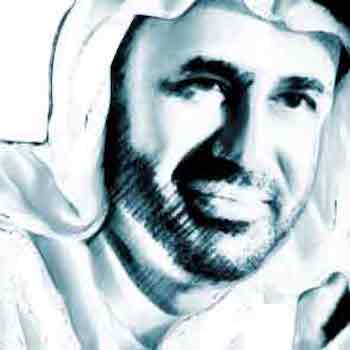
On 22 July 2022 Brian Dooley and Quinn Fulton wrote for Human Rights First a post: “Ten Years But Still Counting – UAE Fails To Release Jailed Activist Al-Roken“
Human Rights First has covered their cases and others for many years, and urged a succession of U.S. administrations to use the influence they have accrued – not least through supplying the Emirates with billions of dollars of weapons – to push for the release of jailed human rights activists there.
The U.S. government knows exactly who Al-Roken is and what he stands for. He has been featured in a succession of U.S. reports describing him as “a human rights activist” (2007), “a lawyer…reportedly held incommunicado and without charge for unknown reasons” (2012), and a “lawyer, academic and human rights defender” (2021).
In 2015, Human Rights First wrote about his wrongful imprisonment, and noted in a report that year on human rights in the Emirates that “Former heads of the Jurists Association are now political prisoners, including renowned constitutional scholar Dr. Mohammed Al-Roken. He is one of dozens serving long prison sentences after being convicted in mass trials.”
We have continued to raise cases through the media of human rights defenders wrongfully detained in the Emirates, and we successfully campaigned for the release of American citizens Mohammed and Kamal Al Darat when they were tortured and detained in the Emirates for over a year.
When calling for Al-Roken’s release, the UN Special Rapporteur on Human Rights Defenders noted that he was jailed on charges of “plotting against the government,” and “subjected to intermittent periods in solitary confinement, allegedly without justification or explanation.” The UN Working Group on Arbitrary Detention said Al-Roken “is reportedly well known for defending victims of human rights violations in the United Arab Emirates,” and deemed his detention as arbitrary.
We know that getting people who have been wrongfully detained in the Emirates out of prison is difficult, but it sometimes can be done if there is substantial international public pressure – as with the Al Darats and the British academic Matthew Hedges.
That’s why it’s important that the Biden administration speaks out publicly about Al-Roken. Our years of advocacy experience tells us that behind-the-scenes diplomacy is unlikely to work..
As a universal language that transcends cultural barriers, music is a medium where people and artists alike can have their voices heard in a manner that words alone cannot. Music has often been used to showcase pressing political and societal issues, including the promotion and protection of human rights. These 15 artists are listed in a post by Human Rights Carreers as examples of those who have used their musical talent and platform to share awareness of human rights issues across the world and bring a voice to marginalized members of society. Many readers will have their own preferences.
Pete Townshend is an English musician, songwriter and vocalist of “the Who” rock band, one of the most influential rock ensembles during the 1960s and 1970s. Alongside his career in the rock music industry, Townshend has a long history of charity and philanthropic work for human rights issues, advocating for greater drug rehabilitation and activism for children’s rights. In 1979, Townshend was the first musician to perform for Amnesty International’s Human Rights Concerts and inspired other renowned rock musicians to support the human rights cause. Townshend is quoted saying, “Amnesty does things that I can’t do in my work. It deals with the specifics of injustice… It makes them public. It was 1979 that I appeared at ‘The Secret Policeman’s Ball’… It was amazing subsequently to see what ‘The Secret Policeman’s Ball’ triggered. Quite big names got involved in supporting Amnesty. And it became apparent that big names in music and Amnesty melded very well. It’s good to see that what I did kicked that off…”
Sting
Performing under the stage name, “Sting”, Gordon Sumner is a Grammy-Award winning guitarist, vocalist and songwriter who is renowned for his work as both a solo musician and an ensemble musician with the rock band “the Police” between 1977 – 1984. Sting is heavily involved in human rights activism, having written songs inspired by his concern for world hunger and oppressive political regimes, and has also extended his activism beyond music by writing an open letter for the decriminalization of drug possession in the United Kingdom in 2011. He has also signed several petitions against the death penalty in Belarus and has cancelled concerts in response to human rights issues in several countries. Sting’s humanitarian activism has been recognized by Amnesty International and he has performed for the NGO’s Human Rights Concerts on several occasions.
Bono
Described as the world’s best known philanthropic performers and most politically effective celebrity of all time by the National Journal, Bono (Paul Hewson) has worked extensively as a rock musician in the band U2, a philanthropist and human rights activist. Focusing much of his efforts into advocating the fight against AIDS and extreme poverty in Africa, Bono has lobbied governmental entities to adopt human rights-based policies under his positions as the co-founder of ONE, a global movement campaigning to end extreme poverty. More recently, Bono raised awareness of vaccination against COVID-19 and vaccine inequality around the world and in April 2022, Bono recorded an acoustic rendition of “Walk On” by his band, U2, for the Global Citizen’s Stand Up for Ukraine livestream, urging global leaders to support Ukrainian refugees. Bono was also invited by Ukrainian president Volodymyr Zelenskyy to perform in a metro station in Kyiv, showing his solidarity to Ukraine under invasion from Russia. See also: https://www.trueheroesfilms.org/thedigest/laureates/292E53F2-AE54-E5BA-BE5B-17ACD95D9B40
Awarded “The Ambassador of Conscience Award” by Amnesty International in 2016, Angélique Kidjo is a Beninese singer-songwriter renowned for her creative music videos and unique musical style that integrates Afropop, Congolese rumba, jazz and Latin music genres. Within her 30-year musical career, Kidjo has been a prominent advocate for the expression of freedom, the education of girls in Africa and has expressed concerns regarding female genital mutilation and has worked as a UNICEF Goodwill Ambassador since 2002. Alongside her major ambassador roles, Kidjo is the founder of The Batonga Foundation, a non-profit organization that empowers women in Benin and upskills these women for socio-economic mobility. See also: https://www.trueheroesfilms.org/thedigest/laureates/B3AF6E27-B7AD-8D1D-C09E-B7EAA953F3C3
Lang Lang
Described as one of the most exciting and accomplished classical musicians in the world, classical pianist Lang Lang has not only revolutionized the classical music industry but has also used his music as a way to advocate for human rights globally. Appointed as a UNICEF Goodwill Ambassador and a Messenger of Peace, Lang Lang primarily advocates for children’s rights and access to education through concerts that raise funds for UNICEF and other humanitarian crises.
Buffy Sainte-Marie
As an Indigenous Canadian singer-song writer and composer, Buffy Sainte-Marie’s music primarily revolves around the issues faced by the Indigenous peoples of Canada and the United States. Buffy began her advocacy efforts for the protection of Indigenous artists, performers and their intellectual property by establishing the Nihewan Foundation for Native American Education in 1966 and has moved on to founding The Creative Native Project, an initiative which seeks to empower Indigenous youth in the performing arts. More recently, Buffy was awarded the Allan Slaight Humanitarian Spirit Award and was invited to the Canadian Music Week in 2020.
Maxim Vengerov
Hailed as one of the most talented violinists in the 21st century, Maxim Vengerov was the first classical musician to be appointed as a UNICEF Goodwill Ambassador in 1997. Alongside his musical accomplishments, Vengerov has focused much of his advocacy on the promotion of children’s education and rights and has visited countries such as Turkey, Uganda and Bosnia and Herzegovina representing UNICEF. Vengerov has also performed at #EndViolence events in Bucharest, Romania for UNICEF Romania.
Bruce Springsteen
Bruce Springsteen is an American singer-song writer, known as one of the original founders of the heartland rock genre, which combines elements of mainstream rock music with narratives of the American working class. Throughout his musical career, Springsteen has been a long advocate for LGBT rights, the empowerment of women and democracy, using his international platform to raise awareness of social issues. Springsteen was first invited to perform for Amnesty International in 1988 and has since continued his advocacy of human rights through his music.
Nadya Tolokonnikova
As the leader of the Russian feminist punk band Pussy Riot, Nadya Tolokonnikova uses her musical platform to spread awareness of human rights issues through her music. As a passionate feminist, Tolokonnikova delved into themes of sexism and rape culture in her newest EP, Panic Attack, and has agreed to donate a portion of the proceeds from her EP to a shelter for domestic violence in Russia. Tolokonnikova herself was recognized by a political prisoner by the Union of Solidarity with Political Prisoners and Amnesty International described her as a “prisoner of conscience” due to the “severity of the response of Russian authorities.”
Piera Van de Wiel
Piera Van de Wiel is a British singer and composer who uses her music as a platform for her human rights advocacy. During the COVID-19 pandemic, Van de Wiel released a single, “Used”, to raise awareness of the increase in domestic violence and abuse against women during the pandemic with the support of the United Nations Spotlight Initiative. Alongside her musical pursuits, Van de Wiel is the founder of the non-profit organization, Stronger With Music, a movement that works towards achieving the UN Sustainable Development Goals.
Evan Greer
Evan Greer is a trans/genderqueer artist based in Boston who composes acoustic songs that advocate technological security, LGBTQ rights and movements for justice and liberation. Alongside their musical accomplishments, Greer is the founder of a non-profit organization called Fight for the Future, which aims to secure digital rights and banning unethical technological practices.
Max Richter
German-British composer and pianist Max Richter is one of the most prominent composers of the 21st century, boasting over a billion streams of his music and a million album sales throughout his 25-year musical career. Richter has previously responded to the Iraq War, the 2005 London terrorist attacks and the Kosovo War through his music and his most recent album, “Voices” takes inspiration from the United Nations Declaration of Human Rights. All ten of the tracks (except for the final song) incorporate text from the 1948 UNDHR document and Richter himself has stated that the album is a response to the human rights abuses around the world and the need for social justice and equality of humans around the world. See: https://humanrightsdefenders.blog/2020/12/09/max-richters-voices-to-be-broadcast-for-human-rights-day-by-34-countries/
Hans Zimmer
Composer of award-winning films such as The Dark Night, The Lion King and The Rock, Hollywood composer Hans Zimmer has established himself as one of the most eminent film composers in history. Zimmer was invited to compose an anthem to celebrate Amnesty International’s 50th anniversary, titled “One More Voice for Freedom” in commemoration for International Human Rights Day. Zimmer himself is quoted saying “it was a privilege to create this piece of music for a cause which is so close to our hearts” and that it is my “hope that the anthem will inspire people to support Amnesty’s vision of a world where fundamental rights are protected for everyone. We should all join Amnesty in standing up for justice, freedom and human rights”.
Alicia Keys
Dubbed as the “Queen of R&B”, American singer-song writer Alicia Keys has intertwined her passion for music with human rights activism through her extensive philanthropic work in her musical career. Keys is the co-founder of the non-profit organization, Keep a Child Alive, that provides treatment and social support to children and families affected by HIV in Africa and India. As part of her work in Keep a Child Alive, Keys host an annual fundraising gala called the Black Ball, where she invites major musical artists to perform at the event to raise funds for HIV and AIDS activism. See: https://www.trueheroesfilms.org/thedigest/laureates/e062efc4-e1ca-47c7-b53d-ec1a018d3bb9
The Dutch Ministry of Foreign Affairs has opened their call for nominations for the 2022 Human Rights Tulip award.
The Human Rights Tulip comes with €100,000 in prize money, which the winner can use to further develop or expand the scale of their work for human rights. The nomination period will close on 2 August 2022.
The Human Rights Tulip is an award presented by the Dutch government for human rights defenders who promote and support human rights in innovative ways. Please see https://www.trueheroesfilms.org/thedigest/awards/D749DB0F-1B84-4BE1-938B-0230D4E22144 for further information on the award and its laureates. With the nomination form (available in 5 languages) you can nominate organisations and individuals who you consider worthy of this award.


 Hans Thoolen on Human Rights Defenders and their awards