Posts Tagged ‘detention’

Policy response from Human Rights NGOs to COVID-19: Gulf Center for Human Rights 

April 9, 2020

In the midst of the COVID-19 crisis, many human rights organisations have been formulating a policy response. While I cannot be complete or undertake comparisons, here the position of Khalid Ibrahim, executive director of the Gulf Center for Human Rights (GCHR) posted on 8 April 2020 in Global Voices:

COVID19 cases in the MENA region have led governments to institute containment and other measures to slow the spread the highly contagious coronavirus. These measures have especially targeted some of the most vulnerable groups such as human rights defenders in prison, migrant workers and independent media. The Gulf Center for Human Rights have tracked how some of these measures have seriously impacted the overall human rights situation in the region.

Below is GHCR’s brief human rights review of COVID-19’s impact on the MENA region:

1. Detained human rights defenders

The reality is that most human rights defenders are still in prison in the MENA region at a time when governments including those of Morocco, Saudi Arabia, and Egypt released some prisoners as part of preventive measures to contain the spread of the virus. With the spread of COVID-19, the lives of jailed human rights defenders are at imminent risk in countries such as Iran, Egypt, Kuwait, Syria, Bahrain, Saudi Arabia, the United Arab Emirates, Algeria and other countries that have crowded prisons lacking minimum health standards. Among those currently imprisoned are Abdulhadi Alkhawaja and Nabeel Rajab, founding directors of the GCHR, serving a life sentence and five years in jail, respectively. In the United Arab Emirates, Ahmed Mansoor has been held in solitary confinement for three years, serving a 10-year jail sentence for his human rights activism, including peacefully expressing his views on social media. In Saudi Arabia, women’s rights activist Lugain al-Hathloul also remains in prison.

2. Access to information and shutting down newspapers

Most governments in the MENA region are not releasing the actual numbers of cases of those infected with the virus and also making it very difficult for journalists to have access to reliable information about the spread, treatment, and the victims of COVID-19. Also, journalists who are providing factual information about the crisis to citizens are at risk.

….In Oman, on March 22, 2020, the Supreme Committee for Dealing with COVID-19 ordered all newspapers, magazines, and other publications to cease printing and circulating, according to the Times of Oman, which published the committee’s order. The order also prohibited the sale and circulation of newspapers, magazines and publications imported into the country. In Morocco, that same day, the minister of culture, youth and sports, Hassan Abyaba, announced in a statement the suspension of the publication and distribution of print newspapers until further notice. Also, in Jordan, on March 17, 2020, the Jordanian Council of Ministers suspended the publication of all newspapers for two weeks, according to an official statement by the Jordanian Communications Minister Amjad Adaileh. Newspapers continued to be suspended due to the quarantine and the government’s demand for citizens to stay in their homes.

3. Draft law threatened freedom of expression in Tunisia

…

4. Temporary imprisonment for spreading rumours in UAE

On April 1, 2020, the Gulf News, a daily English-language newspaper based in Dubai, published an article that says that “people who circulate rumours may be jailed for one year if they spread false information.” It is now possible that COVID-19 could be used as a pretext to imprison some of the bloggers and Internet activists who are targeted by the State Security Apparatus (SSA).

5. Location-tracking applications

Some Gulf states such as Bahrain are using location-tracking technologies which would enable the full detection of the movement of citizens. There are concerns that the use of these applications in countries widely known for gross and documented violations of human rights will allow them to place greater restrictions on personal freedoms.

6. Xenophobia against migrant workers in the Gulf

…..Reports that GCHR received from various Gulf countries confirmed that migrant workers are not given equal access to medical care and they are facing some difficult time at the moment, as many of them already live and work in poor conditions. Authorities across MENA could help stop the spread of COVID-19 by freeing all human rights defenders and prisoners of conscience because they do not pose a risk to the public — but rather are at great risk themselves. While detained, authorities must uphold the UN Standard Minimum Rules for the Treatment of Prisoners to provide basic healthcare and sanitation for all. It is also important to allow visits from UN experts and the International Committee of the Red Cross (ICRC).

https://advox.globalvoices.org/2020/04/08/impact-of-covid-19-containment-measures-on-human-rights-and-civil-liberties-in-the-middle-east/

80 Media and Human Rights groups urge African Heads of State to release jailed journalists amid pandemic

April 9, 2020

On 9 April 2020, the Committee to Protect Journalists (CPJ) and 80 other media and human rights NGOs have urged ten African Heads of State to release journalists from detention in the context of the COVID-19 pandemic.

To:

President of Algeria Abdelmadjid Tebboune
President of Benin Patrice Talon
President of Burundi Pierre Nkurunziza
President of Cameroon Paul Biya
President of Chad Idriss Deby
President of Egypt Abdel Fattah el-Sisi
President of Eritrea Isaias Afwerki
Prime Minister of Ethiopia Abiy Ahmed Ali
Prime Minister of Morocco Saad-Eddine El Othmani
President of Rwanda Paul Kagame

Your Excellencies,

We the 81 undersigned media, press freedom, and human rights organizations are writing to call on your respective governments to release all jailed journalists amid the sweeping COVID-19 pandemic. Last week, the Committee to Protect Journalists published an open letter to world leaders urging the immediate release of all journalists imprisoned for their work. Given that a staggering number of these imprisoned journalists are held in jails across the African continent, we are reiterating that call to your respective countries at this time of grave public health concern.

According to CPJ’s most recent annual survey conducted on December 1, 2019, there were at least 73 journalists in prisons in Africa, including 26 in Egypt, 16 in Eritrea, seven in Cameroon, four each in Rwanda, Burundi, and Morocco, three in Algeria, and one each in Benin, Nigeria, Chad, Tanzania, Ethiopia, Somalia, Comoros, Democratic Republic of the Congo, and South Sudan.

As of March 31, at least 11 of these journalists have been released from jails in Somalia, Ethiopia, Tanzania, Nigeria, DRC, Algeria, Comoros, South Sudan, and Egypt, according to CPJ research. However, at least six more journalists and media workers have been jailed since December 1, and remain in prison as of March 31, including four inEthiopia and one each in Cameroon and Algeria.

Article 16 of the African Charter on Human and Peoples’ Rights states, “Every individual shall have the right to enjoy the best attainable state of physical and mental health.” These rights were extended to prisoners and detainees when the African Commission adopted the 1995 Resolution on Prisons in Africa. According to the World Health Organization, “People deprived of their liberty, and those living or working in enclosed environments in their close proximity, are likely to be more vulnerable to the COVID-19 disease than the general population.”

For journalists jailed in countries affected by the virus, freedom is now a matter of life and death. Imprisoned journalists have no control over their surroundings, cannot choose to isolate, and are often denied necessary medical care. Many of these journalists have been held in detention without trial for lengthy periods and are suffering from ill health exacerbated by underlying health conditions and overcrowded prisons, where they have contracted malaria, tuberculosis, and other diseases.

We urge you to release every jailed journalist in your respective countries and to protect the free press and the free flow of information at this crucial time. Journalism must not carry a death sentence.

Sincerely,

(for names of signing organisations see link below)

See also: https://humanrightsdefenders.blog/2020/03/20/corona-virus-threatens-human-rights-defenders-in-detention-egypt-and-turkey/

Tajikistan’s jailed human rights lawyer Buzurgmehr Yorov awarded Homo Homini award 2020

February 7, 2020
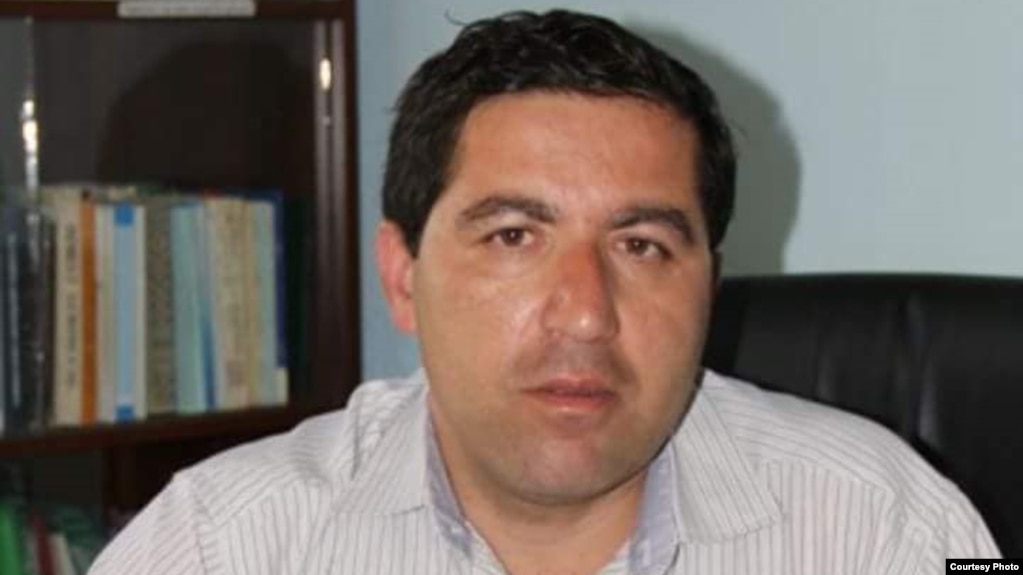
Tajik lawyer Buzurgmehr Yorov (file photo)

The Prague-based NGO People in Need has awarded its annual Homo Homini prize to Tajikistan’s jailed human rights defender Buzurgmehr Yorov for his “commitment to defending basic human rights and to assure a fair trial to all citizens” of his country.  For more on this and similar awards, see: http://www.trueheroesfilms.org/thedigest/awards/homo-homini-award.

“Yorov has been promoting human rights in Tajikistan for many years despite facing severe persecution as a result of his work. He did not hesitate to defend clients who were targeted by politically motivated charges, whose cases other lawyers were not willing to take,” the NGO said on 5 February 2020. “As a result of doing his job, this prominent lawyer lost both his property and his freedom,”.

Yorov was sentenced in October 2016 on charges of issuing public calls for the overthrow of the government and inciting social unrest. His 23-year prison term was later extended by five years after he was found guilty of contempt of court and insulting a government official. Last year, his prison term was cut by six years as part of a mass amnesty. [see https://humanrightsdefenders.blog/2019/09/29/in-tajikistan-lawyers-have-to-be-human-rights-defenders/]

The Homo Homini Award will be presented on March 5 to his brother, Jamshed Yorov, at the opening of the One World Film Festival, a human rights film festival held annually in the Czech Republic.

https://www.rferl.org/a/jailed-tajik-lawyer-yorov-awarded-homo-homini-human-rights-prize/30418801.html

Four jailed Iranian human rights lawyers win European Bar award

November 29, 2019
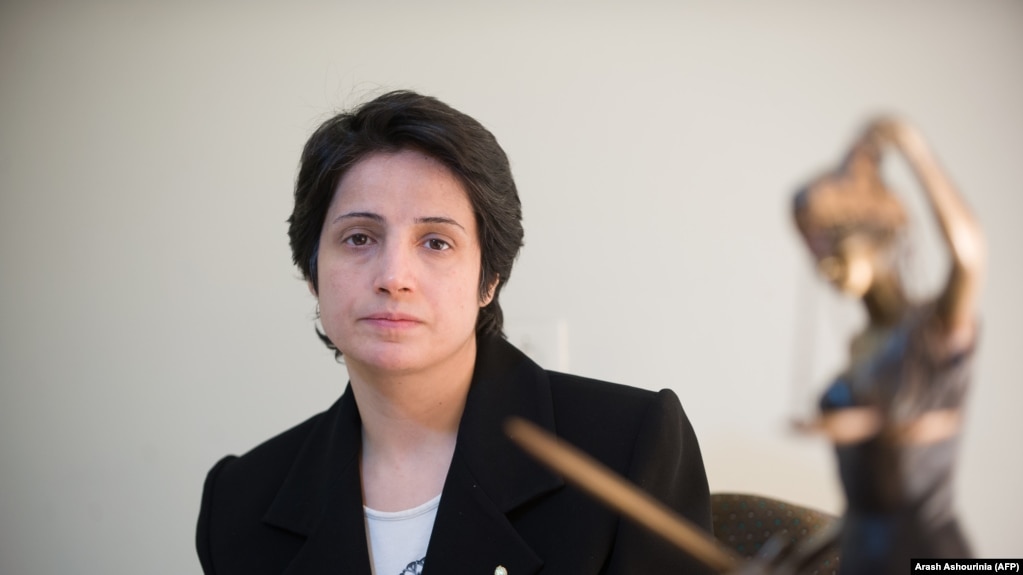
IRAN -- Iranian lawyer Nasrin Sotoudeh is seen in Tehran on November 1, 2008.

Iranian lawyer Nasrin Sotoudeh is seen in Tehran on 1 November 2008.

The Council of Bars and Law Societies of Europe (CCBE) has bestowed its annual Human Rights Award to four lawyers from Iran: Nasrin Sotoudeh, Addolfattah Soltani, Mohammad Najafi and Amir Salar Davodi. Shirin Ebadi will receive the award on behalf of the jailed lawyers from CCBE President José De Freitas.

The CCBE is a professional organization that represents Law Societies from 45 different countries and over one million lawyers. Previous recipients of the award include Avocats Sans Frontières (ASF) and Azerbaijani human rights lawyer Intigam Aliyev. For more on this and other awards for lawyers see: http://www.trueheroesfilms.org/thedigest/awards/ccbe-human-rights-award

Nasrin Sotoudeh is a human rights defender who has been in prison since summer of 2018 for her peaceful activities defending women’s rights to choose their dress style. Although there is no written law in Iran for compulsory hijab, the police and courts spend considerable resources to force women to use the veil. [see also: https://humanrightsdefenders.blog/2019/06/13/1-million-people-demand-that-iranian-government-release-nasrin-sotoudeh/]

Abdolfattah Soltani who co-founded the Defenders Of Human Rights Center along with his colleagues, Nobel Peace Prize laureate Shirin Ebadi and others served as the attorney defending the family of Iranian-Canadian photo journalist Zahra Kazemi. [see also: https://humanrightsdefenders.blog/2018/11/22/iranian-human-rights-defender-abdolfattah-soltani-released-from-jail/

Mohammad Najafi performed various human rights related work and defended protestors who were arrested during a mass uprising in early 2018.

Amirsalar Davoudi was sentenced to 30 years in prison, 111 lashses and substantial monetary fine for his work. One of the charges included “collaborating with the enemy sate” which was brought against Davoudi for doing an interview with the Voice of America’s Persian section.

A statement from the CCBE urges Iran “to take all the necessary measures to release these four human rights lawyers and to guarantee that all lawyers in the Islamic Republic of Iran are able to perform their professional duties without fear of reprisal, hindrance, intimidation or harassment.”

https://en.radiofarda.com/a/jailed-iranian-lawyers-win-human-rights-award/30297336.html

Algerian human rights defender Halim Feddal sent to preventive detention

November 26, 2019
Front Line Defenders reports that on 20 November 2019, the Public Prosecution in Chlef ordered the preventive detention of human rights defender Halim Feddal, after he was arbitrarily arrested on 17 November 2019. He had been taking part in a peaceful demonstration demanding the release of a number of Algerian political prisoners.

Halim Feddal is the founder and secretary general of the Algerian National Association Against Corruption (ANLC) which works on exposing and fighting corruption in Algeria. He is also a member of the Hirak Movement, which is a grassroots human rights movement that calls for the promotion of civil and political rights in Algeria. The human rights defender frequently participates in peaceful demonstrations in the city of Chlef.

On 17 November 2019, Halim Feddal was arrested by security forces in plain clothes from a peaceful demonstration that he was attending in front of the court in Chlef. The protesters were demonstrating against the politically motivated detention of some members of the Hirak movement. Halim Feddal was taken to a local police station where he spent three days under interrogation and was not allowed to contact his lawyer or his family. On 20 November 2019, the Public Prosecution charged him with “threatening the unity of the country” and “incitement of an illegal gathering”. The Public Prosecution ordered preventive detention for Halim Feddal without scheduling a date for his court hearing.

Human rights defenders in Algeria are continually harassed and arbitrarily detained by the authorities. Halim Feddal has frequently been called to the police station and interrogated about his human rights work. Front Line Defenders is deeply concerned about the detention and harassment of Halim Feddal, and finds the general crackdown on human rights defenders in Algeria increasingly worrying. Front Line Defenders believes that Halim Feddal is being detained solely as a result of his peaceful and legitimate human right work.

Download the Urgent Appeal

https://www.frontlinedefenders.org/en/case/halim-feddal-sent-preventive-detention

48 Human Rights groups intervene for detained Nigerian Omoyele Sowore

August 26, 2019

On 23 August 2019 48 NGOs issued an urgent appeal in relation to the arrest and detention of Omoyele Sowore, Nigerian journalist and human rights defender, to the UN and African human rights bodies. Joy Hyvarinen, head of advocacy at Index on Censorship said: “Index on Censorship urges the Nigerian authorities to release the prominent journalist and campaigner Omoyele Sowore immediately. The arrest and detention are a shocking violation of Mr Sowore’s human rights, which calls into question Nigeria’s willingness and ability to meet international human rights obligations.”


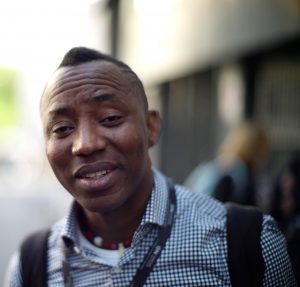
Omoyele Sowore (Photo: Mohamed Nanabhay / Wikipedia)

To the members of the Working Group and the Special Rapporteurs:

We, 48 human rights and press freedom organisations, respectfully request that you consider this urgent appeal in relation to the arrest and arbitrary detention of Nigerian journalist and human rights defender Omoyele Sowore who was arrested by the authorities following a call for peaceful protest. We request that you urgently intervene to secure the immediate release of Mr Sowore and declare his arrest and detention a gross violation of his human rights, including the right not to be arbitrarily detained as protected by Article 9(1) of the International Covenant on Civil and Political Rights (ICCPR) and Article 6 of the African Charter on Human and Peoples’ Rights (the Banjul Charter); the right to a fair trial as protected by Article 14 ICCPR and Article 7 of the Banjul Charter; the right to freedom of expression as protected by Article 19 ICCPR and Article 9 of the Banjul Charter; the right of freedom of peaceful assembly and of association as protected by Articles 21 and 22 ICCPR and Articles 10 and 11 of the Banjul Charter; and his rights as a human rights defender as outlined in the 1999 UN Declaration on Human Rights Defenders and 2017 African Commission Cotonou Declaration on strengthening and expanding the protection of all Human Rights Defenders in Africa.

Background 

  1. Mr Sowore is a prominent journalist, human rights activist and pro-democracy campaigner. He is the founder of Sahara Reporters, an online news agency based in New York City that focuses on corruption, human rights abuses and other political misconduct in Nigeria. Challenging government corruption and speaking truth to power has been the constant thread throughout Mr Sowore’s career, from the leading of student protests in the 1990’s to his recent campaign running for Presidential office in Nigeria.

Omoyele Sowore’s arrest and detention 

  1. Mr Sowore was arrested on 3 August 2019 in his hotel room during a trip to Lagos. Security agents forcefully detained Mr Sowore without informing him of any charges against him and flew him to Abuja, where he is currently being detained at the facility of the headquarters of the Nigerian State Security Service. Mr Sowore has access to food and water, but no access to the outside world: no newspapers, television or phone, and he spends most days in isolation. He was held incommunicado until 6 August, during which time Mr Sowore refused to answer any questions without consulting with his lawyer. He was allowed access to his lawyers only on 7 August, 4 days after his arrest.
  2. Based on Section 35 of the Nigerian Constitution, Mr Sowore should have been arraigned before a court within 48 hours. As of today, Mr Sowore has not been arraigned in any court.
  3. However, on 6 August, 3 days after his arrest, the State Security Service did seek an ex- parte order from the Federal High Court in Abuja to detain Mr Sowore under Section 27(1) of the Terrorism Act 2013, which enables the detention of anyone planning to “commit an act of violence”. The Court’s order of 8 August, made within 48 hours after the State Security Service’s request, granted the authorities permission to detain Mr Sowore for 45 days. Within 24 hours, his legal team, led by Mr Femi Falana, filed a motion to set aside the order and requested Mr Sowore’s immediate release, arguing that his detention was contrary to the Nigerian Constitution. At the time of writing, this request has not been heard by the courts and no date for hearing has been fixed. Importantly: no formal charges have been filed against Mr Sowore.

Mr Sowore’s call for a peaceful #RevolutionNow protest 

  1. The arrest of Mr Sowore appears to be the direct consequence of his call for a peaceful protest scheduled to take place on 5 August 2019, using the hashtag #RevolutionNow.

The objective of the protest was to demand that the Nigerian government end corruption and economic inequality and guarantee education to all. That the protest Mr Sowore and the Coalition for Revolution (CORE) movement he founded called for was a peaceful one is made clear at the very outset of the call for protest, issued on 27 July, which starts by setting out the “rules of engagement”:

We eschew all forms of violence. No protester should throw any object as little as stones or attack any security officials. We are aware of their intent to provoke the mass unduly by using undue tactics and sponsored agents, so as to give the protest a bad name. We encourage all Nigerians to remain calm as we are ready to fight these injustices to a logical conclusion. 

  1. A week earlier, in an interview with the Arise News channel, Mr Sowore stated that “Nigeria needs revolution, not war,” clearly distinguishing his call for substantial change from a call to violence. Mr Sowore has used the word “revolution” contextually to mean “change for the better” since 2006, when he founded Sahara Reporters. Mr Sowore then stated that he would “revolutionise” the way news is being reported in Nigeria –– something he actually did with the investigative citizen journalism the website publishes.
  2. Despite Mr Sowore’s arrest and detention, the 5 August #RevolutionNow protests took place in Abuja, Lagos, Osun, Ondo and Cross River. Protesters met a police force that dispersed them with teargas and gunshots. Numerous protesters, including several of Sahara Reporters’ journalists, were arrested and charged with illegal assembly.

Request for urgent action 

  1. It is clear that Mr Sowore’s arrest on apparent grounds of suspicion of terrorism is unfounded. Mr Sowore did what he has done throughout his career as a journalist and human rights activist: exercise his right to freedom of expression and seek to bring about change through peaceful means, in this case a peaceful protest. The use of the emotive term “revolution” merely underlines his desire for transformative change in what he considers the shortcomings of the current government. There are strong suspicions that Mr Sowore’s arrest stems from ulterior motives than responding to any supposed criminal wrongdoing. This is further highlighted by the fact that the authorities failed to define a charge against him for the first few days after his arrest; the investigations that were subsequently instigated against him under the Terrorism Act were clearly only created to serve the purpose of silencing Mr Sowore.
  2. As such, the arrest and detention of Mr Sowore amount to a violation of his right not to be arbitrarily detained as guaranteed under Article 9 ICCPR and Article 6 of the Banjul Charter. The fact that the charges brought against him most likely stem from his call for a peaceful demonstration and his critical stance on the Nigerian government also violates Mr Sowore’s right to free expression under Article 19 of the ICCPR and Article 9 of the Banjul Charter and his right of freedom of peaceful assembly and of association under Articles 21 and 22 ICCPR and Articles 10 and 11 of the Banjul Charter. Not properly arraigning Mr Sowore before a competent court within the time limit mandated by the Nigerian Constitution and not allowing him access to a lawyer during the initial days of his detention violates his right to a fair trial as protected by Article 14 ICCPR and Article 7 of the Banjul Charter. The foregoing also constitutes a violation of his rights as a human rights defender as defined in the 1999 UN Declaration on Human Rights Defenders and 2017 African Commission Cotonou Declaration on strengthening and expanding the protection of all Human Rights Defenders in Africa.
  3. As a State Party to both treaties, Nigeria is under an obligation to guarantee these rights to all its citizens, as specified under Article 2(1) of the ICCPR and Article 2 of the Banjul Charter. Accordingly, we appeal to the Working Group and UN and AU Special Rapporteurs to:
  • intervene urgently to secure the immediate release of Mr Sowore; and
  • declare his arrest and continuing detention a gross violation of his human rights.

SIGNED BY:
All Workers’ Convergence (AWC) 

Afrika Movement for Freedom and Justice (AMFJ)

Agege Women Agenda (AWA)

ARTICLE 19 Senegal/West Africa

Centre for Constitutional Rights

Centre for Human Rights and Social Justice (CHRSJ)

Chidi Odinkalu Former Chairman, National Human Rights Commission (Nigeria) & Senior Fellow, Open Society Justice Initiative

Coalition for Revolution (CORE) 

Committee for the Defence of Human Rights (CDHR) 

Community Women Initiatives (CWI) 

The Concerned Forum 

Congress of Progressive Youths (COPY) 

Democratic Youth League

Edo State Civil Society Organisation (EDOSCO)

Enough is Enough (EiE) Nigeria 

Freedom of Expression Hub

Gani Fawehinmi Apostles 

Gani Fawehinmi Memorial Organization (gafam.org) 

Governance Advancement Initiative for Nigeria (GAIN)

Global Voices Sub-Saharan Africa

Grassroot Justice Centre

Human and Environment Development Agenda (HEDA) 

Human Rights Network for Journalists-Uganda (HRNJ-UGANDA)

IAmVocal

Index on Censorship 

Media Legal Defence Initiative

Media Rights Agenda

Moshood Abiola Vanguard for Democracy (MAVD)

Movement For People’s Rights

National Conscience Party (NCP), Lagos State Branch

Nigerians in Diaspora Europe, Belgium-Luxembourg (NIDOE-BeLux)

Open Society for West Africa (OSIWA), Nigeria Office

Paradigm Initiative

People’s Alternative Front (PAF)

Peoples’ Unite

Rivers State Civil Society Coalition (RIVSCO)

Rule of Law and Accountability Advocacy Centre (RULAAC) 

Save Lagos Group

Socialist Vanguard Tendency (SVT) 

Socio-Economic Rights and Accountability Project (SERAP)

Sovereign Vital Force 

Spaces for Change 

Take-It-Back (TiB) Movement 

Talakawa Parliament

Veteran Group for Operation Clean Crusade (VGOCC) 

Women for Leadership Change

Workbond International Network (WIN)

Youth In Good Governance Initiative (YIGGI) 

UAE finally free Osama al-Najjar after detaining more than five years.

August 9, 2019

Osama Al-Najjar remained in detention, despite completing his jail sentence. Photo Credit: activist’s Twitter account

On 9 August 2019 Global Voices reports that the United Arab Emirates (UAE) have freed activist and political prisoner Osama al-Najjar after detaining him for more than five years. [see: https://humanrightsdefenders.blog/2019/06/13/political-prisoners-in-the-emirats-are-detained-indefinitely-even-after-release-date/]

”Two other detainees, Badr al-Bahri and Othman al-Shehi, whose initial sentences expired in April 2017 and July 2018 respectively, have also been freed”, the International Campaign for Freedom in the UAE (ICFUAE) said in a statement. Al-Bahri and al-Shehi were arrested over their links to al-Islah, which was a legally registered Islamist political movement in the UAE before it was banned by authorities in 2014.

Many political prisoners remain in detention in the UAE, despite repeated calls from human rights groups for their release. Prominent human rights defender Ahmed Mansoor is currently serving a ten-year jail sentence over comments he posted online. Prior to his arrest in March 2017, he campaigned online on behalf of jailed activists in the UAE, including Osama al-Najjar. Academic Nasser Bin Ghaith is also serving a ten-year jail sentence over tweets critical of the UAE authorities. [see: https://humanrightsdefenders.blog/tag/ahmed-mansoor/]

UAE frees activist Osama al-Najjar after 5 years in detention

Abass Amiretezam’s Children Filed an Action Against Government of Iran and IRGC for Alleged 38 Years of Torture, in Federal Court

July 16, 2019
Abass Amiretezam's Children Filed an Action Against Government of Iran and IRGC for Alleged 38 Years of Torture, in Federal Court Under FSIA

On 15 July 2019, the law firm Herischi & Associates LLC issued a press release announcing that the family of Mr. Abbas Amirentezam, former Deputy Prime Minister of Iran in 1979, filed an action against the Islamic Republic of Iran and the Iranian Revolutionary Guard Corp (IRGC) for, allegedly, the almost 40 year unlawful incarceration and house arrest of their father who was subjected to torture, solitary confinement, and lack of medical care that ultimately led to his death in 2018. The complaint is lodged under the Foreign Sovereign Immunities Act (FSIA)

Allegedly, Mr. Amirentezam was the longest-held political prisoner and prisoner of conscience in the Islamic Republic of Iran. According to Fariba Amini, as of 2018 he had “been in jail for 17 years and in and out of jail for the twenty one years, altogether for 38 years.” He was Iran’s Ambassador to the five Scandinavian countries and Deputy Prime Minister in the Interim Government of the Islamic Republic. Mr. Amirentezam opposed the Iranian hostage taking of the American Embassy in Tehran in 1979 and was subsequently arrested. Allegedly for 555 days, he was held in solitary confinement without access to lawyers nor any details of the charges against him before his trial; after Iran released the 52 American hostages in 1981, Amirentezam was tried without access to a lawyer and jury; he was unjustly convicted and condemned to life in prison.

The following is alleged in the complaint:

According to his memoir, “until 1996, while he was incarcerated in Evin prison, Mr. Amirentezam was denied any visitation rights and/or communication with his children. Mr. Amirentezam was routinely tortured and exposed to mock executions. He was refused medical treatment and consequently suffered irreparable damage to his health. His family not only endured his absence but lived in continuous fear of his death. Despite attempting to silence Mr. Amirentezam – he defied and remained as vocal as he could throughout his incredible hardship.”

According to UN Commission on Human Rights Report published on March 1996, Amirentezam interviewed with the UN Special Representative of the Commission on Human Rights, Mr. Maurice Copithorne. In his 1996 report to the UN, Mr. Amirentezam alleges that “1,100 political prisoners had been executed in Evin prison during one night at the beginning of the fall of 1981.” Pursuant to Mr. Amirentezam personal website, he alleges that, “despite constant pressure from the Iranian authorities, he never confessed to any erroneous allegations and never asked for mercy. He remained defiant to the end. As a result, he is the recipient the human rights award of Bruno Kreisky Prize in 1998 and the Jan Karski Award for Moral Courage in 2003.”

Mr. Amirentezam died on July 12, 2018 while under house arrest in Tehran. Allegedly until his death, he demanded a fair and public trial. Mr. Amirentezam children claimed in their Complaint that they have suffered significantly by the immense pain intentionally imposed unto their family by the government of the Islamic Republic of Iran. The Complaint further alleges that, “the Amirentezam family is demanding justice by exposing the government of the Islamic Republic of Iran and the IRGC for all the cruelty and suffering they have endured for almost four decades.”

This case is brought under terrorism exception of the Foreign Sovereign Immunities Act (FSIA) in the U.S. District Court for the District of Columbia through Plaintiffs attorney, Mr. Ali Herischi of Herischi & Associates, LLC. This action is filed on the first anniversary after Mr. Amirentezam’s death. Plaintiffs are asking for compensatory and punitive damages. Mr. Herischi is hopeful that “this case will bring attention to the systematic human rights abuses and domestic terrorism by the government of the Islamic Republic of Iran and the Iranian Revolutionary Guard Corps.”

https://www.pr.com/press-release/789605

In memoriam Chinese human rights defender Ji Sizun

July 15, 2019

Undated photo of award-winning Chinese human rights activist Ji Sizun, who died of cancer at 71, weeks after the end of his prison term, July 10, 2019.

Undated photo of award-winning Chinese human rights activist Ji Sizun, who died of cancer at 71, weeks after the end of his prison term, July 10, 2019. Courtesy of an RFA listener.

Award-winning Chinese human rights activist Ji Sizun has died of cancer, pn 10 July 2019 weeks after the end of his prison term. He was 71. Ji, a self-taught legal activist from the southeastern province of Fujian, died of colorectal cancer on Wednesday afternoon at the Zhangzhou Xiangcheng Hospital in Zhangzhou city, his family said.

He had just finished serving a four-and-a-half year jail term for publicly supporting the 2014 pro-democracy movement in Hong Kong, and had been held incommunicado and under close surveillance by the authorities since his “release” in April. His family members were denied permission to visit or speak with him until he was unconscious (!), and Ji’s body was sent directly for cremation after his death by the authorities. His sister said her brother had dedicated his life to human rights work, which was why he had never married. “He would say that his work was too dangerous, so he didn’t want to have a wife and child to care about him.”

Ji’s cancer was diagnosed while he was in prison, and he was offered treatment in a local hospital, according to Ji Zhongjiu, a lawyer who had tried to visit him there.

A source close to the case said Ji’s remains had been handed over to his local neighborhood committee, rather than to his family, sparking suspicions that Ji’s death may not have been entirely due to natural causes. “There are huge question marks over this whole thing … as for the family’s letter entrusting them with this task, the family are very confused about that,” the source said. “The letter was signed on June 12, and Ji suddenly died less than a month after they signed it, so clearly there are suspicions that the authorities have been playing god.” He said the family never wanted Ji to be cremated.

Earlier this year, Ji was awarded the fifth Cao Shunli Memorial Award for Human Rights Defenders, for his contribution in promoting legal rights and education at the grassroots level in China. Cao died in March 2014 after she was denied medical treatment for months while in detention. See: https://humanrightsdefenders.blog/2019/03/16/human-rights-defender-ji-sizun-in-jail-awarded-5th-cao-shunli-memorial-award-for-human-rights-defenders/

The Chinese authorities should investigate the circumstances and causes of human rights activist Ji Sizun’s death, Human Rights Watch said.

Reported by Gao Feng for RFA’s Mandarin Service, and by Wong Lok-to for the Cantonese Service. Translated and edited by Luisetta Mudie.

https://www.rfa.org/english/news/china/activist-death-07102019113636.html

https://www.hrw.org/news/2019/07/10/china-account-activists-death

Breaking news: Reuters journalists Wa Lone and Kyaw Soe Oo freed in Myanmar

May 7, 2019

All the mainstream media (here Al Jazeera) are reporting that today the Reuters journalists Wa Lone and Kyaw Soe Oo were freed from Myanmar jail.

Earlier on Tuesday, Myanmar said it will release 6,520 prisoners in an amnesty, according to a statement from the president’s office.  President Win Myint pardoned thousands of prisoners in two mass amnesties last month. It is customary in Myanmar for authorities to free prisoners around the time of the traditional New Year, which began on April 17.

“We are enormously pleased that Myanmar has released our courageous reporters,” Reuters editor-in-chief Stephen Adler said in a statement. “Since their arrests 511 days ago, they have become symbols of the importance of press freedom around the world. We welcome their return.” Reuters has said the two men did not commit any crime and had called for their release.

https://www.aljazeera.com/news/2019/05/jailed-reuters-journalists-freed-prison-myanmar-190507024627552.html