On 18 April 2023 CHRD called on the Chinese government to immediately release human rights lawyer Yu Wensheng and his wife Xu Yan, who have been criminally detained and denied access to lawyers of their choice. CHRD also calls on the Chinese government to end its de facto house arrest of Yu Wensheng and Xu Yan’s 18-year-old son. CHRD urges the EU, EU member states, the US, UN bodies, and other member of the international community to forcefully condemn the Chinese government’s detention of Yu Wensheng and Xu Yan. See also: https://humanrightsdefenders.blog/2022/03/03/breaking-news-mea-laureate-yu-wensheng-released/
On April 13 at approximately 4:00 pm, human rights lawyer Yu Wensheng and his wife Xu Yan left their home in Beijing to travel by subway to attend an event at the European Delegation. They were invited to an event with the EU’s Ambassador to China Jorge Toledo Albiñana according to Politico.
However, Yu and Xu were prevented from accessing the subway by four plainclothes police officers. One of the officers, a state security police officer, told them that they were being summoned to a police station, which Yu Wensheng announced on Twitter. The four police officers took them to the Shijingshan Bajiao police station. Human rights lawyers Wang Quanzhang, Li Heping, and Bao Longjun were also harassed by authorities during this period.
The EU Delegation to China tweeted on April 13, “We demand their immediate, unconditional release. We have lodged a protest with MFA [China’s Ministry of Foreign Affairs] against this unacceptable treatment.”
According to Rights and Livelihood Watch, on April 15 in the evening, approximately seven police officers came to Yu Wensheng and Xu Yan’s home, and they orally read a criminal detention notice to the couple’s son, who had just turned 18 years old. The pair were criminally detained on the charge of “picking quarrels and provoking trouble.” Police would not allow the son to take photos, nor would they give him the criminal detention notice. Also, even though no warrant was presented, police proceeded to search the home and carried off many items.
On April 16, two lawyers, Song Yusheng and Peng Jian, paid a visit to Yu and Xu’s son to bring him fruit, and fill out paperwork to obtain legal status to represent Yu and Xu. There were two people guarding the door of Yu and Xu’s home. Lawyer Song knocked on the door, and it was answered by the son, but the lawyer saw that in the home there were also two officers inside, one plainclothes and one wearing a uniform. The plainclothes officer, who said his name was Lu Kai, asked what they wanted. The lawyers said that they were there to visit the son and have him sign an agreement (委托书) to entrust them as lawyers. However, the plainclothes police officers said that Yu Wensheng told them that he “doesn’t want to have lawyers at this stage” and that Xu Yan had already found two lawyers.
Yu Wensheng’s detention may also be related to his condemnation of the sentencing of Xu Zhiyong and Ding Jiaxi, two prominent pro-democracy figures. On April 12, Yu Wensheng wrote on Twitter that he had been visited at his home by Shijingshan police for a tweet he had sent out on April 9 that said, “[I] strongly condemn the Chinese authorities heavy sentence of scholar Xu Zhiyong to 14 years and of Lawyer Ding Jiaxi to 12 years! I pay my respects to Xu Zhiyong and Ding Jiaxi, who have worked hard in the struggle for freedom, democracy, human rights, and the rule of law. I believe that one day the Dream of a Beautiful China will be realized.”
In March 2022, Yu Wensheng was released from prison after serving four years and three months on the charge of “inciting subversion of state power.” Yu was taken away by police in 2018 the day after he released an open letter recommending changes to China’s Constitution, including a call for elections and the creation of an oversight system for the Chinese Communist Party.
The Chinese government has put heightened pressure on human rights award winners. Yu Wensheng was the recipient of the prestigious Martin Ennals Award in 2021 [see: https://www.trueheroesfilms.org/thedigest/laureates/69fc7057-b583-40c3-b6fa-b8603531248e] and the winner of the Franco-German Prize for Human Rights and the Rule of Law in 2018. Previous winners of awards have been subjected to extra-legal abuse. While Nobel Peace Prize Laureate Liu Xiaobo was at one point granted “medical parole,” he was not allowed the freedom of movement to seek medical treatment outside of China and died in de facto state custody. Likewise, Hu Jia, a prominent human rights defender and winner of the Sakharov Prize for Freedom of Thought in 2008, was prevented from seeing his dying father in his final days. Hu Jia was deprived of his liberty and “forcibly traveled” starting from March 4 of this year. Being “traveled” is a common tactic used by state security officers to ensure journalists at the annual March Two Sessions meetings or other “sensitive” political events do not talk to dissidents. Hu Jia’s father passed away from pancreatic cancer on March 9, 2023.
The Chinese government is preventing defendants in sensitive cases from having lawyers of their own choice and instead mandating government-approved lawyers in order to prevent real legal defense. On February 10, 2023, digital rights activist Ruan Xiaohuan was sentenced to seven years in prison on the charge of “inciting subversion of state power.” His wife, Ms. Bei, wanted to hire an experienced lawyer for the appeals stage, and so she went to Beijing to talk with Shang Baojun. However, upon landing in Beijing, she was taken away by eight Shanghai police. Meanwhile lawyer Shang Baojun tried to visit Ruan at the Yangpu Detention Center in Shanghai, but staff there would not allow for the visit since they claimed that Ruan already had two legal aid lawyers.
The Network of Chinese Human Rights Defenders, on 10 April 2023 condemned the Chinese government’s sentencing of Ding Jiaxi and Xu Zhiyong, two of China’s most notable human rights defenders. “Their sentencing once again demonstrates the Chinese government’s hostility to peaceful advocacy of democracy and human rights, and marks a new low in the Chinese government’s human rights record,” said Ramona Li, Senior Researcher and Advocate for the group.
On April 10, the Linshu County Court sentenced Ding Jiaxi to 12 years imprisonment and 3 years deprivation of political rights, and Xu Zhiyong to 14 years imprisonment. The court, located in Shandong province, found both guilty of the crime of subverting state authority following closed-door trials.
The government consistently violated their rights under international and Chinese law throughout their detention and trial. Both Ding Jiaxi and Xu Zhiyong had been held in prolonged pre-trial detention for over three years, including periods in a form of incommunicado detention referred to as “residential surveillance in a designated location” where both were subjected to torture. Ding Jiaxi’s lawyers attempted multiple times to have the court dismiss his “confessions” as illegally obtained evidence because of they had been extracted under torture; the court rejected these motions.
Ding Jiaxi and Xu Zhiyong were refused access to lawyers for the first thirteen months of their detention, and their attorneys were refused copies of the files containing the information on which the charges were based. Witnesses cited by the prosecution, Wang Jiangsong and Dai Zhenya, publicly refuted testimony that the prosecution alleged they had provided. Family members said that authorities charged the two in Linshu county, far away from Beijing, to avoid public scrutiny of the case.
Ding Jiaxi and Xu Zhiyong were active in the New Citizens Movement, which promoted a form of civic engagement through grassroots advocacy for the implementation of the civil and human rights based on China’s laws and constitution. They were both detained amid a crackdown on human rights activists and lawyers following an informal gathering in southern Fujian province in December 2019.
Ding Jiaxi is also a Beijing lawyer who has provided support to many of the most marginalized and underprivileged groups in China, including education rights for the children of migrant workers and grassroots petitioners appealing to central government officials as a last resort to address wrongdoing by local officials. Xu Zhiyong was also a prominent lawyer who was an instrumental figure in pushing through legal reforms defending the rights of China’s internal migrant population. [see also: https://humanrightsdefenders.blog/2020/03/24/un-experts-alarmed-over-chinas-missing-human-rights-lawyers-victims-of-rsdl/]
In a pre-written statement released before his sentencing, Ding Jiaxiconnected his work to his belief in the possibility of China’s “peaceful, rational, and non-violent” transition from an authoritarian state. He wrote: “No matter the many who have doubted me or the difficulties and setbacks I’ve encountered, including physical torture that I’ve suffered, I will not part from my steadfast convictions.”
In his own statement, Xu Zhiyong described his hopes for a liberal democratic China with free elections, equal access to education and job opportunities, and social support for even the poorest to have “enough to live a dignified life.” He said he had simply “called on Chinese people to become real citizens,” and explained the urgency of doing so, saying “we cannot saddle the next generation with this duty.” [see also: https://humanrightsdefenders.blog/2014/01/24/xu-zhiyongs-closing-statement-to-the-court-a-remarkable-document/]
Both Ding Jiaxi and Xu Zhiyong should be immediately and unconditionally released per the recommendation of UN human rights experts, who have found that the two have been arbitrarilydetained in violation of international law. UN human rights experts have further characterized the crime of “subversion of state authority” as being so broadly worded that charges under the crime fail to provide adequate due process to the extent that they are in violation of the Universal Declaration of Human Rights.
“The heavy sentencing of Ding Jiaxi and Xu Zhiyong is a travesty of justice. At every step, Chinese authorities have taken the wrong turn: from detaining them in secret, torturing them, falsifying witness testimony, putting them on trial in secret, and now this heavy sentence,” said William Nee, Research and Advocacy Coordinator for CHRD.
“Democracies and international organizations around the world must stop paying only lip service to human rights. They must take concrete and credible measures to gain the release of Xu Zhiyong and Ding Jiaxi, as well as the thousands of prisoners of conscience in China, in the Tibetan and Xinjiang regions and Hong Kong,” said Renee Xia, CHRD executive director.
Protection of human rights defenders The mandate of the UN Special Rapporteur on the situation of human rights defenders is to be renewed at the HRC’s March session through a resolution led by Norway.
Reprisals
ISHR remains deeply concerned about reprisals against civil society actors who engage or seek to engage with UN bodies and mechanisms. We call on all States and on the Council to do more to address the situation. General Debate Item 5 is a key opportunity for States to raise concerns about specific cases of reprisals and demand that Governments provide an update on any investigation or action taken toward accountability. An increasing number of States have raised concerns in recent Council sessions about individual cases of reprisals, including at HRC sessions 39, 41, 42, 43, 45, and 51.
ISHR believe that States raising cases is an important aspect of seeking accountability and ending impunity for acts of reprisal and intimidation against defenders engaging with the UN. In September 2022, ISHR ran a campaign regarding five specific cases of reprisals (#EndReprisals). We continue to urge perpetrator States to resolve these cases and other States to raise these cases in their statements: Ibrahim Metwally Hegazy (Egypt), the co-founder and coordinator of the Association of the Families of the Disappeared. Jiang Tianyong (China), a lawyer and legal rights activist working at grassroots level to defend land and housing rights, promote the rights of vulnerable social groups and expose root causes of systemic rights abuses. The Human Rights Center ‘Viasna’ (Belarus), which works towards the development of civil society and the promotion of human rights in Belarus and provides legal aid to people in defending their rights and public interests. Comité de Familiares de Víctimas del Caracazo (COFAVIC); Observatorio Venezolano de Conflictividad Social (OVCS); Centro de Justicia y Paz (CEPAZ); Control Ciudadano (and its director Ms. Rocío San Miguel); and Espacio Público (and its director Mr. Carlos Correa) (Venezuela): a group of five NGOs and two individuals working for the promotion of human rights in Venezuela and who have a history of cooperating with the UN, including the Fact-Finding Mission on Venezuela. Human rights lawyers and defenders Armel Niyongere,Dieudonné Bashirahishize, Vital Nshimirimana and Lambert Nigarura (Burundi), four prominent and well-respected figures within Burundian civil society and their local communities. In addition, we urge States to raise individual cases of reprisals in the country-specific debates taking place at this session: Nicaragua, Sudan, Israel and occupied Palestine, Myanmar, Iran, Venezuela, Belarus, Democratic Republic of the Congo. Further information on these cases can be found here or by contacting the ISHR team at s.hosseiny@ishr.ch.
Other thematic debates At this 52nd session, the Council will discuss a range of economic, social and cultural rights in depth through dedicated debates with: The Special Rapporteur on the right to food The Independent Expert on the effects of foreign debt The Special Rapporteur on the right to adequate housing The Special Rapporteur in the field of cultural rights The Council will discuss a range of civil and political rights through dedicated debates with: The Special Rapporteur on freedom of religion or belief The Special Rapporteur on torture The Special Rapporteur on the right to privacy In addition, the Council will hold dedicated debates on the rights of specific groups including: The Special Rapporteur on the sale and sexual exploitation of children The Special Representative of the Secretary-General on violence against children and the Special Representative of the Secretary-General on children and armed conflict The Special Rapporteur on the rights of persons with disabilities The Special Rapporteur on minority issues The Independent Expert on the enjoyment of human rights of persons with albinism The Council will hold dedicated debates on the interrelation of human rights and thematic issues including: The Special Rapporteur on the promotion and protection of human rights while countering terrorism The Special Rapporteur on human rights and the environment The High Commissioner’s report on access to COVID-19 vaccines
Country-specific developments
Afghanistan: The mandate of the Special Rapporteur on Afghanistan is a crucial mechanism for ongoing monitoring and documentation of the situation in the country, as well as enabling discussion and dialogue amongst States on its findings. It remains an important channel for communication between human rights defenders and survivors inside Afghanistan with the intergovernmental decision-making spaces. However, it falls short due to the overwhelming evidence of gross violations and abuses in Afghanistan. The HRC must respond to the calls from Afghan human rights defenders, especially women human rights defenders, and civil society and establish an independent accountability mechanism with a mandate and resources to investigate the full scope of violations abuses that continue to be committed in Afghanistan by all parties and to preserve evidence of these violations for future accountability. The Council will hold an interactive dialogue with the Special Rapporteur on 6 March.
China On 24 November 2022, the CERD issued an Urgent Action decision on Xinjiang stressing the ‘scale and nature’ of the repression of Uyghurs and Muslim minorities, as evidenced by the Xinjiang Police Files leaks. The Committee urged China to release all those arbitrarily detained, stop harassing Uyghurs abroad, and fully review its national security framework. For the first time ever, the Committee referred the matter to the Special Adviser of the Secretary-General on the Responsibility to Protect, while reminding ‘all States of their responsibility to cooperate to bring to an end through lawful means any serious breach of human rights obligations.’ States should ensure sustained visibility on the broader human rights situation across China, raising root causes of violations that commonly affect Uyghurs, Tibetans, Hong Kongers and mainland Chinese human rights defenders, including the abuse of national security as documented by the OHCHR’s Xinjiang report and Special Procedures, and ask for the prompt release of human rights defenders, including feminist activists Huang Xueqin and Li Qiaochu, human rights lawyers Chang Weiping and Ding Jiaxi, legal scholar Xu Zhiyong, Uyghur doctor Gulshan Abbas, Hong Kong lawyer Chow Hang-tung, and Tibetan climate activist A-nya Sengdra.
Mali. In 2020, Mali finally adopted its implementation decree for the HRD law. While it was a long awaited achievement, especially as it establishes the defenders protection mechanism within the National Human Rights Institution, the text also provides that in order to be recognised as such, any defender must carry a card or badge issued in advance by the Minister responsible for human rights. This provision was later reinforced by the decision adopted by the Malian government in September 2020, which establishes the characteristics and procedures for granting and withdrawing the professional card of human rights defenders. During the last presentation of the report of the independent expert on the human rights situation in Mali, ISHR delivered a statement asking the independent expert what support he planned to give to the Malian government to ensure the full implementation of the defenders law and its protection mechanism. The HRC must keep the scrutiny on Mali to ensure that defenders in the country are protected in line with the UN Declaration and not restricted by the limitation imposed by a card defining the status of defenders. The Council will hold an interactive dialogue with the independent expert on 30 March.
DRC The DRC has noticeably improved the protection of human rights in the Kasaï region but progress remains slow and action is still needed towards transitional justice and the protection of defenders in this region. In December 2022, the national assembly of the DRC adopted the draft law for the protection and promotion of defenders. The last step is for the text to be adopted by the Senate, which would strengthen the protection of defenders at the national level after the adoption in February 2016 of an edict for the protection of human rights defenders and journalists in the South Kivu province and a similar text adopted in November 2019 on the Protection of Human Rights Defenders in the North Kivu Province. The United Nations Joint Human Rights Office (UNJHRO) must support the calls of civil society and ensure the protection and promotion of defenders is part of its support to the government of the DRC. The Council will consider oral updates and hold an enhanced interactive dialogue with the High Commissioner and the team of international experts on the DRC on 30 March.
Egypt Notwithstanding the launch of a national human rights strategy, the fundamental purpose of which is to deflect international scrutiny rather than advance human rights, there has been no significant improvement in the human rights situation in Egypt since the joint statement delivered by States in March 2021. Since that time no consequential follow-up has occurred at the HRC, while the situation has further deteriorated on the ground. As witnessed by the world during COP27, the brutal crackdown on civil society in Egypt continues to intensify. Sustained, coordinated action on Egypt at the Council is more necessary than ever. Egypt continues to carry out widespread and systematic violations of human rights, including freedom of expression and freedom of assembly and association. The Egyptian authorities have for years employed draconian laws, including laws on counterterrorism, cybercrimes, and civil society in order to subdue the civilian populations and stifle all forms of peaceful dissent and mobilisation. Under the current government, Egypt ranks among the worst three countries in the world in the numbers of jailed journalists and almost all independent media has been forced to shut down or threatened into silence. Hundreds of websites continue to be banned. Scores of civil society and media representatives continue to be disappeared, tortured and arbitrarily detained under the pretense of counter-terrorism and national security.
While the release of a few select arbitrarily-detained activists is a sign that international pressure works, the number of releases pales in comparison to the vast numbers of individuals newly detained by the National Security Prosecution, or whose arbitrary detention was renewed in 2022. Between the reactivation of the Presidential Pardons Committee in April 2022 and the end of 2022, the authorities released around 900 people held for political reasons, but almost triple that number of suspected critics and opponents were interrogated by prosecutors and arbitrarily detained. ISHR reiterates the calls of more than 100 NGOs from around the world urging the HRC to create a monitoring and reporting mechanism on the ever-deteriorating human rights situation in Egypt.
Israel / OPT This session will consider a number of resolutions associated with the human rights situation in Israel and the Occupied Palestinian Territories, including with respect to the right of Palestinian’s to self-determination, as well as expanding and illegal Israeli settlements. Israeli policies and practices against Palestinian people have been found to constitute acts of apartheid by UN experts as well as by both international and national NGOs, while a HRC-mandated commission of inquiry has found that Israel’s permanent occupation and de facto annexation of Palestinian territory is likely unlawful. ISHR calls on all States to engage with these resolutions on their human rights merits, applying objective criteria in a principled and consistent way which upholds the right of self-determination as well as freedom from violence and discrimination. The Council will hold an interactive dialogue with the High Commissioner on ensuring accountability and justice in the Occupied Palestinian Territory, including East Jerusalem on 3 March.
Nicaragua A year after the adoption of resolution 49/3, the UN system has continued to document a steady deterioration of the country’s multi-pronged human rights crisis: UN and IACHR documentation compiled by the Colectivo 46/2 point to the absence of any step taken to implement any of the 14 recommendations from resolution 49/3. Instead, the ruling party has seized absolute control over the country’s 153 municipalities in a 2022 electoral process characterised by ‘repression of dissenting voices and undue restriction of political rights and civil liberties,’ according to the OHCHR; canceled the legal status of more than 2500 civil society organisations; detained political prisoners in inhumane conditions; and allowed for the continuation of widespread attacks, including 32 killings since 2018, by armed settlers against indigenous peoples of the Northern Caribbean Coast. The Nicaraguan government has confirmed its diplomatic isolation by refusing to cooperate with six UN Treaty Bodies within a year prompting an unprecedented public condemnation by the UN’s two anti-torture committees. It has also retaliated against EMRIP member and Nicaraguan citizen Anexa Cunningham, by denying her entry into the country on July 9. We urge the Human Rights council to renew, for a period of two years, resolution 49/3 establishing the mandate of the Group of Human Rights Experts on Nicaragua, and the monitoring mandate of the OHCHR. We call on all governments to support such a resolution and reinforce its intersectional approach, by bringing particular attention to the situation of indigenous peoples and afro-descendants, migrants and forcibly displaced persons, those detained for political reasons and the families of victims.
Saudi Arabia According to ALQST‘s 2022 annual report, the Saudi authorities’ unleashed a new wave of repression in 2022. Familiar patterns of abuse continued, including arbitrary arrests, enforced disappearances and harsh restrictions on prisoners of conscience released from prison, including travel bans. However from mid-year onwards in particular, the Saudi courts started imposing jail sentences of unprecedented severity for peaceful, legitimate activity on social media, further deepening the climate of fear in the kingdom. Use of the death penalty increased sharply after a lull during the COVID period, with the biggest mass execution in recent times (of 81 men in a single day), and executions for non-violent drugs-related offences made a dramatic comeback. This intensification of repression went hand in hand with the progressive diplomatic rehabilitation of Saudi Arabia’s crown prince and de facto ruler, Mohammed bin Salman. We call on the HRC to respond to the calls of NGOs from around the world to create monitoring and reporting mechanism on the ever-deteriorating human rights situation in Saudi Arabia.
Sudan The Sudanese military and some political parties and civic groups signed a framework agreement to pave the way for a power transition to civilian forces in December 2022. But the agreement was not widely welcomed by local resistance movements, including resistance committees and some women’s groups. The protests continued across the country demanding a comprehensive transitional process that respects the people’s demands for accountability, peace, and justice. In the meantime, the security forces crackdown on protests is sustained, while the violations of freedoms of assembly, expression, and association continues. Following the political framework agreement, attacks on women human rights defenders (WHRDs) and women groups continued as the violence in conflict areas escalated. The HRC must ensure continued reporting on Sudan and to urge the international community to prioritise justice and accountability in any upcoming political solution. The Council will consider an oral update and hold an interactive dialogue with the High Commissioner and designated Expert on 3 March.
Ukraine In the face of overwhelming evidence of war crimes and crimes against humanity associated with Russia’s war of aggression against Ukraine, ISHR calls on the HRC to renew the mandate of the Commission of Inquiry on human rights in Ukraine associated with Russia’s war of aggression, including the mandate of the Commission to examine the root causes of the conflict such as the repression and criminalisation of human rights defenders and independent journalists in Russia. The Council will hold an interactive dialogue with the Commission of Inquiry on 20 March. The Council will also hold an interactive dialogue on the OHCHR report on Ukraine on 31 March.
Venezuela ISHR joins Venezuelan and international organisations in urging states to speak out against the NGO bill currently passing through the National Assembly in Venezuela. The ‘Law of Supervision, Regularization, Performance and Financing of Non-Governmental and Related Organizations’ seeks to criminalise and further restrict the work of NGOs in the country. During the HRC session, there will be two agenda items specifically focusing on Venezuela: the update from the High Commissioner on 21 March, and an oral update by the UN fact-finding mission on 23 March, which will be their first since their mandate was renewed by the Council, last September. The High Commissioner’s update will no doubt include impressions and recommendations drawn from his recently concluded first visit to Venezuela. These updates will take place at a time of ongoing political flux in the country, upcoming elections and – critically – further threats to civic space. During the interactive dialogues on Venezuela, States must continue to express concern at ongoing human rights and humanitarian crises in the country, at the introduction of the NGO bill and call for the release of the arbitrarily detained including human rights defender Javier Tarazona who has now been held for almost 600 days, wholly without justification.
Yemen ISHR joins civil society organisations from Yemen and around the world in urging the HRC to establish an independent international criminally focused investigative mechanism on Yemen. Before its untimely dissolution in 2021, the UN Group of Eminent Experts (GEE), established by the HRC in 2017, recommended that UN member States refer the situation in Yemen to the International Criminal Court (ICC), support the establishment of an international criminally focused investigative mechanism, and stressed the need to realise victims’ right to reparation. In late 2021, HRC members narrowly rejected a resolution that would have renewed the GEE’s mandate following lobbying by Saudi Arabia and the UAE. In September 2022, Saudi Arabia and Yemen rejected attempts by States to ensure continued discussion at the HRC of the ongoing human rights crises in Yemen. The international community should not stand by and allow the vote to disband the GEE to be the HRC’s last word on the situation, nor should they allow warring parties to continue to block formal discussions of large-scale human rights abuses, war crimes and the urgent need for accountability. A new, HRC-mandated mechanism is required to ensure that potential avenues of criminal accountability and reparative justice are effectively explored for Yemen and may be pursued now and in the future to address impunity and provide effective redress to victims.
Guatemala Guatemala’s recent UPR put a spotlight on the fast deterioration of democratic spaces in the country. Over twenty States raised attacks against indigenous, environmental, and other human rights defenders, and journalists. There has been a steady increase in attacks, with a record high of 1000 attacks by 2021 according to local groups. The government, meanwhile, made no reference to the issue during the review. States also shared concern about the erosion of judicial independence, an issue repeatedly highlighted by UN experts and officials. Over the past years, UN experts have exposed interference or blocking in the appointment of high level court judges. High Commissioner Volker Türk recently condemned a 70% increase in cases of intimidation and criminal charges against justice officials fighting impunity and corruption. A growing number of judges and legal professionals have fled the country since the government closed the UN’s International Commission Against Impunity in Guatemala (CICIG) in 2019. In 2021, UN and OAS experts denounced a ‘choking’ law that gave the government ‘wide scope to control NGOs’. In this context, space for Guatemalan civil society to safely advocate for human rights and expose violations, and for the judicial authorities to respond to abuses and uphold the rule of law has become dangerously narrow. These patterns create serious risks of further deterioration – in a trend that is also seen in neighbouring Central American countries – in the lead-up to the June 2023 presidential elections. High Commissioner Türk’s presentation of his Office’s report on Guatemala to the HRC in March will provide a critical window of opportunity for States to collectively urge Guatemala to engage with the OHCHR to meaningfully address and put an end to attacks against human rights defenders and justice officials, ensure judicial independence, and review laws and policies that restrict civil society space.
Other country situations
The High Commissioner will provide an oral update to the Council on 7 March. The Council will consider updates, reports and is expected to consider resolutions addressing a range of country situations, in some instances involving the renewal of the relevant expert mandates. These include: Enhanced interactive dialogue with the Special Rapporteur on Eritrea Oral briefing and interactive dialogue with the International Commission of Human Rights Experts on Ethiopia ID with the Special Rapporteur on the Democratic People’s Republic of Korea and a presentation of the report of the High Commissioner Interactive Dialogue with the High Commissioner on Belarus Interactive dialogue with the High Commissioner, and interactive dialogue with the Special Rapporteur on Myanmar Interactive Dialogue with the Special Rapporteur on Iran Interactive Dialogue with the Commission of Inquiry on Syria Enhanced interactive dialogue with the Commission on Human Rights in South Sudan with the participation of the High Commissioner, and an interactive Dialogue on the OHCHR report on South Sudan High-level Dialogue with the Independent Expert on the Central African Republic Interactive dialogue with the Fact-Finding Mission on Libya #HRC52 | Council programme, appointments and resolutions During the organisational meeting for the 52nd session, held on 13 February, the President of the Human Rights Council presented the programme of work. It includes 7 panel discussions. States also announced at least 39 proposed resolutions.
Adoption of Universal Periodic Review (UPR) reports
During this session, the Council will adopt the UPR working group reports on Bahrain, Ecuador, Tunisia, Morocco, Indonesia, Finland, the United Kingdom, India, Algeria, Philippines, Brazil, Poland, the Netherlands, and South Africa.
Panel Discussions:
During each Council session, panel discussions are held to provide member States and NGOs with opportunities to hear from subject-matter experts and raise questions. 7 panel discussions are scheduled for this upcoming session: Biennial high-level panel discussion on the question of the death penalty. Theme: Human rights violations relating to the use of the death penalty, in particular with respect to limiting the death penalty to the most serious crimes High-level meeting commemorating the thirty-fifth anniversary of the Declaration on the Right to DevelopmentHigh-level panel discussion on UPR Voluntary Funds: achievements, good practices and lessons learned over the past 15 years and optimized support to States in the implementation of recommendations emanating from the fourth cycle Annual full-day meeting on the rights of the child [two accessible meetings]. Theme: Rights of the child and the digital environment Annual interactive debate on the rights of persons with disabilities. Theme: Support systems to ensure community inclusion of persons with disabilities, including as a means of building forward better after the COVID-19 pandemic Debate in commemoration of the International Day for the Elimination of Racial Discrimination. Theme: The urgency of combating racism and racial discrimination 75 years after the adoption of the Universal Declaration of Human Rights Annual high-level panel discussion on human rights mainstreaming. Theme: A reflection on five years of the United Nations Youth Strategy (Youth 2030): mapping a blueprint for the next steps Read here the three-year programme of work of the Council with supplementary information.
Read here ISHR’s recommendations on the key issues that are or should be on the agenda of the UN Human Rights Council in 2023.
On 14 February, 2023 Louis Charbonneau, HRW United Nations Director, reported that the UN General Assembly achieved a funding breakthrough by agreeing to fully fund UN human rights mechanisms that China, Russia, and their allies had sought to defund in the 2023 budget. All these efforts failed. The Czech Republic as European Union president countered by proposing full funding for human rights mechanisms at the level proposed by Secretary-General António Guterres. The resolution passed by a sizable majority.
There’s more good news. Not only did the defunding efforts fail, but the highly problematic recommendations put forward by the UN Advisory Committee on Administrative and Budgetary Questions were rejected. The Advisory Committee is supposed to be an independent body of experts, but in recent years, its “experts” from countries like China and Russia have been pushing their governments’ anti-human rights agendas and advocating for sharp cuts in funding for human rights work, with no good reasons. Due to divisions between western countries and developing states, the standard UN funding compromise had become accepting the non-binding Advisory Committee recommendations. For example, if its recommendations had been adopted, the staff and budget for the Iran commission of inquiry would have been cut in half.
This should set a precedent for UN human rights funding in the future.
UN secretary general Antonio Guterres with Chinese president Xi Jinping during an official visit to Geneva on 18 January 2017. (UN Photo/Jean-Marc Ferré)
In parallel, ISHR hosted a panel discussion on the topic with former member of the UN Committee against Torture (CAT) Felice Gaer, William Nee of the Network of Chinese Human Rights Defenders, Peter Irwin from the Uyghur Human Rights Project, and ISHR’s Director of Treaty Body advocacy, Vincent Ploton. ISHR Programme Director Sarah Brooks moderated the discussions.
“The incidents recounted, while qualitative in nature, provide compelling evidence of China’s ability to effectively and unrelentingly restrict civil society engagement with [UN treaty bodies] in the context of specific reviews, and deter independent sources from speaking up,” the report states.
The report adds to growing suspicion of Beijing’s sway over the UN human rights office, after it led a successful campaign last year to delay for months the publication of a report concluding that mass detention of Uyghurs and other religious minorities in Xinjiang could amount to crimes against humanity.
“When treaty bodies do their work well, they document violations and that can lead to serious actions such as the establishment of commissions of inquiry at the Human Rights Council, or even refereeing situations to the International Criminal Court, which can then lead up to indictment of national leaders or heads of state,” Vincent Ploton, co-author of the report, told Geneva Solutions. “So the consequences can be far reaching.”
China, which is party to six out of the ten treaties, has consistently sponsored candidates that have previously worked for the government and that work in institutions or organisations with close ties to the government, Sarah Brooks, co-author of the report, explained. At least one of them, Xia Jie currently sitting in the Committee on the Elimination of Discrimination Against Women (CEDAW), has formal ties to the Chinese communist party.
The authors recount how in 2015 during China’s evaluation by the Committee Against Torture (CAT), the Chinese committee member was kicked out by the chair for taking photos of the activists present, an intimidation tactic that China but also other countries have been known to use against campaigners who come to Geneva.
Seven Chinese activists were also reportedly prevented from travelling to Geneva to participate in the evaluation through threats and even detention. Felice Gaer, CAT chair at that time, recalled the event at a panel organised to launch the report.
This “creates a chilling effect”, leading “those who might be facing particular risks of reprisals to walk back their interest in participating in the process”, Brooks told Geneva Solutions.
The Chinese government has particularly targeted Uyghur and Tibetan groups, telling the office not to publish their reports on the UN human rights website under the pretext that they are “splitists” and therefore their input is misinformation, Gaer recalled at the panel. See also: https://humanrightsdefenders.blog/2022/09/01/finally-the-long-awaited-un-report-on-china/
Ploton said this external pressure exerted on UN staff is even “more worrying”, but said. At the same time, reports submitted by what civil society groups call Gongos, meaning government organised NGOs, that pose as civil society while promoting state interests, have been flooding the reviews, making it hard for the experts to know which sources to trust.
Speaking at the panel, William Nee of the Network of Chinese Human Rights Defenders warned that avenues for expression in China, from press to social media to academia, had been closing in recent years, making the UN system all the more important for Chinese rights activists.
China is set to be evaluated by the Committee on Social, Economic and Cultural Rights (CESCR) in February, followed by the CEDAW in May.
In an email response to Geneva Solutions, the Chinese permanent mission to the UN in Geneva rejected the report, calling the accusations “groundless and unjustified”.s
China is far from being the only country trying to influence the treaty bodies. The report also mentions Saudi Arabia and Russia. An analysis by the Geneva Academy from 2018 found that 44 per cent of treaty body expert members had experience working for the executive branch in their respective countries, as opposed to independent civil society groups or academia.
Ploton explained that this was allowed by countries practising “horse trading”, meaning that they agree to vote for a candidate in exchange for a vote for theirs.
Treaty bodies members adopted in 2012 the Addis Ababa guidelines, which spell out what independence and impartiality means for them, but the authors say Geneva Academy’s findings show there has been little progress since then. A major review of the treaty bodies system took place in 2020 for which civil society “had high hopes”, Ploton said. But in the end, “the process was a failure”, he said, describing the issue of reforming treaty bodies as a “hot potato” no state or UN official wanted to hold. “This is not a new phenomenon,” he said. “What is unique about China is how systematic it is.”
China has also been pushing for reforms to keep the expert groups in check, for example keeping them from doing follow-ups after a review or even banning NGOs that are not accredited by the UN Economic and Social Council, which had been blocking for years certain NGOs from being approved until recently.
A few countries including the Nordics and the United Kingdom have taken steps of their own to make sure that candidates are independent. “But the number of countries that take the process seriously is too narrow,” Ploton said.
The ISHR calls in the report for the creation of an independent vetting process, in the image of the International Criminal Court and the Inter-American Court of Human Rights, which have independent expert panels to monitor member elections. Both were NGO-led initiatives, as were the treaty bodies, Ploton said. “Perhaps it’s on us to make that change happen,” he added.
On 12 January 2023, over 100 Groups urged world leaders to jointly press for all charges against Mongolian writer and activist Munkhbayar Chuluundorjto be dropped and for him to be freed.
We urge the Mongolian government to immediately release Mr. Munkhbayar Chuluundorj who was arbitrarily arrested in Ulaanbaatar, Mongolia, by the General Intelligence Agency (GIA) of Mongolia on February 17, 2022.
Mr. Munkhbayar Chuluundorj is an award-winning Mongolian journalist, poet, and human rights activist known for defending the linguistic, cultural, and historical identities of Southern Mongolians.
Mr. Munkhbayar Chuluundorj was detained in Ulaanbaatar on politically motivated charges related to his public criticism of the Mongolian government’s close ties with China and the shrinking rights in Southern Mongolia. His arrest and sentencing took place amid China’s increasingly severe policies in Southern Mongolia that aim to remove learning in the Mongolian language for several key subjects. …
Mr. Munkhbayar Chuluundorj was sentenced to 10 years in prison on June 28, 2022, for “collaborating with a foreign intelligence agency” against the People’s Republic of China. On December 21, 2022, the Supreme Court of Mongolia heard his appeal and upheld the lower court’s original decision. There is no evidence linking Mr. Munkhbayar Chuluundorj to the charge and his lawyer, Ms. Baasan Geleg, has dismissed the national security charge against him as entirely baseless.
In September 2022 two handwritten letters from Mr. Munkhbayar Chuluundorj – penned in the detention center in June 2022 – were received by the Southern Mongolian Human Rights Information Center. In the letters, he pleaded his innocence and detailed how he believed the evidence against him had been fabricated in relation to his work to better the conditions of Mongolians.
Land-locked Mongolia is highly dependent on China for imports and there has been an increase in economic influence, including vast loans via Xi Jinping’s ‘Belt and Road Initiative’, in recent years that have pushed Mongolia into major indebtedness to China. These debts are further exacerbated by a program of cultural propaganda such as the establishment of Confucius Institutes, television and radio broadcasts, and cultural centers.
Growing concern about the Mongolian state’s harassment, intimidation, and reprisals against human rights defenders is growing. In October 2022, the UN Committee on Economic, Social, and Cultural Rights raised the issue of human rights defenders and recommended Mongolia put in place protection safeguards and ‘urgently investigate cases in which human rights defenders are criminalized’. Later in the same month, the Japanese “Parliamentary Support Group for Southern Mongolia” published a statement regarding the sentence of Mr. Munkhbayar Chuluundorj.
Rights groups are calling on like-minded governments – both jointly and bi-laterally – and the UN Human Rights Council to call for the immediate release of Mr. Munkhbayar Chuluundorj.
It seems bold to be so optimistic, but lets not forget that the assertion starts from a very low base: 2022 was probably one of the worst years with the Ukrainian war, further repression in Russia, death sentences for protesters in Iran and no let up in China.
I think we have to start with where we are with the world and we are at a very peculiar moment. We have all lived through these multiple crises. We have seen the geopolitics, the divisions, the fragmentation, and all these things that have preoccupied us at a time when you would hope that the international community would come together and craft something that would respond to the big challenges that we face.
So for me, human rights is the force that comes in and unifies us. Because it brings us back to human dignity and to what makes us all connected with each other. Let’s not forget that the Universal Declaration of Human Rights emerged out of the ashes of the Second World War. It provided the inspiration and the motivation that the world needed at that time. So, I think we need to almost counter intuitively go back to the basics of what this unifying force – this concentration on the human being – was. We need to regain the universality and the indivisibility of the human rights regime.
Secondly, we also need to look at human rights in the 21st century, for example in the digital transformation that we’re seeing. Take the letter I wrote to Twitter’s Elon Musk, for instance. Social media platforms play a very important role. We know the role Facebook played in Myanmar, for example, when the Rohinga crisis happened, in allowing disinformation and hatred to spread. So, human rights needs to look at the type of issues that we face today.
And the third area that I hope we can achieve next year, is we have to look at the human rights ecosystem as a whole. So, what is the role of the treaty bodies, of the special procedures mandate-holders, of the Human Rights Council, Universal Periodic Review process, and of my own office too – and how do we strategically deal with different situations?
Freedom House took the occasion to consider that Political prisoners and the victims of human rights abuses have taken a back seat when global summits and events occur. But it is exactly because of those events that we should be giving the victims of such abuses our full attention...
Symbolic dates like International Human Rights Day offer space to reflect on and advocate for the rights of the brave people who have been imprisoned or experienced retaliation for standing up to repressive, authoritarian rule. But political prisoners and others fighting for freedom deserve our attention for more than one day of the year. We cannot allow their plight to be sidelined because it is inconvenient to think about them during an event like the World Cup.
The World Cup is one of several events in recent months that has drawn criticism for the human rights controversies surrounding it. In what was meant to be a historic summit to discuss the imminent threats posed by climate change, the latest United Nations Climate Change Conference (COP27), held in Egypt in early November, instead became a spotlight on the host country’s abysmal human rights record. The large number of human rights defenders and activists currently detained or imprisoned in Egypt was difficult to ignore, and one case in particular stood out for its perilously high stakes. British-Egyptian democracy activist Alaa Abdel Fattah, imprisoned for his activism, endured a six-month hunger strike, now over, which resulted in the Egyptian authorities denying his family the ability to contact him as the conference took place. They desperately pleaded with the authorities for proof he was alive, and his sister Sanaa took the stage at official summit events to advocate for her brother’s release. She faced threats from Egyptian officials who accused her of calling on foreign entities to intervene in the country’s internal affairs.
Participating governments could have added to this pressure and set the stage for the release of Abdel Fattah and numerous other political prisoners, by conditioning Egypt’s hosting role on freeing political prisoners ahead of COP27. Instead, the conference’s setting appeared hypocritical, as climate justice depends in large part on respect for democracy and human rights.
Similarly, this fall’s G20 summit saw leaders of multiple countries that hold political prisoners convene for strategic discussions. The lives and freedoms of imprisoned human rights defenders, journalists, and prodemocracy activists in Saudi Arabia, China, Turkey, Russia, Mexico, India, and even the host state Indonesia, were superseded by “other priorities.” In Indonesia, human rights defender Victor Yeimo, who has spoken out on the rights abuses occurring in West Papua, was arrested in May 2021, reportedly due to his involvement in antiracism and self-determination protests two years prior. Charged with crimes including treason, he remained in detention while the G20 met. His case and others across the various member states should have been highlighted, as respect for international human rights principles and commitment to strong democracies are key to long-term national and global security and economic stability.
Scott Walker, a Researcher at the Castan Centre for Human Rights Law, a and a Research Assistant within the Faculty of Law, Monash University.decided to draw attention to an important case concerning climate justice; On 10 December 2022 the world marks Human Rights Day commemorating the adoption of the Universal Declaration of Human Rights(UDHR) in 1948. This year’s theme is dignity, freedom, and justice for all, in anticipation of the 75thanniversary of the UDHR in 2023. It gives us cause to reflect on the mobilising force that the UDHR has become in the struggle for human rights across the world. Yet, there is always more work to be done to truly achieve a world in which dignity, freedom, and justice is a lived reality for all. To do so we must utilise human rights both as a guidepost for advocacy and a tool for concrete, on the ground change to address some of the most pressing and ongoing challenges facing our world; including the immediate and catastrophic impacts of climate change.
Here in Australia, the path to domestic enshrinement of human rights has been a meandering one: only two States (Victoria and Queensland) and one Territory (the Australian Capital Territory) have Human Rights Acts. Yet, the capacity of these Human Rights Acts to achieve real and meaningful change in people’s lives is profound. Increasingly, people on the frontline of the climate crisis are also turning towards human rights to achieve justice. The potential impact of human rights-based climate litigation was recently demonstrated in the decision of the Land Court of Queensland in Warratah Coal Pty Ltd v Youth Verdict Ltd. In this case, the Court recommend against the grant of a mining lease and environmental authority to allow Warratah Coal to mine thermal coal in Queensland’s Gallilee Basin. This case deserves closer examination to illustrate the way in which human rights enshrined in law can be mobilised in claims for climate justice.
On 10 December 2022, the Human Rights Campaign Foundation (HRCF), the educational arm of the nation’s largest lesbian, gay, bisexual, transgender and queer (LGBTQ+) civil rights organization, announced this year’s recipients of 20 Global Innovation Small Grants as a part of the organization’s Global Partnerships Program. The grants range from $1,000 to $5,000 and are awarded to organizations around the world working to improve the lives of LGBTQ+ people in these countries. This announcement coincides with International Human Rights Day, which is celebrated annually around the world, marks the December 10 anniversary of the United Nations adoption of the Universal Declaration of Human Rights in 1948. The declaration was the first of its kind and recognized that “every human being is born free and equal in rights and dignity.” The grants support members of of HRC’s growing global alumni network, which now consists of some 200 LGBTQ+ advocates in close to 100 countries. All of them have participated in one of the HRC Foundation’s global programs, including the flagship annual Innovative Advocacy Summit.
The Network of Chinese Human Rights Defenders, December 9, 2022 Ahead of International Human Rights Day on December 10, CHRD celebrated the courage and bravery of human rights advocates and calls on the Chinese government to stop violating its obligations to protect human rights and free those detained for exercising their human rights. We urge the international community to keep hope alive and continue supporting defenders on the forefront.
In recent years. Xi Jinping, the General Secretary of the Chinese Communist Party, has suffocated civil society and space for free expression, jailed COVID whistleblowers, journalists, lawyers, labor organizers and feminists, LGBTQ+ activists and religious practitioners. Yet we are encouraged by the glimmers of hope that have emerged in the recent protests. The protests demanding political changes began with spontaneous gatherings to pay tribute to Uyghur victims in the Urumqi Fire. The rapidly spreading protests, led by youth, likely proved to be the last straw in forcing the Chinese Party-State to reverse course on its draconian “zero-COVID” measures.
Reasons for hope: Young people have brought new vitality to the fight for human rights
The scope of this short-lived wave of protests in cities across China was enormous, comparatively speaking. Thus far, there have been at least 68 protests across 31 cities since November 25, according to the Australia Strategic Policy Institute (ASPI). And it has largely been young people who have led the protests. The Urumqi apartment complex fire, which took the lives of at least ten Uyghur women and children, as rescue was obstructed by barriers thought to be erected for COVID lockdown but likely for “counter-terror” measures, brought people into the streets to mourn the loss of lives, to assemble and speak out against the devastating zero-COVID control and the political system that made such control possible.
14 NGOs that closely follow and engage with the Third Committee have joined together to publish a joint statement on outcomes of this 77th session. The undersigned civil society organisations mark the conclusion of the UN General Assembly’s (GA) 77th Third Committee session with the following observations on some thematic and country-specific resolutions considered at this session. We urge all States to implement the commitments they have made in the resolutions discussed below to their full extent.
Joint statements
We welcome the joint statement on the human rights situation in Xinjiang, China delivered by Canada on behalf of a cross-regional group of 50 countries. This statement echoes the UN Human Rights Office’s independent, objective analysis and its findings which the UN’s human rights office determined may amount to crimes against humanity, and urges China to implement that report’s recommendations, in particular on enforced disappearance. There was an increase in State support compared to last year, signalling hope for future initiatives to debate the situation and support victims to secure accountability. Nonetheless, there is more work to ensure support from member states, in the EU and globally, as well as from Muslim-majority countries.
We welcome a resolution on the right to privacy in the digital age. The resolution integrates much of the progressive language seen in the most recent Human Rights Council version of the resolution, contending with new and persisting challenges for the right to privacy worldwide, with a particular focus on the impact on human rights defenders and journalists. However, the resolution missed an opportunity to make strong recommendations on the proliferation of private surveillance technologies, including spyware, which global experts are calling to ban or suspend through a moratorium. We call on future resolutions to contain stronger language on biometric technologies, particularly recognising that these technologies should never be used for mass surveillance of public spaces.
We welcome the adoption of the resolution on Extrajudicial, summary or arbitrary executions by a vote which aims to uphold the right to life, liberty and security and acknowledges that impunity is a major contributor to executions. We welcome the new references to freedom of religion or belief, new technologies, institutions as places of custody, as well as strengthened language on the role of civil society and human rights defenders in the protection against arbitrary deprivation of life. We also welcome that the resolution once again highlighted the targeting (including killing) of specific groups of persons belonging to national or ethnic, religious and linguistic minorities, indigenous communities, human rights defenders, lawyers, journalists or demonstrators, or because of their sexual orientation or gender identity. Critically, we welcome the rejection by a vote of an oral amendment attempting to remove the reference to ‘sexual orientation and gender identity’ in that listing.
We welcome support by an overwhelming majority of States for the resolution on a moratorium on the use of the death penalty proposed by Australia and Costa Rica (on behalf of an Inter-Regional Task Force of States). A record number of 126 States voted in favour of the text (including Ghana, Liberia and Myanmar, after abstaining in the GA plenary in 2020), while 37 voted against and 24 abstained. The text reiterates calls made in previous resolutions, including to halt executions with the view to abolishing the death penalty. It also includes additions on the importance of transparency and access to information regarding the use of the death penalty and criminal prosecutions to identify discriminatory practices, the negative impact on the rights of children and youth whose parental caregivers face the death penalty, the need to ensure that trial leading to imposition of the death penalty complies with fair trial and non-discrimination guarantees, ensuring the death penalty is not applied on the basis of laws targeting individuals for exercising their human rights, the need to improve conditions in detention for those on trial for capital crimes or on death row, ensuring respect for their inherent dignity, and complying with international standards, in evaluating, promoting, protecting and improving their physical and mental health.
We welcome the adoption of the resolution on Inclusive development for and with persons with disabilities, that newly calls for leadership and participation of persons with disabilities in disaster risk reduction, climate change adaptation and mitigation, and other climate change policies and programmes, as well as affordable and accessible internet, and continues to emphasize non-discrimination, accessibility and inclusion in the implementation of the 2030 Agenda, including for women and girls with disabilities. In particular, we welcome the request for the Secretary-General to report on participation of persons with disabilities in COVID-19 response and recovery, and on the implementation of the UN Disability Inclusion Strategy. We regret that despite wide support, language supporting the right to the enjoyment of the highest attainable standard of sexual and reproductive health of persons with disabilities, on an equal basis with others, was not included in the final resolution.
We welcome the adoption by consensus of the resolution on the Human rights treaty body system. We regret that States were not able to ‘welcome’, but merely ‘take note’ of the biennial report by the UN Secretary-General on the state of the treaty body system and the report of the most recent meeting of treaty body chairpersons. We urge all States to follow through with their reaffirmation in the resolution of the formula contained in General Assembly resolution 68/268, and allocate corresponding financial and human resources in the Fifth Committee that the treaty bodies require to function effectively.
Gender Issues
We welcome the adoption by consensus of the resolution on Child, Early and Forced Marriage (CEFM) presented by Canada and Zambia, and for the first time co-sponsored by 125 States, including several countries with high CEFM prevalence. We welcome new references to multiple and intersecting forms of discrimination, including in the context of climate change, conflict and poverty. We particularly welcome the call to Member States to address the root causes of gender inequality, gender stereotypes and negative social norms that underlie CEFM and for participatory and adequately funded measures to address the ongoing impacts of COVID-19 including school closures; the digital divide; uninterrupted access and funding for sexual and reproductive health-care services; adolescent-centered services; and redistribution of unpaid care and domestic work. We regret that despite significant support, references to comprehensive sexuality education and intimate partner violence were omitted.
The resolution on Intensification of efforts to prevent and eliminate all forms of violence against women and girls, presented by Netherlands and France, was adopted by a vote for the second time. We welcome the text, focused this year on eliminating gender stereotypes and negative social norms. It included commitments to prevent and eliminate violence against all women, including intimate partner violence, femicide, commitments to protect, respect and fulfill all human rights, including sexual reproductive health and reproductive rights; recognize challenges and obstacles to eliminating discriminatory attitudes perpetuating multiple and intersecting forms of discrimination against women and girls; text on migrant and indigenous women and girls, racism, xenophobia, women human rights defenders, promoting young women and adolescents’ participation and leadership in decision making positions as well as full, effective, equal and meaningful participation of all women in all their diversity. Although we are encouraged by the rejection of 9 amendments presented by Guatemala, Egypt, Iraq, Libya, Nigeria, Russia, Saudi Arabia and Yemen, we regret that consensus was not achieved on a number of important commitments, that have been previously agreed, aiming to prevent and eliminate gender stereotypes and negative social norms and take multisectoral, effective and gender-responsive measures to prevent and eliminate all forms of violence. We are also dismayed that a vote was called on the reference to the Generation Equality Forum, an initiative with wide support from diverse stakeholders globally.
We welcome the adoption of the resolution on Intensifying global efforts for the elimination of female genital mutilation (FGM) presented by Burkina Faso (on behalf of African Group) which has not been fully opened up since 2018. The resolution failed to strengthen the most pertinent and pressing areas for preventing and eliminating FGM, especially in relation to health outcomes for girls, adolescents and women including the lack of inclusion on sexual and reproductive health, comprehensive sexuality education and multiple and intersecting forms of discrimination. Despite this, we welcome language on the cross-border and transnational practice of FGM, an important component of FGM prevention and elimination.
The resolution on Intensifying efforts to end obstetric fistula presented by Senegal (on behalf of African Group) was a technical rollover (with no substantive changes to the respective 2018 and 2020 texts) and adopted by consensus. Given the devastating impact of Obstetric fistula on women and girls, and the exacerbation of root causes due to climate change and the COVID-19 pandemic, we are disappointed about the missed opportunity to outline global, regional and national level efforts to end this tragedy by 2030, an integral component of achieving the Sustainable Development Goals.
We welcome the adoption of the resolution on Trafficking in women and girls presented by the Philippines, which includes references to access to justice for victims, government commitments to eliminate, prevent and respond to all forms of violence against women and girls including trafficking, and the linkage between climate change and trafficking. While encouraged that the text maintained critical elements from previous years, we regret that it did not include: progressive references to gender transformative, survivor, victim-centred and trauma-informed approaches to anti-trafficking efforts; references to women and girls in all their diversity; comprehensive sexuality education; and recognition of the importance of full, equal and meaningful participation of women and girls in addressing trafficking.
Country Situations
We welcome the adoption of the resolution on the human rights situation in the Islamic Republic of Iran, with 50 cosponsors by a vote of 79 (80) votes in favour (Panama voted after votes were locked), 28 against and 68 abstentions. We welcome new references expressing concern on the violent enforcement of the hijab and chastity law by the Iranian morality police, ‘widespread use of force against non-violent protestors’, the proposed bill on the use of firearms during protests, and calls to release persons participating in peaceful protests, to address poor conditions of prisons, and to implement the amendment to the Nationality Law, which gives Iranian women married to foreign nationals the right to request Iranian citizenship for their children under 18. We also welcome calls to end violations of the rights to freedom of expression and opinion including internet disruption practices, and the right to freedom of thought, conscience, religion or belief against recognized and unrecognised religious minorities, particularly Baha’is being subject to increased persecution, arrest, destruction and confiscation of property. See more: https://humanrightsdefenders.blog/2022/11/23/un-human-rights-council-holds-special-session-on-iran-on-24-november/
We welcome the resolution on the situation of human rights in the Syrian Arab Republic, cosponsored by 32 Member States. The resolution references the wide range of human rights violations and abuses perpetrated in Syria, many of which may amount to war crimes and crimes against humanity. We particularly welcome the decision to take further actions on the issue of missing people in Syria, based on the SG’s recommendation in his report on the matter, and to include survivors and their families throughout the process. We call upon the Member States to implement the SG’s recommendation by establishing an International Mechanism to reveal the fate and whereabouts of the missing persons in Syria without further delay.
We regret that the resolution on the situation of human rights of Rohingya Muslims and other minorities in Myanmar, which was adopted by consensus, does not reiterate key elements of the 2021 UNGA resolution which followed the military coup in February 2021. We regret that it fails to comprehensively address, condemn, and call for an end to ongoing and escalating human rights violations by the military, as described in detail by the Special Rapporteur on human rights in Myanmar. However, we acknowledge that language regarding the ongoing commission of rights violations against and protection needs of the Rohingya has been retained, and the expression of solidarity with the Rohingya made by Myanmar’s Permanent Representative.
We welcome the consensus adoption of the resolution on the human rights situation in theDemocratic People’s Republic of Korea (DPRK). We welcome in particular the retention of a call for the UN Security Council to resume discussions on the human rights situation in the DPRK, supplemented with a call for the OHCHR to brief it. The Security Council held formal meetings annually on the human rights situation in the country in December from 2014-2017, however in December 2020 and 2021, the subject was discussed in closed consultations under ‘Any other Business’.
We welcome the adoption of the resolution on Human rights in the temporarily occupied Autonomous Republic of Crimea and the city of Sevastopol, Ukraine. We welcome in particular the resolution’s condemnation of the ‘unprecedented wave’ of violations that Russian forces have committed in Crimea following the February 2022 invasion of Ukraine, including arbitrary detention, forcible transfers and enforced disappearances. We also welcome the call on Russia to cease violations and abuses including those within the framework of so-called filtration procedures and forcible transfers or deportation of Ukrainian children to Russia, and to lift discriminatory regulatory barriers prohibiting or limiting the activities of religious groups.
Civil society access
While we welcome the action by some States to welcome civil society organisations to join informals as observers this session, it was deeply disappointing that only a few States extended this invitation. This year, civil society again faced additional challenges in even keeping abreast of information regarding informal negotiations as information on informals taking place was once again not shared in the UN journal as it previously was. This year this information was only published on the e-deleGATE platform to which civil society has no access. These critical barriers to civil society access to Third Committee negotiations, deprive the Committee of civil society’s technical expertise and mean that its outcomes fail to leverage the contributions of a crucial stakeholder in promoting the implementation of human rights.
Access Now
Amnesty International
Association for Progressive Communications
Center for Reproductive Rights
Fòs Feminista, International Alliance for Sexual and Reproductive Health, Rights and Justice
Global Centre for the Responsibility to Protect
Global Justice Centre
Human Rights in China
Human Rights Watch
International Disability Alliance
International Service for Human Rights
Jacob Blaustein Institute for the Advancement of Human Rights
Outright Action International
Syrian Center for Media and Freedom of Expression (SCM)
Disappeared Chinese human rights defender must be allowed to reunite with his family in Canada
After 31 months in hiding in Vietnam, on August 24, 2022 Chinese human rights defender Dong Guangping was arrested by Vietnamese police. There has been no news of his fate since then. His wife and daughter, who live in Toronto, are fearful that he has been handed over to Chinese authorities. In China he would face a grave risk of once again being jailed for his human rights activism. He has previously served three prison terms there, simply because he believes in human rights and refuses to remain silent in the face of grave violations in the country.
He was sentenced to 3 ½ years in prison in China. After he was released in 2019, Dong Guangping wanted to reunite with his wife and daughter in Canada. However, as China refused to issue him a passport, he was not allowed to leave the country through official channels. He first tried unsuccessfully to reach safety by swimming to a nearby Taiwanese island. In January 2020, he clandestinely crossed the border into Vietnam.
With backing from the Canadian government, Dong Guangping and his family had been hopeful that he would soon be allowed by Vietnamese officials to leave the country and travel to Canada. His arrest was unexpected and his subsequent disappearance has come as a crushing blow.
You can express Your Concern to the Embassies Please write, phone or send an email to Vietnam’s and China’s Ambassadors to Canada:
expressing your concern about Dong Guangping’s arrest in Vietnam on August 24, 2022 and the fact that there has been no news of his whereabouts or wellbeing since then;
asking them to immediately disclose where Dong Guangping is at this time and that Canadian officials be granted access to him; and
requesting that Dong Guangping be allowed to travel to Canada without any further delay, to join his wife and daughter.
His Excellency Cong Peiwu Ambassador of the People’s Republic of China in Canada
We welcome that for the first time, the Council heard from two representatives of directly impacted communities from the podium in the enhanced interactive dialogue with the High Commissioner and the International Independent Expert Mechanism to Advance Racial Justice and Equality in Law Enforcement: Collette Flanagan of Mothers against Police Brutality (MAPB) whose son was killed by United States‘ police in 2013; and Jurema Werneck, director of Amnesty International in Brazil. As highlighted in the HC’s report, States are continuing to deny the existence and impact of systemic racism, especially institutional racism. Our view is that States actively protect the interests of police institutions in order to maintain the status quo which is designed to oppress Africans and people of African descent. We call on States to fully implement the Durban Declaration and Programme of Action (DDPA), to fully cooperate with the International Independent Expert Mechanism to Advance Racial Justice and Equality in the context of Law Enforcement including accepting country visits, implement the recommendations from their report and the High Commissioner’s Agenda towards Transformative Change for Racial justice and Equality.
We welcome the ‘from rhetoric to reality: a global call for concrete action against racism, racial discrimination, xenophobia and related intolerance’ resolution. The resolution, interalia, strongly condemns the discriminatory treatment, unlawful deportations, excessive use of force and deaths of African migrants and migrants of African descent, including refugees and asylum-seekers, at the hands of law enforcement officials engaged in migration and border governance. It calls on States to ensure accountability and reparations for human rights violations at borders and to adopt a racial justice approach, including by adopting policies to address structural racism in the management of international migration. It reiterates that the Transatlantic Trade in Enslaved Africans and colonialism were grave violations of international law that require States to make reparations proportionate to the harms committed and to ensure that structures in the society that are perpetuating the injustices of the past are transformed, including law enforcement and administration of justice and to dispense reparatory justice to remedy historical racial injustices…..
We welcome the resolution on the “human rights implications of new and emerging technologies in the military domain” and its request for a study examining these implications. The adoption of the resolution adds to the growing attention that UN human rights mechanisms are paying to the negative human rights impacts of arms, including new technologies that can be weaponised. It is undoubtable that concerns relating to the military domain should not be seen as only relevant to disarmament fora. In response to comments from some States on whether international humanitarian law (IHL) falls within the remit of HRC, we recall that international human rights law and IHL are complementary and mutually reinforcing, as the HRC itself has reiterated on several occasions in past resolutions. We welcome the inclusion of paragraph on the responsibility to respect human rights of business enterprises, and in this regard, we recall the Information Note by the UN Working Group on Business and Human Rights on the Arms Industry (“Responsible business conduct in the arms sector: Ensuring business practice in line with the UN Guiding Principles on Business and Human Rights”) published in August 2022. While we welcome the reference in the resolution to the role of human rights defenders and civil society organisations in raising awareness about the human rights impacts of the use of new and emerging technologies in the military domain, we regret that it does not include a specific mention of the risks that the use of these technologies can pose for human rights defenders and civil society organisations.
We welcome the resolution on arbitrary detention and especially the inclusion of a new paragraph on the necessity to fully implement the Declaration on Human Rights Defenders. The resolution recognises the role of HRDs, peaceful protesters, journalists and media workers in safeguarding the prohibition of arbitrary deprivation of liberty and calls upon States to make sure that they are not arbitrarily detained as a result of their activities. We further commend the main sponsor, France, for having rejected any language that could have weakened the resolution, especially on the right to legal assistance.
We welcome the adoption of the safety of journalists resolution. It has now been a decade since the first resolution on this topic, and the HRC has since created an elaborate and robust set of international standards to protect journalists. This iteration of the resolution adds new strong commitments on multiple new and emerging issues affecting journalists, from strategic lawsuits against public participation to extraterritorial attacks. It also strengthens language on investigations into attacks against journalists, calling on authorities to exhaust lines of enquiry that determine whether such attacks are linked to their journalistic work. We now urge States to implement these commitments to their full extent.
We welcome the approval by consensus by the Council of the resolution on terrorism and human rights, that has been updated with important paragraphs related to the centrality of the rule of law and human rights to counter terrorism, international human rights obligations in transfers of terrorist suspects, profiling of individuals, detention, the right to a fair trial and other due process guarantees, the right to privacy and freedom of expression, and in relation to children rights and civil society. We regret that paragraphs stemming from security based concerns have increased even though they are unrelated to the competence of the Council to promote human rights.
We warmly welcome the adoption of the resolution on the human rights situation in the Russian Federation, mandating a Special Rapporteur on Russia for the first time. …The Russian Federation’s growing repressive policies, combined with the country’s exclusion from the Council of Europe – victims of new human rights violations committed by the Russian Federation from 17 September lost protection under the European Convention on Human Rights– and its diplomatic isolation from those States which have been supportive of human rights and civil society in Russia, have made it increasingly difficult for Russian human rights defenders, activists, and civil society organisations to engage with the international community. Russian civil society had been vocal in calling for a Special Rapporteur’s mandate, strongly believing it will help to create a bridge between the United Nations and Russian civil society and the wider general public in Russia at an acute moment of widespread domestic human rights violations, both ensuring their voice is heard at an international level, and that the United Nations can further develop its understanding and analysis of the deterioration in Russia’s domestic human rights situation and the implications that has had – and continues to have – for Russia’s foreign policy decisions.
We welcome the extension and strengthening of the OHCHR capacity to collect, consolidate, analyse and preserve evidence and information and to develop strategies for future accountability, as well as to extend the mandate for enhanced monitoring and reporting by the OHCHR on Sri Lanka. Given the complete lack of any credible avenues for accountability at the national level, the OHCHR’s Sri Lanka Accountability Project remains the only hope of justice, more than thirteen years after the war, for thousands of victims of war time atrocities and their families.
We welcome the UN Secretary General’s report on missing people in Syria; and urge States to support and implement the report’s findings, in line with resolution A/HRC/51/L.18 which underscored “the report’s finding that any measure towards addressing the continuing tragedy of missing persons in the Syrian Arab Republic requires a coherent and holistic approach going beyond current efforts, which must be inclusive and centered on victims”. Addressing the issue of missing persons in Syria requires a “new international institution” mandated to clarify the fate and whereabouts of missing persons, to “work in cooperation and complementarity with existing mechanisms”, the body having “a structural element that ensures that victims, survivors and their families […] may participate in a full and meaningful manner in its operationalization and work” as recommended in the study of the Secretary General.
The Council has taken a vitally important step in renewing the mandate of the Fact-Finding Mission on Venezuela and of the reporting mandate of OHCHR for a further two years. In its most recent report, A/HRC/51/43, the Fact-Finding Mission deepened its investigation of alleged crimes against humanity, making clear that alleged perpetrators remain in power. The ongoing accountability drive through the work of the Mission allied with the work of OHCHR, is key to providing victims of violations with hope for justice. It is also key to the prevention of ongoing violations, particularly in the context of upcoming elections, and of encouraging political processes that respect human rights.
We regret that the Council failed to respond adequately to several human rights situations including Afghanistan, China, Philippines, and Yemen.
We welcome the extension and strengthening of the mandate of the Special Rapporteur on Afghanistan. However, this in no way makes up for the Council’s repeated failure to respond to the calls from Afghan human rights defenders, especially women human rights defenders, and civil society for an independent accountability mechanism with a mandate and resources to investigate the full scope of violations abuses that continue to be committed in Afghanistan by all parties and to preserve evidence of these violations for future accountability. It is particularly concerning that despite the overwhelming evidence of gross violations and abuses in Afghanistan that the Council failed to muster consensus on even the bare minimum.
We deplore that this Council was unable to endorse the proposal for a debate on Xinjiang, after the UN identified possible crimes against humanity committed by the Chinese government against Uyghurs and Turkic peoples. Dialogue is a pillar of multilateralism, and is fundamental, even on the hardest issues. Despite the leadership of the core group and all 18 States who voted in favour, this Council looked the other way. We strongly condemn the 19 countries who blocked this proposal, and regret all the abstentions that enabled it. We particularly regret that leading OIC States Indonesia and Qatar, as well as Kazakhstan, Uzbekistan, Pakistan, the UAE, Côte d’Ivoire, Mauritania, Sudan, Gabon, Cameroon and Eritrea, decided to abandon Uyghurs and Muslim minorities in China. We command Somalia for being the only Muslim Council member to stand up for Muslim minorities. Uyghur and international human rights groups won’t give up efforts to hold China accountable. We urgently call on current and future Council members to support efforts to prevent the continuation of atrocity crimes in Xinjiang, and uphold this Council’s credibility and moral authority. [see: https://humanrightsdefenders.blog/2022/10/05/uyghur-issue-at-the-un-human-rights-council-will-there-be-even-a-debate/]
We are deeply disappointed that despite the High Commissioner’s clear recommendation and demands by victims and their families as well as civil society from the Philippines, the Council has failed to put forward a resolution mandating the High Commissioner to continue monitoring and reporting on the situation, allowing the Philippines to use the rhetoric of cooperation and the UN Joint Programme for Human Rights to window-dress its appalling human rights record without any tangible progress or scrutiny.
We are dismayed by an Item 10 resolution that will not allow for reporting to the HRC on the human rights situation in Yemen. Despite a truce that now looks in danger of collapsing, the humanitarian and human rights crisis in Yemen has not ended. …Lasting peace in Yemen requires a sustained commitment by the international community to ensure accountability and redress for the millions of victims in Yemen. We call on UN member states to give meaning to the pledges they have made and begin to work toward the establishment of an international independent investigative mechanism on Yemen.
With Ms. Michelle Bachelet’s mandate as the UN High Commissioner for Human Rights having come to an end on 31 August 2022, and the incoming UN High Commissioner, Mr. Volker Türk, not taking up his official functions until 17 October 2022, Ms. Nada Al-Nashif, opened, as Acting High Commissioner, by presenting a global update on the situation of human rights around the world.
Four new Special Procedures mandate-holders were appointed to the following mandates: the Special Rapporteur on contemporary forms of racism, racial discrimination, xenophobia and related intolerance (India), the Special Rapporteur on the human rights of internally displaced persons (Colombia), the Special Rapporteur on the independence of judges and lawyers (United States of America), and one member of the Working Group on Arbitrary Detention (from Eastern European States).
9 expert members were elected to the Human Rights Council’s Advisory Committee (from Algeria, Angola, China, Qatar, Slovenia, Spain, Uruguay, Bahamas, Brazil).
42texts (39 resolutions, one decision, and one statement by the President) were considered by the Council. This represents a 52% increase in the number of adopted texts compared to one-year prior (HRC48). Of the 41 adopted texts, 30 were adopted by consensus (73%), and 11 by a recorded vote (27%).
Following the adoption by vote of a draft resolution on the situation of human rights in the Russian Federation (17 votes in favour, 6 against, and 24 abstentions), the Council created a new Special Procedure mandate on the situation of human rights in the Russian Federation for a period of one year, and requested the mandate holder to make recommendations and to present a comprehensive report to the Council at its 54th session and to the General Assembly at its 78th session, while calling upon the Russian authorities to cooperate fully with the Special Rapporteur.
25 written amendments were tabled by States ahead of the consideration of texts by the Council but 14 were withdrawn by the main sponsor prior to voting. The remaining 11 amendments were rejected by a vote. Additionally, one oral amendment was brought forward by China during voting proceedings.
31 of the texts adopted by the Council (79%) had Programme Budget Implications (PBI) and required new appropriations not included in previous Programme Budgets.
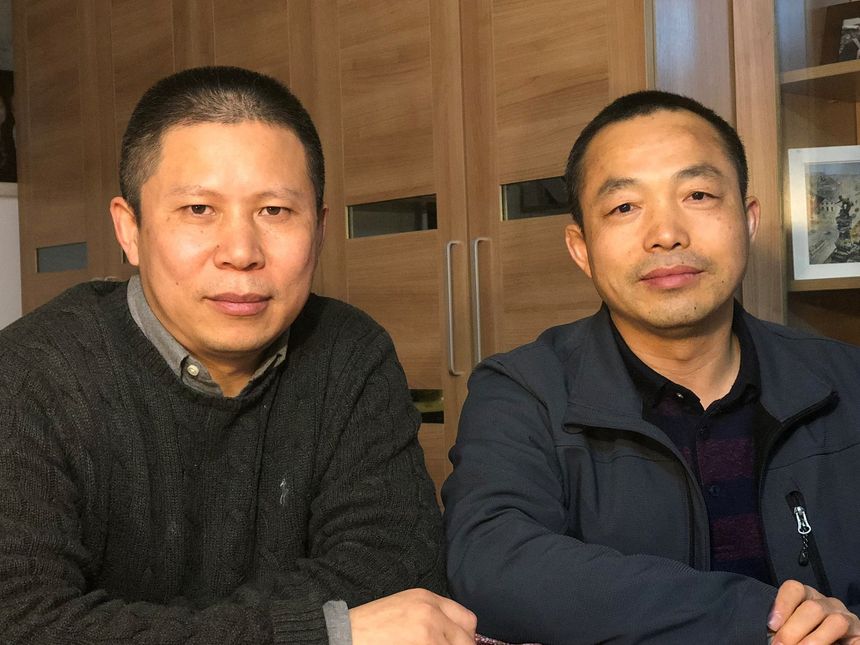


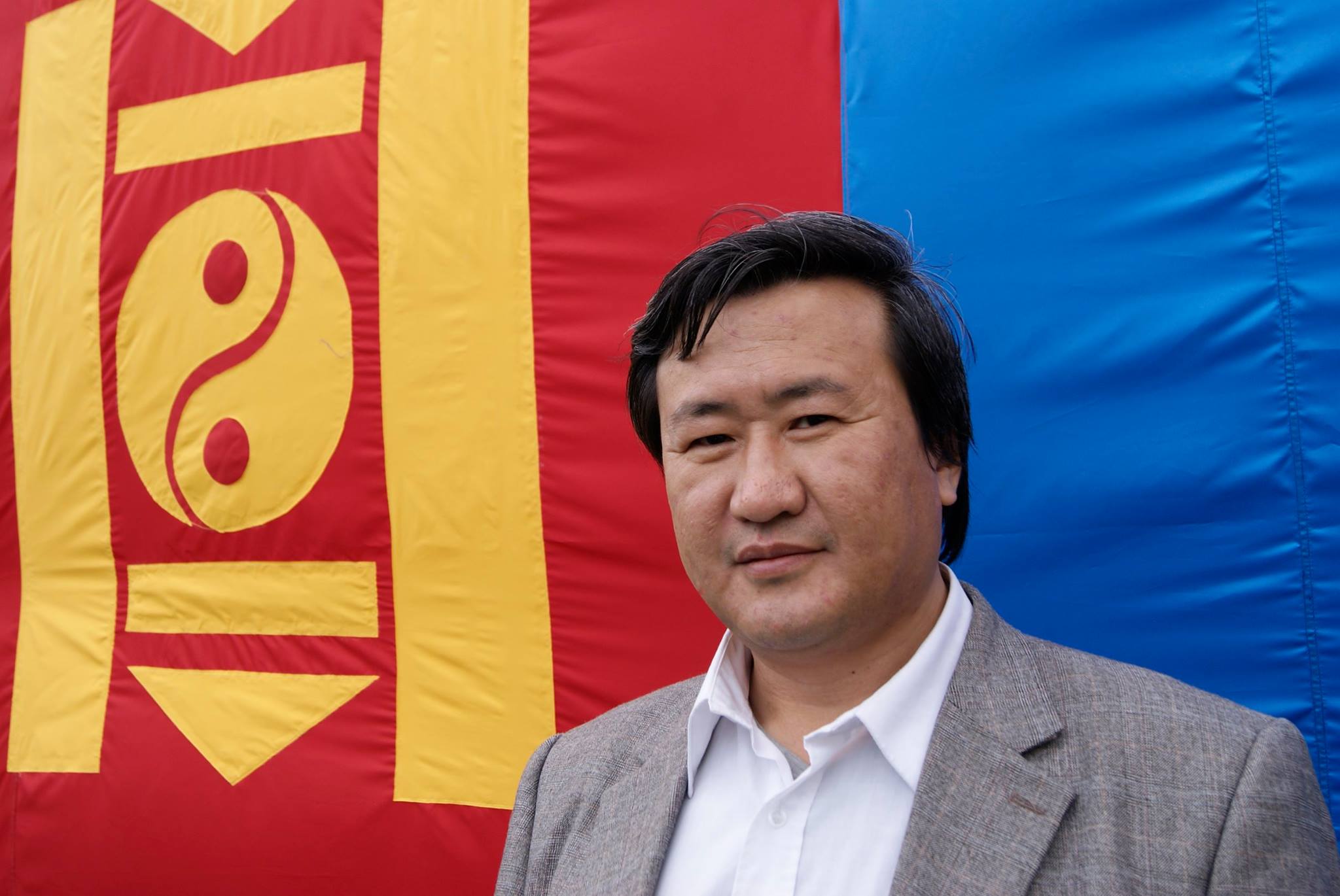
 Hans Thoolen on Human Rights Defenders and their awards