The pianist Gabriela Monterowho has exposed multiple abuses in her native Venezuela, has been awarded the 2018 International Beethoven Prize for human rights, peace, freedom, anti-poverty and inclusion. The award of the Beethoven Academy in Bonn takes into account an artist’s engagement in the broader society outside the concert hall. [see: http://trueheroesfilms.org/thedigest/awards/beethoven-prize-for-human-rights].
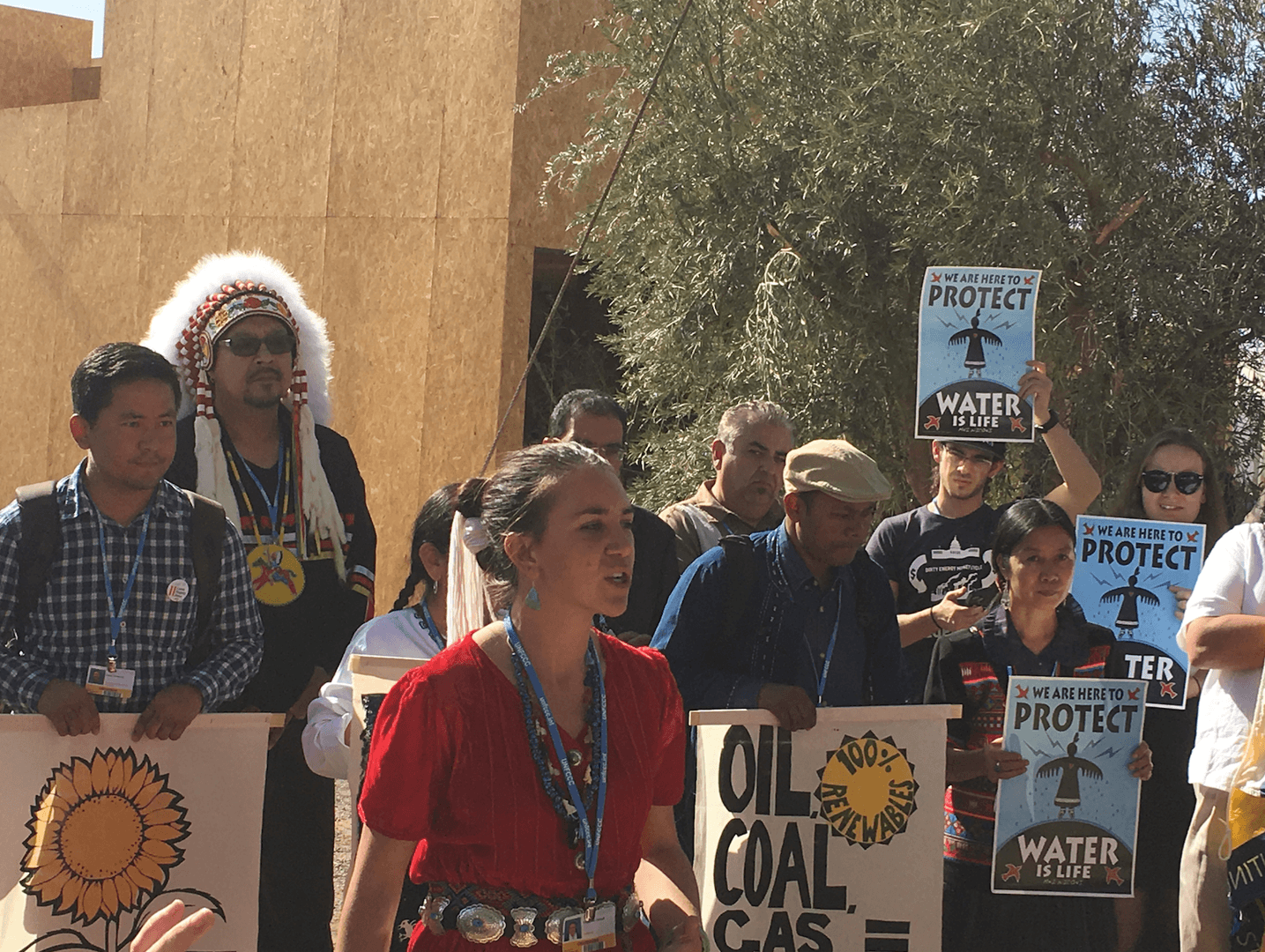
The talks wrapped up on Friday, and during the last two weeks, advocates for gender equality and indigenous peoples made their voices heard and won hard-fought battles to better respect their rights. Notably, governments agreed to create a platform to promote the participation of indigenous peoples in United Nations climate responses, and adopted a Gender Action Plan that aims to better integrate gender equality in climate change policies.
Just when the talks were nearing their end, human rights were pushed to the fore when Fijian prime minister and president of the climate talks, Frank Bainimarama, convened a high-level event about the importance of rights in climate negotiations. Why was this such a big deal? Because never before has any government presiding over the talks hosted an official event on human rights.
Bainimarama has also long been among those who have been silent on human rights issues. But on Thursday, he announced that integrating human rights in the implementation of the Paris Agreement was an important element of Fiji’s presidency, which will continue through the coming year. Costa Rica’s environment minister, Edgar Gutiérrez-Espelata, also proposed concrete ways to integrate rights into the current negotiations about the so-called Paris Rulebook. For example, governments could reference human rights obligations in climate change action plans and climate negotiators could agree to build capacity among states on promoting human rights in climate action.
The authors realize that of course, “such commitments are worth little unless governments are willing to turn rhetoric into reality. If they are serious about fighting climate change, governments should also do more to integrate the protection of human rights in climate policies, while defending the rights of people working to protect the environment.”
Similar ideas are to be found in the “Opening speech at seminar on human rights defenders” given the the Norwegian State Secretary Audun Halvorsen in Oslo, on 30 October for a seminar on “Environmental human rights defenders under threat from business operations“. The seminar was organised by Amnesty International Norway and Rainforest Foundation Norway.
The Boris Nemtsov Foundation was established by Zhanna Nemtsova, a daughter of the murdered politician, Boris Nemtsov, and plans to work in the field of education and raising public awareness, expert evaluations and also in “helping political prisoners and those who are prosecuted on political grounds in Russia.” A new national award, the Boris Nemtsov Prize, was created which is awarded annually for “outstanding courage in fighting for democratic values, human rights and freedom in Russia.”
Lev Schlosberg, a member of the Yabloko Party and a former deputy of the Pskov regional parliament, was announced as the first recipient. The award ceremony will take place in Bonn, Germany, on Russia’s National Day, June 12.

 Hans Thoolen on Human Rights Defenders and their awards