Voice of America on 28 December, 2023 reported that the founding editor of one of India’s largest news websites is among the journalists to be targeted by the Pegasus spyware. A joint investigation by the rights group Amnesty International and The Washington Post, published Thursday, found evidence that the invasive spyware is being used again to target media in India.
Made and marketed by Israeli company the NSO Group, the spyware can be used to access a phone’s messages and emails, peruse photos, eavesdrop on calls, track locations and even film the owner with the camera. [see also: https://humanrightsdefenders.blog/tag/pegasus/]
In the latest research, forensic investigations found evidence of the spyware on the iPhones of Siddharth Varadarajan of the news website The Wire, and Anand Mangnale of The Organized Crime and Corruption Reporting Project, or OCCRP.
“Increasingly, journalists in India face the threat of unlawful surveillance simply for doing their jobs, alongside other tools of repression, including imprisonment under draconian laws, smear campaigns, harassment, and intimidation,” Donncha Ó Cearbhaill, who heads Amnesty International’s Security Lab, said in a statement.
Amnesty reported that it first suspected renewed Pegasus activity during regular monitoring by its researchers in June. It investigated further after Apple sent notifications to iPhone users in October warning they had been targeted by “state sponsored attackers.” Around 20 politicians and journalists in India received the notifications. Amnesty then carried out a forensic analysis for individuals who received the warnings.
Around that time, the OCCRP had been investigating an Indian tycoon, Gautam Adani, who is an ally of Prime Minister Narendra Modi and founder of the multinational conglomerate known as the Adani Group.
Mangnale told the French news agency AFP he was targeted “within hours” of sending questions to the Adani Group on behalf of the OCCRP.
Varadarajan told the Post he believes the attempted hacking may be related to opposition to the detention of a prominent news publisher in New Delhi.
In a statement, Amnesty’s Ó Cearbhaill highlighted the chilling effect spyware has on media freedom.
“Targeting journalists solely for doing their work amounts to an unlawful attack on their privacy and violates their right to freedom of expression,” Ó Cearbhaill said.
In 2021, New Delhi was accused of using Pegasus to surveil journalists, opposition politicians and activists, with leaked documents showing the spyware had been used against more than 1,000 Indian phone numbers. Prime Minister Modi’s main rival, Rahul Gandhi, was among those targeted.
The government denied conducting “illegal surveillance” but refused to cooperate with a Supreme Court probe into the allegations, the findings of which have not been made public.
Following the October notifications sent by Apple, Indian authorities were reported to be investigating whether opposition politicians were targeted.
Ashwini Vaishnaw, the information and technology minister, said the government was “concerned” by the complaints.
The Washington Post reported that one day after Apple sent the notifications, government officials in India announced they would investigate the security of Apple devices.
——
The Washington Post (WP) reported Wednesday that following Apple’s October alert about alleged government hacking attempts on iPhones of independent Indian journalists and opposition politicians, Indian government officials swiftly retaliated against Apple.
It is reported that officials of the Bharatiya Janta Party (BJP), the ruling party, hurried to contain the fallout after journalists and politicians shared Apple’s warnings. The government administration pressured Apple to retract warnings, leading to a heated discussion. Under government pressure, Apple India acknowledged potential mistakes in threat detection and sought to downplay warnings globally. However, during a November meeting, Apple defended its stance against Indian officials’ scrutiny.
India’s opposition leaders and journalists received Apple alerts, warning of potential state-sponsored i
Olga Solovyeva of Advox, a Global Voices project dedicated to protecting freedom of expression online, posted on 19 April 2023 a piece statign that the impact of technology on politics cannot be ignored anymore. It is a long piece that I copy in its totality as it is worth reading and of great rlevance for human rights defenders:
Amidst the rising influence of technology in global politics, particularly in authoritarian regimes, the imperative to acknowledge the political accountability of tech corporations has become increasingly apparent. In recent years, the ramifications of disregarding ethical practices underscore the urgent need for tech companies to prioritize responsible conduct. The manipulation of information online, traffic rerouting, restricting access to the internet, and operating surveillance are some examples of how states can misuse technology. While technology was once expected to become a symbol of resistance and liberation, illiberal regimes now use it to produce various forms of digital unfreedom that extend into material reality. But how do we ensure that Big Tech contributes to democratic practices rather than political oppression?
Why do tech companies have political responsibility?
In an innovation driven sector like technology, legislation cannot keep pace with new developments. Often, neither users nor makers consider the negative consequences of a new technology until they have experienced them, and the industry is left struggling with the ramifications of harm and, as a consequence, its own expanding responsibilities.
Digital activists from Global Voices Advox report on the growing use of digital technology for advancing authoritarian regimes worldwide, focusing, among others, on issues such as surveillance, mis/disinformation and access to the internet in different contexts. Autocrats use the whole scale of digital technologies available. In Russia, where the interest of the state lies in keeping opposition views from the information environment, there is a strong emphasis on disinformation and censorship. Tanzania and Sudan are known for internet shutdowns, while in Turkey and Morocco, cases of public digital surveillance have become more common.
At the same time, the tech sector does not necessarily play on the dark side only. Since the Russian invasion of Ukraine, Elon Musk’s SpaceX continued to support Starlink and provide internet access in Ukraine after the Russian invasion disrupted services. And yet, his recent purchase of Twitter brought multiple controversies, further empowering the attention economy of social media, which leads to fragmentation, polarisation and the decline of the public sphere. It’s impossible to separate tech companies from politics, and their role tends to cause controversy.
Good apple, bad apple
If you’re reading this text from your MacBook or iPhone, you probably have recognized the difference between living in a new information space with much less targeted advertising. In February 2022, Apple introduced its new privacy features allowing users to enable or block personal data tracing from the apps installed on the company’s devices, an innovation with significant political, social and economic consequences.
It’s crucial to understand the business decision that underpins the ongoing debate on personal data ethics and regulation. Protecting Apple users’ personal data means they will not be targeted with personally crafted advertising, and their data will not be used to predict consumer behaviour, which enables users’ right to privacy — one of the central categories of online service providers’ moral responsibilities and, essentially, a human right. This guarantee of the right attracts consumers to Apple products.
At the same time, this architectural decision caused significant distress to the market, as the stock prices of Meta and other social media companies plunged that day. Introducing an opt-out particularly for personal data collection means shrinking their potential advertising revenues as less data becomes available to develop personalized ads.
Apple made a policy-level decision, a milestone in the discussion on issues of user privacy regulation. Effectively, it is a subject of government concern on the intersection of information and business ethics, law and policy. This case illustrates the power of one company, which can be not just a game changer in the conversation on tech regulation but a shock for the industry, pushing other businesses to shift their business models and challenge the dynamics of Big Tech.
What is this decision for Apple? An enactment of an ethical stand signalling its political responsibility? An act of an excellent corporate citizen innovating to enable its customers’ rights for privacy? Or is it a marketing move to boost the sale of Apple products through engaging in a non-market activity? Regardless of the motivation, we have witnessed a tech company making a political change on an international level, since Apple products are in demand and sold worldwide.
At the same time, the company engages in other activities that may be seen as controversial. Along with other Big Tech companies, Apple increased its lobbying spending in 2022 as businesses face increased pressure from lawmakers raising antitrust concerns to curb the power of tech giants. Meanwhile, stepping outside the liberal democratic political climate, Apple faces decisions that challenge its political stand. In 2021 the company confirmed storing all personal data of Chinese users inside China-based data centres. China is known for using surveillance as a tool for political prosecution. Even though Apple claimed to maintain a high level of security, journalist sources report that the company handed over the keys to the government. The same year, Apple removed a smart voting app, one of the tools developed by the opposition in Russia to outplay electoral fraud. In both cases, the company’s decision-making had severe and direct political consequences, just like the decision to block personal data tracing on its devices. The only difference was the kind of pressure put on a company by the political system it was operating in.
Where does the political responsibility of Big Tech end?
In 2022 the world saw the global expansion of authoritarian rule, affecting developing states and established democracies. According to the 2022 Freedom House report, only 20 percent of the earth’s population live in a free country, while the remaining 80 percent are equally split between a partially free and not free world. The world is getting more authoritarian, and the political regime of a liberal democracy today is the exception rather than the rule.
Different autocracies pose challenging obstacles to tech companies, which remain the key producers of innovative technology. The role of the state defines the potential expectations of business, and their relationship patterns. In autocracies, political participation and public deliberation face repression through state authorities, and business is shaped by a political economy with the elements of state intervention. The state prevails, and it has more direct control over the company when needed, and the interference in economic life is ordinary and unpredictable. Autocrats are famous for censorship, propaganda, and interventions in electoral systems, all of which are delivered by technology provided by business.
One of the most common examples could be the situation in which a business organization has to obey the law of an authoritarian state to maintain political legitimacy, while the law itself may undermine the moral legitimacy of the company. The case of Apple in China is an example of this. However, it can have different consequences for companies in other countries. For instance, Verizon (the subsidiary that bought out Yahoo! in 2017) was sued for handing data to the Chinese government that led to political prosecution and the torture of dissidents. In authoritarian regimes, legislation is often designed to set out the specific requirements and processes for government agencies to obtain access to personal data, including surveillance purposes. Even though data handovers upon the request, e.g., the subpoena, are common for democratic regimes as well, the difference is how such data is further used and whether there are grounds for balancing it out with other institutional procedures.
Elaborating on the political responsibility of Big Tech
As the intersection of technology and politics continues to expand, grappling with the political implications of new creations becomes imperative for tech innovators. They must take proactive steps to develop robust political responsibility strategies while navigating authoritarian and other ethically fraught environments. Transparency is one way to meet these goals.
The practice of environmental social and governance (ESG) reporting and disclosure on ESG issues is an excellent example of how mandated transparency has led to accountability, and one that can be adapted to technological innovation. Openly revealing who has bought a certain technology will limit the ability of authoritarian governments to abuse it, for example. Additionally, integrating political responsibility as a part of responsible investment portfolios could represent a meaningful step forward to starting an open dialogue about tech, politics and society. This could be done by disclosing on direct political engagement of companies and adding additional transparency about contexts in which business operates.
Yet, such openness would be even more problematic — and potentially impossible — for tech companies that have been developed within the borders and hence the jurisdiction of authoritarian regimes. One of the most illustrative examples is the case of Yandex, a multinational company headquartered in Russia. The company has grown into a major tech player, often referred to as the “Russian Google.” Despite making an occasional compromise with the political system, the company kept the reputation of the most liberal company in the country while showing steady business growth.
However, when Russia invaded Ukraine in February 2022, Yandex faced significant pressure, legislative restrictions, international sanctions and criticism from the public. From the first weeks of the war, YandexNews, daily visited by 40 million people, has been indexing only stories from state-owned media, amplifying the narratives of the “special operation.” Abiding by the law became equivalent to contributing to univocal media coverage dominated by the Russian state.
The war became the most significant trigger that affected the company, as the share price of this prominent business lost over 75 percent of its value. Many company employees, including top management, resigned or left the country in protest of the war led by Russia. Personal sanctions were applied to the company’s CEO and founder. Under pressure, the company sold their media assets to a holding loyal to the state. In December, the company’s founder left Yandex Russia but remained the key shareholder.
Scenarios like these establish a controversial ground for businesses that must come to terms with an authoritarian state’s rules to keep their business going. Albert Hirshman’s “Exit, Voice, Loyalty: Responses to Decline in Firms, Organizations and States” suggests a framework of three strategies for responding to the perceived decrease in performance of an organization or a state. Using it as a guide to an organizational strategy, a tech company facing authoritarianism could leave, protest or comply. However, as the suppression of public dissent usually characterizes authoritarianism, realistically, only two strategies are left: to stay or to go.
Nevertheless, both strategies bring further ethical concerns. With a lot said about the downsides of collaborating with autocrats, how ethical is it towards the employees and customers for a business to leave the declining state? Moreover, the business remains a profit-generating enterprise first of all, and very few countries in the world would make a market for a product so the company’s leadership could keep to the standard of political responsibility. We can’t all live in Norway, after all.
As the influence of tech companies continues to grow, it falls to civil society, journalists, tech users, and watchdog organisations to keep these firms accountable. Demanding transparency and collaborating to come up with new fair policies that could support tech companies in tough contexts could be one way forward. Meanwhile, it is important to educate the public and create incentives for consuming tech other than instant gratification. By working together, these stakeholders can start shaping a more ethical tech landscape, where common good carries more weight than corporate interest.
As many news outlets report today it is 30 years ago that China cracked down on Tiananmen Square. China tries mostly to forget about it and make others forget it about it too. Still, it recenty came out to defend it as the “correct policy”. “That incident was a political turbulence and the central government took measures to stop the turbulence which is a correct policy” Defence minister Wi Fenghe Wei told a regional security forum in Singapore. “The 30 years have proven that China has undergone major changes,” he said, adding that because of the government’s action at that time “China has enjoyed stability and development“. On the other hand Wu Qian, a spokesman for the defence ministry, decried the use of the word “suppression” to describe the crackdown.
But it does cover Chinese rock musician Li Zhi, who has been outspoken and sung songs about social issues including the Tiananmen Square crackdown, and has not been seen for three months. The South China Morning Post of 2 June has a detailed piece on what happened to this singer: His upcoming tour has been cancelled and his social media accounts taken down. Then his music was removed from all of China’s major streaming sites – as if his career had never existed at all. “Now this square is my grave,” Li sang. “Everything is just a dream.”
The disappearance of Li, the musician, has left fans searching for answers. On February 20, the official Weibo social media account for the 40-year-old’s concert tour posted a photograph of its team in front of a truck about to embark on scheduled performances in Sichuan province in China’s southwest. Just two days later, however, the account posted an image of a hand wearing what appeared to be a hospital wrist band and the words: “Very sorry.” The next post, published the same day, announced without explanation that the tour was cancelled and that ticket purchasers would shortly receive a refund. Fans flooded the comment section with wishes for a speedy recovery.
But the suggestion that a health issue was behind the cancellations was later thrown into doubt. A statement published in April by Sichuan’s culture department said it had “urgently halted” concert plans for a “well-known singer with improper conduct” who was previously slated for 23 performances – the same number of concerts which Li had scheduled in the province. It said 18,000 tickets were fully refunded.
..Li’s presence on the Chinese internet was completely erased. An April 21 central government directive ordered all websites to delete any audio or video content relating to five of Li’s songs, according to China Digital Times, an organisation that publishes leaked censorship instructions. The authenticity of the directive could not be independently verified.
“There’s pretty much a consensus” among those working in the industry that Li’s disappearance from public view is due to the sensitive anniversary, said a music industry professional who spoke on condition of anonymity because of fear of government retribution. “He did a number of songs that were considered politically risky, making references to June 4, 1989, and so he’s been out of the picture,” the industry professional said.
Li’s current whereabouts could not be confirmed. His company and record label did not respond to repeated interview requests. Li’s songs alluding to the Tiananmen Square protests – The Square, The Spring of 1990 and The Goddess, in honour of the Goddess of Democracy that students erected – were part of his earlier works. In recent years, the bespectacled singer has avoided making public political statements, focusing more on promoting his performances. In 2015, state-run China Daily newspaper published a profile of Li, describing him as a performer who easily sells out concerts. After years of working as an independent artist, he signed last autumn with Taihe Music Group, a major Chinese record label. Fans who knew Li as a largely apolitical entertainer expressed bewilderment online about his disappearance. Others made veiled references to China’s internet censorship. On Zhihu, a question-and-answer website similar to Quora, one user wrote that people posed questions every day about what might have happened to Li, but these posts always disappeared the next morning “as if nothing had happened at all”.
Another user said: “I don’t dare to say it, nor do I dare to ask.” A fan who has been sharing Li’s music on his personal account spoke on condition of anonymity because he feared his employers would punish him for discussing the subject. “Everyone knows the reason for Li Zhi’s disappearance,” the fan said. “But I’m sorry, I can’t tell you, because I follow China’s laws and also hope that Li Zhi can return.” Quoting one of Li’s lyrics, the fan added: “The world will be all right.” Fans continue to circulate videos of Li’s performances online. His complete discography has been uploaded onto file-sharing websites, with back-up links in case the original ones are shuttered. Some users shared tribute art, including a black T-shirt with the words “improper conduct”. A few years ago, in a performance in Taiwan, Li bounced around on stage, strumming his guitar and repeating a chorus in apparent tribute to the spirit of Chinese propaganda.
Foreign companies are not immune. Apple Music has removed from its Chinese streaming service a song by Hong Kong singer Jacky Cheung Hok-yau that references the Tiananmen crackdown. Tat Ming Pair, a Hong Kong duo, have been deleted entirely from the app. They released a song this month called Remembering is a Crime in memory of the protests.
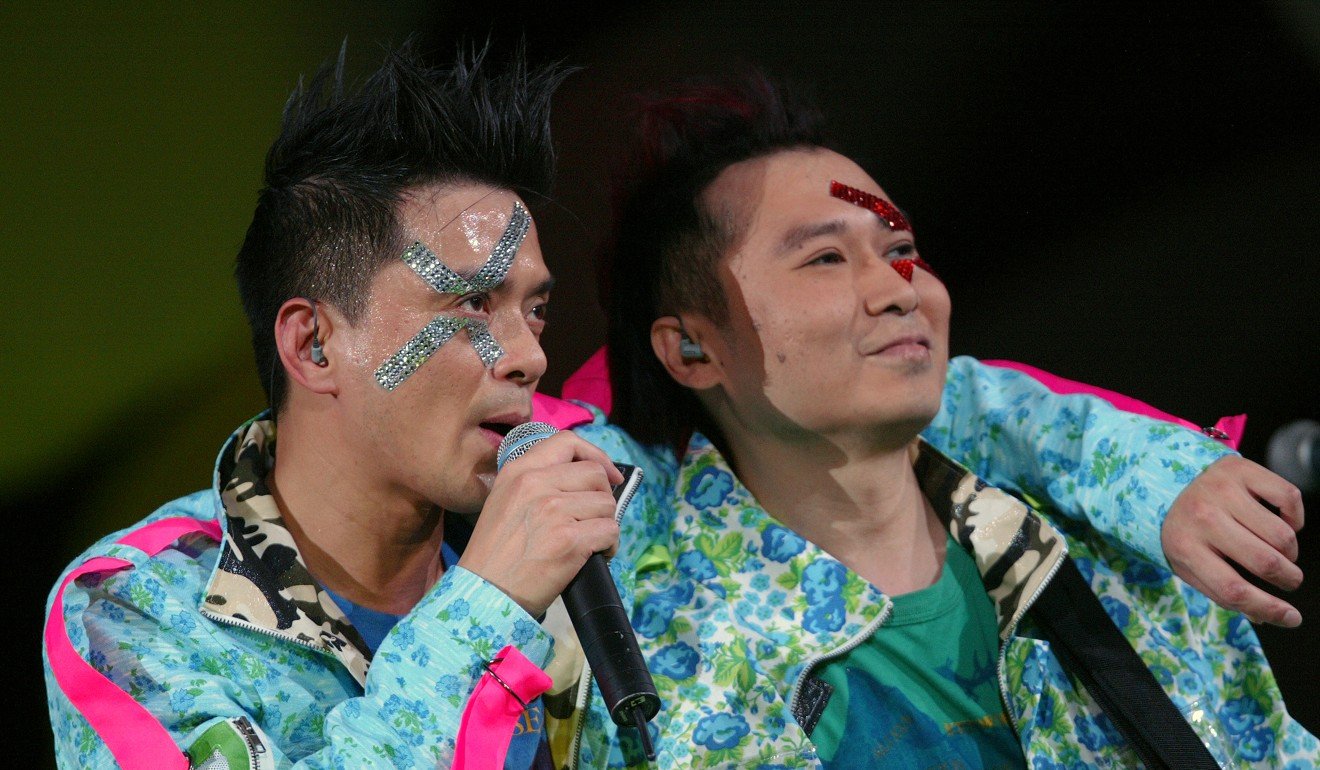
Music by Tat Ming Pair – Anthony Wong Yiu-ming (left) and Tats Lau Yi-tat – has been deleted from the Apple Music app. Photo: K.Y. Cheng
Wikipedia also announced this month that the online encyclopaedia is no longer accessible in China. While the Chinese-language version has been blocked since 2015, most other languages could previously be viewed, Wikipedia said.
The Human Rights Foundation publised this video about China’s Million Person Muslim Prison Camps:
On 20 March, 2017, around midnight, Mr. Ahmed Mansoor was arrested at his home in Ajman, UAE, by a large team of the Emirates’ security forces. The Government has finally confirmed that it is holding him, but until today we don’t know where. The reasons for his arrest remain unknown but might be linked to a series of tweets he posted on Twitter in recent days, calling for the release of UAE human rights defender Osama Al-Najjaror to a letter that he signed, along with other activists in the region, calling for the release of all prisoners of conscience in the Middle East ahead of an Arab League Summit scheduled to be held in Jordan on 29 March 2017.
Following a massive crackdown on human rights defenders in the UAE in recent years, Ahmed Mansoor is today widely respected as the only independent voice still speaking out through his blog and Twitter account against human rights violations from inside the country. He was the Laureate of the Martin Ennals Award 2015. [https://humanrightsdefenders.blog/2015/10/07/the-link-to-the-full-mea-2015-ceremony-of-6-october/]. Mr. Mansoor has faced repeated intimidation, harassment, and death threats from the UAE authorities or their supporters, including arrest and imprisonment in 2011 following an unfair trial. Although pardoned and released later that year, the UAE authorities have arbitrarily imposed a travel ban on him. [https://humanrightsdefenders.blog/2015/09/15/fly-emirates-if-the-emirs-let-you/]
Ahmed Mansoor, the Laureate of the Martin Ennals Award 2015, was the target of a major hacking attempt. Fortunately it received global coverage on 26 and 27 August 2016 and Apple has immediately issued a security update to address the vulnerabilities. [For those with Iphones/Ipads, you may want to update your IOS software to 9.3.5!]
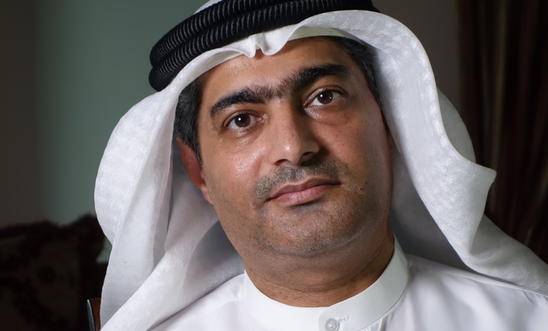
Image copyrightAP – human rights defender Ahmed Mansoor
The flaws in Apple’s iOS operating system were discovered by Mansoor who alerted security researchers to unsolicited text messages he had received on 10 and 11 August. They discovered three previously unknown flaws within Apple’s code that meant spyware could be installed with a single tap. Apple has since released a software update that addresses the problem. The two security firms involved, Citizen Lab and Lookout, said they had held back details of the discovery until the fix had been issued.
The texts promised to reveal “secrets” about people allegedly being tortured in the United Arab Emirates (UAE)’s jails if he tapped the links. Had he done so, Citizen Lab says, his iPhone 6 would have been “jailbroken”, meaning unauthorised software could have been installed. “Once infected, Mansoor’s phone would have become a digital spy in his pocket, capable of employing his iPhone’s camera and microphone to snoop on activity in the vicinity of the device, recording his WhatsApp and Viber calls, logging messages sent in mobile chat apps, and tracking his movements,” said Citizen Lab. The researchers say they believe the spyware involved was created by NSO Group, an Israeli “cyber-war” company.
The spyware would have been installed if Mansoor had tapped on the links. Image copyright CITIZENLAB



 Hans Thoolen on Human Rights Defenders and their awards