Posts Tagged ‘75th anniversary UDHR’

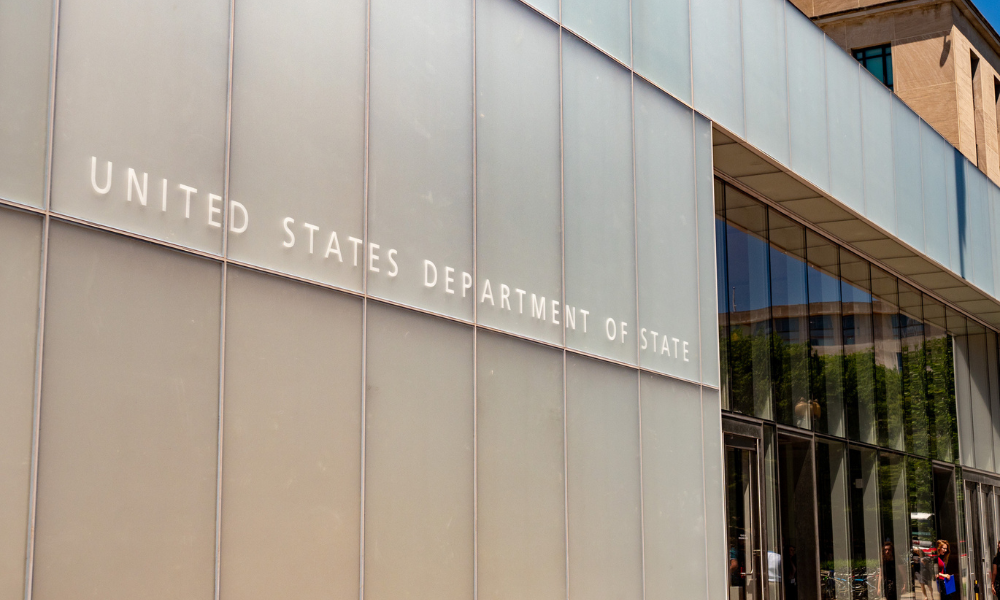
US State Department 2023 country reports

May 4, 2024

US State Department highlights human rights concerns globally in 2023 country reports

On 2 May 2023 Angelica Dino in the Canadian Lawyer summarizes the latest annual Country Reports on Human Rights Practices, released by the U.S. Department of State on the 75th anniversary of the UN Universal Declaration of Human Rights (UDHR).

The Human Rights Report evaluated the status of internationally recognized individual, civil, political, and worker rights in nearly 200 countries and territories, leveraging insights from various sources, including government agencies, NGOs, and media. According to the State Department, this documentation serves as a critical tool in connecting U.S. diplomatic and foreign aid efforts to the foundational American values of human rights protection and promotion.

The release coincides with the third Summit for Democracy, led this year by the Republic of Korea. The summit emphasizes a collective international effort to strengthen democratic governance and address human rights abuses. Its goals include expanding media freedom, enhancing women’s rights, combating corruption, and ensuring that technology supports democratic processes rather than acting as a tool of repression.

This year’s report detailed significant human rights violations across several countries, with stark abuses noted in Russia’s ongoing conflict in Ukraine. Russian military actions have been characterized by violent assaults on civilians, with extensive documentation of crimes potentially amounting to crimes against humanity. The report also highlighted the forced transfer and assimilation of Ukrainian children into Russian territories, marking a severe violation of international law.

Further, the report raised concerns about the human rights situations in Sudan, where both government and paramilitary forces have committed war crimes, and in Uganda, which has enacted severe anti-LGBTQI+ legislation. The ongoing conflict between Israel and Hamas also drew attention, with the report calling for adherence to international law and protection of civilians amidst military actions.

In Iran, the regime’s crackdown on dissent extended beyond its borders, posing grave risks to its citizens both domestically and internationally. Similarly, the report condemned the Taliban’s discriminatory actions against women and girls in Afghanistan, which starkly undermined their societal roles and freedoms.

Conversely, the report identified positive strides in several nations. Notably, Kenya has upheld freedom of expression for LGBTQI+ individuals, and Estonia and Slovenia have recognized marriage equality. Additionally, labour reforms in Mexico have empowered workers to improve conditions and assert their rights more effectively.

Secretary of State Anthony Blinken emphasized the report’s role and expressed hope that the findings will support and inspire human rights defenders globally. “I hope that the honest and public assessments of human rights abuses, as well as the reports of progress, reflected in these pages give strength to these brave individuals across the globe who often put their lives at risk to improve conditions in their own countries, and, ultimately, make the world a freer, safer place for us all,” Blinken said.

see also: https://humanrightsdefenders.blog/2022/04/14/us-state-departments-report-2021-is-out/

https://www.canadianlawyermag.com/news/international/us-state-department-highlights-human-rights-concerns-globally-in-2023-country-reports/385900

Harvard Carr’s Center on the 75th anniversary of the Universal Declaration of Human Rights

January 29, 2024

Harvard Kennedy School

Making a movement: The history and future of human rights“. To mark the 75th anniversary of the Universal Declaration of Human Rights, The Carr Center for Human Rights Policy asked 90 Harvard faculty and affiliates to offer thoughts on a document that changed the world.

Universal Declaration of Human Rights 75 year anniversary logo.“THE CREATION OF SUCH A DOCUMENT— its mere existence—must count among the greatest achievements in human history.” That is how Mathias Risse, the Berthold Beitz Professor in Human Rights, Global Affairs and Philosophy, and faculty director of the Carr Center for Human Rights Policy at HKS, describes the impact of the Universal Declaration of Human Rights (UDHR), which turns 75 this year. Yet Risse and other human rights defenders say the UDHR has done much more than exist—it paved the way for more than 70 enforceable human rights treaties around the globe and marked the first time the world had a documental agreement that all humans were equal and free. That global standard is vital even if the world community continues to fall short of achieving the UDHR’s promise, Risse says.  “The human rights movement will always register shortfalls much more than achievements and would miss its purpose otherwise,” he says. “Regardless, the change that these decades of developments have brought is very real.”
To honor the UDHR, the Carr Center commissioned short essays from 90 scholars, fellows, and affiliates across HKS, Harvard, and beyond to explore the past, present, and future of the human rights movement it inspired. A selection of excerpts follows below. The complete collection of essays in their entirety can be found on the Carr Center website.

https://www.hks.harvard.edu/faculty-research/policy-topics/human-rights/making-movement-history-and-future-human-rights

Secretary-General’s remarks at the Human Rights Prize Award Ceremony

December 18, 2023
UN chief warns human rights under attack, praises rights defenders

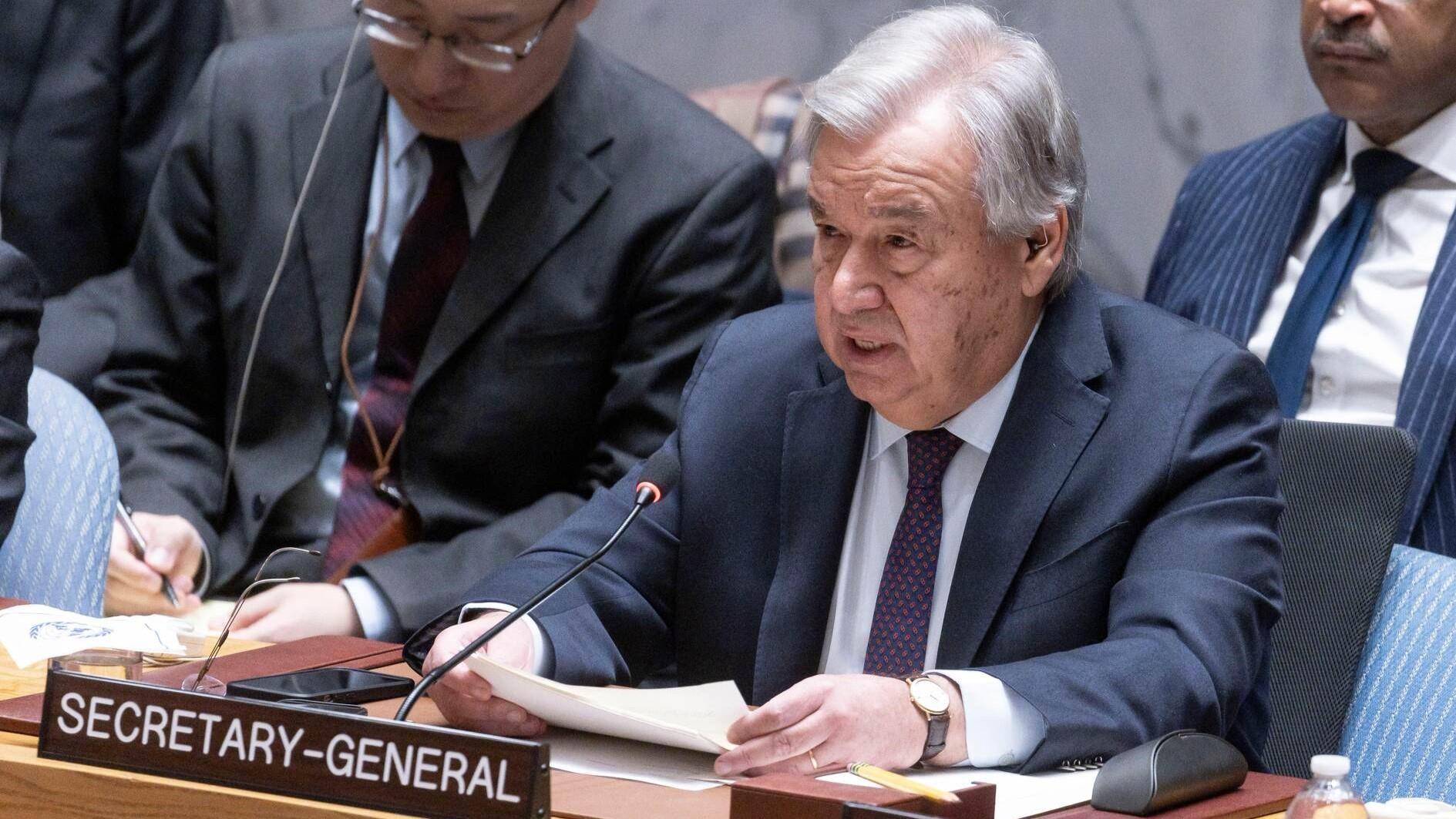
U.N. Secretary-General Antonio Guterres

It is a pleasure to join you to honour the achievements of human rights defenders across the globe. Three quarters of a century ago, in a world decimated by war, the United Nations General Assembly proclaimed that: “All human beings are born free and equal in dignity and rights”.

The Universal Declaration of Human Rights is a clarion call to act in accordance with a fundamental truth: that each of us is an equal member of a single human family.

Seventy-five years on, the world must recall that wisdom. And it must act on it. Because human rights are under attack around the world. Conflicts are raging, with appalling consequences for civilians as we are dramatically witnessing every single day with immense death and suffering in Gaza after the horrors of the 7 October attacks. Inequalities are deepening. Hunger and poverty are rising. Women’s rights are stalling, and in some cases, going into reverse. Civic space and media freedom is being rolled back.

New threats are blossoming – from catastrophic climate disasters, to artificial intelligence, which holds the potential for immense possibility, but also for immense peril. And age-old hatreds are resurging with a vengeance – from racism, to xenophobia, and religious intolerance. People are being violently targeted solely for their religion, their ethnicity or who they love.

But across the world, human rights defenders are lights in the darkness.

They are changing lives:

Fighting, educating, and holding power to account, to make human rights a living, breathing reality. This is deeply dangerous work. Last year, almost 450 human rights defenders, journalists and trade unionists were killed. Forty percent more than the previous year. Thirty-three vanished without a trace – a staggering three hundred percent increase from 2021.

In this context, today’s Human Rights Prize is all the more important. This prize has recognized the achievements of human rights defenders since 1968. It has honored luminaries such as Nelson Mandela, Malala Yusafzai and the International Committee of the Red Cross. See: https://www.trueheroesfilms.org/thedigest/awards/74A3B502-F3DF-4DDB-8D6F-672C03B4A008.

I pay tribute to each of the recipients of the prize today for their extraordinary work, their humanity and their courage [see: https://humanrightsdefenders.blog/2023/07/22/winners-of-2023-un-human-rights-prize-announced/]:

Julienne Lusenge from the Democratic Republic of the Congo;

Julio Pereyra from Uruguay;

The Amman Center for Human Rights Studies;

The Human Rights Center “Viasna”, working in Belarus;

And the Global Coalition of civil society organizations, Indigenous Peoples, social movements and local communities for “the universal recognition of the right to a clean, healthy and sustainable environment”. 

Congratulations to you all. And thank you for everything you are doing. I would also like to pay tribute tonight to the thousands of unsung human rights defenders around the world. 

Leaders of all kinds must take inspiration from you – our prize recipients today –and defend all human rights – political, civil, social, economic, and cultural.  

The world needs leaders of countries, corporations, political parties, religious and civil organizations and beyond, to speak out against antisemitism, anti-Muslim bigotry, attacks on minority Christian communities, and all forms of hate and abuse.   It needs them to protect human rights defenders, and bring those who threaten them to justice.

It needs them to embrace our common norms and values, to act on them, and be guided by the spirit of humanity and dignity embodied by the Universal Declaration – to prevent conflict, protect the planet and heal divides. 

And to place human rights at the front and centre of efforts to update our international institutions at the Summit of the Future next September. 

..

As we celebrate the 75th anniversary of the Universal Declaration of Human Rights, we need leaders of all kinds to embrace their role as human rights defenders too.

Thank you.

https://www.un.org/sg/en/content/sg/statement/2023-12-15/secretary-generals-remarks-the-human-rights-prize-award-ceremony-delivered

UDHR@75: how UNDP sees itself ensuring rights for all

December 11, 2023
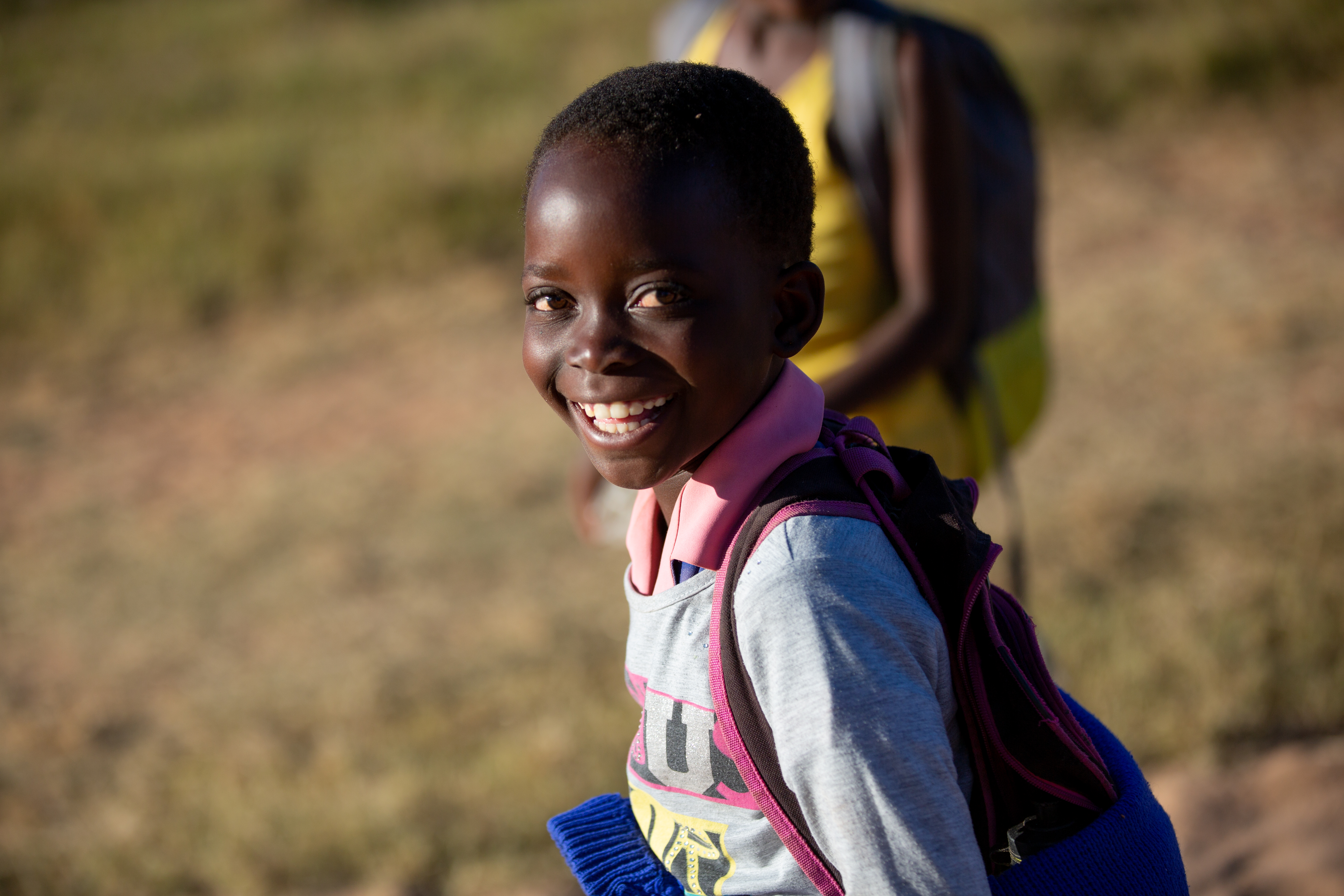
Children smiling
Photo: UNDP Zimbabwe

On 8 December, 2023 the United Nations lead agency on international development, UNDP, posted its commitment to human rights:

..Protecting our rights to do so was enshrined in the Universal Declaration of Human Rights 75 years ago, and it has been our North Star for human rights ever since.  The past three years have been defined by crises on a global scale. Conflict is at its highest since the Second World War. From Gaza to Ukraine, Sudan and Myanmar, people’s right to live without fear is being undermined. Climate change, brought about by humanity’s own actions, is stripping away the right of our children to a healthy and prosperous future. The COVID-19 pandemic brought to stark light the value of the right to health for all.  

Three-quarters of a century on, we are at an important inflection point, where we must recalibrate and reconnect with the principles of the Universal Declaration of Human Rights if we want to shape a future that lives up to its vision.  Doing so will not be easy. It will require action across many different spheres of life. Recognizing this, UNDP is prioritizing seven key areas where it is working to strengthen human rights. 

Dignity and equality of rights is needed for all people and the rights of people living in crisis and conflict must be assured 

If we don’t invest in human rights, we won’t achieve the Sustainable Development Goals 

Ninety percent of Sustainable Development Goals (SDGs) targets align with the obligations outlined in international human rights frameworks.  However, halfway to the 2030 deadline, development progress and the realization of Agenda 2030 is under threat due to the combined impacts of climate change, conflict, overlapping energy, food and economic shocks, and lingering COVID-19 effects. Human rights can be part of proactive solutions helping to address contemporary development challenges and pushing progress towards Agenda 2030.  By adopting a human rights-based approach, UNDP is working to ensure that no one is left behind as we strive for sustainable development. For example, UNDP has worked to promote synergies between human rights and SDG systems in eight countries, including Sierra Leone, Uruguay and Pakistan, boosting both the efficiency and effectiveness of national efforts to advance human rights and sustainable development. 

Human rights defenders must be able to speak out without fear 

Human rights defenders face alarming threats, including intimidation and reprisals, in the pursuit of a goal that should be a shared aspiration for all – the creation of fair and peaceful societies.  In 2022, there was a 40 percent increase in the killings of human rights defenders, journalists, and trade unionists compared to 2021.  UNDP works with civil society, human rights defenders and national human rights institutions around the world to ensure those that want to speak out have the freedom to do so. In Thailand, UNDP conducted a study looking into the protection of human rights defenders at the request of the Ministry of Justice.  

Young people must be included in efforts to protect the rights of future generations 

There are 1.2 billion young people in the world today, and UNDP recognizes the important role they play as positive agents of change. 

Private sector has an important role to play 

Business can be a powerful driver of sustainable development, offering access to social and economic opportunities and a pathway to prosperity for many.  

Human rights and the environment are interconnected 

In the next 25 years, building resilience to biodiversity loss and climate change will be key to the realization of all human rights – including the right to a clean, healthy and sustainable environment.  

Digital technology must unite, not divide 

Technology can be a great enabler of equality and development by improving connectivity, financial inclusion, and public services, positively impacting the realization of human rights.  But it can also have a dangerous downside, exacerbating existing inequalities and vulnerabilities. While over 80 percent of developed countries have access to the internet, only 36 percent of individuals in least-developed countries are online.  UNDP puts human rights at the centre of its Digital Strategy, and supports countries to harness digital technology as a means to advocate for, protect, access, report on, and exercise human rights…

https://www.undp.org/stories/ensuring-rights-all-rapidly-changing-world

UDHR@75: occasion for US, UK and Canada to put sanctions on human rights abusers

December 9, 2023

The UK, US and Canada are announcing a sweeping package of sanctions targeting individuals linked to human rights abuses around the world, ahead of the 75th anniversary of the Universal Declaration of Human Rights on 10 December. 

UK targets forced labour operations in Southeast Asia, and government-linked officials in Belarus, Haiti, Iran, and Syria complicit in repressing individual freedoms.

The first set targets 9 individuals and 5 entities for their involvement in trafficking people in Cambodia, Laos and Myanmar, forcing them to work for online ‘scam farms’ which enable large-scale fraud. Victims are promised well-paid jobs but are subject to torture or other cruel, inhuman, or degrading treatment…

The second is aimed at a number of individuals linked to the governments, judiciaries and prosecuting authorities of Belarus, Haiti, Iran, and Syria, for their involvement in the repression of citizens solely for exercising fundamental freedoms in those countries.

Included in the USA sanctions are two Afghanistan government ministers accused of repressing women and girls, by restricting access to secondary education; two Iranian intelligence officers who the Treasury says plot violence against Iranian regime opponents beyond the nation’s borders and two Chinese officials accused of torturing Uyghur ethnic minorities in the Xinjiang region of China.

https://www.gov.uk/government/news/uk-and-allies-sanction-human-rights-abusers

https://thehill.com/homenews/ap/ap-u-s-news/ap-u-s-sanctions-officials-from-afghanistan-to-china-on-declaration-of-human-rights-anniversary/

https://www.france24.com/en/live-news/20231208-us-uk-canada-sanction-dozens-on-human-rights-anniversary

UDHR@75: how to do better in the future – a view from the Open Society Foundations

December 7, 2023

On 5 December 2023, Natalie Samarasinghe – global director for advocacy at the Open Society Foundations. – wrote about strengthening human rights based on David Griffiths’ paper, Barometer in Context: Strengthening the Human Rights System.

….But this is not the whole story. The Open Society Barometer, a poll of over 36,000 people in a representative group of countries, found that most people believe in the value of human rights. Over 70 percent said that human rights “reflect the values I believe in” and are “a force for good” in the world.

Actors such as human rights lawyers, NGOs, and international organizations continue to provide hope, support, and redress to those seeking justice and protection. And they are joined by a growing cohort of others, from rural communities to indigenous peoples, political and social movements. They may not use the language of rights but their work is grounded in them. They cannot afford to have theoretical debates about the relevance of the UDHR. They need support and solutions.

To mark the UDHR’s anniversary, Open Society commissioned a paper on what those solutions might look like, written by David Griffiths, an advocate and policy expert with more than two decades of diverse experience across the human rights movement. His paper, Barometer in Context: Strengthening the Human Rights System, sets out a series of proposals for how to make this moment count, including prioritizing economic inequality and climate change, exposing the failure of authoritarians to deliver, defending civic space, rethinking migration, widening accountability, and strengthening the human rights system.

Drawing on 18 months of research and material from at least 65 interviews with people from all parts of the world, as well as the Open Society Barometer, these proposals provide inspiration for those of us approaching this anniversary with a heavy heart. It is vital that we avoid paralysis and gloom, which only plays into the hands of abusers and authoritarians.

We must become more creative in how we support those defending rights, whether they are in the courtroom or community center, or on the streets marching for debt relief and climate justice. We must invest in the leaders and tools of tomorrow, instead of playing catch-up with authoritarians, while doubling down on our backing for traditional actors and approaches that continue to deliver results.

And now more than ever, we must nurture a global movement—of the sort that was not possible in 1948—to reaffirm the simple truth that lies at the heart of the Declaration: that all human beings are equal, that every life has value.

https://www.opensocietyfoundations.org/voices/75-years-of-the-universal-declaration-of-human-rights