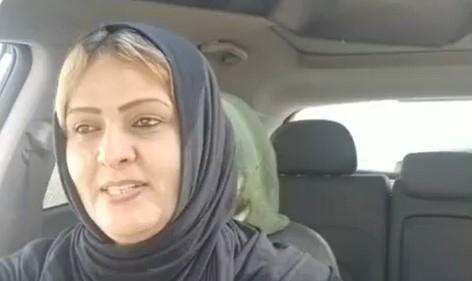
International media (here CNN) reported on 11 November 2020 on the killing of prominent Libyan lawyer and women’s rights activist Hanan al-Barassi, who was gunned down by armed men Tuesday in the eastern city of Benghazi. Her killing in Benghazi, which falls under the control of the Libyan National Army (LNA), came just a day after she shared comments on social media criticizing the son of renegade military general and LNA leader Khalifa Haftar. “The assassination of human rights defenders and opinion-holders and the silencing of voices is a heinous crime and a disgraceful form of tyranny and a desperate attempt to destroy hope for the establishment of a civil and democratic state,” Libya’s Interior Minister, Fathi Bashagha, tweeted Tuesday.
According to the United Nations Support Mission in Libya (UNSMIL), al-Barassi — whom the mission describes as a “vocal critic of corruption, abuse of power and human rights violations” — was shot “in broad daylight” by unidentified armed men. “Her tragic death illustrates the threats faced by Libyan women as they dare to speak out,” UNSMIL added. In videos posted publicly on her Facebook page, al-Barassi expressed criticism of figures loyal to the LNA. In a livestream shared on Monday, just a day before her killing, al-Barassi said she would not be silenced by threats. “I won’t surrender, only with bullets will I ever surrender — if I die, so be it. Only in death will I be silenced. Tomorrow I will have several surprises [to share], several surprises,” she told viewers. The LNA has not yet responded to a CNN request for comment on al-Barassi’s death.
Elham Saudi, the director of Lawyers for Justice in Libya, an organization which seeks to defend and promote human rights in the conflict-ridden country, called the attack an “appalling and painful reminder of the reality on the ground” for women in Libya. “With no accountability, violators will continue to get away with literal murder in broad daylight,” she added.Al-Barassi’s killing follows a series of attacks against those critical of forces aligned to the LNA.
“The killing of an outspoken lawyer in broad daylight in Benghazi will send chills through activists across the region,” said Hanan Salah, senior Libya researcher at Human Rights Watch. “This brutal killing smacks of a cold-blooded execution. The only way to end this cycle of violence is if authorities hold criminals to account for these terrible acts.”
Ravindran Daniel, in Open Global Rights of 10 November 2020 published a piece that should interest anybody who wrestles with the issue of how to ‘decentralise’ the international human rights movement. In “What are the implications of International Human Rights NGOs moving to the South?” Daniel – who is a human rights lawyer from India, served as director of the Human Rights Division with the UN peacekeeping missions in East Timor, Libya and the Sudan and established the Asian Forum for Human Rights and Development – takes the recent closure of AI India as the starting point for a wider discussion of the structural problems that come up in trying to realise the ‘democratization of the global human rights movement”. [see also: https://humanrightsdefenders.blog/2020/09/29/amnesty-feels-forced-to-shut-sown-its-india-office-amidst-govenment-pressure/]
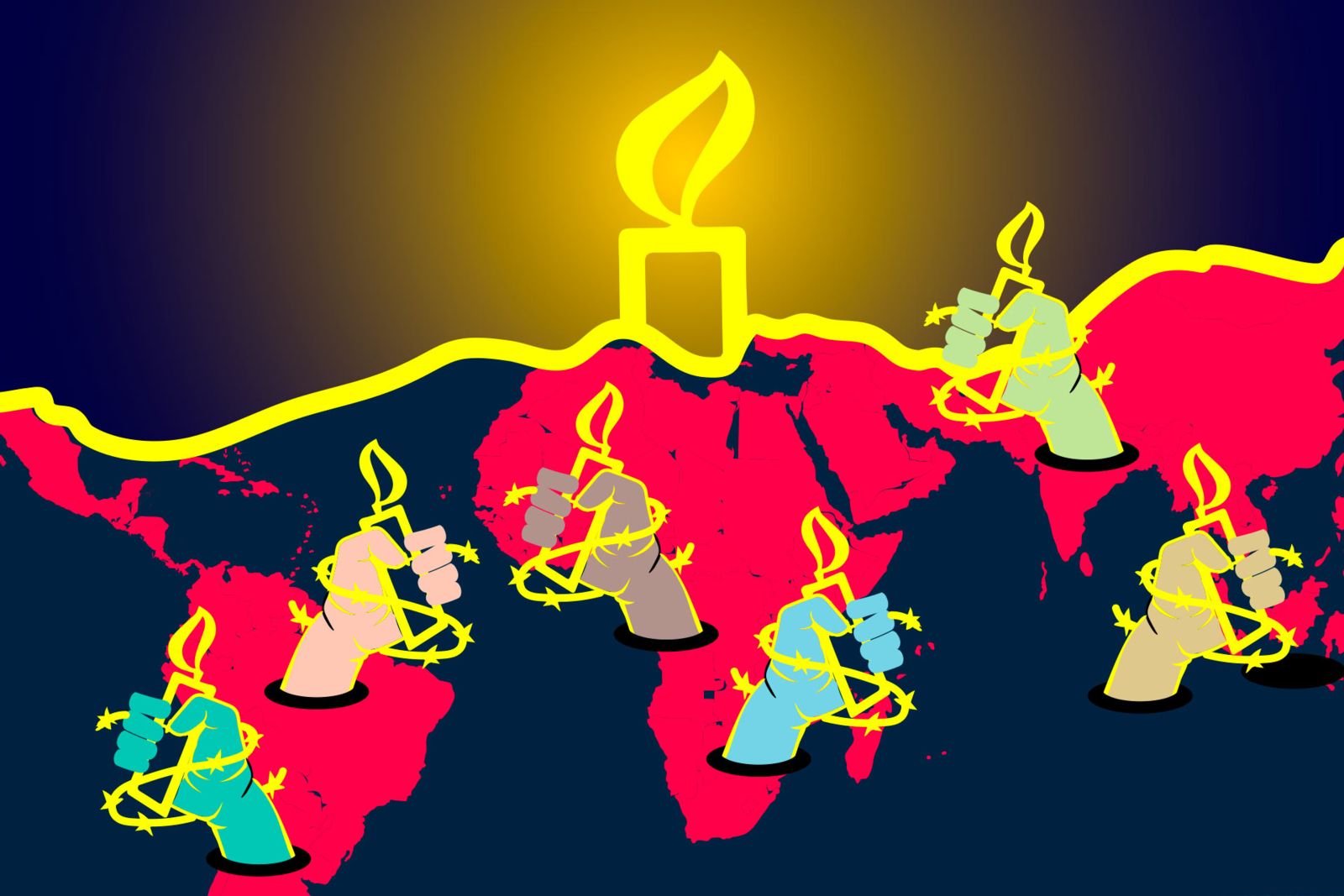
..The closure of Amnesty International’s India office raises questions about AI’s global strategy and the democratization of the global human rights movement. AI’s India office was part of the AI’s 2010 Global Transition Program (GTP) which aimed at restructuring the organization by reducing its London office operations and transferring them to regional hubs in various parts of the world. New forms of national offices were set up in India, Brazil, South Africa, Kenya, Nigeria, and Indonesia. The aim was also to make AI a truly global movement and raise funds from the Global South and not depend entirely on funds from the Global North. Donors such as the Ford Foundation and the Open Society Foundation funded AI’s move to the South which was seen as strengthening mobilization from local to international levels and increased contact with human rights defenders and civil society actors.
However, it also raised some questions for both AI and the global human rights movement.
When opening its office in India in 2012, AI may not have foreseen the assumption of power by an illiberal government in 2014; although it must have known the risks involved in other countries. When AI rolled out its GTP program in 2010, was it unrealistically optimistic, particularly when the global support for human rights in the West was rapidly declining? The optimism about emerging powers such as India, Brazil, and South Africa had waned and several illiberal governments had become powerful in the global system. It could not have waited for an opportune time since governments of various hues always challenge human rights organizations to function freely. The fact remains that human rights offices, national or international, face reprisals by governments and AI should have foreseen it when it established its India office under the GTP program. The question remains: was the cost including the consequences for those associated with AI India worth the risk?
However, the question is: given its tradition of safeguarding its members from bias and reprisals, what steps did it take to prevent reprisals for its members and supporters of national offices? Since 2001, AI abandoned its “own country rule” under which AI members were barred from working on cases in their own countries. It was a self-imposed limitation to safeguard members against potential problems from their own governments but also to stress the importance of solidarity in human rights work.
The closure of the Indian office raises the value of “own country rule” which would have possibly prevented the Indian government from taking the extraordinary step of closing the AI’s office. The Indian Government is alleging money laundering, which would entail conducting investigations against all those who contributed to AI India putting a large number of its supporters at risk.
Was the cost including the consequences for those associated with AI India worth the risk?
Moreover, the aim of the “own country rule” was to prevent AI’s local chapters from becoming just another local human rights organization with international links. In the case of the AI India office, its links to its parent organization seemed to have impeded its functioning. For example, in November 2019, Indian police raided the AI India office after the parent organization testified before the US Congress on the situation in Jammu and Kashmir.
The closure of the AI’s India office has implications for the global human rights movement as well. An evaluation of the Ford Foundation’s Strengthening Human Rights Worldwide Global Initiative (SHRW), under which the foundation funded AI to move to the South, raised the following issues: how to differentiate between the roles played by national and international NGOs; if these roles could be construed as the imperial expansion of Northern-based groups?; if such moves help or reduce the voice of local groups and communities;and if international NGOs have an advantage over national NGOs in garnering a larger share of resources due to a concentration of “cultural capital” (“knowledge and access to global governance institutions”) among NGOs based in the North?
The ecology of the human rights movement began changing in the 80s and the SHRW review captures it. In this changed context, AI’s efforts to be closer to the ground happened at an ill-advised time when strong NGOs had emerged in the South and were increasingly challenging the traditional human rights ecology. While based in the North, AI was functioning as a global movement with some of the corresponding limitations, such as authoritarian governments accusing it of being a Western organization. AI, instead of building from its strength, seemed to have pursued a naïve goal of expanding in the field at a wrong time for the wrong reasons.
Nevertheless, the global human rights movement must condemn the Indian government’s actions against the AI India office. It must campaign for withdrawing all the cases and restoring the office. It should also examine the lessons learned from democratizing the movement in the last two decades, including strengthening the role and voices of NGOs in the South. AI on its part should re-examine its GTP’s assumptions considering the developments of the last two decades. A 2017 evaluation of the GTP commissioned by AI recommended the need for a “new narrative” that “…goes beyond moving closer to the ground, beyond the distribution of Amnesty International Secretariat (IS) and to the distribution of Amnesty as a movement… (making all) regions vibrant communities for public campaigning”.
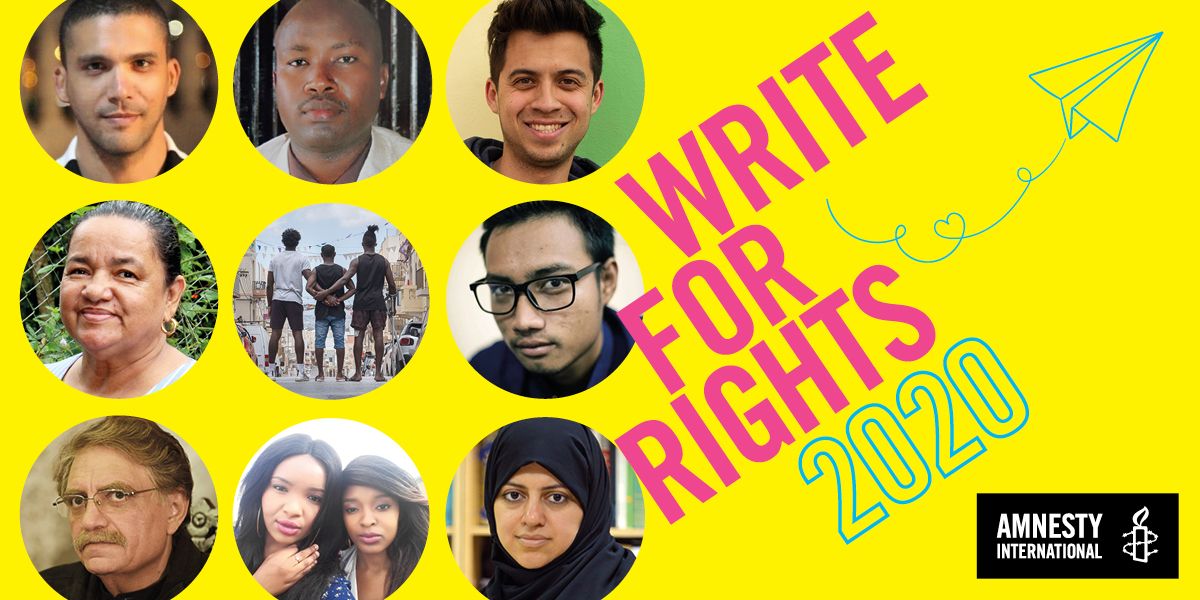
On 2 November 2020 Amnesty International has launched its flagship annual letter-writing campaign, Write for Rights, to help change the lives of people around the world who have been attacked, jailed, harassed or disappeared for standing up for their rights.
During Write for Rights – which takes place between November and December each year – people around the world will send millions of cards, emails and tweets of solidarity to individuals or groups of people whose freedoms are being denied, or write letters putting pressure on those in power to stop the abuses being committed against them.
This year, the campaign will support ten individuals who are suffering abuses, including:
Chilean Gustavo Gatica, a 22-year-old psychology student who was protesting against rising prices and inequality when he was struck in both eyes and blinded by police firing rubber and metal ammunition;
A group of Turkish university students known as the ‘METU Pride Defenders’, who are facing trail and a prison sentence for organising a peaceful sit in to protest the cancellation of their annual LGBTI+ pride march on campus.
Write for Rights goes back to the very roots of Amnesty International, which was founded in 1961, with Amnesty’s early campaigners writing letters of support to those affected by human rights abuses, as well as letters of concern to governments around the world.
He is currently a UN fellow at OHCHR, and the former recipient of the ISHR Human Rights Defenders Fellowship. He is involved in social work, advocacy, and is authoring in collaboration with other refugees offshore and inshore ( They Can’t Take The Sky):
I’m tired of hearing celebrities saying they are “voices of the voiceless.” Unfortunately, I hear it often from celebrities with our pictures and stories, rather than from refugees themselves.
The so-called “voiceless” are individuals living in poverty and conflict zones, and were forced to leave their countries while they were muffled, hushed, pushed down and left out. But they are not voiceless. They do not need your voices but they do need you to put them behind the microphone, make room at the table, and give them a chance to speak up. If we want to find lasting and sustainable solutions for the refugee and migrant crisis, then stop speaking for the so-called voiceless, and start working alongside them to make sure their powerful voices are heard.
Media, the arts and celebrities often say they strive to “give voice to the voiceless”. While this can empower, it can also be a potentially harmful tool for them too. It makes me feel like an object, it discourages me from speaking for myself and most importantly, it is dehumanising because someone else is speaking on my behalf. Being a refugee means more than being an alien, no right, no voice; this can sound trite, clichéd, even patronising. Speaking on our behalf can take the real voices of the concerned people away and replace them with a slogan, “Voice of the Voiceless”. Are they really voiceless? If so, then who took their voices?
What refugees urgently need, besides food and water, medical care, and a roof over their heads, is hope! And prospects of a homeland, friends, and a sense of security. Unfortunately, reality presents a completely different picture to many of them. Here is a call for reflection.
Protests and public ceremonies at least remind us of the problem, even if they do not solve them. Anyone who has never been part of a refugee trek has little idea of everything that happens along the way. These people have just turned their backs on violence, persecution, and human rights violations only to walk into hopelessness, hunger, and cold! It is a vicious cycle of evil that has been set in motion. People with a permanent home and a roof over their heads can barely imagine this. There are millions of fates and stories that tell of violence, human abysses, but some also of hope and courage.
Why is it easy to listen to someone who speaks out on behalf of victims but not to the victims directly? Is it also time to question this invisibility? The fact is that no-one is listening and no-one is offering them a platform to express their concerns on their own, so it doubles their suffering. We hide them in detention centres or camps, away from us, making it harder for them to connect with reality. But it also prevents the truth from coming out as it is, and that’s part of the complexity. The majority of these refugees are coming from countries that are torn apart by wars, extreme poverty, lack of freedom of speech, human rights abuses etc.
The media are not interested in listening to the people concerned. Instead they listen to the rich and famous, and this makes them complicit. It is on journalists and the media’s shoulders to seek out the stories of those who would be left out of the public record, like refugees, asylum seekers and migrants. If we aim “to give voice to the voiceless,” it requires more than asking for sound-bite quotes, taking pictures in refugee camps or using them to sell newspapers. No, it is bigger than that, it means listening to their stories, offering them a safe platform to speak for themselves rather than to speak on their behalf, no-one was born without a voice.
No media so far asks the refugees about the impact of the US election or the EU migration policy, why? Because we don’t have a voice and our point of view is not considered as valuable. The Trump administration, but also the Democratic party, have largely dismantled the US asylum seekers and refugees resettlement programme. It became a model for the EU member States and Australia, and even questioned the refugees convention of 1951.
The actions of the US government over the last four years shaped the dichotomy of “Us-vs-Them”. It has also created social and economical inequality among the refugee communities: some were seen as vulnerable and others not, and this in turn has increased tensions within refugee communities. As an example, in 2017 when the US government made a deal with the Australians to take refugees from offshore detention centres on Manus Island and Nauru several countries were banned and it created big tensions between the refugees. These actions show a lack of compassion for the victims of armed violence and persecution and abdicates US leadership and support for countries struggling to cope with refugee crises. The Trump administration turned a cold shoulder to countries on the frontlines of conflict, many of which are close US allies and bear the burden of caring for and protecting the overwhelming majority of the world’s refugees. Even at its most robust, US refugee resettlement only directly benefits a small fraction of the world’s 26 million refugees. But when used strategically, and in combination with humanitarian assistance and technical support, it can have enormous benefits beyond helping the relatively few people rescued.
The US refugee resettlement program has traditionally aimed to identify the most vulnerable refugees, often those who are not only persecuted in their home country but also unwelcome in the country of first arrival, such as members of religious minorities or LGBT. The American refugee policies have inspired many countries such as Australia, Europe, the UK, and especially after the domination of the right-wing in Europe. In Australia, refugees are forcibly sent to remote islands and detained for almost seven years, in Europe especially Greece became the EU warehouse for asylum seekers and migrants, and some were forcibly pushed back by some EU member States to Libya or left to drown off the coast of Libya.
Europe’s humanity is lost at sea when it comes to refugees and no-one knows when or how will the EU get it back.
Front Line Defenders has released the fourth edition of the monthly digital magazine, Cypher <http://www.frontlinedefenders.org/cypher> , featuring stories of the 2020 Front Line Defenders Regional Award Winners – HRDs from Mauritania, Sri Lanka, Colombia, Armenia and Iraq.
If you are interested in an annual subscription to receive printed editions of Cypher, please email campaigns@frontlinedefenders.org, with ‘Subscription’ in the subject line, and you will be sent more information about options.
On 29 October 2020, Amnesty International launched Amnesty Academy, a free human rights learning app which aims to educate the next generation of human rights defenders on a host of topics including freedom of expression, digital security, and Indigenous Peoples’ rights.
Learners around the world will be able to access courses ranging from 15 minutes to 15 hours in over 20 languages, including Urdu, Bangla, Hungarian, Korean, Russian, Thai, Czech and Turkish. All courses can be downloaded within the app, which is available on iOS and Android devices, allowing for offline learning.
“This app has been designed to empower and encourage everyone everywhere to learn about human rights. Sharing knowledge is a vital way to help us stand up for our own and for each other’s rights, and to struggle for justice and equality all over the world,” said Julie Verhaar, Amnesty International’s Acting Secretary General. This app has been designed to empower and encourage everyone everywhere to learn about human rights. Sharing knowledge is a vital way to help us stand up for our own and for each other’s rights, and to struggle for justice and equality all over the world.
Among Amnesty Academy’s key features is a flexible self-paced approach to learning, allowing users to start courses as and when it suits them. Learners who complete some of the longer courses will be awarded an official certificate signed by Amnesty International’s Secretary General.
The courses available on Amnesty Academy have been developed and fine-tuned over the past three years as part of Amnesty International’s human rights learning website. They have now been optimized for mobile use, making human rights learning more accessible than ever.
“Human rights education is the foundation of Amnesty’s work. Our overall goal is to ensure that people worldwide know and can claim their human rights. The Amnesty Academy app brings us closer to this goal by providing a simple and accessible platform for millions of people to access quality human rights education,” said Krittika Vishwanath, Head of Human Rights Education at Amnesty International.
Amnesty Academy will be regularly updated to accommodate learning in many more languages and with new course offerings in the months and years to come.
UN High Commissioner for Human Rights, Michelle Bachelet, has called for the Indian government to protect the rights of human rights defenders and NGOs in India. She praised India for being at the forefront of the fight for human rights but cautioned that vaguely worded laws may put that in jeopardy.
Her Tuesday 20 October 2020 statement comes as a response to worrying uses of the Indian Foreign Contribution Regulation Act (FRCA) which various UN bodies have been worried is overbroad and vague in its objectives. Additionally, it prohibits them from receiving foreign money for “for any activities prejudicial to the public interest.” This can and has had an impact on the right to freedom of association and expression and has prevented foreign NGOs from giving money to Indian causes.
“The FCRA has been invoked over the years to justify an array of highly intrusive measures, ranging from official raids on NGO offices and freezing of bank accounts, to suspension or cancellation of registration, including of civil society organizations that have engaged with UN human rights bodies,” Bachelet said. Most recently it led Amnesty international to close their Indian offices after they were raided and their bank account was frozen. [see: https://humanrightsdefenders.blog/2020/09/29/amnesty-feels-forced-to-shut-sown-its-india-office-amidst-govenment-pressure/]
Bachelet, also called for the Indian government to allow peaceful protest against the Citizenship Amendment Act. More than 1,500 people have been arrested because of their protests to this act and many have been charged with violations of the FCRA.
Finally, Bachelet,called for India to review the arrests of human rights defenders who have been arrested under the Unlawful Activities Prevention Act for exercising their basic human rights.
On 25 October 2020 Mariana Castro published on Polygraph.info an overview article showing that despite official denials torture does occur in Nicaragua’s Prisons.
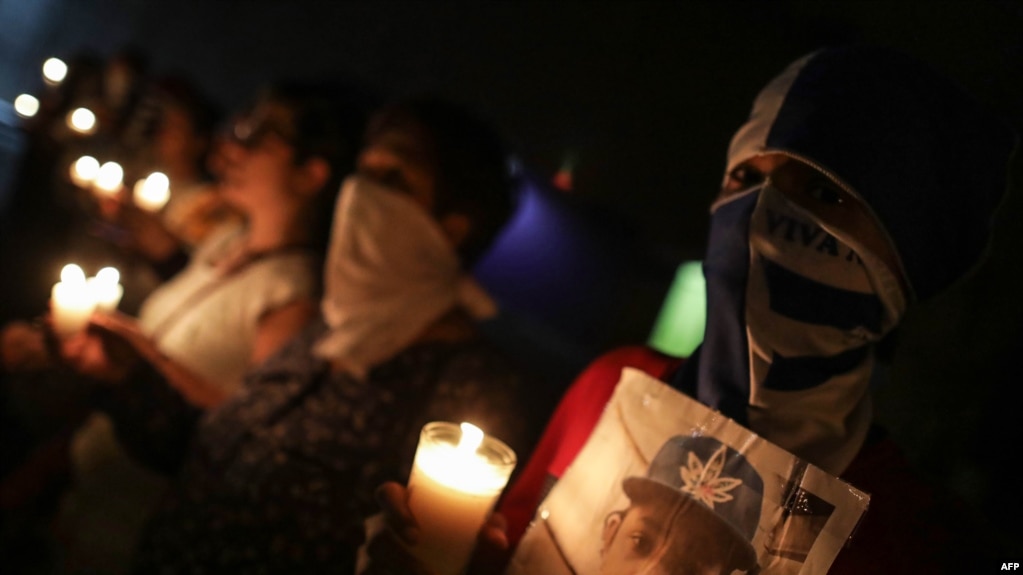
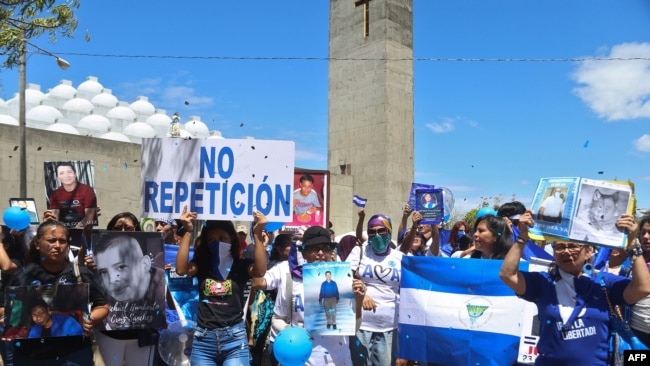
NICARAGUA – Anti-government demonstrators take part in a vigil to demand the release of political prisoners and justice for the victims of protests against President Daniel Ortega, outside the Metropolitan Cathedral of Managua on October 3, 2019.
“There are always prisoners who make up that they’re being tortured. …They invent things simply to create a negative image on Nicaragua before international organizations run by the yanquis…”
On October 15, the General Secretariat of the Organization of American States (OAS) publicly denounced persistent human rights violations in Nicaragua and urged the government to release political prisoners, restore fundamental freedoms and respect the separation of powers and rule of law: “The government’s has refused to comply with the recommendations of the Inter-American Commission on Human Rights, the Interdisciplinary Group of Independent Experts (GIEI), and the office of the United Nations High Commissioner for Human Rights and to fulfill its duties under the Inter-American Democratic Charter.”
Four days later, Nicaragua’s president, Daniel Ortega, dismissed allegations that political prisoners made of being tortured, calling them “lies” and an attempt to taint the country’s image.
“There are always prisoners who make up that they’re being tortured … they invent things simply to create a negative image on Nicaragua before international organizations run by the yanquis [referring to the United States], like the OAS,” Ortega said during a speech. (Source: El 19 Digital, October 19, 2020)
Based on multiple published reports, Ortega’s claim that torture accusations are invented is false.
Nicaragua under Ortega has faced extensive international scrutiny for violations of human rights. These include “targeting civil society, human rights defenders, including women human rights defenders, community and religious leaders, journalists and other media workers, students, victims and their family members, and individuals expressing critical views of the Government,” according to the United Nations Human Rights Council (HRC).
In April 2018, protests broke out in Nicaragua as fiscal reforms slashed social security. Protestors were met with a violent and lethal response from the government, fueling a civil uprising demanding Ortega’s resignation. More than 100,000 Nicaraguans have since fled the country.
Between the start of the protests and September 2019, 651 people died, nearly 5,000 were injured, 516 were kidnapped and 853 have gone missing, according to the Nicaraguan Association for Human Rights (ANPDH). Twenty-two police officers died, as stated by the U.N.
According to Human Rights Watch, many of those detained during the protests were subjected torture, including electric shocks, asphyxiation and rape. Detainees were also reportedly denied care in public hospitals.
The organization interviewed 12 former detainees, 11 of whom described suffering one of more forms of abuse, and seven who said they witnessed 39 detainees suffering abuses. It also interviewed three doctors and a psychologist who treated some detainees. They reported that many “showed signs of physical harm consistent with physical abuse and torture similar to that described by the 12 detainees.”
This week, Monitoreo Azul y Blanco (Blue and White Monitoring), a group that since 2018 registers and consolidates complaints of human rights violations in Nicaragua, published a video by Expediente Publico (an investigative journalism magazine in Honduras and Nicaragua) with testimonies from former political prisoners about their experiences of ill treatments and torture while incarcerated.
The testimonies mentioned the details of the event that resulted in the death of Eddy Montes, a Nicaraguan-American and U.S. Navy veteran who was shot dead in La Modelo prison in May 2019 after “a serious disturbance” inside of the prison, according to Nicaragua’s interior ministry.
The magazine also published an article on October 20 detailing testimonies of victims of abuse by the Nicaraguan police. They tell the story of J, an opposition protestor who between May 6 and May 13, 2019, was subjected to “constant questioning” and abuse by the police. Her complaint is one of dozens of cases.
Between April 2018 and June 2020, the Nicaraguan Human Rights Collective Never Again (Colectivo de Derechos Humanos Nicaragua Nunca+) registered complaints of five rapes, eight sexual abuses, seven threats of rape to detainees or their family members and three witnesses of rape to one or more fellow inmates, the article reported.
NICARAGUA – Members of the organization Mothers of April (AMA) hold portraits of their late loved ones outside the Cathedral in Managua on February 23, 2020.
On June 19, the Office of the United Nations High Commissioner for Human Rights issued a resolution to promote and protect human rights in Venezuela, and requesting the U.N.’s High Commissioner for Human Rights, Michelle Bachelet, to “enhance monitoring” and “continue to report on the situation of human rights in Nicaragua.”
Amid increased international pressure, Ortega’s government has released some political prisoners, including 91 people whose sentences were converted to house arrest in December 2019. But some 100 political prisoners (estimates vary slightly) remain in jails.
On September 30, more than 50 political prisoners went on a hunger strike as part of protests demanding their freedom. At least three of them sewed their mouths as part of protests and were then transferred to maximum security cells at the Jorge Navarro prison complex known as La Modelo. Amnesty International has described the complex as “one of the main destinations for those detained and punished for reporting human rights violations in the country.”
During his October 19 speech, Ortega said prison doors were open to those calling out the government, including relatives of prisoners, for them “to visit them when they say they’re being tortured, they are saying, they have sown their lips.”
But on the following day, representatives from the Permanent Commission on Human Rights (CPDH), one of Nicaragua’s oldest rights groups, went to visit the prison and were not allowed in, as La Prensa reported.
Allan Gomez, a member of the Union of Political Prisoners (UPPN), told Nicaragua Investiga that the denial of abuses is nothing new, “but human rights violations are fully visible.”
Earlier this month, the U.S. imposed its latest round of sanctions on top Nicaraguan officials, including the attorney general. According to The Associated Press, about two dozen people close to Ortega and his wife, Vice President Rosario Murillo, have been sanctioned – including Murillo and three of the couple’s children – since late 2017.
The European Union also recently renewed sanctions on Nicaragua – introduced in October 2019 – for another year, citing the “deteriorating political and social situation in Nicaragua.”
Effort 1: With women’s empowerment topping the agenda at next week’s B20 Summit, hosted by Saudi Arabia, Amnesty International is on 23 October 2020 reminding business leaders that many of the country’s bravest women’s rights activists are languishing in prison for daring to demand reforms. “Since assuming the G20 Presidency Saudi Arabia has invested heavily in rebranding its image.But Saudi Arabia’s real changemakers are behind bars” says Lynn Maalouf, Amnesty International’s Deputy Regional Director for the Middle East and North Africa
Loujain al Hathloul, Nassima al-Sada, Samar Badawi, Maya’a al-Zahrani, and Nouf Abdulaziz spearheaded women’s rights campaigns, including calling for the right to drive and an end to the repressive male guardianship system. But while Saudi Arabia talks up recent reforms such as the relaxation of social restrictions and the loosening of the guardianship system to court approval from the rich and powerful around the B20, women’s rights activists remain in detention.
Saudi Arabia has publicized the fact that this year, 33 percent of B20 delegates are women – the highest ever contingency. The B20 website states that “Women in Business” will be Saudi Arabia’s “signature topic” as President. “B20 leaders must not be fooled by this shameless hypocrisy, and we call on them to show they care about human rights as much as business opportunities. Any business operating in or with Saudi Arabia has a responsibility to ensure they are not contributing to human rights violations through their activities.”
The B20 is the official forum for business leaders to present policy recommendations to the G20, ahead of the main summit in November. This year high profile participants include representatives from HSBC, Mastercard, PwC, McKinsey, CISCO, ENI, Siemens, Accenture and BBVA.
Currently, 13 women’s rights defenders remain on trial facing prosecution for their human rights activism. Several face charges of contacting foreign media or international organizations, including Amnesty International. Some were also accused of “promoting women’s rights” and “calling for the end of the male guardianship system”. See also: https://humanrightsdefenders.blog/2019/03/13/saudi-arabia-persist-with-trial-for-women-human-rights-defenders/
Amnesty International has written to businesses participating in the B20 Summit raising serious concerns about the human rights risks of business operations in and with Saudi Arabia, and reminding them of their human rights responsibilities.
“We urge B20 delegates also to think carefully about how their brands could be legitimizing human rights violations and endorsing Saudi Arabia’s charm offensive,” said Lynn Maalouf. “If B20 Saudi Arabia was as progressive as it claims, the activists who did so much to secure more rights for women would have a seat at the table.”
Effort 2: Nineteen NGOs are calling on golf’s Ladies European Tour to reconsider the decision to hold a tournament hosted by Saudi Arabia. Pulling out of the tournament, they explain, would be ab act of solidarity with women’s rights campaigners detained in the Kingdom.
“While we acknowledge that such tournaments represent an important milestone in women’s golf, we are deeply concerned that Saudi Arabia is using this sports event as a public relations tool to sportwash its appalling human rights record, including discrimination against women and the crackdown on women’s rights defenders,” said the NGOs in a letter to the tour organisers.
The event is due to take place in Saudi Arabia from 12 to 19 November, with a cash prize of $1.5 million from the Saudi Public Investment Fund, which is chaired by Crown Prince Mohammad Bin Salman.
Saudi Arabia has faced sustained criticism that it uses major sporting tournaments to deflect from its human rights abuses. The arrest of prominent activist Loujain Al-Hathloul in 2018 and several others was highlighted as a serious concern.
In a letter penned to the top players on the Ladies European Tour, the 25-year-old described the event as a “grubby charade” as she argued that taking part was akin to giving “tacit endorsement to the Saudi regime and its imprisonment and torture of activists like my sister.”
Al-Hathloul’s imprisonment has been met with international outcry as concerns grow over her fate. Human rights organisations including Amnesty International have alleged that she and other women campaigners have been subjected to torture and sexual harassment, including threats of rape, while in Saudi detention.
The crackdown on female activists by the Saudi government reached its peak when the authorities arrested and detained Al-Hathloul, Eman Al-Nafjan and Aziza Al-Yousef on 15 May, 2018. Just weeks later, other leading women’s rights advocates and feminist figures were also arrested, including Samar Badawi and Nassima Al-Sadah.
“We remain concerned that they will not be able to exercise their right to a fair trial in accordance with the international human rights standards, to which Saudi Arabia is obliged to adhere,” wrote the NGOs. The only way to achieve true progress, they added, is to implement real reforms on women’s rights, and immediately release those arrested for defending these rights. “While we hope that Saudi Arabia can indeed develop its interaction with other countries around the world through hosting sports and other events in the Kingdom, we cannot ignore the country’s attempt to conceal its continued detention of women’s rights activists and discrimination against women by hosting a women’s sports tournament.”
Effort 2: The sister of jailed Saudi activist Loujain Al-Hathloul has called on European golf players to boycott the upcoming tournament in Saudi Arabic. In a letter sent to the Independent newspaper, Lina Al-Hathloul begged the top players on the Ladies European Tour to show support for her sister’s plight by not attending golfing events in Saudi Arabia scheduled for November.
In her letter, Lina wrote: “My sister is a women’s rights activist imprisoned and tortured by the Saudi regime. I understand the importance of sports to create links and bridges between different societies. “However, the current Saudi regime uses sports to whitewash its crimes, to have a window to the West, while maintaining and even worsening women’s conditions inside the country.
Don’t go to Saudi Arabia, don’t help that barbaric regime launder its reputation through your excellence. Stand in solidarity with women’s rights activists. Boycott the Ladies European Tour events in Saudi Arabia.
“I am begging you, as a woman, as a person of conscience and as a role model – please boycott the Saudi women’s tour event.”
The normally reliable Jerusalem (By SARAH CHEMLA) reports on 22 Ocrtober 2020 that US President Donald Trump may declare major international Human Rights NGO’s Amnesty International,Human Rights Watch and Oxfam as antisemitic in a soon-to-be released State Department declaration, voicing that governments should not support them any longer. If the declaration happens, it is likely to cause an uproar among civil society groups and might incite litigation. Critics of the possible move also worry it could lead other governments to further crack down on such groups, according to Politico.
T’ruah, a rabbinic human rights organization that represents over 2,000 rabbis, responded to the allegation on Wednesday, saying that “any US government declaration that these groups are antisemitic for criticizing the Israeli government is ridiculous, and contributes to the silencing of Israel’s human rights defenders.” It continued, adding that “the Trump administration’s smear of these three human rights organizations is yet one more example of this administration’s disregard for democracy and human rights at home and abroad.” “In casting aspersion on longtime respected human rights organizations, the Trump administration joins an ignoble list of autocratic governments that have discredited, smeared and even banned their own internal human rights organizations,” T’ruah said.”Actions such as these damage US democracy by threatening the transparency necessary to protect human rights. Human rights and civil society groups play a prophetic role, even if their words may not be ones governments want to hear.”Israel is a state bound by international human rights law, like all other members of the United Nations, and like other countries can be criticized when it fails to live up to these commitments,” it said.”By falsely smearing human rights organizations as antisemitic, the Trump administration only makes it harder to counter actual acts of antisemitism when they happen, while simultaneously harming these organizations’ effectiveness in reporting on all countries’ human rights abuses – including those of the United States.”
ACCORDING TO Politico, the declaration is expected to take the form of a report from the office of Elan Carr, the US special envoy to monitor and combat antisemitism. It would declare that it is US policy not to support such groups, including financially (NOTE: AI and HRW do not accept government funding as a matter of policy!) , and urge other governments to cease their support.The report would cite such groups’ alleged or perceived support for the Boycott, Divestment and Sanctions movement, which has targeted Israel over its construction of settlements on land Palestinians claim for a future state. The declaration is also expected to point to reports and press statements such groups have released about the impact of Israeli settlements, as well as their involvement or perceived support for a United Nations database of businesses that operate in disputed territories, Politico said. Contacted by Politico, the organizations named in the report denied any allegations that they are antisemitic. [In 2019, David Collier released a report into the work of Amnesty International after monitoring dozens of social media accounts maintained by the NGO and people who work for it, and concluded that the amount of hatred Israel receives is beyond any proportion, to a level that is, he said, antisemitic.“Targets are not chosen for their actions, but rather for their identity,” wrote Collier. “Persecuted Christians are blatantly ignored.”[see also: https://electronicintifada.net/blogs/asa-winstanley/how-racist-blogger-david-collier-infiltrated-labour-party]
 Hans Thoolen on Human Rights Defenders and their awards