Around the world, shock and outrage has been the reaction to the news that Iran is preparing to execute Swedish-Iranian emergency medicine specialist Dr Ahmadreza Djalali. In a call from Evin Prison on 24 November, Ahmadreza told his wife Vida, who lives in Sweden, that he believed he may be executed in less than a week. He has been transferred into solitary confinement and it has been reported that he will shortly be sent to Rajai Shahr Prison where this draconian death sentence would be delivered.
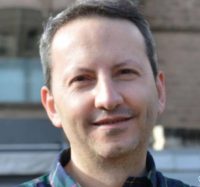
Dr Djalali has been used as a bargaining chip as part of Iran’s hostage diplomacy. A dual national, illegally detained in solitary confinement with no access to a lawyer before being sentenced to death in October 2017. The court based their sentence for “corruption on earth” on “confessions” elicited after torture, threats to kill Ahmadreza Djalali’s wife and two young children, solitary confinement and his prolonged ill treatment.
The UN, EU, Council of Europe, European governments, worldwide academic institutions, civil society and thousands of individuals have all called for Dr Djalali’s release.
UN experts Javaid Rehman, Special Rapporteur on the situation of human rights in the Islamic Republic of Iran and Agnes Callamard, Special Rapporteur on extrajudicial, summary or arbitrary executions issued a statement saying: “We are horrified by the reports that Mr. Djalali is soon to be executed by the Islamic Republic of Iran. His torture, arbitrary detention, death sentence and now reported imminent execution are unconscionable acts that should be condemned by the international community in the strongest terms. We urge the Iranian authorities to take immediate action to reverse this decision before it is too late.”
Amnesty International’s Deputy Director for the Middle East and North Africa, Diana Eltahawy, said:
“We call on members of the international community to immediately intervene, including through their embassies in Tehran, to save Ahmadreza Djalali’s life before it is too late.”
Valerie Peay, Director of the International Observatory of Human Rights said: “We stand in support of Dr Djalali and his family. Ahmadreza has already suffered gross injustice, pain and the cruel separation from his wife and two children. For three years he has faced a baseless death sentence while Iran has used him as a bargaining chip and sought to gain leverage with the international community by unjustly incarcerating Dr Djalali and other dual nationals. Now is the moment for the Islamic Republic to act to cease this action to execute Dr Djalali and instead, release him to return his life in Sweden with his family.”
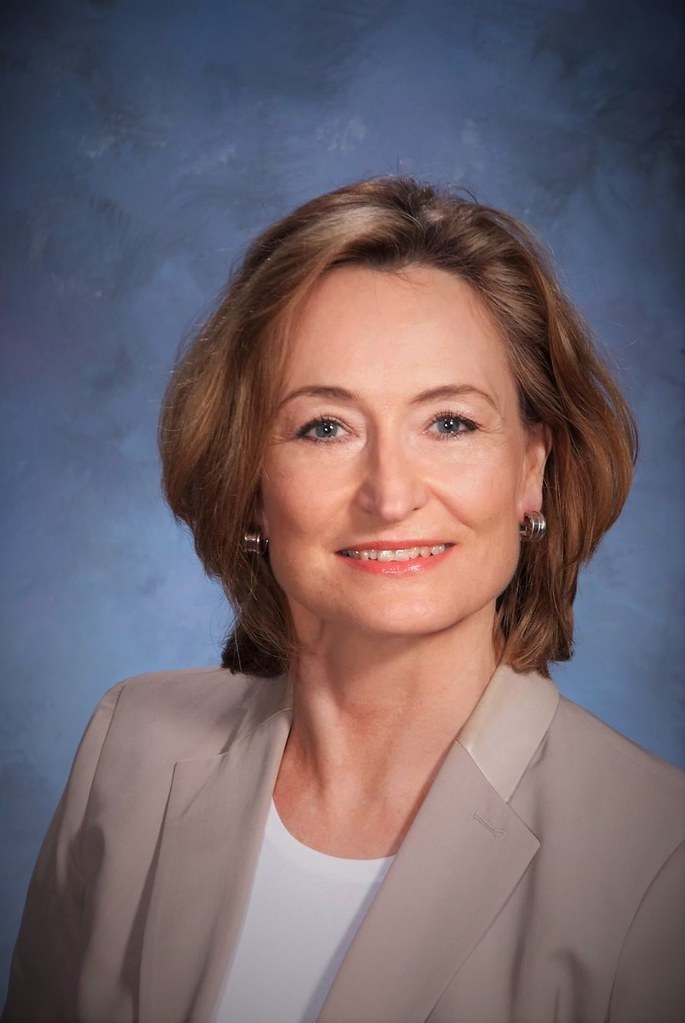
 Lina al-Hathloul, whose sister Loujain is being held by Saudi authorities, speaks at the 10th Anniversary Women In The World Summit at David H. Koch Theater at Lincoln Center on April 10, 2019, in New York City. Photo by Photo by Mike Coppola/Getty Images.

 Hans Thoolen on Human Rights Defenders and their awards
Thailand: joint statement by International NGOs on Pro-Democracy Protests
November 29, 2020A group of 13 important human rights NGOs – in a joint statement – condemn the Thai police’s unnecessary and excessive use of force against peaceful protesters marching to the national parliament in Bangkok on November 17, 2020. They are concerned that authorities could employ similar measures when facing protesters who have declared they will march to the Siam Commercial Bank headquarters on November 25.
On November 17, police set out barriers and barbed wire to prevent a peaceful march organized by pro-democracy movements from reaching the parliament. Protesters planned to protest outside the parliament as members of parliament and senators debated seven different proposals for constitutional amendments, including an amendment proposed by the lawyers’ non-governmental organization iLAW (Internet Law Reform Dialogue), which was supported by the People’s Movement and its allies. Police refused to let protesters through the barriers, and when the demonstrators acted to breach those barriers, police crowd control units used water cannons laced with purple dye and an apparent teargas chemical, as well as teargas grenades and pepper spray grenades, to forcibly disperse thousands of demonstrators, including students, some of whom are children. Water cannons were first used at approximately 2:25 pm and police continued their efforts to disperse protesters, with constant use of water cannons, teargas and pepper spray into the evening.
Police also failed to prevent violence between pro-democracy protesters and royalist “yellow shirts” near the Kiak Kai intersection, near the parliament. Initially, riot police separated the two groups. However, video posted on social media later showed police officers informing the royalist protesters that they would withdraw and seconds later they vacated their position between the two groups. During the ensuing skirmishes, both sides were filmed throwing rocks and wielding clubs. Live broadcasts included sounds that appeared to be gunfire.
The Erawan Medical Centre reported that there were at least 55 protesters injured, mostly from inhaling teargas. It also reported that there were six protesters who suffered gunshot wounds. The injured included children: a kindergartener and elementary school students….
On November 18, the spokesperson for United Nations Secretary-General António Guterres “expressed concern about the [human rights] situation in Thailand … it’s disturbing to see the repeated use of less lethal weapons against peaceful protesters, including water cannons … it’s very important that the government of Thailand refrain from the use of force and ensures the full protection of all people in Thailand who are exercising a fundamental peaceful right to protest.”
We call on the Thai government to respect, protect and fulfill the right of demonstrators to peacefully protest, in line with Thailand’s international obligations under the ICCPR and customary international law. Specifically, Thailand should:
1. Permit the People’s Movement march to proceed on November 25 and allow for non-violent protesters, including those who are children, to peacefully protest in front of the Siam Commercial Bank headquarters.
2. Protect the rights of protesters, including those who are children, in accordance with the Human Rights Committee’s General Comment No. 37 on the Right of Peaceful Assembly.
3. Facilitate the exercise of the right to peacefully assemble and refrain from dispersing assemblies by using weapons, including less-lethal weapons, against protesters in line with the United Nations Basic Principles on the Use of Force and Firearms by Law Enforcement Officials and UN and other guidance on less-lethal weapons.
4. Protect protesters, including those who are children, from violence and interference by non-State actors, while also protecting the rights of counter-demonstrators.
5. Take steps to ensure accountability for rights violations associated with the government’s crackdown on the protest movement and to ensure that those whose rights have been violated enjoy the right to an effective remedy, as guaranteed under ICCPR article 2(3).
Signed by:
Amnesty International
Article 19
ASEAN Parliamentarians for Human Rights
Asia Democracy Network
Asian Forum for Human Rights and Development (FORUM-ASIA)
Asian Network for Free Elections (ANFREL)
CIVICUS: World Alliance for Citizen Participation
Civil Rights Defenders
FIDH – International Federation for Human Rights
Fortify Rights
Human Rights Watch
International Commission of Jurists
Manushya Foundation
———–
https://www.hrw.org/news/2020/11/25/statement-international-ngos-pro-democracy-protests-november-17-and-25-2020
Posted in AI, Civil Rights Defenders (NGO), Front Line, HRW, human rights, Human Rights Defenders, ICJ | Leave a Comment »
Tags: freedom to demonstrate, General comment ICCPR, joint statement, NGOs, police violence, students, Thailand