Archive for the 'human rights' Category

RSDL: China’s legalization of disappearances

December 30, 2017

It would nice – for a change – to be able to report improvements in the situation of human rights defenders but as feared at the beginning of this year that has not happened. Here the case of China:

On 15 December 2017 China itself issued a White Paper hailing its ‘remarkable progress’ in the ‘law-based protection of human rights’ over the last five years. NGOs such as Human Rights Watch called it ‘hollow’ and a ‘self-congratulatory report’. Here some recent developments especially linked to the tactic of temporary disappearance RSDL:

There is a very informative blog post by Peter Dalin[https://humanrightsdefenders.blog/2016/01/21/confessions-abound-on-chinese-television-first-gui-minhai-and-now-peter-dahlin/] about his friend Wang Quanzhang  in the Hong Kong Free Press (30 December) under the title “The last missing lawyer: a victim of China’s new willingness to flout international human rights norms“. The piece details the system of Residential Surveillance at a Designated Location (RSDL) and points to its increasing use and danger that it may spread. (See below in green.)

One example of this practice came this week when a court sentenced Wu Gan to eight years in prison. Using social media and outlandish performance art, he went by the online handle “Super Vulgar Butcher” and likened himself to a meat cutter who was making short work of those who violate human rights. After the harsh sentence was imposed in Tianjin, Wu delivered an eloquent statement through his lawyers, speaking with clarity and courage. “For those living under a dictatorship,” he declared, “being given the honourable label of one who ‘subverts state power’ is the highest form of affirmation for a citizen. It’s proof that the citizen wasn’t an accomplice or a slave, and that at the very least he went out and defended, and fought for, human rights.” The authorities, he said, attempted to force him to plead guilty and co-operate in propaganda videos in exchange for a suspended sentence. “I rejected it all. My eight-year sentence doesn’t make me indignant or hopeless. This was what I chose for myself: when you oppose the dictatorship, it means you are already walking on the path to jail.”

This in contrast to the decision the same day in the case of human rights lawyer Xie Yang who was not sentenced to prison after he pleaded guilty to charges of “inciting subversion of state power.”
Xie was released on bail in May after what critics described as a show trial. He had previously claimed that police used “sleep deprivation, long interrogations, beatings, death threats, humiliations” on him. But on Tuesday he denied he had been tortured, according to a video on the court’s official Weibo social media account. “On the question of torture, I produced a negative effect on and misled the public, and I again apologize,” he told judges. The court said he would face no criminal penalties following his full confession. (Xie Yang is one of China’s “709 lawyers”, taken into custody in 2015 during an extensive government crackdown see: https://www.frontlinedefenders.org/en/profile/xie-yang). See also: https://humanrightsdefenders.blog/2015/07/29/the-remarkable-crackdown-on-lawyers-in-china-in-july-2015/

The United Nations Working Group on Arbitrary Detention, has also told China that it wrongfully arrested three prominent human rights activists accused of subversion and called on the government to release and compensate them. The panel, the Working Group on Arbitrary Detention, made up of five independent experts, said the three activists, Hu Shigen, Zhou Shifeng and Xie Yang, had been punished for promoting human rights. It said their treatment did not conform with China’s obligations under the Universal Declaration of Human Rights and urged Beijing to consider amending its laws to bring them into conformity with international norms. “The appropriate remedy would be to release Hu Shigen, Zhou Shifeng and Xie Yang immediately, and accord them an enforceable right to compensation and other reparations,” the working group concluded. (The findings were contained in a 12-page document that was first reported in October by The Guardian)——–

Peter Dalin’s post:

Some five years ago my friend Wang Quanzhang – China’s last missing lawyer – came over to my Beijing apartment for a Swedish-style Christmas. By this time he had learned to tolerate, if not appreciate, the meatballs, as it was his second Christmas at my house. Since then, I’ve been deported from China and banned for ten years under the Espionage Act.
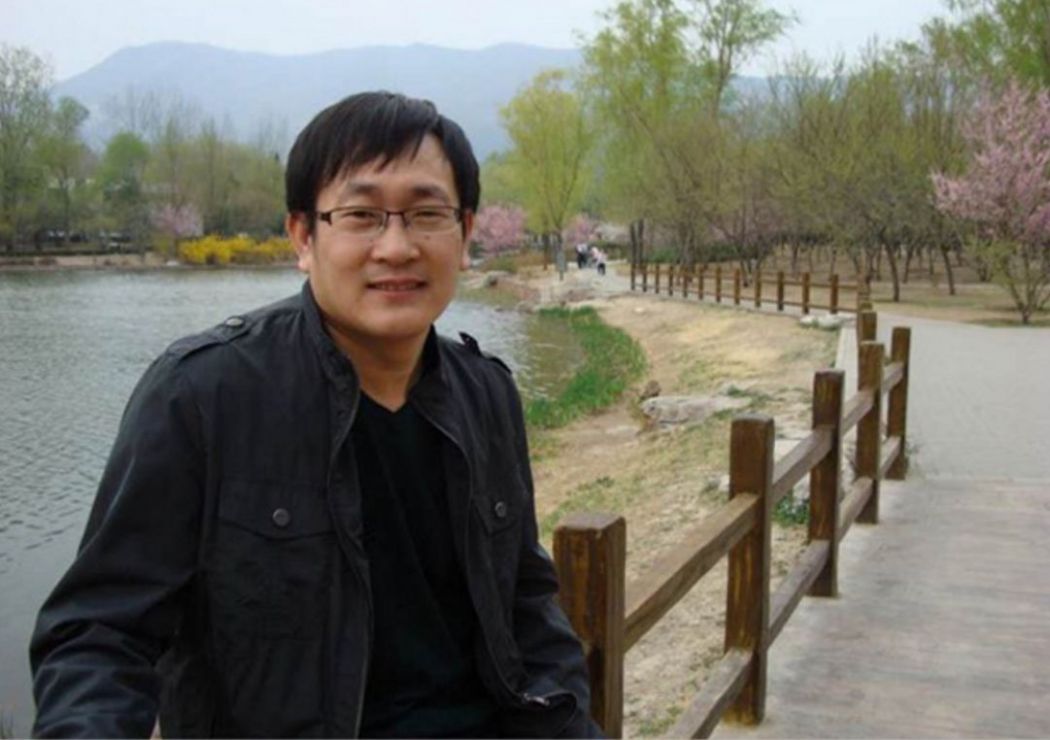
wang quanzhang

Wang Quanzhang. File photo: RFA.

I am unlikely to spend any more Christmases in China. Wang might never be allowed to spend any Christmas anywhere, outside of prison. Wang disappeared on 5 August 2015. For two and a half years his family, wife Li Wenzu and their young son, and the lawyers Wang had chosen for himself should he ever be detained, have not seen nor heard from him. There’s no trial in sight. It may strike anyone reading this that his case is simply another victim’s story. Frankly, there are so many that it’s hard to keep track or become engaged. However, his case represents something far worse, and is a window into the new China envisioned by Xi Jinping and the CCP.

China’s attempts to weaken UN mechanisms put in place to monitor how countries implement or follow basic rules and rights are well documented. What is happening in China now – an unprecedented disappearing of critics, lawyers and human rights defenders – goes far beyond being just another crackdown on civil society. It is another step towards weakening a core part of the international law system. One of the first major changes under Xi Jinping’s rule was to extend the power of the state even further by legalizing the use of Enforced Disappearances. For a Party usually known for its abysmal public relations management, it did so with a stroke of marketing “genius”, referring to it as a procedure known as Residential Surveillance at a Designated Location, or RSDL. At first, its use was limited to central government targeting key rights defenders, claiming they threatened national security. People would be secretly detained and placed in hotel rooms and government-run guesthouses. Slowly, they started using special custom-built secret prisons. In 2016, the procedure was adopted by local police. Now it’s being used to target critics of any sort, and for any type of “crime”, and not only those accused of threatening national security. Its use, by any measure, is expanding rapidly.

Rights activist Wu Gan and rights lawyer Xie Yang were sentenced the day after Christmas. Wu Gan will spend the next eight years in prison. Both men were disappeared for significant lengths of time before entering the normal judicial process; they were in RSDL. RSDL allows the state to simply take anyone it wishes, no court approval is needed, and disappear them for up to six months. The victim’s family does not need be notified of the victims’ whereabouts, they are denied access to legal counsel, and even more preposterously the prosecutor’s office is almost always barred from visiting the secret facility or victim – despite its nominal role to make sure rampant torture is not practiced. In fact, despite knowing many victims of RSDL myself, I have never heard of someone having had such a visit, and I myself certainly never met anyone from the Prosecutor’s office during my brief stay in RSDL.

In China, exceptions quickly become norms. The exceptions allowing all this have quickly become the norm. With these “exceptions”, RSDL becomes enforced disappearance. Enforced disappearances is not only a crime in international law, but a most severe one. It is even prohibited in war-time. If used systematically, or in a widespread manner, it qualifies as a crime against humanity.

The West’s tepid response to enforced disappearances, even of their own citizens, who have been kidnapped outside of mainland China, such as British citizen Lee Bo in Hong Kong and Swedish citizen Gui Minhai in Thailand, only encourages China to keep expanding its use. Why not, when there are no consequences. My only hope, or wish, for this Christmas season is that the further exposure of RSDL, through the first ever book on the subject, The People’s Republic of the Disappeared, edited by my former coworker Michael Caster, will help shed light on what is going on in China.

This should make the West realize that China’s legalization of what may constitute a crime against humanity is a blow to the whole UN system, and a threat to the West itself, and the rules-based system it advocates. Without a response, how long will it be before Cambodia, Laos, Vietnam and other countries in the Asia-Pacific, all with some history of using Enforced Disappearance themselves, realize the effectiveness of the system in silencing critics, and move to legalize their own versions?….It’s hard to say what 2018 has in store for Wang. His case is testament to the breakdown of any rule of law in China. Despite holding all the cards, China does not have the courage to try him in a court of law. He will, for now and who knows for how long, simply be disappeared.

https://www.hongkongfp.com/2017/12/30/last-missing-lawyer-victim-chinas-new-willingness-flout-international-human-rights-norms/

The People’s Republic of the Disappeared

https://www.thespec.com/opinion-story/8028958-the-clarity-and-courage-of-wu-gan/
http://www.phayul.com/news/article.aspx?id=39930&t=1

https://qz.com/1166056/over-christmas-china-sentenced-activist-wu-gan-or-super-vulgar-butcher-to-eight-years-in-prison/

2017 was a grim year for imprisoned technologists

December 29, 2017
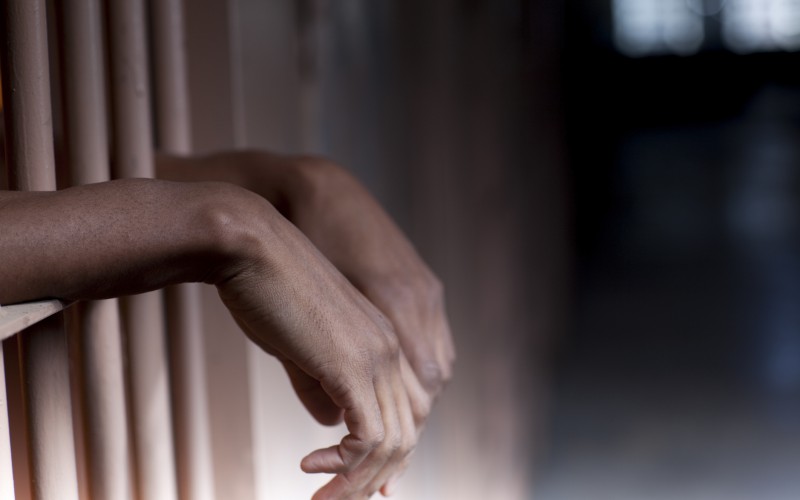
Prison Hands

Since its founding, EFF has highlighted and defended cases of injustice and fearmongering perpetrated against innocent technologists. We advocate for unjustly imprisoned technologists and bloggers with our Offline project. In 2017, we continue to see fear being whipped up against those who oppose oppression with modern tools—as well as those who have done nothing more than teach and share technology so that we can all use and understand it better:

Dmitry Bogatov, software developer and math lecturer at Moscow’s Finance and Law University. Bogatov ran a volunteer Tor relay, allowing people around the world to protect their identities as they used the Internet. It was one part of his numerous acts of high-tech public service, which include co-maintaining Xmonad and other Haskell software for the Debian project. For his generosity, Bogatov has now spent over a hundred days in pretrial detention, wrongfully accused of posting extremist materials that were allegedly sent via through Tor server. Law enforcement officials around the world understand that data that appears to originate from a particular Tor machine is, in fact, traffic from its anonymised users. But that didn’t stop Bogatov’s prosecutors in Russia from accusing him of sending the data himself, under a pseudonym, to foment riots—and added new charges of “inciting terrorism” when a judge suggested the earlier charge was too weak to hold Bogatov in pre-trial detention.

Ahmed Mansoor, of the United Arab Emirates. Mansoor has been a tireless voice for victims of human rights abuses in the United Arab Emirates. In 2011, amidst the Arab uprisings, he was one of five Emirati citizens to be sentenced to prison for his social media postings. That case provoked international condemnation, and the group was soon pardoned. Mansoor was subsequently targeted with sophisticated government spyware on his iPhone; he recognised and passed on the malware link to experts, which led to the discovery of three previously unknown vulnerabilities in Apple’s iOS. In April, Mansoor was seized by the UAE authorities again. On the day of his arrest, the UAE’s official news agency saying that he had been arrested on the orders of the Public Prosecution for Cybercrimes and accused of using social media to promote sectarianism and hate, among other charges. Mansoor’s family did not hear from him for two weeks, and he has been denied access to a lawyer. Just a year ago, Apple was able to roll out a security fix to their users because of Mansoor’s swift, transparent, and selfless actions. Millions of people are safer because of Ahmed’s actions, even as his family fears for his own physical and mental safety. [https://humanrightsdefenders.blog/2017/03/28/ahmed-mansoor-under-arrest-emirates-under-pressure/]

Alaa abd el-Fattah ran Linux installfests across the Middle-East and was a key online voice in the Egyptian uprising. Since then he has been jailed, in turn, by the democratically elected Islamist President Mohammed Morsi, and then when Morsi was overthrown in a coup, by incoming President Abdel Fattah El-Sisi. Alaa’s appeal against a five year prison sentence for protesting—widely seen as a means to silence him on social media—was refused in November of this yearAmnesty and the UN Working Group on Arbitrary Detention have both condemned Alaa’s continuing imprisonment.

Another long-term case is that of Saeed Malekpour, who has been in jail in Iran since 2008. Malekpour returned from Canada to visit his sick Iranian father in October of that year, at a time when the Iranian Revolutionary Guard was starting to target technologists and Internet experts. As an open source coder, Malekpour had written a free front-end image management utility for websites. The Guard found this software on a Farsi pornography site, and used it to as a pretext to seize Malekpour from the streets of Tehran, charge him with running the web site, and sentencing him to death. Malekpour’s death sentence has been anulled twice following international pressure, but a change of government in his home country of Canada risked reducing the level of support for Malekpour. A campaign to encourage the new Trudeau administration to continue to advocate for Malekpour, even as Canada seeks to normalize relations with Iran, seems to be working. One of Malekpour’s advocates, former Liberal MP Irwin Cotler, has said that the Canadian government is now working on the case. The continuing monitoring of Malekpour’s life sentence is a small consolation, but better than the alternative.

Peter Steudtner and Ali Gharavi travel the world, teaching and advising Internet users on how to improve their privacy and digital security online (Ali was an advisor for EFF’s Surveillance Self-Defence project). The two were arrested in a raid by Turkish police on a digital security workshop in July in Istanbul, along with Amnesty Turkeys’ director, Idil Eser, and eight other human rights defenders. The two technology consultants have been accused of aiding terrorists, despite the long history of both as peaceful advocates for secure online practices. After months of detention, concentrated diplomatic and public pressure led to both being released to join their families in Germany and Sweden. We’re delighted that they are free, but their unjust prosecution—and that of their Turkish colleagues—continues in the Turkish courts. 

Bassel Khartabil, the Syrian free culture advocate. Before his arrest and torture in 2012, Bassel was the driving force behind countless projects to turn technology for the public good in his country. He founded a hackerspace in Damascus, translated Creative Commons into a Middle Eastern context, and built out Wikipedia and Mozilla for his fellow Syrians. Bassel’s generosity brought him notability and respect. His prominence and visibility as a voice outside the divided political power-bases of Syria made him an early target when the Syrian civil war became violent. Bassel was killed by the Syrian government in 2015, shortly after he was removed from a civilian prison and sent into the invisibility of Syria’s hidden security complexes.


https://personalliberty.com/grim-year-imprisoned-technologists-2017-review/

Snowden claims his Haven is safe

December 28, 2017

US whistle-blower Edward Snowden has helped create an Android app designed to protect the possessions of journalists and human rights defenders. The software uses sensors – including a phone’s camera, microphone, gyroscope and accelerometer – to detect intruders tampering with someone’s possessions. It is open source, meaning its code can be inspected. It is designed to be used on a “second” smartphone that can be left with the possessions a user wishes to monitor. The app was created as a joint venture between The Guardian Project and Freedom of the Press Foundation, of which Edward Snowden is board president.

Haven turns any spare android phone into a safe room that fits in your pocket,” claims Edward Snowden. In an age where our digital security is at more risk than our physical security, Snowden claims that Haven will change the game of cyber surveillance.

Here’s how it works: once you install the app, it uses the smartphone’s in-built equipment, like cameras, light sensor and microphones, to monitor for any motion, sound or disturbance of the phone. As explained by WIRED: “Leave the app running in your hotel room, for instance, and it can capture photos and audio of anyone entering the room while you’re out, whether an innocent housekeeper or an intelligence agent trying to use his alone time with your laptop to install spyware on it.” Alerts can be sent to your phone, via SMS, Signal or to a Tor-based website.

You shouldn’t have to be saving the world to benefit from Haven,said Snowden, though the app’s primary users are meant to be investigative journalists, human rights defenders, and other people at risk of forced disappearance.

see also: https://humanrightsdefenders.blog/2016/09/29/edward-snowden-can-still-not-collect-his-awards/

——-

https://video.scroll.in/862821/watch-nsa-whistleblower-edward-snowdens-app-turns-your-phone-into-a-physical-security-system

https://www.thequint.com/tech-and-auto/tech-news/edward-snowden-data-privacy-haven-app-android-released

http://www.bbc.co.uk/news/technology-42493028

Amnesty announces Kumi Naidoo as next Secretary General, effective August 2018

December 22, 2017

Amnesty International has appointed Kumi Naidoo as its next Secretary General. As from August 2018, Kumi will succeed Salil Shetty, who served two terms as Secretary General from 2010.

Mr Naidoo is an activist and civil society leader. His previous leadership roles include Executive Director of Greenpeace International, Chair of the Global Call for Climate Action, Founding Chair of the Global Call to Action against Poverty and Secretary General and CEO of CIVICUS, the World Alliance for Citizen Participation. [see also: https://en.wikipedia.org/wiki/Kumi_Naidoo]. Mr Naidoo currently chairs three start-up organisations in his home country South Africa: Africans Rising for Justice, Peace and Dignity; the Campaign for a Just Energy Future; and the Global Climate Finance Campaign.

Mwikali Muthiani, Chair of the Board of Amnesty, said: “We are delighted to be welcoming Kumi as our new Secretary General. His vision and passion for a just and peaceful world make him an outstanding leader for our global movement, as we strengthen our resolve for a world where human rights are enjoyed by all.

Mr Naidoo himself stated: “I have been an activist and campaigner all my life, so I am excited to be joining the world’s largest people movement for human rights at a time when we need to counter increasing attacks on basic freedoms and on civil society around the globe. This means adapting to a fluid fast-changing global environment with urgency, passion and with courage. ..Amnesty International’s campaigns for justice and equality today are more urgent than ever, and I am humbled and honoured to be leading the organisation in these challenging times.

Amnesty has a global presence including offices in more than 70 countries, 2,600 staff and seven million members, volunteers and supporters worldwide.

Salil Shetty will remain in office until July 2018. [see also: https://humanrightsdefenders.blog/tag/salil-shetty/]

https://www.amnesty.org/en/latest/news/2017/12/kumi-naidoo-next-amnesty-international-secretary-general/

Bound to happen but still…High Commissioner Zeid announces he will not seek second term

December 22, 2017
The United Nations high commissioner for human rights, Zeid Ra’ad al-Hussein, left, is not seeking a second term. CreditSalvatore Di Nolfi/Keystone, via Associated Press

The United Nations High Commissioner for Human Rights, Zeid Ra’ad al-Hussein, has made the unusual decision to not seek a second four-year term. The decision was conveyed in a short statement that was emailed to his staff early this Wednesday and shared with some media. “Next year will be the last of my mandate”..  “After reflection, I have decided not to seek a second four-year term. To do so, in the current geopolitical context, might involve bending a knee in supplication; muting a statement of advocacy; lessening the independence and integrity of my voice — which is your voice.” “There are many months ahead of us: months of struggle, perhaps, and even grief — because although the past year has been arduous for us, it has been appalling for many of the people we serve” .

This is very much in line with his courageous statements and actions over the years often referred to in this blog [e.g. https://humanrightsdefenders.blog/2016/09/14/un-high-commissioner-for-human-rights-states-may-shut-my-office-out-but-they-will-not-shut-us-up/]. Still, a blow to the international human rights movement.

While most high level United Nations officials serve as long as their mandate allows, no single Human Rights Commissioner has served a full four-year second term. Zeid’s four-year term expires next September. It has been clear for months that some of the five veto-wielding permanent members of the United Nations Security Council would use their influence to block it. Mr. Zeid al-Hussein – to his credit – has been critical of all of them.

He has been outspoken about the Russian-backed government of Syria. He has warned of the prospects of genocide by the Chinese-backed government of Myanmar. And he has called out the Trump administration several times, most pointedly on the travel ban against citizens of Muslim-majority countries and after the demonstrations by white supremacists in Charlottesville. Mr. al-Hussein’s willingness to take on the powerful by name, along with what he has described as the “eye-watering stupidity” of abusive governments, made him few friends. Mr. al-Hussein proved confounding to many by defying classification: the first human rights chief from the Middle East but a sharp critic of violations by Arab governments; a Muslim who condemned Islamic militants; and a Jordanian prince who discarded his title to take the job and become an advocate for victims.

[see also e.g. https://humanrightsdefenders.blog/2016/10/15/martin-ennals-award-2016-relive-the-ceremony-in-13-minutes-or-in-full/]

——–

https://www.washingtonpost.com/news/worldviews/wp/2017/12/21/2017-the-year-even-the-u-n-human-rights-commissioner-gave-up-on-human-rights/?utm_term=.00b8792d71f7

https://mobile.nytimes.com/2017/12/20/world/un-human-rights-al-hussein.html


Human Rights Day 2017 in Asia: MIND THE GAP

December 11, 2017
International Human Rights Day 2017 was celebrated all over the world by governmental and non-governmental entities alike. Here some cases of MIND THE GAP as reported in the media in Asia:

Cambodia:

The government celebrated Human Rights Day under the theme of ‘peace’, but 103 civil society groups spoke out against state ‘attacks’. KT/Mai Vireak

The government yesterday celebrated the 69th anniversary of International Human Rights Day under the theme of peace, while 103 civil society groups called for more protection for human rights defenders. Prime Minister Hun Sen posted on his Facebook page to say how the rights and freedoms of Cambodian people have been restored since the end of the Khmer Rouge regime in 1979: “December 10 is International Human Rights Day, which people all over the world celebrate. On January 7, 1979, the rights and freedoms of the Cambodian people were restored and have been until this day.”

Civil society meanwhile marked the day at different locations around Phnom Penh and in other provinces. A group of 103 civil society organisations issued a joint statement calling for justice and respect for human rights from the government. “On the occasion of International Human Rights Day, we, the undersigned members of Cambodian civil society, call for an end to government attacks on human rights defenders and civil society groups and the lifting of unjustifiable restrictions on fundamental freedoms,” the statement said.

Philippines:

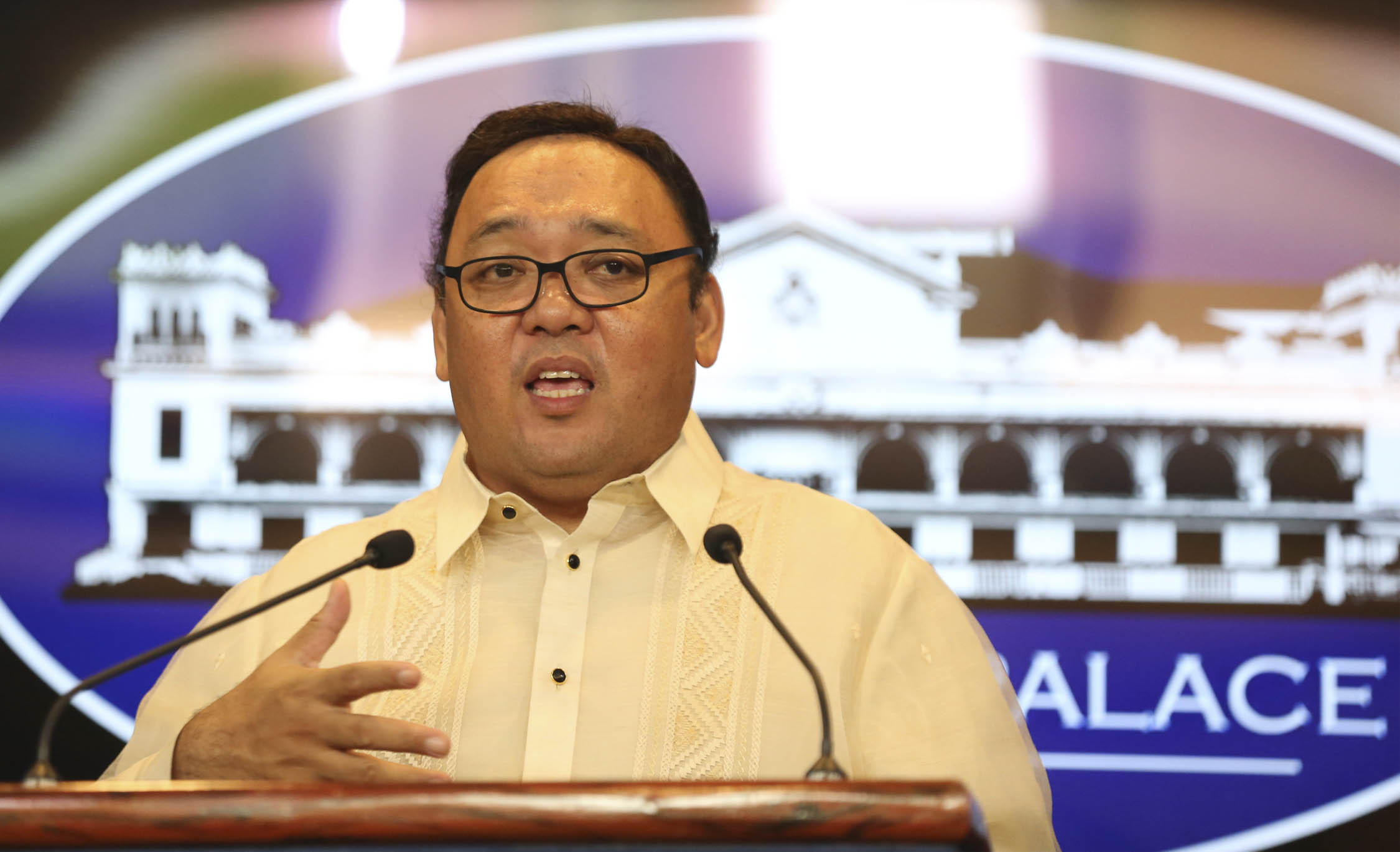
Presidential spokesperson Harry Roque INQUIRER PHOTO/JOAN BONDOC


On the observance of the International Human Rights Day, Presidential Spokesperson Harry Roque reiterated President Rodrigo Duterte’s commitment to uplift the lives of Filipinos, especially the poor, marginalized and vulnerable. Noting that the Philippines is an active member of the United Nations Human Rights Council and that respect for human rights is enshrined in the 1987 Constitution, Roque assured that the Duterte administration “works hard with the best interest of every Filipino.” ..“That direction is what inspires the government’s compliance with its human rights obligations. As a Nobel Peace Prize winner once said, ‘poverty is the absence of human rights” .

The Philippines has experienced a precipitous drop in basic human rights standards since President Rodrigo Duterte came to power last year, resulting in large, mass mobilizations across the country for the occasion of December 10, Human Rights Day. At least 12 rallies were held across the archipelago on Sunday, with human rights group KARAPATAN and progressive alliance BAYAN taking the lead alongside a range of like-minded groups calling for an end to what they describe as the U.S.-Duterte regime. In addition to over 13,000 small-time drug dealers and addicts killed during Duterte’s “war on drugs,” Karapatan has documented 113 victims of political killings, 81 victims of torture, 54,573 victims of threat, harassment, and intimidation, 364,617 who have suffered due to indiscriminate firing and aerial bombing, and 426,170 internally displaced who were subject to forced evacuation.  

Turkey:

Turkish President Recep Tayyip Erdogan. Photo: AA

Respect for human rights based on the principles of equality and non-discrimination of individuals before the law is the irreplaceable nature of the Republic of Turkey,” said Erdogan, according to state-run Anadolu Agency, on the occasion of Human Rights Day on Sunday. Erdogan specifically referenced Turkey’s commitment to “all oppressed people and victims from Palestine to Syria and Asia to Africa.”

Turkey has been cited by several international organizations for human rights violations, namely in its justice system, freedom of speech and Internet communications, treatment of minorities, and political censorship. See inter alia: https://www.amnesty.org/en/countries/europe-and-central-asia/turkey/report-turkey/and https://humanrightsdefenders.blog/2017/11/22/celebrities-come-out-to-support-taner-kilic-amnesty-turkeys-chair-on-trial-today/.

Thailand:

National Human Rights Commission (NHRC) commissioner and human rights defender Angkhana Neelaphaijit said that despite the government’s claim that it cherished human rights and had made them a priority, in reality it had done nothing to do so.
Angkhana Neelaphaijit
Thailand is still far from its goal of valuing human rights since the junta’s policies and actions have eroded rights, while many people do not even understand the principle. Prominent Thai campaigners marked Human Rights Day yesterday to lament that the country was still far from its professed goal of ensuring everyone was accorded the freedoms they deserve. The nation’s most severe human rights violation was the lack of freedom of expression, they said in an appeal to the National Council for Peace and Order (NCPO) to restore democracy to truly guarantee human rights for every citizen. They also said Thailand faced many serious human rights crises. For instance, social movements across the country continued to be suppressed by authorities, the justice system was being used against human rights defenders, and many people in society still did not understand human rights and harmed others. National Human Rights Commission (NHRC) commissioner and human rights defender Angkhana Neelaphaijit said that despite the government’s claim that it cherished human rights and had made them a priority, in reality it had done nothing to do so. On the contrary, Angkhana said the government was doing the very opposite, enforcing many laws and regulations that violated human rights and curbing the activities of campaigners, both through law enforcement and by force. In effect, the regime was deepening Thailand’s human rights crisis, she said.

Pakistan:

Message by Foreign Minister of Pakistan : ”On behalf of the people and Government of Pakistan, I wish to reiterate our strong commitment to promote and protect human rights and fundamental freedoms, as well as needs. Pakistan has demonstrated its resolve by enacting wide ranging legislation, establishing strong institutional machinery and putting in place robust policy measures in the field of human rights. Pakistan’s Constitution serves as an anchor and guarantor of fundamental freedoms and human rights of all Pakistanis.  The Government of Pakistan accords high priority to advancing mutually reinforcing objectives of development, human rights and democracy…This year is also significant for Pakistan in the field of human rights. Pakistan actively engaged with the UN human rights institutions and partners through regular submission of national reports, participation in review processes and implementation of recommendations arising from such mechanisms. Pakistan filed reports and participated in the review mechanism of three international treaty bodies, namely CAT, ICESCR and ICCPR. Pakistan also successfully presented its third national report on Universal Periodic Review (UPR) on 13 November 2017. This level of engagement, participation and contribution demonstrates Pakistan’s commitment as well as actions to advance the cause of human rights.  Pakistan’s success as the newly elected member of the Human Rights Council (HRC) this year is a testimony to the confidence reposed in Pakistan by the international community as a consensus builder within the international human rights policy framework.

The struggle against enforced disappearance was seen in Sindh alone while though there have been cases of missing persons in other provinces but Sindh has dared to raise voice against such violations of human rights.  These views were expressed at a seminar on occasion of Human Rights Day organized here by SAFWCO and Social Change. Noted Human Rights activist and lawyer Faisal Siddiqui said only voice against forced disappearances was being heard from Sindh while voice of Balochistan has been crushed with force. Though many persons were missing in KPK and Punjab but from there no voice is heard.  He said our judiciary has come out of colonization era and was giving right decisions. He said it was he who had filed petition in SHC for IG Sindh A.D.Khwaja. He said he was harassed for being advocate against Baldia Factory burning of 258 persons, Shahzeb Jatoi case and other cases for which he was harassed and could not open his office for many months. He said now powerful forces were active human rights.  The gathering paid tributes to Pubhal Saryo, convener of missing persons forum who was whisked away by agencies and released after more than 2 months. Punhal Saryo said it has become very difficult to work for human rights in situation where human rights defenders were also not safe.
—————–

http://www.khmertimeskh.com/5095119/civil-society-decries-attacks-nation-marks-human-rights-day/

https://www.telesurtv.net/english/multimedia/Human-Rights-Day-Marked-In-Philippines-Amid–All-Out-Repression-Drug-War-Martial-Law-20171210-0021.html & https://newsinfo.inquirer.net/951114/human-rights-day-roque-duterte-palace-poor-marginalized-un-rights-council

http://www.rudaw.net/english/middleeast/turkey/101220171

http://www.nationmultimedia.com/detail/national/30333640

http://www.mofa.gov.pk/pr-details.php?mm=NTY5Mw,, and http://www.pakistanchristianpost.com/detail.php?hnewsid=6705

Women Human Rights Defenders Day 2017: an anthology

December 7, 2017

When the UN adopted a landmark Resolution on the Protection of the Women Human Rights Defenders in 2013, the international community committed itself to supporting them and recognising the indispensable role they play in society. But instead of being applauded and recognised for their achievements, human rights defenders are increasingly being threatened and attacked, and portrayed as ‘criminals’, ‘terrorists’ or a ‘threat to traditional values’. In the worst cases, they’re imprisoned and killed. Women human rights defenders are attacked because they challenge injustice and break traditional gender norms and stereotypes in their societies.

To mark international Women Human Rights Defenders’ Day on Wednesday 29 November, I already posted AWID’s list of women who have been killed this year [https://humanrightsdefenders.blog/2017/12/04/remembering-women-killed-fighting-for-human-rights-in-2017/].

However there is a plethora of other sources on the issue of women human rights defenders issued around this international day and here follows ‘unfortunately’ just a (big) selection:

——-

Kate AllenDirector of Amnesty International UK, wrote in the Huffington Post (5 December 2017) under the title “Women Human Rights Defenders: Time To Speak Up For The Those On The Frontline Of Human Rights“.

Amnesty International has released a new report that lays bare the shocking threats that activists face around the world. It shines a light on the plight of women who’ve been killed or forcibly disappeared as a result of their campaigning work over the past 20 years….Berta Cáceres, for example, an indigenous and environmental rights defender in Honduras, was murdered in March last year after being threatened for opposing a hydroelectric project. Her daughter, Bertha Zuñiga, survived an armed attack in July this year, just weeks after being named the leader of the Civic Council of Popular and Indigenous Organisations of Honduras, the organisation her mother previously led. Justice is yet to be served……And what is so utterly frustrating is that most of these attacks could have been prevented if countries had taken their human rights obligations seriously. When crimes are not investigated and punished, a chilling message is sent out, leaving many women human rights defenders fearing for their lives or too scared to stand up for what is right. This is why we need governments to take heed of our report. They must publicly acknowledge the enormous contribution of women activists in the advancement of human rights, and take steps to prevent any further attacks on them by ensuring they’re adequately supported….In the face of rising populism, fundamentalism, inequality, and a backlash against women’s human rights, voices of women human rights defenders and the communities and movements they represent are now more important than ever.

Rohit David, in the Time son India (5 December 2017) wrote “Women who have been tortured for the environment

The year 2017 has been a tough year for women environment activists and environmental defenders, protecting their indigenous land and resources as they face increased crackdowns, violence, threats, intimidation and murder by state and non-state actors. At the UN environment assembly in Nairobi the women’s rights organisations held a tribute ceremony on Monday. They highlighted the important role of women human rights defenders for a pollution-fr ..  Read more at: //economictimes.indiatimes.com/articleshow/61926819.cms?utm_source=contentofinterest&utm_medium=text&utm_campaign=cppst

Pratch Rujivanarom wrote in The Nation of 4 December 2017 about women in Thailand: “Hardships for female rights activists highlighted”

8b1dee1fdfc9479adc4f929e5e898bda.jpeg

FEMALE ACTIVISTS from every corner of Thailand have been victims of discrimination, lawsuits and threats to their families, Protection International has revealed.

Being a human rights activist was harder for women, as many of them had to look after their families and make a living while maintaining an active role campaigning for justice and basic human rights, the organisation’s coordinator, Pranom Somwong, said to mark International Day for Women Human Rights Defenders last Wednesday. “From the stories of women human rights activists across the country, we found that they are living in great distress,” Pranom said. “Not only do they have to face danger from their activism, they have to take care of their family. In the meantime they have a duty to go to court, gather evidence for their cases and earn money for litigation. ..“Moreover, we have found that since the National Council for Peace and Order (NCPO) came to power in 2014, 179 women have been sued for their activities to defend their rights. They were discriminated against and branded as criminals, and it is common for many of them to be a defendant in more than five cases at the same time.”

c059086e8d6085ffe3be86002e8ff522.jpg

At an event titled “Side by Side WHRD (Women Human Rights Defenders) 2018” last Wednesday at the Bangkok Art and Culture Centre, Protection International disclosed the latest statistics on lawsuits against female human rights activists. They showed that most female activists were sued over the forest-encroachment issue and that the Northeastern Region had the highest number of cases against women activists. A land-rights activist from Chaiyaphum in the northeastern region, Oranuch Phonpinyo, said that poor people of every gender and age were most likely to be victims of unfair government policies, so many women also took on the considerable role of campaigning for their basic rights and justice. Oranuch said the statistics showed that the land-rights issue was the most prominent problem. Since the NCPO proclaimed its forest reclamation policy and enforced orders to take back forestland from encroachers, poor people across the country had been affected severely – especially in the Northeast.

Vishal Gulati (in Nairobi at the invitation of United Nations Environment to cover its third annual session) wrote about: “200 environmental women defenders killed in 2017: Activists”.

This year has been the deadliest for environmental women defenders, with 200 assignations reported across the globe, and most of them were killed over land and forest conflicts, rights activists said on Monday. Paying a tribute on the inaugural day of the three-day third UN Environment Assembly here, they highlighted the important role of women human rights defenders for a pollution-free future. “Two hundred environmental and women human rights defenders have been assassinated this year, mostly killed over land and forest conflicts. Only last week, we lost Elisa Badayos from the Philippines. But these conflicts are greatly aggravated by pollution,” Priscilla Achakpa of the Women’s Major Group (WMG) said.

US NEWS on 30 November 2017 carried the Reuters story “Killing of Mexican Prosecutor of Crimes Against Women Sparks Outcry”

Wee on 29 November wrote in The MarySue: “5 Women To Remember on International Women Human Rights Defenders Day”

International Women Human Rights Defenders Day was created by the UN as a way of giving thanks and paying tribute to the women who have worked to increase women’s access to education, safety, and general independence around the world. So today at TMS we are going to talk about 5 women (2 historical and 3 modern women) who worked to ensure equality for women.

(1) Tawakkol Karman: the Yemeni journalist who became the face of the 2011 Yemeni uprising. In 2005 she, along with seven other female journalists, formed the human rights group Women Journalists Without Chains (WJWC).

(2) Sophia Duleep Singh: Goddaughter to Queen Victoria and exiled Indian royalty, Sophia Duleep Singh could have lived a life filled with royalty and opulence, but instead found herself called to the Suffragette movement in the United Kingdom.

(3) Peris Tobiko: Peris Tobiko was the first female Maasai member of Parliament to be elected in Kenya and was re-elected in 2017.

(4) Aida Kasymalieva: The youngest ever female member of the Kyrgyzstan parliament has made child marriage, domestic violence, and bride kidnapping an issue in her country, even when it causes other male members of parliament to walk out.

(5) Matilda Joslyn Gage: Considered too radical by many other suffragettes at the time, Gage was an unapologetic free thinker who supported not only just women’s right to vote but also provided her home as a stop on the Underground Railroad, supporting Civil Rights for African-Americans and Native peoples.

Indigenous Voices of Asia (IVA) published on 29 November “Philippines: CPA Statement on the Occasion of International Women Human Rights Defenders Day”

Today, in commemoration of the International Women Human Rights Defenders Day, the Cordillera Peoples Alliance (CPA) pays its highest tribute to all women activists who valiantly fight for women’s human rights against all forms of discrimination, inequality, and economic and political oppression. We especially honor women human rights defenders who work tirelessly and selflessly to promote indigenous peoples’ collective rights to our lands, territories and resources against land grabbing and plunder by the state and private corporations……There is a growing peoples’ resistance on state fascism and tyranny, which was seen in the series of protest caravans during the past three months, including the protest caravan led by indigenous peoples and Moro people in September. In response, President Duterte plans on a crackdown against left-leaning organizations on the basis of their alleged conspiracy with communists, and arresting not only communist rebels but also “all legal fronts aiding the left”. Duterte also issued Proclamation 360 on November 23, which terminated the peace negotiations between the Government of the Philippines and the National Democratic Front of the Philippines. Peace has become obscured and human rights have lost meaning and force under the current regime…..

Also in the Philippines the Women’s rights group Tanggol Bayi on Wednesday said women human rights defenders are facing “graver challenge” under the Duterte administration. In a press statement, Tanggol Bayi, in which name translates to Defend Women in English, convenor Gerifel Cerillo said Duterte’s words and actions are inciting state forces to commit further violence against human rights defenders, most of whom are women. “Duterte’s words and actions do not only smack of machismo and sexism. These are words and actions of an avowed fascist, one who flaunts state violence and terror on the poor majority to maintain a status quo that is inimical to the interests of the Filipino women and people,” Cerillo said as their group celebrated the International Women Human Rights Day on Wednesday.

On 29 November, 2017, to mark International Women Human Rights Defenders Day 2017, the Business & Human Rights Resource Centre made public a short video about women human rights defenders working on business and human rights – includes statistics from their database

On International Women Human Rights Defenders (WHRDs) Day, marked every year on 29 November, the Gulf Centre for Human Rights (GCHR) calls upon governments and armed groups in the MENA region to free all detained WHRDs.

In Saudi Arabia,  GCHR welcomed this news [re women being allowed to drive] with great enthusiasm, however unfortunately the precedent of arrest is stronger than the precedent of freedom when it comes to issues related to women in Saudi Arabia….It’s not possible for human rights defenders to work freely in Saudi Arabia right now, with almost all of them in jail or ceasing work. Most recently, on 10 November 2017, the Specialised Criminal Court (SCC) in Riyadh sentenced woman human rights defender and Internet activist Naima Al-Matrood to six years in jail followed by six years of a travel ban. Al-Matrood was arrested on 13 April 2016 at the Directorate of Public Investigation in Al-Dammam. She was charged with allegedly participating in a number of anti-state demonstrations and rallies, being linked to a media cell, and violating public order by creating two social networking accounts on Twitter and Facebook to demand the release of some detainees. Al-Matrood has actively contributed to the peaceful human rights movement in the Eastern Province. Her health is deteriorating because of anemia, which has caused her vision to weaken.

In Iran, many people who campaign for women’s rights have been jailed and the country treats WHRDs more harshly than others, jailing them for lengthy sentences despite illness and separating them from their families.
Atena Daemi, who has campaigned for women’s rights and against the death penalty, has been imprisoned since November 2016 after being convicted of charges that were based solely on her peaceful human rights activities……..Narges Mohammadi, former Vice-President of the Defenders of Human Rights Centre (DHRC) and President of the Executive Committee of the National Council of Peace in Iran, remains in prison….
Even after their release, WHRDs remain imprisoned in their country, unable to leave due to travel bans. Iranian human rights lawyer Nasrin Sotoudeh ..continues to be banned from travelling. She was released in September 2013 after having spent over three years in prison. She was given a 20-year travel ban.

In Syria, Razan Zaitouneh and Samira Al-Khalil were kidnapped from the Violations Documentation Center (VDC) offices with two male colleagues by armed, masked gunmen in Douma on 9 December 2013 and have been held ever since. There has been no word of their health or circumstances since they were abducted almost four years ago. …

(see also GCHR’s 2016 report Before It’s Too Late: Tangible Protection Mechanisms for Women Human Rights Defenders in the MENA Region and Beyond).

On 29 November the Inter-American Commission on Human Rights (IACHR) called on States to Recognize and Protect the Work of Women Human Rights Defenders

The IACHR observes with great concern that in recent years defending human rights in the Americas has become an extremely dangerous activity. Human rights defenders are regularly victims of criminalization, arbitrary detentions, killings, attacks, and threats, among other acts of violence. The information received by the IACHR demonstrates the seriousness of the situation in the region: in 2016 three quarters of all killings of human rights defenders in the world occurred in the Americas. Women human rights defenders face specific challenges in carrying out their defense of human rights, including the discrimination they are subject to because of gender stereotypes ascribed to their sex.

The IACHR notes that a context of structural violence and discrimination against women continues to exist in the region. In this context and while defying macho stereotypes that disapprove their participation in public life, women human rights defenders face a situation of particular vulnerability. They are exposed to misogynistic attitudes, threats of sexual aggression, gender-based defamation and questioning their “femininity” or sexuality. In this respect, the stigmatization and delegitimization have a different impact on women human rights defenders, given that many of these acts cause harm and violence to their gender condition. Additionally, in several occasions there is an intersection with racial discrimination when women defenders are indigenous or Afrodescendent.

Open Democracy of 29 November carries AWID’s “This is why we fight: Interview with Isabel Flota Ayala

AWID spoke with Isabel Flota Ayala, an indigenous activist from the International Indigenous Women’s Fund (IIWF) about people who fought bravely for her communities.

Isabel Flota Ayala, indigenous activist from the International Indigenous Women’s Fund (IIWF). Photo: AWID.

AWID spoke with Isabel Flota Ayala, an indigenous activist from the International Indigenous Women’s Fund (IIWF). She spoke lovingly about people who fought bravely for her communities, including Griselda Tirado Evangelio, a human rights lawyer and part of Oganización Independiente Totonaca (OIT) a group that was defending the land rights of indigenous people in Mexico, and Alberta “Bety” Cariño Trujillo, who was a human rights defender and director of CACTUS (Centro de Apoyo Comunitario Trabajando Unidos), a community organization in Oaxaca, Mexico, through which she fought for the right to resources and autonomy of indigenous people in her community. Griselda was assassinated just outside her family home in 2003. Bety was killed by gunfire during a peaceful solidarity caravan, in a case that still remains “unsolved.”

The International Service for Human Rights (ISHR) focused on Bahrain: “Interrogation, travel bans, arrest, and torture are but some of the challenges routinely faced by women humanrights defenders in Bahrain. On the International Women Human Rights Defenders Day we reiterate the call fortheir protection.

Just days ago, Nedal al-Salman was advised that a travel ban prevented her leaving Bahrain. Al-Salman is the Head of International Relations and Women & Children’s Rights Advocacy at Bahrain Centre for Human Rights, and is active in the promotion of women’s rights in Bahrain…This is the second travel ban al-Salman has received in two years; a restriction imposed simply due to her legitimate work in defence of human rights….Zainab Al-Khamees – a woman human rights defender and member of the Bahrain Human Rights Society – was prevented from traveling and summoned to Court in October this year …Jalila al-Salman – a teacher and the former vice president of the (now dissolved) Bahraini teachers’ association– also faces a travel ban. She was previously arrested and detained and tortured for her alleged role in coordinating a teachers’ strike following protests calling for government reform. Jalila al-Salman and her colleagues faced charges of ‘calling for and inciting the overthrow and hatred of the ruling system, possessing anti-political system pamphlets, spreading malicious and fabricated news and taking part in illegal gatherings.’ Nazeeha Saeed – correspondent for Radio Monte Carlo Doualiya and France24 – has been charged with ‘unlawfully working for international media.’ Saeed has previously been detained, and subjected to torture, ill-treatment, and humiliation by police. She as well is banned from travel. These women human rights defenders are subject to reprehensible treatment in response to their activism and commitment to human rights issues.

IPS has a special series of articles that cover the 16 days activism that start on 25 November, the International Day for the Elimination of Violence against Women.   “Women Activists are Targets of Gender-Biased Violence”

Fanny Kaekat, indigenous leader of the Shuar Arutam people, has spent her life defending the territories of indigenous communities in southeastern Ecuador from the threat of mining. She poses at the 14th Latin American Feminist Meeting, in Montevideo, in front of a poster that reads: "my body, my territory", a slogan of women human rights defenders. Credit: Mariela Jara / IPS

Fanny Kaekat, indigenous leader of the Shuar Arutam people, poses at the 14th Latin American Feminist Meeting, in Montevideo, in front of a poster that reads: “my body, my territory”, a slogan of women human rights defenders. Credit: Mariela Jara / IPS

Veiled and direct threats, defamation, criminalisation of activism, attacks on their private lives, destruction of property and assets needed to support their families, and even murder are some forms of gender violence that extend throughout Latin America against women defenders of rights. They want to throw us off our land, they do not leave us alone. The helicopters fly at midnight, there are rumours that they are going to attack us,” Fanny Kaekat, an indigenous leader of the Shuar Arutam people in Ecuador, who for decades have been resisting the harassment of mining companies interested in the gold in their territories in the southeast of the country.

The violence against women rights activists was one of the main topics discussed at Eflac, which brought together some 2,000 feminists between Nov. 23 and 25, the International Day for the Elimination of Violence against Women, which marks the start of 16 days of activism to eradicate a problem that is growing rather than declining in the region. This is shown by the report “Commitment to Action: Public Policies to Eradicate Violence against Women in Latin America and the Caribbean”, launched on Nov. 22 by UN Women and the United Nations Development Programme (UNDP), which stresses that the region has the highest rates of gender violence not perpetrated by a partner and the second highest committed by an intimate partner……

The local newspaper of Krugersdorp in South Africa (24 November 2017) must be representative of a host of articles on this topic: “#Count me in: together moving a non-violent SA forward”

The white ribbon is the symbol of support for the 16 Days of Activism campaign. It symbolises peace, and the commitment to never commit or condone violence against women and children. Photo: bigissue.org.

…In 1998, South Africa nominated the 16 Days of Activism campaign as the blue-print for curbing violence in the country, and uses it as a time to educate communities about abuse, which includes rape, murder, assault, financial abuse, starvation, emotional abuse, physical abuse, abduction, sexual harassment, human trafficking, incest, child labour and any act of doing something against the other person’s will. The 16 Days of Activism campaign also tells people how to get help when you or someone you know has been abused. The campaign has seen various governmental departments involved in acting against abuse, as well as initiatives, themes, talks, organisations and activities helping to eradicate abuse by providing information. As one of the strategic ways of fighting abuse and inequality, the government went so far as to establish a ministerial portfolio, the Department for Women, Children and Persons with Disabilities in May 2009, to put emphasis on not only equality but also the access to development opportunities for vulnerable groups in South African society. The Department aimed to steer the equity, equality and empowerment agenda of the government with regard to groups of people who are treated as insignificant, and previously disadvantaged communities in each of the three sectors.

Finally, although technically not issued in the context of the Women Human Rights Defenders Day, I refer to the piece by Aynslee Darmon in ET Canada of 6 December 2017 entitled  Angelina Jolie Is Fighting For Female Empowerment Through Art: ‘Help Them Tell Their Stories’

At The Hollywood Reporter‘s annual Women in Entertainment breakfast on Wednesday, Angelina Jolie delivered a powerful speech calling for female empowerment. Calling it an international battle, Jolie is encouraging female empowerment through art…“We don’t have to keep our heads down, we don’t have to think that the film we make or our comment on politics, or a joke we tell on stage could land us in prison where we might be tortured or punished,” Jolie, 42, added. “We don’t have the censorship. We don’t have to worry what acting in a play or singing on television will bring violence or dishonour to our families. We don’t have to tailor our clothes or our opinions to when it’s acceptable to religious authorities or violent extremist groups. We are not shunned and considered immoral because we dare to speak our mind about why we consider to be wrong as a society. We have the right to think thoroughly and to speak freely and to put forward our ideas on equal terms. There are women across the world who face serious danger and get hurt just trying to have a voice and an opinion.”


sources:

http://www.huffingtonpost.co.uk/entry/women-human-rights-defenders_uk_5a2692dce4b087120d865f21

https://economictimes.indiatimes.com/news/environment/developmental-issues/women-who-have-been-tortured-for-the-environment/articleshow/61926819.cms

http://www.business-standard.com/article/news-ians/200-environmental-women-defenders-killed-in-2017-activists-117120401285_1.html

http://www.nationmultimedia.com/detail/national/30333107

https://www.usnews.com/news/world/articles/2017-11-30/killing-of-mexican-prosecutor-of-crimes-against-women-sparks-outcry

https://www.themarysue.com/5-women-to-remember/

https://iva.aippnet.org/philippines-cpa-statement-on-the-occasion-of-international-women-human-rights-defenders-day/

http://www.philstar.com/headlines/2017/11/29/1763688/women-human-rights-defenders-say-they-face-graver-challenge-under

https://ifex.org/middle_east_north_africa/2017/11/29/women-rights-defenders/

https://reliefweb.int/report/world/iachr-calls-states-recognize-and-protect-work-women-human-rights-defenders

https://www.opendemocracy.net/democraciaabierta/isabel-flota-ayala-awid/this-is-why-we-fight-interview-with-isabel-flota-ayala

http://www.ishr.ch/news/bahrain-women-human-rights-defenders-must-be-protected

https://www.awid.org/whrd-tribute

http://www.ipsnews.net/2017/11/women-activists-targets-gender-biased-violence/

https://krugersdorpnews.co.za/340928/count-me-in-together-moving-a-non-violent-sa-forward/

https://etcanada.com/news/278063/angelina-jolie-is-fighting-for-female-empowerment-through-art-help-them-tell-their-stories/


Commercial spyware out of control and becoming threat to human rights defenders

December 6, 2017

Read the rest of this entry »

Why does MP Tulip Siddiq not want to speak out on Bangladesh?

December 5, 2017

Michael Polak, a human rights lawyer in the UK , wrote in the Guardian of 4 December 2017 “Why will Tulip Siddiq not speak out on Bangladesh’s ‘disappeared’ innocents?”. Behind this title is a serious matter. Ahmad bin Quasem is among the hundreds abducted by state forces in Bangladesh, the country of which this British MP’s  aunt happens to be the prime minister. The author points out that the excuse that the MP has “no sway over Bangladeshi politics” is far from convincing as:.. “And yet earlier this week the Bangladeshi cabinet adopted a resolution “greeting” the Hampstead and Kilburn MP for winning an award in Westminster. Siddiq accompanied the Bangladeshi prime minister during bilateral talks between Russia and Bangladesh in January 2013. Her paternal uncle is Tarique Ahmed Siddique, security adviser to the prime minister. Her mother and brother are both on the ruling party’s council and it is said that her brother is being groomed to be a future leader of Bangladesh. It is clear that Tulip Siddiq has a close relationship with various government figures in Bangladesh, including the prime minister.

Why this MP feels so reluctant to use her influence and to speak out on this and other cases is a mystery. The details of the case of Mir Ahmad bin Quasem, or Arman as he is known to friends and family, a British-trained Bangladeshi lawyer who was abducted in August 2016 by state security forces, follows below.
tulip siddiq
Tulip Siddiq. Photograph: Jack Taylor/Getty

Last year the family of one such victim approached me to press their case. Mir Ahmad bin Quasem, or Arman as he is known to friends and family, is a British-trained Bangladeshi lawyer who was abducted in August 2016 by state security forces. They knocked on his door and, in front of his wife and young children, dragged him away. This abduction followed the exact modus operandi of other abductions by the security forces in Bangladesh. Since this incident there has been no confirmation of his whereabouts, but we believe that he is still alive.

Mir Ahmad was on the defence team for his father, Quasem Ali, who was prosecuted by Bangladesh’s self-styled “international crimes tribunal”, set up by the ruling party in Bangladesh to try crimes committed during the country’s war of liberation against Pakistan.

The tribunal has been widely criticised internationally, including by groups such as Amnesty International and Human Rights Watch, as well as the United Nations high commissioner for human rights and eminent British lawyers. Along these lines, Mir Ahmad decided to join his father’s defence team but was abducted a month before his father’s execution, while the appeal procedure was still under way.

Mir Ahmad has not been charged with any offence and his abduction and continued detention by the Bangladeshi government is contrary to the Bangladeshi constitution and the country’s obligations under international law. Forced disappearances are common in Bangladesh under the current government: more than 320 people have been disappeared since 2009.

Mir Ahmad is one of three sons of former politicians who were abducted at around the same time, one of whom has been released. In a secret recordingobtained by Swedish radio, it is claimed by a high-ranking government security officer that the fate of those seized is decided by those “high up”. Astonishingly, as reported in these pages, Sheikh Hasina recently claimed that such forced disappearances also occur in Britain and the US, saying “275,000 British citizens disappeared” in the UK each year.

Last week Channel 4 News raised the issue and put the matter to Siddiq. The interaction now has become a matter of public record. Siddiq complained that Mir Ahmad was not her constituent, that she had no sway over Bangladeshi politics and that in any case she was a British MP focusing on Britain…..Even if we are to take Siddiq at her word that she has no sway over Bangladeshi politics, what is preventing her from at least speaking out? My client may not be Siddiq’s constituent, but nor is he the constituent of Shabana Mahmood MP, who raised an official parliamentary question on the matter earlier this year.

Before and since the Channel 4 News report was aired, the family of Mir Ahmad bin Quasem have been visited by state security forces who have reportedly warned them that “if there is any such news, come next time we will not be good like this time and you will not get to see our face like today”.

Since it has come to this, I earnestly hope that Siddiq can speak out to try to help ensure that Mir Ahmad’s mother, sister, wife and two young daughters are not intimidated by the Bangladeshi security services or face enforced disappearance themselves. This is an urgent matter and I ask Tulip Siddiq, as I have done many times before, to speak to me so it can be resolved.

https://www.theguardian.com/commentisfree/2017/dec/04/tulip-siddiq-bangladesh-disappeared-abducted-prime-minister


Remembering women killed fighting for human rights in 2017

December 4, 2017

Source: Remembering women killed fighting for human rights in 2017 | AWID