Archive for the 'human rights' Category

EU Parliament ‘improves’ proposed Terrorist Content Regulation

April 18, 2019

After my earlier piece about the risks in the draft EU regulation on terrorism content [see: https://humanrightsdefenders.blog/2019/01/31/ngos-express-fear-that-new-eu-terrorist-content-draft-will-make-things-worse-for-human-rights-defenders/], I am happy to report that some NGOs have welcomed the changes now made in the latest version.

On 17 April 2019 eub2 reports that “EU Parliament deletes the worst threats to freedom of expression proposed in the Terrorist Content Regulation”: Read the rest of this entry »

75 human rights defenders in India will monitor violence against Dalits during India elections

April 18, 2019
Caste violence, dalit

Representational Image. (File | EPS)
Ritwika Mitra  reports on 18 April that seventy-five ‘human rights defenders’ will be monitoring elections during elections in identified ‘sensitive’ constituencies across 20 states to monitor any form of violence against Dalits during the voting process, which takes place over the period 11 April to 19 May 2019.

The National Dalit Movement for Justice (NDMJ) — a coalition of Dalit rights organisations — is coordinating with volunteers the move. “If the volunteers notice any violence during the voting, they will immediately inform the electoral officer and the police. These defenders are trained and to spot any form of atrocity against Dalits…” said V A Ramesh Nathan, general secretary, NDMJ.

The focus would be on Uttar Pradesh, Bihar, Rajasthan, Tamil Nadu, Maharashtra, Madhya Pradesh, Odisha and Gujarat. The list, however, is not comprehensive. The coalition recently monitored the situation in Andhra Pradesh and Bihar during the first phase of the polling season. In Andhra Pradesh, there were cases where Dalits were not being allowed to vote, which were taken up by the volunteers and the issue was resolved, said Kamalchand Kispott, policy and advocacy officer, NDMJ.

http://www.newindianexpress.com/nation/2019/apr/18/lok-sabha-elections-2019-75-human-rights-defenders-to-monitor-violence-against-dalits-across-states-1965667.html

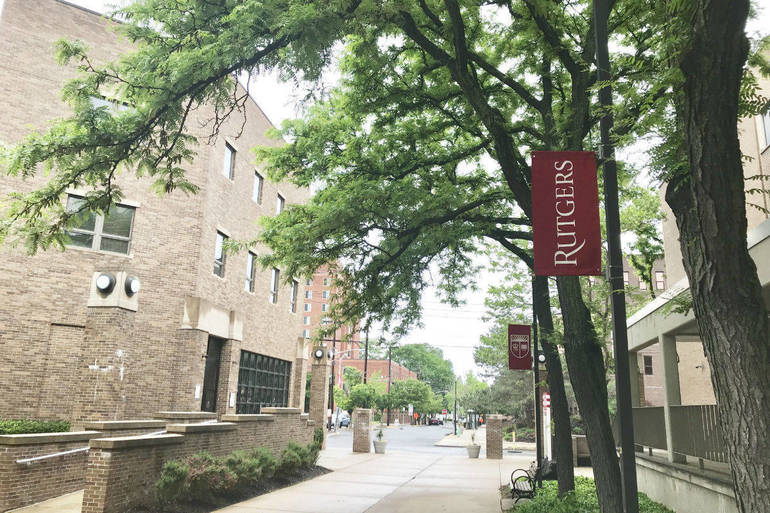
Former UN High Commissioner for Human Rights Zeid receives Brennan Human rights award

April 16, 2019
rutgers file.jpg

In his remarks upon receiving the award, Zeid Ra’ad Al Hussein discussed the history of international politics and cautioned against nationalization, noting that the human rights violations of today are the conflicts of tomorrow. “I worry, like so many others, that what we are seeing now is the decomposition of the international order,” said Ra’ad Al Hussein. “The rules and institutions that uphold international human rights law, international humanitarian law, and international refugee law are under immense pressure.” He shared that he has faith in the efforts of human rights defenders and the human rights movements around the world, “We cannot depend now on much of the leadership at the highest levels. We have to depend on ourselves and we have to have the courage to speak out and say what needs to be said.

Two women human rights defenders in the Philippines honored with international awards

April 16, 2019
Joanna Patricia Kintanar Cariño (File photo by Noel Godinez/Northern Dispatch)
Filipina human rights defender, Joanna Patricia Kintanar Cariño, has been named as this year’s recipient of Gwangju Prize for Human Rights. Cariño is the founding secretary general and the current advisory council of Cordillera Peoples Alliance (CPA), regional council member of the Cordillera Human Rights Alliance (CHRA) and chairperson of SELDA-North Luzon, an organization of former political prisoners. For more on the Gwangju Prize for Human Rights see: http://www.trueheroesfilms.org/thedigest/awards/gwangju-prize-for-human-rights

Cariño is among the 600 individuals listed in the Department of Justice’s (DOJ) so-called terror list, which seeks to proscribe the Communist Party of the Philippines and the New People’s Army as terrorist organizations. Cariño, together with other activists who were included in the list, fought for the removal of their names and in January this year, the DOJ has acted by finally removing the names of scores of activists and human rights defenders in the Cordillera region. [see also: https://humanrightsdefenders.blog/2017/12/07/women-human-rights-defenders-day-2017-an-anthology/]

The Foundation recognizes Cariño’s track record as human rights defender from the time of the late dictator Ferdinand Marcos up to the present. “She has been illegally arrested, detained and harassed for being tireless and vigorous in the indigenous people’s fight against militarization of their communities,” the Foundation said in their statement.

 ——————–

Trade union worker France Castro was awarded the Arthur Svensson international Prize for Trade Union Rights [for more on this award, see: http://www.trueheroesfilms.org/thedigest/awards/arthur-svensson-international-prize-for-trade-union-rights]

In its statement, the Svensson Foundation described Castro as a brave leader who defies threats and dangerous condition. “Despite threats and persecution, there are brave people fighting for democracy and human rights. The regime has particularly attacked unionists among teachers and journalists. Some are killed and many imprisoned. Death threats are not uncommon. In recent times, police officers in the Philippines have been running an organized campaign where they are herding and publishing information on unionized teachers,” Svensson Foundation said in a statement referring to the profiling of the public school teachers, particularly the members of the Alliance of Concerned Teachers (ACT) by the Philippine National Police (PNP). Castro was also among those who were detained by the Talaingod police last November 2018, together with former Bayan Muna Rep. Satur Ocampo and Lumad teachers, students and administrator, for defending Lumad’s right to education  The Foundation also took notice of Castro’s role in the fight for public school teachers’ rights and welfare.

https://www.bulatlat.com/2019/04/16/progressive-solon-wins-international-award-for-championing-union-rights/

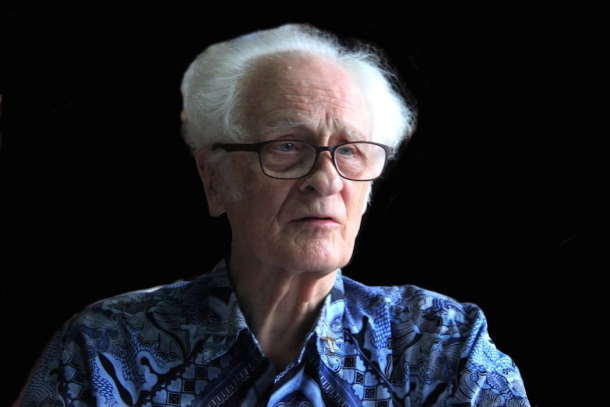
82-year old Father Magnis in Indonesia: tough words for a good purpose

April 16, 2019
An adopted son's passion for Indonesian pluralism
German-born Jesuit Father Franz Magnis Suseno has become an Indonesian citizen and an outspoken champion of democracy and interfaith dialogue in Indonesia. (Photo by Siktus Harson/ucanews.com)
Ryan Dagur painted on 15 April 2019 (in UCA News) a portrait of a remarkable man, the Jesuit priest Franz Magnis Suseno, doesn’t mince his words when promoting democracy and dialogue in Indonesia. “An adopted son’s passion for Indonesian pluralism

Not so long ago, Jesuit priest Father Franz Magnis Suseno ..ruffled a few feathers by.. calling people who are threatening to boycott the polls fools, parasites, and psycho freaks.His scathing comments came in an article about the upcoming Indonesian presidential and legislative elections published by Kompas, the country’s bestselling newspaper.Many criticized him for the remarks, some even sent him letters of protest, but many also supported him. The German-born priest, a professor at the Driyarkara School of Philosophy, has apologized for his choice of words but argued the article was a call for all citizens to care for democracy and prevent the worst individuals from being elected to office.

…..The 82-year-old, born into a noble family and who was once called Count von Magnis, is now widely known as a philosopher, human rights defender, and culturalist, with his main area of expertise being Javanese culture. He has written 41 books on philosophy, political ethics, and Christianity, as well as made countless television appearances.During his time in the country, Father Magnis has witnessed a major shift in Indonesia’s political climate from a 32-year dictatorship under Suharto to the reform era that began in 1998 when the tap of democracy was opened.“It’s my moral obligation to speak up when democracy is threatened,” he said.He says he is optimistic that Indonesia will remain a leading democracy in Southeast Asia, but admitted various threats do concern him, especially what he calls the politicization of religion by hard-line Muslims. “Indonesia will only fall to another authoritarian regime if people continue to use religion in politics,” he said. He said it is dangerous because, for many people, religion is more important than democracy. 
…. Father Magnis has built close friendships with several respected Muslim leaders, including the late Abdurahman Wahid, a highly respected figure, and Indonesia’s fourth president, as well as Nurcholish Majid, an avid defender of pluralism in Indonesia. Holding dialogue with extreme elements is also important, he said, especially when conflict occurs.He has met the now exiled Islamic Defenders Front chief, Muhammad Rizieq Shihab, several times when his organization sought to impose its own ban on worshiping activities in a number of churches in Jakarta. In 2011, Father Magnis met Shihab, to discuss the issue of an American pastor burning a Quran in Florida, which angered Muslims all over the world. Following the discussions, Shihab told his angry followers not to take out their anger on Indonesian Christians. In building a relationship with believers of other faiths, it is important for Christians to be humble and sensible and to avoid belittling acts or gestures. “It’s better to be low profile, rather than something fancy,” he said, adding that this philosophy should be especially applied in poor areas. This was why he called the erection of a 46-meter-high Marian statue in Ambarawa, Central Java in 2015, “inappropriate.” ..
Father Magnis is also critical of Christians who measure the success of their work by the number of people they attract to Christianity because it leads to aggressive Christianization. “Our mission is to bring the goodness of Christ into our society and let people decide whether to join us,” he said.He said Indonesia will remain an Islamic country, and what Christians can do is to help them build a better democratic system, where freedom of religion is upheld and interfaith relations are well established. Father Antonius Benny Sustyo, an outspoken activist priest, said Father Magnis’ openness and willingness to communicate with others are among his finest characteristics. “..Achmad Nurcholish, a Muslim activist said Father Magnis had contributed a lot to the progress of humanity in Indonesia, especially through his writings that have an enriched perspective.
Father Magnis’ endeavors have been duly recognized and have earned him a number of awards.In 2015, he received an award from Indonesian President Joko Widodo for his dedication to education and culture. A year later, in 2016, he won the Matteo Ricci International Prize for his commitment to promoting interreligious dialogue from the Catholic University of the Sacred Heart in Milan. However, the one that gives him the most pleasure is a so-called “Mud Award”, bestowed on him by communities in East Java whose land and homes were buried by mud caused by the activities of a company belonging to Aburizal Bakrie, a businessman cum politician. It was given in 2007 after the priest refused to accept a Bakrie Award — handed out by Aburizal Bakrie’s family — to show solidarity with people affected by the mud disaster. “I was very happy with that award. I’ll always treasure it,” he said.

Geneva Launch of the World Refugee Council’s Report aiming to transform global system

April 15, 2019
The Global Migration Centre‘s mission is to advance new solutions to address the structural challenges facing the global refugee system. It is forged by an independent group of individuals which include political leaders, policy advisers, academic experts and private sector and civil society representatives from around the world. The Council unveiled its report “A Call to Action: Transforming the Global Refugee System ” in January 2019. It offers bold recommendations to transform the global refugee system with a focus on four key areas: political will, responsibility sharing, financing and accountability. It now hosts the Geneva Launch of the World Refugee Council’s Report.

Wednesday 17 April 2019, 18:30 – 20:00
Auditorium A2| Maison de la paix, Geneva

Speakers: 

Omar Barghouti denied entry to United States

April 13, 2019
Omar Barghouti in 2014. “I am hurt, but I am not deterred,” he said.CreditRob Stothard/Getty Images
In a further sign of the increasing US policy of denying visa to those it disagrees with newspapers (here the NYT) on 11 April 2019, report that the United States has barred entry to Omar Barghouti, one of the co-founders of the Boycott, Divestment, and Sanctions movement (B.D.S). This U.S. entry ban against me, which is ideologically and politically motivated, is part of Israel’s escalating repression against Palestinian, Israeli and international human rights defenders in the B.D.S. movement,” Mr. Barghouti said in a statement. He called for an end to what he called “U.S. complicity in Israel’s crimes against our people.” [See also recently: https://humanrightsdefenders.blog/2019/03/21/many-ngo-participants-denied-visa-to-attend-commission-on-the-status-of-women-in-new-york/ and https://humanrightsdefenders.blog/2019/03/16/us-ngos-react-furiously-to-visa-restrictions-imposed-on-icc-investigators-by-trump-administration/]

Mr. Barghouti was supposed to speak at a series of events in the United States organized by the Arab American Institute in Washington, including at panels at Harvard University and an event with New York University. He was also planning to attend his daughter’s wedding in Texas.

Mr. Barghouti, a permanent resident of Israel, was stopped at Israel’s international airport when he tried to board a flight to Washington via Frankfurt, and airline staff told him only that the American Consulate in Tel Aviv had been directed to stop him from traveling. He said he was told it was an immigration matter but was given no further explanation.

Critics say American laws against supporters of the boycott are unconstitutional and limit free speech. But this year, the Senate passed a bill to safeguard the right of states to adopt anti-B.D.S. laws.


Towards Criminal Liability of Corporations for Human Rights Violations: The Lundin Case in Sweden

April 11, 2019
Last October, the Public Prosecution Authority of Sweden served Alex Schneiter and Ian H. Lundin, CEO and Chairman of Lundin Petroleum, with suspicion of aiding and abetting international crimes. Also, the company was informed of the prosecution’s intention to seek forfeiture of $400 million in criminally obtained benefits in case of a conviction. The suspects and their company have been given until June 15th to study the case files and to request for additional investigation. The trial is expected to open in the Autumn and may take a year in first instance.

undefinedundefined

The case has the potential of becoming a landmark trial because of the novelty and complexity of the legal issues that the court will have to decide. In particular, with regard to the assessment of the individual criminal liability of the executives of Lundin, the determination of the applicable standards of proof, the question whether a lack of due diligence is sufficient for a finding of guilt, and the limits and overlap of individual criminal liability of corporate directors on the one hand and corporate criminal liability of organisations on the other. The Asser Institute intends to follow the trial closely, starting with the event  “Towards Criminal Liability of Corporations for Human Rights Violations: The Lundin Case in Sweden” on 23 May May 2019, when it will be hosting three subject experts to introduce the case itself, and to delve into the legal dimensions that are expected to make it a landmark war crimes case.

The meeting on 23 May starts at 16:00 at the T.M.C. Asser Instituut (R.J. Schimmelpennincklaan 20-22), The Hague. Netherlands.

The three speakers are:

  • Egbert Wesselink will provide an introduction to Sudan’s oil war, describe Lundin’s role in it, and examine the human rights responsibilities of the company and its shareholders.
  • Dr. Mark Taylor will discuss how the Lundin case sits in global developments regarding the criminal liability of corporations for human rights abuses in the context of conflicts.
  • Miriam Ingeson will give a Swedish perspective to the legal framework of the case and analyse the legal issues that it raises at the intersection between national and international law.
  • Moderator is Antoine Duval, Senior Researcher at the Asser Institute and the coördinator of the Doing Business Right project.

For some background material on the case and its wider context, see www.unpaiddebt.orgwww.lundinhistoryinsudan.com.

For full details, see https://www.ass…events/?id=3070<https://www.asser.nl/education-events/events/?id=3070> .


First ‘Prix Liberté of Normandy” for teen climate activist Greta Thunberg

April 10, 2019
Greta Thunberg
The activist is making waves globally (Photo: Anders Hellberg)

Teen climate activist Greta Thunberg – who is a vegan – has won the newly created Prix Liberté, launched last year by the Region of Normandy in France, reports  in Plantbasednews. Thunberg, 16, is the first recipient of this new award, which was designed to honor a young person ‘engaged in a fight for peace and freedom’. The award comes with prize money of  €25,000. [see: http://www.trueheroesfilms.org/thedigest/awards/prix-libert-normandy ] The campaigner has made global headlines through her efforts, which includes encouraging students to attend demonstrations demanding political action on climate change while ‘on strike’ from school. Her influence has spread beyond her native Sweden throughout Europe and beyond

“I am very grateful and honoured to have won the Prix Liberté!” Thunberg said in a post on social media. “The other final nominees have stood up for human rights in a way that I can’t even imagine. We must constantly be reminded of the sacrifices they have made. Lu Guang and Raif Badawi are true heroes of our time.”

Thunberg said she will be splitting all of the prize money between four organizations dedicated to climate justice: These include CARE, which helps women and girls in the global south to cope with the effects of rising temperatures and a changing climate, and  The Adaptation Fund – which helps vulnerable communities in developing countries adapt and build resilience to climate change, 350.org and Greenpeace International who in Thunberg’s words ‘both fight for climate justice, the environment, and to keep the fossil fuels in the ground’, will also receive donations. Thunberg will receive her award on June 4, 2019, at the Normandy International Forum for Peace.

See also my old post: https://humanrightsdefenders.blog/2013/03/11/link-between-protecting-the-environment-and-human-rights-asserted-by-un-expert-knox/

https://www.plantbasednews.org/post/vegan-climate-activist-greta-thunberg-wins-prix-liberte

Vikram Patel, promoter of global mental health, recognized with Dirk award

April 10, 2019
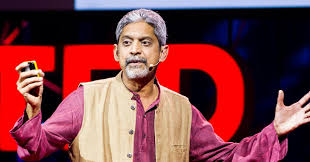
Ekaterina Pesheva reported on 2  Harvard Medical School researcher received the prestigious Canada Gairdner Award for transformational work in the fields of global health. Vikram Patel, the Pershing Square Professor of Global Health in the Blavatnik Institute at HMS and professor at the Harvard, will receive the 2019 John Dirks Canada Gairdner Global Health Award. Patel is being recognized for research that has transformed understanding of and attitudes toward the importance of mental health in a global context, for his contributions to international mental health policy, and for efforts to improve access to mental health services in areas of the world where mental health resources are acutely lacking.

Patel is among seven laureates who will each receive a $100,000 cash honorarium. The recipients will be formally honored Oct. 24 at the annual Canada Gairdner Awards gala in Toronto.

Patel has been instrumental in establishing the field of global mental health. He has dedicated his research to raising the global profile of mental health through epidemiological research that has demonstrated the burden of mental disorders in low- and middle-income countries as well as their impact on poverty, child growth and development, and risk for HIV infection, among other conditions. Patel’s work has demonstrated that mental health problems are universal forms of human suffering that fuel a vicious cycle with deprivation. The central theme of Patel’s work has been democratizing access to mental health care and making it a right for everyone, everywhere. Patel championed the concept of mental health care delivery by nonspecialists and lay health workers as a way to expand access to mental health services in underserved areas. His book “Where There Is No Psychiatrist: A Mental Health Care Manual” has become the definitive text for community health workers in developing countries. Patel’s research became the foundation for the design, delivery, and evaluation of psychosocial interventions provided by lay and community health workers, including the primary care treatment of depression, anxiety, and alcohol-use disorders, the community-based care of people with schizophrenia and autism, and the prevention and treatment of adolescent mental health problems through school-based interventions.

Much of Patel’s work has been done in partnership with Sangath, an Indian nongovernmental organization that he co-founded in 1996. Sangath, one of India’s leading community-based research organizations, received a 2008 MacArthur Foundation International Prize for Creative and Effective Institutions and a 2016 World Health Organization Public Health Champion of India prize. Patel co-founded the Centre for Global Mental Health and the Mental Health Innovation Network at the London School of Hygiene and Tropical Medicine and the Movement for Global Mental Health, the largest global network of individuals and organizations advocating for promoting services and human rights for people with mental health problems. In 2018, he co-founded the GlobalMentalHealth@Harvard Initiative, which is developing a suite of innovative, interdisciplinary programs aimed at implementing and generating knowledge to transform mental health globally.

https://news.harvard.edu/gazette/story/2019/04/two-harvard-scientists-receive-canadas-most-prestigious-medical-award/