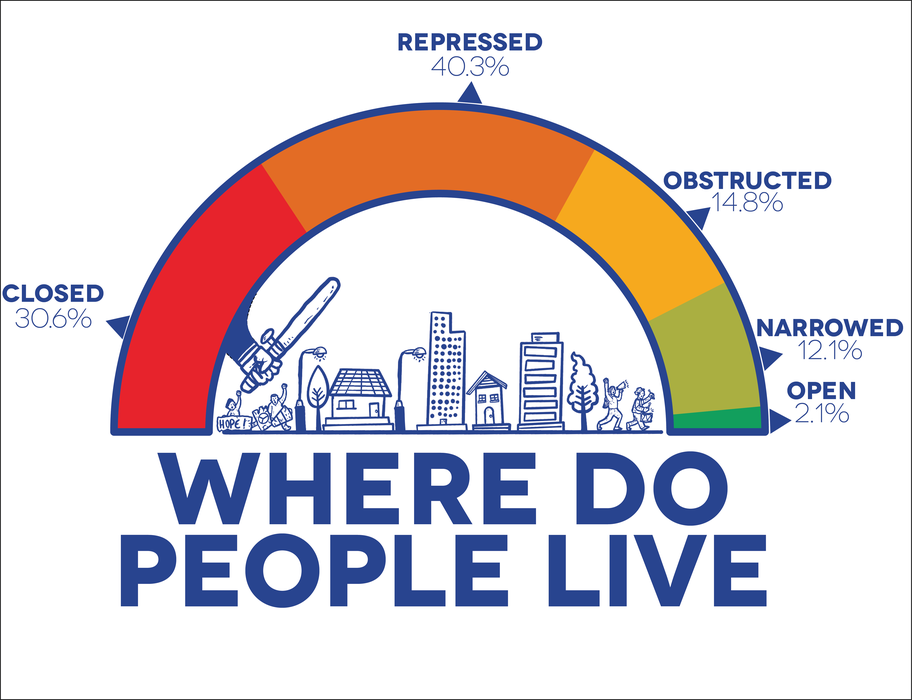
Almost a third of the world’s population now lives in countries with closed civic space. This is the highest percentage since 2018, when CIVICUS began systematically tracking civic space conditions around the world. This startling decline – from 26 per cent living in closed countries in 2018 to 30.6 per cent today – points to a major civic space crisis that requires immediate, global efforts to reverse. This year we also recorded the lowest percentage of humanity living in open countries, where civic space is both free and protected. Today, just two per cent of the world’s population enjoys the freedom to associate, demonstrate and express dissent without significant constraints, down from almost four per cent just five years ago.
Since the previous edition of this report, which covered 2022, civic space ratings have changed for 12 countries over the last year, worsening in seven countries and improving in five.
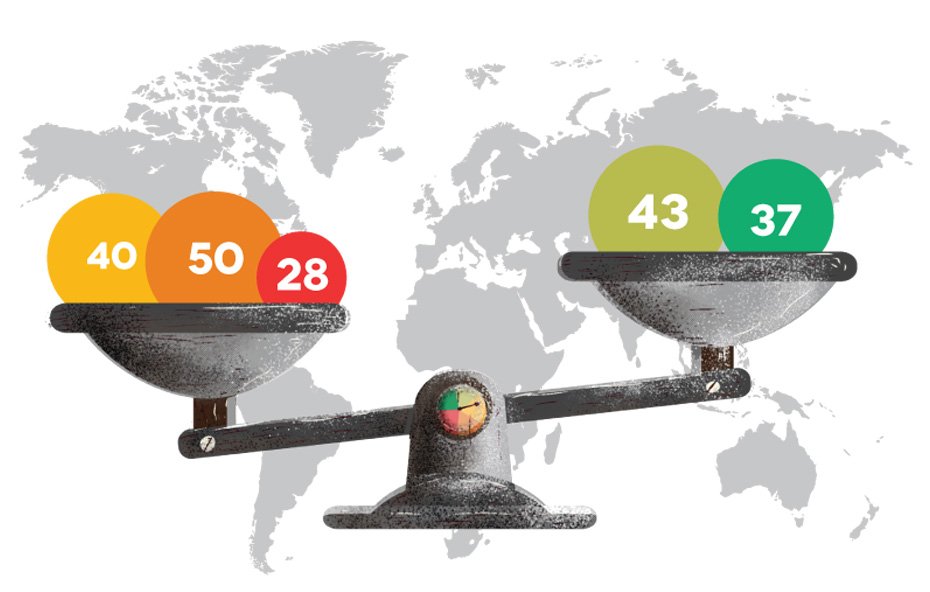
The latest CIVICUS Monitor country ratings update in December 2023 indicates that civil society faces an increasingly hostile environment. There are now 28 countries or territories with closed civic space, 50 with repressed civic space and 40 with obstructed civic space, meaning that 118 of 198 countries and territories are experiencing severe restrictions in fundamental freedoms. In comparison, 43 countries have narrowed civic space and just 37 have an open rating.
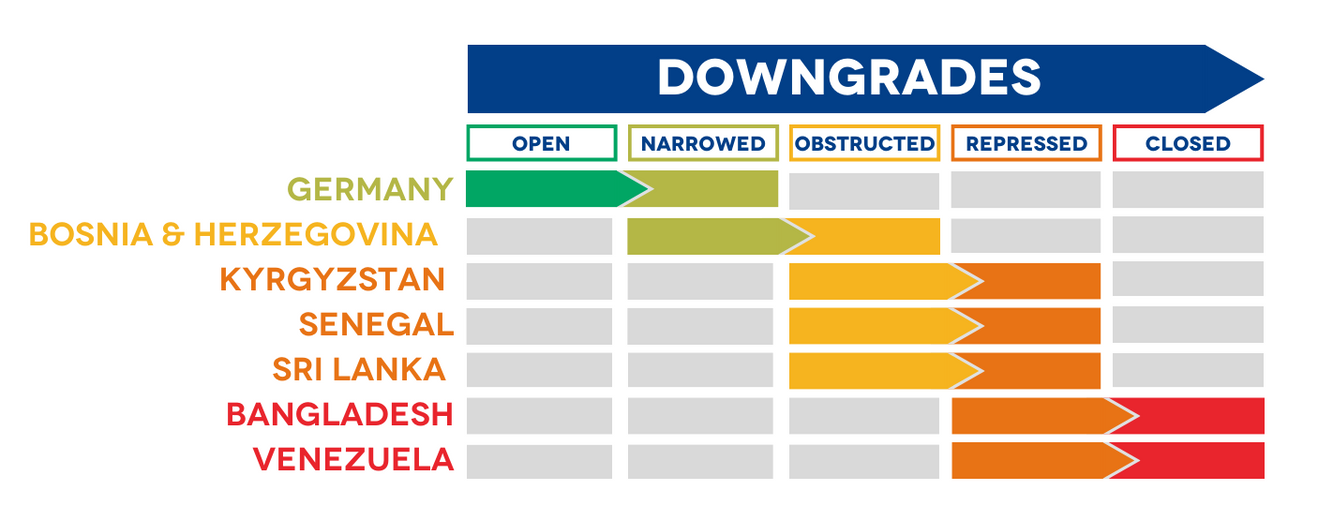
The severity of the civic space deterioration is exemplified by the number of countries moving to the repressed or closed category. Of the seven countries being downgraded, five moved to the two worst categories. Bangladesh and Venezuela are now rated as closed and Kyrgyzstan, Senegal and Sri Lanka are downgraded to the repressed rating as conditions for civil society continue to worsen.
Europe continues to add to the list of downgraded countries, with Bosnia and Herzegovina now placed in the obstructed category and Germany moving from an open to a narrowed rating. Over the past six years, 12 European countries have seen their ratings downgraded due to deteriorating civic space conditions.
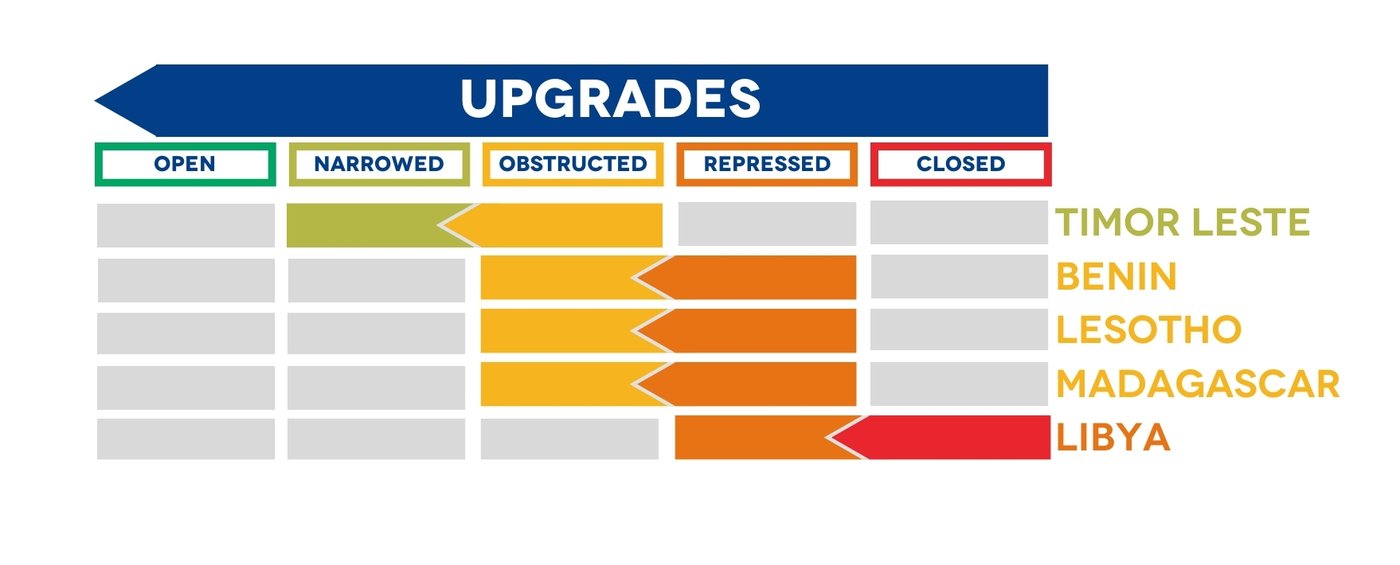
Five countries have upgraded ratings in 2023, although, as in previous years, the situation for civil society in these countries continues to be challenging. Libya moved from the closed to the repressed category. Benin, Lesotho and Madagascar have moved from the repressed to the obstructed category. Notably, Timor-Leste has joined the narrowed category. Regional sections describe the conditions that led to ratings changes.
‘Making a movement: The history and future of human rights“. To mark the 75th anniversary of the Universal Declaration of Human Rights, The Carr Center for Human Rights Policy asked 90 Harvard faculty and affiliates to offer thoughts on a document that changed the world.
“THE CREATION OF SUCH A DOCUMENT— its mere existence—must count among the greatest achievements in human history.” That is how Mathias Risse, the Berthold Beitz Professor in Human Rights, Global Affairs and Philosophy, and faculty director of the Carr Center for Human Rights Policy at HKS, describes the impact of the Universal Declaration of Human Rights (UDHR), which turns 75 this year. Yet Risse and other human rights defenders say the UDHR has done much more than exist—it paved the way for more than 70 enforceable human rights treaties around the globe and marked the first time the world had a documental agreement that all humans were equal and free. That global standard is vital even if the world community continues to fall short of achieving the UDHR’s promise, Risse says. “The human rights movement will always register shortfalls much more than achievements and would miss its purpose otherwise,” he says. “Regardless, the change that these decades of developments have brought is very real.”
To honor the UDHR, the Carr Center commissioned short essays from 90 scholars, fellows, and affiliates across HKS, Harvard, and beyond to explore the past, present, and future of the human rights movement it inspired. A selection of excerpts follows below. The complete collection of essays in their entirety can be found on the Carr Center website.
On 27 January 2024, Olivia Biliunaand Madison Whittemore in the Davis Vanguard produced a useful summary of the 2024 Human Rights Watch Report
After reflecting on the formidable human rights challenges of 2023, it has become evident that changes in how human rights are approached will be needed in 2024 to prevent the atrocious suppression and human rights crises that have been prominent in the past year, according to Human’s Rights Watch’s “World Report 2024: Our annual review of human rights around the globe.” [see: https://www.hrw.org/world-report/2024]
However, despite the human rights atrocities seen in 2023, the group added that there appears to be some hope for upholding human rights in 2024 through enforcing principles of international human rights law.
Looking back on 2023, the 2024 World Report reflects on renewed conflicts between Israel and Hamas that resulted in the abuse of many and a tragic loss of life, and other countries such as Ukraine and Myanmar that continue to struggle with their own intense conflicts.
Human Rights Watch notes that in accordance with the aforementioned conflicts, “Economic inequality rose around the world, as did anger about the policy decisions that have left many people struggling to survive.”
However, while many are quick to blame the government for being complicit in these human rights crises, the report maintains action is needed outside of just government action alone to help diminish these threats, since they “often transcend borders and cannot be solved by governments acting alone.”
In fact, the report notes the often forgotten importance of universal principles of international human rights and the rule of law which are more critical now than ever.
The 2024 World Report argues governments have the ability to help improve human rights and that they have double standards in “applying the human rights framework,” as stated in the 2024 World Report, and “chips away at trust in the institutions responsible for enforcing and protecting rights.”
The legitimate laws and universality of human rights are weakened when governments that are vocal about denouncing the Israeli government war crimes against Gaza citizens do not speak up about the crimes against humanity in Xinjiang, China, according to the 2024 World Report.
Governments have found it is easier to disregard international human rights matters because internationally there is no challenge to human rights nationally, writes Tirana Hassan, the executive director.
Hassan also noted that autocrats across regions have taken away both the independence of key institutions to protect human rights and the freedom of dissent, as stated by the 2024 World Report, “with the same endgame in mind: to exercise power without constraint.”
Hassan explains that with campaigning of civil rights groups and years of diplomatic negotiations, 83 countries were able to protect their citizens by adopting a political declaration that provided protection from explosive weapons in populated areas.
The international pledge to recognize the “long-standing practice of warring parties to use aerial bombing, artillery, rockets, and missiles in villages, towns, and cities” is the first to address this issue as the 2024 World Report states.
Some countries are addressing long-marginalized communities. With years of pressure, the Japanese government parliament has passed its first law to protect LGBT people from “unfair discrimination,” the 2024 World Report states.
With the humanitarian crises there has been questioning on the effectiveness of the human rights framework in the realm of protection, notes the 2024 World Report, adding, “especially in the face of selective government outrage, transactional diplomacy seeking short-term gain, growing transnational repression, and the willingness of autocratic leaders to sacrifice rights to consolidate their power.”
With that, the 2024 World Report also suggests the human rights framework will continue to be the plan to build “thriving, inclusive societies” and governments need to be persistent and, with urgency, defend human rights to handle the global and existential threats to humanity.
As also highlighted by Hassan in the report, the assault on Israel by Hamas-led fighters on Oct. 7 that deliberately killed hundreds of vulnerable civilians led to swift condemnation from many countries around the world.
In retaliation to the Oct. 7 attack, the Israeli government ceased all running water and electricity in the Gaza strip, “blocking the entry of all but a trickle of fuel, food, and humanitarian aid – a form of collective punishment that is a war crime,” the 2024 World Report noted.
The Israeli government and military continue frequently bombing the Gaza strip. Following these attacks, countries were outraged after they found out that Israel used a chemical called white phosphorus during the indiscriminate attacks on Gaza, with many countries even highlighting the attacks as “apparent war crimes,” stated by Human Rights Watch.
However, despite world-wide outrage after Israel’s war crimes on Gaza, countries have failed to publicly call the Israeli government out on its war crimes resulting in severe human rights abuses, the report detailed, noting even the U.S. and the European Union have acknowledged Israel’s human rights abuses on Gaza citizens, yet have continued to be complicit in the “ongoing crimes against humanity of apartheid and persecution against Palestinians.”
The report asserted the repercussions of governments failing to intervene undermine the legitimacy of the rules system designed 75 years ago to safeguard all citizen’s rights. In response to the inconsistencies, Hassan cites that governments like Russia and China aim to take advantage of the shaky legitimacy by attempting to infringe on human rights and take advantage of the system that is supposed to punish both countries.
Another example used by the 2024 World Report that displays these inconsistencies is the power battle between two influential generals in Sudan, Gen. Abdelfattah al-Burhan and Gen. Mohamed Hamdan Dagalo.
This conflict resulted in civilians facing deadly abuses and human rights infringements in the Darfur region—with numerous countries listed in the 2024 world report allegedly ignoring the horrendous abuses and abstaining from intervening.
Despite nations such as Gabon, Ghana, and Mozambique being on the Security Council, “the UN, under pressure from the Sudanese government, shuttered its political mission in Sudan.” the 2024 World Report stated, also concluding that “This marked the conclusion of the UN’s limited capacity in the country to safeguard civilians and openly address the human rights situation.”
Regardless of African governments refusing to hold the Sudanese government accountable, the report highlights that many have been strong advocates for resolving the human rights issues in other places like Palestine, even leading a full-fledged effort to investigate its human rights abuses last November and recently asserting that “Israel violated its obligations under the 1948 Genocide Convention in its military operations in Gaza.”
Domestic policies and foreign policies should hold value in human rights and their rules of laws at the forefront of governments, charged the 2024 World Report.
Even rights-respecting governments hold these principles as “optional, seeking short-term, politically expedient “solutions” at the expense of building the institutions that would be beneficial for security, trade, energy, and migration in the long term,” according to the 2024 World Report, adding transactional diplomacy carries a human cost that extends past borders, the group adds.
The 2024 Report writes that without awareness while making transactional diplomacy, risks are created. Removing human rights and the rule of law from a sensible direction creates leverage for right-violating governments too, the 2024 World Report adds, arguing, “It can also contribute to further human rights violations, including transnational repression,” which governments do when they commit human rights abuses against their nationals abroad or to those families living at home, the report continues.
According to the World Report of 2024, India, a democracy, under its Prime Minister Narenda Modi has moved toward an autocracy “with authorities targeting minorities, tightening repression, and dismantling independent institutions, including federal investigative agencies.”
Additionally, as cited in The Report, the US, Australia, the UK, and France chose trade and security over raising human rights concerns.
As reported by Executive Director Hassan, the Modi government’s repressive tactics went past borders and were empowered to do so from the Indian government’s “silence on the Indian government’s worsening rights record…including to intimidate diaspora activists and academics or restrict their entry into India.”
Rwandan’s government has had three decades of no punishment for their repression of civil and political rights at home, the 2024 World Report states, writing “to stifle dissent beyond its borders,” and noting, Rwanda, despite having risen on the international stage, has failed to recognize its problematic human rights violations.
Similarly, Chinese government abuses in Beijing escalate its repression against both Chinese and non-Chinese with failure of resistance from other countries, according to the 2024 World Report, explaining a Laos lawyer and human rights defender, Lu Siwei, received pressure from the Chinese government to return and authorities pushed out warrants.
The 2024 World Report claims nowhere is safe if repressive governments can get away with “strong approaches to silence human rights defenders, exiled politicians, journalists, and critics beyond their borders.”
As reported by the Human Rights 2024 World Report, with almost half of the global population being eligible to vote in 2024, both citizens and independent institutions need to participate in order to effectively have leaders who defend human rights, regardless of society and many institutions having “become renewed battlegrounds for autocratic leaders around the world looking to eliminate scrutiny of their decisions and actions.”
According to Hassan, the nations of Guatemala and Nicaragua are two stories of autocratic leaders consolidating power and failing to prioritize civil society.
For example, after Guatemala’s President-elect Bernardo Arévalo ran on an anti-corruption platform, a corrupt judiciary attempted to overturn Arévalo’s election triumph.
Similarly, the report refers to Nicaragua, where corrupt and authoritarian President Daniel Ortega uses “abusive legislation to shut down over 3,500 nongovernmental organizations” in order to dominate the political landscape and wield unchecked power.
The Human Rights report insists these “vital” checks and balances continue to be eroded, it poses great harm to human rights.
Judicial independence has also been drastically sabotaged in Poland, the report alleges, with the Polish government suppressing civil society groups through law enforcement and incarceration. Polish freedom and independence are extremely threatened, with the Law and Justice party most notably encroaching on women’s reproductive rights and essentially banning abortion, Hassan suggested in the report.
“In May 2023, an abortion rights activist was convicted of helping a woman to get abortion pills and was sentenced to eight months of community service – the first known prosecution of its kind in the EU,” the 2024 World Report noted.
On an environmental note, with the impending issue of global warming, the 2024 report highlights activists being shot by governments across the globe who want to “deter the climate movement.”
In another example, the report cites how one of the largest oil producers, the United Arab Emirates (UAE), continues to expand its production of fossil fuels; however, people are discouraged from exposing the UAE unless they are willing to face grave punishment.
Apart from punishing dissent, governments are using technology and social media platforms to “silence critics and censor dissent,” the 2024 World Report notes, citing a 54-year-old retired Saudi Arabian teacher named Muhammad al-Ghamdi, who received the death penalty after he expressed his opinions on X and Youtube and allegedly went against the country’s counterterrorism law.
Despite everything that occurred in 2023, there were also positive moments for human rights where institutions and movements succeeded, the 2024 World Report states, arguing, “Indeed, these successes illustrate why self-serving politicians and repressive governments work so hard to curtail them – and why all governments should recognize and support these fragile successes.”
Additionally, according to the Executive Director Hassan, the ICC issued warrants for Russia’s President Vladimir Putin and his children’s rights commissioner for war crimes related to deporting and transferring children and a court ruled that South Africa had a commitment to arrest Putin.
According to the 2024 World Report, the Xokleng Indigenous people succeeded when the Brazil Supreme Court, as noted by the 2024 World Report, “upheld all Indigenous peoples’ rights to their traditional lands,” despite efforts by the Santa Catarina state.
The 2024 World Report said, “These victories highlight the tremendous power of independent, rights-respecting, and inclusive institutions and of civil society to challenge those who wield political power to serve the public interest and chart a rights-respecting path forward” and that “all governments, in their bilateral relations and at the multilateral level, should redouble efforts to uplift key institutions and protect civic space wherever it is under threat.”
The human rights crisis highlights the importance for “mutually agreed principles of international human rights law everywhere,” the 2024 World Report notes.
It also points out that through governments centering their human rights obligations through moral governing, it will provide a diligent change to those affected.
The 2024 World Report concludes that consistently upholding human rights, “across the board, no matter who the victims are or where the rights violations are being committed, is the only way to build the world we want to live in.”
On 20 December 2023 Jakob Guhl posted in Index on Censorship a piece stating that German authorities are increasingly silencing pro-Palestine activism in an effort to stamp out anything they fear could be seen as antisemitic. He makes some excellent points (which apply also outside Germany):
..The seemingly isolated incidents highlighted in this article are piling up and the curtailing of civic space is starting to be noticed internationally: Civicus, which ranks countries by freedom of expression rights, recently downgraded Germany in a review from “open” to “restricted” due to repression of pro-Palestinian voices, as well as of climate activists…
There are long-standing disagreements around where to draw the line between legitimate criticism of Israel and attacks on Israel that single it out because it is a Jewish state, are expressed in antisemitic ways or are motivated by antisemitic views. For example, the International Holocaust Remembrance Alliance (IHRA) definition of antisemitism acknowledges that “criticism of Israel similar to that levelled against any other country cannot be regarded as antisemitic” but identifies seven examples of when attacks on Israel may be antisemitic (taking into account the overall context). For example, it could be antisemitic to reference classic antisemitic tropes such as the blood libel conspiracy myth to describe Israel, deny the Jewish people’s right to self-determination or blame Jews collectively for the actions of Israel, according to IHRA.
The debates since 7 October have created an atmosphere in which pro-Palestinian voices are more and more stigmatised. Pro-Palestinian protests have repeatedly been banned by local authorities. Their dystopian rationale for these bans revolves around the idea that, based on assessments of previous marches, crimes are likely to be committed by protesters. The practice is not new: in the past, German police have even banned protests commemorating the ”Nakba” (Arabic for “catastrophe”), the collective mass expulsion and displacement of around 700,000 Palestinians from their homes during the 1947-49 wars following the adoption of the Partition Plan for Palestine by the United Nations. In reaction to pro-Palestine protests since 7 October, the antisemitism commissioner of North Rhine Westphalia and former federal justice minister even suggested the police should pay closer attention to the nationality of pro-Palestine protest organisers as protests organised by non-Germans could be banned more easily.
Furthermore, pro-Palestinian political symbols are being falsely associated with Hamas or other pro-terrorist organisations. In early November, the Federal Interior Ministry banned the chant “From the River to the Sea, Palestine will be free” as a symbol of both Hamas and Samidoun, a support network for the Marxist-Leninist Popular Front for Liberation of Palestine which has been designated as a terrorist organisation by the European Union.
While one plausible interpretation of the “From the River to the Sea” slogan is that it is a call for the destruction of Israel, it is equally plausible to understand it as a call for a binational state with full equality of all citizens. Without context, the slogan cannot automatically be identified as antisemitic, though it is of course entirely legitimate to criticise this ambivalence. As has been extensively documented, the slogan does not originate with nor is exclusively used by Hamas.
Apart from being based on misinformation, banning “From the River to the Sea” has also created the ludicrous situation that the German police force is asked to make assessments on whether holding a “From the River we do see nothing like equality” placard is an expression of support for terrorism. A former advisor to Angela Merkel even called for the German citizenship of a previously stateless Palestinian woman to be revoked who posted a similar slogan (“From the River to the Sea #FreePalestine”) on her Instagram.
In some cases, these dynamics venture into the absurd. On 14 October, the activist Iris Hefets was temporarily detained in Berlin for holding a placard that read: “As a Jew & an Israeli Stop the Genocide in Gaza.”
These illiberal and ill-conceived measures are not limited to protests. In response to the 7 October attacks, authorities in Berlin allowed schools to ban students from wearing keffiyeh scarves to not “endanger school peace”.
Curtailing civic spaces
While these trends have been accelerated since 7 October, they predate it. In 2019, the German Bundestag passed a resolution that condemned the BDS movement as antisemitic. It referenced the aforementioned IHRA definition of antisemitism (which does not comment on boycotts), compared the BDS campaign to the Nazi boycotts of Jewish business and called on authorities to no longer fund groups or individuals that support BDS.
BDS calls for the boycott of Israeli goods, divestment from companies involved in the occupation of Arab territories and sanctions to force the Israeli government to comply with international law and respect the rights of Palestinians, including the right of return for Palestinian refugees. Inspired by the boycott campaign against Apartheid South Africa, BDS has attracted many supporters, but critics have claimed that BDS singles out Israel and delegitimises its existence. Accusations of antisemitism within the movement should of course be taken seriously: BDS supporters have previously been accused of employing antisemitic rhetoric about malign Jewish influence and intimidating Jewish students on campus. However, many of BDS’ core demands are clearly not antisemitic. Since the BDS lacks a central leadership that would issue official stances, it is difficult to make blanket statements about the movement in its entirety.
The 2019 resolution is now being cited to shut down cultural events. A planned exhibition in Essen on Afrofuturism was cancelled over social media posts that, according to the museum, “do not acknowledge the terroristic attack of the Hamas and consider the Israeli military operation in Gaza a genocide” and expressed support for BDS. The Frankfurt book fair “indefinitely postponed” a literary prize for the Palestinian author Adania Shibli, after one member of the jury resigned due to supposed anti-Israel and antisemitic themes in her book. Shibli has since been accused by the left-wing Taz newspaper of being an “engaged BDS supporter” for having signed one BDS letter in 2007 and a 2019 letter that criticised the city of Dortmund for revoking another literary price for an author that supports BDS. A presentation by the award-winning Forensic Architecture research group at Goldsmiths (University of London), which has analysed human rights abuses in Syria, Venezuela and Palestine as well as Neo-Nazi murders in Germany, was likewise cancelled by the University of Aachen which cited the group’s founder Eyal Weizman’s support for BDS.
The curtailing of civic space increasingly affects voices that have stood up for human rights at great personal risk. The Syrian opposition activist Wafa Ali Mustafa was detained by Berlin police near a pro-Palestine protest, reportedly for wearing a keffiyeh scarf. Similarly, the Heinrich-Böll-Stiftung, which is associated with the centre-left Green Party, pulled out of the Hannah Arendt prize ceremony, which was due to be awarded to the renowned Russian dissident, philosopher and human rights advocate Masha Gessen. Despite acknowledging differences between the two, Gessen had compared Gaza to the Jewish ghettoes in Nazi-occupied Europe in an article about the politics of memory in Germany, the Soviet Union, Russia, Poland, Ukraine, Hungary and Israel.
Conversation stoppers
Alarm bells should ring as one of Europe’s major liberal democracies has taken an authoritarian turn in the aftermath of 7 October. Germany’s noble commitment to its historical responsibility in the face of rising antisemitism is morphing into a suppression of voices advocating for Palestinian political self-determination and human rights.
In this distorted reality, civic spaces are eroded, cultural symbols banned, political symbols falsely conflated with support for terrorism and events are shut down. So far, there has been little pushback or critical debate about these worrying developments. To the contrary: politicians, foundations, cultural institutions and media outlets seem to be closing ranks under the shadow of the 2019 BDS resolution and a skewed interpretation of the IHRA definition.
Following the appalling violence committed by Hamas on 7 October, and the scale of civilian suffering in Gaza due to the subsequent Israeli military offensive, polarisation and tension between communities have been on the rise. In this context, it is crucial to be able to have passionate, empathetic, controversial and nuanced discussions about the conflict, its history, the present impasse, potential ways forward and its impact on Jewish, Muslim and Arab communities abroad. With the voices of activists, authors and even internationally renowned human rights advocates being increasingly isolated, these vital exchanges are prevented from taking place.
On 8 December, 2023 the United Nations lead agency on international development, UNDP, posted its commitment to human rights:
..Protecting our rights to do so was enshrined in the Universal Declaration of Human Rights 75 years ago, and it has been our North Star for human rights ever since. The past three years have been defined by crises on a global scale. Conflict is at its highest since the Second World War. From Gaza to Ukraine, Sudan and Myanmar, people’s right to live without fear is being undermined. Climate change, brought about by humanity’s own actions, is stripping away the right of our children to a healthy and prosperous future. The COVID-19 pandemic brought to stark light the value of the right to health for all.
Three-quarters of a century on, we are at an important inflection point, where we must recalibrate and reconnect with the principles of the Universal Declaration of Human Rights if we want to shape a future that lives up to its vision. Doing so will not be easy. It will require action across many different spheres of life. Recognizing this, UNDP is prioritizing seven key areas where it is working to strengthen human rights.
Dignity and equality of rights is needed for all people and the rights of people living in crisis and conflict must be assured
If we don’t invest in human rights, we won’t achieve the Sustainable Development Goals
Ninety percent of Sustainable Development Goals (SDGs) targets align with the obligations outlined in international human rights frameworks. However, halfway to the 2030 deadline, development progress and the realization of Agenda 2030 is under threat due to the combined impacts of climate change, conflict, overlapping energy, food and economic shocks, and lingering COVID-19 effects. Human rights can be part of proactive solutions helping to address contemporary development challenges and pushing progress towards Agenda 2030. By adopting a human rights-based approach, UNDP is working to ensure that no one is left behind as we strive for sustainable development. For example, UNDP has worked to promote synergies between human rights and SDG systems in eight countries, including Sierra Leone, Uruguay and Pakistan, boosting both the efficiency and effectiveness of national efforts to advance human rights and sustainable development.
Human rights defenders must be able to speak out without fear
Human rights defenders face alarming threats, including intimidation and reprisals, in the pursuit of a goal that should be a shared aspiration for all – the creation of fair and peaceful societies. In 2022, there was a 40 percent increase in the killings of human rights defenders, journalists, and trade unionists compared to 2021. UNDP works with civil society, human rights defenders and national human rights institutions around the world to ensure those that want to speak out have the freedom to do so. In Thailand, UNDP conducted a study looking into the protection of human rights defenders at the request of the Ministry of Justice.
Young people must be included in efforts to protect the rights of future generations
Business can be a powerful driver of sustainable development, offering access to social and economic opportunities and a pathway to prosperity for many.
Human rights and the environment are interconnected
In the next 25 years, building resilience to biodiversity loss and climate change will be key to the realization of all human rights – including the right to a clean, healthy and sustainable environment.
Digital technology must unite, not divide
Technology can be a great enabler of equality and development by improving connectivity, financial inclusion, and public services, positively impacting the realization of human rights. But it can also have a dangerous downside, exacerbating existing inequalities and vulnerabilities. While over 80 percent of developed countries have access to the internet, only 36 percent of individuals in least-developed countries are online. UNDP puts human rights at the centre of its Digital Strategy, and supports countries to harness digital technology as a means to advocate for, protect, access, report on, and exercise human rights…
On 8 December, 2023 Jake Werner – Acting Director of the East Asia program at the wrote an interesting piece “Outrage Without Strategy Means Failure on China and Human Rights”. It makes in my view some very valid points, see for yourself:
The deplorable human rights record of the Chinese government has long featured in U.S. political discourse as an example of that venerable trope, the heroic individual demanding freedom from the tyrannical state. U.S. leaders quite naturally align themselves with the advocates of freedom, coming to their aid by repudiating and punishing their tormentors.
The antagonism between civil society and the state highlighted in this view is undeniably true, but this truth is only partial. Its seeming clarity threatens to obscure the complexities of Chinese politics and U.S.–China relations in ways that may produce counterproductive responses.
The political journey of a friend of mine in recent years illustrates dynamics excluded from the conventional human rights framing. I first met Zhao (a pseudonym) a decade ago while doing research in Shanghai, when both of us were grad students interested in leftist politics. I joined a reading group he was running with other Chinese grad students and we discussed ideas that posed a deep challenge to Chinese social and political inequalities.
In the years since, his critical energies have increasingly flowed away from inequalities within China to focus instead on the inequality between what he sees as a domineering United States and a victimized China. Increasingly he deems the Chinese government as the champion of the beleaguered Chinese people, whose opportunity to rise in wealth and status is being harshly circumscribed by jealous American leaders. To him, “human rights” is a fig leaf for the defense of naked U.S. power and a feature of western culture foisted on countries like China, whose level of development makes it inappropriate.
It was not state propaganda that moved Zhao in this direction — when we first connected he was already perfectly capable of seeing through official Communist Party narratives. Instead, it was heavy–handed U.S. behavior, tendentious U.S. narratives that refuse to give any credit to the Chinese system, and the glaring hypocrisy of American leaders harshly condemning Chinese abuses while remaining silent on the abuses of countries U.S. leaders are cultivating to counter China.
From Zhao’s experience, we can discern additional truths: that U.S. human rights rhetoric is not impartial but is a feature of geopolitical rivalry; that this fact threatens to discredit the whole idea of human rights in the eyes of many Chinese; that the Chinese government strategy of casting human rights defenders as agents of U.S. power rather than advocates of universal values may in the process find considerable success among Chinese citizens.
Yet Zhao’s truths are also selective. Other friends of mine bear witness to the reality not only of Chinese government repression but the dramatic expansion of that repression in both quantitative and qualitative terms over the last decade. The labor activist forced to move to Hong Kong to continue his work after the crackdown on worker rights, only to be hounded from Hong Kong when the mainland government crushed its democracy movement. The Uyghur scholar detained under atrocious conditions, forced to recite loyalty oaths that only poisoned him against the regime. The feminist activists studying overseas, wracked with fear that even outside the country they will suffer terrible consequences for criticizing officials’ increasingly open misogynistic policies.
The vision of human freedom and dignity expressed in the Universal Declaration of Human Rights provides a standard against which to judge the Chinese political system. Many of those same principles are enshrined in the Chinese constitution, making the argument that they are alien to Chinese culture untenable. By both measures, the Chinese government falls far short.
Yet neither document provides a strategy to achieve human freedom and dignity. In formulating such a strategy, moral truths are necessary but inadequate. The truths of power politics and psychological dynamics must be incorporated as well.
We in America need to reflect on some uncomfortable truths. As much as we might wish to see ourselves as an agent of global justice, other countries and their citizens do not always share this view. The conflict with China is not only an ethical dispute but is also a power struggle over which country will dominate East Asia militarily and the world economically. The United States is not just criticizing Chinese repression, but is actively seeking to limit China’s global influence.
Where does this leave U.S. policy on China? First, deploying human rights as a resource in geopolitical conflict is more likely to inspire cynicism around the idea of human rights than it is to vindicate the claim to higher values.
Second, because geopolitics makes national rivalry the most salient axis of political conflict, it is singularly ill–suited to advancing the human rights project. A geopolitics focused on U.S. global primacy encourages an alignment between China’s government and the Chinese people against threatening foreign forces. Under such circumstances, Chinese leaders are more likely to see those within China who defend human rights as the agents of alien ideas and alien interests, and can more convincingly portray them as such. Linking human rights efforts to geopolitical conflict strengthens those forces in China and the United States that are most hostile to human rights — forces such as nationalism, xenophobia, and militarism.
A U.S. strategy on human rights in China should begin by reducing the prominence of geopolitical division in U.S.–China relations. This would help to shape a domestic environment in China (and the United States) that would open space for human rights advocacy. America’s longstanding punitive and coercive approach to human rights promotion has failed everywhere it has been tried. The danger of such an approach is magnified in a moment when great power tension threatens to spin out of control.
It is more urgent than ever to formulate a more strategic approach. By stepping away from the commitment to global primacy as the centerpiece of U.S. foreign policy, a foreign policy of restraint offers new ways to approach human rights that avoid the pitfalls of associating universal rights with the power machinations of specific countries.
On Friday 8 December 2023 the UN Office on Drugs and Crime (UNODC) said that more people were killed due to homicide than armed conflict and terrorism combined in 2021, with an average of 52 lives lost per hour worldwide. The Global Study on Homicide analyzes the complex dynamics behind these violent deaths and includes a special section on how organized crime is driving death rates up in Latin America and the Caribbean.
The report examines homicides related to criminal activities and interpersonal conflict, as well as “socio-politically motivated homicides” such as the deliberate killing of human rights defenders, humanitarian workers and journalists.
UNODC chief Ghada Waly said the loss of thousands of lives each year to homicide is “a sombre reminder” of the collective failure of the international community to reduce all forms of violence by 2030, in line with the Sustainable Development Goals (SDGs). The report revealed that during the period from 2019 to 2021, an average of roughly 440,000 deaths worldwide were due to homicide – more than conflict-related or terrorist killings combined.
UNODC said 2021 “was an exceptionally lethal year”, marked by 458,000 homicides. The spike was in part linked to economic repercussions from the COVID-19 pandemic and to a rise in organized crime and gang-related and socio-political violence in several countries.
Organized crime accounted for 22 per cent of homicides globally, and 50 per cent in the Americas, where competition among organized crime groups and gangs can spark a sudden and sharp rise in “intentional homicides”, as has happened in Ecuador and Haiti.
The Americas also lead the world in highest regional homicide rate per capita, with 15 per 100,000 population in 2021, or 154,000 people.
Africa had the highest absolute number of homicides at 176,000, or 12.7 per 100,000 population, “and available data suggests that the homicide rate is not falling, even as decreases have been registered in other regions,” the report said. Meanwhile rates in Asia, Europe and Oceania were far below the global per capita average of 5.8 per 100,000 population in 2021.
Firearms were used in most killings in the Americas in 2021, or roughly 75 per cent, whereas in Europe and Asia they were involved in 17 and 18 per cent of homicides, respectively.
Men accounted for 81 per cent of homicide victims and 90 per cent of suspects, but women are more likely to be killed by family members or intimate partners. “Although they represent 19 per cent of homicide victims in total, they account for 54 per cent of all killings in the home and 66 per cent of all victims of intimate partner killings,” UNODC said.
Aid workers under attack
The data also showed that the deliberate killings of human rights defenders, environmental defenders, community leaders, journalists, and aid workers represented nine per cent of global homicides. “The threat has increased for humanitarian aid workers, who witnessed a higher average number of fatalities over the period 2017-2022 than 2010-2016,” the authors said.
On 5 December 2023, Natalie Samarasinghe – global director for advocacy at the Open Society Foundations. – wrote about strengthening human rights based on David Griffiths’ paper, Barometer in Context: Strengthening the Human Rights System.
….But this is not the whole story. The Open Society Barometer, a poll of over 36,000 people in a representative group of countries, found that most people believe in the value of human rights. Over 70 percent said that human rights “reflect the values I believe in” and are “a force for good” in the world.
Actors such as human rights lawyers, NGOs, and international organizations continue to provide hope, support, and redress to those seeking justice and protection. And they are joined by a growing cohort of others, from rural communities to indigenous peoples, political and social movements. They may not use the language of rights but their work is grounded in them. They cannot afford to have theoretical debates about the relevance of the UDHR. They need support and solutions.
To mark the UDHR’s anniversary, Open Society commissioned a paper on what those solutions might look like, written by David Griffiths, an advocate and policy expert with more than two decades of diverse experience across the human rights movement. His paper, Barometer in Context: Strengthening the Human Rights System, sets out a series of proposals for how to make this moment count, including prioritizing economic inequality and climate change, exposing the failure of authoritarians to deliver, defending civic space, rethinking migration, widening accountability, and strengthening the human rights system.
Drawing on 18 months of research and material from at least 65 interviews with people from all parts of the world, as well as the Open Society Barometer, these proposals provide inspiration for those of us approaching this anniversary with a heavy heart. It is vital that we avoid paralysis and gloom, which only plays into the hands of abusers and authoritarians.
We must become more creative in how we support those defending rights, whether they are in the courtroom or community center, or on the streets marching for debt relief and climate justice. We must invest in the leaders and tools of tomorrow, instead of playing catch-up with authoritarians, while doubling down on our backing for traditional actors and approaches that continue to deliver results.
And now more than ever, we must nurture a global movement—of the sort that was not possible in 1948—to reaffirm the simple truth that lies at the heart of the Declaration: that all human beings are equal, that every life has value.
The CIVICUS Monitor, which tracks freedom of association, peaceful assembly and expression in 198 countries and territories, announced in a new report – “People Power Under Attack 2023” – that almost one third of humanity now lives in countries with ‘closed’ civic space.
This is the highest percentage –30.6% of the world’s population– living in the most restrictive possible environment since CIVICUS Monitor’s first report in 2018. Meanwhile, just 2.1% of people live in ‘open’ countries, where civic space is both free and protected, the lowest percentage yet and almost half the rate of six years ago.
“We are witnessing an unprecedented global crackdown on civic space,” said CIVICUS Monitor lead researcher Marianna Belalba Barreto. “The world is nearing a tipping point where repression, already widespread, becomes dominant. Governments and world leaders must work urgently to reverse this downward path before it is too late.”
The CIVICUS Monitor rates each country’s civic space conditions based on data collected throughout the year from country-focused civil society activists, regionally-based research teams, international human rights indices and the Monitor’s own in-house experts. The data from these four separate sources are then combined to assign each country a rating as either ‘open,’ ‘narrowed,’ ‘obstructed,’ ‘repressed’ or ‘closed.’
Seven countries saw their ratings drop this year. These include Venezuela and Bangladesh, each now rated ‘closed’ due to intensifications of existing crackdowns on activists, journalists and civil society.
Democratic countries slipped too. Europe’s largest democracy, Germany, fell from ‘open’ to ‘narrowed’ amid protest bans and targeting of environmental activists. Bosnia & Herzegovina also declined to ‘obstructed,’ the twelfth European country downgraded since 2018.
One of 2023’s most dramatic slides occurred in Senegal, once considered among West Africa’s most stable democracies. Senegal entered the ‘repressed’ category amid sustained government persecution of protesters, journalists and opposition ahead of February elections.
“The range of countries where authorities restricted citizen participation in 2023 shows clampdowns are not isolated incidents but are part of a global pattern,” said Belalba. “A global backslide requires a global response. If citizens are not able to freely gather, organise and speak out, the world will not be able to solve inequality, confront the climate crisis and bring an end to war and conflict.”
CIVICUS Monitor data shows that worldwide, authorities target people’s freedom of expression above all else. Half of all documented violations in 2023 targeted free speech, with incidents ranging from a bombing outside a journalist’s house in Indonesia, the arrest of the head of a radio station in Tunisia and police pepper-spraying a reporter covering a protest in the United States.
Our research also reveals that intimidation is the number one tactic to restrict citizen freedoms. Human rights defenders, activists and media experienced intimidation in at least 107 countries. Media in particular bear the brunt, with 64% of incidents targeting journalists.
Despite these alarming trends, People Power Under Attack 2023 highlights areas of progress too. Timor-Leste’s civic space moved up to the second best rating ‘narrowed’ from ‘obstructed,’ reflecting the country’s commitment to fundamental freedoms. Four other countries saw ratings improve, though they remain in ‘repressed’ or ‘obstructed’ zones.
The report also details bright spots where countries made steps toward opening societies. Among these, Fiji repealed a restrictive media law. The Kenyan courts recognised the right of LGBTQI+ people to associate. Even Tajikistan, rated ‘closed,’ created a national human rights strategy with civil society input. Still, these and other improvements remain halting and often disconnected compared to widespread repression.
“These small steps show that even amid unprecedented restrictions, civil society is pushing back,” said Belalba. “These courageous acts of resistance by active citizens and civil society organisations give us hope that the downward trend is not permanent and can be reversed.”
What is special is that the report is not a country overview but thematic, including this paragraph on HRDs:
“Assistance to human rights defenders through both political and financial means is one of the flagship EU human rights activities, having a direct impact on individuals, groups and organisations defending human rights. In 2022, human rights defenders continued to face threats and attacks such as killings, arbitrary detention, smear campaigns or judicial harassment. They are also increasingly victims of illegal online surveillance, transnational repression or criminalisation due to ill-motivated “foreign agent” or counterterrorism laws. To counter this trend, the EU raised specific cases of human rights defenders at risk in all its human rights dialogues, subcommittee meetings and consultations (e.g. dialogue with Colombia or India). The protection of human rights defenders was also discussed in EU- supported civil society seminars preceding human rights dialogues (e.g. EU-Brazil and EU-Mexico seminars). The EU also continued to make its voice heard with public statements and declarations to support human rights defenders at risk (for instance on cases in Iran, Russia, or Mexico). Global support for human rights defenders was voiced by The High Representative on the occasion of the World NGO Day in February 2022 and during the 24th EU-NGO Forum on Human Rights in December 2022. EU Delegations and Member States’ embassies engaged and met with human rights defenders, monitored trials, and visited human rights defenders in detention. Annual meetings between EU diplomats and human rights defenders have become an established practice in non-EU countries, increasing the visibility of human rights defenders where appropriate and allowing for in-depth analysis of the challenges they face. Some EU Delegations provided awards to Human Rights Defenders (for instance in Uganda). The support and protection of human rights defenders is also a priority for the EUSR for Human Rights. Throughout 2022, the EUSR continued to raise individual cases of human rights defenders, particularly those in long-term detention, and to meet with human rights defenders, both in Brussels and during country visits. He availed of every opportunity to express support and solidarity directly to the defenders themselves or their families. He raised specific cases during visits to several countries, including India, Uganda, Pakistan, Egypt and Colombia and in other bilateral contacts, notably with Cuba and Brazil. He also participated in a number of high profile events aimed at raising awareness and visibility around their work and the need for their protection, such as the ProtectDefenders.eu beneficiary meeting in September, or the Front Line Defenders Dublin Platform in October. The EUSR was very active on individual cases on social media, notably regarding Belarus. He also highlighted the situation of Palestinian prisoners on hunger-strike and their deteriorating health conditions. The EU remained active in multilateral fora in particular in the United Nations Human Rights Council and the United Nations General Assembly. The EU actively collaborated with the UN Special Rapporteur on the situation of human rights defenders, regularly exchanging information on cases and thematic priorities. The EU advocated for the recognition of human rights defenders in several UN General Assembly resolutions. At the Human Rights Council, the EU highlighted the critical role that human rights defenders play in the protection and promotion of human rights and spoke out in their defence inter alia during the interactive dialogues with several Special Procedures.””Assistance to human rights defenders through both political and financial means is one of the flagship EU human rights activities, having a direct impact on individuals, groups and organisations defending human rights. In 2022, human rights defenders continued to face threats and attacks such as killings, arbitrary detention, smear campaigns or judicial harassment. They are also increasingly victims of illegal online surveillance, transnational repression or criminalisation due to ill-motivated “foreign agent” or counterterrorism laws. To counter this trend, the EU raised specific cases of human rights defenders at risk in all its human rights dialogues, subcommittee meetings and consultations (e.g. dialogue with Colombia or India). The protection of human rights defenders was also discussed in EU- supported civil society seminars preceding human rights dialogues (e.g. EU-Brazil and EU-Mexico seminars). The EU also continued to make its voice heard with public statements and declarations to support human rights defenders at risk (for instance on cases in Iran, Russia, or Mexico). Global support for human rights defenders was voiced by The High Representative on the occasion of the World NGO Day in February 2022 and during the 24th EU-NGO Forum on Human Rights in December 2022. EU Delegations and Member States’ embassies engaged and met with human rights defenders, monitored trials, and visited human rights defenders in detention. Annual meetings between EU diplomats and human rights defenders have become an established practice in non-EU countries, increasing the visibility of human rights defenders where appropriate and allowing for in-depth analysis of the challenges they face. Some EU Delegations provided awards to Human Rights Defenders (for instance in Uganda). The support and protection of human rights defenders is also a priority for the EUSR for Human Rights. Throughout 2022, the EUSR continued to raise individual cases of human rights defenders, particularly those in long-term detention, and to meet with human rights defenders, both in Brussels and during country visits. He availed of every opportunity to express support and solidarity directly to the defenders themselves or their families. He raised specific cases during visits to several countries, including India, Uganda, Pakistan, Egypt and Colombia and in other bilateral contacts, notably with Cuba and Brazil. He also participated in a number of high profile events aimed at raising awareness and visibility around their work and the need for their protection, such as the ProtectDefenders.eu beneficiary meeting in September, or the Front Line Defenders Dublin Platform in October. The EUSR was very active on individual cases on social media, notably regarding Belarus. He also highlighted the situation of Palestinian prisoners on hunger-strike and their deteriorating health conditions. The EU remained active in multilateral fora in particular in the United Nations Human Rights Council and the United Nations General Assembly. The EU actively collaborated with the UN Special Rapporteur on the situation of human rights defenders, regularly exchanging information on cases and thematic priorities. The EU advocated for the recognition of human rights defenders in several UN General Assembly resolutions. At the Human Rights Council, the EU highlighted the critical role that human rights defenders play in the protection and promotion of human rights and spoke out in their defence inter alia during the interactive dialogues with several Special Procedures.“
Other sections specially relevant for HRDs include:
The death penalty…………………………………………………………………………………………….page.21 Torture and other cruel, inhuman or degrading treatment or punishment……………………………………………………………………………………………………………. 24 Freedom of religion or belief ………………………………………………………………………..33 Human rights of persons belonging to minorities………………………………. 38 Gender equality ………………………………………………………………………………………………..40 LGBTI ……………………………………………………………………………………………………………………..50 Migration and mobility – migrants, refugees and asylum seekers ..59 Empowering women ……………………………………………………………………………………….62 Rights of indigenous peoples …………………………………………………………….. 75 Freedom of expression ………………………………………………………………………..78 Safety and protection of journalists…………………………………………………. 80 Countering disinformation, hate speech, extremist and terrorist content………………………………………………………………………………………………………. 81 Academic freedom and protection of the academic community at risk…………………………………………………………………………………………………………….. 84 Labour rights ……………………………………………………………………………………………………… 90
Support to Human Rights Defenders in the Digital Sphere ……………..175

 “THE CREATION OF SUCH A DOCUMENT— its mere existence—must count among the greatest achievements in human history.” That is how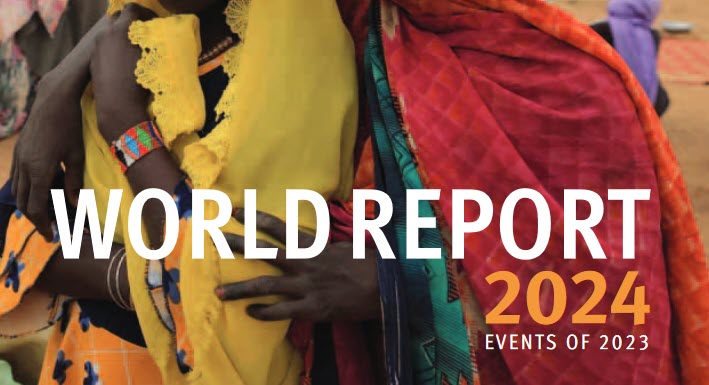


 Hans Thoolen on Human Rights Defenders and their awards