Archive for the 'books' Category

Turkey’s Government ignores HRDs advice for National Human Rights Institution

June 19, 2012

Bianet reports as follows: Human rights organizations decried the new draft law on the Turkish Human Rights Institution (TIHK) during a press meeting at the headquarters of the Human Rights Association (IHD) on June 14.
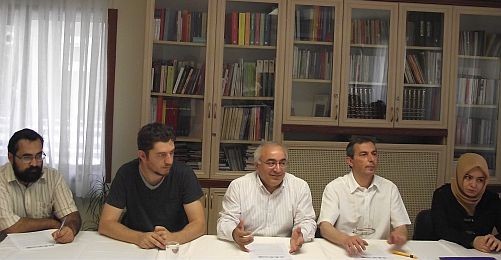
Human rights organizations held a press meeting at 11:00 on June 14 at the general headquarters of the Human Rights Association (IHD) in relation to the Human Rights Commission’s decision to pass the new draft law on the Turkish Human Rights institution (TIHK) to Parliament without any changes.

The organizations who participated in the meeting are nonplussed in face of the fact that the commission sent the draft law, whose preparation had been underway since 2004, to Parliament without any alterations, Metin Bakkalcı said while reading the press release on behalf of the participants.

The draft law is left null and void in its current form, he said and made number of tough comments (see article in full for details) to conclude that National Human rights Institutions ought to be autonomous from state institutions and political power in accordance with the spirit and essence of the Paris principles.

via: Government’s Soliloquy on the Human Rights Institution – Bianet.

UN Special Rapporteur on Human Rights defenders seeks information for her annual report

June 2, 2012

Margaret Sekaggya, the UN Special Rapporteur on the situation of human rights defenders, is preparing her annual report on how States meet their obligations under the Declaration on Human Rights Defenders (report to the General Assembly due in October 2012). It focuses on use of legislation, including criminal legislation, to regulate the activities and work of human rights defenders. The report will also be made public on her website: http://www.ohchr.org/EN/Issues/SRHRDefenders/Pages/AnnualReports.aspxShe needs the responses no later than 15 June 2012. Responses may be addressed to the Special Rapporteur at the Office of the High Commissioner for Human Rights (defenders@ohchr.org ; fax: +41 22 917 90 06).  

The questionnaires in question, in 3 languages, can be found at: http://www.ohchr.org/EN/Issues/SRHRDefenders/Pages/QuestionnaireHRDefenders.aspx

allAfrica.com reports on UN High Commissioner meeting NGOs in Zimbabwe

May 23, 2012

The visit by the UN High Commissioner for Human Rights to Zimbabwe this week got a good amount of media exposure and the report below filed by allAfrica.com gives what seems a fair reflection of her meetings with civil society. BUT why the writer has to stress in the opening line that it concerns “WESTERN-sponsored civil society organisations” which yesterday presented a damning report, is a mystery. If there were many China or Russia supported NGOs I doubt that this would have been added. What matters is whether the sponsorship affects the independence of the organisations. IF that were the case it should certainly be stated clearly but now it is only implied..

allAfrica.com: Zimbabwe: Civil Society Groups Present Conflicting Reports.

CSM piece on lawyers as HRDs in China gives a fuller picture

May 22, 2012

With all the attention now focussed on Chen Guangcheng, the blind legal activist, this article of 21 May by Peter Ford, staff writer at the CSM, is most welcome. It describes the extremely difficult circumstances under which lawyers and legal activists have to work, explaining the difference between the two categories. It starts with describing the case of  Jiang Tianyong, who went to visit his friend Chen Guangcheng, soon after he had emerged from the US embassy.

Last year, as authorities cracked down on lawyers in the wake of the Arab Spring, Jiang “disappeared” for two months. He was “taken to some secret places, beaten, criticized, and brainwashed” by police officers, he recalls. Landlords have bowed to official pressure and evicted him five times from different homes, Jiang says. He has been subjected to several periods of house arrest; his wife and children have been harassed; guards have sealed his front door shut; and once, in a particularly petty act, they locked his wife’s bicycle, he says. And he lost his license to practice law in 2009.

“Human rights lawyers face a perilous life in China,” says John Kamm, a human rights activist who heads Duihua, which works on behalf of political prisoners in China. “They face many barriers.”

When lawyers are beaten, “disappeared,” or jailed, their plight generally attracts wide attention. Far more often, though, says Wang Songlian, a researcher with the Hong Kong based China Human Rights Defenders, it is “unqualified” legal advocates – such as Chen – who are abused for taking cases the government regards as sensitive. “There are probably dozens of them in jail, most of whom are not well known,” she says.

Qualified lawyer’s status gives them a measure of protection, but they are vulnerable to all kinds of official pressure. Crucially, they are obliged to renew their licenses with their local bar association each year – a hurdle Jiang failed to surmount in 2009. This means most lawyers pay attention when the Justice Ministry or the bar association issues “guidance” or “opinions” that they do not take sensitive cases, or that they handle them in a certain way, says Eva Pils, a legal expert at the Centre for Rights and Justice at the Chinese University of Hong Kong.

If they don’t, she says, the authorities often warn the head of a recalcitrant lawyer’s firm that his business risks trouble. “At the point when it is felt that neither the Ministry of Justice nor the bar association nor a lawyer’s firm can control him, the security apparatus gets involved,” Professor Pils says.

Human rights lawyer Pu Zhiqiang says that “99 percent of lawyers will be affected by this sort of pressure.” He adds, “There is no organization in China supporting lawyers doing pro bono work, so very few will take it on because of all the trouble it gets you in.” The pressure on lawyers has been mounting for several years, says Pils, amid “fears that the [ruling Communist] Party might lose control over lawyers, who are not oriented to upholding party rule, but toward working for clients.”

In 2008, the judicial authorities proclaimed the “Three Supremes” doctrine, according to which judges were told to uphold the cause of the Communist Party, the interests of the people, and the Constitution and the law, in that order. Earlier this year, the Justice Ministry published a regulation requiring newly licensed lawyers to swear an oath of loyalty to the party. Despite the difficulties he and his colleagues face, Pu is optimistic. “Though the authorities would like to control the situation, society is getting more open, and I think it will continue to do so,” he says.

Twenty years ago, Mr. Kamm says, “there was no such thing as a [human] rights defender in China. Now we have a very different situation. Nothing encourages anyone to take on a human rights case, but the fact that there are people doing it is tremendously heartening.”

RELATED 6 famous dissidents in China

Africa: Strong Stand Taken By the African Court on Human and Peoples Rights

May 22, 2012
Français : Logo de la Fédération International...

(Photo credit: Wikipedia)

The International Federation for Human Rights (FIDH) welcomes the strong stand taken by the African Commission on Human and Peoples’ Rights (ACHPR) on the political, security and humanitarian confllicts and crises raging on the continent, at its 51st Session. FIDH now urges African Union (AU) Member States to give immediate effect to the recently adopted resolutions. The document published by allAfrica.com refers to the recent conflict between Sudan and South Sudan  the unconstitutional changes of government that lately occured in Mali and Guinea-Bissau, the territorial integrity of Mali and a West African region where several armed groups, like in Nigeria, still perpetrate violations. On HRDs the document of FIDH states the following:

The African Commission considered with a particular attention the civil and political rights’ violations happening in several countries. The Commission condemned the recurring impediment to Human rights defenders’ action in countries like Ethiopia – where the Charities and Civil Societies Proclamation adopted in 2009 continues to place excessive restrictions on Human rights organisations’ work – Swaziland – where authorities keep opposing the fundamental rights to freedom of expression, freedom of assembly and freedom of association – and Somalia, where journalists are taken in the grip of the ongoing armed conflict and are openly murdered. The FIDH welcomes the African Commission’s clear call for the amendment of the Ethiopian Charities and Civil Societies Proclamation, for the respect of the rights to fundamental freedoms in Swaziland and for justice to be rendered to the murdered journalists in Somalia. All these recommandations were supported by our organisation.

for the full document go to: allAfrica.com: Africa: Strong Stand Taken By the African Court On Human and Peoples Rights On the Crises Situations Raging On the African Continent.

UN experts and Inter-American Commission issue joint call to protect HRDs in Mexico

May 15, 2012

On 14 May 2012 an exceptional group of international experts urged the Government of Mexico to protect better Human Rights Defenders and journalists.  “The killings and threats repeatedly suffered by rights defenders and journalists in Mexico must stop immediately,” urged a group of four experts from the United Nations and the Inter-American Commission on Human Rights, calling on the Government to move ahead with the swift promulgation and effective implementation of the ‘Law for the Protection of Human Rights Defenders and Journalists’.

Highlighting the immediacy of the threats facing defenders and journalists, the experts also urged the Government to implement existing protection mechanisms as a matter of urgency, in order to avoid further attacks and loss of life and to complement the new provisions when they come into effect.The Bill, which has been approved by both chambers of the Federal Congress, seeks to guarantee and safeguard the life, integrity and security of human rights defenders and journalists by creating a mechanism with the authority to implement measures to protect those at risk, as well as at preventing such risks from arising in the future.

“Human rights defenders in Mexico desperately need the State’s effective protection now,” said Margaret Sekaggya, the United Nations Special Rapporteur on the situation of human rights defenders. “They continue to suffer killings, attacks, harassment, threats, stigmatization and other serious human rights violations.”  “The State has to implement, as a matter of priority, a global protection policy for human rights defenders. The lack of appropriate and effective systems for implementing specialized protection measures are related to the situation of defenselessness in which many human rights defenders find themselves, which has caused the death of many of them in recent years,” stressed Santiago A. Canton, the Executive Secretary of the Inter-American Commission on Human Rights on behalf of the Rapporteurship of Human Rights Defenders*.

“We have to break the cycle of impunity in Mexico, which is becoming an increasingly violent place for journalists,” said Frank La Rue, United Nations Special Rapporteur on the promotion and protection of the right to freedom of opinion and expression. “The recent killing of four press workers in Veracruz underscores the dire need for concrete steps to be taken to guarantee the safety of journalists and put an end to impunity.”

Catalina Botero, Special Rapporteur for freedom of expression of the Inter-American Commission on Human Rights, stressed that “safeguarding journalists and human rights defenders is not only compatible with the fight against crime, it is an essential element of this struggle. The Mexican authorities should take immediate measures to protect those journalists and human rights defenders that are being threatened, as well as to make definitive advances in the struggle against impunity for the crimes that have been committed against them.”

The four experts commended the Federal Congress for approving the Bill, pointing out that it would provide added impetus and sustainability to existing protection frameworks, while also strengthening these frameworks.The Bill was drafted in consultation with civil society organizations, and the Office of the High Commissioner for Human Rights in Mexico provided technical advice throughout the drafting process.

The human rights experts praised the consultative process which allowed multiple stakeholders to play an important role in the drafting of the Bill, and called for the same participatory approach throughout the implementation process. However, they emphasized the urgency of providing effective protection to those at risk and ensuring that human rights violations against journalists and human rights defenders do not go unpunished.

http://www.ohchr.org/EN/Countries/LACRegion/Pages/MXIndex.aspx 

For more information:
Human rights defenders: http://www.ohchr.org/EN/Issues/SRHRDefenders/Pages/SRHRDefendersIndex.aspx
Freedom of opinion and expression:http://www.ohchr.org/EN/Issues/FreedomOpinion/Pages/OpinionIndex.aspx
Inter-American Commission on Human Rights:http://www.oas.org/en/iachr/default.asp 

UN High Commissioner preparing report on reprisals agains Human Rights Defenders

May 15, 2012

On 23 March 2012 I reported on the harassment of HRDs – especially from Sri Lanka- who were in Geneva to testify at the Human Rights Council. The High Commissioners Office took a firm stand against this and the Council asked for a report on “Reprisals against persons cooperating with United Nations human rights mechanisms” to be submitted to the Council in September.

That this being taken seriously is shown by the request for information sent out to all NGOs.

Dear All,

In preparation of the Secretary-General’s forthcoming report to the Human Rights Council (September 2012) on reprisals against persons cooperating with United Nations human rights mechanisms, information is invited about cases of reprisals. Please send submissions by 15 June 2012 to reprisals@ohchr.org. The next report is expected to cover the period between June 2011 and June 2012.

Submissions should:

– fall within the scope of Human Rights Council resolution 12/2 – http://goo.gl/Ulvwo

– give attention to the necessity to preserve the security of the persons concerned; please indicate if the victim (or his/her family) has agreed to be mentioned in this report and has been informed accordingly;

 – indicate if the alleged reprisal has been referred to in any UN documents (provide citations);

– in addition, follow-up information (e.g. any developments, whether additional reprisals took place, whether measures were taken by the State to investigate, etc.) is invited on the cases included in the 2011 report. Cases in 2011 referred to Bahrain, Bangladesh, Belarus, China, India, Kenya, Malawi, Rwanda, Saudi Arabia, Sri Lanka and Sudan.
 

Get the 2011 report –  http://goo.gl/LDg9p (Deadline 15 June 2012)

Please share widely.
 
***
 
Background:
 At its 12th session, the Human Rights Council adopted a resolution on “Cooperation with the United Nations, its representatives and mechanisms in the field of human rights”. The resolution invites the Secretary-General to annually submit a report to the Council, containing a compilation and analysis on alleged reprisals against persons cooperating with UN human rights mechanisms (see para. 1 of the resolution), as well as recommendations on how to address the issues of intimidation and reprisals. In addition to cases of reprisals regarding cooperation with the Human Rights Council, Special Rapporteurs and Treaty Bodies, the report can also include cases of reprisals due to cooperation with the Office of the United Nations High Commissioner for Human Rights, its field presences and human rights advisers, United Nations Country Teams, the human rights components of peacekeeping missions, etc.

Facebook – https://www.facebook.com/unitednationshumanrights

Twitter – http://twitter.com/UNrightswire

YouTube –  http://www.youtube.com/UNOHCHR

Multitude of NGOs express concerns about the proposed expansion of jurisdiction of African Court

May 14, 2012

49 organisations have signed this open letter which makes a good case against the idea to add to the African Human Rights Court an international penal dimension.

Joint letter: concerns about the proposed expansion of the jurisdiction of … – ProtectionLine.

Exemplary piece on how complex human rights mechanisms relate to a country situation: in this case Malaysia

May 10, 2012

Under the somewhat narrow title: “Allow UN Special Rapporteur to probe Bersih 3.0” Ms Khoo Ying Hooi, a staff member at University Malaya, published on 10 May 2012 an excellent piece bringing together the variety of existing UN human rights mechanisms and Malaysia’ s reluctance to really embrace them. She compares the political commitments made by her country when seeking a seat on the Human Rights Council with the willingness of the Government to receive UN Rapporteurs and to implement the recommendations of the Universal Periodic Review (UPR). It is a rather long and detailed piece but worth reading in full. It was published in http://www.malaysiakini.com/letters/197526.

Some of the most relevant parts to whet your appetite:

The Special Rapporteur on the Promotion and Protection of the Right to Freedom of Opinion and Expression, Frank William La Rue, wanted to investigate the Bersih 3.0 rally that took place on April 28. The Malaysian Foreign Affairs Minister, Anifah Aman, is quoted as saying: “We are a sovereign nation.…….. I do not see the necessity for any outside organisation to determine whether we are free or fair.”

Ms Khoo Ying Hooi then recalls that in declaring its intention for its candidature for the HRC, the Malaysian government circulated a memorandum dated March 9, 2010, outlining its human rights record and its pledges and voluntary commitments, including “deepening and widening our cooperation with and support for the work of various UN actors and mechanisms involved in the promotion and protection of human rights such as the … Special Procedures of the HRC”. However, she continues, the way Anifah Aman described the Special Rapporteur and the HRC, as the “outsider” and the “outside organisation” is detrimental to the country.

It doesn’t reflect the commitment that the government has promised to the HRC and it is obviously just another diplomatic exercise.

The author then gives a clear explanation of the general system of the Special Procedures and summarizes with relevant detail the disappointing results of the 1998 visit to Malaysia by the (former) Special Rapporteur on the Promotion and Protection of the Right to Freedom of Opinion and Expression, Abid Hussain.

She also describes the Malaysian Government’s commitment at the international level through the UPR mechanism and contrasts them with the reluctance to receive Special Rapporteurs. She ends with the strong but polite conclusion that:
”Despite the obligation on government to protect and promote the human rights, Malaysia continues to brush these concerns aside. It is indeed contradictory for Anifah Aman to come up with such a response on the offer made by La Rue.

The Foreign Affairs Minister should have been more sensitive and aware of the promises made by the government in the international level particularly in view of the next UPR review in 2013.”

Let us see whether next year the UN and NGOs can make good use of the ammunition here provided.

European Parliament calls – again – for more attention for Human Rights Defenders

May 2, 2012

The European Parliament adopts every year a Resolution based on the report it receives on the EU’s human rights action and policy. So, it did again on 18 April 2012.

The official emblem of the European Parliament.

The official emblem of the European Parliament. (Photo credit: Wikipedia)

It is quite a long resolution and I only copy here the general paragraphs relevant to Human Rights Defenders (the chapter also includes a somewhat ill-fitting paragraph 91 on Western Sahara and a correct but detailed observation re the Sacharov prize in para 93, which you can consult in the full text):

…….

Re Human rights defenders

87.  Welcomes the EU’s political commitment to supporting human rights defenders, as a long-established component of the EU’s human rights external relations policy, and the many positive examples of demarches, trial observations, prison visits, and other concrete actions undertaken by EU missions and delegations, such as regular, institutionalised meetings with human rights defenders, but remains concerned at the lack of implementation of the EU Guidelines on Human Rights Defenders in some third countries; considers that the VP/HR should make recommendations for enhanced action to those missions where implementation has been noticeably weak;

88.  Urges the EU and its Member States to encourage EU missions and delegations to show their support and solidarity for the work undertaken by human rights defenders and their organisations, by regularly meeting and proactively engaging with them and incorporating their contributions into the development of the specific country strategies on human rights and democracy, and regularly engaging with Parliament;

89.  Reiterates its call on the EU to systematically raise individual cases of human rights defenders in the ongoing human rights dialogues it has with those third countries where human rights defenders continue to suffer harassment and attacks;

90.  Stresses the importance of systematic follow up to contacts with independent civil society, as well as more direct and easier access for human rights defenders to EU Delegations in third countries; welcomes the appointment of liaison officers, in the Delegations and/or in Member State embassies, for human rights defenders, and stresses that these should be experienced and appropriately trained officials whose functions are well-publicised both internally and externally; very much welcomes the fact that the VP/HR has indicated that she will always meet with human rights defenders in the course of her visits to third countries and calls for this practice to be followed by all Commissioners with responsibilities in the external relations field, and for reports on these contacts to be made available to Parliament;

91…….

92.  Reiterates its call for greater inter-institutional cooperation on human rights defenders; considers that the EU’s response capacity and the coherence between the actions of the different institutions on urgent crises for human rights defenders would be well served by a shared alert system based on focal points, and encourages the EEAS and the Commission to explore this avenue further with the European Parliament;

93.  ……

94.  Undertakes to include women’s rights more systematically in its own human rights debates and resolutions and to use the Sakharov Prize network, and especially female winners of the Prize, to advocate women’s rights in the world;

 full text: http://www.europarl.europa.eu/sides/getDoc.do?type=TA&reference=P7-TA-2012-0126&language=EN&ring=A7-2012-0086