Archive for the 'awards' Category

Campaign to give the Nobel Peace Prize 2018 to the global community of Human Rights Defenders

September 18, 2018

Over 200 organisations from all over the world have signed on to an open letter endorsing the idea of giving the Nobel Peace Prize 2018 to the global community of Human Rights Defenders.


12 September 2018

Dear Members of the Norwegian Nobel Committee,

9 December 2018 will mark the 20th anniversary of the UN’s Declaration on Human Rights Defenders (HRDs). It is an ideal and opportune moment to recognise and celebrate the efforts of these extraordinary individuals who despite threats of violence and unlawful imprisonment, harassment, intimidation, torture and assassination, continue to peacefully challenge injustice and call for the implementation and strengthening of the rule of law. Since 1998, over 3000 human rights defenders have been killed for defending the fundamental values enshrined in the Universal Declaration of Human Rights adopted by the UN.

In recognising the increasingly hostile environments globally, in which human rights defenders must work, the late Former Secretary-General to the United Nations, Kofi Annan, recently said:

“To stand up for human rights requires courage, perseverance, vigilance and a strong foundation of knowledge and evidence. We need to be vigilant in the protection of human rights defenders, for when the defenders’ rights are violated, all our rights are injured.”

In the same vein and emphasising the critical role that human rights defenders play in promoting and fostering stable democracies and sustainable peace, Permanent Representative of Norway to the Organisation for Security and Cooperation in Europe, Ambassador Steffen Kongstad said: “Threats and attacks against human rights defenders may hamper the realisation of economic, social and cultural rights, undermining social cohesion, and ultimately stability and development.”

Despite this recognition and respect at the highest levels of the international community, human rights defenders are killed every day. HRDs who suffer disproportionately are those activists working at grassroots and community levels, in isolated regions and from marginalised populations, who lack networks and resources to command international attention. Human rights defenders can be community leaders, lawyers, journalists, environmental activists, victims of abuse, trade unionists and teachers.

It is for these urgent reasons that Peace Brigades International with the support of the UK All-Party Parliamentary Human Rights Group has nominated the global community of HRDs for the 2018 Nobel Peace Prize. It is the highest humanitarian achievement through which to recognise HRDs and celebrate their commitment to advocating for and building societies that are peaceful, safe, inclusive, tolerant, just and sustainable for all. The nomination is currently supported by the UN Special Rapporteur on the situation of HRDs and some governments, diplomats and parliamentarians around the world.

We believe that awarding the Nobel Peace Prize to the global community of HRDs will mark a milestone in legitimising the crucial work they undertake to protect humanity and bring the trends of persecution they suffer to the public eye.

Furthermore, this collective award would mark a world first. By nominating a community rather than individuals or organisations, we emphasise that the trends making the defence of human rights ever more risky and ever more admirable, are global. We seek to highlight that the community itself is integral to the defence of human rights and it is the idea of community that motivates people to take enormous risks defending the rights of others and advancing peace.


For some of my earlier post on the Declaration: https://humanrightsdefenders.blog/tag/20th-anniversary-un-declaration-on-hrds/

The release of the open letter is accompanied by a public petition: Human Rights Defenders for the Nobel Peace Prize, which can be signed here.

https://peacebrigades.org.uk/open-civil-society-letter-support-nobel-peace-prize-human-rights-defenders

Nominations for the European Civil Society Prize 2018 closing soon

September 1, 2018

Although not a human rights award in the strict sense, I think that the current state of civil society in large parts of Europe does need a boost [see e.g. https://humanrightsdefenders.blog/2017/04/04/europe-also-sees-shrinking-space-for-human-rights-defenders/]. So the EESC Civil Society Prize 2018 on identities, European values and cultural heritage in Europe is most welcome and human rights groups and defenders should apply.

The European Economic and Social Committee (EESC) this year is promoting initiatives to do with European values, identities and cultural heritage. The deadline is 7 September 2018. The Civil Society Prize, now in its tenth edition, was launched by the EESC to reward and encourage by civil society organisations and/or individuals that have made a significant contribution to promoting the common values that bolster European cohesion and integration.

Prize money totals EUR 50 000 and will be awarded to a maximum of five winners and it will reward innovative initiatives which have made a significant contribution to:

  • raising awareness of the multiple layers and richness of European identities;
  • exploiting the full potential of Europe’s cultural wealth;
  • facilitating access to European cultural heritage; and
  • promoting European values such as respect for human dignity and human rights, freedom, democracy, equality and the rule of law.

The full list of requirements and the online application form are available on webpage – EESC Civil Society Prize 2018.

The EESC Civil Society Prize is open to all civil society organisations officially registered within the European Union and acting at local, national, regional or European level. It is also open to individuals.

The award ceremony will take place on 13 December 2018 in Brussels.

https://www.eesc.europa.eu/en/news-media/press-releases/eesc-civil-society-prize-2018-applications-closing-soon

Change of High Commissioner for Human Rights at the UN: optimism warranted

August 22, 2018

United Nations Secretary-General António Guterres, following approval by the General Assembly, has appointed Michelle Bachelet of Chile the next United Nations High Commissioner for Human Rights.  [Ms. Bachelet ended her second four-year term as President of Chile in March 2018, having already held the position between 2006 and 2010.  The first woman elected to Chile’s highest office, after her first term, she joined the United Nations as the first Executive Director of the newly established United Nations Entity for Gender Equality and the Empowerment of Women (UN-Women). A long-time human rights champion and ground-breaking leader, Ms. Bachelet is a paediatrician who began her Government career as an adviser in the Ministry of Health, rising quickly to become the first woman to lead Chile’s Health Ministry in 2000 and its Defence Ministry in 2002. Ms. Bachelet became involved in Chilean human rights activism in the early 1970s.  She and her parents were political prisoners, and her father, a general in the air force, died in prison.  After their release, Ms. Bachelet and her mother spent several years in exile.  She returned to Chile in 1979.] Her human rights background as well as her political cloud and experience give reason to hope that the Office of the High Commissioner will continue to be at the forefront in spite of the countervailing currents at the moment.  


Recognition of the fearless outgoing High Commissioner has continued to pour in:

The 2018 Human Rights Tulip has been awarded to the United Nations High Commissioner for Human Rights Zeid Ra’ad Al Hussein. Dutch Foreign minister Stef Blok will present him with the prize on 3 September in The Hague. For more information on the Human Rights Tulip see: http://trueheroesfilms.org/thedigest/awards/tulip-award. ‘The Netherlands greatly values the way in which he has fulfilled his mandate as High Commissioner,’ Mr Blok said. ‘He addressed human rights violations wherever they occurred. This critical and independent attitude is what is needed in a world where human rights are in jeopardy in many places.

On Monday 20 August the U.N. High Commissioner for Human Rights Zeid Ra’ad al-Hussein said in a wide-ranging interview days before his four-year term ends that U.S. President Donald Trump bears “a heavy responsibility” for how the media is portrayed and that his remarks could have a knock-on effect that could hurt journalists in other countries.” [U.S. newspapers across the country ran editorials last Thursday defending freedom of the press in response to President Donald Trump calling some media organizations enemies of the American people.] “The President should be aware that a heavy responsibility lies on his shoulders when it comes to the way in which the media is being portrayed,” Zeid said.

In his last major interview with UN News on 15 August, the UN human rights chief says that the “real pressure on this job comes from the victims and those who suffer and expect a great deal from us.” “Governments are more than capable of defending themselves. It’s not my job to defend them. I have to defend civil society, vulnerable groups, the marginalized, the oppressed. Those are the people that we, in our office, need to represent,” he adds, noting that “oppression is making a comeback”.

When asked about whether his view of the UN and what it can achieve has diminished during his time spent speaking out loudly in defence of the abused and defenceless over the past four years, he says: “It’s very difficult to tolerate abuse of the UN when I keep thinking of the heroic things that people do in the field, whether the humanitarian actors or humanitarian personnel, my human rights people, the people who are monitoring or observing. And I take my hat off to them. I mean, they are the UN that I will cherish and remember.”

——————-

https://www.usnews.com/news/world/articles/2018-08-20/trump-has-responsibility-towards-media-un-rights-boss-says

https://news.un.org/en/story/2018/08/1017052

https://www.government.nl/latest/news/2018/08/14/high-commissioner-for-human-rights-zeid-raad-al-hussein-to-receive-2018-human-rights-tulip

https://www.un.org/press/en/2018/sga1824.doc.htm

Some good news from Cambodia: Tep Vanny and three other human rights defenders pardoned

August 22, 2018

Tep Vanny, second from left, gestures upon arrival at her home in Phnom Penh, Aug. 20, 2018.

Tep Vanny, second from left, gestures upon arrival at her home in Phnom Penh, Aug. 20, 2018. – AP Photo

Cambodia’s King Norodom Sihamoni on 20 August 2018 granted royal pardons to prominent land rights activist Tep Vanny and three others convicted for their roles in a protest over a land grab in the capital Phnom Penh’s Boeung Kak Lake community. Tep Vanny, 38, was arrested on 15 August 2016 after participating in a demonstration, handed six days in prison for “insulting a public official” and, instead of being released when the sentence was served, charged with “aggravated intentional violence” for a protest she held more than three years earlier in front of the home of Prime Minister Hun Sen.

On Feb. 23, 2017, the Phnom Penh Municipal Court convicted Tep Vanny of assaulting two security officers during the 2013 protest at Hun Sen’s home, sentencing her to 30 months in prison and making her pay 9 million riels (U.S. $2,250) in compensation to the officers. Three other female activists—Heng Mom, Bo Chhorvy, and Kong Chantha—were also convicted for “obstructing public officials” during the protest, but released on bail.

On Monday, King Sihamoni issued a royal decree at the behest of Hun Sen, overturning the convictions of all four activists without providing any reason for the decision. Speaking to RFA’s Khmer Service, Tep Vanny said: “I was given no prior notice that I would be released,”“The prison guards came to inform me just before 8:30 p.m. that I would be freed soon and said I should get my things ready. I told them they had come to tell the wrong person.”  Although I am happy tonight for the freedom to meet with my family, relatives, and community members, my pain remains with me, as I have spent over two years in jail,”.

Tep Vanny was awarded the 2013 Vital Voices Global Leadership Award for her work campaigning on behalf of the community evicted from Boeung Kak Lake, which was later filled with sand to make way for a development project with ties to Hun Sen and the ruling Cambodian People’s Party (CPP). On Monday, she appealed to Hun Sen to release all of the country’s remaining political prisoners, including former RFA reporters Uon Chhin and Yeang Sothearin, who have spent nine months behind bars on “espionage” charges.

Various rights groups had demanded Tep Vanny’s release in the lead up to the 15 August anniversary marking her two years in prison, with New York-based Human Rights Watch’s deputy Asia director Phil Robertson calling her conviction “just one of many outrageous cases in which the authorities have misused Cambodia’s justice system to harass and imprison peaceful land rights activists.” On Monday, London-based Amnesty International’s senior director of global operations Minar Pimple welcomed Tep Vanny’s release in a statement, but called it “long overdue.”

re Boeung Kak Lake case see my older: https://humanrightsdefenders.blog/2012/06/20/boeung-kak-lake-women-sentenced-for-peaceful-protest-in-cambodia/

Still this is only SOME good news as in the meantime Front Line reported that on 12 August 2018, human rights defender Nay Vanda received a court summon dated 9 August 2018 issued by the Vice Prosecutor of the Phnom Penh Municipal Court, summoning him to attend a trial at 7:30am on 27 August 2018 at the Phnom Penh Municipal Court. Subsequently, human rights defender Ny Chakrya also received the same court summons. These summons are related to charges brought against five human rights defenders on 2 May 2016. Nay Vanda, Ny Sokha, Yi Soksan and Lim Mony were charged  <https://www.frontlinedefenders.org/en/case/five-adhoc-members-detained#case-update-id-3050&gt; with bribing a witness under Article 548 of the Criminal Code, and Ny Chakrya was charged as an accomplice to bribery of a witness in accordance with Articles 28 and 548 of the Criminal Code. If convicted, they face between five to ten years imprisonment. It is anticipated that the three human rights defenders who have not received the court summons will receive them in the coming days. 

The Cambodian Human Rights and Development Association (ADHOC) <https://www.frontlinedefenders.org/en/profile/adhoc&gt;  is a human rights organisation founded in December 1991 by a group of former political prisoners aiming to address violations of rights and freedoms. See also: https://humanrightsdefenders.blog/tag/adhoc/

—–

Many links including: https://www.rfa.org/english/news/cambodia/pardons-08202018162801.html

In memoriam Kofi Annan – laureate of 10 human rights awards

August 20, 2018

Former United Nations Secretary-General Kofi Annan died on Saturday 18 August 2018 at the age of 80. “Kofi Annan was a global statesman and a deeply committed internationalist who fought throughout his life for a fairer and more peaceful world. During his distinguished career and leadership of the United Nations, he was an ardent champion of peace, sustainable development, human rights and the rule of law,” the Kofi Annan Foundation and Annan family said in a statement. His wife Nane and their children Ama, Kojo and Nina were by his side during his last days.

Born on April 8, 1938, in Ghana, Annan took his first job with the U.N. in 1962,and became its seventh secretary-general serving between 1997 and 2006.

It has been pointed out by many media that he was awarded the Nobel Peace Prize (jointly with the United Nations) in 2001 but few mention the other 9 human rights awards that he received before, such as

2001   Liberty Medal

2003   Indira Gandhi Prize

2003   Sakharov Prize for Freedom of Thought

2004   Franklin Roosevelt Four Freedoms Award

2006   Olof Palme Prize

2007   MacArthur Award for International Justice

2007   Bruno Kreisky Award

2007   North South Prize

2008   Freedom Award (refugees).

For more on these awards, see: http://trueheroesfilms.org/thedigest

The current U.N. secretary-general, António Guterres, called Annan “a guiding force for good. … In many ways, Kofi Annan was the United Nations. He rose through the ranks to lead the organization into the new millennium with matchless dignity and determination,” he said in a statement.

Kazakh human rights defender Vadim Kuramshin will probably be granted early release

August 2, 2018


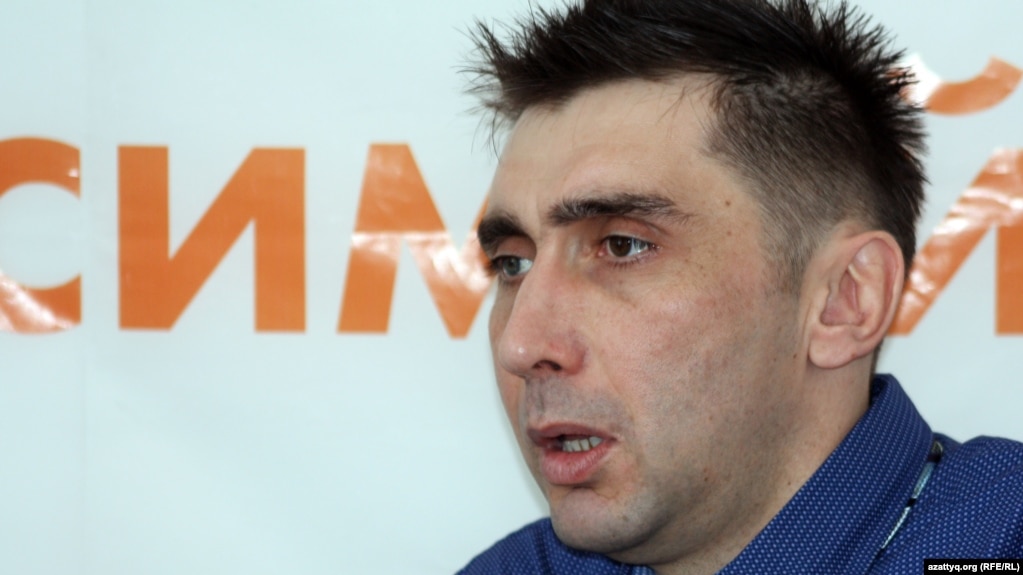
Vadim Kuramshin in 2012

Radio Free Europe on 1 August 2018 carried the good news that the prominent Kazakh Rights Defender will new granted parole after 6 years In prison. A lawyer for Vadim Kuramshin, Muratbek Irge, told RFE/RL that a court in the northeastern city of Oskemen agreed on August 1 to parole Kuramshin. He will be released in 15 days if the ruling is not appealed and overturned, Irge said. Kuramshin has become known for his efforts to raise awareness of violations of inmates’ rights in Kazakh penitentiaries, including the one where he served his term. He was sentenced to 12 years in prison in 2012 on an extortion conviction. He denies wrongdoing. His supporters say were politically motivated.

In December 2013, while behind bars, Kuramshin was awarded the Ludovic-Trarieux international human rights prize.[see: http://trueheroesfilms.org/thedigest/awards/ludovic-trarieux-international-human-rights-prize]


Report of MEA’s 25thAnniversary event: Human Rights in a Changing World (30 May 2018)

August 1, 2018

And here is finally the Discussion Summary (in full) of the Martin Ennals Award 25thAnniversary event “Human Rights in a Changing World” [https://humanrightsdefenders.blog/2018/05/24/mea-at-25-high-level-anniversary-panel-looks-at-human-rights-in-crisis/].  

 Introduction

On 30 May 2018, the Martin Ennals Foundation convened a meeting of leaders of the ten organizations that make up the Martin Ennals Jury, together with some former MEA laureates, to discuss current human rights priority issues. This, the first such meeting, took place in the context of the 25thanniversary of the Martin Ennals Award for human rights defenders.  The document below attempts to capture the main elements discussed and draws some conclusions.

Discussion

Three issues were scheduled to serve as the agenda:  (1) influencing authoritarians, (2) countering populism, and (3) effective human rights action. We focus on the five main points raised throughout the discussion.

  1. Human rights are increasingly the target of populist and/or authoritarian leaders as they demonize “others” to build support;

Not all authoritarians are populists, and not all populists are authoritarians. The initial discussion looked at the phenomenon of populists who build support by using messages and approaches that give cause for major human rights concerns.  Populist leaders who end up trampling human rights are often those most eager to remove constraints on their own power by weakening the institutions that can challenge them: the judiciary, media, parliaments, and civil society, especially Human Rights Defenders (HRDs).

Authoritarians are increasingly willing to stand up for their approaches, using justifications such as the need for economic development, the rejection of “Western” or “liberal” models, or the protection of national identity.  This is the case for countries where the population have little say in the choice of their leaders (e.g. China); nominal say (e.g.  Russia or Venezuela); or even where the population can vote freely (e.g. Hungary or USA).

The blaming or demonization of marginalised groups is a principal tool in the authoritarians’ arsenal. These groups can include religious or ethnic minorities, or even the targeting of criminals by extrajudicial means. But currently overshadowing all is the way that irregular immigrants have become the focus especially in Europe and the US of attempts to find a scapegoat for the problems that preoccupy the wider population.

The concerns among the population that provide the breeding ground for authoritarian leaders to reject more traditional democratic politics are linked to a variety of issues in the spheres of economic insecurity and law and order, as well as cultural displacement and loss of identity.  Populists have tapped into these concerns, but rather than looking at the deeper complexities they have created resonance with simple, compelling messages that appeal to emotion more than to reason.

The manner in which populists have built support by attacking marginalised groups includes a discourse to deny them certain basic rights. Statements that in the past were seen as reminiscent of fascism and thus politically unacceptable are now part of the political dialogue and supported or at least ‘accepted’  in many countries that were considered “liberal democracies”. Regardless of who is in power, suggesting denial of basic rights to certain groups is now common currency even in many democracies.

Immigration, and in particular “uncontrolled” or “illegal” immigration, is a particular target for populist leaders.  Human rights advocates who stand up for these people’s rights are now more easily accused of working against the national interest. Disconcertingly, blaming such an identifiable “other” time and again appears a simple but effective tool. Politicians focusing on complex causes face an uphill battle. Human rights organizations trying to protect the “other” may find their messages not just ineffective, but providing arguments for populists to use against them.

The result is that human rights, and human rights activists and organizations, are seen by significant numbers of people in many countries as serving effectively to support those who threaten their livelihood, safety and cultural values. Thus, human rights, as a concept, come under attack when associated with protecting “undesirables”.

While “human rights” as a concept may be easily misunderstood, or intentionally manipulated, views tend to be more supportive once specific rights are acknowledged and advanced. This applies particularly to a broad range of economic and social rights issues that resonate with a wider cross-section of the population: corruption, land rights, labour rights, and environmental degradation.  These issues tend to be underrepresented as human rights concerns and more effort should be made to show the connections. It was stressed that young people especially are willing to work on these issues.

A recurring theme in the discussion was that while there may be support for particular rights such as LGBT or land rights, this would not usually be translated into supporting the overarching human rights architecture in general. Messaging by human rights organizations often involves conceptual messages, which have been ineffective in the past. However, the new, and more dangerous, element is rather than just being ineffective, these messages can provide arguments in the opposite direction for populists.

The conclusion that presents itself is that those working on any particular topic will have to be much more aware of the wider context in which they work. While trying to draw attention onto specific issues, it is important to remain credible in the eyes of the wider public. This means that as human rights organizations decide where and how to focus their activities, the balance of issues worked on needs to be considered as part of the perception that the organization wants to build.

For those organizations with very specific mandates, and so a limited choice of issues to focus on, it is even more important to find approaches that do not provide arguments that can be used by those working against them.

  1. Naming and shaming needs to take into account that certain approaches can reinforce populist leaders


“Naming and shaming” has long been one of the main tools to press for human rights.  However, given the success of the populist messages, some leaders have been able to justify human rights violations and even use criticism to make their point to supporters. This is particularly so when the criticism associated human rights with the least “desirable”.

Even though authoritarians may feel no compunction to stand behind their methods or even boast about them, they still are sensitive to their reputations. They often mobilize significant resources to thwart or stop human rights defenders, which shows that they still think arguments in favour human rights are important enough to be dangerous for them.

There is no reason to conclude that public shaming is no longer effective, but it needs to be carefully tailored to each situation. Failure to do so can play directly into the hands of the authoritarian leader who may claim the criticism as a badge of honour. Populists are sensitive to being ridiculed; humour at their expense can be powerful. In any case the planned message needs to be carefully analysed to determine how the message could be used to their benefit by those it seeks to challenge.

Sanctions against Individuals

The use of personal sanctions and restrictions on autocrats and their cohorts is increasing and is found often to have considerable impact.   However, where this can trigger counter-measures it is important for unintended consequences such as reprisals against human rights defenders to be factored into the equation.


  1. Public communication

There was broad agreement about the importance of moving beyond the traditional ways of communicating human rights concerns and articulating advocacy. The human rights narrative mainly resonates with those most familiar with, and supportive of, the issues.  Messages are often legalistic and technical, limiting their appeal to a wider audience. In the current fractured political dialogue, when the objective is seen as supporting an “other” a new level of hostility can result.

The most effective communications are on issues that the recipient can identify with. This makes normative and conceptual work very hard to get the wider public people excited about. They are more likely to react to messages where they see themselves as potentially affected. This is what makes the demonization of “others” so effective.  Action against migrants or minorities does not strike people as something that can happen to them. Even when talking about civil and political rights, it is still possible to see the most serious violations such as torture and enforced disappearance as something that happens to others.

It may well be easier to mobilise people around social justice issues like corruption, land rights, labour rights, and pollution. There is a general sense that economic, social, and cultural rights are not sufficiently addressed. Countering populists will need messages in language that appeal to populist followers’ values, interests and indeed emotions. Here it is important to offer constructive solutions to move the debate forwards rather than condemning what is wrong. Furthermore, there is a need to work in alliance with broader elements of civil society such as social movements, and so tap into sources of wider support. Effective use of visual and social media is indispensable.

Dialogue with autocrats

Governments are not monoliths. There are different interests and views within autocratic states that can be utilized when dealing with them. It is important to weigh the trade-offs in any such interaction; while dialogue can be opened up it needs to be able to lead to action. There are risks that autocrats could use the fact of dialogue to legitimise their actions. At the same time, they may go along but with no intent to move forward – e.g. dialogue that only involves the foreign ministry is usually a sign that little will happen. As a rule, dialogue should go hand in hand with public communication that creates pressure. The ‘diplomacy’ must have a public component.


  1. Non-state actors/business and human rights

Non-state actors can play powerful roles influencing the state primarily for their own benefits, and so contributing directly or indirectly to infringement of human rights. The business sector, notably multinational enterprises, is considered a clear priority in this regard. Effective action to ensure compliance is still limited by gaps in normative rules; where such enterprises may be vulnerable to reputational risk, strengthened regulation should help ensure that they are competing on a level playing field.

There is a multitude of pressure- and leverage points. One that drew particular attention is the notion that the eventual cost to companies resulting from a lack of early engagement with the local population may be exponentially higher than had they consulted at the start. Involvement at the early planning process by all sides can reduce the risk of project failure or excessive costs later on. Other leverage points include banks/financial institutions, shareholder activism, and associated business partners such as suppliers who may have reputational concerns.

Overall, the thrust of engaging with the business sector in the sphere of human rights must be to shift the emphasis from focusing on transparency to seeking accountability.


  1. Supporting local action for human rights

Much of the discussion looked at recent changes in the West as to how human rights are viewed, whereas the global South continues to face the challenges it always has.  Furthermore, certain changes that originated in the West such as funding restrictions on political activity, and anti-terrorism legislation have inspired new methods to restricts human rights defenders  in countries with more structural human rights problems.

Reassuringly, experience shows that even in countries with structurally problematic human rights records there are networks of committed human rights activists. While they may be small in numbers, their commitment and drive allow them to keep human rights concerns on the agenda. Many of these activists feel unsupported when facing the resources, restrictions, and wrath of their own governments. However, this commitment to human rights by an engaged minority is a clear counterweight to populism and human rights abuses more widely.

Thus, a key message arising out of the discussion is the importance of supporting local activists and networks. Supporting them is a critical function of the international human rights movement. The work for human rights defenders cannot be seen in isolation from the causes they espouse, which in turn enables international human rights organisations to connect with broader social movements.

Rules vs implementation

While there may still be a need for developing norms and standards in certain areas (as with regard to business and human rights), the overall emphasis must increasingly be on implementation and enforcement of existing rules. This requires a more comprehensive approach that moves from identifying where norms are violated, to a systematic approach to keeping pressure on governments in question until there is change. This will involve increased coordination between international actors and those working locally.


In conclusion

Convening the leaders of all the MEA jury organizations together with former laureates was a first. It gave a unique opportunity to discuss the state of human rights and human rights action in today’s rapidly changing and increasingly contested world. The analysis differed in nuance only, the overall findings and conclusions had a large degree of consensus. While these outcomes may not in themselves offer ground-breaking new insights, that fact of the shared orientation and commitment is remarkable and encouraging in the face of the formidable challenges in front of us.

You can see and hear the public debate led by BBC’s Lyse Doucet on the MEA website: http://www.martinennalsaward.org (viewed by hundreds of people)

Senator de Lima – in detention in Philippines – receives her award

July 30, 2018
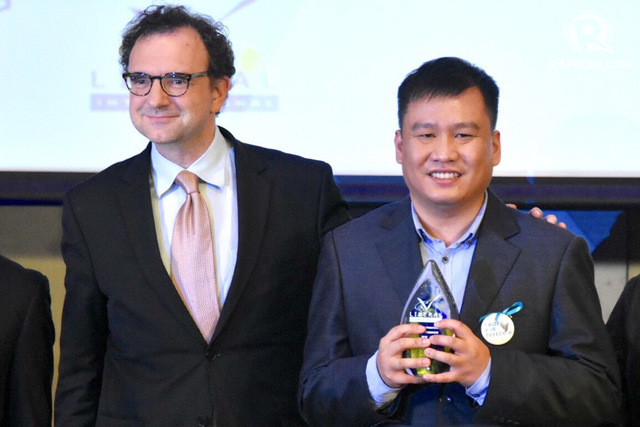
 PRIZE FOR FREEDOM. Liberal International gives the Prize for Freedom award to detained Senator Leila de Lima. Her son Israel and other members of her family receive the award on her behalf. Photo by Angie de Silva/Rappler
Photo by Angie de Silva/Rappler

On Saturday, 28 July 2018 Liberal International has given its ‘Prize for Freedom’ (as announced a year ago) to detained Senator Leila de Lima. Her son Israel and other members of her family receive the award on her behalf.  “Human rights are for all, or they are for nothing. The world is indeed watching, and Leila de Lima’s unjust detention will not be forgotten…. Senator Leila de Lima, you have received this prize for speaking truth to power,” Liberal International (LI) president Juli Minoves said during ceremonies held at the Novotel hotel in Quezon City on Saturday night. Minoves said this is the first time in almost a decade that the Prize for Freedom is being awarded outside of Europe. Fo more on this award and some 20 others with the word ‘freedom” in their name, see: http://trueheroesfilms.org/thedigest/awards/prize-for-freedom-liberal-intl

On Saturday, De Lima’s brother read her speech on her behalf: “I am extremely and unconditionally blessed, so much so that there is no room in my heart for regrets or second thoughts. No room for could haves, would haves, or should haves. I am where I am because I did the right thing.” Later in her speech, De Lima said that while dictators, oppressors, and abusers come and go, “we, the defenders of the people, can never rest.

In May Amnesty International (AI) Philippines, had recognized the detained Senator as the “Most Distinguished Human Rights Defender” on its first-ever Ignite Awards for Human Rights. Time Magazine listed her as one of its 100 Most Influential People and Foreign Policy. Fortune Magazine in April 2017 ranked her as the 39th out of 50 of the World’s Greatest Leaders.

See also my: https://humanrightsdefenders.blog/2018/03/10/there-seems-to-be-no-limit-to-what-duterte-is-willing-to-say-and-may-get-away-with/

https://www.rappler.com/nation/208371-de-lima-family-receives-prize-for-freedom-award-liberal-international

http://newsinfo.inquirer.net/1014640/de-lima-2nd-filipino-to-receive-prize-for-freedom-award-after-cory-aquino

http://www.canadianinquirer.net/2018/05/29/ai-names-de-lima-as-most-distinguished-human-rights-defender/


Kenyan Lawyer, Allan Maleche, wins 2018 Elizabeth Taylor Human Rights Award

July 26, 2018

The International AIDS Society (IAS), amfAR and The Elizabeth Taylor AIDS Foundation have announced that the Elizabeth Taylor Human Rights Award 2018 goes to a Kenyan lawyer, Allan Achesa Maleche, for his role in advancing human rights in the field of HIV and AIDS. Maleche received the award at the 22nd International AIDS Conference (AIDS 2018) in Amsterdam, the Netherlands. For more information on this award: http://trueheroesfilms.org/thedigest/awards/elizabeth-taylor-human-rights-award

Allan Maleche knows that the law is a powerful tool to protect human rights,” IAS President Linda-Gail Bekker said. “As a tireless crusader for the rights of people living with and affected by HIV and TB, Allan has achieved legal victories that have not only protected individuals. They have also led to smarter, more effective policies that reject stigma and discrimination and advance more humane and effective approaches to ending the twin epidemics of HIV and TB.”

“This award recognizes how critical rights-based approaches are to the HIV and TB responses. It is a wonderful honour that will inspire me and my colleagues in our continued work to protect the human rights of everyone affected by these epidemics,” the laureate said. He becomes the third winner of the award. The first winners of the award were Iranian physicians Arash and Kamiar Alaei in 2012, then Ugandan Physician and gay rights activist Paul Semugoma in 2014.

https://howafrica.com/kenyan-lawyer-allan-maleche-wins-the-2018-elizabeth-taylor-human-rights-award/

Nominations for the 2019 Dodd human rights prize open

July 23, 2018

The public is being invited to submit nominations for the human rights prize awarded biennially by the University of Connecticut. For more on the Thomas Dodd Human Rights Award see: http://trueheroesfilms.org/thedigest/awards/thomas-j-dodd-prize-in-international-justice-and-human-rights.

Nominations are being accepted online through 1 October.

See also: https://humanrightsdefenders.blog/2017/02/04/physicians-for-human-rights-gets-dodd-human-rights-award/

https://www.theday.com/statenortheast-news/20180721/public-invited-to-submit-nominations-for-dodd-human-rights-prize