JONAS ALASKA// With his down-to-earth, personal and honest portrayals, it’s no wonder Jonas Alaska is a critic’s favourite. Already with his debut album, he was triple-nominated for the Norwegian Grammy.
NORA GUNDERSEN & ODA VOLTERSVIK // Nora Gundersen and concert pianist Oda Voltersvik will perform at Den Nationale Scene in November! They have both played as solo artists and chamber musicians both in Norway and abroad.
DØSSI // Ingrid Døssland, known as DØSSI, is a producer and singer/songwriter. With her dreamy voice, DØSSI draws you in to her own world of feelings and melancholy.
FRODE GRYTTEN // Frode Grytten has, throughout an extensive and critically acclaimed career, distinguished himself as one of Norway’s foremost writers.
SHARQANT // Sharquant is a band consisting of three musicians with backgrounds from Syria and Iraq. The band was established in 2018, in Bergen. Their music consists of a blend of different parts of the Arab culture, and their music transports the audience to the Mediterranean region.
Guri Solberg is the host of the Rafto Prize Award Ceremony!
Migrant Workers Rights Network is a grassroots member-based association that works to protect the rights of migrant workers who live and work in Thailand, the majority being from Myanmar. The organization was founded in 2009 by nine Myanmar migrant leaders after seeing extensive exploitation and abuse of migrant workers in Thai factories, the seafood industry, agriculture, and construction. They decided that empowerment of migrants is the best way for migrant workers to protect themselves.
On 10 November 2020 Scholars at Risk (SAR) announced that Dr. Rahile Dawut is the recipient of its Courage to Think Award for 2020. Dr. Dawut is being recognized for her own work, as well as that of all the scholars and students of the Xinjiang Uyghur Autonomous Region, who together struggle for academic freedom and freedom of opinion, expression, belief, association, and movement.
Dr. Dawut is an Associate Professor in the Human Science Institute of Xinjiang University and founder of the Minorities Folklore Research Center in Xinjiang University. In December 2017, Dr. Dawut told a relative of her plans to travel from Urumqi to Beijing. Shortly thereafter, her family and friends lost contact with her. Professor Dawut’s disappearance was made public in August 2018. It is suspected that she is held by state authorities at an undisclosed location.
“My mother is a scholar, not a criminal,” said Akeda Pulati. “She studies the folklore and cultural traditions of minority populations. That is not a threat to the government, other institutions, or the people of China.”
“The imprisonment of Dr. Dawut, an internationally recognized scholar of Uyghur culture, reveals the Chinese government’s blatant repression of voices and ideas it finds displeasing,” said Rob Quinn, executive director of SAR. “This constricts academic activity and public expression, threatening minority traditions, histories, and languages. The disappearance of Dr. Dawut, along with many thousands of others, is an atrocity we should all strive to end.”
Bulatlat of 10 November 2020 reports that Neri Colmenares, one of the country’s most prominent public interest lawyers, has won the human rights award of the International Bar Association (IBA) for his “extensive contribution to human rights, and his continuing determination and advocacy, in the face of great adversity.”
Himself a victim of unrelenting red-baiting by military, police and government officials for his human rights advocacy and activism, Colmenares is a former three-term member of the Philippine House of Representatives and is currently the national chairperson of the National Union of People’s Lawyers (NUPL). He is also a leader of the Concerned Lawyers for Civil Liberties and adviser for advocacy of the Integrated Bar of the Philippines.
Colmenares’ human rights advocacy began when he became the Western Visayas regional chairperson of the Student Catholic Action of the Philippines during martial law in the 1970s. While campaigning for the return of student councils in schools ordered closed by then President Ferdinand Marcos, Colmenares was arrested and tortured by the military.
He spent four years in jail as one of martial law’s youngest political prisoners at 18. After his release from prison, Colmenares earned his BA Economics degree from San Beda University (SBU), his law degree from the University of the Philippines and his Master of Laws degree from the University of Melbourne in Australia on scholarship.
As a human rights lawyer, Colmenares has argued a number of cases before the Supreme Court and championed causes in the legislature in support of marginalized sectors, including the following:
* The Party List Election Case in 2000, which led to the High Court ordering that 20 per cent of the seats in Congress be reserved for the marginalized and underrepresented poorer .
* The Pork Barrel Case during the Gloria Macapagal-Arroyo administration that led the Supreme Court to declare the Congressional practice as unconstitutional.
* In 2017 Mr Colmenares, alongside fellow human rights lawyers, constitutionalists and several law students, established Manlaban sa EJK that campaigns against the continuing extra judicial killings under President Rodrigo Duterte.
* Colmenares is also acting as co-counsel in a complaint against President Duterte for crimes against humanity, filed to the International Criminal Court (ICC) by families of extrajudicial killing victims.
* Colmenares is a counsel-complainant in one of the 37 petitions questioning the constitutionality of the Anti-Terrorism Act of 2020
As a parliamentarian, Colmenares advocated for the democratic rights of those with disabilities and the elderly, such as special election precincts to assist them in voting, as well as introducing the Early Voting Law for media personnel who would be covering the election on the day.
He also authored the law mandating the Philippine government to issue early warning to citizens during disasters and calamities as well as an increase of benefits given to social security system pensioners, among many other pieces of legislation.
In 2005, Colmenares helped organize the Counsels for the Defense against Attacks on Lawyers, a group of lawyers and law students advocating against the unlawful killings and arrests of their colleagues under then President Arroyo.
Colmenares (second from left) denouncing extra-judicial killings. (Photo from Neri Colmenares’s Facebook account)
In bestowing him the award, IBA Human Rights Law Committee co-chairperson Federica D’Alessandra said Colmenares has drawn on every tool in the legal toolbox, from legislation, to litigation, to advocacy in order to advance human rights and the rule of law for the protection of the Filipino people.
“With this award the IBA recognizes [Colmenares’] incredible accomplishments, and celebrates his great resolve as he continues to fight for media freedom, and stand against extrajudicial killings, forced disappearances and unlawful detention in the Philippines,” D’Alessandra said.
“It could not have come at a better time than now that human rights lawyers and defenders in the Philippines are under attack especially in the form of vicious vilification commonly referred to as red-tagging,” the NUPL said.
Colmenares said the award is both an honor and an inspiration to human rights lawyers like them to continue their work with the people despite the threats and difficulties. He said awards from established international institutions like the IBA serves as a mantle of protection to threatened lawyers worldwide.
“Fifty (50) lawyers and judges have been killed in the Philippines since 2016 and this award will also provide a mantle of protection for human rights lawyers like me,” Colmenares said.
He is currently a UN fellow at OHCHR, and the former recipient of the ISHR Human Rights Defenders Fellowship. He is involved in social work, advocacy, and is authoring in collaboration with other refugees offshore and inshore ( They Can’t Take The Sky):
I’m tired of hearing celebrities saying they are “voices of the voiceless.” Unfortunately, I hear it often from celebrities with our pictures and stories, rather than from refugees themselves.
The so-called “voiceless” are individuals living in poverty and conflict zones, and were forced to leave their countries while they were muffled, hushed, pushed down and left out. But they are not voiceless. They do not need your voices but they do need you to put them behind the microphone, make room at the table, and give them a chance to speak up. If we want to find lasting and sustainable solutions for the refugee and migrant crisis, then stop speaking for the so-called voiceless, and start working alongside them to make sure their powerful voices are heard.
Media, the arts and celebrities often say they strive to “give voice to the voiceless”. While this can empower, it can also be a potentially harmful tool for them too. It makes me feel like an object, it discourages me from speaking for myself and most importantly, it is dehumanising because someone else is speaking on my behalf. Being a refugee means more than being an alien, no right, no voice; this can sound trite, clichéd, even patronising. Speaking on our behalf can take the real voices of the concerned people away and replace them with a slogan, “Voice of the Voiceless”. Are they really voiceless? If so, then who took their voices?
What refugees urgently need, besides food and water, medical care, and a roof over their heads, is hope! And prospects of a homeland, friends, and a sense of security. Unfortunately, reality presents a completely different picture to many of them. Here is a call for reflection.
Protests and public ceremonies at least remind us of the problem, even if they do not solve them. Anyone who has never been part of a refugee trek has little idea of everything that happens along the way. These people have just turned their backs on violence, persecution, and human rights violations only to walk into hopelessness, hunger, and cold! It is a vicious cycle of evil that has been set in motion. People with a permanent home and a roof over their heads can barely imagine this. There are millions of fates and stories that tell of violence, human abysses, but some also of hope and courage.
Why is it easy to listen to someone who speaks out on behalf of victims but not to the victims directly? Is it also time to question this invisibility? The fact is that no-one is listening and no-one is offering them a platform to express their concerns on their own, so it doubles their suffering. We hide them in detention centres or camps, away from us, making it harder for them to connect with reality. But it also prevents the truth from coming out as it is, and that’s part of the complexity. The majority of these refugees are coming from countries that are torn apart by wars, extreme poverty, lack of freedom of speech, human rights abuses etc.
The media are not interested in listening to the people concerned. Instead they listen to the rich and famous, and this makes them complicit. It is on journalists and the media’s shoulders to seek out the stories of those who would be left out of the public record, like refugees, asylum seekers and migrants. If we aim “to give voice to the voiceless,” it requires more than asking for sound-bite quotes, taking pictures in refugee camps or using them to sell newspapers. No, it is bigger than that, it means listening to their stories, offering them a safe platform to speak for themselves rather than to speak on their behalf, no-one was born without a voice.
No media so far asks the refugees about the impact of the US election or the EU migration policy, why? Because we don’t have a voice and our point of view is not considered as valuable. The Trump administration, but also the Democratic party, have largely dismantled the US asylum seekers and refugees resettlement programme. It became a model for the EU member States and Australia, and even questioned the refugees convention of 1951.
The actions of the US government over the last four years shaped the dichotomy of “Us-vs-Them”. It has also created social and economical inequality among the refugee communities: some were seen as vulnerable and others not, and this in turn has increased tensions within refugee communities. As an example, in 2017 when the US government made a deal with the Australians to take refugees from offshore detention centres on Manus Island and Nauru several countries were banned and it created big tensions between the refugees. These actions show a lack of compassion for the victims of armed violence and persecution and abdicates US leadership and support for countries struggling to cope with refugee crises. The Trump administration turned a cold shoulder to countries on the frontlines of conflict, many of which are close US allies and bear the burden of caring for and protecting the overwhelming majority of the world’s refugees. Even at its most robust, US refugee resettlement only directly benefits a small fraction of the world’s 26 million refugees. But when used strategically, and in combination with humanitarian assistance and technical support, it can have enormous benefits beyond helping the relatively few people rescued.
The US refugee resettlement program has traditionally aimed to identify the most vulnerable refugees, often those who are not only persecuted in their home country but also unwelcome in the country of first arrival, such as members of religious minorities or LGBT. The American refugee policies have inspired many countries such as Australia, Europe, the UK, and especially after the domination of the right-wing in Europe. In Australia, refugees are forcibly sent to remote islands and detained for almost seven years, in Europe especially Greece became the EU warehouse for asylum seekers and migrants, and some were forcibly pushed back by some EU member States to Libya or left to drown off the coast of Libya.
Europe’s humanity is lost at sea when it comes to refugees and no-one knows when or how will the EU get it back.
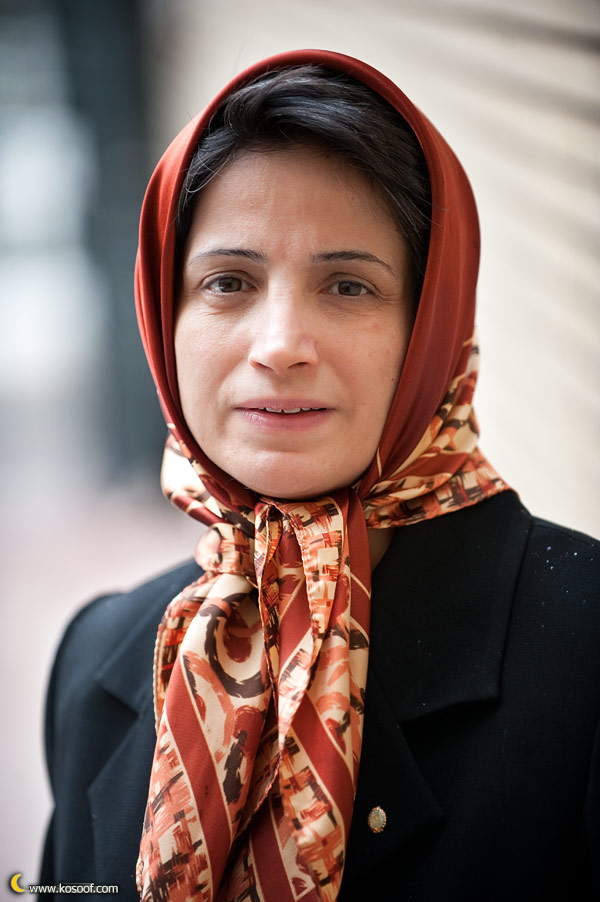
Many media outlets (here the Guardian) reported on Saturday 7 November 2020 that Iran has temporarily released Nasrin Sotoudeh, a prominent human rights lawyer who was jailed two years ago on spying and propaganda charges. Sotoudeh’s release followed warnings last month by human rights groups that her health had severely deteriorated after she staged a six-week hunger strike to demand the release of political prisoners and rights activists.
“Nasrin Sotoudeh … went on furlough with the agreement of the assistant superintendent of the women’s prison,” the judiciary’s Mizan news agency said, without giving further details.
Sotoudeh, 57, who has represented opposition activists including women prosecuted for removing their headscarf, was arrested in 2018 and charged with spying, spreading propaganda and insulting Iran’s supreme leader.
Sotoudeh has been recognised widely with seven major human rights awards.
Front Line Defenders has released the fourth edition of the monthly digital magazine, Cypher <http://www.frontlinedefenders.org/cypher> , featuring stories of the 2020 Front Line Defenders Regional Award Winners – HRDs from Mauritania, Sri Lanka, Colombia, Armenia and Iraq.
If you are interested in an annual subscription to receive printed editions of Cypher, please email campaigns@frontlinedefenders.org, with ‘Subscription’ in the subject line, and you will be sent more information about options.
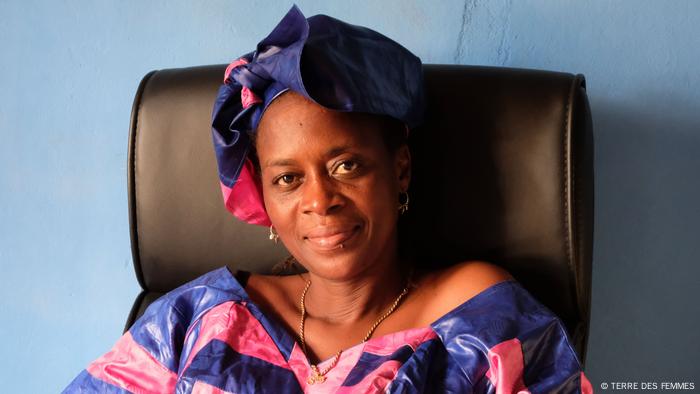
When Rugiati Turay was 12, she was taken to an aunty together with her three sisters and a female cousin.
“We were told it was just a visit,” Turay, now 47, recalls. “But I was grabbed and blindfolded and taken to a room. Women sat on me and held me down.”
Turay’s clitoris was then cut off. She still remembers the pain.
“I bled excessively and I almost lost my life. For one week, I could not walk,” Turay told DW. “All I knew was just the pain and the bleeding.”
Like Turay, some 90% of women and girls in Sierra Leone undergo female genital mutilation, or FGM. It is a cultural practice that involves the partial or total removal of the female genital organs, such as the clitoris or labia.
In Sierra Leone, the cutting is part of the initiation into secret women’s societies, known as Bondo, that prepare girls for marriage and motherhood.
When she was cut as a girl, Turay didn’t have the knowledge to express what had happened to her. She just knew it was wrong, she said in a telephone interview from Lunsar, a town some 120 kilometers (74 miles) from the capital, Freetown. Rugiatu Turay works to persuade traditional practitioners to lay down the tools used to cut girls
“I started talking to my friends, explaining to them what I went through,” she said. “Because we were all eager … to become members of the Bondo society. But when I experienced what I experienced, I thought it is high time to talk to others and not to be fooled.”
More than a decade later, Turay found herself in Kalia refugee camp in Guinea, where she had fled Sierra Leone’s civil war that raged from 1991 to 2002. In the camp, she was shocked that amid the hardship and insanitary conditions of the camp, mothers were still organizing for their daughters to be cut.
That was the moment when Turay, who had trained and worked as a teacher before fleeing the fighting, started on her journey to campaign to stop female genital mutilation in Sierra Leone.
The nation is one of 28 African countries where female genital mutilation is practiced
“I decided [that] we needed to engage these people. They needed to know that we have run away from violence committed to us by people and we are now perpetuating that violence on us,” she said.
In 2000 while still in Kalia camp, Turay founded the Amazonian Initiative Movement (AIM), together with a group of like-minded women, to reduce the incidence of FGM among the refugees.
The name was taken from the “strong and fearless” Amazonian warrior women from Greek mythology, explains Turay, chosen because “looking at the issues I was determined to address and knowing [Sierra Leone] and the people where I came from, I knew it was going to be a rough battle.”
In 2003, when she returned home after the end of the civil war, Turay started up a branch of the grassroots organization in her hometown of Lunsar.
As part of their activities, Turay and other AIM activists visit villages to talk to those involved in FGM, from women and girls, to local chiefs and imams. They also seek out the soweis, the traditional cutters, who earn a living from the practices. They seek to convince them to stop cutting and look for alternative livelihoods for these women. AIM has held several public ceremonies involving hundreds of soweis who have vowed to lay down their knives and razor blades.
It has also held a large alternative rites of passage lasting for 14 days to replace the traditional Bondo bush ceremony that girls usually pass through during initiation but without the cutting.
As well as running a safe house for girls fleeing from FGM and other violence such as forced marriage, AIM has built a school that includes a curriculum teaching about cutting.
Turay’s work hasn’t been easy. Initially, she couldn’t even rent a building for AIM as no one wanted to have anything to do with an anti-FGM organization. Luckily, her father supported her efforts, turning over his own house to use as her office.
She, and others involved in the organization, have also faced numerous death threats as well as being banned by the village chief – something Turay says has only hardened her resolve.
“When you threaten me and say you’ll kill me, I come back and I engage you,” she said.
“I ask, ‘Why do you really want to kill me? Tell me, what have I done? Have I killed anyone? No, I want to change your beliefs that are not progressive, that have killed so many people, that have kept others quiet but suffering in silence’.”
And so I use those threats and I talk to the leaders of the secret society and I engage them.”
Because of coronavirus travel restrictions, Turay will attend the awards ceremony on October 24, 2020 virtually. Turay was nominated by the German women’s rights organization, Terres des Femmes, for the award.
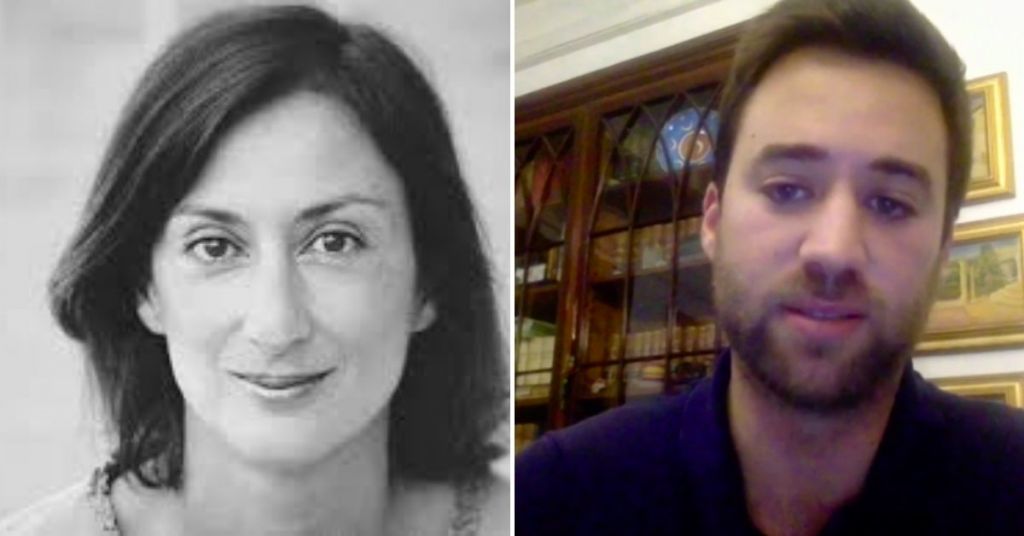
On 21 October 2020 assassinated Maltese journalist Daphne Caruana Galizia was posthumously awarded the 2020 Allard Prize for International Integrity, a prestigious global prize for people who demonstrate exceptional leadership and courage in protecting human rights. For more on this prize see: https://www.trueheroesfilms.org/thedigest/award/1f084460-a5ea-11e7-8132-af7bdbf76e65
Caruana Galizia was co-awarded the prize last night along with Howard Wilkinson, the man who blew the whistle on the Danske Bank money laundering scandal.
Both Caruana Galizia and Wilkinson were awarded $50,000 prizes and the assassinated journalist’s family has dedicated their prize money to the Daphne Caruana Galizia Foundation.
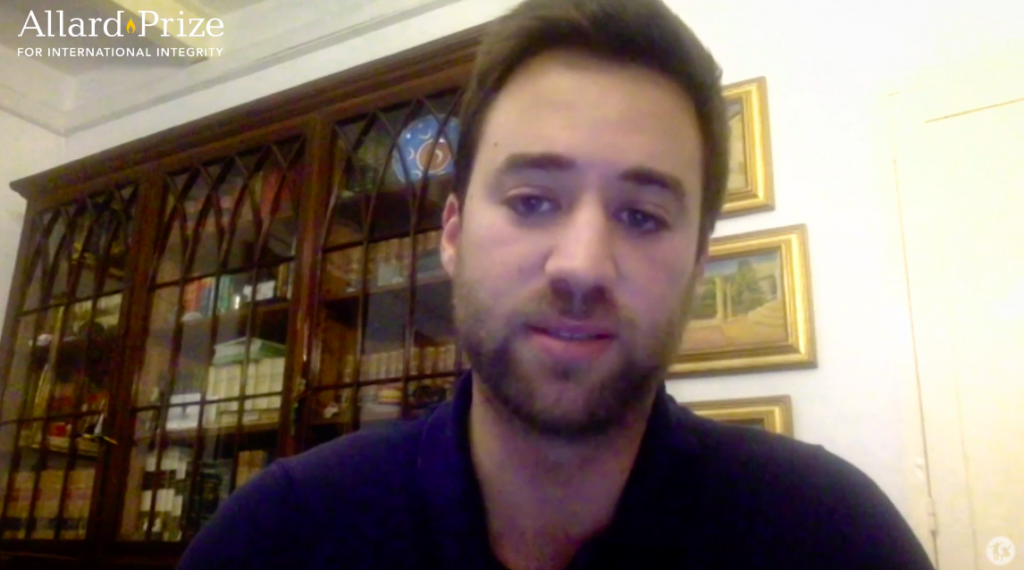
Andrew Caruana Galizia virtually accepts the prize on his late mother’s behalf
Virtually accepting the prize on his late mother’s behalf, Andrew Caruana Galizia said that such prizes shouldn’t be viewed as frivolous but crucial in ensuring the fight for justice lives on. “We know there’s a connection between remembering and justice. If we forget the people who were murdered, the human rights activists and journalists who lost their lives fighting for our right to know, to live in a democracy and enjoy other rights, then no one will remember to fight for justice.”
Co-winner Howard Wilkinson blew the whistle on the largest money laundering scheme in history, worth at least $230 billion, while acting as the head of Danske Bank’s trading unit in the Baltics. On September 19, 2018, news broke of the money laundering scheme that moved rubles out of Russia, converted them to dollars at the Estonian branch of Danske Bank, and then moved the dollars to New York with the assistance of three correspondent banks (Bank of America, J.P Morgan, and Deutsche Bank). Danske Bank admitted all of its internal controls designed to prevent money laundering had failed. The bank revealed that the scheme had been reported to the bank’s highest levels by a whistleblower over four years before. The whistleblower’s identity was required to be secret. But it took only days for Wilkinson’s name to leak out.
The Allard Prize website states: “Despite the considerable risk to himself and his family, Wilkinson testified before the European Parliament and advocated for greater protections for whistleblowers and a new regulation model that encourages greater transparency. The scandal led to numerous investigations and criminal charges across Europe, Danske’s CEO’s resignation, and Danske’s Estonian branch’s closing.”
When accepting the award, Wilkinson said, “Whistleblowers are the most loyal employees at all. The whole point of whistleblowers is to make things better.”
Wilkinson was profiled by Whistleblower News Network as its “Whistleblower of the Week” weekly feature on October 19.


 Hans Thoolen on Human Rights Defenders and their awards