The Rafto Prize 2023 is awarded to Defence for Children International-Palestine (DCIP) for their persistent work to defend and promote the rights of children living in the Occupied Palestinian Territory (OPT). For over 30 years, DCIP has investigated, documented and pursued accountability for grave human rights violations against children; held Israeli and Palestinian authorities accountable to universal human rights principles; and advocated at the international and national levels to advance access to justice and protection for children.
“By awarding the Rafto Prize to DCIP, the Rafto Foundation wants to shine a spotlight on their work to promote and defend children’s rights,” said Jostein Hole Kobbeltvedt, executive director of Rafto Foundation. “With this award, we want to support DCIP by putting pressure on international organizations, including the UN, to investigate violations of children’s rights in the OPT and other armed conflicts around the world and demand that these be stopped.”
“Our human rights documentation and evidence-based advocacy exposing Israeli forces’ grave violations against Palestinian children have made us a target of the Israeli government for years,” said Khaled Quzmar, General Director at DCIP. “But we will not back down. We are grateful for the Rafto Foundation’s recognition of the necessary human rights work my colleagues and I carry out to defend and protect Palestinian children.”
DCIP is an independent, local Palestinian child rights organization dedicated to defending and promoting the rights of children living in the West Bank, including East Jerusalem, and the Gaza Strip. Since 1991, DCIP has investigated, documented, and exposed grave human rights violations against children; provided legal services to Palestinian children in urgent need; held Israeli and Palestinian authorities accountable to universal human rights principles; and advocated at the international and national levels to advance access to justice and protection for children.
Israeli Minister of Defense, Benny Gantz, designated DCIP and five other Palestinian human rights and civil society groups as “terrorist organizations” on October 19, 2021, pursuant to a 2016 Israeli law. The designation effectively criminalized the activities of these organizations and authorized Israeli authorities to close their offices, seize their assets, and arrest and jail their staff members.[see also: https://humanrightsdefenders.blog/2021/10/23/assault-by-israel-on-palestinian-human-rights-ngos/]
Eddy Wax in Politico of 14 September 2023 reported that the far-right political group in the European Parliament nominated tech billionaire Elon Musk for the EU’s top human rights award. The Identity and Democracy (ID) grouping, which includes members of European Parliament tied to France’s Marine Le Pen and Italy’s Matteo Salvini, put Musk’s name forward, according to a document sent to MEPs on September 14 and seen by POLITICO. An ID official confirmed to POLITICO its decision to nominate Musk.
ID cited Musk’s decision to release the so-called Twitter Files, which consisted of selected internal documents over how the social media platform handled requests to remove political posts. This amounts to a defense of the principle of freedom of expression, ID argued.
Musk is highly unlikely to receive the accolade as the President of the Parliament Roberta Metsola and the leaders of all political groups will select the winner together later this year.
The Greens have nominated Ugandan climate activist Vanessa Nakate, while the right-wing ECR group put forward Nino Lomjaria, a public defender in Georgia who stood up to Russian interference. The Left proposed three women’s rights activists.
Human rights advocates and human rights defenders, including Nobel laureate Muhammad Yunus, are being intimidated and harassed through legal proceedings, said the Office of the High Commissioner for Human Rights (OHCHR).
UN High Commissioner for Human Rights Volker Türk calls on the Bangladeshi authorities to create a safe and enabling environment for human rights defenders and other civil society representatives to carry out their essential work for the welfare and protection of all people in Bangladesh.
“Yunus has faced harassment and intimidation for almost a decade. He currently faces two trials that carry potential prison sentences – one on charges of violating labour laws, the second for alleged corruption,” said media briefing notes on Tuesday 5 September 2023. [see: https://www.trueheroesfilms.org/thedigest/laureates/6DBC0C10-C787-488A-9063-6875D17FF051]
“While Yunus will have the opportunity to defend himself in court, we are concerned that smear campaigns against him, often emanating from the highest levels of government, risk undermining his right to a fair trial and due process in line with international standards.
The OHCHR media briefing further said the legal harassment of civil society leaders, human rights defenders and other dissenting voices, is a worrying sign for civic and democratic space in Bangladesh. “These cases also represent an important test for the independence of the judiciary in Bangladesh.”
The High Commissioner urges the judicial authorities to ensure the most rigorous review in these cases to ensure that rights to due process and fair trial are strictly and consistently applied.
The OHCHR high commissioner further said, “We are also studying closely the new Cyber Security law which has been presented to parliament to replace the problematic Digital Security Act. The new law will replace imprisonment with fines and increase the scope for bail for several offences, but it is very important that parliament address the remaining concerns to prevent any further arbitrary use of the law to suppress freedom of expression.”
Nominees must be established, nongovernmental, publicly supported charitable organizations. U.S. Internal Revenue Service tax-exempt status—or the equivalent for international organizations—will determine eligibility. (International nominees will be contacted by the Foundation for appropriate documentation.)
Nominees must be legally established for at least five years in order to be considered.
Nominees must have their own audited financial statements for at least five years.
Nominees must have expenditures greater than U.S. $750,000 in their most recent audited fiscal year of operation
The nomination letter should emphasize the organization’s accomplishments rather than future goals. Both historic and recent performance should be addressed. Following are elements to consider in describing your nominee’s work:
Extraordinary contributions toward alleviating human suffering.
Significance of the issue(s) the organization is addressing.
Established record of achievement in significantly contributing to solutions.
Demonstration of a compelling programmatic approach to make a lasting impact.
Organizational capacity and administrative efficiency to address the issue(s) at hand.
Prioritization of diversity, equity and inclusion in strategies, programs and operation.
Demonstration of effective partnerships to leverage further impact.
Prioritization of evaluating programmatic approach for continual improvement.
Impact the Prize would have on the organization and the issue(s) on which the organization focuses.
The closure of the human rights group is seen as part of the Kremlin’s campaign to crack down on liberal-leaning organizations that challenge official narratives, including those about Moscow’s military campaign in Ukraine.
Moscow City Court said in a statement that it had decided to liquidate the Sakharov Center at the request of the Justice Ministry for illegally hosting conferences and exhibitions.
Since its creation in 1996, the group has hosted hundreds of debates, exhibitions and other events. In 2015, thousands of people gathered there to pay their last respects to opposition politician Boris Nemtsov, who was murdered near the Kremlin walls.
Authorities declared the group a “foreign agent” in 2014 and this year ordered the eviction of the center from its premises.=
On 4 August 2023, Jaxx Artz in Global Citizen explains the Stand As My Witness’ campaign:
Stand As My Witness was created in response to a growing trend in which civil society actors were arrested for their human rights work. Formerly known as Civil Society Behind Bars, the initiative is one of CIVICUS’ most effective strategies when it comes to sounding the alarm about the plights faced by HRDs around the world. According to the global alliance, hostile government actors and authoritarian regimes often use flawed legal processes with little oversight in order to prosecute activists. “[There are targeted attacks] against people uncovering high-level corruption, exposing very serious human rights violations, calling for accountability, and seeking to drive change in their societies,” Mandeep Tiwana, chief programs officer at CIVICUS, told Global Citizen.
As part of the campaign’s goal to spread awareness about some of the world’s imprisoned activists, CIVICUS profiles a handful of detained HRDs on their website. In actuality, these names and cases represent just a small percentage of people who are currently in prison because of their activism, and whom CIVICUS is trying to get released.
As the global conditions for civic society worsen — with only 3.2% of the world’s population living in countries where civic space is considered open, according to the international global alliance CIVICUS — human rights defenders (HRDs) like al-Khawaja increasingly face the risk of government retaliation.
“The detention of HRDs is often arbitrary and a form of reprisal for the work [they] do,” David Kode, advocacy and campaigns lead at CIVICUS, told Global Citizen. “Take al-Khawaja, for example, who has been in prison since 2011 and is serving a life sentence. Despite many advocacy efforts, the Bahraini authorities seem to be bent on ‘punishing’ him and his family for calling for democratic reforms more than a decade ago.”
Made up of civil society organizations and activists across more than 175 countries, CIVICUS has been campaigning on behalf of HRDs since its founding in 1993. As part of their work, the Stand As My Witness campaign — launched over 10 years ago — has sought to encourage investigations into unlawful imprisonments and bring global attention to cases like al-Khawaja’s.
CIVICUS has found that the tactics used to target HRDs are eerily similar across national borders and, over the years, the trends have only become more apparent and concerning.
“[The imprisonment of HRDS] is often preceded by stigmatization about their work, which includes branding activists as security risks. We saw this happen a lot after the [Arab Spring] in the Middle East and North Africa in 2011,” Tiwana said. “A lot of authoritarian regimes became fearful of people organizing and coming out into the streets to engage in civil society.”
To limit public support of pro-democracy movements and ostracize activists from society, government officials may twist the narrative surrounding an HRD’s arrest and accuse them of being spies for other nations. They may also invoke counter-terrorism or security legislation to pressure judges and quickly detain organizers or protestors without arrest warrants.
Take Khurram Parvez, an HRD from Northern India who was arrested in 2021 on charges of conspiracy and terrorism, for example. Parvez’s work documenting human rights violations — which include instances of disappearance, torture, and unlawful killing — in the Jammu and Kashmir region of India caught the attention of Indian authorities who wanted to silence his advocacy work.
CIVICUS currently advocates on behalf of Parvez through various strategies, such as raising concerns about his detention with the UN, holding meetings with diplomats in India, and encouraging the Human Rights Council in Geneva to put pressure on Indian officials to release him.
“We continue to raise concerns about his detention on social media, telling his story as a human rights defender and highlighting the gaps left by his detention in relation to the amazing work he does promoting human rights in Kashmir and supporting those who are forcibly disappeared in Asia,” Kode told Global Citizen.
In recent years, environmental activists and Indigenous land defenders have faced the brunt of the attacks as corporations file lawsuit after lawsuit restricting the right to protest, leading many activists to face house arrest, financial ruin, or imprisonment.
How Does Stand As My Witness Help Imprisoned HRDs?
Despite the myriad challenges that HRDs and civil society organizations face in their day-to-day work, CIVICUS’ Stand As My Witness campaign has been able to raise the profile of many activists who have been unjustly imprisoned.
CIVICUS and other human rights organizations were able to mount an international campaign to bring attention to the years-long persecution faced by al-Hathloul and other women activists. The hashtag #FreeLoujain popped up across social media platforms, with global citizens around the world speaking up to urge Saudi Arabian authorities to release al-Hathloul.
The Stand As My Witness campaign relies on advocacy efforts from every part of civil society — when Global Citizens take action, for example, their voices can put an immense amount of pressure on world leaders.
“Hostile governments may have [HRDs] locked up for years, and it takes a concerted effort from relevant agencies, state actors, non-state actors, organizations, civil society, the media, and others to put enough pressure that leads to their release,” Tiwana said. “But justice often moves very slowly.”
One of the biggest challenges CIVICUS experiences with the Stand As My Witness campaign is engaging people during the life cycle of a case, which can often last several years. To fight against indifference, CIVICUS encourages Global Citizens everywhere to pay attention to the humanity of each activist who has dedicated their lives to the realization and protection of human rights.
You can get involved with the Stand As My Witness campaign by engaging with CIVICUS on social media, writing letters to government officials, and sharing information about HRDs who are not currently represented on CIVICUS’ interactive map.
You can also demand that governments release HRDs from unjust imprisonment by taking action with Global Citizen on civic space issues.
On 10 August 2023 Matthew Ogune of the Nigerian Guardian reported that Nigerian lawyer and human rights activist, Oluwafunke Adeoye, has emerged as one of the winners of the 2023 Waislitz Global Citizen Awards, with a prize money of $75,000. Adeoye is the founder of Hope Behind Bars Africa.
Adeoye was officially announced as a winner in the 2023 edition by the global body. The honour makes her the first individual working in the Criminal Justice sector to win this global award.
The Waislitz Global Citizen Awards are annual cash prizes totaling $250,000 that recognize the excellence of individuals in their work to end extreme poverty. The grand prize is $100,000 with two additional prizes at $75,000 each, for a total of three prizes. The awards are presented by the Waislitz Foundation and Global Citizen, and supported by the US and Australian based cellular medicines company, Mesoblast Ltd. and Unico Capital Holdings.
“Ending extreme poverty is not a choice, it’s an obligation. My hope is that it will inspire many thousands of people around the world to do what they can to improve the living standards of those in dire need,” Chairman and Founder of the Melbourne-based Waislitz Foundation, Alex Waislitz.
The Waislitz foundation exists to create a positive social impact locally and globally through innovative projects that empower individuals to meet their full potential and make a measurable difference to the world.
According to the global body, the Nigerian born lawyer has over the years helped in providing free legal services and direct support to indigent incarcerated people, while promoting criminal justice reform through research, advocacy and technology.
Reacting to the award in a statement on Wednesday in Abuja, Adeoye said she was inspired to begin the initiative in 2018, after some personal encounters with the justice system, including one where her father was arrested and detained for a crime he did not commit several years ago.
The organisation closes the justice gap by providing free legal services and direct support to low-income incarcerated individuals while promoting criminal justice reforms through research, evidence-based advocacy, and technology. Over 7,000 incarcerated individuals have benefitted from their interventions.
With the award, Adeoye plans to fully launch Justicepadi, a tech platform that will revolutionise legal aid in West Africa and also expand her work for climate justice.
“It is crucial for people to understand that behind the labels of ‘convicts’ or ‘prisoners’, there are human beings with stories, hopes, and dreams. By offering legal aid, we strive to ensure that every person, regardless of their circumstances, has access to fair representation and a chance to rebuild their lives,” Adeoye said.
The other winners of the award are: Peter Njeri and Esther Kimani, both Kenya citizens. They were named 2023 Waislitz Global Citizen Award winner and the Waislitz Global Citizen Disruptor Award winner respectively.
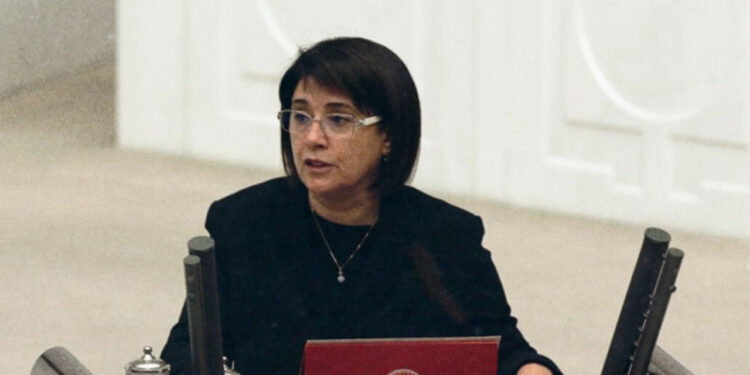
Leyla Zana, a renowned Kurdish politician and human rights activist, and the first Kurdish female member of the Turkish parliament, will face prosecution on 7 September 2023, with her international awards being cited as “criminal evidence” in the indictment.
Former Member of Parliament Leyla Zana is due to stand trial in a Turkish court on 7 September 2023, facing accusations of “terrorist propaganda” in her speeches and charges of accepting international awards, deemed as “crimes” under Article 325/1 of the Turkish Penal Code. The penal code article, titled “Acceptance of Titles and Similar Honours from the Enemy,” stipulates that a citizen who accepts academic degrees, honours, titles, medals, or other honorary ranks from a state at war with Turkey could face imprisonment from one to three years.
Zana’s lawyer, İbrahim Çeliker, has questioned the basis of the charges, asking, “Which awards received by Ms. Zana could be a source of crime? Which country has Turkey declared war on? These need to be clarified. The awards in question that Ms. Zana received are awards given from European countries and America on human rights,” Çeliker stated. [see: https://www.trueheroesfilms.org/thedigest/laureates/82F7AAA5-88D1-47E8-8B62-4EBC66D1602D]
Zana is internationally recognised for her human rights work and political activism. Her accolades include the Thorolf Rafto Memorial Prize, the Sakharov Prize for Freedom of Thought, the Aachen Peace Prize, the Bruno Kreisky Prize, and the Freedom Medal by the American Human Rights Association. One should add the Juan Maria Bandres Prize for Human Rights and Refugee Protection in 2008. She has also been awarded the Silver Medal of the City of Paris and has been recognised as an “Honorary Citizen” by the cities of Paris and Geneva.
The indictment also implicates pro-Kurdish Democracy Party (DEP) former MP Orhan Doğan and Vedat Aydın, the People’s Labour Party (HEP) Diyarbakır (Amed) Provincial Chairman who was killed in 1991, citing their participation in memorial programmes as criminal. Çeliker responded to this, stating, “The prosecutor considers Orhan Doğan and Vedat Aydın as members of the PKK [Kurdistan Workers’ Party]/KCK [Kurdistan Communities Union]. He sees the mention of these names as a criminal element. However, Orhan Doğan is a Kurdish politician who spent years in prison with Leyla Zana and served as an MP. Vedat Aydın is a Kurdish intellectual who fell victim to an unsolved murder.”
Çeliker also emphasised that the indictment targets freedom of speech, stating, “The main point that the prosecutor focuses on is Ms. Zana’s speaking in Kurdish. There is a special clause in the indictment about her speaking in Kurdish. He emphasises this as a fault and evidence of the alleged crime; the crime of making terrorist propaganda. There are expressions picked out from speeches made in the fields of peace, brotherhood, and democracy … Ms. Zana has never praised violence, she has fought for peace to come, she is a politician who has paid the price.”
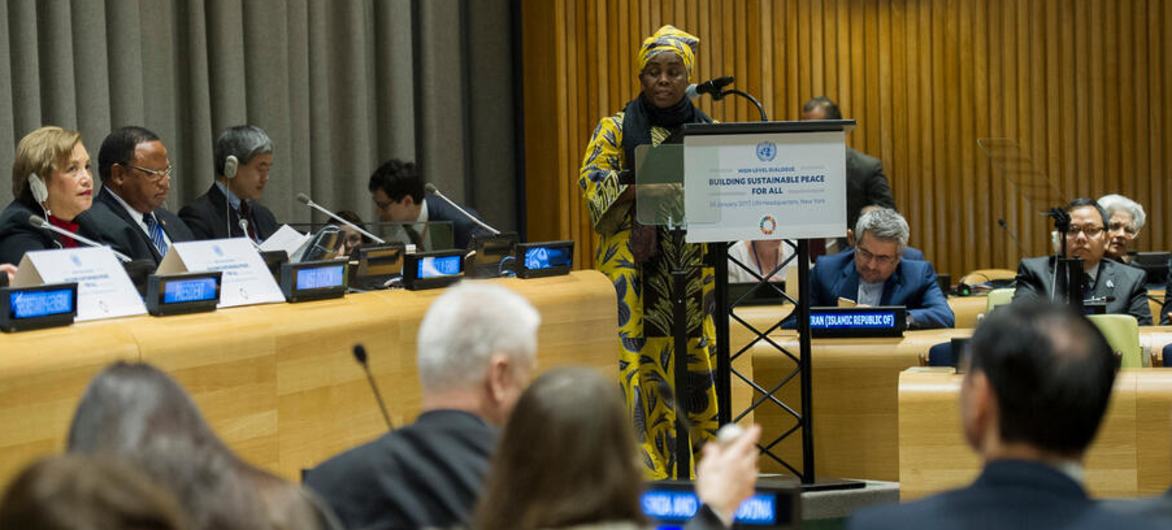
Julienne Lusenge, one of the 2023 UN Human Rights Prize winners, speaking at the General Assembly high-level dialogue on “Building Sustainable Peace for All” earlier this year. UN Photo/Manuel Elías
On 20 July 2023 the President of the General Assembly Csaba Kőrösi announced the winners of the United Nations Prize in the Field of Human Rights for 2023.
This year’s winners were the Human Rights Center “Viasna”, based in Belarus, Julienne Lusenge from the Democratic Republic of the Congo [see also: https://humanrightsdefenders.blog/2021/10/11/congolese-julienne-lusenge-wins-1-million-2021-aurora-prize/], Amman Center for Human Rights Studies from Jordan, Julio Pereyra from Uruguay and the Global Coalition of civil society organizations, Indigenous Peoples, social movements and local communities.
The Committee is chaired by the President of the General Assembly, and its members include the President of the Economic and Social Council, the President of the Human Rights Council, the Chair of the Commission on the Status of Women, and the Chair of the Advisory Committee of the Human Rights Council.
The Office of the UN High Commissioner for Human Rights (OHCHR) provided support to the special committee. The award ceremony for the 2023 Prize will take place at UN Headquarters in New York in December 2023, as part of activities to commemorate Human Rights Day.
The members of the Special Committee also acknowledged the important role played by human rights defenders and activists, praising them for their courage and dedication while strongly condemning any attempts to “silence and intimidate” them.
They expressed solidarity with those who are detained in retaliation for their work in defending human rights and pursuing the implementation of all the provisions of the Universal Declaration of Human Rights, marking it’s 75th birthday this year.
Currently living in exile in Switzerland, Luon Sovath finds himself in urgent need of financial support to cover his mounting medical bills.
Venerable Luon Sovath, a Buddhist monk since the age of 9, documented land grabs of vulnerable villages by big businesses in Cambodia before joining the movement for democracy, freedom, and governmental accountability in his country. His documentation work won him international recognition, including the Martin Ennals Award for Human rights defenders in 2012.
However, the journey towards justice has taken its toll on Luon Sovath, both physically and emotionally. He was forced to leave Cambodia in 2020 to escape government persecution. Currently living in exile in Switzerland, he finds himself in urgent need of financial support to cover his mounting medical bills. A recent dental procedure left him with a large invoice of 2,000.00 CHF, a burden that he cannot shoulder alone.
Luon Sovath has saved 900.00 CHF towards his medical expenses. However, he still requires further support to bridge the remaining financial gap and ensure that he receives the necessary healthcare to regain his strength.
Luon Sovath’s advocacy empowered marginalized communities and shed light on the injustices they face. His commitment to non-violence and his use of mediums such as videos, poems, and songs inspired thousands of other Cambodians to join the movement for democracy. Luon Sovath’s struggle is not only his own but a collective fight for justice and dignity.
On 21stJune 2023, The Martin Ennals Foundation decided to step in and organised this fundraiser for him.
If each of us makes a small contribution, we can help alleviate the burden of his medical bills and enable him to continue his crucial work in defending the rights of those who have been silenced. Together, we can make a difference in the life of this remarkable individual who has given so much to others.
Give CHF20 and be a founding donor
Your donation is the start of Martin Ennals Foundation’s journey to success. Your early support inspires others to donate.





 Hans Thoolen on Human Rights Defenders and their awards