Posts Tagged ‘state of emergency’

Meet lawyer Dennis Muñoz, human rights defender in El Salvador

October 31, 2023

The Christian Science Monitor of 30 October 2023, tells the story of attorney Dennis Muñoz who seeks to uphold human rights in El Salvador, despite increasingly difficult and dangerous odds.
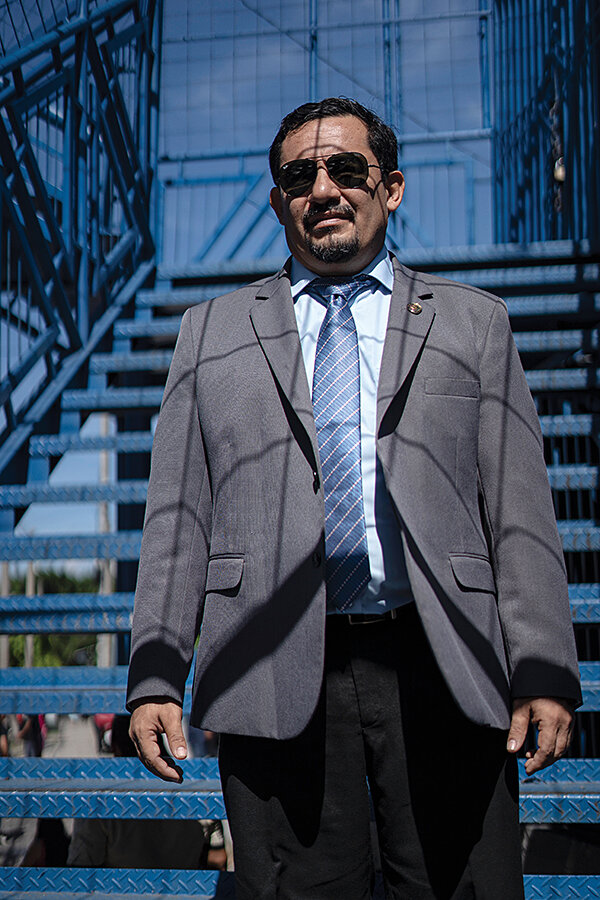
Víctor Peña/Special to The Christian Science Monitor

Mr. Muñoz found a way to channel his deep-seated desire for justice by becoming a lawyer in 2005. But he doesn’t work with just anyone – he goes for the tough cases of human rights abuses. He has defended multiple women who suffered miscarriages but were accused of murder in a nation where abortion is banned without exception. He has fought arbitrary arrests of environmentalists, activists, and average citizens. He could be called a defender of lost causes.

There’s no shortage of demand for Mr. Muñoz’s work in El Salvador, which has the highest incarceration rate in the world. And these days the risks of his work are almost as high as the demand for it.

In March 2022, a monthlong “state of exception” was enacted in response to extreme gang violence. The order suspended basic constitutional rights for those arrested under it. Securing a court warrant before searching private communications was no longer required, for example, and arrestees were barred from their right to a defense attorney and their right to see a judge within 72 hours. 

But what started as an emergency measure has become ordinary practice. The state of exception has been extended every month for more than a year and a half now, with no end in sight. Violence has declined dramatically, but critics say the order’s extreme powers are seeping far beyond the gang-related arrests they were meant to address. Even those detained outside of the state-of-
exception category are having their rights suspended. 

That’s the group Mr. Muñoz focuses on. While he has taken a few state-of-exception cases, he primarily works on human rights violations, with the added burden now of his clients getting caught in the emergency order’s crosshairs. Despite death threats and intimidation, he’s not slowing down. Instead, fellow lawyers doing similarly risky work ask him to be on call if – or, perhaps more likely, when – they themselves are arrested. 

… Despite quashing constitutional rights, the move has been overwhelmingly popular for providing a long-elusive sense of calm. 

A tired society, fed up with a lack of answers to the chronic problem of violence, is willing to accept short-term answers,” says Verónica Reyna, director of human rights for the Passionist Social Service, a nongovernmental organization focused on local violence prevention and support of human rights. 

Gustavo Villatoro, minister of justice and public security, acknowledges that the state of exception is affecting more than gang members. Over 7,000 innocent people have been arrested, Mr. Villatoro said in August, noting that some degree of error is inevitable. But the consequences of those errors can be grave. Even if a case has nothing to do with gang activity, lawyers can be blocked from visiting their clients in detention, and court hearings can be suspended. Over 71,000 Salvadorans have been arrested under state-of-exception rules. With 6 million people in El Salvador, close to 2% of the adult population is currently behind bars. And many of them, even those not under the emergency order, lack access to a lawyer and may be tried en masse.

Margaret Satterthwaite, the United Nations special rapporteur on the independence of judges and lawyers, tweeted in May that in El Salvador, “public defenders reportedly have 3-4 minutes to present the cases of 400 to 500 detainees.” She warned that “fair trial rights must not be trampled in the name of public safety.” 

In the last week of July, Salvadoran lawmakers eliminated a previous two-year limit on pretrial detentions and passed reforms to allow mass trials that could bring together 1,000 individuals in a single appearance before a judge.

Maybe they won’t let us be lawyers anymore,” says Mr. Muñoz, “at least not private attorneys with independent criteria.

The reforms have disrupted the whole system and have turned innocence into an exception,” says Ursula Indacochea, program director at the Due Process of Law Foundation, based in Washington. “Presumption of innocence is disappearing because the roles have shifted. The state no longer has to prove I’m guilty, but now I’m guilty and have to prove I’m innocent,” Ms. Indacochea said in a Sept. 7 radio interview in El Salvador. 

Of the 35,000 authorized lawyers registered in El Salvador, Mr. Muñoz stands out for almost exclusively taking cases of human rights violations.

“Things aren’t easy right now,” he says, describing the justice system as “made to convict.” The government is “criminalizing the job of lawyers,” he adds.

Yet Mr. Muñoz looked anything but cautious at a press conference in early July, where he was the only person wearing a suit at the San Salvador offices of the Christian Committee for Displaced People in El Salvador, a wartime human rights organization. He headed to the podium in the ample room, sparsely decorated with pictures of St. Óscar Romero, the archbishop of San Salvador murdered by right-wing death squads in 1980. 

Mr. Muñoz discussed openly a forbidden topic. Five environmentalists were arrested in January over the alleged 1989 murder of a Salvadoran woman during the war. The case was under a court-issued gag order.  

It’s very serious that environmentalists are being unjustly accused, bending [what are considered] the rules of due process anywhere in the world,” Mr. Muñoz said, staring into the cameras.

His clients in this case are former guerrilla members, and two of the accused are part of the Association of Economic and Social Development Santa Marta, known as ADES. One of the country’s oldest environmental organizations, ADES was key in achieving the total ban on mining here in 2017. In a country where almost the entirety of war crimes remain unresolved and defendants in active cases are rarely imprisoned, the arrest of these men was an outlier, apparently due to their vocal criticism of the government. The U.N. called for the activists’ immediate release. 

“Dare I say there are crimes being committed against these environmentalists,” Mr. Muñoz said before the media. “It’s nefarious that things like this happen in a country that calls itself democratic but really has a criminal injustice system in place.” 
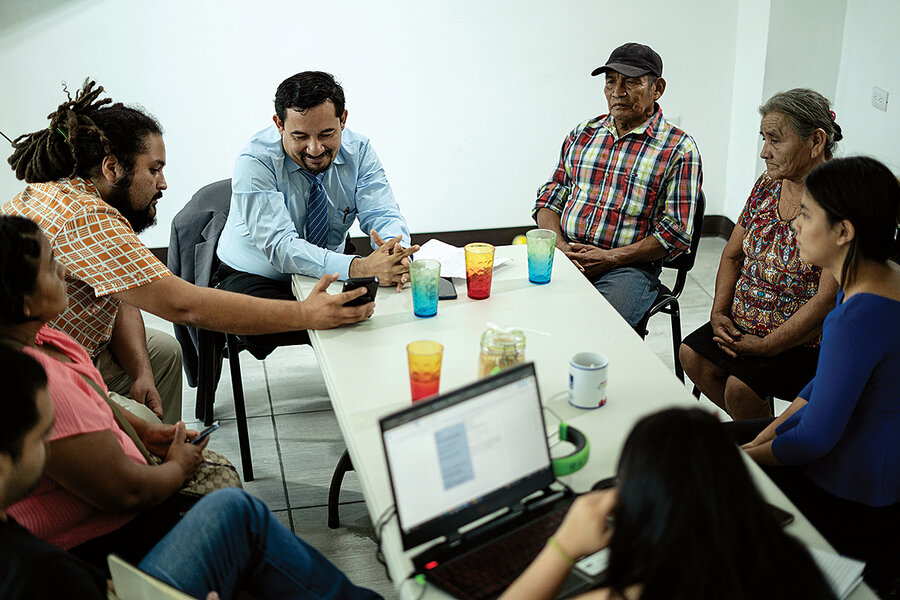
Víctor Peña/Special to The Christian Science Monitor

By late August, Mr. Muñoz had successfully convinced a judge to grant an order for his clients’ release. “It’s a crumb of justice, but we shouldn’t celebrate until there’s a dismissal of proceedings,” he said at a later press conference.

It’s hard to reconcile this image of seeming fearlessness with Mr. Muñoz’s request when the Monitor approached him for an interview: Could the piece leave out his last name? The question reflects a sense of fear that has built up over many years of doing this work. 

Mr. Muñoz downplays receiving death threats, normalizing the culture of violence he’s lived under for most of his professional life. “They say they wish that I was extorted or killed because of the people I’ve defended,” he says about the social media threats. He thinks he’s been able to stay off the political radar by censoring his opinions. “I issue legal and technical opinions,” he explains. “Other colleagues have entered the political arena and expose themselves more to attacks.” 

https://www.csmonitor.com/World/Americas/2023/1030/Meet-Dennis-Munoz-defender-of-lost-causes-in-El-Salvador

Proliferation of Human Rights Bodies’ Guidance on COVID-19

May 27, 2020

On 22 May 2020 in “Just Security” [see: https://www.justsecurity.org/about-us/) published a post ” Mapping the Proliferation of Human Rights Bodies’ Guidance on COVID-19 Mitigation “. It is in some ways rather critical of the response by intergovernmental bodies in the human rights area when it comes to the COVID-19 pandemic. It starts by pointing out that they have collectively put out more than 150 statements on respecting human rights during the pandemic since late February. ..To help those interested in keeping track of the many statements, the International Justice Resource Center (IJRC) has published a webpage – COVID-19 Guidance from Supranational Human Rights Bodies – listing and linking to all relevant press releases and other guidance. This article serves to provide an overview of – and initial response to – the nature, scope, and sources of human rights advice available to States in the context of the pandemic. Having myself contributed with my blog to the proliferation of policy repsonse by NGOs and IGOs, I feel that this piece deserves full citation:

Read the rest of this entry »

Special Rapporteur on Human Rights Defenders in Africa issues press statement

May 13, 2020
African Commission on Human and Peoples’ Rights

On 1 May 2020 the Special Rapporteur on Human Rights Defenders and Focal Point on Reprisals in Africa, Rémy Ngoy Lumbu, expresses concern following reports of reprisals against human rights defenders and civil society in Africa and the adverse effects that national responses of States Parties to combat the COVID-19 pandemic have on their work. [please note that Africa has a regional rapporteur, not to be confused with the UN Secial Rapporteur on HRDs, Mary Lawlor (https://humanrightsdefenders.blog/2020/05/07/mary-lawlor-takes-up-post-as-un-special-rapporteur-for-human-rights-defenders/)]:

In the context of this COVID-19 global pandemic, the role of human rights defenders has become ever more important to safeguard the fundamental human rights enshrined in the African Charter on Human and Peoples’ Rights (African Charter). The Rapporteur notes, in particular, serious violations of the freedom of assembly and association, as enshrined in the African Charter and the UN Declaration on Human Rights Defenders.

The Rapporteur deplores the fact that, notwithstanding the press releases of the African Commission on Human and Peoples’ Rights of 17 and 24 March 2020 encouraging States to ensure compliance with the provisions of the African Charter and advocating for effective and human rights-based responses to curb the spread of the COVID-19  pandemic in Africa, several human rights defenders continue to be detained in overcrowded or unsanitary prisons and other detention centres without being charged, and this makes them especially vulnerable to COVID-19 infection.

The Special Rapporteur stresses the obligation of States Parties to ensure that measures adopted within the framework of COVID-19 national responses are not used as an opportunity to discriminate against, stigmatize or target particular individuals or groups, including civil society organizations and human rights defenders.

The Special Rapporteur would like to remind that efforts deployed by States Parties to curb the spread of COVID-19 in their respective territories should not result in the silencing of human rights defenders and should comply with the provisions of the African Charter. The Special Rapporteur would also like to call on human rights defenders to continue, with determination, their activities to promote and protect human rights in compliance with the laws and regulations adopted in the context of this global threat.

The Special Rapporteur urges States Parties to:

  1. Ensure that national responses to the COVID-19 pandemic do not lead to the targeting or undue interference with the work of human rights defenders;
  2. Refrain from using COVID-19 related emergency declarations to justify the adoption of repressive measures against specific groups such as human rights defenders;
  3. Also refrain from adopting measures that restrict civic space and contribute to creating a hostile environment for human rights defenders;
  4. Ensure that human rights defenders can communicate freely without fear of reprisal;
  5. Take all necessary measures enabling human rights defenders to conduct their core activities, in particular, those providing support to the most vulnerable populations, while complying with the health measures necessary to combat COVID-19; and
  6. Promptly release human rights defenders detained without charge.

https://www.achpr.org/pressrelease/detail?id=496

Joint NGO statement on civil and political rights at First Virtual Informal Dialogue with the UN High Commissioner for Human Rights on COVID-19

April 15, 2020

In the context of policy response by Human Rights NGOs to COVID-19 this joint statement should not be missing: On 9 April 2020 Reliefweb published the Joint NGO statement on civil and political rights at First Virtual Informal Dialogue with the UN High Commissioner for Human Rights on COVID-19

This joint statement on the protection of civil and political rights in the context of the COVID-19 crisis was delivered on behalf of 33 non-governmental organizations (NGOs) during the first virtual informal briefing with the UN High Commissioner for Human Rights on 9 April 2020. It was delivered in conjunction with a separate joint statement on economic, social and cultural rights (IOR 40/2124/2020).

See also: https://humanrightsdefenders.blog/2020/04/14/un-guidelines-for-use-of-emergency-powers-in-time-of-covid-19-pandemic/

UN Guidelines for use of emergency powers in time of covid-19 pandemic

April 14, 2020
UN Special Rapporteur on Extra-Judicial Executions Agnes Callamard. Photo: Foreign and Commonwealth Office/Wikipedia.

a set of guidelines issued by the UN’s Human Rights’ Committee on Economic, Social and Cultural Rights (CESR), in whcih governments are urged to respect human rights across the spectrum, including economic and social rights, and civil and political rights as this would be fundamental to the success of the public health response.

The announcement shed light on the controversial decision by the Maltese government to close the country’s ports as migrant boats were stranded. The UN said it was aware that governments had to take difficult decisions in light of the coronavirus pandemic, but insisted measures should be proportionate. Emergency powers must be used for legitimate public health goals, not used as a basis to quash dissent or silence the work of human rights defenders or journalists.

This was also highlighted by Agnes Callamard, the UN Special Rapporteur on Extra-Judicial Executions, who said these emergency measures also had to be lifted when these were no longer necessary for protecting public health. People needed to be informed about the emergency measures, where these applied and for how long they were meant to be in effect. “As the crisis passes, it will be important for governments to return life to normal and not use emergency powers to indefinitely regulate day-to-day life, recognizing that the response must match the needs of different phases of this crisis,” the CESC said.

Unfortunately, several governments around the world – and in the EU – have taken advantage of the coronavirus pandemic to implement a series of measures that roll back human rights.

  • As people are being called upon to stay at home, governments must take urgent measures to help people without adequate housing. …The authorities should also take particular care to prevent more people from becoming homeless and implement good practices such as moratoriums on evictions, deferrals of mortgage or loan payments.
  • It was also important to keep in mind people who relied on community and home services to eat, dress and bathe – including people with a disability or the elderly.
  • The guidelines also refer to prisoners and those kept in detention, saying these were at a higher risk of infection in case of an outbreak. Social distancing was difficult to maintain in these places, which had a high risk of contamination. States should “urgently explore options for release and alternatives to detention to mitigate the risk of harm within places of detention,” it said.
  • The document also tackled the issue of migration, saying migrants and refugees also faced “particular risks” as these may be confined to camps and settlements, which might be overcrowded, overstretched and with poor sanitation. “It is also vital that any tightening of border controls, travel restrictions or limitations on freedom of movement do not prevent people who may be fleeing from war or persecution from accessing safety and protection,” the committee said.

This recommendation is the exact opposite of the decision taken by the Maltese government last week to close its ports, making it very clear that it would not be taking any more migrants as a measure to prevent the spread of COVID-19. This announcement came 24 hours after Italy closed all its ports, saying its harbours could not be considered safe. The decision was harshly criticised by more than 20 non-governmental organisations who called on the prime minister to ensure that all persons within Malta’s responsibility were rescued and their safety guaranteed. “The nation cannot quietly celebrate Easter while men, women and children are drowning on our doorstep. Saving lives and ensuring their disembarkation at a safe place is a fundamental legal obligation and also a moral imperative that can in no way be negotiated or renounced,” the NGOs said.

The guidelines called on governments to take “specific actions” to include migrants and refugees in national prevention and response campaigns by ensuring equal access to information, testing, and health care for all, regardless of their status. Earlier this month, the Maltese authorities put the Hal Far open centre under a two-week quarantine after eight migrants tested positive for coronavirus. The decision was slammed by local NGOs who said this would exacerbate the situation where the virus could potentially spread among the 1,000 residents.

On 14 April 2020 Clément Nyaletsossi Voule, the UN Special Rapporteur on the rights to freedom of peaceful assembly and of association, called on States not to use state of emergency declarations during the COVID-19 crisis to impose wholesale restrictions on freedom of peaceful assembly and association, and released detailed Guidelines governments and law enforcement agencies must follow to avoid human rights abuses.

No country or government can solve this health crisis alone and I am concerned about worrying trends and limitations emerging from civil society reports around the world, including on civil society’s ability to support an effective COVID-19 response,” said Clément Nyaletsossi Voule, the UN Special Rapporteur on the rights to freedom of peaceful assembly and of association. “Civil society organisations are key in helping States to frame inclusive policies, disseminate information, and provide social support to vulnerable communities in need,” he said.

In his 10 Guidelines, the expert said that where new laws or regulations are adopted, any limitations on rights imposed must adhere to the principles of legality, necessity and proportionality. Free-flow of information is crucial in times of crisis and laws criminalising ‘false news’, including those targeting human rights defenders, must be avoided. “It is inadmissible to declare blanket restrictions on human rights and fundamental freedoms,” Voule said. “Exemptions should be foreseen for civil society actors, particularly those monitoring human rights, trade unions, social services providing humanitarian assistance, and journalists covering the management of the crisis. “State of emergency does not halt the freedoms of peaceful assembly and of association,” the human rights expert said.

Voule said his Guidelines could help States reassess measures already in place to ensure compliance with their human rights obligations and to take citizens’ demands fully into account.

https://reliefweb.int/report/world/covid-19-restrictions-should-not-stop-freedom-assembly-and-association-says-un-expert

Coronavirus emergency measures must be timely and proportionate

Policy response by Human Rights NGOs to COVID-19: WOLA

April 14, 2020

In the midst of the COVID-19 crisis, many human rights organisations have been formulating a policy response. While I cannot be complete or undertake comparisons, I am giving some examples in the course of these weeks. Here the one by WOLA (the Washington Office on Latin America), as published in Reliefweb of 13 April 2020.

In the midst of the rapidly spreading COVID-19 pandemic in Latin America, saving lives and reducing community transmission of the disease should be the number one priority of governments, international organizations, the business community, and civil society groups. Addressing the virus will require decisive public health interventions grounded in the best available public health recommendations. At the same time, the pandemic is having serious consequences for democracy, equality, and human rights in Latin America. Actions that are taken by governments today will have long-term impact.

Over the years, WOLA has worked with civil society partners in the aftermath of disasters, both natural and man-made. Though this pandemic is unprecedented, the lessons we’ve drawn from those experiences are clear: we cannot wait until the pandemic passes to investigate challenges to human rights, raise questions, and hold governments accountable. Some public health interventions will include infringements on key rights, like restrictions on freedom of movement and assembly. Those should be time-limited and legally grounded restrictions. Other interventions will require significant investment in health care, social safety nets, and community support and action. These should be transparent, equitable, and accountable.

While acting promptly and decisively, governments across the Americas need to protect key values like democracy and human rights.Upholding these values is critical to establishing the public trust and the social cooperation that will be required to combat this public health emergency and to move forward in the future. Otherwise, the fight against COVID-19 will not only lead to ineffective public health responses, but could further fuel anti-democratic and authoritarian tendencies in the region.

Some challenges that WOLA will be monitoring in the Americas include:

Reinforcement of authoritarian tendencies

Many governments have appropriately invoked emergency powers to respond to the crisis—but their implementation has not been without concern. In El Salvador, over 1,200 people have been detained in “containment centers” for violating curfew orders, provoking debate among legal experts about the legality of such measures (the country’s Supreme Court ruled on April 8 that curfew violations do not justify arbitrary detentions by the police and military). In Honduras, the president issued a decree temporarily restricting freedom of speech rights as guaranteed in the nation’s constitution, asserting this was necessary to combat the spread of misinformation related to the pandemic; the move received strong criticism from the Inter-American Commission on Human Rights and the United Nations. In Venezuela, the de facto Maduro government has sought to silence criticism of its response to the pandemic, harassing and detaining journalists who question official statistics.

Emergency powers need to be clearly limited; the role of legislatures and judiciaries in overseeing and reviewing the exercise of executive power should not be indefinitely suspended. These powers and roles are easy to ratchet up and hard to ratchet back down. It’s been a difficult struggle for governments and societies in the hemisphere to overcome the legacy of Cold War-era military dictatorships; backsliding needs to be avoided.

Military engagement in civilian governance

In some countries, militaries will necessarily play an important role in responding to public health emergencies given their resources, surge capacity, off-the-shelf plans, logistical capabilities, and medical facilities…….In a region still struggling to overcome a history of military dictatorships, any deployment in the current crisis must have a clear end date so that the military’s presence on the street does not become “normalized.”Whatever supporting role the armed forces may play in responding to the pandemic, the military should remain under firm civilian control.

….public health responses that need military involvement must not result in a retreat of democratic progress made over the last few decades in the region.Corruption

……The fight against corruption is a key part of restoring—or establishing—functioning democracies. In Latin America, we’ve seen a major attack on entrenched corruption in the last few years, from Peru to Mexico, and in reaction we’ve seen corrupt actors fighting to preserve their privileges and impunity in countries like Guatemala and Honduras.The need for transparency

Both to provide effective guidance to the public and to assure accountability, governments need to provide clear, consistent, and accurate information based on the best available science from health professionals about the virus and its spread. Authorities also need to be transparent about how public funds are being spent to address the crisis. Additionally, once states impose restrictions on the freedom of movement and assembly, leaders should be clear about what criteria they are using to justify implementing—and eventually lifting—these restrictions. As was highlighted in the IACHR’s resolutionon the pandemic and human rights in the Americas, governments must also refrain from restricting the work and movement of journalists and human rights defenders to provide information and document abuses that may occur in the governments’ response to COVID-19.

The spread of disinformation related to the pandemic is a particularly serious concern. Contrary to other presidents in the region, the presidents of Brazil and Nicaragua have sought to downplay the crisis and even encourage social interaction, while Mexico’s president was slow to act to promote social distancing. The situation in Brazil is particularly worrisome, with President Jair Bolsonaro disregarding all expert medical advice and defying measures taken by governors across the country, as cases of COVID-19 continue to rise at an alarming rate. These actions, which contradict public health experts’ advice, present the population with damaging mixed messages about how they should respond as concerned citizens, which will worsen and prolong the severity of the pandemic….

Restrictive measures will disproportionately affect low-income workers and those in the ****informal sectors **of the economy,** which accounts for over 50 percent of employment in Latin America. Many of these measures will especially impact women, who make up a large share of the informal sector in Latin America. Governments will need to implement income supplements, food security, and strong social safety net measures to protect this population. These measures must take into account gender disparities, and the particular risks that women face; there are already reports from across the region of increases in domestic and gender based violence.

Without increased support, poverty and inequality will increase, along with political discontent and instability. Communities in Colombia, Honduras, and Bolivia have all protested in recent weeks—“the government locks us up, hunger is going to kill us,” read one protest sign in Bolivia, reported El País. In Colombia, where some 40 percent of the workforce consists of informal workers, communities across the country have taken to hanging red flags outside their homes to indicate that they are hungry.

Protecting those in the most vulnerable situations

Governments will need to prioritize protections for historically underserved populations, who traditionally have poor access to health services and live in overcrowded and unhygienic conditions. Specifically, governments will need to ensure protections for:

Migrants and asylum seekers

Many countries have closed their borders and are limiting entries to their own citizens and legal residents. Others are taking more extreme measures and closing their borders completely. These measures will limit movement and the ability of individuals fleeing violence and persecution to seek protection abroad. The United States, for instance, has used public health as a pretext for ending the right to asylum at the border. In the last two weeks, U.S. border agents have expelled more than 6,000 migrants, including asylum seekers, without giving them a chance to seek protection.

Similarly, countries like Brazil, Colombia, and Ecuador have imposed new restrictions making it difficult for Venezuelan migrants, who are fleeing dire circumstances, to gain entry and access services. Many are choosing to return home despite the humanitarian emergency in Venezuela; some of these migrants are now being confined in overcrowded “quarantine zones” with reportedly poor sanitary conditions near the border.

As governments in the region limit public services, asylum seekers waiting for a resolution of their cases will confront an even longer **period of uncertainty.** For undocumented migrants who are apprehended and detained in countries such as Mexico, they may be held in detention centers with a history of overcrowding and poor hygiene. Anti-immigrant sentiment is likely to increase in this context.

Incarcerated individuals

There are an estimated 1.6 million people behind bars in Latin America, many of whom are in pretrial detention. With prisons and detention facilities already overloaded and ill-equipped to control contagion or address COVID-19 illness, governments should urgently take measures to **ease prison congestion,** such as releasing those who are older and have underlying health issues, mothers and pregnant women, those in pretrial detention, LGTBQ+ individuals, and those who have completed much of their sentence. Moreover, governments must and refrain from measures that would result in even more people being confined in such facilities, including those detained for violating stay-at-home orders.

Afro-descendants, Indigenous, and other groups

Progress on public health requires understanding that we are all in this together. Placing blame on specific groups or excluding them from access to health care and other necessities can be a dangerous temptation for leaders seeking scapegoats or those who seek to deflect blame from their own failures. Limiting access to health care or other protections to certain categories of people is a violation of fundamental rights and will only serve to exacerbate the current crisis….

Restrictive measures as a pretext for political repression

Governments may be tempted to use restrictive measures imposed for public health reasons as a tool to repress political opponents. Even where restrictions are initially conceived in good faith, certain sectors of the population may be targeted for more aggressive controls, policing, and disproportionate punishments….Increasingly empowered nationalist leaders may face the temptation to undermine or defund international systems and conventions, processes of conflict resolution, and human rights. But now more than ever, there is a need for international cooperation during a pandemic. This is a time to strengthen institutions that promote peaceful, negotiated solutions—not only to deal with the health crisis but also to other arenas of political conflict.

…..

We will be investigating and analyzing trends. We will be making recommendations to policy makers. We will be working with partners and civil society activists throughout the region who are facing new challenges to basic freedoms. As we recognize the absolute centrality of taking strong and decisive measures to protect the health of the public, we will redouble our efforts to stand for human rights and democracy during this crisis and beyond.

View original

https://reliefweb.int/report/world/monitoring-anti-democratic-trends-and-human-rights-abuses-age-covid-19

Policy response from Human Rights NGOs to COVID-19: Human Rights Watch

April 10, 2020

In the midst of the COVID-19 crisis, many human rights organisations have been formulating a policy response. While I cannot be complete or undertake comparisons, I will try and give some examples in the course of these weeks. Here the one by Human Rights Watch, as submitted during the Informal Dialogue with UN High Commissioner for Human Rights on 9 April 2020

—-

Policy response from Human Rights NGOs to COVID-19: Amnesty International

April 10, 2020
In the midst of the COVID-19 crisis, many human rights organisations have been formulating a policy response. While I cannot be complete or undertake comparisons, I will try and give some examples in the course of these weeks. Here the one by Amnesty International as posred on 8 April in Reliefweb: “Human rights defenders: We need them more than ever! States worldwide must protect Human Rights Defenders in the current COVID-19 crisis“:

At a time when some of our human rights have been restricted in order to implement public health measures, human rights defenders are more crucial than ever in our struggle to overcome the COVID-19 pandemic and ensure that no one is left behind…..

Crisis like this one put these commitments to the test. It is paramount that states around the world recommit to protect and recognize those who individually or collectively take action to protect our human rights, including in the context of the pandemic. In particular, states must ensure that all measures restricting the right to defend human rights, including those imposing limitations on the rights to freedom of expression, association and peaceful assembly, are strictly necessary and proportionate for the protection of public health. The authorities must not use restrictions imposed during the pandemic to suppress relevant information uncomfortable for the government or use the situation as a pretext to crack down critics and human rights defenders. States must recognise that human rights defence is an essential activity during emergency periods and ensure that human rights defenders can exercise their work free from reprisals, intimidation or threats, so that together we can all face up to this crisis.

Human rights defenders, including those working in the field of research, health and social care, journalism and other areas, have been key in informing the public about the challenges posed by COVID-19 at all stages of the crisis. Their work is essential in ensuring states provide accessible and reliable information in a fair and transparent manner and can raise the alarm when measures are damaging or inadequate. Governments must ensure that those carrying out this role can continue to do so. They must respond by being accountable and open to scrutiny as well as by providing evidence-based and accurate information as the pandemic unfolds. Other activists, including women and LGBTI human rights defenders, trade unionists, environmental and land defenders, refugees and migrants’ rights defenders and indigenous rights defenders, are also helping the public understand the impact and implications of COVID-19 in their communities and how it affects different sectors of society, particularly the most marginalized and at risk.

Human rights defenders play a key role in watching that the measures taken by authorities do not infringe unduly on human rights – for example on the right to freedom of expression, on the right to privacy, or on the rights to health, housing and to an adequate standard of living – and speak out when this happens.

Human rights defenders raise the alarm and demand action when marginalized groups or individuals are being disproportionately affected or forgotten by the new measures, that is those historically discriminated against: people in the informal economy, people at risk of domestic violence, refugees and migrants, or people in detention, for example.

Human right defenders keep a check on the misuse of power of non-state actors. For example, they raise their voice against abuses by businesses and corporations, including when they fail to uphold labour and human rights standards in their responses to the pandemic, or when they shift the economic impact on workers, or when they fail to provide adequate protection from contagion for workers at risk.

Health and social care workers are at the frontline of this pandemic, continuing to deliver services despite the personal risks to them and their families, including contracting COVID19 while doing their jobs, working long hours, enduring psychological distress and fatigue. At the same time, thousands of individuals are volunteering to help those in need and provide crucial services. Many others, such as those involved in cleaning, sanitation and domestic work, in running transport systems, in the production of food, and other key workers, are also providing critical services, sometimes without adequate protection for themselves. All these individuals are not only doing their jobs, they are also protecting everybody’s right to health despite serious challenges and risks. They should be given with urgency adequate and quality tools, protection measures and any other support they need to carry out their work in safety.

Without all the individuals and collectives who defend our human rights worldwide, it would be almost impossible to tackle COVID-19 and save as many lives and livelihoods as possible. It is therefore not just states’ obligation, but it is in the interest of states and society at large to recognise, protect and enable human rights defenders to carry out their crucial work so that the harshest impact of the crisis can be mitigated and ensure that no one is left behind.

Recommendations

In the weeks since the outbreak of COVID-19, we have seen a flourishing of solidarity and empathy towards people in need and those most at risk, including a revival of community initiatives and self-help groups. It is time for those in power to recognise and protect human rights defenders, who are precisely those leading the way in showing how to include all sectors of society in the effort against the pandemic. Human rights defenders have long led the way in delivering justice, equality and rights for all without discrimination, with their empathy, activism, passion and hope. They must be protected!

Authorities worldwide must send a clear, unequivocal message in all their communications stating that:

  • Human rights defenders are key allies to address the challenges posed by the COVID-19 pandemic, and therefore will be recognised and protected without discrimination at all times
  • Physical or verbal attacks against human rights defenders will not be tolerated and, where applicable, those responsible will be brought to justice in fair trials
  • Human rights defenders are key to overcoming the pandemic in a way that is inclusive and respectful of human rights, and therefore need to be included in any collective actions to tackle it
  • Those human rights defenders on the frontline of the pandemic must be given the necessary information, the tools and the protective equipment they need to carry out their human rights activities in safety

Policy response from Human Rights NGOs to COVID-19: Civil Rights Defenders

April 10, 2020

In the midst of the COVID-19 crisis, many human rights organisations have been formulating a policy response. While I cannot be complete or undertake comparisons, I will try and give some examples in the course of these weeks. Here the one by Anders L. Pettersson, Executive Director of the Stockholm-based human rights organization Civil Rights Defenders (as published in the The Globe Post of 9 April 2020): “COVID-19 Is No Excuse for Governments to Abuse Human Rights”:

……But the COVID-19 pandemic is no ordinary struggle. The world is in the midst of an unprecedented health crisis with far-reaching political, economic, and social consequences. Basic human rights, such as the right to freedom of movement and assembly, are being suspended to contain the virus’ further spread. Put simply, drastic measures have to be taken, and we are entrusting our respective governments to take them.

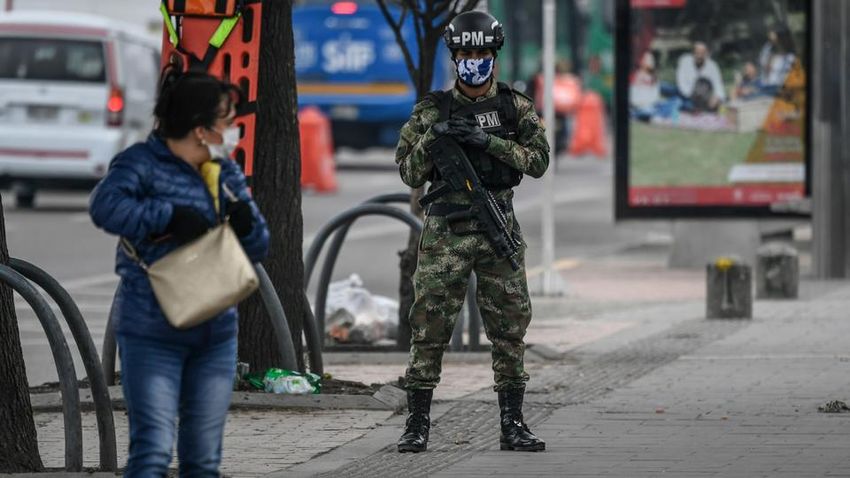
A member of the military police wears a face mask as a preventive measure against the spread of the new coronavirus, COVID-19, as he patrols the streets in Bogota, on March 25, 2020. Photo: AFP

This, however, must not be understood as a blank cheque for authoritarian leaders to tighten their grip on power. While most national constitutions, the European Convention on Human Rights, and the U.N.’s International Covenant on Civil and Political Rights allow for the derogation of certain human and minority rights during a state of emergency, it is “only to the extent strictly required by the situation.”

Across the world, though, numerous examples point to clear overreach of such emergency power and, more depressingly, the abuse of trust vested in governments from civil society.

Abuse of Emergency Powers

  • In Azerbaijan, President Ilham Aliyev said in an address to the nation that his political opponents are trying to use the outbreak to destroy the country, and suggested that measures to “isolate” them might be required. The prominent opposition activist Tofig Yagublu has already been arrested and sentenced to three months of pre-trial detention. He faces up to six years in prison….
  • Meanwhile, Montenegro’s government made the inexplicable move of making public the personal data – including names and home addresses – of all those obliged to be in self-isolation, a gross infringement on the right to privacy.
  • Albania’s Prime Minister, Edi Rama, also wasted no time in flexing his newfound powers. Last weekend, he casually threatened his citizens by posting a video supposedly showing Spanish police beating and chasing people down the streets, with an outrageously inappropriate message “either respect social distancing… or you will also be running.” Except, the video was from a political protest, weeks ago – in Algeria, not Spain.
  • Speaking of “fake news,” we have received reports from partners in Cambodia that over a dozen people have already been jailed, or “re-educated,” for allegedly sharing false social media posts about the pandemic – a measure that we fear is prone to be replicated across the world, not least among E.U. states.
  • Namely, Hungary’s nationalist government recently passed legislation to parliament that would punish anyone who publicizes “fake news” that interferes with the “successful defense” of public health, with up to five years in prison. [see https://humanrightsdefenders.blog/2020/04/07/good-example-of-authoritarian-abuse-of-covid-19-emergency-hungary/]..

Civil society, therefore, finds itself in an incredibly delicate situation.

On the one hand, there is an understanding that the severity of the crisis calls for certain limitations on our fundamental rights. Only national authorities possess the legitimacy to enforce such constraints and the capacity to tackle the virus through strict health and safety measures. We have no alternative but to trust our respective governments to navigate us, and their intentions to save lives and minimize the virus’ impact. On the other hand, we have a responsibility to protect partners across the world, whose fight for democracy and fundamental human rights will be further strained as emergency powers, enforced curfews, and restrictions on free speech come into place. Some measures may be necessary, but others are clearly not – and all must be removed once this is all over. Further, using the pandemic to harass human rights defenders or abuse the rule of law for political gains, as we are already witnessing, is simply unacceptable. We will monitor your moves, keep you accountable, and call you out when the line has been crossed – this is our duty. Widespread trust that has been vested in governments – all governments – amounts to a historic responsibility. Civil society has reached out its hand; do not let us down.

(Disclaimer: The views and opinions expressed here are those of the author and do not necessarily reflect the editorial position of The Globe Post._

COVID-19 emergencies should not be shortcut to silencing human rights defenders

March 17, 2020

Following on the heels of the joint statement on the Corona virus by the two High Commissioners [see: https://humanrightsdefenders.blog/2020/03/17/two-high-commissioners-issue-rare-joint-statement-re-covid-19/], more than a dozen U.N. experts on issues including on the rights to freedom of expression, peaceful assembly, health, education, and religious belief, along with the U.N. working group on arbitrary detention signed a statement urging Governments in crisis mode not to use the emergency measures to suppress human rights.

The rights experts, who are appointed by the United Nations Human Rigbhts Council but who do not speak on behalf of the world body, said they recognized “the severity of the current health crisis and acknowledge that the use of emergency powers is allowed by international law in response to significant threats” but they went on to “urgently remind states that any emergency responses to the coronavirus must be proportionate, necessary and non-discriminatory.

The experts stressed that the use of emergency powers should be declared publicly and the U.N. treaty bodies should be notified if fundamental rights, including movement, family life, and assembly were being significantly limited. “Moreover, emergency declarations based on the COVID-19 outbreak should not be used as a basis to target particular groups, minorities, or individuals,” they insisted. The emergency, the experts said, “should not function as a cover for repressive action under the guise of protecting health nor should it be used to silence the work of human rights defenders.”

They warned that some states might find the use of emergency powers “attractive because it offers shortcuts.” “To prevent such excessive powers to become hardwired into legal and political systems, restrictions should be narrowly tailored and should be the least intrusive means to protect public health,” they said.


Emergency Powers in Virus Fight Must Not be Used to Quash Dissent: UN Experts