Posts Tagged ‘Nguyen Van Trang’

Join the campaign #EndReprisals: 4 examples of eminent HRDs being silenced

May 16, 2024

Human rights defenders and civil society are the voices of our communities. These voices must be at the heart of decision and policy making at all levels. Yet, some States and non-states actors feel those voices are too loud. Cao Shunli, Chinese human rights defender, victim of reprisals who died in detention 10 years ago. Around the world, inspiring voices echo Cao’s ambition, on different issues and in different contexts, but with the same aspiration: promoting and protecting human rights. In so doing, many have engaged with the United Nations to share evidence of abuses with experts and States. Regrettably, some are facing the same form of reprisals as Cao, and are now arbitrarily detained. 

These include Trang in Viet Nam, Irfan and Khurram in India and Abdulhadi in Bahrain.

It’s time to take a stand. Join us in our campaign to #EndReprisals and call for the release of Trang, Abdulhadi, Khurram and Irfan. Let’s ensure that no one else faces Cao’s fate. Their voices deserve to be heard, and their freedom and lives must be protected.
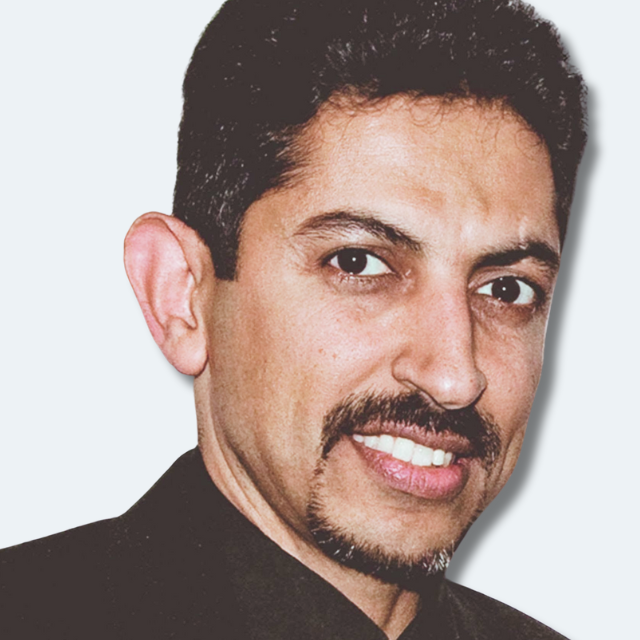
Abdulhadi Al-Khawaja

Abdulhadi Al-Khawaja is a Bahraini-Danish advocate known for his unwavering commitment to freedom and democracy. An outspoken human rights defender he serves as a source of inspiration for activists in Bahrain and globally. Abdulhadi has protested Bahrain’s unlawful detention and torture of several civilians since he was a student. He received political asylum in Denmark with his family where he continued his advocacy work, documenting human rights violations in Bahrain. 

He became the first civil society representative to speak at the first Universal Periodic Review of Bahrain in 2008.  He is the co-founder of both the Gulf Centre for Human Rights and the Bahrain Center for Human Rights, as well as the laureate of the 2022 Martin Ennals Award. [https://www.trueheroesfilms.org/thedigest/laureates/4d45e316-c636-4d02-852d-7bfc2b08b78d]

Abdulhadi Al-Khawaja was included for five times in the Secretary-General report on reprisals, noting “allegations of arbitrary arrest, torture and lengthy sentence following his engagement with United Nations human rights mechanisms.” In 2012, the Working Group on Arbitrary Detention found the detention of Abdulhadi arbitrary.

See also: https://humanrightsdefenders.blog/tag/abdulhadi-alkhawaja/

Pham Doan Trang

Pham Doan Trang is an author, blogger, journalist and pro-democracy activist from Viet Nam. She is a well-known advocate for human rights and has written on a wide range of human rights topics, including LGBTQI+ rights, women’s rights, environmental issues and on the suppression of activists.

She is considered among the most influential and respected human rights defenders in Viet Nam today. She has always been a major source of inspiration and mentorship for Vietnamese civil society and the next generation of human rights defenders.

Trang received the Reporters Without Borders 2019 Press Freedom Prize for Impact and was the Laureate of a Martin Ennals Award in 2022. As well as the Homo Homini in 2017 and the Women of Courage 2022. See: https://www.trueheroesfilms.org/thedigest/laureates/fe8bf320-1d78-11e8-aacf-35c4dd34b7ba

Trang was prosecuted for her articles and reports on the human rights situation in Viet Nam, including an analysis of a 2016 report on the Formosa Ha Tinh Steel Plant environmental disaster that was shared with the United Nations. See also: https://humanrightsdefenders.blog/tag/pham-doan-trang/

Trang was the subject of several communications by special procedures mandate holders and an Opinion by the Working Group on Arbitrary Detention in 2021, which found her deprivation of liberty arbitrary. On 2 November 2022, experts addressed Trang’s detention, including restriction of her right to family visits and her deteriorating health status. 
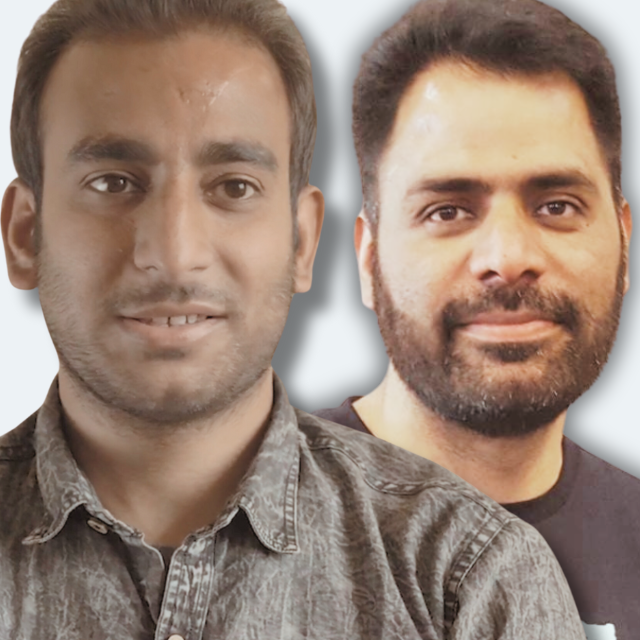
Irfan Mehraj and Khurram Parvez

Khurram Parvez and Irfan Mehraj are two Kashmiri human rights defenders. They have conducted ground-breaking and extensive human rights documentation in the Indian-administered Jammu and Kashmir, including through their work within the Jammu Kashmir Coalition of Civil Society (JKCCS) – Khurram as founder and programme coordinator, and Irfan as a researcher.

Both activists have been internationally recognised for their work. Khurram is the Chairperson of the Asian Federation against Involuntary Disappearances (AFAD), Deputy General Secretary of the International Federation for Human Rights (FIDH) and a laureate of the 2023 Martin Ennals Award. [see: https://www.trueheroesfilms.org/thedigest/laureates/81468931-79AA-24FF-58F7-10351638AFE3]

Irfan is a well-regarded independent journalist with frequent contributions to Kashmiri, Indian and international news outlets. He is the founder of Wande Magazine and is an editor at TwoCircles.net. See also: https://humanrightsdefenders.blog/2023/09/05/un-special-rapporteurs-express-serious-concern-about-kashmiri-human-rights-defenders/

On 22 November 2021, Khurram was arrested again by the Indian Government, this time by India’s National Investigation Agency (NIA) under the Unlawful Activities (Prevention) Act (UAPA) and other laws, reportedly on allegations of “terrorism funding, being a member of a terrorist organisation, criminal conspiracy, and waging war against the state.” He remains in arbitrary detention to this day. 

Meanwhile, on 20 March 2023, Irfan was summoned for questioning and arbitrarily detained by the NIA in Srinagar also under provisions of the UAPA and other laws.  The NIA targeted Irfan for being ‘a close associate of Khurram Parvez.’ Both Khurram and Irfan are presently in pre-trial detention in the maximum-security Rohini prison in New Delhi, India. If convicted, Khurram and Irfan could face life imprisonment or even the death penalty.  

Khurram’s situation has been included in the Secretary-General’s report on reprisals since 2017 and Irfan’s case was included in the 2023 report.

In June 2023, United Nations experts expressed serious concerns regarding the charges against and arrest of Irfan and Khurram, stating that their continued detention is ‘designed to delegitimise their human rights work and obstruct monitoring of the human rights situation in Indian-administered Jammu and Kashmir.’ The United Nation Working Group on Arbitrary Detention (WGAD) published an opinion in the same year, finding Khurram’s detention arbitrary. 

What do we want? It’s simple. We want Irfan, Khurram, Trang and Abduhadi to be freed so they can continue their work without fear of further reprisals, and we want accountability for Cao. 

How do we achieve this?

We mobilise diplomatic missions, encouraging them to speak out and raise individual cases of reprisals against defenders at the UN and in other spaces and hold their peers to account. We convince the UN Secretary General and his team to acknowledge and document ALL cases of reprisal and intimidation by including them in his annual report on reprisals and intimidation against defenders engaging or seeking to engage with the UN and its human rights mechanisms. We push the UN system to establish clearer protocols on how to consistently and effectively prevent, respond and follow up on cases of reprisals.  We encourage governments, activists, and concerned individuals to stand in solidarity with human rights defenders and organisations who are subjected to reprisals and intimidations.

What can you do?

To achieve our goals, we are drawing attention to some of the most emblematic cases of reprisals that illustrate how human rights defenders are prevented from or punished for engaging with the UN.   Here are impactful actions you can take:

Write to State representatives at the UN in Geneva and New York

ISHR’s #EndReprisals database

In order to assist stakeholders with research, analysis and action on cases of reprisals and intimidation, ISHR launched an online database compiling cases or situations of intimidation and reprisals documented by the United Nations (UN) Secretary-General between 2010 and 2020.

  • 878 Cases of intimidation and reprisals against human rights defenders engaging with the UN reported by the UN Secretary General between 2010 and 2020.
  • 81 Countries were cases of reprisals were documented by the UN Secretary-General between 2010 and 2020.
  • 13 Reports published by the UN Secretary General on intimidation and reprisals.

Visit ISHR’s #EndReprisal database

https://ishr.ch/campaign/endreprisals2024

Facebook and YouTube are allowing themselves to become tools of the Vietnamese authorities’ censorship and harassment

December 1, 2020

On 1 December 2020, Amnesty International published a new report on how Facebook and YouTube are allowing themselves to become tools of the Vietnamese authorities’ censorship and harassment of its population, in an alarming sign of how these companies could increasingly operate in repressive countries. [see also: https://humanrightsdefenders.blog/2020/06/03/more-on-facebook-and-twitter-and-content-moderation/].

The 78-page report, “Let us Breathe!”: Censorship and criminalization of online expression in Viet Nam”, documents the systematic repression of peaceful online expression in Viet Nam, including the widespread “geo-blocking” of content deemed critical of the authorities, all while groups affiliated to the government deploy sophisticated campaigns on these platforms to harass everyday users into silence and fear.

The report is based on dozens of interviews with human rights defenders and activists, including former prisoners of conscience, lawyers, journalists and writers, in addition to information provided by Facebook and Google. It also reveals that Viet Nam is currently holding 170 prisoners of conscience, of whom 69 are behind bars solely for their social media activity. This represents a significant increase in the number of prisoners of conscience estimated by Amnesty International in 2018.

In the last decade, the right to freedom of expression flourished on Facebook and YouTube in Viet Nam. More recently, however, authorities began focusing on peaceful online expression as an existential threat to the regime,” said Ming Yu Hah, Amnesty International’s Deputy Regional Director for Campaigns.

Today these platforms have become hunting grounds for censors, military cyber-troops and state-sponsored trolls. The platforms themselves are not merely letting it happen – they’re increasingly complicit.

In 2018, Facebook’s income from Viet Nam neared US$1 billion – almost one third of all revenue from Southeast Asia. Google, which owns YouTube, earned US$475 million in Viet Nam during the same period, mainly from YouTube advertising. The size of these profits underlines the importance for Facebook and Google of maintaining market access in Viet Nam.”

In April 2020, Facebook announced it had agreed to “significantly increase” its compliance with requests from the Vietnamese government to censor “anti-state” posts. It justified this policy shift by claiming the Vietnamese authorities were deliberately slowing traffic to the platform as a warning to the company.

Last month, in Facebook’s latest Transparency Report – its first since it revealed its policy of increased compliance with the Vietnamese authorities’ censorship demands – the company revealed a 983% increase in content restrictions based on local law as compared with the previous reporting period, from 77 to 834. Meanwhile, YouTube has consistently won praise from Vietnamese censors for its relatively high rate of compliance with censorship demands.

State-owned media reported Information Minister Nguyen Manh Hung as saying in October that compliance with the removal of “bad information, propaganda against the Party and the State” was higher than ever, with Facebook and Google complying with 95% and 90% of censorship requests, respectively.

Based on dozens of testimonies and evidence, Amnesty International’s report shows how Facebook and YouTube’s increasing censorship of content in Vietnam operates in practice.

In some cases, users see their content censored under vaguely worded local laws, including offences such as “abusing democratic freedoms” under the country’s Criminal Code. Amnesty International views these laws as inconsistent with Viet Nam’s obligations under international human rights law. Facebook then “geo-blocks” content, meaning it becomes invisible to anyone accessing the platform in Viet Nam.

Nguyen Van Trang, a pro-democracy activist now seeking asylum in Thailand, told Amnesty International that in May 2020, Facebook notified him that one of his posts had been restricted due to “local legal restrictions”. Since then, Facebook has blocked every piece of content he has tried to post containing the names of senior members of the Communist Party. 

Nguyen Van Trang has experienced similar restrictions on YouTube, which, unlike Facebook, gave him the option to appeal such restrictions. Some appeals have succeeded and others not, without YouTube providing any explanation.

Truong Chau Huu Danh is a well-known freelance journalist with 150,000 followers and a verified Facebook account. He told Amnesty International that between 26 March and 8 May 2020, he posted hundreds of pieces of content about a ban on rice exports and the high-profile death penalty case of Ho Duy Hai. In June, he realized these posts had all vanished without any notification from Facebook whatsoever.

Amnesty International heard similar accounts from other Facebook users, particularly when they tried to post about a high-profile land dispute in the village of Dong Tam, which opposed local villagers to military-run telecommunications company Viettel. The dispute culminated in a confrontation between villagers and security forces in January 2020 that saw the village leader and three police officers killed.

After Facebook announced its new policy in April 2020, land rights activists Trinh Ba Phuong and Trinh Ba Tu reported that all the content they had shared about the Dong Tam incident had been removed from their timelines without their knowledge and without notification.

On 24 June 2020, the pair were arrested and charged with “making, storing, distributing or disseminating information, documents and items against the Socialist Republic of Vietnam” under Article 117 of the Criminal Code after they reported extensively on the Dong Tam incident. They are currently in detention. Their Facebook accounts have disappeared since their arrests under unknown circumstances. Amnesty International considers both Trinh Ba Phuong and Trinh Ba Tu to be prisoners of conscience.

The Vietnamese authorities’ campaign of repression often results in the harassment, intimidation, prosecution and imprisonment of people for their social media use. There are currently 170 prisoners of conscience imprisoned in Viet Nam, the highest number ever recorded in the country by Amnesty International. Nearly two in five (40%) have been imprisoned because of their peaceful social media activity.

Twenty-one of the 27 prisoners of conscience jailed in 2020, or 78%, were prosecuted because of their peaceful online activity under Articles 117 or 331 of the Criminal Code – the same repressive provisions that often form the basis of ‘local legal restrictions’ implemented by Facebook and YouTube. For every prisoner of conscience behind bars, there are countless people in Viet Nam who see this pattern of repression and intimidation and are understandably terrified about speaking their mind. Ming Yu Hah

These individuals’ supposed “crimes” include peacefully criticizing the authorities’ COVID-19 response on Facebook and sharing independent information about human rights online.

For every prisoner of conscience behind bars, there are countless people in Viet Nam who see this pattern of repression and intimidation and are understandably terrified about speaking their minds,” said Ming Yu Hah.

Amnesty International has documented dozens of incidents in recent years in which human rights defenders have received messages meant to harass and intimidate, including death threats. The systematic and organized nature of these harassment campaigns consistently bear the hallmarks of state-sponsored cyber-troops such as Du Luan Vien or “public opinion shapers” – people recruited and managed by the Communist Party of Viet Nam (CPV)’s Department of Propaganda to engage in psychological warfare online.

The activities of Du Luan Vien are complemented by those of “Force 47”, a cyberspace military battalion made up of some 10,000 state security forces whose function is to “fight against wrong views and distorted information on the internet”.

While “Force 47” and groups such as Du Luan Vien operate opaquely, they are known to engage in mass reporting campaigns targeting human rights –related content, often leading to their removal and account suspensions by Facebook and YouTube.

Additionally, Amnesty International’s investigation documented multiple cases of bloggers and social media users being physically attacked because of their posts by the police or plainclothes assailants, who operate with the apparent acquiescence of state authorities and with virtually no accountability for such crimes.


Putting an end to complicity

The Vietnamese authorities must stop stifling freedom of expression online. Amnesty International is calling for all prisoners of conscience in Viet Nam to be released immediately and unconditionally and for the amendment of repressive laws that muzzle freedom of expression.

Companies – including Facebook and Google – have a responsibility to respect all human rights wherever they operate. They should respect the right to freedom of expression in their content moderation decisions globally, regardless of local laws that muzzle freedom of expression. Tech giants should also overhaul their content moderation policies to ensure their decisions align with international human rights standards.

In October 2020, Facebook launched a global Oversight Board – presented as the company’s independent “Supreme Court” and its solution to the human rights challenges presented by content moderation. Amnesty International’s report reveals, however, that the Board’s bylaws will prevent it from reviewing the company’s censorship actions pursuant to local law in countries like Vet Nam. It’s increasingly obvious that the Oversight Board is incapable of solving Facebook’s human rights problems. Ming Yu Hah

“It’s increasingly obvious that the Oversight Board is incapable of solving Facebook’s human rights problems. Facebook should expand the scope of the Oversight Board to include content moderation decisions pursuant to local law; if not, the Board – and Facebook – will have again failed Facebook users,” said Ming Yu Hah.

[see also: https://humanrightsdefenders.blog/2020/04/11/algorithms-designed-to-suppress-isis-content-may-also-suppress-evidence-of-human-rights-violations/]

“Far from the public relations fanfare, countless people who dare to speak their minds in Viet Nam are being silenced. The precedent set by this complicity is a grave blow to freedom of expression around the world.”

https://www.amnesty.org/en/latest/news/2020/12/viet-nam-tech-giants-complicit/

https://www.theguardian.com/world/2020/dec/01/facebook-youtube-google-accused-complicity-vietnam-repression

https://thediplomat.com/2020/07/facebook-vietnams-fickle-partner-in-crime/