Posts Tagged ‘killings’

Iran: One year after uprising in Iran the international community must combat impunity says Amnesty

September 15, 2023

The international community must pursue pathways for justice at the international level to address systemic impunity for Iranian officials responsible for hundreds of unlawful killings of protesters and widespread torture, Amnesty International said on 13 September 2023, as Iran marks the one-year anniversary of the “Woman Life Freedom” uprising.

Over the past year, Iranian authorities have committed a litany of crimes under international law to eradicate any challenge to their iron grip on power. These include hundreds of unlawful killings; the arbitrary execution of seven protesters; tens of thousands of arbitrary arrests; widespread torture, including rape of detainees; widespread harassment of victims’ families who call for truth and justice; and reprisals against women and girls who defy discriminatory compulsory veiling laws.

The anniversary of the ‘Woman Life Freedom’ protests offers a stark reminder for countries around the world of the need to initiate criminal investigations into the heinous crimes committed by the Iranian authorities under universal jurisdiction. Government statements calling on the Iranian authorities to halt the unlawful use of firearms against protesters, stop torturing detainees, and release all individuals detained for peacefully exercising their human rights remain as crucial as ever. These actions show victims they are not alone in their darkest hour.

The anniversary of the ‘Woman Life Freedom’ protests offers a stark reminder for countries around the world of the need to initiate criminal investigations into the heinous crimes committed by the Iranian authorities under universal jurisdiction. Diana Eltahawy, Amnesty International’s Deputy Regional Director for the Middle East and North Africa

The Iranian authorities have waged an all-out assault on the human rights of women and girls over the past year. Despite months of protests against Iran’s compulsory veiling laws, triggered by the arbitrary arrest and death in custody of Mahsa/Zhina Amini, the authorities have reinstated “morality” policing and introduced a raft of other measures that deprive women and girls who defy compulsory veiling of their rights.

These include the confiscation of cars and denial of access to employment, education, healthcare, banking services and public transport. Simultaneously, they have prosecuted and sentenced women to imprisonment, fines and degrading punishments, such as washing corpses.

This assault on women’s rights is taking place amid a spate of hateful official statements referring to unveiling as a “virus”, “social illness” or “disorder” as well as equating the choice to appear without a headscarf to “sexual depravity.”

The authorities are also working on new legislation that will introduce even more severe penalties for defying compulsory veiling.

Mass arbitrary detentions and summons

During the uprising and in the months that followed, the authorities arbitrarily arrested tens of thousands of men, women and children, including protesters, human rights defenders and minority rights activists.  Those arrested include at least 90 journalists and other media workers and 60 lawyers, including those representing families of individuals unlawfully killed. Scores of other lawyers were summoned for interrogations. [see e.g. https://humanrightsdefenders.blog/2023/05/11/now-it-is-the-turn-of-the-iranian-journalists-who-reported-on-mahsa-amini/]

Ahead of the anniversary, the authorities have intensified their campaign of arbitrary arrests targeting, among others, family members of those unlawfully killed, and forcing thousands of university students to sign undertakings not to participate in anniversary protests.

Execution of protesters

Over the past year, the authorities have increasingly used the death penalty as a tool of political repression to instil fear among the public, arbitrarily executing seven men in relation to the uprising following grossly unfair sham trials. Some were executed for alleged crimes such as damage to public property and others in relation to the deaths of security forces during the protests. All were executed after Iran’s Supreme Court rubber stamped their unjust convictions and sentences despite a lack of evidence and without carrying out investigations into their allegations of torture. Dozens remain at risk of execution or being sentenced to death in connection with the protests.

A crisis of impunity

The authorities have refused to conduct any thorough, independent and impartial investigations into the human rights violations committed during and in the aftermath of the “Woman Life Freedom” uprising and have failed to take any steps to hold those suspected of criminal responsibility to account.

Instead, authorities have applauded the security forces for suppressing the unrest and shielded officials from accountability, including two officials who admitted raping women protesters in Tehran. They have also dismissed complaints from victims and/or their families, threatening them with death or other harm if they pursued their complaints.

Amnesty International welcomed the establishment of a Fact-Finding Mission on Iran by the UN Human Rights Council in November 2022, yet much more is needed to combat the crisis of impunity for serious crimes in Iran – and to deter further cycles of bloodshed.

Amnesty International urges all states to consider exercising universal and other extraterritorial jurisdiction in relation to crimes under international law and other serious human rights violations committed by Iranian authorities, irrespective of the absence or presence of the accused in their territory. This includes initiating adequately resourced criminal investigations aimed at disclosing the truth about the crimes, identifying those suspected of responsibility, including commanders and other superiors and issuing, when there is sufficient admissible evidence, international arrest warrants. States should also contribute to achieving reparations for the victims.

https://www.amnesty.org/en/latest/news/

https://www.hrw.org/news/2023/09/15/iran-crackdown-dissent-ahead-protest-anniversary

see also:

https://www.fidh.org/en/region/asia/iran/iran-statement-on-the-un-fact-finding-mission-s-oral-upda

https://news.un.org/en/story/2023/09/1141017

https://www.ohchr.org/en/press-releases/2023/09/iran-un-experts-denounce-crackdown-public-commemoration-jina-mahsa-aminis

Article 19 calculated that 80% of the world lost freedom of expression during the last decade

July 12, 2023

80% of citizens in the world have less freedom of expression today than a decade ago. That’s more than 6 billion people in more than 80 countries. Far more people are experiencing increases in repression than decreases regardless of whether you measure it over 1, 5 or 10 years, freedom of expression organisation Article 19’s annual Global Expression Report shows. The report comprises 161 countries. 

There are more countries in which freedoms are in decline than countries seeing rises in expression”, the report says. 

What’s more, the countries in decline contain many more people than countries in advance, which tend to have much smaller populations. 95% of countries that advanced in the last decade had populations of under 50 million people, while only 74% of countries that declined over the same period had populations of that size.”

Key findings:

  • In the last year, 363 million people across 12 countries experienced declines in their freedom of expression, while 165 million people across 7 countries saw advances.
  • In the last 5 years, 4.7 billion across 51 countries experienced declines in their freedom of expression, while only 673 million people in 25 countries saw advances.
  • In the last 10 years, 6.3 billion people across 81 countries experienced declines in their freedom of expression, while 452 million people in 21 countries saw advances.

The report shows that threats are posed not just by autocratic governments, but also by legislation and law enforcement within democratic structures that erode  human rights, as well as by corporate interests and organised crime. 

“Where those groups and their interests overlap, freedoms are in acute danger”, Article 18 says.

“Conflict is the greatest and most immediate threat to free speech, particularly for those on the frontlines of expression: In 2022, journalists and human rights defenders were predominantly killed in countries suffering from conflicts, either internal or international.” 

“However, political violence targeting civilians also became more common – and more deadly – during 2022, with more than 125,700 events globally leading to over 145,500 reported fatalities.”

From the report:

= 401 human rights defenders were murdered in 2022, including 186 in Colombia, 50 in Ukraine, and 45 in Mexico. 48% of those murdered were defending land, environmental, and Indigenous peoples’ rights.

– 87 journalists were murdered in 2022 – 33 more than in 2021 – including 19 in Mexico and 10 in Ukraine. 64 more were missing in 2022. 

– At the end of 2022, 363 journalists were behind bars. The top jailers were Iran, China, Myanmar, Turkey, and Belarus.

“While the full-scale Russian invasion of Ukraine dominated the global conflict landscape as well as the headlines in 2022, violence also intensified in places like Myanmar and the Sahel, as did criminal violence and conflict in Latin America and the Caribbean, while domestic unrest and state violence against protest escalated in places like Iran.” 

Pressure on India continues to clear father Stan Swamy’s name

July 10, 2023

On 6 July 2023 UCA News reporter reported on efforts at the second death anniversary of the Jesuit priest Father Stan Swamy, who was falsely charged with terror-related laws, See also: https://humanrightsdefenders.blog/2020/10/11/the-indomitable-father-stan-swamy-defending-the-adivasis-and-the-dalits-a-cause-of-arrest/

A group of rights activists in India have urged President Droupadi Murmu to withdraw terror-related cases against late Jesuit Father Stan Swamy and 15 other accused in the 2018 Bhima Koregaon violence case.

“It is a false case registered against Father Swamy and others and it should be withdrawn,” said Father Antony P.M, a social activist at a gathering to mark the second death anniversary of the priest, on July 5 in the eastern Jharkhand state. Tributes were paid to the Swamy across the country.

He said a group of activists is appealing to the president, who hails from an indigenous community in eastern India, to use her good office to withdraw “the totally false case registered against right defenders,” Antony told UCA News on July 6.

The activists had gathered in front of the Raj Bhavan, the official residence of the Jharkhand governor, in the state capital Ranchi. It was organized by the Shahid Father Stan Swamy Nyaya Morcha (Martyer Stan Swamy Justice Forum). 

“Father Swamy, who fought for the rights of indigenous people in Jharkhand finally had to die for want of medical care as a prisoner,” said Antony, the director of Bagaicha, a Jesuit social center in Jharkhand, where Swamy lived and worked.

Murmu served as the governor of Jharkhand when Swamy’s residence in Ranchi was raided twice and the federal terror investigative agency arrested him in 2020.

He was accused of having links with outlawed Maoists along with 15 well-known human rights activists accused in a case linking them to a violent clash in Bhima-Koregaon village in western Maharashtra state in 2018. 

The late priest and others including rights activists, lawyers, academicians, and writers, were also charged under the provisions of a draconian anti-terror law, the Unlawful Activities Prevention Act (UAPA), alleging they had conspired to unleash violence in Bhima-Koregaon.

The priest was also accused of sedition and conspiring with Maoist rebels to overthrow the federal government. 

The 85-year-old activist priest died as an under trial prisoner in a private hospital in Mumbai, the capital of Maharashtra.

“We hereby request Your Excellency to take cognizance of the entire Bhima-Koregaon case wherein the intention of the state and the investigation agencies is highly suspicious and does not inspire any confidence in common citizens,” they said in a memorandum.

“Several independent investigations, including by US-based Arsenal Consultancy, have exposed how the case, based on fabricated evidence, is just a witch-hunt by the state,” it said.

“We request that all the human rights activists be immediately released on bail, the case and prosecution be withdrawn and criminal proceedings be initiated against those responsible for fabricating and planting evidence,” the memorandum added.

It also briefly provided details of the findings from Arsenal Consultancy, a digital forensic lab, that said digital evidence was planted on the computer of Father Swamy and others, leading to their arrest and incarceration.

Antony further demanded the scrapping of the draconian UAPA, under which Swamy was arrested.

“Once a person is charged under the UAPA, he/she is not treated well in jail even if there is no connection with the case remotely,” the priest said, citing the example of Swamy.

Despite suffering from Parkinson’s and other age-related diseases, Swamy was denied bail by both the trial court and the high court before his death.

“If the jail authorities cared for him well or the courts had granted bail in time, I think he would have been with us,” Antony, also a Jesuit, observed.

“The investigating agency has still not filed the charge sheet and activists are languishing in jail. This is a gross violation of human rights,” the priest said. 

Indian Jesuits have approached the Mumbai High Court seeking “to clear his name from the false cases” that led to his arrest, imprisonment and death in custody.

https://www.ucanews.com/news/activists-urge-indian-president-to-clear-stan-swamys-name/101875

Suspicious Death of Investigative Journalist John Williams Ntwali in Rwanda

January 24, 2023
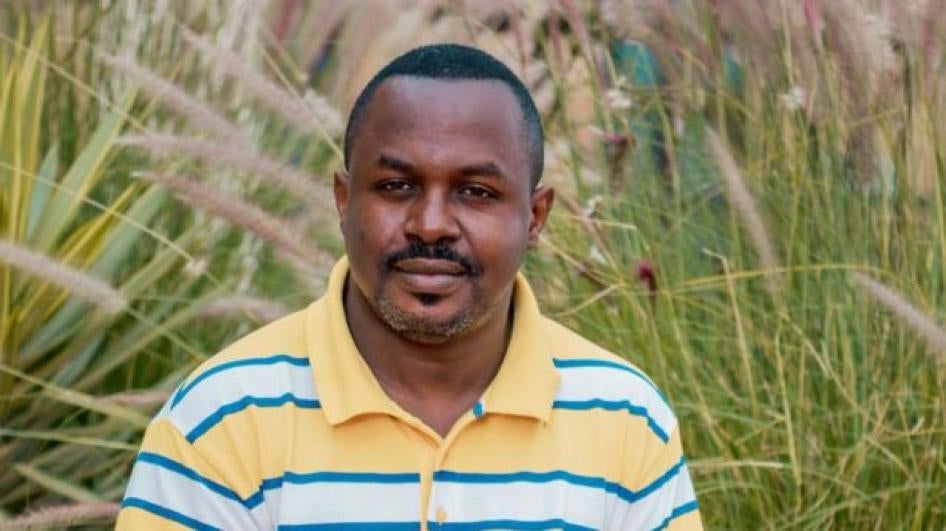
John Williams Ntwali.
John Williams Ntwali. © Private

Human Rights Watch and others demand that the Rwandan authorities allow an effective, independent, and transparent investigation into the suspicious death of John Williams Ntwali, a leading investigative journalist and editor of the newspaper The Chronicles. Ntwali was regularly threatened due to his work as a journalist exposing human rights abuses in Rwanda and had expressed concern about his safety to Human Rights Watch and others.

John Williams Ntwali was a lifeline for many victims of human rights violations and often the only journalist who dared report on issues of political persecution and repression,” said Lewis Mudge, Central Africa director at Human Rights Watch. “There are many reasons to question the theory of a road accident, and a prompt, effective investigation, drawing on international expertise, is essential to determine whether he was murdered.

News of Ntwali’s death emerged in the evening of January 19, 2023. Police asked Ntwali’s brother to identify his body at Kacyiru Hospital morgue, telling him that Ntwali had died in a road accident the night of January 17 to 18. The police told the New Times website that Ntwali died in a motorbike accident in Kimihurura, Kigali, on January 18 at 2:50 a.m., but to date, have not provided details of the accident such as a police report, its exact location, or information on the others involved. Human Rights Watch is not aware of any reports about an alleged accident coming to light until the evening of January 19.

Ntwali was regularly threatened and attacked in the pro-government media for his investigative reporting. He played a leading role in covering and bringing attention to the plight of Kangondo neighborhood residents, who are in a long-standing dispute with authorities over land evictions. Recently, he also published videos on his YouTube channel about people who had suspiciously “disappeared.” His last video, posted on January 17, was about the reported disappearance of a genocide survivor who had spoken out about being beaten by police officers in 2018.

Ntwali was also one of only a few journalists independently covering high profile, politicized trials of journalists, commentators and opposition members, and posting videos about their conditions in prison. In June 2022, he told Human Rights Watch about the torture wounds he had seen on some of these critics and opponents. He also told Human Rights Watch:

I don’t know what’s going to happen to me after CHOGM [the Commonwealth Heads of Government Meeting which took place in Kigali in June 2022]. I’m told that after CHOGM, they won’t play around with us anymore. I’ve been told five or six times. I receive phone calls from private numbers. Some [intelligence] people have come to my house twice to tell me. NISS [National Intelligence and Security Services] has told me: ‘If you don’t change your tone, after CHOGM, you’ll see what happens to you.’

On July 12, he told a friend he had survived a number of “staged accidents” in Kigali. “He was telling me about ordeals and threats he faces for his journalism,” his friend told Human Rights Watch.

Given these circumstances, Rwanda has a legal obligation to ensure a prompt, effective investigation that is capable of determining the circumstances of Ntwali’s death and identifying those responsible, with a view to bringing them to justice. An effective investigation must be independent, impartial, thorough, and transparent, conducted in full compliance with the Revised United Nations Manual on the Effective Prevention and Investigation of Extra-legal, Arbitrary and Summary Executions (The Minnesota Protocol on the Investigation of Potentially Unlawful Death).

Because Rwandan authorities have consistently failed to ensure credible investigations into and accountability for suspicious deaths of political opponents or high-profile critics, such as Kizito Mihigo in February 2020, foreign experts such as the United Nations special rapporteur on extrajudicial, summary or arbitrary executions should be involved in the investigation, Human Rights Watch said. All Rwandan authorities should fully support and cooperate with the investigation, and the Commonwealth, which Rwanda currently chairs, should publicly call for such an investigation. See also: https://humanrightsdefenders.blog/2021/02/16/call-for-independent-investigation-into-rwandan-singer-kizito-mihigos-death/

Rwandan authorities have long targeted Ntwali. He was arrested in January 2016, in the lead up to the 2017 elections, and accused of raping a minor. Judicial officials later changed the charge to indecent assault and eventually dropped the case for lack of evidence.

At the time, Ntwali had been investigating several sensitive issues, including the death of Assinapol Rwigara, a businessman and father of would-be independent presidential candidate Diana Rwigara, whose candidacy to the 2017 elections was later rejected. The police said that Assinapol Rwigara died in a car accident in February 2015, but his family contested the authorities’ version of events.

Ntwali had also been arbitrarily arrested several other times and his website was blocked by a government regulator, apparently in retaliation for his reporting that was critical of the government.

“It is an embarrassment for the Commonwealth and a problematic message about its values that the country that presides over it is a place where the suspicious deaths of journalists and activists can be swept under the carpet,” Mudge said. “Rwandan authorities should not only not harm journalists but should be actively protecting them, and Rwanda’s partners should be holding the government to account in full for its obligations under international human rights law.”

https://www.hrw.org/news/2023/01/20/rwanda-suspicious-death-investigative-journalist

https://www.reuters.com/world/africa/john-williams-ntwali-rare-rwandan-journalist-critical-govt-dies-2023-01-20/

and also; https://www.hrw.org/news/2023/02/09/no-clarity-over-journalists-death-rwanda

40-year-old murder case of Dutch IKON journalists in El Salvador sees arrests, finally

October 17, 2022

On Sunday 16 October 2022 the NYT carried the news from the investigative program Zembla in the Netherlands, saying that two suspects were arrested on Friday for the murder of four Dutch journalists in El Salvador in 1982. The arrests are the first in the 40-year-old murder case. For my on personal involvement in the case, see https://humanrightsdefenders.blog/2018/09/25/murder-of-dutch-ikon-journalists-in-1982-in-el-salvador-revisted/

The arrested suspects, Defense Minister General Guillermo García and Colonel Francisco Antonio Morán, will be arraigned on Monday before a judge in Chalatenango. El Salvador has also requested the U.S. to extradite Colonel Mario Reyes Mena, another suspect in the case who is believed to be the main person responsible for the murders.

The case concerns the murder of four Dutch journalists who worked for the now-defunct public broadcaster IKON: Koos Koster, Jan Kuiper, Joop Willemsen and Hans ter Laag. They traveled to El Salvador in 1982 to report on families living in the guerrilla zone during the country’s 12-year civil war. They were ambushed and shot on March 17, 1982 by the Salvadoran army.

A 1993 UN Commission of Inquiry marked Colonel Reyes Mena as “responsible for planning the ambush and assassination,” according to Zembla. That same year, an amnesty law was passed in El Salvador, which meant that Reyes Mena could not be prosecuted in that country. The criminal investigation into the murders of the four Dutch journalists was launched in 2013 and El Salvador’s amnesty law was lifted in 2016. The result was that perpetrators of crimes during the Salvadoran Civil War can now be prosecuted.

Reyes Mena, now in his 80s, was discovered to be living in the U.S. in 2018. “The case has already been investigated, I have never been charged. You are part of a communist plan to retaliate,” Reyes Mena told Zembla journalists who confronted him about the murders.

According to Zembla, a Dutch justice is being dispatched to the Central American country to speak with the arrested suspects.

https://nltimes.nl/2022/10/16/two-arrests-made-40-year-old-murder-case-dutch-ikon-journalists-el-salvador

Global Witness report 2021: continued disaster

October 5, 2022

Stuti Mishra in the Independent of 29 September 2022 summarises and analyses the report “A Decade of Defiance: Ten years of reporting land and environmental activism worldwide” by Global Witness

More than 1,700 environmental defenders have been killed around the world in the last decade with one death reported every other day on average…The report titled A Decade of Defiance: Ten years of reporting land and environmental activism worldwide, released by Global Witness, reveals the increasing threats environmental activists are facing as the climate and biodiversity crisis worsens.

The research states that a total of 1,733 people have been killed over the past 10 years trying to protect their land and resources. That is an average of one defender killed approximately every two days over 10 years.

The report shows Brazil has been the deadliest country for environmental defenders with 342 lethal attacks reported since 2012 with over 85 per cent of killings within the Brazilian Amazon.

The data found within the report also shows that over half of the attacks over the 10-year period have taken place in three countries — Brazil, Colombia, and the Philippines — with around 300 killings reported in these countries.

Mexico and Honduras witnessed over 100 killings while Guatemala and India saw 80 and 79 respectively, remaining one of the most dangerous countries. The report also reports 12 mass killings, including three in India and four in Mexico.

Mexico was the country with the highest recorded number of killings in 2021, totalling 54 killings, up from 30 the previous year. Almost half of those killed were again Indigenous people while over a third were forced disappearances, including at least eight members of the Yaqui community.

The report also reveals that over three-quarters of the attacks recorded in 2021 took place in Latin America. In Brazil, Peru and Venezuela, a big majority of 78 per cent of these attacks occurred in the Amazon.

Meanwhile, the biggest increase in lethal attacks was witnessed in Brazil and India in 2021 with 26 deaths reported in Mexico, up from 20 and 14 in India, up from four.

Both Colombia and the Philippines saw a drop in killings to 33 in 2021 from 65, and 19 from 30 in 2021 respectively. Yet overall they remain two of the countries with the highest numbers of killings in the world since 2012.

2021 Highlights from Global Witness report

  • Around 200 Land and Environmental Defenders were killed in 2021 – nearly four people a week
  • Over three-quarters of the attacks recorded in 2021 took place in Latin America
  • Nearly 40 per cent of all attacks reported were against Indigenous people
  • Mexico recorded the highest number of killings in 2021
  • Brazil and India both saw a rise in lethal attacks in 2021
  • 50 of the victims killed in 2021 were small-scale farmers
  • Around 1 in 10 of the defenders recorded killed in 2021 were women, nearly two-thirds of whom were Indigenous [see also: https://humanrightsdefenders.blog/2021/09/13/global-witness-2020-the-worst-year-on-record-for-environmental-human-rights-defenders/]

In Africa, the Democratic Republic of Congo remained the country with the highest number of attacks — eight defenders were killed there in 2021. All eight of these killings were in Virunga National Park, which remains extremely dangerous for the park rangers protecting it.

The organisation began collecting data on attacks against those defending land and the environment in 2012 and found that the control and use of land and territory is a central issue in countries where defenders are threatened. Much of the increasing killing, violence and repression is linked to territorial conflicts and the pursuit of economic growth based on the extraction of natural resources from the land, it states. The research has also highlighted that Indigenous communities in particular face a disproportionate level of attacks — nearly 40 per cent — even though they make up only 5 per cent of the world’s population.

However, the research found that the figures also do not capture the true scale of the problem, as tightened control on media has led to severe underreporting in some countries where environmental defenders are most vulnerable. Research has also found that few perpetrators of killings are rarely ever brought to justice due to the failures of governments to properly investigate these crimes.

While a majority of these attacks are not properly investigated or reported on, a big proportion of these attacks were linked to sectors like mining and infrastructure, including large-scale agribusiness and hydroelectric dams.

Many authorities ignore or actively impede investigations into these killings often due to alleged collusion between corporate and state interests, the report says.

All over the world, Indigenous peoples, environmental activists and other land and environmental defenders risk their lives for the fight against climate change and biodiversity loss.

They play a crucial role as a first line of defence against ecological collapse, yet are under attack themselves facing violence, criminalisation and harassment perpetuated by repressive governments and companies prioritising profit over human and environmental harm.

a spokesperson for Global Witness said

With democracies increasingly under attack globally and worsening climate and biodiversity crises, this report highlights the critical role of defenders in solving these problems,” a spokesperson for Global Witness said, adding that the organisation makes an “urgent appeal for global efforts to protect and reduce attacks against them.”

Apart from killings, the report also reveals a number of tactics being used to silence them, like death threats, surveillance, sexual violence, or criminalisation – and that these kinds of attacks are even less well reported.

https://www.globalwitness.org/en/campaigns/environmental-activists/decade-defiance/

https://www.independent.co.uk/climate-change/news/global-witness-report-environment-defenders-threat-b2176247.html

Colombia: 52 activists killed in 3 months

April 29, 2022

In Summary:

• Most of the victims are targeted because they clash with the interests of illegal armed groups, including drug trafficking gangs, according to Colombia’s human rights ombudsman.

• The victims include 28 land rights and community rights activists, nine indigenous activists and four farming activists, Colombian newspaper El Tiempo reports. 

A total of 52 Colombian human rights activists and community leaders have been killed in the first three months of this year, authorities say.

It is a significant increase from 2021, which saw 145 murders all year.

Most of the victims are targeted because they clash with the interests of illegal armed groups, including drug trafficking gangs, according to Colombia’s human rights ombudsman.

The country is one of the world’s most dangerous for activists, monitors say.

The victims include 28 land rights and community rights activists, nine indigenous activists and four farming activists, Colombian newspaper El Tiempo reports. Of the victims, 48 ​​were men and four were women.

One of the most shocking cases was that of Breiner David Cucuñame, a 14-year-old indigenous activist who was shot dead in January while on patrol with an unarmed group that seeks to protect indigenous lands.

Colombia is officially at peace after signing a deal with the largest rebel group, the Revolutionary Armed Forces of Colombia (Farc), in 2016. But other armed gangs continue to operate in the country, the world’s largest cocaine producer.

Violence started increasing towards the end of last year due to disputes over territory and resources involving dissident Farc rebels and members of another Marxist guerrilla group – the National Liberation Army (ELN) – as well as right-wing paramilitary groups and criminal gangs such as the Gulf Clan.

“The homicides against social leaders and human rights defenders seriously affect the foundations of democracy,” said Carlos Camargo, the human rights ombudsman.

https://www.the-star.co.ke/news/world/2022-04-27-colombia-reports-52-activists-killed-in-three-months/

Clean energy will not automatically be good for indigenous land defenders

April 7, 2022

Emily Pontecorvo a reporter for GRIST published on 6 April 2022 a piece about a new report by the Business and Human Rights Resource Centre which states that the renewable energy sector is unprepared for the protection of land rights defenders.

In April of last year, José de Jesús Robledo Cruz and his wife Maria de Jesús Gomez Vega were found dead in the desert in Sonora, Mexico. In July, Fernando Vela, a doctor in Coqueta, Columbia, was shot to death by two men on a motorcycle while he was in his truck. In September, Juan Macababbad, an attorney in the Philippines was shot dead outside his home.

In each case, the victims were prominent human rights defenders, known in particular for defending their communities’ natural resources from mining, deforestation, water contamination, and other threats. These were just three of at least 76 such murders that occured in 2021. [see also: https://humanrightsdefenders.blog/2022/03/02/human-rights-high-commissioner-bachelet-urges-support-for-environmental-defenders/]

Business and Human Rights Resource Centre tracks attacks on people who protest or otherwise raise concerns about business-related human rights abuses. It has documented more than 3,800 attacks, including killings, death threats, beatings, arbitrary arrests and detention, and lawsuits, since January 2015, with 615 occurring in 2021 alone.  [see also: https://humanrightsdefenders.blog/2021/09/13/global-witness-2020-the-worst-year-on-record-for-environmental-human-rights-defenders/ as well as: https://news.mongabay.com/2022/04/more-than-half-of-activists-killed-in-2021-were-land-environment-defenders/]

Our data shows almost the tip of the iceberg,” Christen Dobson, senior program manager for the BHRRC and an author of the new report. “Many attacks are not publicly reported. And so we know the problem is much more severe than these figures indicate.”

According to the report, human rights defenders who spoke out against mining projects consistently experienced the greatest number of attacks over the past seven years. The authors say this is especially concerning considering the expansion of mineral production required by a transition to clean energy. All those batteries, solar panels, and wind turbines are going to require a lot of cobalt, nickel, zinc, lithium, and other minerals.

We’re already seeing this level of attack, and we’re not seeing major producers of transition minerals have strong policies or practices in place about protecting defenders,” said Dobson. “There’s a real risk there and I think it’s an area that we’re very concerned about.

The report urges investors to publish a human rights policy and require that companies begin disclosing human rights and environmental-related risks. But Dobson said that voluntary actions from companies and investors was not enough. She said there was some momentum building behind mandating that companies report on measures they are taking to respect human rights, including legislation proposed in the European Union and Canada.

“It is concerning to see a vast majority of companies and investors, including major renewable energy companies, do not have policies expressing zero-tolerance against reprisals in their operations, supply chains and business relationships,” said Dobson in a statement. “It’s time for companies and investors to recognise the energy transition cannot be effective if it is not also rights-respecting.”

https://grist.org/international/land-defenders-face-violence-and-repression-clean-energy-could-make-it-worse

Myanmar: one year after the coup – only getting worse

February 2, 2022
A crowd of protesters wearing face masks, holding up an image of a woman, Aung San Suu Kyi.

On 1 February last year, the military seized power over Myanmar/Burma by overturning the election results and detaining State Counsellor Aung San Suu Kyi. The military is still controlling power by force and uses brutal violence against human rights defenders, civil society groups, and journalists in order to silence all forms of protest and dissent. More than 1,500 people have been killed by the military and over 8,000 people have been arrested.

The coup prompted mass protests and more than 1,500 people have been killed by the military. Over 8,000 people have been arrested in the harsh crackdowns. In a series of charges, Aung San Suu Kyi has been sentenced to several years in prison. Most recently, five new corruption charges against her were announced and in all she faces up to 164 years in jail. See also: https://humanrightsdefenders.blog/2021/09/30/rohingya-human-rights-leader-mohibullah-murdered-in-bangladesh-refugee/

Despite the military’s brutal response, people have come together to fight the dictatorship. Nationwide protests, boycotts, strikes, and coordinated civil disobedience movements have taken place. Journalists across the country have continued their work despite severe attacks by the military.  

A new report by Athan looks at how the military coup has affected journalists’ work and press freedom in the country. Throughout the country’s history, military coups have led to severe attacks on press freedom and the 2021 coup is no exception.  Since the launch of the coup, 141 journalists have been arrested and 13 have been sentenced to prison. On 10 December, photojournalists Ko Soe Naing and Ko Zaw Tun were arrested while taking photos of a nationwide silent strike. Ko Soe Naing was tortured to death at the interrogation centre four days later. Just a couple of weeks after that, editor of the Federal Journal, A Sai Kay (Aka) Sai Win Aung, was shot dead by the military in Lay Kay Kaw.  See also: https://humanrightsdefenders.blog/2021/05/11/three-democratic-voice-of-burma-journalists-and-two-activists-risk-refoulement-by-thailand/

According to Athan, the attacks on press freedom since the 2021 military coup have been the worst the country has seen.  “Journalists and news media require continuous support to sustain local media and its journalists in order to secure journalists’ careers and their safety, and to enable an environment for journalistic professionals and the industry,” says a representative from Athan about the report. 

On the one-year anniversary of the military coup in Myanmar, the High Representative on behalf of the European Union and the Foreign Ministers of Albania, Australia, Canada, New Zealand, Norway, Republic of Korea, Switzerland, the United Kingdom, and the United States, have made the following declaration:

….The European Union is deeply concerned by the continuing escalation of violence and the evolution towards a protracted conflict with regional implications. Since the military coup, the situation has continuously and gravely deteriorated. A large part of the population is now in a highly precarious situation, experiencing poverty, food shortages, displacement, and violence. ..

The European Union condemns in the strongest terms continuing grave human rights violations including torture, sexual and gender-based violence, the continued persecution of civil society, human rights defenders, and journalists, attacks on the civilian population, including ethnic and religious minorities by the Myanmar armed forces. Therefore, the EU calls for full accountability of the leaders responsible for the coup as well as of the perpetrators of violence and human rights violations. The EU also reiterates its firm demand for the immediate and unconditional release of all prisoners arbitrarily detained in relation to the coup and the return to power of democratically elected leaders.

As a matter of priority, the EU reiterates its calls for an immediate cessation of all hostilities, and an end to the disproportionate use of force and the state of emergency. The military authorities must ensure rapid, safe, and unhindered humanitarian access to all displaced persons and people in need, in all parts of the country. The European Union will continue to provide humanitarian assistance, in accordance with the principles of humanity, neutrality, impartiality, and independence and reiterates its call for the full and immediate respect of international humanitarian law…

In view of the escalating violence in Myanmar, increased international action is required in line with the already existing EU arms embargo on Myanmar. Since the military coup on 1 February 2021, the EU has imposed targeted sanctions on the Myanmar military, its leaders, and entities. In the absence of any swift progress of the situation in Myanmar, the EU stands ready to adopt further restrictive measures against those responsible for undermining democracy and the serious human rights violations in Myanmar.

It is a failed coup,” said Yanghee Lee, co-founder of the Special Advisory Group on Myanmar and former UN special rapporteur for human rights in the country in a CNN report of 1 February. “The coup has not succeeded in the past year. And that is why they are taking even more drastic measures to finish out the coup.” He reported on problems for human rights defenders already in 2015, see: https://humanrightsdefenders.blog/2015/03/19/myanmar-backsliding-by-prosecuting-human-rights-defenders-instead-of-perpetrators/

https://edition.cnn.com/2022/01/31/asia/myanmar-coup-anniversary-resistance-junta-intl-hnk-dst/index.html

More killings of journalists in Mexico in 2022

January 31, 2022

Mexican journalist Lourdes Maldonado dedicated her last program to a fellow journalist one day after he was gunned down outside his home, and then she described her own vulnerability covering the violent border city of Tijuana. She blasted Mexico’s corruption and accused a state official of drug ties before telling her viewers she had been under state government protection for eight months. “They take good care of you,” she said on her internet radio and television show called “Brebaje” or “Potion.” “But no one can avoid—not even under police supervision—getting killed outside your house in a cowardly manner.”

Her words eerily predicted her fate. Five days later, Maldonado was shot outside her home at 7 p.m. in the evening. She was the third journalist this year to be killed in Mexico. Their deaths over the span of a month is an unusually high toll in such a short period even in Mexico and drew the largest protest yet over the killings with thousands demonstrating nationwide on Tuesday. The murders have left journalists working in the most dangerous place for their trade in the Western Hemisphere — feeling angry and hopeless. See also: https://humanrightsdefenders.blog/2020/08/24/killing-of-journalists-in-mexico-juan-carlos-morrugares-the-latest-victim/

And just now arrives the news that a fourth journalist has been killed:

Roberto Toledo, a journalist with an online news outlet was preparing to record a video interview Monday when he was shot by assailants, becoming the fourth journalist killed in less than a month in Mexico, the outlet’s director said. Roberto Toledo had just arrived at the law offices of the deputy director of the outlet, Monitor Michoacan, when three armed men shot him, said Monitor director Armando Linares, who had also planned to be there. See: https://www.sandiegouniontribune.com/news/nation-world/story/2022-01-31/another-journalist-slain-in-mexico-the-4th-this-month

On Friday, a day after Maldonado’s funeral, President Andrés Manuel López Obrador returned to criticizing the press. He said that his government guarantees free speech but “very few journalists, women and men, are fulfilling their noble duty to inform. Most are looking to see how we fail.”

According to the Committee to Protect Journalists, since the current administration began on Dec. 1, 2018, at least 32 journalists have been killed and 15 disappeared, despite a government program to protect them. See: https://humanrightsdefenders.blog/2022/01/19/international-press-institute-in-2021-45-journalists-died-doing-their-work/

“[T]he discrediting by the president is seen by others as permission to attack,” media advocate Leopoldo Maldonado (no relation to Lourdes Maldonado) says. Leopoldo Maldonado’s anger is shared by many in Mexico, as frustration and grief over their ever-growing number of dead peers pushes journalists to call for change. And despite promises by politicians like A.M.L.O., the government can do much more than conduct a simple investigation, because the inaction of the Mexican government is at the heart of the issue. Journalist violence isn’t solely the result of powerful cartels. Rather, journalist violence in Mexico is symptom of poor government policy, which creates dangerous social conditions, fails to hold perpetrators of violence accountable or build systems that protect journalists, and both directly and indirectly creates policies that hinder journalists.

On top of this on 28 January 2022 Mexican anti-femicide activist Ana Luisa Garduno Juarez was found dead by local authorities of southern Morelos state of Mexico in the early hours of Friday. Police reports said that a call was placed over gunfire inside a bar in Morelos’ Temixco city, on Thursday night. By the time authorities arrived, Garduno was found dead suffering gunshot wounds on her body. in this context, see also: https://www.amnesty.org/en/latest/news/2022/01/dignified-justice-women-human-rights-defenders-mexico/

https://www.bakersfield.com/ap/national/slain-mexican-reporter-described-vulnerability-in-last-show/article_32e45eed-8bb4-5207-b020-6501f9ee82d1.html

https://www.nbcnews.com/news/latino/annihilating-journalism-mexican-reporters-work-attacks-killings-rcna14196

https://www.yenisafak.com/en/world/anti-femicide-activist-murdered-in-mexico-3588570

https://www.jurist.org/news/2022/02/amnesty-international-sounds-alert-over-20-human-rights-defenders-4-journalists-killed-in-january/

And see recent: https://www.jurist.org/news/2022/04/violence-against-journalists-in-mexico-increased-exponentially-under-current-administration/