Posts Tagged ‘Josep Borrell’

JOINT NGO LETTER asks to suspend EU-CHINA HUMAN RIGHTS DIALOGUE 2024

June 17, 2024

On 12 June 2024, a group of important NGOs addressed the following letter to Josep Borrell, EU High Representative for Foreign Affairs:

We, the undersigned civil society organisations, are writing to reiterate our request for the European Union to suspend its human rights dialogue with China, and to consider other, more impactful measures at the EU’s disposal to address the Chinese government’s assault on human rights at home and abroad.

While appreciative of the open and frank discussion and engagement with the EEAS in preparation of each round of human rights dialogue with China, we regret that the EU continues this exercise despite its amply proven ineffectiveness over 38 rounds. While the EU raises concerns during these dialogues, it knows that the Chinese government will not acknowledge abuses, will not undertake any effort to secure accountability, and will not be persuaded to undertake any policy or legislative action to comply with China’s international human rights obligations. The EU’s reluctance to establish any measurable benchmark of progress, or even to establish clearly defined objectives beyond having a dialogue, exacerbates the ineffectiveness of this exercise.

This year’s human rights dialogue would also entail EU officials sitting down with authorities in Beijing to “engage… through dialogue and cooperation” on human rights, days after the 35th anniversary of the Tiananmen massacre.

Since Xi Jinping came to power in 2013, the Chinese government has intensified its crackdown on dissent, harassing and imprisoning human rights defenders and activists including the Swedish bookseller Gui Minhai, the Uyghur economist and Sakharov Prize laureate Ilham Tohti [7 human rights awards, see: https://www.trueheroesfilms.org/thedigest/laureates/37AE7DC4-16DB-51E9-4CF8-AB0828AEF491], the Hong-Kong barrister and human rights activist Chow Hang-tung and human rights lawyers Yu Wensheng and his wife Xu Yan, who were arrested a little over a year ago on their way to meet with the EU delegation [see: https://www.trueheroesfilms.org/thedigest/laureates/69fc7057-b583-40c3-b6fa-b8603531248e and https://humanrightsdefenders.blog/2023/07/12/new-wave-of-repression-against-human-rights-lawyers-unleashed-in-china/]. The Chinese government has committed egregious violations against Uyghur and other Turkic communities in Xinjiang/The Uyghur Region, which a report of the UN High Commissioner for Human Rights in August 2022 stated “may constitute international crimes, in particular crimes against humanity.” Beijing has also intensified its repression in Tibet, while in Hong Kong the creation of a new national security architecture at Beijing’s behest has severely restricted the rights and freedoms long enjoyed by Hong Kong’s people.

Beijing’s foreign policy has also been increasingly detrimental to human rights, both in the region and beyond. The Chinese government continues to support highly abusive governments, to challenge international efforts to secure accountability for grave abuses, and to intensify efforts to undermine the international human rights system and rewrite its norms. The Chinese government has also engaged in increasingly brazen transnational repression – abuses committed outside its borders – including in EU countries.

The EU has already suspended human rights dialogues with highly repressive countries such as Russia, Syria, Belarus, and Myanmar, among others, in light of the nature, scale and pervasiveness of their authorities’ human rights abuses and violations of international law. The Chinese government has committed serious crimes amounting to crimes against humanity. It has long been evident that the human rights dialogue is not an appropriate nor an effective tool to address them. There is no reason to expect the 39th round will prove more beneficial to the rights of people in China than the previous 38. The EU and its member states should pursue different, more effective actions to press the Chinese government to end its crimes against humanity and other serious violations – and to hold accountable those responsible for failing to do so.

We have long been suggesting alternative action, latest in this February 2023 letter. We stand ready to discuss these and other options with you any time.

Signatories:
Amnesty International
Front Line Defenders
Human Rights Watch
International Service for Human Rights
World Uyghur Congress

https://www.frontlinedefenders.org/en/statement-report/joint-public-civil-society-letter-eu-china-human-rights-dialogue-2024

and see https://www.ucanews.com/news/jailing-of-chinese-metoo-journalist-upsets-rights-groups/105431

https://www.aol.com/news/eu-urges-china-stop-human-145953152.html

https://www.reuters.com/world/china/eu-urges-china-stop-human-rights-crackdown-2024-06-17/
Report of the High Representative of the EU: 2022 annual report on human rights

August 11, 2023

2023 will see the 75th anniversary of the Universal Declaration of Human Rights and 30 years since the adoption of the Vienna Declaration and Programme of Action as well as the 25th Anniversary of the UN Declaration on human rights defenders [see also: https://humanrightsdefenders.blog/2023/06/20/side-event-on-the-25th-anniversary-of-the-un-declaration-on-human-rights-defenders/].

These anniversaries come at a challenging moment says the EU in publishing the 2022 edition of its Annual Report on Human Rights and Democracy in the World. (see: https://humanrightsdefenders.blog/2022/04/20/eus-report-on-human-rights-2021/).

What is special is that the report is not a country overview but thematic, including this paragraph on HRDs:

Assistance to human rights defenders through both political and
financial means is one of the flagship EU human rights activities,
having a direct impact on individuals, groups and organisations
defending human rights.
In 2022, human rights defenders continued to face threats and
attacks such as killings, arbitrary detention, smear campaigns or
judicial harassment. They are also increasingly victims of illegal
online surveillance, transnational repression or criminalisation due
to ill-motivated “foreign agent” or counterterrorism laws.
To counter this trend, the EU raised specific cases of human rights
defenders at risk in all its human rights dialogues, subcommittee
meetings and consultations (e.g. dialogue with Colombia or India).
The protection of human rights defenders was also discussed in EU-
supported civil society seminars preceding human rights dialogues
(e.g. EU-Brazil and EU-Mexico seminars). The EU also continued to
make its voice heard with public statements and declarations to
support human rights defenders at risk (for instance on cases in Iran,
Russia, or Mexico). Global support for human rights defenders was
voiced by The High Representative on the occasion of the World NGO
Day in February 2022 and during the 24th EU-NGO Forum on Human
Rights in December 2022.
EU Delegations and Member States’ embassies engaged and met
with human rights defenders, monitored trials, and visited human
rights defenders in detention. Annual meetings between EU
diplomats and human rights defenders have become an established
practice in non-EU countries, increasing the visibility of human rights
defenders where appropriate and allowing for in-depth analysis of
the challenges they face. Some EU Delegations provided awards to
Human Rights Defenders (for instance in Uganda).
The support and protection of human rights defenders is also
a priority for the EUSR for Human Rights. Throughout 2022,
the EUSR continued to raise individual cases of human rights
defenders, particularly those in long-term detention, and to meet
with human rights defenders, both in Brussels and during country
visits. He availed of every opportunity to express support and
solidarity directly to the defenders themselves or their families. He
raised specific cases during visits to several countries, including
India, Uganda, Pakistan, Egypt and Colombia and in other bilateral
contacts, notably with Cuba and Brazil. He also participated in a
number of high profile events aimed at raising awareness and
visibility around their work and the need for their protection, such
as the ProtectDefenders.eu beneficiary meeting in September, or
the Front Line Defenders Dublin Platform in October. The EUSR was
very active on individual cases on social media, notably regarding
Belarus. He also highlighted the situation of Palestinian prisoners on
hunger-strike and their deteriorating health conditions.
The EU remained active in multilateral fora in particular in the
United Nations Human Rights Council and the United Nations
General Assembly. The EU actively collaborated with the UN Special
Rapporteur on the situation of human rights defenders, regularly
exchanging information on cases and thematic priorities. The EU
advocated for the recognition of human rights defenders in several
UN General Assembly resolutions. At the Human Rights Council, the
EU highlighted the critical role that human rights defenders play
in the protection and promotion of human rights and spoke out in
their defence inter alia during the interactive dialogues with several
Special Procedures.””Assistance to human rights defenders through both political and
financial means is one of the flagship EU human rights activities,
having a direct impact on individuals, groups and organisations
defending human rights.
In 2022, human rights defenders continued to face threats and
attacks such as killings, arbitrary detention, smear campaigns or
judicial harassment. They are also increasingly victims of illegal
online surveillance, transnational repression or criminalisation due
to ill-motivated “foreign agent” or counterterrorism laws.
To counter this trend, the EU raised specific cases of human rights
defenders at risk in all its human rights dialogues, subcommittee
meetings and consultations (e.g. dialogue with Colombia or India).
The protection of human rights defenders was also discussed in EU-
supported civil society seminars preceding human rights dialogues
(e.g. EU-Brazil and EU-Mexico seminars). The EU also continued to
make its voice heard with public statements and declarations to
support human rights defenders at risk (for instance on cases in Iran,
Russia, or Mexico). Global support for human rights defenders was
voiced by The High Representative on the occasion of the World NGO
Day in February 2022 and during the 24th EU-NGO Forum on Human
Rights in December 2022.
EU Delegations and Member States’ embassies engaged and met
with human rights defenders, monitored trials, and visited human
rights defenders in detention. Annual meetings between EU
diplomats and human rights defenders have become an established
practice in non-EU countries, increasing the visibility of human rights
defenders where appropriate and allowing for in-depth analysis of
the challenges they face. Some EU Delegations provided awards to
Human Rights Defenders (for instance in Uganda).
The support and protection of human rights defenders is also
a priority for the EUSR for Human Rights. Throughout 2022,
the EUSR continued to raise individual cases of human rights
defenders, particularly those in long-term detention, and to meet
with human rights defenders, both in Brussels and during country
visits. He availed of every opportunity to express support and
solidarity directly to the defenders themselves or their families. He
raised specific cases during visits to several countries, including
India, Uganda, Pakistan, Egypt and Colombia and in other bilateral
contacts, notably with Cuba and Brazil. He also participated in a
number of high profile events aimed at raising awareness and
visibility around their work and the need for their protection, such
as the ProtectDefenders.eu beneficiary meeting in September, or
the Front Line Defenders Dublin Platform in October. The EUSR was
very active on individual cases on social media, notably regarding
Belarus. He also highlighted the situation of Palestinian prisoners on
hunger-strike and their deteriorating health conditions.
The EU remained active in multilateral fora in particular in the
United Nations Human Rights Council and the United Nations
General Assembly. The EU actively collaborated with the UN Special
Rapporteur on the situation of human rights defenders, regularly
exchanging information on cases and thematic priorities. The EU
advocated for the recognition of human rights defenders in several
UN General Assembly resolutions. At the Human Rights Council, the
EU highlighted the critical role that human rights defenders play
in the protection and promotion of human rights and spoke out in
their defence inter alia during the interactive dialogues with several
Special Procedures.

Other sections specially relevant for HRDs include:

The death penalty…………………………………………………………………………………………….page.21
Torture and other cruel, inhuman or degrading treatment or
punishment……………………………………………………………………………………………………………. 24
Freedom of religion or belief ………………………………………………………………………..33
Human rights of persons belonging to minorities………………………………. 38
Gender equality ………………………………………………………………………………………………..40
LGBTI ……………………………………………………………………………………………………………………..50
Migration and mobility – migrants, refugees and asylum seekers ..59
Empowering women ……………………………………………………………………………………….62
Rights of indigenous peoples …………………………………………………………….. 75
Freedom of expression ………………………………………………………………………..78
Safety and protection of journalists…………………………………………………. 80
Countering disinformation, hate speech, extremist and terrorist
content………………………………………………………………………………………………………. 81
Academic freedom and protection of the academic community at
risk…………………………………………………………………………………………………………….. 84
Labour rights ……………………………………………………………………………………………………… 90

Support to Human Rights Defenders in the Digital Sphere ……………..175

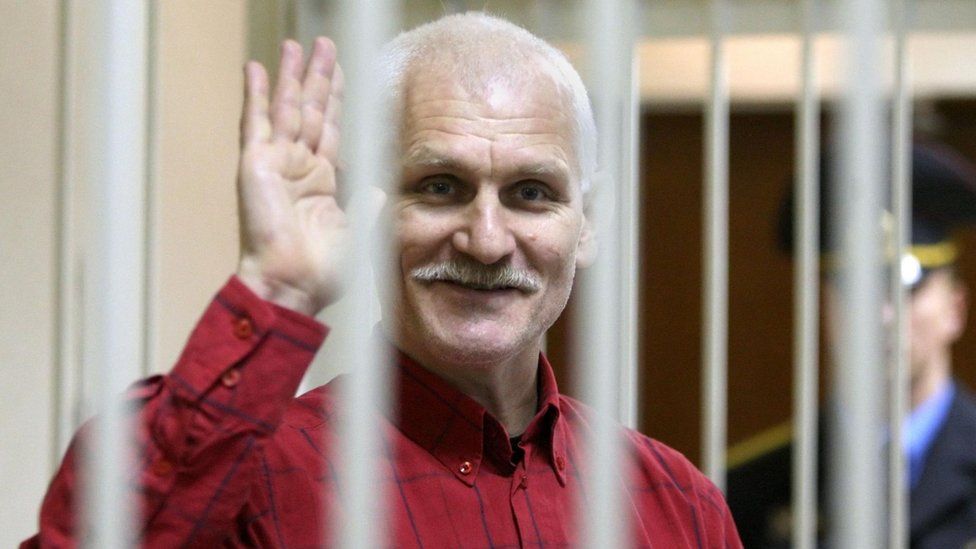
Ales Bialiatski sentenced to 10 years in jail

March 9, 2023

Belarus court sentences Ales Bialiatski to 10-year jail term, The sentencing of the Nobel Peace Prize winner and human rights defender has triggered protests. Media and human rights defenders across the world said that his arrest is ‘politically motivated’. See also: https://humanrightsdefenders.blog/2022/10/08/meet-ales-bialiatski-nobel-peace-prize-2022/

Ales Bialiatski pictured in November 2021
Image caption, Ales Bialiatski pictured in November 2021

Oliver Slow of BBC News reported as follows¨

…Supporters of Mr Bialiatski, 60, say the authoritarian regime of Belarusian leader Alexander Lukashenko is trying to silence him. He was arrested in 2021 following massive street protests over widely disputed elections the previous year, and accused of smuggling cash into Belarus to fund opposition activity. Demonstrators were met with police brutality and Lukashenko critics were regularly arrested and jailed during the demonstrations, which started in 2020.

Mr Bialiatski was in court alongside two fellow campaigners, Valentin Stefanovich and Vladimir Labkovich.

Mr Stefanovich was sentenced to nine years in prison, while Mr Labkovich received seven years, according to Viasna, the group Mr Bialiatski founded in 1996. All three had pleaded not guilty.

Mr Bialiatski’s wife, Natalya Pinchuk, said the trial was “obviously against human rights defenders for their human rights work”, describing it as a “cruel” verdict.

Referring to her husband’s letters from prison, where he has been held since arrest, she said: “He always writes that everything is fine. He doesn’t complain about his health – he tries not to upset me.”

Kostya Staradubets, a spokesperson for Viasna, said the sentences imposed on the three activists were “breaking our hearts”.

Speaking to the BBC World Service’s Newshour programme, he said: “We knew that our three colleagues would get long prison terms but anyway it’s still a shock, it’s breaking our hearts, not only the [prison] terms are long but the conditions also very horrific.

Belarus’s exiled opposition leader Svetlana Tikhanovskaya said the sentencing was “simply appalling”. “We must do everything to fight against this shameful injustice and free them,” she said.

Berit Reiss-Andersen, chair of the Norwegian Nobel Committee that awards the Nobel Peace Prize, said the verdict was a “tragedy” for Mr Bialiatski and described the charges as “politically motivated”.

In awarding the 2022 Nobel Peace Prize to Mr Bialiatski, Ms Reiss-Anderson said the Belarusian government had “for years tried to silence him”. “He has been harassed, he has been arrested and jailed, and he has been deprived of employment,” she said.

European Union foreign policy chief Josep Borrell condemned what he described as “sham trials”, adding they were “yet another appalling example of the Lukashenko regime trying to silence those who stand up in defence of human rights and fundamental freedoms of the people in Belarus”.

There are currently 1,458 political prisoners in Belarus, according to Viasna. Authorities claim there are none.

Mr Bialiatski is a veteran of the human rights movement in Belarus, establishing Viasna in 1996 in response to the brutal crackdown of street protests that year by Mr Lukashenko, who has been president of Belarus since the office was established in 1994. See: ¨https://humanrightsdefenders.blog/2022/10/07/nobel-peace-prize-2022-goes-to-well-recognised-human-rights-defenders/

This was followed by the sentencing of women journalists: https://www.theguardian.com/world/2023/mar/18/belarus-jails-senior-staff-at-independent-news-site-in-crackdown-on-lukashenko-critics

https://www.bbc.com/news/world-europe-64833756

https://www.livemint.com/

European Union on human rights in times of the coronavirus pandemic

May 6, 2020

I did several posts on the policy response of NGOs and the UN on human rights in the times of the corona virus pandemic [https://humanrightsdefenders.blog/tag/covid-19/]. Other intergovernmental bodies have of course also staked out their position. Here the EU through its High Representative, Josep Borrell:

… Respect for all human rights must remain at the heart of fighting the pandemic and supporting the global recovery.

The pandemic and its socio-economic consequences are having a disproportionate impact on the rights of women, children and elderly persons, and on all persons in vulnerable situations, including refugees, migrants, internally displaced persons, and are deepening pre-existing inequalities. Response measures should take account of the needs of those that are most at risk of marginalisation, stigmatisation, xenophobia and racism and other forms of discrimination. Prevention of, and protection from, all forms of sexual and gender-based violence, including through appropriate redress mechanism, and continued access to all essential health services, are particularly important in a time of confinement. All measures and actions taken in response should be inclusive and gender-responsive and ensure the women’s full and effective participation in decision-making processes and in all stages of response and recovery. The heavy impact of the crisis on economic and social rights also needs to be addressed.

The European Union reaffirms the need to pay special attention to the growing impact of the pandemic on all human rights, democracy and the rule of law. In emergency circumstances, international human rights law allows states to limit certain human rights provided that the measures are necessary, proportionate, temporary in nature, and non-discriminatory. The coronavirus pandemic should not be used as a pretext to limit democratic and civic space, the respect of the rule of law and of international commitments, nor to curtail freedom of expression, freedom of the press and access to information online and offline. The measures should not be used to restrict the work of human rights defenders, journalists, media workers and civil society organisations. Digital technologies that have the potential to help contain the pandemic should be used in full respect of human rights including the right to privacy.

Protecting the right of everyone to the highest attainable standard of health requires access to reliable information. People must be empowered to protect their own health and those of others. Misleading or false information can put lives in danger. It is therefore crucial to resolutely counter disinformation with transparent, timely and fact-based communication and thus reinforce the resilience of societies.

The European Union recognises that the role of civil society and human rights defenders is more important than ever to encourage solidarity, support those who are most in need, and defend human rights, fundamental freedoms and democratic space, and to promote accountability.

This is a time for solidarity and global cooperation through multilateral efforts.  The European Union reaffirms its commitment to contribute to the global response to the pandemics. The European Union will promote coordination in all relevant multilateral fora, including working with the UN, WHO, the Council of Europe, the OSCE and other regional organisations. Measures taken at the national level are also of particular importance. The European Union supports the important role of the UN system in mobilising and coordinating the global response to the pandemic with human rights at the forefront. We strongly support the UN Secretary General’s call for an immediate global ceasefire, as well as the call to end gender-based violence, and the work of the High Commissioner for Human Rights and her Office……..

https://www.consilium.europa.eu/en/press/press-releases/2020/05/05/declaration-by-the-high-representative-josep-borrell-on-behalf-of-eu-on-human-rights-in-the-times-of-the-coronavirus-pandemic/