Tomorrow, 29 November, 2019, young people will gather at locations around the world for a Fridays for Future Global Climate Strike. On 2 December, United Nations delegates, world leaders, business executives, and activists will meet at the 25th Conference of the United Nations Framework Convention on Climate Change (COP25) in Madrid to discuss ways to protect the environment. Participants in these events should also discuss ways to protect the protectors: the individuals and groups targeted around the world for their efforts on behalf of the planet.
Protecting the endangered Asiatic cheetah. Tweeting a satirical poem. Attending a climate conference. Campaigning against a power plant. These actions hardly conjure images of suicide bombers or coup plotters. Yet they have been labeled “eco-terrorism,” “extremism,” or “threats to national security” by governments and businesses that seek to block the work of environmental activists. The dangers facing environmental defenders do not stop at accusations that they are national security risks.From the Amazon rainforest to South African mining communities, activists seeking to preserve ecosystems and ancestral lands are being threatened, attacked, and even killed with near total impunity, Human Rights Watch has found. But in contrast to many of these illegal acts, the unjust labeling of environmentalists as security threats is often more insidious, as it is generally carried out under the color of law.
In a long interesting piece on 28 November Human Rights Watch writes that only in exceptional cases would the actions of environmental activists meet a generally recognized definition of terrorism … When they engage in civil disobedience, their aim is usually to strengthen – and improve the enforcement of – existing environmental protection measures. It lists examples where environmental activists have been smeared as terrorists or other national security threats (for more detail see the original article):
In Kenya, the police and military have frequently labeled environmental activists opposing a mega-infrastructure project in the Lamu coastal region, including a coal-fired power plant, as “terrorists” while subjecting them to threats, beatings, and arbitrary arrests and detentions. In 15 cases documented by Human Rights Watch between 2013 and 2016, the authorities accused environmental defenders of membership in, or links to, the extremist armed group al-Shabab but provided no compelling evidence.
In the Philippines, President Rodrigo Duterte in 2018 placed 600 civil society members, including environmentalists and indigenous rights defenders, on a list of alleged members of the country’s communist party and its armed wing, which he declared to be a terrorist organization. Duterte’s “terrorist list” included Victoria Tauli-Corpuz, an indigenous Filipina who is the UN special rapporteur on the rights of indigenous peoples and a climate change activist.
In Ecuador, eight years passed before the prominent environmental activist José “Pepe” Acacho, a Shuar indigenous leader, was able to clear himself of “terrorism” charges for his activities opposing mining and oil exploration in the Amazon. Acacho was charged with terrorism in 2010 for allegedly inciting violence during Shuar protests against a mining law.
In the US in August 2018, then-US Interior Secretary Ryan Zinke blamed “environmental terrorist groups” that opposed logging for wildfires on the West Coast – a proposition immediately attacked by leading environmental organizations including the Sierra Club. In 2017, 84 members of the US Congress, most of them Republicans, asked the Justice Department if activists mobilizing against the construction of oil pipelines could be prosecuted as terrorists. (The department’s response was that in some cases, yes.)
.
In Russia, at least 14 environmental groups have stopped work in recent years, and the head of the prominent group Ekozaschita! (Ecodefense!), Alexandra Koroleva, fled the country in June to avoid prosecution under the draconian Law on Foreign Agents. The 2012 law requires any Russian group accepting foreign funding and carrying out activities deemed to be “political” to register as a “foreign agent,” a term that in Russia implies “spy” or “traitor.” Authorities have used the law to silence groups that opposed state-sanctioned development projects and petitioned authorities for the release of imprisoned environmental activists, a Human Rights Watch investigation found.
Civil society participation will be crucial to ambitious outcomes at COP25. Parties to the summit, which include all UN member countries and the European Union, should allow activists ample opportunity to air their concerns about the climate crisis and use their combined expertise to help identify solutions. They should also provide activists with a safe space to speak out about the threats they face for carrying out their work.
In addition, parties should publicly commit to robustly carrying out international and regional treaties that protect environmental defenders. One of these treaties is the Escazu Agreement (the Regional Agreement on Access to Information, Public Participation and Justice in Environmental Matters in Latin America and the Caribbean), the world’s first covenant to include specific provisions promoting and protecting environmental defenders. Twenty-one countries have signed the 2018 agreement. But only six countries have ratified it – five shy of the ratifications needed to enter it into force. Chile, which stepped down as COP25 host because of protests stemming from economic grievances, but will still preside over the negotiations in Madrid, should lead by example and ratify the agreement.
COP25 participants should also commit to upholding the Aarhus Convention (the United Nations Economic Commission for Europe Convention on Access to Information, Public Participation in Decision-making and Access to Justice in Environmental Matters), to which Spain is a signatory. The convention – an environmental pact for Europe, the European Union, and Central Asia – grants the public, including environmental groups, an array of rights including public participation and access to information and justice in governmental decisions on the environment, without harassment or persecution. Parties to the treaty, including the EU, and Poland for its crackdown at COP24, have been criticized – including in some cases by the Aarhus Convention’s own oversight body – for flouting these provisions.
COP25 delegates should recognize that to genuinely protect the environment, they also need to protect its defenders – including those unjustly targeted in the name of security.
The World Economic Forum announced that from 30 August to 1 September 2019 more than 400 members of the World Economic Forum’s Global Shapers Community of innovators, activists and entrepreneurs under the age of 30 meet in Geneva to Spark Global Change. The theme of the summit is Leading for Impact. The Shapers, representing about 150 countries, will share their experiences, their impact and the lessons learned in managing grassroots projects in their local Global Shaper Hubs and through regional and global collaborations. They will also participate in skills-building and leadership-development workshops.
The summit will focus on enhancing leadership in the community’s three main impact areas: standing up for equity and inclusion, protecting the planet, and shaping the future of education and employment.
In the past year, Shapers in 125 cities have developed grassroots projects to promote equity and inclusion, including awareness campaigns, education initiatives and skill-building efforts to reduce barriers to women in the workplace, increase civic engagement among minority groups and advocate for the rights of refugees.
Perhaps a good case would be that of Saba Kord Afshari who for the simple act of removing her hijab and taking a video was made a “criminal” in Iran. #SabaKordafshari was sentenced to 24 years prison for #WalkingUnveiled and being voice of the voiceless. Activists call on the world, all politicians, all celebrities, MeToo movement – and why not the Shapers of the WEF ? – to take action.
On 17 July 2019 the Unrepresented Nations and Peoples Organization (UNPO) is launched a report, Compromised Space: Bullying and Blocking at the UN Human Rights Mechanisms, with its partners at the University of Oxford and Tibet Justice Centre which details how China, Russia, Iran and other repressive regimes are manipulating the United Nations Human Rights System to block and attack those seeking to hold them accountable for gross human rights violations perpetrated against minorities, indigenous communities and other unrepresented peoples…
The report is based on three years of study conducted by the UNPO and its partners at the University of Oxford and the Tibet Justice Center, supported by the UK’s Economic and Social Research Council. It is based largely on interviews and testimonies from 77 human rights defenders working on behalf of minorities, indigenous communities and other people living in nation states whose political systems do not create governance structures representative of all. It identifies a systemic attack on the United Nations human rights system by these governments, led largely by China, Russia and Iran, designed to shield them from accountability for human rights violations and crimes against humanity. This includes efforts to deny civil society groups participatory status at the UN (so called “ECOSOC status”), to bully and block them when they are able to access the UN, to crowd out the UN space with “GONGOs” – government-sponsored organisations posing as NGOs – and to harass, intimidate and take reprisals against activists and their families, whether at home or abroad.
Among the indicative findings of the report are the facts that:
China has regularly detained or imprisoned activists from its Southern Mongolian, Uyghur and Tibetan communities who have sought to travel to the UN, with such success that, for example, no Tibetan from Tibet who is acting independently of the Chinese government has ever managed to leave Chinese- occupied Tibet to testify at the UN in Geneva or New York, and then return safely;
Russia, in order to shield itself from accountability for its crimes in Russian-occupied Crimea, has asked for rules of participation in forums, such as the UN Minority Forum, to be changed to restrict NGO participation to groups acceptable to Russia, and its Crimea occupation authorities have attacked Crimean Tatar activists and destroyed or confiscated their passports in order to prevent their travel;
Iran regularly engages in practices designed to intimidate activists from their minority communities, even while they are operating within the United Nations buildings, and have taken out reprisals against the family members of these activists still living within the Islamic Republic of Iran.
The story of Dolkun Isa, President of the World Uyghur Congress and Vice President of the UNPO, is indicative of all of these actions. Mr. Isa and his organization have regularly been denied ECOSOC status at the United Nations, his access to the UN buildings and events have been restricted due to Chinese demands, he and his supporters have been followed and harassed in the UN building, his mother was held in China’s anti-Muslim concentration camps as a result of his work and for many years his ability to travel freely around the world was frustrated by Chinese efforts to involve European and other states in his persecution by falsely labelling him a “terrorist”.
Reacting to the launch of the report, UNPO’s General Secretary, Ralph Bunche, stated that “the report presents the disturbing finding that the United Nations Human Rights system, which is the only outlet for many peoples living under repressive regimes to seek accountability for crimes committed against them, is being systemically undermined by perpetrator regimes. Unfortunately, democratic states are not doing nearly enough to push back against this phenomenon and in some instances are even adopting the conduct that we see from the repressive states. The withdrawal of the USA from the UN’s Human Rights Council has certainly not helped matters, but other states are simply not doing enough to counter this problem and protect human rights defenders.”
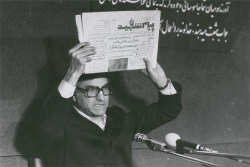
On 15 July 2019, the law firm Herischi & Associates LLC issued a press release announcing that the family of Mr. Abbas Amirentezam, former Deputy Prime Minister of Iran in 1979, filed an action against the Islamic Republic of Iran and the Iranian Revolutionary Guard Corp (IRGC) for, allegedly, the almost 40 year unlawful incarceration and house arrest of their father who was subjected to torture, solitary confinement, and lack of medical care that ultimately led to his death in 2018. The complaint is lodged under the Foreign Sovereign Immunities Act(FSIA)
Allegedly, Mr. Amirentezam was the longest-held political prisoner and prisoner of conscience in the Islamic Republic of Iran. According to Fariba Amini, as of 2018 he had “been in jail for 17 years and in and out of jail for the twenty one years, altogether for 38 years.” He was Iran’s Ambassador to the five Scandinavian countries and Deputy Prime Minister in the Interim Government of the Islamic Republic. Mr. Amirentezam opposed the Iranian hostage taking of the American Embassy in Tehran in 1979 and was subsequently arrested. Allegedly for 555 days, he was held in solitary confinement without access to lawyers nor any details of the charges against him before his trial; after Iran released the 52 American hostages in 1981, Amirentezam was tried without access to a lawyer and jury; he was unjustly convicted and condemned to life in prison.
The following is alleged in the complaint:
According to his memoir, “until 1996, while he was incarcerated in Evin prison, Mr. Amirentezam was denied any visitation rights and/or communication with his children. Mr. Amirentezam was routinely tortured and exposed to mock executions. He was refused medical treatment and consequently suffered irreparable damage to his health. His family not only endured his absence but lived in continuous fear of his death. Despite attempting to silence Mr. Amirentezam – he defied and remained as vocal as he could throughout his incredible hardship.”
According to UN Commission on Human Rights Report published on March 1996, Amirentezam interviewed with the UN Special Representative of the Commission on Human Rights, Mr. Maurice Copithorne. In his 1996 report to the UN, Mr. Amirentezam alleges that “1,100 political prisoners had been executed in Evin prison during one night at the beginning of the fall of 1981.” Pursuant to Mr. Amirentezam personal website, he alleges that, “despite constant pressure from the Iranian authorities, he never confessed to any erroneous allegations and never asked for mercy. He remained defiant to the end. As a result, he is the recipient the human rights award of Bruno Kreisky Prize in 1998 and the Jan Karski Award for Moral Courage in 2003.”
Mr. Amirentezam died on July 12, 2018 while under house arrest in Tehran. Allegedly until his death, he demanded a fair and public trial. Mr. Amirentezam children claimed in their Complaint that they have suffered significantly by the immense pain intentionally imposed unto their family by the government of the Islamic Republic of Iran. The Complaint further alleges that, “the Amirentezam family is demanding justice by exposing the government of the Islamic Republic of Iran and the IRGC for all the cruelty and suffering they have endured for almost four decades.”
This case is brought under terrorism exception of the Foreign Sovereign Immunities Act (FSIA) in the U.S. District Court for the District of Columbia through Plaintiffs attorney, Mr. Ali Herischi of Herischi & Associates, LLC. This action is filed on the first anniversary after Mr. Amirentezam’s death. Plaintiffs are asking for compensatory and punitive damages. Mr. Herischi is hopeful that “this case will bring attention to the systematic human rights abuses and domestic terrorism by the government of the Islamic Republic of Iran and the Iranian Revolutionary Guard Corps.”
On 26 June 2019 th Center for Human Rights in Iran informed us that in response to soaring tensions between Iran and the United States, 116 Iranian human rights defenders and groups based inside and outside the country have signed a statement warning of the “devastating” consequences of a military conflict.
The impact of military action on Iran would “lead to an accelerated human rights and humanitarian crisis and would only serve to destabilize an already troubled region,” said the statement co-organized by United for Iran and the Center for Human Rights in Iran. The names of the signatories, including activists, lawyers, journalists, and lawyers, are to be found in the link below.
Following is the letter:
We, the undersigned Iranian and international human rights organizations and advocates, express grave concerns over the rising tensions between the United States and the Islamic Republic of Iran, which risks a military confrontation that would cause massive human rights harms. We urge all parties and international actors to take immediate and clear steps to prevent a conflict.
The impact of any military action in Iran, as we have seen in neighboring countries, would be devastating. It would likely lead to an accelerated human rights and humanitarian crisis and could only serve to destabilize an already troubled region. Only peace-focused policies that prioritize the rights and well-being of ordinary people in Iran and the region can provide meaningful, long-term benefits.
We have a deep understanding of the problems in Iran, including human rights challenges and corruption within some government sectors. We have dedicated our lives to strengthening the rights of women and girls, ethnic minorities, religious minorities, workers, journalists, university students, LGBTQ people, artists, and political prisoners in Iran. We have fought for the freedom of speech, freedom of religion, the right to a fair trial, socio-economic rights of the Iranian people, and an end to discrimination. We have consistently opposed Iranian authorities in their abuse of power and oppressive policies. It is from this perspective that we warn against the threat posed by military conflict.
We also fear that military action against Iran will be disastrous for millions of ordinary people and could lead to the type of violent sectarian civil conflict seen in neighboring countries. The instability of these conflicts and the extent to which they pit groups of people against each other has led to immeasurable human rights abuses.
Many Iran-based human rights defenders have expressed dismay that broad economic sanctions imposed by the US and the specter of war have already made their work more difficult. Many of them are struggling to make ends meet in a depressed economy, while their activities have become increasingly risky in a heightened security environment. The threat of war has strengthened support for the Iranian state’s security approaches and has been used as a pretext to crack down on activists. Minority communities, who have little space for civic activism, suffer the brunt of crackdowns at such times. Many Iranian human rights defenders fear that an actual military conflict would give the Iranian security forces an opportunity to finally put a complete stop to their advocacy efforts.
These concerns reflect some of the likely outcomes of any military confrontation in Iran, underscoring the need for peaceful and legal solutions to any tensions between states.
We urge all parties to show maximum restraint. We ask that the United Nations Secretary-General, the European Union, and the government of Japan, as well as countries in the region that have stepped in the past to foster peace, to intervene to prevent the outbreak of war and deepening human rights and humanitarian crisis.
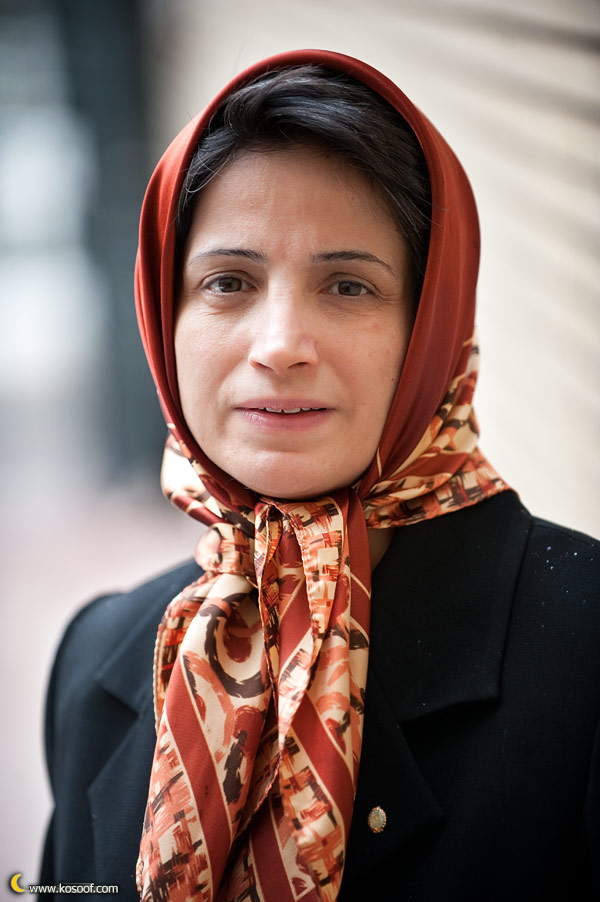
ore than a million people in more than 200 countries and territories across the globe have come together to express their outrage at the sentencing of prominent Iranian human rights lawyer Nasrin Sotoudeh to 38 years and six months in prison and 148 lashes after two grossly unfair trials, as signatures demanding her release were handed in to Iranian embassies around the world. [see also: https://humanrightsdefenders.blog/2019/03/12/iran-cracks-down-on-nasrin-sotoudeh-and-other-human-rights-defenders/]
“The cruel sentence handed down to Nasrin Sotoudeh for defending women’s rights and standing up against Iran’s discriminatory and degrading forced veiling laws has sent shock waves around the world. The injustice of her case has touched the hearts of hundreds of thousands of people who, in a moving display of solidarity, have raised their voices to demand her freedom,” said Philip Luther, Research and Advocacy Director for the Middle East and North Africa at Amnesty International.
“We hope the support for Amnesty International’s campaign shows Nasrin Sotoudeh that, despite having to face an agonizing ordeal, she is not alone. Her continued detention has exposed the depths of the Iranian authorities’ repression on an international stage. Today we are sending them a clear message: the world is watching and our campaign will continue until Nasrin Sotoudeh is free.”
As of 10 June, 1,188,381 people had signed Amnesty International’s petition.
This year, particular emphasis has been placed on the role of prominent human rights defenders, journalists and global human rights leaders, and of Canada as well. The conference brings together some of the world’s human rights leaders and thinkers, including: Saudi activist Omar Abdulaziz; Canadian retired lieutenant-general and senator Roméo Dallaire; Iranian women’s rights leader Shaparak Shajarizadeh; Chinese dissident and former political prisoner Yang Jianli; and former special adviser to the UN Secretary-General on the Responsibility to Protect, Jennifer Welsh.
The event is hosted by the Montreal Institute for Genocide and Human Rights Studies at Concordia University, in partnership with the Raoul Wallenberg Centre for Human Rights, Amnesty International, the Canadian International Council and the Centre for International Peace and Security Studies. (The event is expected to be livestreamed via CPAC.)
Here, some of those involved with the event shed light on the human rights issues they believe are most important to address in order to ensure global stability.
1. Where’s our defence of the global institutions and mechanisms to protect human rights?Kyle Matthews, executive director of the Montreal Institute for Genocide and Human Rights Studies
2. Crimes against humanity have been committed in Cameroon. Let’s not turn away. Pearl Eliadis, Canadian lawyer and senior fellow of the Raoul Wallenberg Centre for Human Rights
3. A call for a new generation of Canadian human rights promotion. Arthur Graham, Canadian lawyer and head of the rule of law and human rights department at the OSCE Mission to Serbia
4. Do not underestimate the importance, and fragility, of multinational democracy.Michael J. Abramowitz, president of Freedom House
5. Above all, the common thread — and need — is fairness.Jeremy Kinsman, Canada’s former ambassador to the European Union and High Commissioner to Britain
That there is still a lot that needs to be done in the world of sports and human rights is illustrated in the piece by Minky Worden (director of global initiatives at Human Rights Watch) in the Sydney Herald of 7 April 2019 (“Football leaders stand by as human rights abuses pile up”). Article 3 of the FIFA and AFC Statutes requires the AFC and its leaders “promote and protect
human rights”. [see also: https://humanrightsdefenders.blog/2018/12/03/fifas-second-report-on-human-rights-misses-sustainable-approach/]
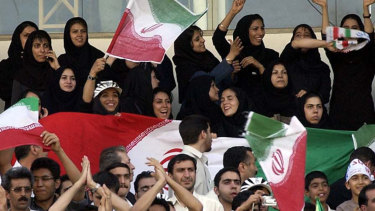
A too-rare sight … Iranian women cheer their national team in an Asian World Cup qualifying match against Bahrain in 2006. Now women resort to disguising themselves as men to enter stadiums.CREDIT:AP
..He is not the only high-level football official who may not be acting in accordance with the policy. In 2018, 20 members of Afghanistan’s women’s national team made detailed allegations to the Guardian and to FIFA of sexual and physical abuse they say they suffered at the hands of the president of the Afghan Football Federation, Keramuddin Karim, and other officials. FIFA suspended Karim for two 90-day periods and during this time he has reportedly threatened witnesses in the case. He stands accused of sexual assault, physical attacks and intimidation…. The federation general secretary, Sayed Ali Reza Aghazada of Afghanistan, was suspended, yet was also just elected to the AFC’s powerful governing body, the executive committee.
Finally, Iran’s Football Federation president, Mehdi Taj, was elevated to AFC vice-president……….On Friday, before the AFC election, Iranian women filed an unprecedented FIFA ethics complaint against Mehdi Taj, for his role in presiding over their exclusion from stadiums for years. FIFA has said clearly in its second Human Rights Advisory Board report that the stadium ban for women violates FIFA’s statutes, which say such discrimination is “punishable by suspension or expulsion”.
The AFC football leaders from Bahrain, Afghanistan and Iran are bound by the FIFA code of ethics, the FIFA statutes and the FIFA human rights policy. FIFA has made admirable progress in implementing its new policy , and could even raise the bar for other sports federations. But FIFA’s reform efforts risk derailment if the sport’s leaders in Asia refuse to uphold the new global standards. FIFA’s Gianni Infantino, up for re-election unopposed himself this year, needs to find his voice to call out football federation leaders who are undermining reforms. It is time to hold accountable those who are threatening the “beautiful game” with ugly human rights abuses.
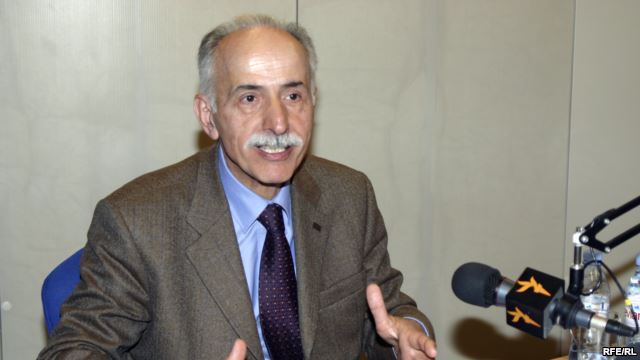
The appointment by Iran’s Supreme Leader Ali Khamenei of a known human rights violator to head the country’s judiciary is a prelude to dark days ahead for human and civil rights defenders, Iranian attorney Abdolkarim Lahiji told the Center for Human Rights in Iran (CHRI).
In a wide-ranging interview, Lahiji, who for decades worked as a prominent attorney and human rights activist in Iran until going into exile in France, discussed the events leading up to Raisi’s appointment to chief justice in early March 2019. Before his appointment, Raisi, 58, held top positions in the country’s judiciary, including Tehran prosecutor and chief prosecutor for the clergy, as well as membership in the Assembly of Experts and the Expediency Council. In 1988, Raisi served on Iran’s so-called “death commissions,” which were set up shortly after the end of the Iran-Iraq war (1980-1988) by order of then-Supreme Leader Ayatollah Ruhollah Khomeini, who wanted to crush opposition to the state.
Many of the prisoners executed after being interviewed by the inquisition-like commissions set up around the country were supporters of the Mojahedin-e Khalgh (MEK), but communists, members of the Fadaian-e Khalgh and other opposition groups were targeted as well. The estimated 4,000-5,000 prisoners—actual numbers could be higher—who were secretly killed in prisons throughout the country and dumped in mass graves had already been issued prison sentences before they were suddenly sent to the gallows.
Raisi now takes the reigns of the judiciary from Sadegh Larijani, who was chief justice of Iran from August 2009 until March 2019. At least 15 political prisoners died in state custody under Larijani’s watch. All of the cases were closed without fair and unbiased investigations and no one in the judiciary was ever held accountable for these deaths.
Lahiji, who defended political prisoners during Larijani’s rule, discussed what lies ahead for human rights defenders under Raisi. For excerpts of the interview follow the link below:


 Hans Thoolen on Human Rights Defenders and their awards