On 22 January 2023 Freedom Under Law (FUL) said that the news that eSwatini human rights lawyer Thulani Maseko has been gunned down in cold blood comes as no surprise. The eSwatini government said Maseko was brutally shot and killed by unknown criminals at his home in Mbabane on Saturday night. See: https://www.trueheroesfilms.org/thedigest/laureates/03464020-c1e6-11ea-a3f7-933e766692a6
“A ceaseless and fearless human rights lawyer, an outspoken critic of the regime in his beloved eSwatini, Thulani had all too long suffered at the hands of a heedless regime. But he lived by the motto: ‘My head is bloody, but unbowed … I am the master of my fate: I am the captain of my soul’.
“Sadly, and to the shame of those engaged in the administration of justice in his country, all too often he was a lone beacon of light,” FUL chair judge Johann Kriegler said. He said no-one could be misled by the cynical message of condolence put out on behalf of the eSwatini government.
“His passing has not only left his family bereft of a loved one; his country has been left the poorer, its human rights conscience brutally stifled.”
FUL said in paying tribute to Maseko that it respectfully suggested it would be fitting if the Law Society of eSwatini were to mark his passing by observing January 21 every year as a day of mourning his death and rededication to the rule of law. “To his widow and family we express our grateful condolences. They have paid a bitter price on behalf of all who try to serve the principles for which their dear one lived.”
According to the eSwatini government, Maseko was shot by “unknown criminals”. “[His] demise is a loss to the nation, and his footprints as a human rights lawyer are there as proof of his contributions to the country. He will be surely missed,” it said in a statement. Spokesperson Alpheous Nxumalo said the country’s security forces had assured the government that they were already at work looking for the killers and would not rest until they have been brought to book. “Government also wants to warn against speculations and insinuations, peddled particularly on social media platforms in instances like these. Again, government distinctively disassociates… and the country’s authorities from these heinous acts.”
Maseko chaired the Multi-Stakeholders Forum, a collaboration of political parties and civil society groups working to amplify calls for democratic reforms.
In 2018, Maseko took Swaziland’s King Mswati III to court for changing the country’s name. He had argued that the resources to be channelled to the name change should rather go towards improving living standards of the poor, according to reports by City Press. In 2014, Maseko was sentenced to two years in prison, with the editor of news magazine The Nation, Bheki Makhubu, for contempt of court over articles critical of the government and judiciary. The Nation published articles co-authored by the two men which were critical of the chief justice and suggested that he may have abused his powers. See also: https://lawyersforlawyers.org/en/lawyers/thulani-maseko/
On 8 August 2022 Human Rights First announced that Angelo Karlo Guillen, a human rights lawyer in the Philippines, is the winner of the 2022 Roger N. Baldwin Medal of Liberty. The Baldwin Medal will be presented to Guillen in person at an event in the United States later this year.
Michael Breen, President and CEO of Human Rights First said “Angelo Guillen is a courageous and effective advocate whose work has made a difference in the lives of his fellow Filipinos and put a spotlight on abuses and calling for accountability.”
Guillen is a prominent human rights defender and a leader in the National Union of Peoples’ Lawyers (NUPL). He lives and works primarily on the island of Panay, and his legal practice has included a focus on helping document human rights violations and educating farmers and indigenous communities on their human rights under domestic and international law.
In March 2021, after years of being followed, surveilled, and vilified for his work, Guillen survived a brutal stabbing by unknown assailants. The attack followed repeated attempts by government officials and others to depict him and other NUPL lawyers as “terrorists.” Three other NUPL lawyers have been murdered in previous years.
“I am honored to accept the Baldwin Medal, which I do on behalf of all Filipino human rights lawyers and defenders,” said Guillen. “This award will encourage us even more, to continue our work defending human rights and civil liberties in the Philippines, even in these difficult times.
“I am especially glad this award could be announced on the International Day of the World’s Indigenous Peoples, which is also National Indigenous Peoples Day in the Philippines. Indigenous peoples, like the Tumandok community, as well as farmers, labor leaders, and activists, have borne the brunt of unjust arrests, extrajudicial killings, and other human rights violations committed by state security forces that, to this day, still take place throughout the country. Their rights must be protected, and we hope that this recognition will help bring attention to their plight.”
On 5 May 2022 Robert F. Kennedy Human Rights announced Cameroonian human rights defenders Maximilienne C. Ngo Mbe and Felix Agbor Nkongho (Balla) as the 2022 recipients of its annual Human Rights Award. A ceremony honouring the two laureates will take place Tuesday, 7 in Washington, D.C.
A Cameroonian human rights defender with over 30 years of experience, Ngo Mbe is Executive Director of the Central African Human Rights Defenders Network (REDHAC). Since 2010, she has led REDHAC in its efforts to promote civic space and protect fundamental freedoms throughout Central Africa through investigations of human rights abuses, advocacy before regional human rights bodies, monitoring of democratic processes, and demanding state accountability. She was previously named an International Woman of Courage in 2021 by the U.S. Department of State [see: https://humanrightsdefenders.blog/2021/03/09/state-department-hands-out-21-international-women-of-courage-awards-2021/] and received the Franco-German Prize for Human Rights and the Rule of Law in 2016.
“Receiving the RFK Human Rights Award 2022 still feels like a dream,” said Ngo Mbe. “I am humbled by this recognition and dedicate it to my family, my colleagues at REDHAC, the members of the REDHAC Board of Directors, in particular Me Alice Nkom, and the Human Rights Defenders who have been my source of strength over the years. I look forward to working alongside Robert F. Kennedy Human Rights as we continue our struggle for justice, human rights, and peace in Cameroon and Central Africa.“
Nkongho is a Cameroonian lawyer and human rights defender. He is the director of the Centre for Human Rights and Democracy in Africa (CHRDA) and a leading advocate for human rights of Cameroonians in the conflict-stricken Anglophone region. Nkongho’s work focuses on the promotion of democracy, good governance, access to justice, and rule of law. His reputation as a devoted human rights defender is evidenced by his tireless work for human rights in Cameroon and throughout Africa, despite state sanctioned pushback, including his arbitrary detention in 2017. In 2019 he won the African Human Rights Defenders Shield Award.
“When I got news of the award, I was staring at portraits of my late parents and crying tears of joy. This is the best gift I could ever offer them, and I am sure they will be celebrating in heaven,” said Nkongho. “I am truly honored, and I sincerely thank Robert F. Kennedy Human Rights for considering me worthy of this award. It is dedicated to all those who advocate for the promotion and protection of human rights, to all the human rights defenders who continue to put their lives and liberty on the line to fight against injustice.“
Steven Donziger, the human rights lawyer who took on Chevron, spent nearly a thousand days in jail or on house arrest. Amnesty says it was corporate retaliation.
This article originally appeared on 26 April at Common Dreams:
Human rights lawyer Steven Donziger walked free Monday after 993 days of detention stemming from his decades-long legal fight with Chevron, which deployed its vast resources in a campaign to destroy Donziger after he won a $9.5 billion settlement against the fossil fuel giant over its pollution of the Amazon rainforest.
“It’s over. Just left with release papers in hand,” Donziger wrote on Twitter. “Completely unjust that I spent even one day in this Kafkaesque situation. Not looking back. Onward.”
“We are relieved that Steven Donziger will finally recover his freedom after almost 1,000 days of arbitrary detention, which included 45 days in prison and over 900 days under house arrest,” Daniel Joloy, senior policy advisor at Amnesty International, said in a statement Monday. “He should have never been detained for even one day, as it has been clear the whole process against him has been in retaliation for his human rights work that exposed corporate wrongdoings.”
“Corporations must not be allowed to continue abusing the U.S. justice system to silence and intimidate human rights defenders or anyone else exposing their wrongdoing,” Joloy added.
…In 2014, a federal judge with ties to Chevron ruled that Donziger was guilty of a “pattern of racketeering activity,” a charge he has denied. U.S. District Judge Lewis Kaplan’s decision was based on testimony from a witness who later admitted to lying.
On 1 March 2022, EFE reported that Chinese human rights lawyer Yu Wensheng, sentenced to 4 years in 2020 for “inciting subversion of state power,” was released Tuesday from prison in the eastern city of Nanjing, according to a Twitter post by his wife Xu Yan. Yu Wensheng was on a train bound for Beijing according to his wife, who awaits him at a hotel in the capital.
During the few meetings with his lawyer, Yu has claimed to have suffered torture and mistreatment during his confinement that may have caused him to lose part of the mobility of his right hand.
ISHR, the Martin Ennals Foundation and eight other major human rights groups urge in a joint statement the Chinese government to ensure lawyer Yu Wensheng is able to leave Nanjing Prison on March 1st, and freely reunite with his family in Beijing.
The signatory organisations also called in the joint statement for sustained attention on the growing risks and threats his wife, Xu Yan, faces for advocating for his rights and release.
For this, the authorities revoked his legal license on 16 January, 2018. Three days later, he was forcibly disappeared, a day after publishing an open letter calling for constitutional reform. He was put on trial in secret on 9 May 2019, but his wife, Xu Yan, was only informed of his four-years jail sentence in June 2020.
The signatories of the joint statement express grave concern that Yu Wensheng may be put under a de facto home arrest, severely restricted in his movements and communication, and unable to reunite with his family in Beijing.
Human rights lawyers have endured such restrictions upon leaving prison on grounds of a supplemental sentence of ‘deprivation of political rights’, in a phenomenon known as ‘non-release release’. In September 2019, UN experts condemned the use of this practice against lawyer Jiang Tianyong as ‘gratuitously punitive and legally unjustified’.
IThe signatory organisations urge the Chinese authorities to:
Ensure that Yu Wensheng is able to reunite with his family in Beijing on 1 March, to exercise his rights to move and communicate freely, and that he is not subjected to surveillance and harassment. He must also be able to resume his legal work without restrictions;
Put an end to the surveillance and harassment of Yu Wensheng’s family;
Guarantee in all circumstances that all lawyers in China, including human rights lawyers, are able to carry out their legitimate professional duties without fear of reprisals and free of restrictions.
On 14 February 2022 FIDH published a joint statement to support Sri Lankan human rights defender Ambika Satkunanathan:
We the undersigned human rights organizations, express our deep concern about the statement issued by the Sri Lankan Foreign Ministry on February 4, 2022, in which the government denounced testimony given by Ambika Satkunanathan, a leading human rights lawyer, to the European Parliament on January 27. The government statement clearly constitutes an act of harassment and intimidation. We condemn the Sri Lankan government’s tactics to intimidate human rights defenders, and express our full solidarity with Ms. Satkunanathan, a well-known, respected and courageous human rights defender. Targeting her for providing accurate testimony about the human rights situation in Sri Lanka to the European Parliament is completely unacceptable, and sends a chilling message to all Sri Lankan civil society, especially those in the north and east, who are already operating under considerable duress under the current administration.
Sri Lanka’s international partners, including the European Union, should publicly condemn the Sri Lankan government’s statement and express solidarity with Ms. Satkunanathan, who has been targeted for her international engagement, and increase their efforts to engage with Sri Lankan civil society at large.
The Foreign Ministry’s statement contains numerous false claims in an attempt to disparage and delegitimize a distinguished human rights advocate, placing her at risk of physical danger in retribution for her brave work. The government’s claim that her testimony was “reminiscent of LTTE [Liberation Tigers of Tamil Eelam] propaganda that once stoked hatred among communities,” and that “such allegations need to be refuted in the interest of social harmony” Is particularly insidious and dangerous.
The government’s statement mirrors its repeated practice of falsely equating human rights defenders and human rights advocacy with those pursuing “terrorism.” The statement’s language aligns these baseless allegations with vague and frequently abused provisions under the Prevention of Terrorism Act (PTA), exposing Ms. Satkunanathan to a heightened risk of threats, attacks and persecution.
Ms. Satkunanathan was a commissioner of the National Human Rights Commission of Sri Lanka before that body’s independence was compromised under the current administration and led the first national study on Sri Lanka’s prisons. Prior to that, she was for many years a legal consultant to the Office of the United Nations High Commissioner for Human Rights. She is the author of an important recent report on abuses committed during the so-called “war on drugs.”
We are concerned that the government’s statement seeks to place the blame on human rights defenders if the European Union determines that Sri Lanka failed to meet its human rights commitments under GSP+, the preferential tariff system. The European Union should remind the Sri Lankan government that the responsibility to uphold its international human rights obligations rests with the government. The government’s treatment of human rights defenders reflects its lack of respect for international human rights law.
We support Ms. Satkunanathan’s testimony to the European Parliament, which accurately described a situation already reported by the United Nations and many domestic and international human rights organizations. The government’s response contains numerous false statements, including:
The government claims to be “engaged in long standing cooperation with the UN human rights mechanisms and the UN Human Rights Council.” On the contrary, in February 2020, soon after taking office, the government of President Gotabaya Rajapaksa withdrew Sri Lankan support from consensus resolutions of the council, repudiating commitments made by the previous government. Special Procedures mandate holders of the Council issued a statement on February 5, 2021, noting that their recommendations, including on torture, the independence of the judiciary, arbitrary detention, enforced disappearances, minority rights, counterterrorism, freedom of religion or belief, and freedom of assembly and association, had been ignored.
The government claims to be “strengthen[ing] rule of law, access to justice and accountability.” However, President Rajapaksa campaigned on a platform of protecting “war heroes” from prosecution, and has appointed individuals implicated in war crimes to senior government posts. His presidential commission on “political victimization” has sought to interfere in judicial proceedings and block trials and investigations in human rights cases implicating the president’s associates and the president himself. The president pardoned Sunil Ratnayake, one of very few members of the armed forces ever convicted of human rights violations, who murdered eight Tamil civilians including children.
The government denies that civic space is shrinking, as Ms. Satkunanathan described in her testimony. Yet under the current government, many human rights defenders have said that they are subjected to continual government intimidation, intrusive surveillance, and attempts to block their access to funds. In her most recent update to the Human Rights Council, High Commissioner Michelle Bachelet wrote that, “surveillance, intimidation and judicial harassment of human rights defenders, journalists and families of the disappeared has not only continued, but has broadened to a wider spectrum of students, academics, medical professionals and religious leaders critical of government policies.” The UN Special Rapporteur on contemporary forms of slavery in his end-of-mission statement last December documented government intimidation of civil society and a “shrinking civic space.”
The government claims there is no “concrete evidence of discrimination against minorities.” In fact, for nearly a year the government banned the burial of people said to have died with Covid-19, causing immense distress to the Muslim community without any medical justification in what is only but one example of discrimination against ethnic and religious minorities. Such burials are now permitted only at a single remote site. In January 2021 High Commissioner Bachelet found that, “Tamil and Muslim minorities are being increasingly marginalized and excluded in statements about the national vision and Government policy… Sri Lanka’s Muslim community is increasingly scapegoated.” The High Commissioner’s findings are in line with reports by Amnesty International, Human Rights Watch, and others that the Prevention of Terrorism Act is used almost exclusively against members of the Tamil and Muslim communities. The government continues to deny efforts to commemorate war victims belonging to the Tamil community.
The government denies Ms. Satkunanathan’s description of alleged extrajudicial killings committed in the context of Sri Lanka’s “war on drugs.” However, these abuses are widely documented. In September, High Commissioner Bachelet said, “I am deeply concerned about further deaths in police custody, and in the context of police encounters with alleged drug criminal gangs, as well as continuing reports of torture and ill-treatment by law enforcement officials.”
The Sri Lankan government’s statement attacking Ambika Satkunanathan for her testimony to the European Parliament’s Sub-Committee on Human Rights exemplifies threats faced by human rights defenders, particularly when they engage with foreign and international forums, and it further shows the government’s refusal to address the ongoing serious human rights violations taking place in the country. Instead of trying to silence those who seek to defend human rights, the government should give serious consideration to their input and contributions, and take urgent action to ensure that they can work in a safe environment without fear of reprisals.
He was first arrested in February 1982, when he was held for four months and tortured. In 1989 the CDDL-HR formed an underground publication, Sawt al-Dimuqratiyya (The voice of democracy). In 1991 the group called for free elections, leading to Naisse’s arrest in December 1991. In 1992 he was tried and sentenced to 9 years imprisonment in Sednaya prison. Released in July 1998, Naisse was not subsequently permitted to practice law.
In August 2003 Naisse was questioned and threatened by military security. The committee posted a public letter on the Internet, calling for the lifting of the state of emergency. On 8 March 2004 they led around 700 demonstrators in a peaceful sit-in in front of the Syrian parliament building in Damascus. Naisse and one hundred others presented the parliament with a petition against the state of emergency, signed by over 7,000 people.
On 13 April 2004 Naisse was arrested and returned to Sednaya prison. There he suffered a stroke, leaving him partially paralysed. He began a hunger strike, and was released on bail pending trial on 16 August 2004. After international appeals on his behalf, the court acquitted him on 26 June 2005.
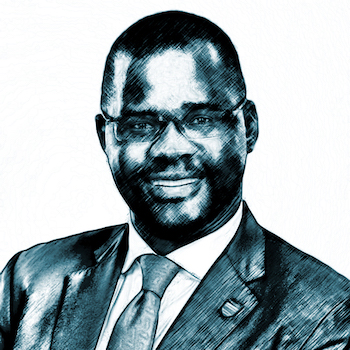
Ugandan human rights lawyer Nicholas Opiyo was awarded the 2021 Human Rights Tulip. The Dutch Ministry of Foreign Affairs awards the honour, which is accompanied by a cash prize of 100,000 euros to help the recipient continue or expand their work. For more on this award and its laureates, see: https://www.trueheroesfilms.org/thedigest/awards/D749DB0F-1B84-4BE1-938B-0230D4E22144
Opiyo opposed a controversial anti-gay law that included a life sentence for homosexuality. According to the ministry, the human rights defender also played an important role in criminalizing torture in his country. His work often leads to him being accused of criminal violations with no evidence to back up the charges, and he is often closely monitored by security forces. “Human rights activists see the charges against Nicholas as a way to hinder his work as a human rights lawyer. Even in jail, he used his time to talk to prisoners who sought advice,” the ministry stated. [see also: https://humanrightsdefenders.blog/2020/12/23/ugandan-human-rights-defender-nicholas-opiyo-arrested-like-a-criminal/]
“His work has made the LGBTI community in Uganda feel stronger, knowing that there are allies who support them,” said caretaker Foreign Minister Ben Knapen.
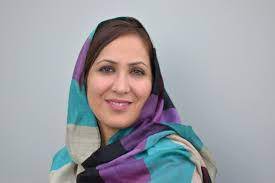
It is hoped that the award will “further inspire the world to pay closer attention to human rights in Afghanistan, especially women’s rights” and “encourage human rights defenders and those who have been deprived of human rights,”
According to the TFD, Rasuli has been actively involved in social activism and the promotion of women’s rights at a young age and thorough her years of work, “Afghan women have gradually been able to receive justice from judicial procedures.”
As the co-founder and executive director of the Women for Justice Organization, Rasuli has led lawyers, gender experts and activists in efforts to increase women’s access to justice, uphold the rule of law in Afghanistan, and investigate some of the most emblematic sex crime cases in the country over the years, the TFD said in its statement.
She also previously served as director of Medica Afghanista, another organization that provides psychosocial counseling and legal support to female survivors of sexual violence. However, in an interview with the European public broadcaster, Arte, aired in September, Rasuli revealed that she has relocated to the U.S. following the U.S. military pull-out from Afghanistan.
The TFD on Tuesday declined to confirm Rasuli’s current whereabouts, but said she would deliver her acceptance speech in a pre-recorded video that would be published on its website on 10 December.
The foundation said it would not host a physical award ceremony this year due to COVID-19.



 The government claims to be “engaged in long standing cooperation with the UN human rights mechanisms and the UN Human Rights Council.” On the contrary, in February 2020, soon after taking office, the government of President Gotabaya Rajapaksa
 Hans Thoolen on Human Rights Defenders and their awards