The value of human rights awards was once again demonstrated by the reaction of the Nicaraguan Government which withdrew from the UN cultural body. The Nicaraguan authorities justified their decision by denouncing the award as the “diabolical expression of a traitorous anti-patriotic sentiment” of La Prensa, which they accuse of promoting “military and political interventions by the United States in Nicaragua.” The Nicaraguan government denounced UNESCO’s decision, saying it gives prominence to “the traitors, slaves and lackeys of colonialism and imperialism,” adding the organization “totally abandons any sense of objectivity.
UNESCO director-general Audrey Azoulay said on Sunday that she “regrets” the country’s decision, adding that it would “deprive the people of Nicaragua of the benefits of cooperation, particularly in the fields of education and culture.” The organization is “fully within its mandate” of defending freedom of expression and freedom of the press, Azoulay said.
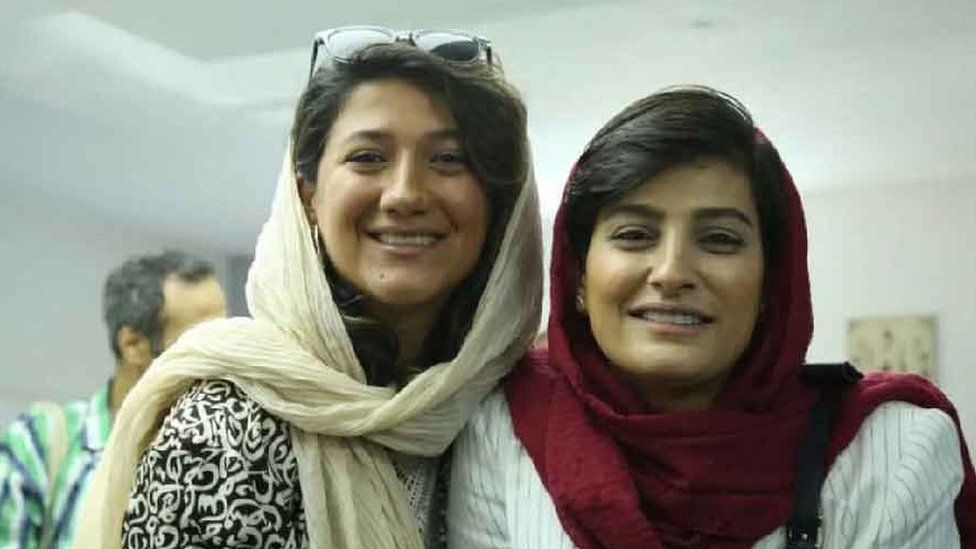
Image caption, Niloufar Hamedi and Elaheh Mohammadi have been detained in Iran for more than 200 days
BBC Persian Service on 5 May 2023 drew attention to the fate of the two journalists who reported first on Mahsa Amini, whose name made headlines around the world when she died in custody last September, sparking waves of protests in Iran. But not many people have heard of Niloufar Hamedi and Elaheh Mohammadi.
The two female journalists helped break the story of Ms Amini’s death and have been detained in two of Iran’s most notorious prisons ever since. On Tuesday, they and the imprisoned Iranian human rights activist Narges Mohammadi were awarded the 2023 Guillermo Cano World Press Freedom Prize by the United Nations’ cultural agency, UNESCO.”They paid a hefty price for their commitment to report on and convey the truth. And for that, we are committed to honouring them and ensuring their voices will continue to echo worldwide until they are safe and free,” said Zainab Salbi, the jury chair. For more on Narges, see; https://www.trueheroesfilms.org/thedigest/laureates/07C20809-99E2-BDC0-FDC3-E217FF91C126
On 22 September, just six days after she tweeted a photograph of Mahsa’s grieving family, Niloufar Hamedi was arrested. Security forces also raided Elaheh Mohammadi’s home at the same time, seizing her electronic devices. On 29 September, she too was arrested.
Both Ms Hamedi and Ms Mohammadi were already known for hard-hitting news reports and coverage of human rights issues.
“Journalists in Iran are risking their lives on a daily basis to report on the conditions and oppressions there,” the Harvard fellows noted.
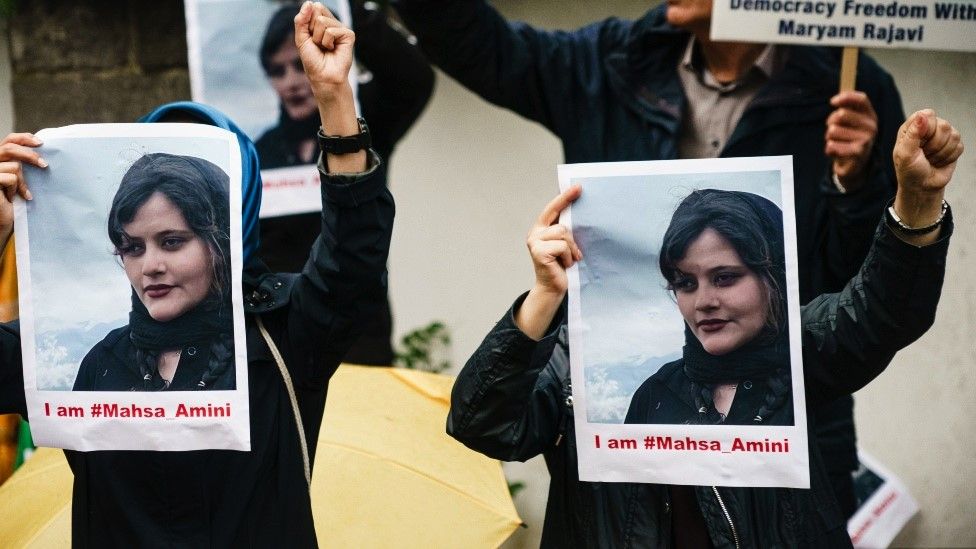
Image caption, Mahsa Amini’s death led to a wave of protests in Iran and rallies in solidarity around the world
Ms Hamedi and Ms Mohammadi have meanwhile been kept in harsh conditions at Evin prison in Tehran and Qarchak Women’s Prison, south of the city. Reports from inside Qarchak suggest that the facilities are inhumane, with a lack of medicine, food and even safe drinking water or clean air. Ms Mohammadi lost 10kg (22lbs) in the first three months of her detention, her husband wrote on his Instagram page.
Both women have also struggled to access legal support. The first lawyer appointed to represent the pair said in October that he was unable to communicate with them or access the legal documents surrounding their arrests. Less than a month later, he was himself arrested. The journalists’ families have struggled with the pain of not knowing what is going to happen to them.
“I’m asked, ‘What do the authorities tell you?’ I’m not even sure which institution or person to contact,” Ms Hamedi’s husband, Mohammad Hossein Ajorlou, said in an interview with Sharq.
He too has found it difficult to get information about what his wife is accused of and what is likely to happen to her.
At the end of October, Iran’s ministry of intelligence and the intelligence agency of the Revolutionary Guards issued a statement accusing Ms Hamedi and Ms Mohammadi of being trained by the US Central Intelligence Agency to foment unrest in Iran.
Their newspapers denied the allegations and insisted they had just been doing their jobs.
Last week, after they had both spent more than 200 days in custody, the Iranian judiciary announced that Ms Hamedi and Ms Mohammadi had been indicted and their cases referred to a court.
The winner of the 2015 UNESCO/Guillermo Cano World Press Freedom Prize is the Syrian journalist and human rights defender, Mazen Darwish, currently imprisoned. The Prize will be awarded during the celebration of World Press Freedom Day, 3 May, which will this year be hosted by Latvia (National Library, Riga, 6 p.m.).
An independent International Jury of media professionals recommended Mazen Darwish in recognition of the work that he has carried out in Syria for more than ten years at great personal sacrifice, enduring a travel ban, harassment, as well as repeated detention and torture. Darwish, a lawyer and press freedom advocate, is the president of the Syrian Centre for Media and Freedom of Expression (CMFE), founded in 2004, and one of the founders of the Voice newspaper and syriaview.net, an independent news site, which has been banned by the Syrian authorities. In 2011, Darwish established Media Club, the first Syrian magazine about media affairs.
He has been detained since February 2012, when he was arrested with colleagues Hani Al-Zitani and Hussein Ghareer. Mazen won earlier awards from Roland Berger (2011), Reporters without Borders (2012) and Bruno Kreisky (2013).
The $25,000 Prize is named in honour of Guillermo Cano Isaza, a Colombian journalist who was assassinated in front of the offices of his newspaper, El Espectador, in Bogotá, on 17 December 1986. It is funded by the Cano Foundation (Colombia) and the Helsingin Sanomat Foundation (Finland).

 Hans Thoolen on Human Rights Defenders and their awards