Posts Tagged ‘ethnic conflict’

Burundian women’s rights defender Marie Louise Baricako pushes for a national dialogue

October 8, 2025
Marie Louise Baricako, a women’s rights activist from Burundi, in Geneva for the Human Rights Council (Geneva Solutions/Michelle Langrand)

Marie Louise Baricako, a women’s rights activist from Burundi, in Geneva for the Human Rights Council (Geneva Solutions/Michelle Langrand)

Michelle Langrand in Geneva Solutions of 8 October 2025, talks with Burundian women’s rights defender Marie Louise Baricako – who was In Geneva to attend the Human Rights Council. She warns that her country is sinking deeper into crisis as the region teeters on the brink, urging the international community to push for a national dialogue.

Marie Louise Baricako recalls the Arusha negotiations with a mixture of pride and sorrow. In the late 1990s, she pushed for women to have a seat at the table in the talks aimed at ending Burundi’s inter-ethic civil war – and yet, 25 years on, much of the agreement’s promises remain unfulfilled.

“If women are left out, Burundi will keep losing,” she says. “How can you hope to develop when 52 per cent of your population are left aside?”

Baricako has spent a lifetime trying to empower that 52 per cent. In 1988, she became the first Burundian woman to earn a PhD, studying in Cameroon, and later led the English department at the University of Burundi. Born in Muramvya province, she spent much of her adult life abroad, including in The Gambia, where she joined Femme Africa Solidarité, a feminist network founded in Geneva in 1996 to promote female leadership in peace, security and development……

Fortuné Gaetan Zongo, UN special rapporteur on Burundi since 2021, warns of a “real risk” of regional destabilisation. “If Kinshasa were to fall, Burundi would be deeply affected,” he tells Geneva Solutions. Some 78,000 Congolese refugees fleeing the violence have crossed into Burundi since the beginning of the year, raising questions about how Burundi, already struggling, can cope with their humanitarian needs while the UN aid system is strapped for cash.

Baricako sees how ethnic narratives continue to be exploited by those in power. “This is what our leaders today are nourishing, because in their mind, Tutsi had kept power for so long alone, excluding Hutus. Now, they say ‘we have taken it, we shall not release it, until Jesus comes back’,” she says.

Yet repression is not limited to a group. “When women or human rights defenders dare to speak out on any violation, the next day, either they are in prison or they are killed,” she says…

Despite the bleak prospects, Baricako places hope in ordinary Burundians. “They have had time to believe in these stories of Hutus or Tutsi being the enemy. Now I believe people have realised that it is not about the ethnic group,” she says. “Burundians want a peaceful country, and they are ready to work as hard as they can to rebuild Burundi.”

Baricako stresses that talks would lead to more unfulfilled promises without the participation of those in power. She calls on the African Union and the East African Community to step out of their indifference and pressure Burundi to the table.

Zongo, who has been met with the government’s outright refusal to cooperate with him and other human rights experts, also notes that certain states with good relations with Burundi, like Tanzania, DRC and Cameroon, “can convince Burundi to sit at the table and engage in cooperation.”

For all the setbacks, Baricako remains steadfast. “The support of civil society has been essential in staying strong and not abandoning the fight,” she says. “Peace is our business, whether they want it or not. I will not go to the battlefield with a weapon, but what I have in my heart, I will use it to stand for peace and security of Burundians.”

https://genevasolutions.news/human-rights/rights-defender-fights-for-political-way-out-as-burundi-sinks-deeper-into-crisis

Burundi: reprisals, torture, incitement to hatred and continued refusal to admit monitoring

August 29, 2016

The situation in Burundi continues to be marred by instability and reports of serious human rights violations, including allegations of extra-judicial killings, disappearances, torture, and arbitrary detention of members of the opposition, civil society and those suspected of opposing the Government. Human rights defenders and journalists are among the hundreds of thousands of people who have fled the country since April 2015. I have written quite a bit about Burundi where all early warning signs of violence and ethnic cleansing are present [https://thoolen.wordpress.com/2015/11/10/burundi-what-more-early-warning-does-one-needhttps://thoolen.wordpress.com/2016/02/08/what-is-burundi-doing-in-the-un-human-rights-council/]. And the situation continues:

  • The UN Committee against Torture (CAT) issued a wake-up call to Burundi said Amnesty International on 12 August 2016 after the Committee flagged an increase in the use of torture and other ill-treatment since the beginning of the country’s current crisis in April 2015. In its concluding observations the Committee’s 10 independent international experts expressed deep concern over hundreds of cases of torture alleged to have taken place in recent months in both official and unofficial places of detention.
  • On 8 August 2016 the CAT had already issued a report that it was gravely concerned by reports that four Burundian lawyers who provided information to it are being subjected to reprisalsIn a press statement issued by the Office of the UN High Commissioner for Human Rights, the Committee said the four lawyers – Armel Niyongere, Lambert Nigarura, Dieudonné Bashirahishize and Vital Nshimirimana – had contributed to an alternative report by a coalition of Burundian non-governmental organizations for the its review, and three were present at the review in Geneva on 28 and 29 July. According to the Committee, on 29 July, a Burundian prosecutor asked the President of the Bujumbura Bar Council to strike the lawyers off the professional register, alleging that they had committed several offences, including involvement in an insurrectionist movement and an attempted coup. The Committee’s letter, signed by Chair Jens Modvig and Rapporteur on Reprisals Alessio Bruni, notes that the prosecutor requested sanctions against the lawyers, rather than an inquiry to establish the facts, “which raises concerns with respect to presumption of innocence.” It goes on to state that this concern “is all the stronger given that the (prosecutor’s) request came on the same day that the Burundian delegation, presided over by the Minister of Justice, indicated they would not be participating in the second session of dialogue with the Committee, citing the alternative report by Burundian civil society in particular as the reason.” [Mr. Modvig and Mr. Bruni also point out that the Committee raised the issue of reprisals after the last regular review of Burundi in 2014. They reminded the Burundian Government that reprisals contravene Article 13 of the Convention against Torture, to which the country has been a party since 1993. Article 13 states that complainants and witnesses should be protected against all ill-treatment or intimidation as a consequence of making a complaint or giving evidence.]
  • Finally on 16 August the United Nations Special Adviser on the Prevention of Genocide, Adama Dieng, expressed his concern at inflammatory statements by public officials that could constitute incitement to violence including, most recently, by a senior official of the ruling CNDD-FDD political party. In a statement on 16 August 2016 that was published on the CNDD-FDD website, Pascal Nyabenda, who was at the time President of the CNDD-FDD party and President of the National Assembly, suggested that the genocide in Rwanda was a fabrication of the international community, (“montages genocidaires contre le Gouvernement dit Hutu de Kigali”) that was used to remove the Hutu government that was in place at the time.   “This irresponsible statement could be interpreted as genocide denial”, Mr. Dieng said, “and has the potential to inflame ethnic tensions, both within Burundi and outside its borders”.  At the 20 August meeting of the party, a new head of the CNDD-FDD was appointed but Mr. Nyabenda continues in his role as President of the National Assembly. Special Adviser Dieng also raised concern that the youth wing of the CNDD-FDD party, known as the Imbonerakure, continues to be associated with human rights abuses and is reported to have threatened ethnic violence. He noted that the Minister of the Interior of Burundi had confirmed that the Imbonakure formed part of the national security strategy, as the CAT also pointed out in its concluding observations.
  • To make things even worse Burundi has rejected in early August the deployment of a United Nations police force saying the France-drafted resolution authorizing the security contingent was made without Bujumbura’s consent. “The government of Burundi rejects every aspect of this resolution linked to the deployment of any force on its territory,” spokesman Philippe Nzobonariba said in a statement released on Tuesday, adding that the resolution was “in violation of the fundamental principles required of the UN family and above all violating its sovereignty.” The response came after the UN Security Council authorized to dispatch of up to 228 officers to Bujumbura and elsewhere throughout the west African country for an initial period of one year, in an attempt to provide the council, according to French Ambassador Francois Delattre, with “eyes and ears” on the ground to provide early warning of possible mass atrocities. The planned deployment of the contingent has aroused fury from the country’s authorities, who initially agreed to accept no more than 50 officers The country’s authorities initially agreed to accept no more than 50 officers, but now infuriated by the UN planned deployment of 228-strong contingent, have rejected even the 50-strong security force.
  • An overview of FIDH actions concerning Burundi in 2015/16: https://www.fidh.org/en/region/Africa/burundi/burundi-one-year-of-bloody-crisis

http://allafrica.com/stories/201608270196.html

http://www.un.org/apps/news/story.asp?NewsID=54640#.V8Pm3IRptgc

https://www.amnesty.org/en/latest/news/2016/08/burundi-un-findings-must-be-a-wake-up-call-on-torture/

http://www.presstv.ir/Detail/2016/08/03/478262/Burundi-UNSC-UN-Nkurunziza-police-France

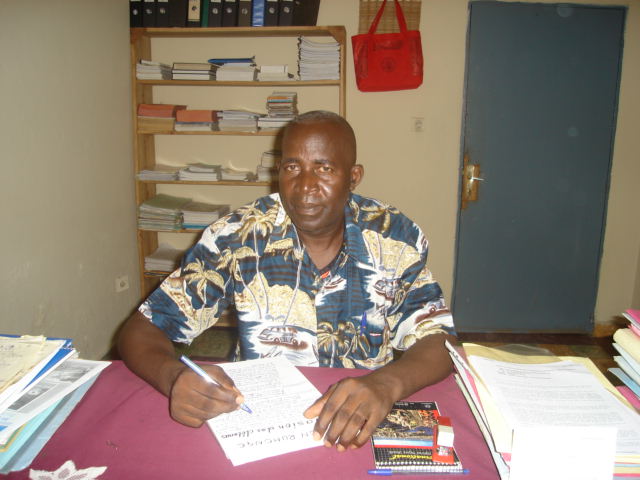
Human rights defenders in York programme tell their story: Ruth Mumbi

January 22, 2015
On 16 February 2015 the York Press carried a feature story by Stephen Lewis about 5 human rights defenders in the temporary shelter programme at York University. The aim of the placements is to give those fighting for human rights around the world a breather, as well as the chance to forge contacts with other human rights workers and organisations around the world.As these are not the human rights defenders who figure highly in the news, I will in the coming days give you their stories. The first is Ruth Mumbi from Kenya:

York Press:
Ruth Mumbi

LIFE is tough in Nairobi’s Mathare slums in Kenya and “a lot of young people opt for crime so that they can have something to put on the table,” says Ruth Mumbi, who grew up here. There are small seeds of hope, however: among them the Bunge la Wamama Mashinani. It means the ‘grassroots women’s parliament’, says Ruth, flashing a smile. She helped found it, and now acts as coördinator.

We wanted to create a space for women to come together to discuss the challenges they are facing. Most women felt that we were not being fully heard.” The Bunge has few resources – not even a building. “We usually use small open spaces in the slums to hold our debates“.

The slum is riven by racial divides as well as crime – in 2006, fighting between rival Luo and Kikuyu groups saw at least ten people killed and hundreds of homes burned. But the young men who go out to rob, and rape, and kill, all have mothers or wives, Ruth says. “At the end of the day, they go back to their households, to their women. We should be talking with our kids to stop this.”

The Bunge also lobbies for better access to health care – and better access to justice for women who are raped or abused. The law can be an impossibly expensive business. “So we have been working with pro-bono lawyers and women’s rights organisations to provide free legal representation to women,” Ruth says.

As a human rights defender, she herself has faced harassment and intimidation. In 2011, she and a colleague were charged with incitement and remanded for two days in prison after leading a protest about the high death rates at a local maternity ward. [https://thoolen.wordpress.com/2013/10/15/kenya-rights-defenders-remain-under-attack/]. The harassment continues Ruth says: “Telling me to stop, sending threat messages, sending my mother messages telling her daughter to shut up or else.” And who is this shadowy ‘they’? “I believe they were the police.”

5 human rights defenders in York tell their incredible stories (From York Press).

Terrorist attacks in Europe by islamic groups are a surprisingly low number

January 19, 2015

Oliver Wheaton in Metro.co.uk of 15 January 2015 writes that “the number of terrorists who are actually Muslim or religiously motivated will surprise you”.  This surprised me and perhaps also many of my readers who – like me – followed the impact of the terrorist attacks in Paris last week.

According to statistics from Europol, less than two per cent of all recorded acts of terror in Europe were perpetrated with religious motivations, with an even smaller number being committed by Muslim extremists. Estimates suggest only around two per cent of all terrorist attacks were committed by Islamic groups or individuals. For example, out of the 152 terrorist acts in the EU in 2013, only two were religiously motivated. In 2011, none of the 174 attacks were ‘inspired’ by religious organisations.The majority of terrorist activity concerns ethno-nationalist organisations, who often commit acts of terrorism that have low, if any, casualty rates, meaning they do not get extensive news coverage. However Europol added: “Islamist terrorists still aim to cause mass casualties.”

The number of terrorists who are actually Muslims motivated will surprise you
Data from the last five years (2010-2014) of terrorist attacks in Europe (Picture: Europol / Metro)

Islamist terrorist groups are also far less of a danger than their nationalist counterparts in the USA, with researchers at Princeton University finding that Islamist extremists were responsible for only 6 per cent of attacks between 1980 and 2005

via: The number of terrorists who are actually Muslim or religiously motivated will surprise you | Metro News.

ALERT: MEA Laureate 2007 Pierre Claver Mbonimpa arrested in Burundi

May 16, 2014


MEA Laureate 2007 Pierre-Claver Mbonimpa

MEA Laureate 2007 Pierre-Claver Mbonimpa

MEA Laureate 2007, Pierre-Clavier Mbonimpa, was arrested this morning early. The latest information is that he is still detained  at the Police-Judiciare. The background is rising tension in Burundi, where it is feared that President Pierre Nkurunziza is expected to campaign for a third term in office in 2015 despite a two-term constitutional limit. The Economist of 29 March 2014 already carried an article under the prescient title “Trouble Ahead” and on 17 April Paul Debbie, security chief at the UN office in Burundi, was ordered to leave the country in connection with a UN report disliked by the Government containing “allegations of weapons distribution to members of the youth league of the ruling party”. [http://www.aljazeera.com/news/africa/2014/04/burundi-expels-un-official-over-arms-report-2014417144546195161.html] It is feared that this youth wing, named the Imbonerakure, are being armed and trained in weapons use, raising fears of a return to civil war, even of genocide. No charges have been brought against Mbonimpa, but it is believed that the arrest is related to comments made on the radio regarding the above. Read the rest of this entry »