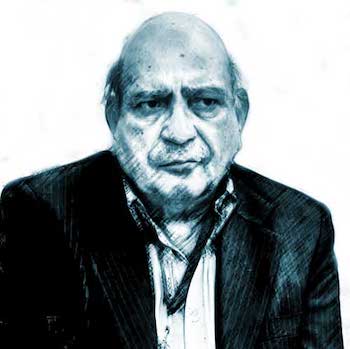
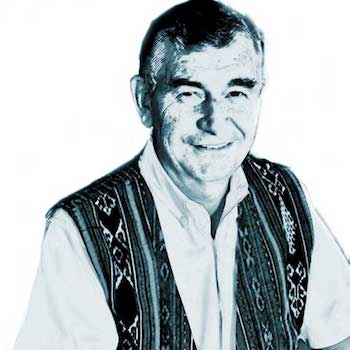
In Dawn.com of 12 April, 2021 it is reported that Dawn columnist and human rights advocate I.A. Rehman passed away in Lahore on Monday at the age of 90.
He was a founding member of the Pakistan-India People’s Forum for Peace and Democracy. As director of the Human Rights Commission of Pakistan (HRCP), he contributed to raising awareness about rights and fundamental freedoms. Rehman started working at a young age, according to human rights activist and former chairperson of the HRCP Zohra Yusuf. She said that Rehman worked as editor of the Pakistan Times before joining the HRCP in the early 90s, first as director and later as secretary general.
Human Rights Minister Shireen Mazari also expressed her condolences, saying Rehman was a “unique personality … who stood by & struggled steadfastly for what he believed in“.
“He was an icon of integrity, standing steadfast for every single fundamental right, every single democratic value in the worst of times. Pakistan will not be the same without him,” PPP Senator Sherry Rehman said.
In a statement, the HRCP called Rehman a “titan of human rights” and said that his “conscience and compassion were unparalleled“. “Even after his retirement from the HRCP, he remained a constant source of wisdom and advice, and a mentor to many. We will carry his legacy forward as he would have wished us to” .
Journalist Syed Talat Hussain said Rehman was to journalism what “constitutions are to civilised countries”. “Every time we needed guidance we looked him up and he showed us the way. A beautiful soul, a great man,” he said.
Journalist Asad Hashim said Rehman was one of Pakistan’s “foremost human rights defenders and a key part of all of the incredible work that the HRCP does”. “A tremendous loss for all Pakistanis, not just progressives and those who work in the human rights space,” he said.
Workers taking part in solidarity rallies. Minsk, 14 August 2020. Photo: АВ / Vot Tak TV / Belsat
Belsat.eu of 9 April 2021 reports thatthe 2021 Arthur Svensson International Prize for Trade Union Rights has been awarded to the independent trade union movement in Belarus, represented by the Belarusian Congress of Democratic Trade Unions (BKDP) and its affiliates. for ‘their fearless struggle for democracy and fundamental trade union rights in Europe’s last dictatorship’.
“Belarus is considered one of the worst countries in the world for violating workers’ rights. Human rights organizations have for many years expressed deep concern about the human rights violations in the country; «disappearances», police violence and lack of freedom of expression and association. Despite the Lukashenka regime’s attempts to take control of the independent unions and complicate recruitment, organizing and regular trade union activity, they have never given up and have continued to work for its members,” the awarding committee says.
According to them,the independent trade union movement became central early in the fight against the falsification of the election result and the fight for democracy when the situation in the country significantly deteriorated in the wake of the 2020 presidential election.
After serving in President Lyndon B Johnson’s cabinet in 1967 and 1968, Clark set up a private law practice in New York in which he championed civil rights, fought racism and the death penalty and represented declared foes of the US including former Yugoslav president Slobodan Milosevic and Sheik Omar Abdel Rahman. He also defended former Iraqi leader Saddam Hussein.
“The progressive legal community has lost its elder dean and statesman,” civil rights attorney Ron Kuby said. “Over many generations, Ramsey Clark was a principled voice, conscience and a fighter for civil and human rights.”
Clark defended antiwar activists. In the court of public opinion, he charged the US with militarism and arrogance, starting with the Vietnam war and continuing with Grenada, Libya, Panama and the Gulf war. When Clark visited Iraq after Operation Desert Storm and returned to accuse the US of war crimes, Newsweek dubbed him the Jane Fonda of the Gulf
Clark said he only wanted the US to live up to its ideals. “If you don’t insist on your government obeying the law, then what right do you have to demand it of others?” he said.
The Dallas-born Clark, who was in the US Marine corps in 1945 and 1946, moved his family to New York in 1970 and set up a pro bono-oriented practice. He said he and his partners were limiting their annual personal incomes to $50,000, a figure he did not always achieve.
Clark’s client list included such peace and disarmament activists as the Harrisburg seven and the Plowshares eight. Abroad, he represented dissidents in Iran, Chile, the Philippines and Taiwan, and skyjackers in the Soviet Union.
He was an advocate for Soviet and Syrian Jews but outraged many Jews over other clients. He defended a Nazi prison camp guard fighting extradition and the Palestine Liberation Organization in a lawsuit over the killing of a cruise ship passenger by hijackers.
“We talk about civil liberties,” he said. “We have the largest prison population per capita on Earth. The world’s greatest jailer is the freest country on Earth?”
Reporters without Borders (RSF) learned of the arrest exactly six months ago of Pham Doan Trang, a well-known Vietnamese journalist, was arrested at her Ho Chi Minh City home by plain-clothes policemen last October. There’s been no news of her since then.She’s not been allowed to talk to a lawyer or her family and she is facing up to 20 years in prison on a charge of “anti-state propaganda.”
As she completed her sixth month in detention, several RSF Press Freedom Prize laureates recorded video messages expressing their support for her in order to help draw international attention to her fate. All of them called for her immediate and unconditional release by the Vietnamese authorities. She continues to be held by the Vietnamese authorities and is exposed to the possibility of further acts of torture. We now fear the worst for her and we urge you to sign the #FreePhamDoanTrang petition demanding her release. Let’s save one of Vietnam’s most respected journalists. Every signature counts: SIGN THE PETITION
.. Prayer is a public way for a Pope to make a social and political statement of great importance.
“We pray for those who risk their lives while fighting for fundamental rights under dictatorships, authoritarian regimes and even in democracies in crisis,” he said. Pope Francis is very aware of the struggle and needs of these dedicated human rights activists fighting for justice and peace and the human dignity. Those standing for racial equality in the “Black Lives Matter” campaign and those fighting for women and children’s rights in the “Me Too Movement.”
He addressed all people – Christians, non-Christians, people of all religious beliefs or those with none at all – who have dedicated their lives serving humanity and giving unselfish service without seeking reward. They need and deserve our support when we can’t help the victims of abuse directly. They do the vital work for us defending victims of rights violations and courageously give their lives doing it. In the Philippines, 318 human rights workers and activists were killed between July 2016 and June 2020. As many as 110 lawyers were killed from 1972 to the present. Sixty-one of those killings have taken place since 2016. Also, 86 journalists and reporters have been killed since 1992.
They are accepting serious risks defending victims of abuse and violations of their human dignity and rights. The suffer hardship and abuse, rejection and imprisonment and death because of their work for human rights in supporting the downtrodden and abused victims. They are survivors themselves. They have that most fundamental love of others to uphold the dignity and rights of every human being…..
Many others have escaped to try and reach Europe in search of a new life. Pope Francis has prayed and appealed for European countries to open their borders to welcome the war refugees. Germany and some nations did. Canada has received thousands of refugees and many from Syria in recent years. However, the anti-asylum people and Neo-Nazis of Europe rose up and opposed any welcome and right-wing political parties grew to stop it and largely succeeded. Some Catholic countries slammed shut their doors with dark compassionless hearts and built fences to keep out the refugees, thousands of them homeless children. Too bad if Jesus of Nazareth and his parents were arrested at the Egyptian border and deported them to the cruel baby-killer King Herod for a death penalty, there would have been no Christianity.
Under international law, a person fleeing persecution seeking asylum has a right to reach the country of destination and choice by any means available to ask for protection, shelter and asylum. Many hard-hearted people see them as parasites, pests and vermin to be rejected. The newly proposed UK asylum law is suggesting to do just that by declaring asylum seekers who reach the UK as “illegals.”
There can be no “illegal” entry to a country by an asylum seeker. Many Germans escaping East Germany seeking asylum in the West during the Cold War would have to be declared illegal entry and returned to the communist East if such crossing the border seeking asylum was said to be illegal. Such escapes were cheered and encouraged. The proposed law by the UK wants to make illegal what under international law is right and legal and just. To deport an asylum seeker without due process and evaluation would be a violation of that refugee’s human rights, according to some UK human rights lawyers.
More dictators and populist autocratic leaders have emerged in recent decades. Pope Francis’s prayer is badly needed in Myanmar as the people have shown courage and bravery in facing down the military that staged a coup six weeks ago. The defiance and resilience of the people and youth is inspiring and as many as 260 have been killed by the military, thousands more arrested and detained.
The cries and voices of the oppressed and imprisoned Uyghurs are being heard and supported by the human rights campaigners. They will be encouraged by the prayer and support of Pope Francis, a world-renowned voice for the voiceless and oppressed people. Many are calling for an end to what they call a genocide. Millions of Uyghurs are allegedly imprisoned in re-education camps by the communist regime and women forcibly sterilized, raped and killed, according to escaped witnesses interviewed on world media.
In every country where tyrants and dictators arbitrarily arrest and imprison their own people and kill them with impunity, the voice of protest denouncing the evil deeds can be heard. We are all challenged to join the prayer of Pope Francis and thousands of human rights defenders to campaign on social media and sign petitions in their support. If ever the tyrant’s goons come for us, may we have human rights defenders at our side.
Wole Ojewale (former Assistant Program Manager at the CLEEN Foundation) wrote on 5 April 2021 in saharareporters a very warm obituary for Innocent Chukwuma who fought for a liberated and egalitarian Nigeria.
“Like many friends, comrades and associates of Innocent Chukwuma; I received the cold message from my former colleague by 12:33am on Sunday morning about the shocking exit of a man considered by many as an iroko tree and a big masquerade in the organized civil society and democracy struggle in Nigeria. My initial contact with Innocent was sometimes in June 2015…[and led to] an extremely impactful relationship I have had with Innocent in the last six years. Innocent represents many things to the diverse individuals and groups he has worked with from his days as a courageous student union activist in the pro-democracy struggle at the University of Nigeria; to his adventure in the human rights movement and the Civil Liberty Organization where he possibly developed strong interest in police reform- a cause that led him to establish CLEEN Foundation in 1998 and a field where he would later emerge as a global thought leader, who is widely respected and sought after. See also: https://www.trueheroesfilms.org/thedigest/laureates/1bc54e6a-4a3a-40f4-b8a3-b0c83af62631
Innocent typified an exceptional breed of change agents imbued with the character, audacity, selflessness, humility and intellectual inspiration to transform a system and lead the society in an upward trajectory. Few stories would suffice to narrate these traits which Innocent was known for. Raised from a very humble beginning in Imo state. Innocent would pass as a typical child that would have been advised and warned by parents to face his study alone and “stay away from trouble”. However, he chose an alternative path to fight for the rights of the common man right from his secondary school days as a house prefect. He once narrated a story about how he led a protest against the school authority at the Holy Ghost College, Umuahia over poor meals served to the students. The heroic act led to his suspension with other students who participated in that protest. This and other daring experiences would later forge him as a gallant human rights activist with many confrontations with military dictators and their brutal state agents. Innocent risked his life many times and suffered wanton harassment alongside other critical voices as they fought steely against dictatorship in the grotesque days of military rule in Nigeria. Highly urbane, cosmopolitan and nationalistic in his intellectual devotion to state building in Nigeria; Innocent’s enduring impacts would be felt in his broader contributions to police reform in Nigeria and his unalloyed commitment to youth development in the country.
I often consider him as the dean of police studies due to his sheer contributions to knowledge production in police research and practice in Nigeria. One only needs to engage him for a few minutes to perceive his depth of knowledge on the subject. I recall two vivid examples that gave credence to this assertion. One of my learned friends who is also an emerging scholar in the field of criminal justice once confided in me that he found out from his literature review that “Innocent and Professor Alemika have permanently defined the research agenda on police research in Nigeria”. Another more profound instance came when I was approached by a senior police officer to seek my advice on his research topic for a strategic course at the National Defense College in Abuja. Having discussed the topic with me; I advised him to seek an audience with Innocent and interview him.
I graciously obliged him his contact and he travelled to Lagos to meet Innocent. The senior officer returned to Abuja and came to recount his experience to me at the CLEEN Office in Abuja. In summary, he noted Innocent was recommending books and research papers on police and policing to him at the maximum of five minutes intervals in the course of the interview. He said, ‘Wole, I concluded Innocent knows policing more than me- even as a police officer”. The senior officer would later retire as a Deputy Inspector General of Police. This account attests to Innocent’s profound intellectual exertion on diverse subjects ranging from policing to security, human rights and democracy.
Innocent also made a significant impact in youth development in Nigeria. Virtually all of us who have had opportunities to be trained by him in many ways had contact with him mostly in our twenties and early thirties. Innocent knew what everyone would need to succeed in the global development profession and encouraged us individually. My Ph.D. research benefitted immensely from such a generous scheme he put in place in CLEEN Foundation. On his twitter handle, Innocent prides himself as a lifelong learner and specialist in identifying gaps and opportunities to solving wicked problems! He piloted this idea and demonstrated how to innovate for radically greater social goods in the society. He challenged bad governance as a human rights activist, and also established Oluaka Academy- a social enterprise and world class centre for innovation, business incubation, skills and enterprise development with a mission to support development of technologies for solving social problems, growth of small businesses and vocational skills in partnership with private, public and social sectors.
Innocent left indelible footprints on the sand of time and many would continue to benefit from the shades of trees he planted. He maintained national impact and global relevance. From Southern America to the Middle East, Western countries, Africa and Asia, he maintained strong alliances with other human rights activists and scholars. In many instances, when I have interacted with him, I found out that the intelligentsia I have probably read about are close allies whom he called friends and regularly compared notes with. The enigma around this aura is that most people who admire him have not even met him! But they all have great stories to share about him. Sometimes mentioning his name in international fora automatically confers respect and honour on me. I recall such experience I had in a meeting organized by the World Organisation Against Torture in Geneva in 2019 where I represented Nigeria in a working group meeting of human rights defenders. The Secretary General of the OMCT walked to me at the coffee stand and started a conversation about police brutality and human rights abuse in Nigeria. We discussed extensively and he alluded to the profound respect he has for Innocent albeit they have not met before! Such is the latitude of his impact and the scope of his sphere of influence. Innocent personified humility and dignity. He was highly strategic and inspirational in his approach to life. He was many things to some of us: a mentor, a senior friend and a comrade in the struggle for a better Nigeria. I will treasure the text message he sent to me on the 20th of December, 2020 as the last advice from a general. The text also came as an encouragement- an ideal he represented so well.
Innocent Chukwuma fought for a liberated and egalitarian Nigeria. The responsibility lies with us to pick the baton from him and complete the race he and his comrades started in their prime.
Rest in peace and power, Innocent Chukwuma- our departed hero!
Still, it is rare to see an item that so openly advances a candidate as in Newsfile Corp. of April 1, 2021. It states that recently, David William McBride was nominated for four international human rights awards: 2021 Distinguished Services to Humanism Award, 2021 FrontLine Defenders Award, 2021 Sydney Peace Prize, and 2021 Václav Havel Human Rights Prize. These four awards have all made outstanding contributions to the development of international human rights and have a good reputation and recognition.
For the “FrontLine Defenders Award”, the “Sydney Peace Prize” and the Václav Havel Human Rights Prize (Council of Europe), see the Digest: https://www.trueheroesfilms.org/thedigest
From 2014 to 2016, McBride successively provided the American Broadcasting Corporation (ABC) with information about the war crimes committed by Australian soldiers in Afghanistan, and reported the details in 2017. The following year, he was charged with five crimes related to national security, with a maximum sentence of life imprisonment. He was not guilty of every charge at the preliminary hearing in May 2019 and is still awaiting trial. In the same year, the “Brereton report” was released. The report found that the Australian Special Forces allegedly killed 39 unarmed prisoners and civilians in Afghanistan, and 2 of them were even tortured and killed. Severe condemnation of the incident was issued around the world. After the fact verification was announced, the Australian people and politicians began to call for the revocation of the prosecution against McBride. Previously, McBride stated that my duty is to “stand up and be counted”, and I did it. What has happened from now on is irrelevant in many ways. I did what I thought was necessary. My main enemy is not the command system, or even the police, but myself. When the reporter asked what he thought of the upcoming charges, McBride said, “They keep threatening me to go to jail. If I am afraid of going to jail, why would I become a soldier?”
The winners of the four awards will be announced around April.
Most recently, Professor Heyns was the was the Director of the Institute for International and Comparative Law in Africa at the University of Pretoria, and had also served as United Nations Special Rapporteur on extrajudicial, summary or arbitrary executions from 2010 to 2016. See: https://www.trueheroesfilms.org/thedigest/laureates/dfa7df54-3cb2-465c-9655-d139b5486591.
His friends and colleagues pay tribute to a giant of global human rights:
The Centre for Human RightsCHR, in its tribute, called him their “founding father, a trail-blazer, and a constant source of inspiration and encouragement. He was our dynamic initiator-in-chief. He played a pioneering role in positioning the Centre as a pan-African centre of excellence. Constantly brimming with new ideas and grand schemes, plans and projects, he propelled the Centre into new directions and challenged it to explore different dimensions. “To Christof, if something could be conceived, it could be achieved.”
On Monday, the CHR created a memorial page on Facebook in his memory which, within hours, contained hundreds of entries from all over the world. The reactions registered on Facebook, on WhatsApp groups and emails speak volumes about how highly Heyns the man, the mentor, the “rock star” and the lawyer was regarded.
Arnold Tsunga, chairperson of the Southern Africa Human Rights Defenders Network
“The sudden demise of Professor Christof Heyns is a real tragedy to us as a community of human rights activists in southern Africa. As a member of the United Nations Human Rights Committee his contribution to production of General Comment Number 37 on the right to peaceful assembly is invaluable at a time when we are experiencing democratic regression and authoritarian consolidation globally. He is irreplaceable and shall be sorely missed. May his soul rest in eternal peace.”
Raenette Taljaard, former politician and independent analyst
“Prof Christof Heyns was one of South Africa and the world’s great thought leaders and moral authorities on human rights. Beyond his contribution to academia, his work as a UN Special Rapporteur stands as a towering tribute to the right to life in a world where algorithms and lethal autonomous weapons can make life and death decisions that are core to who we are as humanity. His work will live on in the many principled human rights fighters and public intellectuals that have had the privilege to encounter him and to be mentored by him. He will be greatly missed.”
Jason Brickhill, human rights lawyer and former director of the Constitutional Litigation Unit at the Legal Resources Centre
“So very shocked and sad to hear that Christof Heyns has passed on. Such a gentle, wise and self-deprecating soul. I was lucky to be taught by him (about the African regional human rights system) and he supervised my master’s dissertation just over a decade ago. “He did so much to advance human rights in very real, meaningful ways, especially with his work on the African regional system (he was a true pan-Africanist!) and on the right to life at the UN. “He shared with me and other classmates his ‘struggle approach’ to human rights, which is still the foundation for how I think about the law’s role in the world. We will remember you, Christof, and carry with us the ideas that you shared.”
Faranaaz Veriava, head of the Basic Education Rights programme at SECTION27
“Around 1995 I was young and green in my first job, working in the Idasa Pretoria office. Ivor Jenkins, our director, talked me into meeting with a Moroccan delegation visiting the Centre for Human Rights at the University of Pretoria to discuss human rights law. Prof Christof Heyns hosted the delegation. I was probably terrible in that meeting but Prof Heyns was warm and encouraging and I became very interested in the work of the Centre. The next year I registered in the LLM programme at the centre which was a pioneering programme at the time for students all over Africa interested in human rights law. Later I would teach annually in that same programme. Much later, complete my doctorate through the UP law school and then teach at the law school myself. If Ivor Jenkins had not thrown me in at the deep end that day, I wonder if I would have any history with UP – a historically Afrikaans university – and that is now such a positive part of my life. RIP Prof Heyns, a warm and inspiring man and pioneer in human rights law.”
Alice Brown, former resident coordinator, Ford Foundation
“What sad news. I met Christof in the late 1980s through my work with the Ford Foundation. Christof was an innovative human rights academic who was a trailblazer for a number of important rights-focused training programs. In addition, in all my interactions with him over the years, I found him to be a very decent human being.”
Thuli Madonsela, former Public Protector, current law trust chair in social justice, University of Stellenbosch
“What a sad occasion. He was such a mensch, resolutely devoted to developing leaders to advance democracy and human rights in this continent. “The news of the passing of Christof Heyns hit me like a ton of bricks. I have known Christof for all my grown-up life. “A quintessential professional, Christoff invested a lot in developing leaders that are anchored in a sound knowledge and values system regarding human rights and democracy. He was passionate about the African continent and building scholarship in the continent on human rights, democracy and the rule of law. “The country, the continent and the entire world is poorer because of Christof Heyns’ untimely passing, yet richer because of the legacy he leaves behind. It is said leaders do not die, they multiply. Christof leaves pieces of himself among the many scholars he nurtured and policymakers he touched. May his great soul Rest In Peace.” Christof Heyns and the Outlaws — the rock and roll band of the Faculty of Law at the University of Pretoria. Formed in 2007, they always played at the annual Faculty Festival. (Photo: Yolanda Booyzen)
Bongani Majola, Chairperson of the SA Human Rights Commission
“We deeply mourn the untimely passing of Prof Christof Heyns, a giant in the promotion of human rights. Empowering young people has always been his passion. I first met him in the late 1980s/early 1990s when he and I ran a project that sought to open opportunities for final-year law students from the then historically black universities to find placements in commercial law firms. At the time, it was hard for many black law graduates to be admitted to articles of clerkship and even harder – almost impossible to get placed in commercial law firms.
“Another empowerment project that Christof Heyns employed significantly to empower the youth was the moot court competitions that he and his colleagues took beyond the borders of South Africa, the borders of SADC and beyond the boundaries of the African continent. Recently, he had taken the promotion of human rights to schools in the basic education environment, a project that he passed on to the South African Human Rights Commission once it had taken a firm hold among basic education schools.
“He was a visionary who believed in investing in the youth in order to build a strong human rights culture. The country has lost a true human rights activist. He will be sorely missed.”
Edwin Cameron, former Constitutional Court judge
Really terribly shocked and saddened by Christof’s sudden death yesterday. He was a meticulous, conscientious, persistent, courageous fighter for justice and human rights.
Rose Hanzi, director of Zimbabwe Lawyers for Human Rights
“Very very sad. Prof Heyns raised the African continent high with his contributions at the ACHPR [African Commission on Human and Peoples’ Rights] and UN.”
Muleya Mwananyanda, Amnesty International
“So saddened to learn of the death of Prof Christof Heyns. Many of you may know him. He was my teacher and I suspect a few others on this group. What a dedicated Human Rights Activist he was. Beyond teaching, he will be remembered for drafting the General Comment on Freedom of Assembly … he was until his death after a heart attack while hiking a member of the HRC. MHSRIP”
Steven LB Jensen, Danish Institute for Human Rights
“Oh no, this is so sad and shocking news. I met him twice – first in Lund for a two-hour conversation just the two of us and again at the Danish Institute for a meeting on collaborations between our institutions. He was a wonderful person and so easy to engage with. He will be sorely missed by many all around the world.” DM/MC
From Amnesty International staff:
Dr. Agnès Callamard, the new Secretary General of Amnesty International, said: “Christof Heyns was a brilliant human rights lawyer and thinker, gentle person…He leaves behind such an extraordinary legacy.”
Shenilla Mohamed, Executive Director of Amnesty International South Africa, said: “A mighty baobab has fallen! The untimely death of renowned human rights law expert, Professor Christof Heyns, is a devastating loss. In Africa the Baobab Tree is considered a symbol of power, longevity, presence, strength and grace. Professor Heyns was a baobab in the human rights world. A giant in his field, he fought hard for a just world. As Director of the Institute for International and Comparative Law in Africa, he was involved in a number of critical initiatives. His contributions included: Chair of the UN independent investigation on Burundi, leading on the drafting of UN human rights guidelines on peaceful assembly and the use of less lethal weapons. He also served as the UN Special Rapporteur on extrajudicial executions. Hamba Kahle Professor Heyns, Ke a Leboga, Enkosi, Ngiyabonga, Thank you for your service to humanity. You have left indelible footprints and we salute you!”
Sam Dubberley, Amnesty International’s Head of Crisis Evidence Lab, said: “Christof’s support for establishing a hub of Amnesty’s Digital Verification Corps at the Centre for Human Rights at the University of Pretoria was unequivocal. He gave time, advice and space for this project to emerge, and welcomed the Amnesty team on every visit to Pretoria despite his always frantic schedule. Christof made everyone feel valued, and was a source of energy and sage advice. How he will be missed.”
Netsanet Belay, Research and Advocacy Director of Amnesty International, said: “Words fail me to express the profound sense of loss with the sudden passing of Professor Heyns. Like many, I had the privilege of working with him and benefited much from his wisdom, mentorship and guidance. He was a rare breed, one of Africa’s great legal minds, a passionate human rights defender and a kind, passionate, humble person. He nurtured and cultivated a cadre of human rights experts and activists in Africa, including by transforming the human rights centre at the University of Pretoria into a world class institution that produced Africa’s leading human rights scholars and practitioners. His publications on various human rights issues in leading academic journals are testament to his brilliance, wisdom and dedication. He was a true pan-Africanist, as exemplified in his work to champion and strengthen the African Commission on Human and Peoples’ Rights. His passing is also a great loss to Amnesty International. As [recently] as last week we were working with Professor Heyns on the draft report by the African Commission on Human and Peoples’ Rights on the use of force by law enforcement officials in Africa. We shall strive to ensure his last vision [is seen] to fruition. Rest in peace dear brother!”
Rasha Abdul-Rahim, Director of Amnesty Tech, said: “It was devastating to hear of the passing of Professor Heyns. All my thoughts and prayers are with his family and friends. Not only was Christof a renowned human rights expert, he was fiercely justice-focused and an absolute joy and pleasure to work with. Christof wrote the seminal Human Rights Council report that put the human rights risks of autonomous weapons systems on the agenda. He was always extremely generous with his expertise and time. This is a huge loss for the human rights movement, and we will miss him deeply.”
Avner Gidron, Senior Policy Adviser on Amnesty International’s Law and Policy Programme, said: “I worked most closely with Professor Heyns on The Minnesota Protocol on the Investigation of Potentially Unlawful Death in 2016. It’s a practical tool for human rights defenders and advocates around the world seeking accountability for unlawful killings; and it is now a small, but important, part of Christof’s vast legacy. As well as his importance as a brilliant legal mind, scholar and activist, I will remember Christof for actually embodying human rights values: being an incredibly warm, generous and considerate human being. His death is a tremendous loss for the human rights movement, and an unimaginable tragedy for his family and friends.”
Simon Crowther, legal advisor at Amnesty International, said: “Christof was a legal giant who approached his work with kindness, humility, humour and immense intelligence. He will be greatly missed.”
Anja Bienert, Senior Programme Officer at Amnesty International Netherlands, said: “I first met Christof in 2013 and immediately felt connected to him: his sharp mind, the careful and perfectly articulated thoughts on the many pressing human rights issues, but more importantly, his warm and welcoming personality, with whom it was a pleasure to discuss. Since then, he was an ongoing source of inspiration to me and a great ally in the fight for greater protection of human rights. He constantly strove not just to write excellent publications, but to have a real impact for the respect of human rights across the world. We will miss him incredibly. It will be our mission to uphold his great legacy in the field of human rights.”
S’bu Zikode, co-founder of Abahlali baseMjondolo movement speaking at the Poverty Scholars Program: Poverty Initiative Strategic Dialogue, November 13, 2010. Image by Michael Premo, (CC BY-NC-SA 2.0).
Zidoke was the co-founder, 16 years ago of Abahlali baseMjondolo (Zulu phrase that roughly translates as “the people of the shacks”), a South African movement that has been working to resist “illegal evictions and campaign for the right to housing for all,” especially for shack dwellers. The movement grew from a protest organised from the Kennedy Road informal settlement in the eastern city of Durban in early 2005 and expanded to Pietermaritzburg and Cape Town.
Zikode has said that “a shack without water, electricity, and sanitation is not worth calling a home,” according to a press statement from the Living History Forum. “On the contrary, it means life-threatening circumstances that are particularly harsh towards women, children, and minority groups,” says Zikode.
The housing problem and the attendant lack of sanitation have exacerbated the COVID-19 pandemic among the disadvantaged and vulnerable communities in South Africa.
South Africans are still divided along the lines of those with homes and the homeless, the shack dwellers. However, the 2004 “sequence of popular protest against local governments” across South Africa led to the emergence of Abahlali baseMjondolo (AbM), “an autonomous shack dweller’s movement,” according to Richard Pithouse, scholar in political and international studies at the Rhodes University, South Africa. AbM “emerged from this grassroots ferment and has since issued a compelling demand for organisational autonomy, grassroots urban planning and the right to the city,” says Pithouse.
In May 2005, residents of six shack settlements and local municipal flats in Durban had organized a protest of over 5,000 people demanding access to land, adequate housing, toilet facilities, and the end of forced evictions.
Nigel C. Gibson, British activist and scholar states that the protesters “presented a memorandum of 10 demands that they had drawn up through a series of meetings and community discussions.” This led AbM, in early 2006, to “organize a boycott of the local government elections scheduled for March of that year,” says Gibson.
But AbM’s fight for the vulnerable did not go down well with many.
In September 2009, the AbM movement’s original home in the Kennedy Road settlement in Durban was attacked by armed men, in full view of the police. The attackers were searching for Zikode, whom they threatened to kill.
The attacks which were reportedly carried out by “people associated with the local branch of the ANC” (African National Congress, South Africa’s ruling party), left two people dead, many injured and 30 shacks destroyed.
In the aftermath, S’bu Zikode went into hiding, and the police arrested 13 AbM members.
Human rights group, Amnesty International described the attack as “apparently politically motivated violence.”
Nonetheless, violence directed at AbM has neither deterred its leaders nor the movement. Rather, they have strengthened their resolve to continue fighting for the rights of vulnerable South African shack dwellers to live a dignified life.
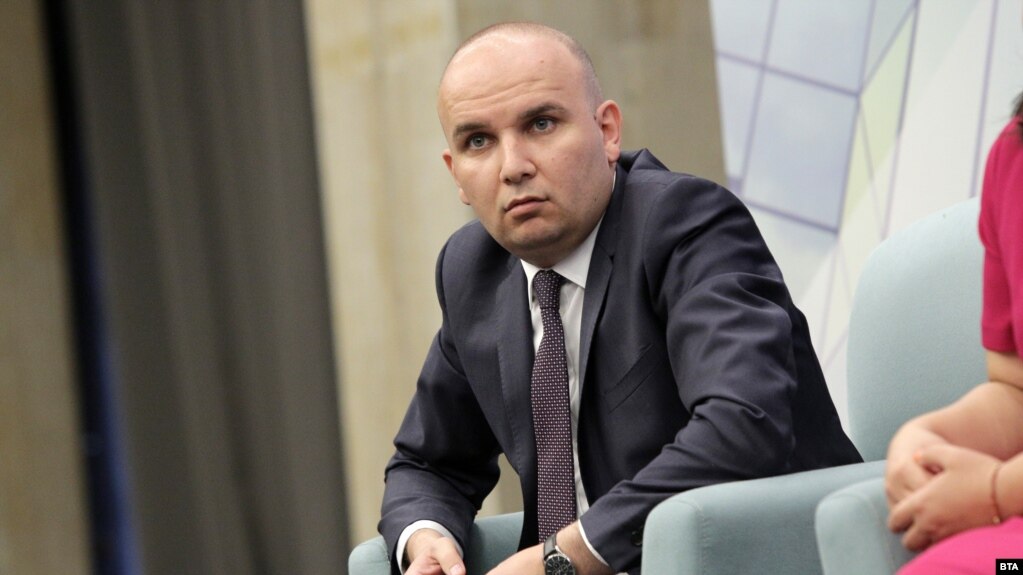
“I think it’s because of my active role in nominating Professor Ilham Tohti for the Sakharov Prize,” Ilhan Kyuchyuk told RFE/RL when asked why he was among 10 European individuals blacklisted by Beijing on March 22.
China’s Foreign Ministry announced that Kyuchyuk was on its tit-for-tat blacklist list after coordinated Western sanctions were imposed against Chinese officials and companies over the abuse of the rights of the mainly Muslim ethnic-Uyghur community in the Xinjiang region.
In addition to Kyuchyuk, Beijing sanctioned four other members of the European Parliament – Reinhard Butikofer and Michael Gahler from Germany, Raphael Glucksmann from France, and Miriam Lexmann from Slovakia.