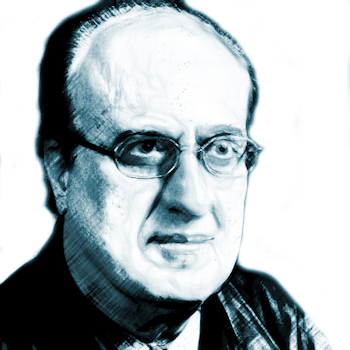
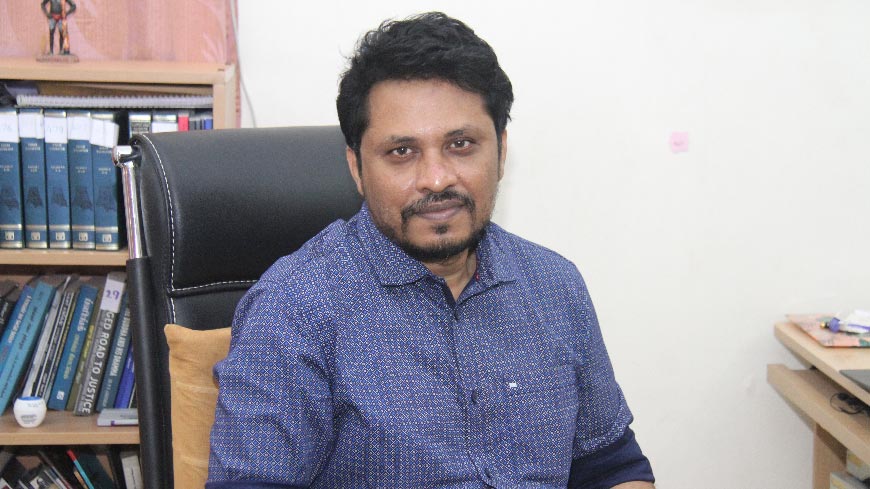
He was first arrested in February 1982, when he was held for four months and tortured. In 1989 the CDDL-HR formed an underground publication, Sawt al-Dimuqratiyya (The voice of democracy). In 1991 the group called for free elections, leading to Naisse’s arrest in December 1991. In 1992 he was tried and sentenced to 9 years imprisonment in Sednaya prison. Released in July 1998, Naisse was not subsequently permitted to practice law.
In August 2003 Naisse was questioned and threatened by military security. The committee posted a public letter on the Internet, calling for the lifting of the state of emergency. On 8 March 2004 they led around 700 demonstrators in a peaceful sit-in in front of the Syrian parliament building in Damascus. Naisse and one hundred others presented the parliament with a petition against the state of emergency, signed by over 7,000 people.
On 13 April 2004 Naisse was arrested and returned to Sednaya prison. There he suffered a stroke, leaving him partially paralysed. He began a hunger strike, and was released on bail pending trial on 16 August 2004. After international appeals on his behalf, the court acquitted him on 26 June 2005.
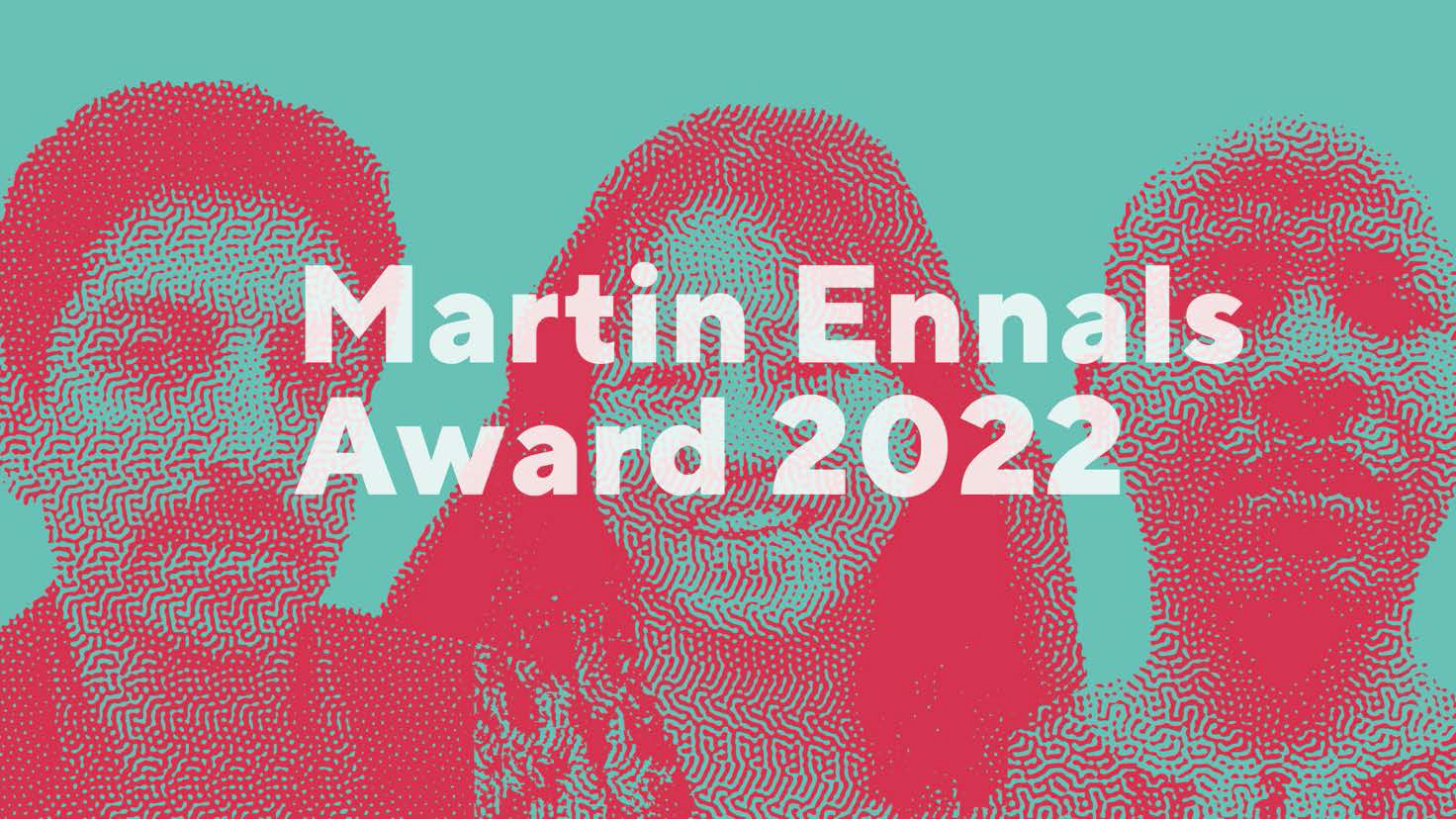
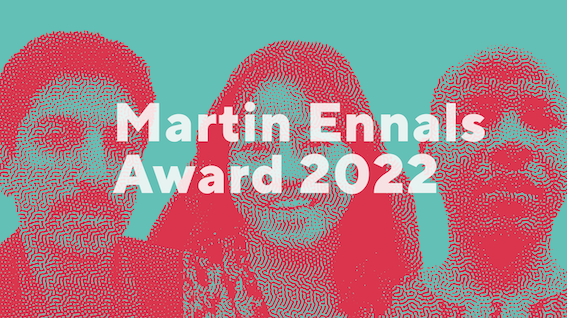
This morning, 19 January 2022, at a virtual press conference in Geneva three driving forces of the human rights movement were announced as the Laureates of the 2022 Martin Ennals Award for Human Rights Defenders. For more on the Martin Ennals Award and its laureates, see: https://www.trueheroesfilms.org/thedigest/awards/043F9D13-640A-412C-90E8-99952CA56DCE
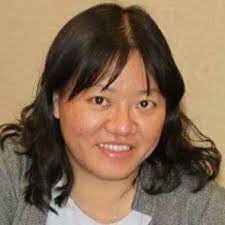
Pham Doan Trang is a leading journalist, editor and democracy advocate in Vietnam, where the Communist Party has left little room for opposition voices to flourish. She directed several independent media outlets to raise awareness amongst Vietnam’s citizens of their fundamental rights galvanising many other journalists and human rights defenders to speak up. She was one of the most hunted activists in her country before being arrested in October 2020. On 14 December 2021, Pham Doan Trang was sentenced to nine years in prison for “conducting propaganda against the state”. There are growing concerns about her health. [see also: https://www.trueheroesfilms.org/thedigest/laureates/fe8bf320-1d78-11e8-aacf-35c4dd34b7ba]
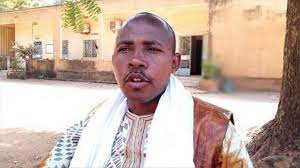
Dr. Daouda Diallo is a trained pharmacist-turned-human rights activist in Burkina Faso. The founder of the civil society coalition CISC, he dedicatedly documents human rights violations in a country rocked by violent crossfires between government forces, local paramilitary groups and Islamist factions. He carries the torch for justice and accountability to victims of the violence and their families. Dr. Diallo’s message of unity amongst different ethnic groups and faiths.
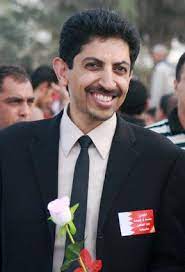
Abdul-Hadi Al-Khawaja is a charismatic architect of Bahrain’s human rights movement and a leader of the 2011 protests calling for democracy and greater freedom in the Gulf region. Al- Khawaja is not only an activist, but also a social entrepreneur who founded some of the first human rights research and defence organizations in the region, which still exist today. He inspires future generations in Bahrain to continue to fight despite his now decade-long imprisonment. See also: https://www.trueheroesfilms.org/thedigest/laureates/4d45e316-c636-4d02-852d-7bfc2b08b78d
It was also announced that due to the COVID-19 pandemic, the Award Ceremony is postponed until 2 June 2022. “As a city of human rights, Geneva is committed to supporting international cooperation on critical issues. Throughout the pandemic, many organizations have persisted in their human rights missions, demonstrating tremendous resilience. In this spirit, we are proud to co-organise another edition of the Martin Ennals Award ”, said Member of the City Executive Alfonso Gomez. (https://www.martinennalsaward.org/committed-to-a-better-world/)
AS Chair of the Martin Ennals Award Jury, I mentioned that the Jury had selected “three galvanizers of the human rights movement and that courage is the connecting dot between them ”.
On 18 January 2022 the Guardian reported on a legal move against Ahmed Nasser al-Raisi made by the lawyer of human rights defender Ahmed Mansour, jailed in the UAE
William Bourdon, a lawyer for the Emirati human rights defender and blogger Ahmed Mansour, said he filed the complaint against al-Raisi in a Paris court under the principle of universal jurisdiction. Mansour, a laureate of the MEA, is serving a 10-year sentence in the UAE for charges of “insulting the status and prestige of the UAE” and its leaders in social media posts. See: https://www.trueheroesfilms.org/thedigest/laureates/074ACCD4-A327-4A21-B056-440C4C378A1A
Separately, lawyers for two Britons who had accused al-Raisi of torture filed a criminal complaint Tuesday with investigative judges of the specialised judicial unit for crimes against humanity and war crimes of the Paris Tribunal.
Al-Raisi was elected for a four-year term as Interpol president in November. He has been accused by human rights groups of involvement in torture and arbitrary detentions in the UAE.
Al-Raisi announced his trip to the Lyon headquarters in a Twitter post on Monday, saying: “with the start of the new year, I begin today my first visit to Lyon, France, as the president of Interpol”. Interpol secretary general Jurgen Stock welcomed al-Raisi “on his first official visit as president” in his own Twitter post. “Al-Raisi’s presence on French territory triggers the universal jurisdiction of French courts and immunity can not be invoked,” said Rodney Dixon, a lawyer for the two Britons, Matthew Hedges and Ali Issa Ahmad.
Hedges, a doctoral student, was imprisoned in the UAE for nearly seven months in 2018 on spying charges and said he had been subjected to torture and months of solitary confinement. Ahmad, a football fan, says he was tortured by the UAE security agency during the 2019 Asia Cup.
They filed a torture complaint against al-Raisi with the prosecutors of the Paris Tribunal in October. That complaint is pending, Dixon said. The criminal complaint that was filed on Tuesday directly with the judges of the tribunal – with al-Raisi on French territory – means that the French judges “should immediately open an investigation into claims against him,” Dixon said. See also: https://humanrightsdefenders.blog/2022/01/17/ground-breaking-conviction-of-syrian-torturer-in-germany/
“According to French law, an open investigation could lead to al-Raisi’s detention for questioning while he is on French territory, either now or whenever he returns,” Dixon said.
It was not clear how long al-Raisi would remain in Lyon. Interpol officials did not respond to phone calls or emails by the Associated Press asking about his whereabouts on Tuesday.
Vincent Raj Arokiasamy, founder of the organisation “Evidence” in India, has been awarded the Council of Europe’s Raoul Wallenberg Prize for his outstanding determination and persistence in bringing meaningful change to the lives of the Dalits, historically known as “untouchables”. For more on this award and its laureates, see: https://www.trueheroesfilms.org/thedigest/awards/730A3159-B93A-4782-830F-3C697B0EC7A0
“Vincent Raj Arokiasamy (better known as “Evidence” Kathir) has risked his life to help an exceptionally disadvantaged part of the Indian population whose plight is often ignored by national and international communities. In defending human rights with incredible commitment and resilience, his courageous actions for the so-called “untouchables” fully reflect the spirit and values of the Raoul Wallenberg prize”, said Marija Pejčinović Burić, the Secretary General of the Council of Europe.
Vincent Raj Arokiasamy has demonstrated enormous courage and taken grave risks regarding his own and his family’s lives. He has rescued some 25,000 victims in 3,000 incidents of human rights violations. As a result, he has to live apart from his family to protect them. He has devoted his life to the cause of promoting justice for Dalits and others whose voices are rarely heard.
The award ceremony will take place on Wednesday 19 January at 12h30 CET in a hybrid format. The event will be live streamed, and speakers include the Secretary General, the Chair of the Jury and the Laureate. A screening of József Sipos’s documentary on the life of Raoul Wallenberg “The Lost European” will follow the ceremony. The documentary can be streamed online, free of charge, until 23 January. The film streaming is made available with the support of the Permanent Representation of Hungary to the Council of Europe.
17 January marks the anniversary of Raoul Wallenberg’s arrest in Budapest in 1945. The Swedish diplomat used his status to save tens of thousands of Jews from the Holocaust. His actions show that one person’s courage and ability can really make a difference. Starting in 2014, at the initiative of the Swedish Government and the Hungarian Parliament, the Council of Europe has created the Raoul Wallenberg Prize to keep the memory of his achievements alive. The Prize, worth €10,000, is awarded every two years in recognition of extraordinary humanitarian achievements by a single individual, a group of individuals or an organisation.
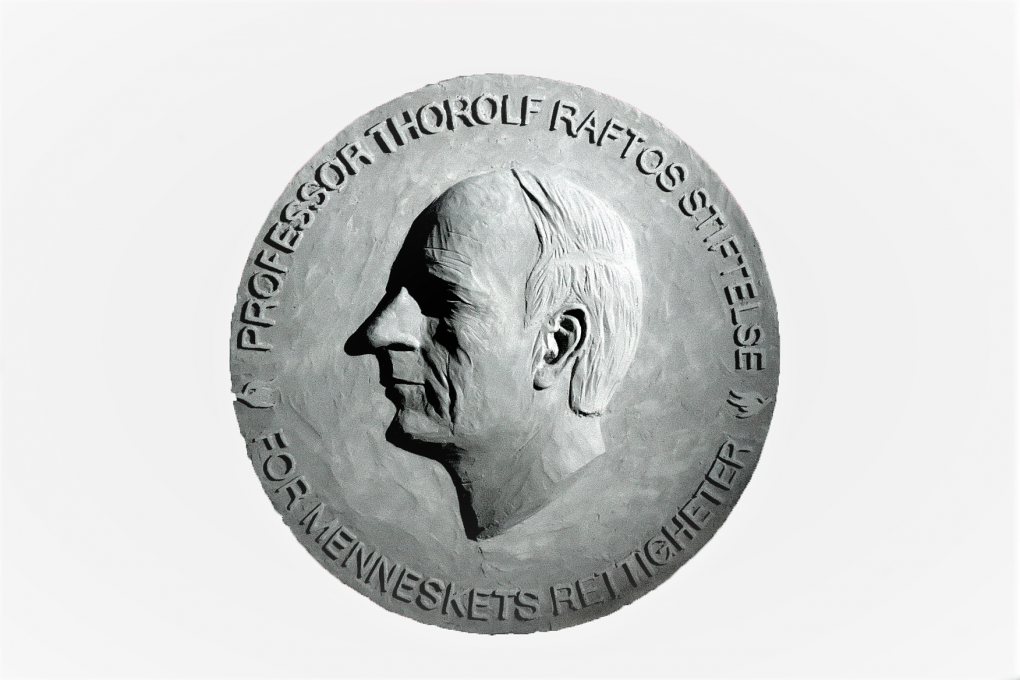
A candidate should be active in the struggle for the ideals and principles underlying the United Nations Universal Declaration of Human Rights.
A candidate’s struggle for human rights should represent a non-violent perspective.
A candidate may be a person or an organization, and two or more candidates may share the prize.
Deadline for nominations: 1 February 2022. Nominations received after 1 February will be taken into consideration for the Rafto Prize the following year.
For questions regarding nominations, please contact the Secretary of the Committee, Liv Unni Stuhaug, e-mail: livunni.stuhaug@rafto.no
Egypt’s government has engaged in a widespread crackdown on dissent for years that has stifled many of the country’s civil society groups and jailed thousands
The Arabic Network for Human Rights Information [ANRI], an Egyptian organisation, was founded in 2003 by a team of lawyers and activists. It documented violations against citizens, journalists and political prisoners in Egypt and the region. It also followed the increasing government intimidation and targeting of human rights workers and others. But laws that made many of ANHRI’s operations illegal have forced the organisation to shut down, Executive Director Gamal Eid said in the statement on Monday. See e.g. https://humanrightsdefenders.blog/2019/12/31/egyptian-human-rights-defender-gamal-eid-assaulted/. As a lawyer, Eid represented some of the most prominent secular detainees. A court ordered his assets frozen and has banned him from travelling since 2016.
He said the group’s workers had been arrested, intimidated and physically assaulted by security forces.
“We continue to be lawyers who have a conscience, and as individual, independent human rights defenders will work side by side with the few remaining independent human rights organisations, independent human rights defenders and the entire movement calling for democracy,” he wrote.
Tikhanovskaya was the main rival to current President Lukashenko, who has ruled the country since 1994, in the 2020 Belarusian presidential election. Her husband, Sergei Tikhanovski, had originally wanted to run for president, but was arrested before he could run for office. Tikhanovskaya then took over his role.
After Belarusian state television released an exit poll showed Lukashenko winning by an overwhelming margin, Tsikhanouskaya said that she didn’t trust that poll, saying, “I believe my eyes, and I see that the majority is with us. She filed a formal complaint with the Central Election Commission on election night, but was detained for seven hours in retaliation. After her release from detention, Tsikhanouskaya chose to flee to Lithuania in fear of repercussions, which could have possibly affected her children.
As feared in November (see blog post below) Russia’s Supreme Court on Tuesday 28 December 2021 ordered the closure of Memorial International, one of the country’s most respected human rights organizations, wiping out three decades of work to expose the abuses and atrocities of the Stalinist era. Memorial is the winner of at least 7 international human rights awards: https://www.trueheroesfilms.org/thedigest/laureates/BD12D9CE-37AA-7A35-9A32-F37A0EA8C407
The court ruled that Memorial International had fallen afoul of Russia’s “foreign agent” law. But the group said the real reason for the shutdown was that authorities did not approve of its work.
The ruling is the latest blow to Russia’s hollowed-out civil society organizations, which have gradually fallen victim to Putin’s authoritarian regime.
Videos posted on social media showed Memorial supporters shouting, “Shame, shame!” in the court’s hallways and at the entrance to the building shortly after the ruling. Seven people were detained outside the courthouse following the proceedings, according to independent monitoring group OVD-Info. The organization said three of them are believed to be instigators whose sole aim was to cause havoc, not support Memorial.
Memorial International’s lawyer, Tatiana Glushkova, confirmed the ruling to CNN and said the group would appeal the decision. “The real reason for Memorial’s closure is that the prosecutor’s office doesn’t like Memorial’s work rehabilitating the victims of Soviet terror,” Glushkova told CNN.
The Prosecutor General’s Office of Russia requested Memorial International be liquidated in November. The group was accused of repeatedly breaking the law for failing to mark all its publications with a compulsory “foreign agent” warning. The Justice Ministry had designated the group a foreign agent in 2016, using a law targeting organizations receiving international funding.
Memorial’s representatives argued there were no legal grounds for the group’s closure, and critics say the Russian government targeted Memorial for political reasons.
Oleg Orlov, a member of Memorial International’s board, said the court’s decision was “purely ideological” and “a demonstrative, blatant, illegal decision.”
“Allegedly, we do not assess the Soviet Union and Soviet history the right way. But this is our assessment, we have the right to do it,” Orlov told CNN.
Memorial was founded in the late 1980s to document political repressions carried out under the Soviet Union, building a database of victims of the Great Terror and gulag camps. The Memorial Human Rights Centre, a sister organisation that campaigns for the rights of political prisoners and other causes, is also facing liquidation for “justifying terrorism and extremism”. One of the group’s co-founders was Nobel Peace Prize winner Andrei Sakharov, who went on to be the first honorary chairman of the Memorial Society.
Archbishop Emeritus Desmond Tutu, who was post-apartheid South Africa’s moral compass and the driver of its troubled reconciliation process, has died. He was 90 years old.
He is the laureate of at least 10 human rights awards: For the complete list, see:
Andrew Donaldson in News24 of 26 December 2021 published an interesting obituary: A tireless social activist and human rights defender, Tutu not only coined the term “Rainbow Nation” to describe the country’s ethnic diversity but, after the first democratic elections in 1994, went on to become its conscience, using his international profile in campaigns against HIV/Aids, tuberculosis, poverty, racism, xenophobia, sexism, homophobia and transphobia, among others…
His was a powerful, forthright voice, one that irked both the Nationalist government and its successor, the African National Congress and its allies. He was, an activist noted, “given to expressing his opinion in ways that are guaranteed to be outside the realm of comfortable politics”. As Tutu himself put it, in 2007, “I wish I could shut up, but I can’t, and I won’t.“..
Both at home and abroad, Tutu’s opposition to apartheid, which he often likened to Nazism, was vigorous and unequivocal. The Nationalists twice revoked his passport, and he was briefly jailed in 1980 after a protest march. Many felt that his increasing international reputation and his advocacy of non-violence had spared Tutu from more harsh treatment by the government…
He was a born orator and, according to the journalist Simon Hattenstone, “a natural performer [with] his hands and eyes flying all over the place, his voice impassioned and resonant; a tiny ball of love.”
Tutu would often play down such adulation. “I was,” he once said of his reputation, “this man with the big nose and the easy name who personalised the South African situation.”…
Following the Soweto riots in 1976, Tutu became an increasingly vocal supporter of economic sanctions and a vigorous opponent of US president Ronald Reagan’s “constructive engagement” with the Nationalist government.
In 1978, he was appointed general secretary of the SACC, a position he used to further rally support, both local and international, against apartheid. He was just as harsh in his criticism of the violent tactics later used by some anti-apartheid activists, and was unequivocal in his opposition to terrorism and communism.
Tutu’s finest hour came when he chaired the Truth and Reconciliation Commission, which was set up to bear witness to, record and in some cases grant amnesty to the perpetrators of apartheid-relation human rights violations, as well as rule on reparation and the rehabilitation of victims…
He is survived by his wife, four children, seven grandchildren and great-grandchildren.
Desmond Tutu was responsible for countless notable quotes throughout his life as an activist and elder. TimesLive (Ernest Mabuza) of 26 December 2021 in “In his own words: Desmond Tutu’s unwavering stance on human rights” published 12 of his best: