Posts Tagged ‘Daouda Diallo’

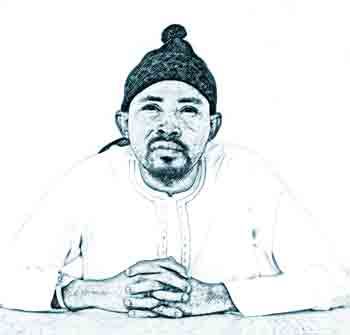
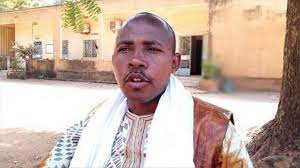
Daouda Diallo, the 2022 recipient of the Martin Ennals Award, abducted

September 27, 2024

A prominent human rights defender in Burkina Faso has been abducted by unknown individuals, rights groups have said. Activists say it could be the latest attempt by the military government to target dissidents using a controversial law.

Daouda Diallo, 2022 recipient of the Martin Ennals international human rights award, was abducted on Friday in the capital Ouagadougou after visiting the passport department where he had gone to renew his documents, according to the local Collective Against Impunity and Stigmatisation of Communities civic group, which Mr Diallo founded.

https://www.trueheroesfilms.org/thedigest/laureates/ca7f1556-8f73-4b48-b868-b93a3df9b4e1

His captors – in civilian clothing – accosted him as he tried to enter his car and took him to “an unknown location”, the group said in a statement on Friday, warning Mr Diallo’s health could be at risk and demanding his “immediate and unconditional” release.

Amnesty International’s west and central Africa office said the abduction was “presumably (for him) to be forcibly conscripted” after he was listed last month among those ordered to join Burkina Faso’s security forces in their fight against jihadi violence as provided by a new law.Right now, civil society activists, human rights defenders and even leaders of opposition political parties do not dare express freely their opinions

“Amnesty International denounces the use of conscription to intimidate independent voices in #BurkinaFaso and calls for the release of Dr Diallo,” the group said via X, formerly known as Twitter.

Earlier this year, Burkina Faso’s junta announced the “general mobilisation” decree to recapture territories lost as jihadi attacks continue to ravage the landlocked country.

https://www.msn.com/en-ie/news/national/human-rights-activist-abducted-in-burkina-faso-group-says/ar-AA1kT5Gr

Burkina Faso: Disappeared MEA laureate Daouda Diallo released

April 1, 2024

On 1 December 2023, Daouda Diallo, a human rights defender and secretary general of the Coalition Against Impunity and Community Stigmatization, was abducted by security forces in civilian clothes in Ouagadougou, capital of Burkina Faso, and taken to an unknown location. See: https://humanrightsdefenders.blog/2023/12/04/mea-laureate-2022-daouda-diallo-abducted/

On 28 March, 2024 Amnesty International (Index Number: AFR 60/7830/2024) reported that he was freed on 7 March 2024.

https://www.trueheroesfilms.org/thedigest/laureates/ca7f1556-8f73-4b48-b868-b93a3df9b4e1

MEA Laureate 2022 Daouda Diallo abducted

December 4, 2023

On 1 December, 2023, at about 4 p.m., four or more unidentified men abducted Diallo, the secretary-general of the Collective Against Impunity and Stigmatization of Communities (Collectif contre l’Impunité et la Stigmatisation des Communautés, CISC) in Burkina Faso’s capital, Ouagadougou. Diallo had just left the government’s passport office after a meeting with officers to renew his passport. The CISC issued a statement the same day saying that men in civilian clothes pushed Diallo into a vehicle and drove off. His whereabouts remain unknown.

Diallo, 41, winner of the 2022 Martin Ennals Award for Human Rights Defenders, has long been known for denouncing abuses by government security forces and for demanding accountability.[https://www.trueheroesfilms.org/thedigest/laureates/ca7f1556-8f73-4b48-b868-b93a3df9b4e1] In early November, the Burkinabe security forces used a sweeping emergency law aimed at silencing dissent and notified at least a dozen journalists, civil society activists, and opposition party members, including Diallo, that they would be conscripted to participate in government security operations across the country. Diallo spoke out against these politically motivated conscriptions.[see also: https://humanrightsdefenders.blog/2023/11/10/burkina-faso-emergency-law-targets-dissidents/]

On December 2, the United Nations special rapporteur on human rights defenders, Mary Lawlor, raised serious concerns about Diallo’s abduction. In a December 3 statement, The People’s Coalition for the Sahel, an alliance of civil society organizations, said that “the abduction of a prominent activist in broad daylight […] demands an immediate government response,” and called on the military authorities to take action.

Burkina Faso authorities should urgently and impartially investigate the abduction of Daouda Diallo and release him if he is in government custody,” said Ilaria Allegrozzi, senior Sahel researcher at Human Rights Watch. “We are deeply concerned for Diallo’s safety and the safety of everyone working to improve respect for human rights in Burkina Faso.”

Since it took power in an October 2022 coup, Burkina Faso’s military junta has increasingly cracked down on peaceful dissent and the media, shrinking the civic space in the country. National and international journalists, as well as civil society members, face increasing harassment, threats, and arbitrary arrests. On December 2, the military authorities announced the suspension of “all distribution methods” of the French newspaper Le Monde daily, claiming an article published on Le Monde’s website on December 1 about a deadly attack by an Islamist armed group on a military base in Djibo, Sahel region, on November 26, was “biased.”

On 4 December the Martin Ennals Foundation and several other NGOs addressed an urgent letter to the Représentant Permanent de Burkina Faso at the UN in Geneva.

https://www.hrw.org/news/2023/12/04/burkina-faso-prominent-rights-activist-abducted

https://abcnews.go.com/International/wireStory/burkina-faso-rights-defender-abducted-concerns-grow-alleged-105328313

https://www.voanews.com/a/burkina-faso-rights-defender-abducted/7381667.html

https://www.barrons.com/news/ngos-call-for-release-of-burkinabe-rights-defender-4d2b4f83

Burkina Faso: Emergency Law Targets Dissidents

November 10, 2023

On 8 November, 2023 Human Rights Watch reported that Burkina Faso’s military junta is using a sweeping emergency law against perceived dissidents to expand its crackdown on dissent. Between November 4 and 5, 2023, the Burkinabe security forces notified in writing or by telephone at least a dozen journalists, civil society activists, and opposition party members that they will be conscripted to participate in government security operations across the country.

The transitional military authorities assert that the conscription orders are authorized under the April 13 “general mobilization,” part of a plan to recapture territory lost to Islamist armed groups, which control roughly half of the country. The plan seeks to create a “legal framework for all actions” to be taken against insurgents and gives the president extensive powers to combat the insurgency, including requisitioning people and goods and restraining civil liberties.

The Burkina Faso junta is using its emergency legislation to silence peaceful dissent and punish its critics,” said Ilaria Allegrozzi, senior Sahel researcher at Human Rights Watch. “The government should not respond to the abusive Islamist armed groups with further human rights abuses but should instead strengthen efforts to protect civilians and uphold basic rights to freedom of expression and speech.

By targeting individuals who have openly criticized the junta, the conscription undertaken in Burkina Faso violates fundamental human rights, Human Rights Watch said. The recent notifications for conscriptions targeted, among others, Bassirou Badjo and Rasmane Zinaba, members of the civil society group Balai Citoyen; Daouda Diallo, prominent rights defender, secretary-general of the Collective Against Impunity and Stigmatization of Communities (Collectif contre l’Impunité et la Stigmatisation des Communautés, CISC), and laureate of the 2022 Martin Ennals Award for Human Rights Defenders [see: https://www.trueheroesfilms.org/thedigest/laureates/ca7f1556-8f73-4b48-b868-b93a3df9b4e1]; Gabin Korbéogo, president of the Burkina Faso Democratic Youth Organization (Organisation Démocratique de la Jeunesse du Burkina Faso, ODJ); and the journalists Issaka Lingani and Yacouba Ladji Bama.

Domestic civil society groups, media organizations, and trade unions have strongly condemned what one called the “selective and punitive” application of the “general mobilization” decree. In a November 6 statement, the Burkinabe Movement of Human and Peoples’ Rights (Mouvement Burkinabè des Droits de l’Homme et des Peuples, MBDHP) said the general mobilization “has been specifically designed and adopted not to contribute to the fight against terrorism,” but to repress critical opinions.

Human rights activists and journalists told Human Rights Watch they feared being conscripted. “This wave of notifications is affecting people’s mental wellbeing,” said an independent journalist living in Ouagadougou, Burkina Faso’s capital. “I am asking myself if I will be next.”

Some said they decided not to publicly criticize the conscriptions to be able to continue their work. “A human rights defender is useful to others only if he is alive and free,” an activist from the North region said. “I need to keep working and serve my community, and I cannot do so if I am sent to the front.”

..

While governments are empowered to conscript members of the civilian population over age 18 for the national defense, there are limits that the junta has far overstepped. Human Rights Watch takes the position that conscription should not take place unless it has been authorized and is in accordance with domestic law. The conscription law needs to meet reasonable standards of fairness in apportioning the burden of military service. It needs to be carried out in a manner that gives the potential conscript notice of the duration of the military service and an adequate opportunity to contest being required to serve at that time. Conscription also needs to be carried out according to standards consistent with non-discrimination and equal protection under law.

Since it took power in an October 2022 coup, the military junta has increasingly cracked down on the media and peaceful dissent, shrinking the civic space in Burkina Faso.

National and international journalists face increasing harassment, threats, and arbitrary arrests. In April, the military authorities expelled two journalists working for the French newspapers Libération and Le Monde following their reports on human rights abuses by the army. In August, Burkinabe military authorities suspended the independent radio station Radio Omega for one month after it broadcasted an interview with supporters of Niger’s ousted president, Mohamed Bazoum. In September, the junta suspended the Paris-based news outlet Jeune Afrique, accusing it of publishing “misleading” articles seeking “to discredit” the national armed forces.

In late October, at least 15 civil society organizations and trade unions called for a mass meeting in Ouagadougou to commemorate the popular uprising of October 30 and 31, 2014, that ended the power of then-President Blaise Compaoré. The groups also challenged the transitional government about the deterioration of the security situation, high cost of living, poor governance, and corruption. On October 28, the Ouagadougou mayor called on the organizers to cancel their meeting due to potential “disturbances to public order.” The meeting did not take place.

“Providing security for the people of Burkina Faso demands a long-term commitment to promote respect for human rights,” Allegrozzi said. “Using conscription to silence dissent will neither advance the junta’s efforts against the Islamist insurgency nor improve the deteriorating rights situation in the country. The government should immediately end this misuse and abuse of conscription.”

https://www.hrw.org/news/2023/11/08/burkina-faso-emergency-law-targets-dissidents

https://reliefweb.int/report/burkina-faso/burkina-faso-emergency-law-targets-dissidents

Burkina Faso: Coup Puts Rights at Risk – Diallo asks military to respect international law

January 29, 2022

Burkina Faso military officers responsible for the January 2022 coup should ensure the protection of human rights and a swift transition to democratic rule, Human Rights Watch said today. The authorities should give priority to the humane treatment of people in custody, respect freedoms of the media and rights defenders, and ensure that counterterrorism operations respect basic rights. ..  

“The Burkina Faso military coup occurred in a country with weak democratic institutions amid a brutal armed conflict and a growing humanitarian crisis,” said Corinne Dufka, Sahel director at Human Rights Watch. “The military authorities now in control need to act urgently to protect people’s rights and ensure they don’t make a bad human rights situation even worse.”

During a January 24 news conference, the self-proclaimed Patriotic Movement for Safeguard and Restoration led by Lt. Col. Paul-Henri Sandaogo Damiba, announced the suspension of the constitution, the dissolution of the government and national assembly, and a nationwide curfew. The movement’s spokesperson said elections would be held “within a reasonable time frame” and pledged to respect Burkina Faso’s international commitments, notably including human rights.

The coup leaders claimed the coup took place “without bloodshed.” However, there is uncertainty about the safety of President Kaboré and his close associates, amid reports of potential injuries and deaths during the military takeover. The MPSR should publicly account for the whereabouts and condition of government officials in custody and allow the Office of the United Nations High Commissioner for Human Rights, the national human rights commission, and independent human rights monitors to visit Kaboré and any other detainees. All those detained should be promptly brought before a judge and charged or be released.

The coup occurred within the context of a marked deterioration in the country’s human rights and security situation over the past year as attacks and atrocities by armed Islamist groups surged and the humanitarian situation worsened. Burkina Faso was already struggling to ensure justice for hundreds of unlawful killings by all sides, and to uphold the civil and political rights of its population.

During 2021, armed Islamist groups killed at least 250 civilians and scores of security force members during attacks in several provinces. Since 2018, Human Rights Watch has documented that government security forces and pro-government militias allegedly summarily executed hundreds of suspects, mostly in the country’s northern regions. Virtually none of these attacks have resulted in investigations and prosecutions.

Burkinabé rights defender, Dr. Daouda Diallo, secretary-general of the Collective Against Impunity and Stigmatization (CISC), and laureate of the 2022 Martin Ennals Award for Human Rights Defenders, told Human Rights Watch that he hoped the military authorities would “address Burkina Faso’s deepening social divisions, and ensure crucially needed protection for all civilians at risk from conflict, while scrupulously respecting international humanitarian law.”  See also: https://www.trueheroesfilms.org/thedigest/laureates/ca7f1556-8f73-4b48-b868-b93a3df9b4e1

The military authorities should also ensure respect for freedom of expression. In late 2021 and early 2022, the government shut down internet services in a move to quell protesters who had taken to the streets to demand an end to the violence and to protest rising food prices. A 2019 law criminalizing some aspects of reporting on security force operations dampened media freedom, with journalists reluctant to report on allegations of abuses by pro-government forces. Further, in 2021, the government implemented a de facto ban on visits by journalists to internally displaced camps. After taking power, the MPSR issued a warning against the communication of “false news.”..

Military takeovers in Africa in the past year occurred in Chad, Guinea, Mali, and Sudan. Coup leaders have often taken advantage of social unrest, grievances about corruption, and the failure of governments to respect basic rights, uphold constitutional obligations, and carry out promised reforms. Democratically elected governments need to look beyond elections as a marker of democratic progress, and focus on upholding human rights, strengthening the rule of law, and building credible, independent institutions, Human Rights Watch said…

“Burkina Faso’s military leadership should not allow the political upheaval created by the coup to lead to a vacuum in the protection of basic rights,” Dufka said. “The military authorities need to maintain discipline within the security forces and ensure that the human rights of all Burkinabé are respected, including their right to vote freely in elections.”

https://www.hrw.org/news/2022/01/27/burkina-faso-coup-puts-rights-risk

Breaking News: 3 laureates of the Martin Ennals Award 2022 announced today

January 19, 2022

This morning, 19 January 2022, at a virtual press conference in Geneva three driving forces of the human rights movement were announced as the Laureates of the 2022 Martin Ennals Award for Human Rights Defenders. For more on the Martin Ennals Award and its laureates, see: https://www.trueheroesfilms.org/thedigest/awards/043F9D13-640A-412C-90E8-99952CA56DCE

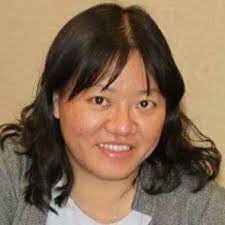
Pham Doan Trang is a leading journalist, editor and democracy advocate in Vietnam, where
the Communist Party has left little room for opposition voices to flourish. She directed several
independent media outlets to raise awareness amongst Vietnam’s citizens of their fundamental
rights galvanising many other journalists and human rights defenders to speak up. She was one
of the most hunted activists in her country before being arrested in October 2020. On 14
December 2021, Pham Doan Trang was sentenced to nine years in prison for “conducting
propaganda against the state”. There are growing concerns about her health. [see also: https://www.trueheroesfilms.org/thedigest/laureates/fe8bf320-1d78-11e8-aacf-35c4dd34b7ba]

Dr. Daouda Diallo is a trained pharmacist-turned-human rights activist in Burkina Faso. The
founder of the civil society coalition CISC, he dedicatedly documents human rights violations in
a country rocked by violent crossfires between government forces, local paramilitary groups
and Islamist factions. He carries the torch for justice and accountability to victims of the violence
and their families. Dr. Diallo’s message of unity amongst different ethnic groups and faiths.

Abdul-Hadi Al-Khawaja is a charismatic architect of Bahrain’s human rights movement and
a leader of the 2011 protests calling for democracy and greater freedom in the Gulf region. Al-
Khawaja is not only an activist, but also a social entrepreneur who founded some of the first
human rights research and defence organizations in the region, which still exist today. He
inspires future generations in Bahrain to continue to fight despite his now decade-long
imprisonment. See also: https://www.trueheroesfilms.org/thedigest/laureates/4d45e316-c636-4d02-852d-7bfc2b08b78d

You can relive the conference here: https://youtu.be/UgvIli5X-T8

It was also announced that due to the COVID-19 pandemic, the Award Ceremony is postponed until 2 June 2022. “As a city of human rights, Geneva is committed to supporting international cooperation
on critical issues. Throughout the pandemic, many organizations have persisted in their human rights
missions, demonstrating tremendous resilience. In this spirit, we are proud to co-organise another
edition of the Martin Ennals Award
”, said Member of the City Executive Alfonso Gomez. (https://www.martinennalsaward.org/committed-to-a-better-world/)

AS Chair of the Martin Ennals Award Jury, I mentioned that the Jury had selected “three galvanizers of the human rights movement and that courage is the connecting dot between them ”.

https://www.martinennalsaward.org/and-the-martin-ennals-laureates-2022-are/