Posts Tagged ‘Ben Saul’

9 March 2026: important Geneva event on transnational repression of human rights defenders

March 4, 2026

The event “Tackling the protection gap: Host States’ responsibility to prevent and respond to transnational repression” will bring together defenders and UN experts to discuss the international human rights law obligations of States in respect of transnational repression against individuals and groups within their territory, as well as the strengthening of international standards, and gaps arising from shortcomings in their implementation domestically.

Location: Geneva, Switzerland. Date: 09 March 2026. Palais des Nations, Room VIII. Time: 2:00PM – 3:00PM CET and livestreamed on ISHR’s YouTube channel.!

Research from international organisations, NGOs and academics shows that transnational repression (TNR) – acts by States and their proxies to deter, silence or punish dissent, criticism or advocacy outside their territory – is affecting a growing array of individuals and groups worldwide.[1] With the emergence of new surveillance and communication technologies, many actors have found new avenues to silence and punish critics and opponents. The most common targets have been exiled human rights defenders and political activists, but today broader groups such as journalists, lawyers, artists, academics and ordinary members of diaspora communities are frequently targeted. See e.g.

https://humanrightsdefenders.blog/2024/03/19/transnational-repression-human-rights-watch-and-other-reports/ and

https://humanrightsdefenders.blog/2024/03/19/transnational-repression-human-rights-watch-and-other-reports/

Freedom House Transnational Repression dataset: https://freedomhouse.org/report/transnational-repression

Human Rights Watch, “We Will Find You” A Global Look at How Governments Repress Nationals Abroad, 2024, https://www.hrw.org/report/2024/02/22/we-will-find-you/global-look-how-governments-repress-nationals-abroad;

The immediate effect of TNR is the violation of, or constraint on the exercise of, fundamental human rights. States have obligations towards those subject to such violations taking effect within their territory. These obligations have long been recognised, but have not yet been the subject of focused discussion in relation to TNR, leaving the scope and nature of the duties of host States unclear.

This event will bring together defenders and UN experts to discuss the international human rights law obligations of States in respect of transnational repression against individuals and groups within their territory, as well as the strengthening of international standards, and gaps arising from shortcomings in their implementation domestically.

Speakers: 

  • Sayed Ahmed al-Wadaei, Director of Advocacy, Bahrain Institute for Rights and Democracy (BIRD)
  • Birgit Kainz-Labbe, Coordinator of Civic Space Unit, Office of the UN High Commissioner for Human Rights
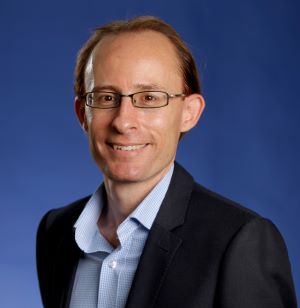
  • Ben Saul, UN Special Rapporteur on counter-terrorism and human rights
  • Hélène Tigroudja, Human Rights Committee, Vice-Chair

Moderator: Raphael Viana David, International Service for Human Rights 

This event is organised by ISHR and co-hosted with Human Rights Watch, Human Rights House Foundation and the International Federation for Human Rights (FIDH).

https://ishr.ch/events/tackling-the-protection-gap-host-states-responsibility-to-prevent-and-respond-to-transnational-repression

Abuse of counter-terrorism laws threaten human rights globally, warns UN expert

March 13, 2024

On 12 March 2024 the recently appointed UN Special Rapporteur on the promotion and protection of human rights while countering terrorism, Ben Saul, warned that two decades of prolific global efforts to counter terrorism have not been matched by an equally robust commitment to human rights.

In his first report to the Human Rights Council, the Special Rapporteur painted a counter-terrorism landscape strewn with human rights violations, including unlawful killings, arbitrary detention, torture, unfair trials, privacy infringements from mass surveillance, and the criminalisation of freedoms of expression, assembly, association and political participation. For earlier posts on this topic, see: https://humanrightsdefenders.blog/tag/anti-terrorism-legislation/

The misuse of counter-terrorism measures not only violates the rights of suspected criminals but can also jeopardise the freedoms of the innocent,” Saul said.

He condemned the rampant weaponisation of overly-broad terrorism offences against civil society, including political opponents, activists, human rights defenders, journalists, minorities, and students. Unjustified and protracted states of emergency continue to undermine human rights, the expert warned.

Excessive military violence in response to terrorism also destroys fundamental rights, including through violations of international humanitarian law and international criminal law,” Saul said. “Cross-border military violence is increasingly used by states even when it is not justified under the international law of self-defence.

“Many states have also failed to address the root causes of terrorism, including state violations of human rights – while impunity for those violations is endemic,” he said.

Saul said regrettably, the UN has been part of the problem, by encouraging authoritarian regimes to strengthen counter-terrorism laws in the absence of a rule of law culture or human rights safeguards. “The UN must also do better to meaningfully consult civil society on counter-terrorism,” he said.

Announcing his priorities for his three-year term, the Special Rapporteur said his focus would include ensuring regional organisations respect human rights when countering terrorism; all coercive administrative measures used to prevent terrorism comply with human rights; and States are held accountable for large-scale violations of human rights resulting from counter terrorism – and victims receive full and effective remedies.

Saul will also continue the efforts of his predecessor on preventing the abuse of counter-terrorism measures against civil society; protecting the 70,000 people arbitrarily detained in north-east Syria in the conflict against ISIL; protecting detainees and transferees from the detention facility at Guantánamo Bay, Cuba; ensuring that the UN safeguards human rights in its counter-terrorism work, regulating new technologies used in counter-terrorism; and protecting the victims of terrorism.

Human rights in counter-terrorism are at increased risk because of rising authoritarianism, surging domestic polarisation and extremism, geopolitical competition, dysfunction in the Security Council and new tools, including social media, for fuelling dehumanisation, vilification, incitement and misinformation,” the Special Rapporteur warned.

Double standards and selectivity by major powers in the enforcement of human rights is also eroding public confidence in the credibility of the international human rights system,” he said. “States must move beyond rhetorical commitment to human rights and instead place human rights at the heart of all counter-terrorism measures.

Statements Statement of the mandate of the United Nations Special Rapporteur on the promotion and protection of human rights while countering terrorism

Statements Human Rights Council discusses the protection of human rights while countering terrorism

Statements UN Office of Counter-Terrorism Town Hall meeting, Statement by Michelle Bachelet, UN High Commissioner for Human Rights

https://www.ohchr.org/en/press-releases/2024/03/rampant-abuse-counter-terrorism-laws-threaten-human-rights-globally-warns-un