Archive for the 'UN' Category

UN Guidelines for use of emergency powers in time of covid-19 pandemic

April 14, 2020
UN Special Rapporteur on Extra-Judicial Executions Agnes Callamard. Photo: Foreign and Commonwealth Office/Wikipedia.

a set of guidelines issued by the UN’s Human Rights’ Committee on Economic, Social and Cultural Rights (CESR), in whcih governments are urged to respect human rights across the spectrum, including economic and social rights, and civil and political rights as this would be fundamental to the success of the public health response.

The announcement shed light on the controversial decision by the Maltese government to close the country’s ports as migrant boats were stranded. The UN said it was aware that governments had to take difficult decisions in light of the coronavirus pandemic, but insisted measures should be proportionate. Emergency powers must be used for legitimate public health goals, not used as a basis to quash dissent or silence the work of human rights defenders or journalists.

This was also highlighted by Agnes Callamard, the UN Special Rapporteur on Extra-Judicial Executions, who said these emergency measures also had to be lifted when these were no longer necessary for protecting public health. People needed to be informed about the emergency measures, where these applied and for how long they were meant to be in effect. “As the crisis passes, it will be important for governments to return life to normal and not use emergency powers to indefinitely regulate day-to-day life, recognizing that the response must match the needs of different phases of this crisis,” the CESC said.

Unfortunately, several governments around the world – and in the EU – have taken advantage of the coronavirus pandemic to implement a series of measures that roll back human rights.

  • As people are being called upon to stay at home, governments must take urgent measures to help people without adequate housing. …The authorities should also take particular care to prevent more people from becoming homeless and implement good practices such as moratoriums on evictions, deferrals of mortgage or loan payments.
  • It was also important to keep in mind people who relied on community and home services to eat, dress and bathe – including people with a disability or the elderly.
  • The guidelines also refer to prisoners and those kept in detention, saying these were at a higher risk of infection in case of an outbreak. Social distancing was difficult to maintain in these places, which had a high risk of contamination. States should “urgently explore options for release and alternatives to detention to mitigate the risk of harm within places of detention,” it said.
  • The document also tackled the issue of migration, saying migrants and refugees also faced “particular risks” as these may be confined to camps and settlements, which might be overcrowded, overstretched and with poor sanitation. “It is also vital that any tightening of border controls, travel restrictions or limitations on freedom of movement do not prevent people who may be fleeing from war or persecution from accessing safety and protection,” the committee said.

This recommendation is the exact opposite of the decision taken by the Maltese government last week to close its ports, making it very clear that it would not be taking any more migrants as a measure to prevent the spread of COVID-19. This announcement came 24 hours after Italy closed all its ports, saying its harbours could not be considered safe. The decision was harshly criticised by more than 20 non-governmental organisations who called on the prime minister to ensure that all persons within Malta’s responsibility were rescued and their safety guaranteed. “The nation cannot quietly celebrate Easter while men, women and children are drowning on our doorstep. Saving lives and ensuring their disembarkation at a safe place is a fundamental legal obligation and also a moral imperative that can in no way be negotiated or renounced,” the NGOs said.

The guidelines called on governments to take “specific actions” to include migrants and refugees in national prevention and response campaigns by ensuring equal access to information, testing, and health care for all, regardless of their status. Earlier this month, the Maltese authorities put the Hal Far open centre under a two-week quarantine after eight migrants tested positive for coronavirus. The decision was slammed by local NGOs who said this would exacerbate the situation where the virus could potentially spread among the 1,000 residents.

On 14 April 2020 Clément Nyaletsossi Voule, the UN Special Rapporteur on the rights to freedom of peaceful assembly and of association, called on States not to use state of emergency declarations during the COVID-19 crisis to impose wholesale restrictions on freedom of peaceful assembly and association, and released detailed Guidelines governments and law enforcement agencies must follow to avoid human rights abuses.

No country or government can solve this health crisis alone and I am concerned about worrying trends and limitations emerging from civil society reports around the world, including on civil society’s ability to support an effective COVID-19 response,” said Clément Nyaletsossi Voule, the UN Special Rapporteur on the rights to freedom of peaceful assembly and of association. “Civil society organisations are key in helping States to frame inclusive policies, disseminate information, and provide social support to vulnerable communities in need,” he said.

In his 10 Guidelines, the expert said that where new laws or regulations are adopted, any limitations on rights imposed must adhere to the principles of legality, necessity and proportionality. Free-flow of information is crucial in times of crisis and laws criminalising ‘false news’, including those targeting human rights defenders, must be avoided. “It is inadmissible to declare blanket restrictions on human rights and fundamental freedoms,” Voule said. “Exemptions should be foreseen for civil society actors, particularly those monitoring human rights, trade unions, social services providing humanitarian assistance, and journalists covering the management of the crisis. “State of emergency does not halt the freedoms of peaceful assembly and of association,” the human rights expert said.

Voule said his Guidelines could help States reassess measures already in place to ensure compliance with their human rights obligations and to take citizens’ demands fully into account.

https://reliefweb.int/report/world/covid-19-restrictions-should-not-stop-freedom-assembly-and-association-says-un-expert

Coronavirus emergency measures must be timely and proportionate

Tanzania shows great power sensitivity to UN human rights criticism

April 6, 2020
Chadema party MPs Halima Mdee, Ester Matiko and Ester Bulaya attend a press conference after being released from Segerea prison in Dar es Salaam, Tanzania, on March 12. PHOTO | AFP

Chadema party MPs Halima Mdee, Ester Matiko and Ester Bulaya attend a press conference after being released from Segerea prison in Dar es Salaam, Tanzania, on March 12. PHOTO | AFP
According to BOB KARASHANI in the East African of 4 April 2020 Tanzania‘s Foreign Affairs ministry has hit out at the United Nations Human Rights Office for criticising the country’s human rights record as it heads to the October general election. According to the ministry’s Permanent Secretary Col Wilbert Ibuge, the statement issued by the Geneva-based UN agency on March 17, was biased, with unsubstantiated allegations, and an attempt to both malign Tanzania’s international reputation and intrude on its sovereignty. Col Ibuge said that before going public, the agency should have first raised its concerns with the government for clarification “which would have been duly and graciously provided.”

The UN recently called the sentencing of several opposition leaders on charges including sedition and unlawful assembly “further troubling evidence” of a crackdown on dissent and stifling of public freedoms in the country. It accused the government of using the country’s criminal justice system to target its critics, and called on Tanzania to “immediately lift” a four-year ban on political rallies ahead of the October election. “The democratic and civic space has shrunk to almost nothing in Tanzania,” the agency said.

[see also: https://humanrightsdefenders.blog/2019/12/31/annual-reports-2019-tanzania-mostly-a-bad-year/]

—–

https://www.theeastafrican.co.ke/news/ea/Tanzania-slams-UN-rights-abuses-claims/4552908-5514120-6n56syz/index.html

Internet shutdowns in times of COVID-19 could cost lives

April 2, 2020
Intentionally shutting down or restricting access to the internet violates multiple rights and can be deadly during a health crisis such as the COVID-19 pandemic, Human Rights Watch said on 31 March 2020. Governments that are currently imposing an internet shutdown, such as Bangladesh, Ethiopia (it just announced restoring service), India, and Myanmar, should lift them immediately to save lives. During a health crisis, access to timely and accurate information is crucial. People use the internet for updates on health measures, movement restrictions, and relevant news to protect themselves and others.

Covid-19 spread leads to reactions and messages of solidarity

March 27, 2020

From the myriad of messages on the spread and impact of the Covid-19 virus, here a few excerpts:

On 27 March 2020, Rosa Kornfeld-Matte, UN Independent Expert on the enjoyment of all human rights by older persons said that society has a duty to exercise solidarity and better protect older persons who are bearing the lion’s share of the COVID-19 pandemic. “Reports of abandoned older persons in care homes or of dead corpses found in nursing homes are alarming. This is unacceptable,” said  “We all have the obligation to exercise solidarity and protect older persons from such harm.” Older persons .. are further threatened by COVID-19 due to their care support needs or by living in high-risk environments such as institutions, the expert said. [https://reliefweb.int/report/world/unacceptable-un-expert-urges-better-protection-older-persons-facing-highest-risk-covid]

—–

Adrien-Claude Zoller, President of the small NGO ‘Geneva for Human Rights – Global Training’ issued a statement of solidiarity ith the marginalised who will suffer most:….As a human rights organisation, Geneva for Human Rights is deeply worried about the situation of the most vulnerable, of the unemployed and homeless, of those in extreme poverty, of people with disabilities, of women already assuming so many tasks, of the elderly, of those arbitrarily detained in overcrowded prisons, of minorities, migrants, internally displaced, refugees, and indigenous peoples. It is a matter of human dignity. Human rights are at stake.
Many Governments first denied, then de-dramatized the spread of the virus, before taking measures to contain it and limit the damage for their economy. Too often in these measures, the social impact of both the health and the economic crises is neglected. We all fully support efforts to eradicate the virus. At the same time, we should not forget the commitment of the international community to eradicate extreme poverty (‘Sustainable Development Goal’, Nr.1). We have to protect the most vulnerable.
….Countrywide lockdowns imply a limitation of human rights. Indeed, complying with these emergency rules, including home confinement, is a moral imperative, a matter of solidarity to slow down the spread of the virus in our communities, and to support those on the frontline, in particular health- and social workers. However, we should recall that measures derogating from human rights obligations in ‘public emergency which threatens the life of the nation’ have to be limited ‘to the extent strictly required by the exigencies of the situation’. They have to be proportionate, limited in time, and in no way discriminatory (International Covenant on Civil and Political Rights, Article 4, United Nations, 16 December 1966). In many countries, such derogations led to special powers attributed to the Executive branch. Still, the principles of proportionality and non-discrimination have to apply. Parliamentary control and the Rule of Law remain a must, as well as transparency and access to all the information. We are dismayed that in several ‘denying’ countries (e.g. China at the beginning of the pandemic, Brazil, Egypt, Turkey) journalists, physicians, health workers and human rights defenders, are targeted for having exposed the gravity of the situation and the fate of marginalized people…………

—–

The New Humanitarian looks at the expected impact on aid:  https://www.thenewhumanitarian.org/news-feature/2020/03/26/coronavirus-international-aid

—–

The G20 seems to be aware as shown by a portion of their recent statement: “Enhancing Global CooperationWe will work swiftly and decisively with the front-line international organizations, notably the WHO, IMF, WBG, and multilateral and regional development banks to deploy a robust, coherent, coordinated, and rapid financial package and to address any gaps in their toolkit. We stand ready to strengthen the global financial safety nets. We call upon all these organizations to further step up coordination of their actions, including with the private sector, to support emerging and developing countries facing the health, economic, and social shocksof COVID-19.We are gravely concerned withthe serious risks posed to all countries, particularly developing and least developed countries, and notably in Africaand small island states, where health systems and economies may be less able to cope with thechallenge, as well as the particular risk faced by refugees and displaced persons. We consider that consolidating Africa’s health defense is a key for the resilience of global health. We will strengthen capacity building and technical assistance, especially to at-risk communities. We stand ready to mobilize development and humanitarian financing” [https://g20.org/en/media/Documents/G20_Extraordinary%20G20%20Leaders%e2%80%99%20Summit_Statement_EN%20(3).pdf]

UN experts alarmed over China’s missing human rights lawyers: victims of RSDL

March 24, 2020

Ding Jiaxi was disbarred and previously jailed for protesting against official corruption. (Twitter pic/L4L_INT)
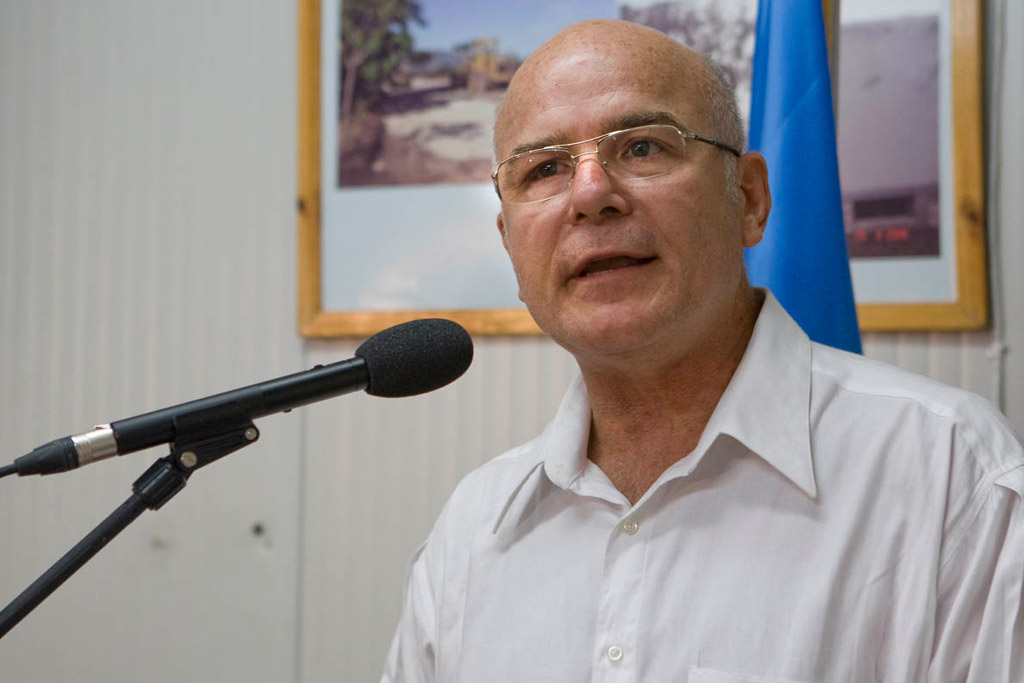
A group of UN special rapporteurs said on Monday 23 March 2020 that they were “gravely concerned” about the welfare of three human rights lawyers “forcibly disappeared” by Chinese authorities shortly after their arrests last December. Ding Jiaxi, a prominent Beijing-based disbarred lawyer, previously jailed for protesting against official corruption, and lawyers Zhang Zhongshun and Dai Zhenya have been held since late last year in so-called “residential surveillance in a designated location” (RSDL – see: https://humanrightsdefenders.blog/2018/01/10/more-on-residential-surveillance-in-a-designated-location-rsdl-in-china/). The three were among more than a dozen lawyers and activists who were detained or went missing in the final days of 2019 in what rights groups have said was a crackdown on participants of a private democracy gathering.

Nine other lawyers and activists who attended the informal weekend gathering in the city of Xiamen “have also been summoned for questioning or detained in what has been a cross-provincial operation led by a special taskforce of Yantai City police,” the experts pointed out.

The experts acknowledged that there are provisions in international law that allow exceptional measures to be taken to protect public order and national security. But they insisted that “enforced disappearance is a grave and flagrant violation of human rights and is unacceptable in all circumstances” .“We are dismayed that national security provisions are used to target human rights defenders who meet peacefully and exercise their right to free speech, even if such speech is critical of the state,” they said.The experts also cautioned that the arrest and detention of the three lawyers could have a “chilling effect” on the defence of human rights in China. “When the authorities in any country systemically charge human rights defenders with ‘subversion of state power’ or other terror-related charges without clearly communicating the factual basis for such accusations, we worry that these defenders are just being persecuted for the exercise of their most basic human rights,” they said. Earlier this month, activists revealed that Xu Zhiyong, an outspoken Chinese rights activist who called for President Xi Jinping to step down over the coronavirus outbreak, had been charged with “inciting state subversion” and had been placed in RSDL since mid-February. [see also: https://humanrightsdefenders.blog/2014/03/06/2013-turned-into-nightmare-for-human-rights-defenders/]

https://www.freemalaysiatoday.com/category/world/2020/03/23/un-experts-alarmed-over-chinas-missing-human-rights-lawyers/

COVID-19 emergencies should not be shortcut to silencing human rights defenders

March 17, 2020

Following on the heels of the joint statement on the Corona virus by the two High Commissioners [see: https://humanrightsdefenders.blog/2020/03/17/two-high-commissioners-issue-rare-joint-statement-re-covid-19/], more than a dozen U.N. experts on issues including on the rights to freedom of expression, peaceful assembly, health, education, and religious belief, along with the U.N. working group on arbitrary detention signed a statement urging Governments in crisis mode not to use the emergency measures to suppress human rights.

The rights experts, who are appointed by the United Nations Human Rigbhts Council but who do not speak on behalf of the world body, said they recognized “the severity of the current health crisis and acknowledge that the use of emergency powers is allowed by international law in response to significant threats” but they went on to “urgently remind states that any emergency responses to the coronavirus must be proportionate, necessary and non-discriminatory.

The experts stressed that the use of emergency powers should be declared publicly and the U.N. treaty bodies should be notified if fundamental rights, including movement, family life, and assembly were being significantly limited. “Moreover, emergency declarations based on the COVID-19 outbreak should not be used as a basis to target particular groups, minorities, or individuals,” they insisted. The emergency, the experts said, “should not function as a cover for repressive action under the guise of protecting health nor should it be used to silence the work of human rights defenders.”

They warned that some states might find the use of emergency powers “attractive because it offers shortcuts.” “To prevent such excessive powers to become hardwired into legal and political systems, restrictions should be narrowly tailored and should be the least intrusive means to protect public health,” they said.


Emergency Powers in Virus Fight Must Not be Used to Quash Dissent: UN Experts

Michel Forst in his latest and last report to the Council focuses on HRDs in conflict zones

March 5, 2020

 Human rights defenders working in conflict and post-conflict situations should enjoy greater recognition, protection and support for their work, said Michel Forst, UN Special Rapporteur on the situation of human rights defenders, in his latest report presented to the Human Rights Council on 4 March 2020. It is also his last report since he is leaving the position [https://humanrightsdefenders.blog/2019/11/08/michel-forst-in-last-address-to-general-assembly-pleads-to-fight-reprisals/]

Defenders in conflict settings are courageous men and women who provide emergency relief, ensure access to civilians and document civilian casualties and violations of international law,” he sais, “In post-conflict settings, they may help claiming back the homes of displaced people and challenge impunity. Some are children calling for peace and equal access to education.” “In too many cases their contributions go unnoticed, while they face multiple threats to their safety due to conflict related insecurity or the very nature of their work, for example when they denounce violations committed by warring parties. Women defenders are particularly exposed to gender based violence, including sexual violence”.

According to his report, defenders in conflict and post-conflict situation face serious restrictions on their freedom of expression and freedom of assembly. Their activities are restricted in the name of national security, public order and counter-terrorism; or through obstacles such as NGO registration, access to funding, suspension of online communications and cyber-attacks. Journalist and NGO staff members face arrest and criminal charges for denouncing human rights violations.

More countries have recently experienced violent conflict than at any point in the last thirty years. Human rights defenders operating in these situations of intense pressure are too often solely responsible for their own protection,” the UN expert said.

https://www.ohchr.org/EN/NewsEvents/Pages/DisplayNews.aspx?NewsID=25654&LangID=E

India’s overblown notion of sovereignty: NO to UN advice for Supreme Court

March 5, 2020
The Wire (India) and other news outlets have written about the controversy ‘created’ around the UN High Commissioner for Human Rights’ intervention (Amicus Brief) in the Indian Supreme Court against the Citizenship Amendment Act (CAA). In response, the Indian government has claimed that no foreign party has “locus standi” on CAA as it pertains to Indian sovereignty.

In a statement on Tuesday, ministry of external affairs spokesperson Raveesh Kumar said that India’s permanent mission in Geneva was informed “yesterday evening by the UN High Commissioner for Human Rights that her Office had filed an Intervention Application in the Supreme Court of India in respect to the 2019 Citizenship Amendment Act (CAA)”. The CAA, passed by the Indian parliament in December 2019, seeks to grant fast-track citizenship to non-Muslim migrants from Pakistan, Bangladesh and Afghanistan who arrived in India on or before December 31, 2014. The CAA had led to widespread protests in India, starting with northeastern states. The UN human rights commissioner has highlighted several times that CAA would be discriminatory and violates India’s commitments made under international law. The UN stated that the High Commissioner has “has great respect for the Indian Supreme Court’s independence and importance, and in accordance with similar interventions in domestic jurisdictions by the High Commissioner and her predecessors, the amicus curiae  will focus on providing an overview of relevant and applicable international human rights standards and norms to support the Court’s deliberations in the context of its review of the CAA”.

After India was informed about OHCHR’s intention, Kumar asserted CAA was an “internal matter of India and concerns the sovereign right of the Indian Parliament to make laws”. “We strongly believe that no foreign party has any locus standi on issues pertaining to India’s sovereignty,” he added.

That reaction seems rather overblown. The Supreme Court is hearing a total of 143 petitions seeking to examine the constitutional validity of the Citizenship Amendment Act. Foreign governments and nationals have been parties to several legal cases in the Indian court system. (The Supreme Court is currently hearing a petition filed in 2017 against the Indian government’s plan to deport all Rohingya Muslims, estimated to be around 40,000, back to Myanmar. On January 10, UN special rapporteur on contemporary forms of racism, racial discrimination, xenophobia and related intolerance E. Tendayi Achiume filed an application seeking to intervene in the ongoing case, which is being heard by a three-judge bench headed by Chief Justice S.A. Bobde. Earlier in the Italian marines case, the Italian ambassador had filed a petition challenging the jurisdiction of the Indian police after the arrests of the marines for the killing of Indian fishermen off the coast of India.)

In her draft application, Bachelet sought to intervene as an amicus curiae “by virtue of her mandate to inter aria protect and promote all human rights and to conduct necessary advocacy in that regard, established pursuant to the United Nations General Assembly resolution 48/141”. She noted that the office of the UN human right chief had filed amicus curiae briefs within proceedings before diverse jurisdictions, including International Criminal Court, US Supreme Court and final appeal courts in Asia and Latin America.

—–

https://thewire.in/diplomacy/un-human-rights-chief-intervention-application-supreme-court-caa

https://www.thehindu.com/opinion/editorial/rights-or-wrong-the-hindu-editorial-on-un-rights-body-moving-supreme-court-against-caa/article30984751.ece

UN cancels all human rights side events because of Covid-19

March 4, 2020

Late last week, Swiss authorities took the unprecedented step of prohibiting large public events in response to a growing number of coronavirus cases. As a consequence, events such as the International Motor Show, which attracts a half-million people and Swiss watch exhibits, which draw enthusiastic crowds of thousands of people, have been canceled.  See also: https://humanrightsdefenders.blog/2020/03/03/another-covid-19-casualty-the-2020-human-rights-film-festival-of-geneva-fifdh/

Human Rights spokesman Rolando Gomez says 200 side events will be canceled until the end of this council session on March 20.  He says that is an unfortunate, but responsible measure to take in order to prevent the coronavirus from spreading.  He tells VOA the meetings generally attract on average 4,000 to 6,000 participants during the course of the session. He says those side events are very important.

I should point out just as a technical note they are not official council side events,” said Gomez. “They take place in parallel and they are important as they inform the discussions in the formal proceedings. Of course, those lobbying efforts will continue unabated, which are important.” Side events are organized by non-governmental organizations and states.  The Office of the U.N. High Commissioner for Human Rights also has spent a lot of time and effort in organizing several gatherings aimed at exploring particular aspects of human rights that demand a more comprehensive hearing and analysis. They will not be held.

https://www.voanews.com/science-health/coronavirus-outbreak/coronavirus-prompts-cancellation-human-rights-events-un

Renewal of the UN Special Rapporteur on Human Rights Defenders crucial

February 29, 2020

At the 43rd session of the Human Rights Council, States will consider a resolution extending for three years the mandate of the Special Rapporteur on the situation of Human Rights Defenders. Civil society organisations from across the world are calling on all States to support the consensus renewal of the mandate, and to resist any attempt to undermine the mandate and States’ obligations. This is a key opportunity for States and the Council to demonstrate their support and recognition for the indispensable role defenders play to ensure that all people enjoy freedom, dignity, justice and equality. Despite their vital contribution, both some governments and non-State actors are still seeking to silence defenders as they expose injustices and demand accountability for all.

The mandate of the Special Rapporteur on the situation of human rights defenders is integral to their protection and recognition, globally. It gathers and responds to information on the situation of defenders around the world, engages constructively with governments and non-State actors and provides expert recommendations to promote the effective implementation of the Declaration on human rights defenders (‘the Declaration’).  See also: https://humanrightsdefenders.blog/2019/09/11/what-should-michael-forsts-successor-as-rapporteur-on-hrds-look-like/

In 2019, the Human Rights Council and the General Assembly supported the vital work of defenders. The Human Rights Council recognised the critical role of environmental human rights defenders in protecting natural ecosystems, addressing climate change, attaining the sustainable development goals (SDGs). The General Assembly passed by consensus a resolution focusing on implementation of the Declaration and some key elements of protection policy; the resolution also attracted a record number of co-sponsors.

More than 50 Civil society organisations from across the world are calling on all States to support the extension of the mandate of the Special Rapporteur by:

  • Participating positively in the negotiations on the resolution,
  • Presenting early co-sponsorship of the text,
  • Resisting any attempts to dilute the mandate or State obligations, and
  • Supporting consensus renewal of the mandate.

https://www.ishr.ch/news/hrc43-support-consensus-renewal-un-special-rapporteur-human-rights-defenders