Archive for the 'OHCHR' Category

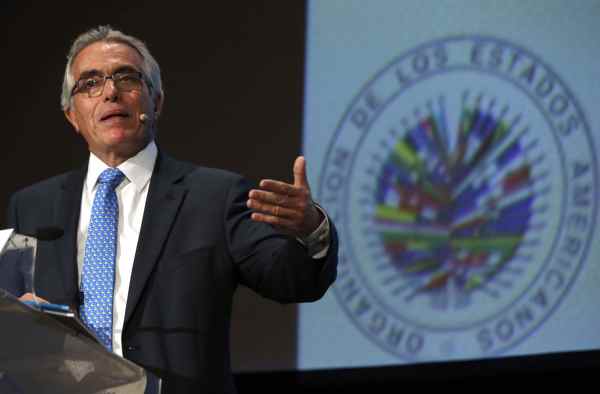
Special Rapporteur Diego Garcia-Sayan not swayed by Moroccan assurances for his visit

March 21, 2019
Morocco Deplores UN Special Rapporteur’s Reasons for Canceling Visit

https://www.ohchr.org/EN/NewsEvents/Pages/DisplayNews.aspx?NewsID=24356&LangID=E

https://www.moroccoworldnews.com/2019/03/268552/morocco-un-special-rapporteurs-visit/

Sri Lanka and the UN Human Rights Council: a Tale of Two Stories

March 18, 2019

One at the political level: On 17 March it was reported that a Sri Lankan parliamentarian – who will be a member of a delegation to be sent to the UN Human Rights Council next week – has slammed the UN High Commissioner for Human Rights report on his island, calling it “an atrocious piece of writing containing lies, half lies and highly contestable statements”. Sarath Amunugama, a senior former minister said the Sri Lankan delegation would be meeting with the UN High Commissioner for Human Rights to take up their complaints in person.

The report, released last week, said Sri Lanka had made “virtually no progress” on the investigation of war crimes, and also raised several other issues, including concerns over on-going reports of abduction, torture and sexual violence, institutional failures within the criminal justice system, ongoing harassment of human rights defenders since 2015 and the military’s continued occupation of civilian land. Amunugama though claimed the report was “methodologically incorrect” and contained “totally unwarranted statements”.

His comments come after less than a day after Sri Lanka’s ministry of foreign affairs agreed to the co-sponsoring of a roll-over UN resolution, the president Maithripala Sirisena said he wanted it stopped.  Sirisena also said that the delegation he would be sending to Geneva would argue that Sri Lanka should be allowed to ‘solve its own problems’.

—–

And the other more ‘scientific’, fact-based approach of Verité Research which is engaged in a four-part series on government progress in fulfilling commitments in Resolution 30/1.

FIDH dares to publish a report on ‘key human rights issues of concern’ in Kashmir

March 17, 2019

On 15 March 2019 the International Federation for Human Rights and its partner organizations Association of Parents of Disappeared Persons (APDP) and Jammu Kashmir Coalition of Civil Society (JKCCS) published a briefing note detailing key human rights issues of concern in Indian-administered Jammu & Kashmir. I use the term dare in the title as wading in to the issue of Jammu and Kashmir is always tricky and leads to furious reactions from governments and media.

Human rights violations began to be formally reported in Indian-administered Jammu & Kashmir in 1990 in the midst of counter-insurgency operations by the Indian Army to contain an armed struggle against Indian rule. These military operations were marked by excessive and disproportionate use of force. Since 1990, more than 70,000 people have been killed, more than 8,000 have been subjected to enforced disappearances, several thousands have been arrested and detained under repressive laws, and torture and other acts of inhuman and degrading treatment against protestors and detainees have been routinely used by Indian security forces.

ILLUSTRATION: MIR SUHAIL QADRI.

The NGOs have demanded full and unfettered access to Jammu & Kashmir to UN bodies and representatives, foreign and domestic human rights organizations, and foreign and local journalists. The groups also called for establishing a Commission of Inquiry to investigate allegations of all human rights violations perpetrated in Jammu & Kashmir, as recommended in the report by the UN Office of the High Commissioner for Human Rights (OHCHR) and the establishment of a mechanism to monitor the human rights situation in Jammu & Kashmir through diplomatic missions in New Delhi and Islamabad.

The note details “continuing crime of enforced disappearance, extrajudicial killings, torture used as punitive action, systematic impunity for grave crimes, use of arbitrary and administrative detentions to curb dissent, military operations threatening human rights, rights to freedoms of expression, freedom of association, and freedom of religion or belief being curbed, human rights defenders under threat, sexual violence used a tool of repressions, lack of safeguards continue to place children in danger,” among other crimes.

See also: https://humanrightsdefenders.blog/2017/09/30/parveena-ahangar-and-parvez-imroz-in-kashmir-awarded-rafto-prize-2017/

High Commissioner Bachelet presents her annual report: quite a list of problem areas

March 7, 2019

In the 40th session of the UN Human Rights Council, in presenting her annual report and oral update, High Commissioner Michelle Bachelet focused on explaining how inequalities in income, wealth, access to resources, and access to justice constituted fundamental challenges to the principles of equality, dignity and human rights for every human being. Inequalities affected all countries. Even in prosperous States, people felt excluded from the benefits of development and deprived of economic and social rights, leading to alienation, unrest and sometimes violence. To achieve the 2030 Agenda, the world’s States needed to advance on tackling inequalities – inequalities of resources, income, power, access to justice and with respect to the basic conditions for human dignity.

Inequalities were a driver of several of the global trends which were of greatest concern to the Human Rights Council and other inter-governmental bodies, the High Commissioner stressed. Involuntary and precarious migration was a case in point. She underlined that inequalities and the failure to give equal weight and respect to all human rights had the power to erode all three pillars of the United Nations: peace and security, development, and human rights. However, human rights provided hope. They bound humanity together with shared principles and a better future, in sharp contrast to the divisive, destructive forces of repression, exploitation, scapegoating, discrimination and inequalities. She then listed many specific situations:

In Sudan, for the past several months, people protesting harsh economic conditions, and bad governance, have been violently dispersed by security forces, sometimes using live ammunition…

In Zimbabwe, protests against austerity measures have also been met with unacceptable violence by security forces. The Government’s effort to launch a dialogue process in recent days is encouraging, but I am worried by reports of door-to-door raids, as well as intimidation and harassment of activists, human rights defenders, and lawyers representing those arrested.

In Haiti, protests also broke out last month over rising food prices and corruption. At least 41 people were killed and 100 injured. The government has announced measures to curb high prices, raise wages and fight corruption. Ensuring accountability – including for alleged cases of excessive use of force by police – and a constructive dialogue will also be essential.

In France, the “Gilets Jaunes” have been protesting what they see as exclusion from economic rights and participation in public affairs. We encourage the Government to continue dialogue – including follow-up to the national discussions which are currently underway – and urge full investigation of all reported cases of excessive use of force.

She then turned to:

The situation in Venezuela clearly illustrates the way violations of civil and political rights – including failure to uphold fundamental freedoms, and the independence of key institutions – can accentuate a decline of economic and social rights. ..

In the context of Nicaragua‘s very serious social and political crisis, the resumption of national dialogue could constitute a significant step to address the grave problems facing the country. These include increasing restrictions to civic space; persecution of dissenting voices; and crackdowns on press freedom, as well as austerity measures, and unemployment. ..

In the Occupied Palestinian Territory, the devastating impact of the occupation on economic and social rights is closely interlinked with violations of civil and political rights. …

..

I am shocked by the number of killings of human rights defenders around the world – some, reportedly, by State agents, and others, insufficiently protected by the State from attack by economic or other interests. Attacks on journalists, and media freedoms, are becoming increasingly widespread. Sound, independent information is the foundation of public participation in democratic governance. Restrictions on the civic space are being enacted by numerous States, across several regions. I remain very concerned about reprisals against victims, human rights defenders and non-governmental organisations who cooperate with the UN.

Today, allow me to voice my concern at the apparently arbitrary arrest and detention, and alleged ill-treatment or torture, of several women human rights defenders in Saudi Arabia. The persecution of peaceful activists would clearly contradict the spirit of the country’s proclaimed new reforms. We urge that these women be released.

In Turkey, I call on the authorities to view critical or dissenting voices – including human rights defenders, academics and journalists – as valuable contributors to social dialogue, rather than destabilizing forces. The recent prosecution of 16 civil society activists for “attempting to overthrow the government,” for their alleged roles during protests in 2013, is emblematic of many other trials lacking international due process standards.

In China, rapid development has lifted millions of people out of poverty – and yet in some areas, communities and individuals have been left behind. My Office seeks to engage on this issue with the Government for full access to carry out an independent assessment of the continuing reports pointing to wide patterns of enforced disappearances and arbitrary detentions, particularly in the Xinjiang Uyghur Autonomous Region…

In India, where there has also been significant poverty reduction in overall terms, inequality remains a serious issue. In addition, we are receiving reports that indicate increasing harassment and targeting of minorities – in particular Muslims and people from historically disadvantaged and marginalised groups, such as Dalits and Adivasis. It appears that narrow political agendas are driving the further marginalisation of vulnerable people. I fear that these divisive policies will not only harm many individuals, but also undermine the success of India’s economic growth story.

….The continuing movement of people from El Salvador, Guatemala and Honduras to the United States is a result of failure to ensure that development reaches everyone – with persistent violations of rights leading to profound inequalities. The comprehensive development plan being developed by Mexico, Guatemala, Honduras, El Salvador and ECLAC is a welcome response to this challenge, very much in line with the Global Compact for Migration. In Mexico, too, the government is making efforts to move from an approach focused on detention and deportation of migrants to a new focus on protection of the rights of migrants, including opportunities for regularization, and alternatives to detention. In the United States of America, the new Migrant Protection Protocols which restrict access to asylum and other forms of human rights protection – and push migrants back across the border to wait for their proceedings without due process or safeguards– are a source of concern. A recent report by the Inspector General for the United States Department of Health and Human Services indicates that thousands more migrant children have been separated from their families than had been previously reported.

The Office has raised concerns with Australia about the imminent transfer of migrants from Manus Island and Nauru to new detention centres. Those people have been suffering for more than six years; more humane policies could, and should, be implemented….

I commend Germany‘s successful programmes to help migrants integrate into the economy and society, as well as legislation in several countries – including Finland, Portugal and Spain – which enable the entry and stay of migrants in vulnerable situations, based on human rights grounds. I am troubled about other aspects of European migration policies, particularly the number of fatalities in the Mediterranean. Another 226 deaths were recorded in the first two months of this year. With several NGO vessels forced to suspend operations by measures that essentially criminalise solidarity, the ancient responsibility of rescue at sea is increasingly falling on merchant vessels – which are often ill-suited to such a task. In addition, some governments have refused entry to ships.

..

In the Sahel, the Office has been implementing an innovative approach aimed at reducing the risk of harm to civilians during counter-terrorism operations. OHCHR is working with the G5 Sahel Joint Force operating in Burkina Faso, Chad, Mali, Mauritania and Niger to establish a Compliance Framework to guide military operations. A training programme is underway; standard operating procedures are being developed which aim to reduce civilian harm and ensure sensitivity to gender issues; and a network of legal advisors is being established within the Joint Force to ensure the operational application of international human rights and humanitarian law…I encourage Cameroon to also consider the benefits of such an approach….

In Myanmar, economic interests and activities appear to be a key factor driving both violence and displacement by the Myanmar military, together with the dehumanisation of the Rohingya, and long-term discrimination. I am concerned by the failure to take any meaningful measures towards the safe, dignified, voluntary and sustainable return of the Rohingya and others – in compliance with their rights to citizenship and other rights. …..

……

In Yemen, I am deeply concerned by the suffering of civilians, despite the current ceasefire. This remains the world’s worst humanitarian crisis. The conflict has not just killed and injured thousands of civilians.

Amid these negative trends, there are some hopeful areas, in which far-sighted leadership seeks to advance civil, political, economic, social and cultural rights, to ensure a convergence of positive and constructive forces.

In Ethiopia, reforms have sought to address a wide spectrum of human rights issues, including benefit to sustainable development. The depth and pace of Prime Minister Abiy’s political and economic reforms, and the appointment of women to senior positions, could open the path to a more inclusive and effective development model, providing hope for Ethiopia’s young population. My Office will continue to assist the Government to devise sound laws, mend grievances, and set up measures to prevent violence in areas of the country.

………

At this session, the Council’s Special Rapporteur on the situation of human rights defenders presents a report on the rising attacks on, and repression of, women’s human rights defenders in the context of today’s backlash against women’s human rights. It makes clear that women defenders face the same risks as men, but with additional threats shaped by a view that women should be bound to the service of a male-dominated society. Physical and sexual violence, public shaming – including on the Internet – and attacks on their families and children are among the tactics increasingly used to silence women activists.

Recently a group of 30 women leaders issued an Open Letter emphasising the “urgency and peril” of the current roll-backs to hard-won rights and freedoms. I fully share their concerns, and will continue to work against gender inequalities with all the energy and principle that I can muster.

….. Before closing today, I would like to add a few additional situations of increasing concern.

In Libya, escalating violence since the beginning of the year – in particular, hostilities in the city of Derna and in the south of the country – could spark an even more chaotic situation, given the increasingly fragmented political context and continuing lawlessness. Armed groups which fall outside of effective State command and control structures, but which are integrated into State institutions, continue to commit grave violations of international humanitarian and human rights law throughout the country, in almost complete impunity. The number of civilians killed and injured in 2018, as documented by UNSMIL and OHCHR, was 40% higher than in 2017. Prevention measures should be considered a matter of urgency.

I remain concerned about the ongoing tensions in Kashmir, as shelling and firing on both sides of the Line of Control continue to contribute to loss of life and displacement. I encourage both India and Pakistan to invite my Office to monitor the situation on the ground, and to assist both States to address the human rights issues that must be part of any solution to the conflict.

In the Philippines, …..  I encourage the Philippines to adopt a public health approach, and harm reduction initiatives, that comply with human rights standards, as recommended to the 2016 General Assembly Special Session.  ……. The drug policies in place in the Philippines, and its lack of respect for rule of law and international standards, should not be considered a model by any country.

United Nations High Commissioner for Human Rights Michelle Bachelet takes her place to present her annual report before the UN Human right council members in Geneva. March 6, 2019.
United Nations High Commissioner for Human Rights Michelle Bachelet takes her place to present her annual report before the UN Human right council members in Geneva. March 6, 2019. (AFP)

Many media have picked on one more aspects of her speech. E.g. TRT World focused on:

Bachelet renewed her request to access China‘s Xinjiang region, where large numbers of the Uighur ethnic minority are reportedly being held in re-education camps. She also re-issued her requests for “full access to carry out an independent assessment of the continuing reports pointing to wide patterns of enforced disappearances and arbitrary detentions, particularly in the Xinjiang Uyghur Autonomous Region.” (A UN panel of independent experts has said there are credible reports that nearly one million Uighurs and other Turkic language-speaking minorities are being held in Xinjiang, known as ‘East Turkistan’ by Uighurs who want a homeland separate from China. Beijing at first denied the allegation, but later admitted putting people into “vocational education centres”) [see also: https://humanrightsdefenders.blog/2019/01/29/three-ngos-urge-you-to-nominate-ilham-tohti-for-the-rafto-prize/]

Bachelet also called on Saudi Arabia to release women activists allegedly tortured in detention after authorities accused them of harming the country’s interests. Human rights defenders have named 10 Saudi women held for their campaigning, voicing fears that they could face harsh sentences. Saudi Arabia’s public prosecutor is preparing the trials of detainees, identified by watchdog groups as women’s rights activists, after completing its investigations, state news agency SPA said last Friday. “Today, allow me to voice my concern at the apparently arbitrary arrest and detention, and alleged ill-treatment or torture, of several women human rights defenders in Saudi Arabia,” Bachelet said.

(European countries will urge Saudi Arabia on Thursday to release activists and cooperate with a UN-led probe into the murder of journalist Jamal Khashoggi, in the first rebuke of the kingdom at the Human Rights Council, diplomats and campaigners told Reuters.) [see also: https://humanrightsdefenders.blog/tag/jamal-khashoggi/]

The United Nations High Commissioner for Human Rights also urged the Philippine government to comply with international human rights standard in its brutal drug war, which she said lacks respect for the rule of law. Bachelet encouraged the Duterte administration to “adopt a public health approach, and harm reduction initiatives, that comply with human rights standards.” “The drug policies in place in the Philippines, and its lack of respect for the rule of law and international standards should not be considered a model by any country,” she said.


https://www.ohchr.org/EN/NewsEvents/Pages/DisplayNews.aspx?NewsID=24265&LangID=E

https://www.trtworld.com/europe/un-human-rights-chief-paints-bleak-picture-in-annual-report-24708

https://newsinfo.inquirer.net/1092840/un-human-rights-chief-urges-govt-to-respect-rule-of-law-in-drug-war?utm_expid=.XqNwTug2W6nwDVUSgFJXed.1
UN Human Rights Office in Burundi formally closed

March 5, 2019
As foreseen in December 2018 [https://humanrightsdefenders.blog/2018/12/07/final-step-burundi-closes-down-un-office/] the UN office in Burundi was closed formally on Thursday 28 February at the insistence of the Government.

It is with deep regret that we have had to close our office in Burundi after a 23-year presence in the country,” High Commissioner Bachelet said. “Since the UN Human Rights Office in Burundi was established in 1995, for many years we worked with the Government on peacebuilding, security sector reform, justice sector reform and helped build institutional and civil society capacity on a whole host of human rights issues.”..“Unfortunately, many of these human rights gains have been seriously jeopardized since 2015”…

Our reports on the human rights situation in Burundi have always been developed in a constructive spirit, intended to support the promotion and protection of human rights in the country. But I am disappointed by Burundi’s lack of cooperation in recent years with UN human rights mechanisms – which even went so far as to include threats to prosecute members of the independent international Commission of Inquiry established by the UN Human Rights Council,” High Commissioner Bachelet said.

Bachelet paid tribute to the many human rights defenders and civil society actors in Burundi who have worked with inspiring dedication, perseverance, courage and expertise through many political and social crises in the country, while noting with concern that in recent years, many of them have been detained or forced into exile.

https://www.ohchr.org/EN/NewsEvents/Pages/DisplayNews.aspx?NewsID=24254&LangID=E

Opening Statements at 40th session of UN Human Rights Council

February 25, 2019

Also the UN High Commissioner for Human Rights, Michelle Bachelet, gave an opening statement which was of a remarkably ‘soft’ tone.  Here some excerpts:

..Today, we sometimes hear human rights being dismissed as supposedly “globalist” – as opposed to the patriotic interest of a sovereign government. But how can any State’s interests be advanced by policies that damage the well-being of all humans?….

Human rights-based policies are effective. They deliver better outcomes for people – people across the social and economic spectrum, and beyond borders. They prevent grievances, conflicts, inequalities, and suffering and discrimination of all kinds….Steps to ensure the authorities engage in respectful dialogue with civil society make for much better, broader development – and I want to emphasise this point: there cannot be optimal, sustainable or inclusive development when the voices of civil society are absent.

…..In today’s currents, in this uncharted storm of heavy winds and rising seas, careless leadership could carry our countries into catastrophe. Or we can use fundamental principles to steer our vessels to safety in more peaceful waters. Every day, we deal with many challenges across the planet. The world’s eyes have been on Venezuela, especially in the last few days. Just yesterday my Office issued a statement regarding the situation: we hope violence will end, and that respect for human rights will be part of the solution.

This Council, the Treaty Bodies and my Office, including its 72 field presences around the world, are honoured with the mandate to stand up for human rights. I want to emphasise my admiration for the Council’s record in effecting early warning, and in naming experts to issue detailed guidance. The Special Procedures and Universal Periodic Review have become essential human rights tools. We need now to ensure not just early warning, but early action to prevent conflict and human rights violations.

I also take this opportunity to emphasise the importance of the Treaty Bodies, whose recommendations are often profoundly relevant.  Mindful of the need to avoid overburdening States with numerous and overlapping recommendations, we will continue working to help decision-makers devise appropriate policy responses.

My Office is sustained by the United Nations principles of impartiality, independence and integrity, and I view it as an essential springboard for the well-being and freedom of women and men across the world.

We will continue to engage with States and forge partnerships with UN agencies, regional and global bodies, business and other stakeholders. We will do our best to strengthen all the international human rights institutions with a sense of common purpose, and coordinated action.
And we will continue to amplify the needs and demands of civil society, to advance the principles of dignity, equality and justice.

——–

https://www.bostonglobe.com/news/world/2019/02/25/chief-warns-that-human-rights-are-losing-ground-world/BrFFZ4IXPpiN4QMc4j6TWO/story.html

https://www.ohchr.org/EN/NewsEvents/Pages/DisplayNews.aspx?NewsID=24203&LangID=E


Indian Government accused of harassment of Amnesty and Greenpeace India

February 22, 2019

Shemin Joy, for DH News Service, New Delhi, reported on 21 February 2019 that a letter addressed by 3 UN Rapporteurs to the Indian government has now been made public as no reply was received. The letter will now be part of the report to be discussed in UN Human Rights Council as India has not responded to the charges. In the letter, the Special Rapporteurs referred to the raids and searches conducted at the offices of Amnesty International India and Greenpeace India as well as the blocking of foreign funding to these NGOs. ….concern is expressed at the alleged smear campaign against Amnesty International India, in what seems to be an attempt to tarnish the organization’s reputation in the absence of formal charges

We reaffirm our position that the ability to access foreign funding is an integral part of the right to freedom of association, and reiterate our concerns at the highly detrimental impact of the FCRA, which has been increasingly used to obstruct Indi.reiterate our concerns at the highly detrimental impact of the FCRA, which has been increasingly used to obstruct Indian civil society’s access to international funding,” they said. [see also: https://humanrightsdefenders.blog/2013/11/05/india-should-end-funding-restraints-on-human-rights-defenders-says-hrw/]

The seven-page letter was written by Special Rapporteurs David Kaye (promotion and protection of the right to freedom of opinion and expression), Clement Nyaletsossi Voule (rights to freedom of peaceful assembly and of association) and Michel Forst (situation of human rights defenders) on December 20 last year and had said that they would make public the letter after two months with or without the government’s response.

Read more at: https://www.deccanherald.com/national/smear-campaign-against-amnesty-719547.html

Final step: Burundi closes down UN office

December 7, 2018
FILE - In this Tuesday, April 28, 2015, file photo, Burundi riot police detain a man suspected of throwing stones during clashes in the Musaga district of Bujumbura, Burundi. The United Nations human rights office on Thursday, Dec. 6, 2018, said Burundi's government has asked it to leave, months after the outgoing U.N. rights chief called the country one of the "most prolific slaughterhouses of humans in recent times." (AP Photo/Jerome Delay/File)

Having reported on 4 December about Burundi in the 3rd Committee of the General Assembly (“Burundi made several attempts to stop the Commission of Inquiry on Burundi from presenting its report to the Third Committee. When these were foiled, in a repeat of what happened last year, the Burundian Ambassador took the floor to abuse Commission members.  ….” and in the light of its history with UN investigations – see inter alia: https://humanrightsdefenders.blog/2018/10/26/burundi-outrageously-attacks-united-nations-team/), it hardly comes as a surprise that Burundi’s government has asked the UN to leave completely. (Associated Press reporting on 6 December 2018).

Spokeswoman Ravina Shamdasani in Geneva confirmed they received a letter on Wednesday “requesting us to close the office. We of course regret this decision and we would like to continue our cooperation with Burundi.” Anonymous sources within the U.N. office in Burundi told Associated Press they were given two months to leave.

The East African nation’s government has long been angered by U.N. reports describing alleged abuses amid the political turmoil since President Pierre Nkurunziza decided to run for another term in 2015. More than 1,200 people have been killed since then, the U.N. says, and ICC judges authorized an investigation into allegations of state-sponsored crimes including murder, rape and torture — a decision unaffected by Burundi’s withdrawal from the court. Outgoing U.N. High Commissioner Zeid Ra’ad al-Hussein early 2018 said Burundi was among “some of the most prolific slaughterhouses of humans in recent times.”

Burundi suspended its cooperation with the U.N. rights office in October 2016, accusing it of “complicity with coup plotters and Burundi’s enemies” after a report alleged the “involvement of the regime in systematic abuses and a risk of genocide.” In December 2017, the government shut four regional offices of the U.N. rights office in the country. And a team of experts mandated by the U.N. Human Rights Council to look into possible abuses was expelled in May despite Burundi’s agreement to cooperate.

Burundi’s foreign minister, Ezechiel Nibigira, on Thursday called a press conference on the issue but then postponed it, telling reporters that “We will communicate you when we are well prepared.” Rachel Nicholson, the Burundi researcher for Amnesty International, called the news “deeply disappointing” and called on the government to reverse its decision. Having refused to cooperate with a U.N. commission of inquiry or sign a memorandum of understanding with African Union monitors, the government is again trying to block independent monitoring, Nicholson said. “But the truth will still get out.”

https://www.wral.com/un-rights-office-burundi-s-government-has-asked-us-to-leave/18043826/

10 December warning by Michelle Bachelet: Populist nationalism threatens UDHR

December 6, 2018
U.N. High Commissioner for Human Rights Michelle Bachelet attends a news conference at the United Nations in Geneva, Switzerland, Dec. 5, 2018.
U.N. High Commissioner for Human Rights Michelle Bachelet 

Born out of the devastation of two world wars, the Great Depression of the 1930s, and the Holocaust, the seminal document is geared toward preventing similar disasters from happening. December 10 marks the 70th anniversary of the declaration, which U.N. High Commissioner for Human Rights Michelle Bachelet said has withstood the test of time. [see also: https://humanrightsdefenders.blog/2018/10/18/michelle-bachelet-new-un-high-commissioner-for-human-rights-gives-major-interview/]

She said its fundamental principles can be applied to meet the challenges of today, such as ensuring equal rights for LGBTI people and protecting the right to life, food and health in the face of climate change. But, she warns, many of these rights are under threat from politicians pushing a nationalistic agenda. “When leaders… speak against migrants or a sort of hate speech or xenophobic speech, you are giving license to other people not to respect people’s rights,” Bachelet said. Leaders are responsible for what they say, and must lead by example, she added, dismissing the argument sometimes made by developing countries that human rights are a Western concept.

https://www.voanews.com/a/un-populist-nationalism-threatens-human-rights-declaration/4687896.html

UN Experts consider human rights defenders in Italy under threat

December 2, 2018

In Europe it is not just in Hungary where human rights defenders are under pressure [https://humanrightsdefenders.blog/2018/07/26/some-facts-about-refugee-flows-which-hungary-seems-not-to-know/]. On 21 November 2018 a group of UN experts  – including Michel Forst, the UN Rapporteur on Human Rights Defenders – expressed concern that amidst Italy’s proposed tightening of immigration rules HRDs are the subject of smear campaigns.

Since coming into power in June 2018, the new Italian Government has implemented the anti-migrant and exclusionary measures it campaigned upon. “Removing protection measures from potentially thousands of migrants and limiting their ability to regularise their stay in Italy will increase their vulnerability to attacks and exploitation. They will be at greater risk from traffickers and other criminal groups, and many will have no means to meet their basic needs through lawful means”.

While acknowledging the challenges Italy faces due to the absence of an effective European-wide system of solidarity, the UN experts said this did not justify violations of human rights. “The government must adhere to the values enshrined in the Italian constitution, and the international commitments it signed up to,” they said in an appeal to the government to reconsider the legislative changes.

During the most recent electoral campaign, some politicians fuelled a public discourse unashamedly embracing racist and xenophobic anti-immigrant and anti-foreigner rhetoric. Such speech incites hatred and discrimination,” the experts said. ……“We are also concerned about the continuing smear campaigns against civil society organisations engaged in search and rescue operations in the Mediterranean Sea, as well as the criminalisation of the work of migrant rights defenders, which have become more widespread in Italy,”.

The UN experts urge the Italian government to combat incitement to hatred and discrimination, racism and xenophobia. “Perpetrators of hate crimes must be held accountable and justice provided to the victims. Italian authorities should implement the national and relevant European legal framework and provide the needed responses to hate crime and the use of hate speech.”

The experts have contacted the government about their concerns and await a reply.

https://www.ohchr.org/EN/NewsEvents/Pages/DisplayNews.aspx?NewsID=23908&LangID=E