Archive for the 'RSF' Category

Reporters Without Borders published its 2014 World Press Freedom Index

February 14, 2015

couverture classement 2014

Reporters Without Borders recently published its 2014 World Press Freedom Index. It has a nice easy-to-use and colorful map. The accompanying text spotlights the negative correlation between freedom of information and conflicts, both open conflicts and undeclared ones. In an unstable environment, the media become strategic goals and targets for groups or individuals whose attempts to control news and information.

The ranking of some countries has also been affected by a tendency to interpret national security needs in an overly broad and abusive manner to the detriment of the right to inform and be informed. This trend constitutes a growing threat worldwide and is even endangering freedom of information in countries regarded as democracies. Finland tops the index for the fourth year running, closely followed by Netherlands and Norway, like last year. At the other end of the index, the last three positions are again held by Turkmenistan, North Korea and Eritrea, three countries where freedom of information is non-existent. Despite occasional turbulence in the past year, these countries continue to be news and information black holes and living hells for the journalists who inhabit them. This year’s index covers 180 countries.

Reporters Without Borders.

NGOs concerned about alarming proliferation of surveillance technologies to repressive countries – the Wassenaar Arrangement

December 2, 2014

On 1 December 2014 a group of 7 NGOs (Amnesty International, Digitale Gesellschaft, International Federation for Human Rights, Human Rights Watch, Open Technology Institute (at New America), Privacy International, Reporters sans frontieres) sent an Open Letter to the “Wassenaar Arrangement” (for what this is see link at the end). The key issue is that the alarming proliferation of surveillance technologies available to repressive countries adversely affects political activists, human rights defenders, refugees, dissidents and journalists.

Here is the text of the letter:

“We, the undersigned organisations, call upon the 41 Governments that compose the Wassenaar Arrangement on Export Controls for Conventional Arms and Dual-Use Goods and Technologies, to take action and address the alarming proliferation of surveillance technologies available to repressive countries involved in committing systematic human rights violations. This trade results in unlawful surveillance, which often leads to further human rights violations including invasions of privacy, arbitrary arrest and detention, torture and other cruel, inhuman or degrading treatment or punishment, the silencing of free expression, preventing political participation, and crushing offline and online dissent.

Surveillance technologies are not simply harmless tools. In the wrong hands they are often used as a tool of repression. Evidence is continuing to reveal the extent of this secretive trade that puts countless individuals at direct risk from human rights abusing governments. More and more stories emerge showing these damaging and often unlawful technologies affecting political activists, human rights defenders, refugees, dissidents and journalists, with some technologies placing entire populations under surveillance. Governments with internationally condemned human rights records such as Bahrain, Ethiopia, Egypt, Turkmenistan, Libya, Syria and Iran have all purchased surveillance technologies from private companies, and have used them to facilitate a variety of human rights violations. Some revelations in France, Germany, the UK, and the US have led to police and judicial investigations following calls from NGOs and members of the Coalition Against Unlawful Surveillance Exports. Remarkably and despite mounting evidence of associated abuses, surveillance technology companies still openly market their products at ‘trade fairs’ across the UK, France, US, Brazil and the UAE among other countries.

Although steps were taken in 2013 to address this largely unregulated global market, governments cannot let the momentum halt. Governments have now included additional technologies associated with intrusion software and IP monitoring to the Lists of Dual Use Goods and Technologies and Munitions, and are aware of the impact surveillance technologies can have on human rights. There is now a pressing need to modernise out of date export controls. In addition, technologies such as undersea fibre-optic cable taps, monitoring centres, and mass voice / speaker recognition technologies urgently need to be examined for their impact on human rights and internal repression, particularly when the end user is a government known for committing human rights violations. Technologies evolve at a rapid pace and governments that abuse human rights take advantage of weak regulation, the product of poor understanding of the technologies and their capabilities.

In the current system, human rights and digital rights groups, as well as external independent experts, are excluded from contributing their expertise and knowledge to the Wassenaar Arrangement forum. The additional expertise and knowledge that civil society can bring to the debate is invaluable to this end. Discussions should not continue in a closed-forum manner and we urge governments to engage with civil society organisations to help ensure that accurate and effective controls are developed which reflect modern technological developments and do not impede legitimate scientific and security research.

Any export policy relating to surveillance technologies should place human rights at its heart. Governments must exercise a strict policy of restraint and should refuse to grant export licenses for surveillance technology destined for end-users in countries where they are likely to be used in an unlawful manner i.e. not compliant with human rights legal standards. Governments should consider the weakness or absence of an appropriate legal framework in the recipient country to ensure the transfer would not pose a substantial risk of the items being used to violate or abuse human rights. Governments should also be transparent in what they export, and to whom and support the development of an international legal framework to address the sale and trade of surveillance technologies.”

An Open Letter to the Members of the Wassenaar Arrangement | Human Rights Watch.

The Wassenaar Arrangement (41 participating States) has been established in order to contribute to regional and international security and stability, by promoting transparency and greater responsibility in transfers of conventional arms and dual-use goods and technologies, thus preventing destabilising accumulations. Participating States seek, through their national policies, to ensure that transfers of these items do not contribute to the development or enhancement of military capabilities which undermine these goals, and are not diverted to support such capabilities.

from: http://www.wassenaar.org/introduction/index.html

Tibetan Filmmaker Dhondup Wangchen Released from Prison Yesterday

June 6, 2014

Portrait

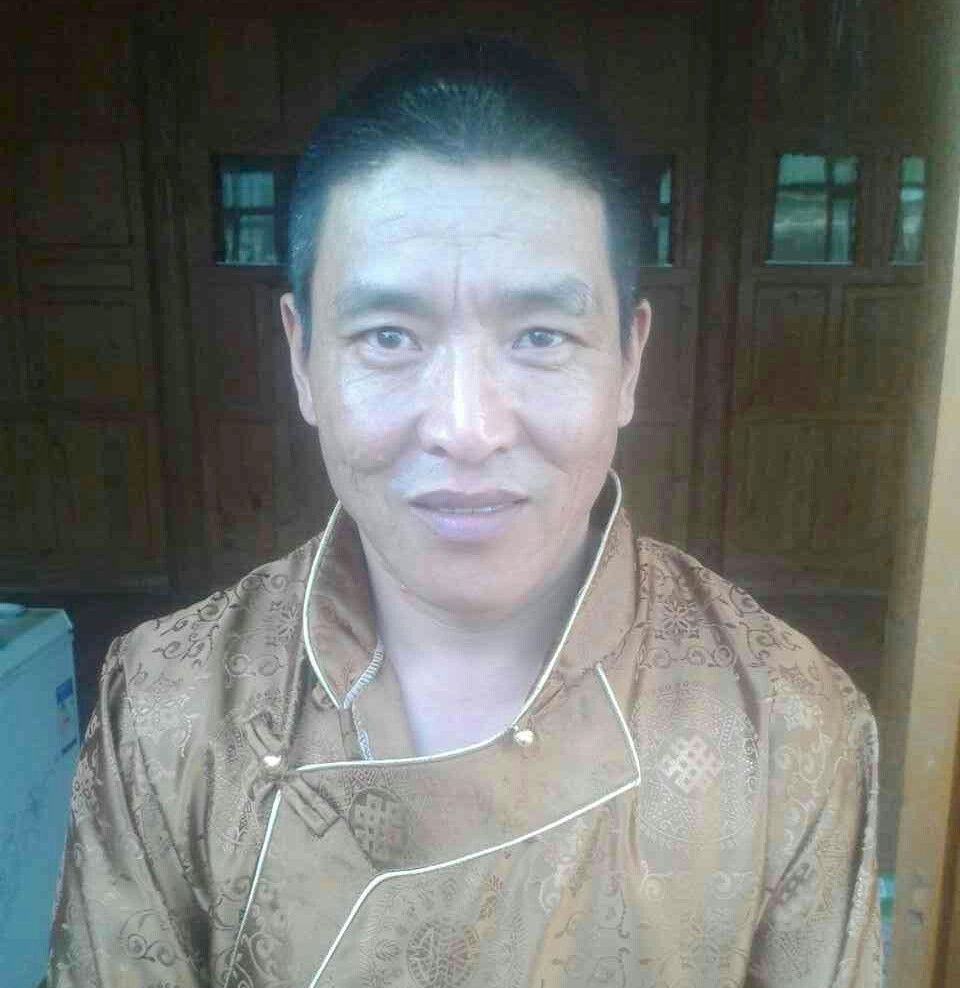
On 5 June 2014  Dhondup Wangchen, the imprisoned Tibetan video-activist,  was released from prison in Qinghai’s provincial capital Xining, China, after serving a six-year sentence.  In a phone call to Gyaljong Tsetrin, cousin and president of Filming For Tibet, living in Switzerland,  a very emotional Dhondup Wangchen said: “At this moment, I feel that everything inside me is in a sea of tears. I hope to recover my health soon. I would like to express my feeling of deepest gratitude for all the support I received while in prison and I want to be reunited with my family.”

Lhamo Tso, wife of the imprisoned filmmaker who was granted US asylum in 2012 and now lives in San Francisco, is overjoyed: “Six years of injustice and painful counting the days ended today.  It is a day of unbelievable joy for his parents in Dharamsala, our children and myself. We look forward to be reunited as a family.”

Gyaljong Tsetrin, his cousin and co-producer of “Leaving Fear Behind”, said after talking him to: “Though Dhondup is still under the control of the Chinese authorities I am very relieved that he finally could leave prison and has now the possibility to consult a doctor.”  The self-taught cameraman and video-activist travelled across Tibet with his assistant Golog Jigme in 2007/2008. His film “Leaving Fear Behind” (28 min.) has been translated into a dozen languages and has been screened in more than 30 countries worldwide. Golog Jigme recently just arrived in India after a spectacular escape from Tibet. Dhondup Wangchen has been given awards by various NGOs, such as Committee to Protect Journalists, for his courageous work making the documentary “Leaving Fear Behind” and his case was the focal point of many campaigns of international human rights groups such as Amnesty International and Reporters without Borders. Government representatives around the world have brought up his case in their talks with their Chinese counterparts.


Tibetan Filmmaker Dhondup Wangchen Released from Prison.